


US, China agree 90-day tariff pause to continue negotiations
The US and China agreed on Monday to temporarily slash so-called reciprocal tariffs and respective countermeasures by 115% to 10%, Kallanish reports.
The announcement made in Geneva states that both countries will pause these tariffs for 90 days to continue negotiations towards “rebalancing trade.” A baseline 10% tariff rate will remain in place in both countries during the period. Other US tariffs on Chinese goods have also been retained, including the 20% rate related to fentanyl, US officials say in a press conference.
Additionally, China will suspend or remove the non-tariff countermeasures taken against the US since 2 April, which include export restrictions.
Their joint statement states that the trade talks in Geneva between China’s Vice Premier He Lifeng and US treasury secretary Scott Bessent and US trade representative Jamieson Greer created a “mechanism to continue consultations on economic and trade relations.”
The deal recognises the importance of bilateral economic and trade relations to both countries and the global economy. It also considers the need for a “sustainable, long-term and mutually beneficial economic and trade relationship.” The countries have agreed to continue advancing negotiations “in a spirit of mutual openness, continuous communication, cooperation and mutual respect.”
Bessent says that it became clear that “neither side want decoupling,” while noting Washington wants China to open for more US goods. He also indicates potential purchase agreements to help balance trade, stating that the US massive trade deficit with China stems from negligence by previous US administrations.
China’s commerce ministry notes that this round of talks has attracted great attention from the international community. Vice Premier He says Beijing is willing to work with the US to “inject more certainty and stability into the world economy.”
Other existing US tariffs on certain sectors, including a 25% tariff on cars and auto parts, remain in place. It’s unclear when a new round of talks will take place.
Analysts at ING say the trade war de-escalation is a “win-win” as it benefits both economies. Yet, they believe the agreement, “which significantly lowers tariffs without any concessions, is likely to be viewed as a particular victory for China.”
“This was a larger-than-expected de-escalation and represents an upgrade to the outlook, though the negotiation process will likely remain challenging,” they add.


EU HRC prices face downward pressure as market sentiment remains cautious
European domestic hot-rolled coil prices remained largely stable May 8, with sources citing a modest erosion of EUR10-20 across various regions.
“Prices have been pretty stable overall, but we expect a small dip in the short term, with HRC ex-Ruhr at EUR630-640 and ex-Italy at EUR620,” a mill source said. “We’re not seeing a lot of action in the market right now, and the outlook remains fairly weak.”
Despite this, there is optimism for the second half of the year, with expectations for a potential improvement as market conditions stabilize. However, concerns about the gap between domestic and import prices, combined with regulatory uncertainty, remain.
“Import activity is quieter, and there’s little insight on where it will go,” the source added, noting that a lack of clarity on the Carbon Border Adjustment Mechanism (CBAM) was exacerbating market hesitancy. “People are starting to calculate what it really means, but there are still many gaps to be filled by the commission.”
Platts assessed HRC ex-works Italy at EUR620/mt and HRC CIF Southern Europe at EUR530/mt, both stable day over day. Platts assessed HRC in Northwest Europe at EUR640/mt EXW Ruhr, down Eur5 day over day, and HRC CIF Antwerp at Eur540/mt, stable day over day.


EU flats market shows caution at Made in Steel trade fair amid rising volatility
Uncertainty was the dominant theme at this year’s Made in Steel trade fair in Milan, Italy, as Europe’s flat steel market grappled with weak demand, volatile trade dynamics, and mounting regulatory complexity.
As the steel industry gathered in Milan May 6-8 for the trade fair, market participants shared largely bearish outlooks for the flat steel pricing trajectory and expectations for the continuation of poor near-term demand visibility.
Despite the recent trend of increased mill offers across Europe, many attendees noted that regulatory uncertainties and a lack of concrete activity have kept prices under pressure.
“The fair has been quite muted so far. Sentiment is generally negative,” a Southern European mill source said. “There’s a lot of uncertainty—quotas, tariffs, the situation with the US—all of it is complicating things.”
But some sources noted more positive signs.
A German stockholder expressed optimism that a ceasefire in the Russia-Ukraine conflict and increased infrastructure spending under the incoming German government could help lift demand. “We’re hopeful this will improve sentiment in the second half of the year,” the stockholder said.
Imports are under pressure
Although European import quotas have seen mixed allocation rates across hot-rolled coil, cold-rolled coil, and hot-dipped galvanized steel, sources at the fair offered mixed views on price viability and buyer receptiveness to the different origins.
Numerous sources cited an influx of Indonesian coils, with offers heard during the fair at Eur 570/mt CFR Italy. Whether the material was workable for the wider market or more suited for piping applications remained a key area of debate.
Discussing the feasibility of imports in general, and the reduced uptake of the quotas, one trader referred to an atmosphere of uncertainty, partially due to buyer hesitancy in the first quarter during the European Commission’s safeguard review, with the impact still being felt. Similarly, looking forward, he said, “Buyers booking imported material from Asia are trying to delay for a few weeks to see what domestic prices and end-consumers are doing.”
“But any material that is ordered now won’t arrive until after summer; nobody has any demand visibility that far out, and they don’t want to take the risk.”
Despite the South Korean import quota for HRC being exhausted during the fair, market reactions remained muted. Many recognized that domestic availability in Northern and Southern Europe remained strong.
“It is a buyers’ market,” said a second trader, who anticipated that domestic HRC offer levels will drop by Eur20-30 in the coming weeks.
“We would like to see higher prices, but there is not a lot of business, and a lot of competition at the moment [among] service centers,” a service center source said. “We are very curious where mill margins are, as they will struggle to drop prices.”
The same source also pointed toward short-term demand visibility as significantly affecting market confidence, reporting that some customers were asking for small, additional volumes at the last moment, limiting the ability to do forward planning.
CBAM uncertainty looms
The EU’s Carbon Border Adjust Mechanism continued to polarize the market, with many arguing there was a continued lack of clarity or transparency on the emissions reporting mechanism or the potential price impact it will have.
Several market participants anticipated a price increase, citing the additional administrative burden following a shift in preference for customs-cleared material versus CIF cargoes and metal from origins with lower default values. However, the absence of EU-declared benchmark/threshold emission values and a corresponding benchmark carbon level for each production pathway remain common criticisms.
More broadly, sources suggested that the legislation was adding an additional layer of uncertainty, with confusion over how CBAM can be hedged and how the additional cost burden was coming at a moment when the market was under considerable cost pressure across the supply chain.
Cautious outlook
While some fair attendees held out hope that Made in Steel would bring fresh momentum to the market, most agreed that visibility remained limited and pricing pressure was mounting, especially on the domestic side.
“We’ll reassess after the fair,” said a buyer. “But the market feels cautious. Unless something shifts, we may see prices heading down.”
Market participants pointed to persistent uncertainty around trade policy, muted demand, and regulatory developments as key themes shaping the outlook for flat steel in the coming weeks and months.

German engineering welcomes chancellor, upbeat on first quarter
New German chancellor Friedrich Merz should quickly set course for a recovery in the country’s economy and industries, says mechanical engineering association VDMA.
The first 100 days of the new government will be fundamental for tackling social and economic challenges, and for industrial growth and competitiveness, says VDMA president Bertram Kawlath.
He asserts that “Germany must once again become a European driving force and, together with its European partners, vigorously push for a deepening of the internal market.”
More concretely, he asks that “improved investment and innovation conditions with accelerated depreciation and a widely usable research allowance” should be facilitated to ensure innovation.
Meanwhile, the mechanical engineering industry completed the first quarter with the first positive year-on-year balance of orders in three years, Kallanish hears. Q1 saw an overall increase in orders of 4%.
Domestic orders from January to March were 1% higher y-o-y, while orders from abroad were up by 5%. The disparity widened in March alone with domestic business down 3%, offset by a 6% increase in foreign orders.
“It is therefore all the more important that the new German government now directly introduces brave reforms to strengthen the country, to attract investment again,” demands VDMA chief economist Johannes Gernandt. “We are now seeing a turning point in international business, while domestic business remains difficult.”
Christian Koehl Germany
EU should tackle declining consumption, not scrap: Assofermet
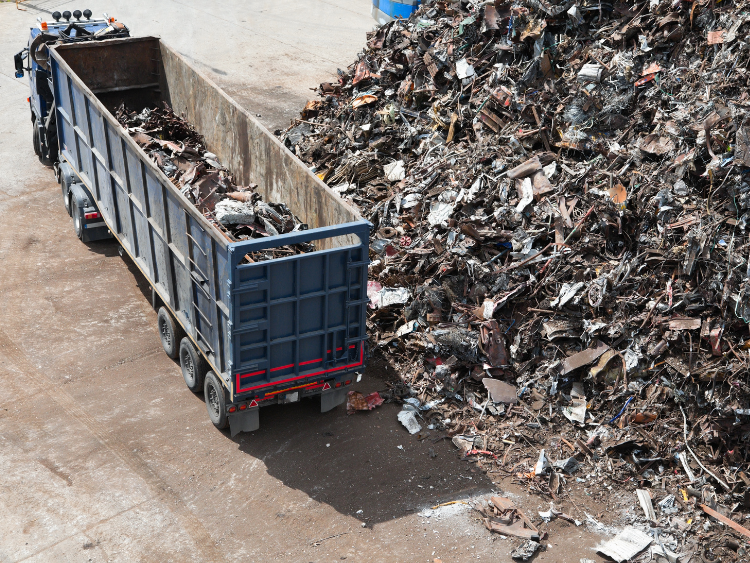
Scrap demand in Europe is notably lagging behind supply, according to Italian steel trade association Assofermet. The European recycling industry collects around 100 million tonnes/year of waste metal, with the union effectively utilising about 80%, leaving 20% unutilised.
Unlike Italy, where a significant majority of steel production relies on electric arc furnaces, the remainder of European steel is predominantly produced through blast furnaces. The 20% scrap exported “is not a theft that is perpetrated to the steelmaking sector but rather the consequence of the structural decline in European steel production,” Assofermet president Cinzia Vezzosi said at Made in Steel in Milan attended by Kallanish last week.
“As the production decreases, the availability of that type of material [scrap] increases,” she added.
In order for the industry to continue to have technologically sophisticated recycling businesses, they must maintain their operational margins and be allowed to export the surplus of scrap.
Assofermet is urging the European Commission to take this perspective into account when evaluating its steel action plan. Scrap is not merely a resource, said Vezzosi; it holds strategic importance and is available for the European steelmaking industry.
This comes in response to European steelmakers’ attempts to ban scrap exports. Steelmakers are struggling to secure a ban on the export of 18 million tonnes of scrap that departs from Europe annually, with Antwerp being a significant point of departure.
“We have been engaged in discussions for 11 years regarding a duty equivalent to the CO2 that has been paid on that scrap. The scrap is directed towards nations that are excluded from the ETS protocols, thereby gaining an unfair competitive advantage over us. We have managed … to have this approved in the European Parliament. Then when we returned to the Commission, the Germans obstructed it,” Gozzi said at the trade show (see Kallanish passim).
Meanwhile, Assofermet believes the Steel & Metals Action Plan is not addressing the industry’s key issues. The proposed measures are vague and only outlined in general terms.
“The Plan focuses on issues and aspects that affect production but does not consider, except in a completely lateral way, the main problem that is causing the decline of the European steel industry: the lack of demand … It is now crucial to enhance the market demand that has diminished over the years …[and] prevent EU steel production from further declining, damaging the entire supply chain, including end-users,” the association says in a note.
Natalia Capra France

Marcegaglia conveys cautious optimism, eyes Fos upstream integration
Antonio Marcegaglia is cautiously optimistic about European steel demand and pricing amid a highly uncertain landscape for the remainder of the year.
At Made in Steel in Milan last week, he told Kallanish he does not anticipate any decline in European demand, which will largely align with last year’s figures. Additionally, Europe may experience a positive impact from the German government’s decision to accelerate spending. The volume of imports is likely to remain limited due to the implementation of safeguard measures, the Carbon Border Adjustment Mechanism (CBAM), and additional duties.
In the latter half of 2025, Marcegaglia anticipates a gradual recovery in demand, contrasting with supply which is expected to remain stable. Consequently, pricing may stabilise at slightly higher levels compared to current figures.
The fluctuating dollar is the primary reason for the current decline in coil import prices. However, constraints on import volumes are mitigating the impact of this price reduction. The disparity between imported and European domestic coil prices is now becoming significant, but Marcegaglia claims that despite pressure from imports, there is no indication that European prices will decline, because of narrow margins.
Downstream margins were under pressure in the first quarter. However, the company recorded an improvement in February and March. Overall, Marcegaglia has observed a marginally improved performance in stainless steel relative to carbon steel.
The current climate of uncertainty has resulted in a noticeable deceleration in both private and public investment. Additionally, the decline in consumer goods consumption has hampered demand. The imposition of tariffs is adversely impacting global trade, which constitutes a crucial component of demand within the steel sector. Inventory levels have remained relatively low, and the first quarter has shown satisfactory performance regarding shipments, Marcegaglia observed.
“You build up your shipments day by day with a very short-term view. This again does not help prices and does not help margins … Demand is not so good, but also not so bad – but, price wise, we are seeing an increase from the very low levels of November last year,” Marcegaglia said.
“From those lows we can say that prices have been going up; but again, the Trump administration and the depreciation of the dollar are raising concerns regarding the sustainability of the price growth trend, so there is a kind of pause in the price increase momentum. In some areas, this is still going on; for example, in the tubes segment … but in other segments, prices are stagnating,” he added.
Seasonality is likely to provide a beneficial impact. The market may witness a gradual recovery in prices, as the current absolute price levels, particularly in Europe, are not significantly elevated, he adds.
Marcegaglia confirmed to Kallanish the firm is increasing investment in the relaunch of its For-sur-Mer steel mill, in southern France, formerly known as Ascometal, to €800 million ($902m), a “bold but necessary” move. “It is a partial upstream integration for both carbon and stainless steel,” he explained.
Stainless melting will continue to be carried out at the Sheffield unit, but re-rolling will happen in Fos. The project will cover approximately 30% of Marcegaglia’s needs of coil and slab procurement, which has been strongly impacted by the uncertainty associated with duties and the unpredictability regarding the future supply of steel in Europe, particularly as EU production trends down.
“Will there be enough melted steel in Europe in five to ten years time? I think it’s very wise and sound to have a partial integration of our needs and supply chain,” Marcegaglia noted. He added the company is negotiating long-term electricity pricing with the French government and EDF. Groundbreaking is planned for the beginning of next year.
Natalia Capra France

Knauf Interfer invests in strip galvanizer
German steel distributor Knauf Interfer has acquired a majority stake in the H. D. Lenzen Group, based in Hagen. It is thereby strengthening its Steel division by expanding its portfolio in strip finishing, Kallanish hears from the company.
H.D. Lenzen was founded in 1985 and has two high-performance sites in Hagen. According to Knauf Interfer, it is recognised as one of the world’s leading suppliers of electrolytically galvanized precision steel strip. It serves international customers from sectors including the automotive, furniture, electrical and construction industries.
Peter and Philipp Plobst, the current managing directors, will remain associated with the companies as shareholders and in leadership roles.
The transaction also involves Lenzen subsidiary Galvano, which has been refining metal strip at its site in Halver, North Rhine Westphalia, for 100 years.
Knauf Interfer Cold Rolling focuses on the production of cold-rolled steel across a wide range of grades, as well as electrolytic tin-plating and galvanizing at its Iserlohn plant, previously named Giebel.
Christian Koehl Germany