


EU non-profits call for revised green steel mechanisms
Two steel non-profit organisations have joined forces to produce “The Steel Decarbonization Scale” (SDS) – a policy briefing advocating a “robust and realistic,” and “scrap-conscious” approach to European steel decarbonization.
The joint study by ResponsibleSteel and LESS aisbl (Association Internationale Sans But Lucratif) calls for greater awareness of the limitations of past and present decarbonization policy measures that define green steel solely in terms of site-level greenhouse gas (GHG) emissions, or the “carbon footprint” identified through life cycle analysis of a steel product. The briefing instead calls for direct accounting of scrap content in assessing steel sustainability.
“Steel decarbonization requires an appropriate base for comparing steel products in terms of their global climate impact,” said Dr. Martin Theuringer, Secretary General of LESS aisbl. “Scrap is a valuable and limited resource. […] Our approach ensures that both primary and scrap-based production are incentivised to decarbonise, not just to compete for a fixed pool of scrap.”
In painting a picture of the fundamentals of scrap-based steelmaking – past, present, and future – the organisations illustrate inherent insufficiency in scrap availability, noting a disconnect between the general steel recycling rate of 85% (as high as 95% for new or directly-integrated scrap collection, according to a cited Material Economics study) and the average recycled content of new steel at 32%.
This is primarily due to the long life-cycle enjoyed by steel products, ranging from 15-75 years, based on Material Economics data, and averaging to around 35 years in the SDS briefing.
Scrap limitations
ResponsibleSteel and LESS suggest that this longevity sets a theoretical maximum “post-consumer recycled content” for steel on the basis of steel production 35 years prior, assuming no extra inefficiencies or losses in scrap circularity. In 1989, this amounted to 0.78 bnt of crude steel, limiting the recycled content of steel in 2024 to a theoretical maximum of 41%.
Studies cited in the SDS paper suggest that while the quality of collected and processed scrap could be improved, volumes collected are already running at near-maximum efficiency due to the maturity of the scrap markets. Material Economics demonstrate in their 2020 report that value-loss suffered through steel industry circularity – around 31% after first-use – is largely defined by process inefficiencies. These inefficiencies generate quality and price losses as scrap is refined back to general use purposes to wipe the “memory” from the steel, removing alloy content and other quality-defining elements as waste.
Copper content in steel also threatens to compound as an issue if scrap becomes a circularity hegemon prematurely. Copper is generally a contaminant in steel production, detracting significantly from steel strength and quality even in miniscule volumes. While some steels like rebar can accommodate copper content up to 0.40%, other commodity steel products suffer at contents above 0.15%, with crude steel limited to 0.10% on Material Economics data. As secondary, or scrap steel, averages 0.15% Cu or above, some steelmakers already “dilute” their melt with virgin steel to ensure copper contamination is kept within production tolerances.
ResponsibleSteel and LESS thus hold that as scrap is already utilised at maximum capacity, any decarbonization metrics that do not directly account for scrap content risk misrepresenting overall GHG or carbon emissions. If steelmakers offer green steel products in their portfolios on the basis of a higher scrap content, this essentially represents a redistribution of the scrap from elsewhere in their or the industry’s supply chain.
As summarised in the SDS briefing: “redistributing scrap redistributes rather than reduces GHG emissions.”
Indeed, scrap shortages from expansions in electric-arc furnace (EAF) production – the most visible decarbonization route for the majority of Europe’s steelmakers – are projected from 2030 onwards, with availability at only 46% of 2050 demand under best case scenarios, according to associations such as Eurofer and the International Energy Agency.
While scrap availability will increase dramatically over time to reflect the historic expansion in steel capacities, to contemporary over-capacity (the briefing estimates 2.5 bnt as possible by 2100), EU decarbonization timelines that demand a 55% emissions reduction by 2030, and net-zero by 2050, cannot afford to wait.
As such, an all-in approach on scrap as the sole saviour of European decarbonization appears doomed to falter. Instead, ResponsibleSteel and LESS advocate for direct accounting of the scrap content of steel on their “Steel Decarbonization Scale,” allowing the industry to track and compare real improvements in the sustainability of their productions.
Emissions reduction benchmarks
The SDS essentially benchmarks emissions reductions both in terms of the volume of CO2 emitted per ton of crude steel produced (t CO2e/t), and the associated scrap content. ResponsibleSteel’s version splits the scale into four “Progress Levels,” certifying more achievable thresholds the lower the scrap content of the steel, as illustrated in appendix 1 to this article.
For example, to be included in the optimal category – Progress Level 4: Near Zero – a blast furnace (BF) producer using 0% steel scrap would be permitted emissions up to 0.40t CO2e/t, whereas an EAF producer with 100% scrap content would be limited to 0.05t CO2e/t.
The briefing lists the advantages of the SDS as promoting the allocation of funds to real emissions reduction projects; greater incentives to achieve these more visible reductions; a prevention of any “masking” of emissions redistribution; and compliance with WTO obligations.
This latter point is premised upon the universality of the SDS to all production routes and their combinations, as well as all categories of steel products such as flats and longs.
McCloskey’s own reduced carbon price marker was designed for similar interoperability, currently calculated weekly in reference to surveyed green hot-rolled coil (HRC) premiums, both on an embedded and mass-balanced basis, and is able to retroactively accommodate scrap-content accounting if the market widely adopts an SDS approach.
An SDS-based system could be welcomed by EAF, and particularly long steel producers. McCloskey’s market sources have described difficulty in achieving similar premiums to flat steel producers, as their emissions have always been comparatively lower, meaning consumers are reluctant to pay green premiums for material they have historically accessed at commodity-grade prices.
As described in McCloskey’s Green Steel Profiles – particularly for the European and Middle Eastern markets – direct-reduced iron (DRI) produced via natural gas, or ideally hydrogen, is also emerging as a leading decarbonization route for EAF producers. On the basis of current emission rates, under the SDS producers would receive a better progress grading for adopting said new inputs over pig iron, or the inherently limited scrap supply.
Institutions including the World Economic Forum; Climate Group; the International Energy Agency; the German Steel Association; and the China Iron and Steel association are described as preferring SDS-based carbon accounting systems similar to the one developed by ResponsibleSteel and LESS.
ResponsibleSteel and LESS are thus calling on the European Commission (EC) to adopt the mechanism in upcoming legislation and policy initiatives laid out in the EU steel action plan, urging them to pursue the plan’s strategies such as the creation of voluntary carbon labels and lead markets for decarbonized products in reference to the SDS, accounting for the limitations of an overreliance on scrap inputs.
In the draft version of the steel action plan, the EC floated the possibility of an export ban on scrap. While not directly addressed in the briefing, ResponsibleSteel and LESS appear to be against such a move, repeatedly emphasising that any present expansion of scrap adoption in European steelmaking would constitute a redistribution of overall emissions rather than any real reduction.
The SDS is described as “neutral as regard to scrap use,” though the authors suggest that under the SDS scrap would still be highly valued as an input for European production, due to relatively low grid emissions in the EU, and a welcoming political context for decarbonization, allowing scrap-based steelmakers to better facilitate real reductions elsewhere in their operations.
Appendix 1: SDS (ResponsibleSteel)
| Progress Levels | Emissions at 0% Scrap content (t CO2e/t) | Emissions at 100% scrap content (t CO2e/t) |
| Level 1 | 2.00-2.80 | 0.35-0.50 |
| Level 2 | 1.20-2.00 | 0.20-0.35 |
| Level 3 | 0.40-1.20 | 0.05-0.20 |
| Level 4 | 0.00-0.40 | 0.00-0.05 |
Benjamin Steven


HRC prices broadly flat in Europe; slow demand, competitive imports weigh on sentiment
In Northern Europe, HRC with July lead times was heard offered at €620-630 ($709-743) per tonne ex-works or delivered from integrated mills.
But sources pointed out that mills had a certain degree of flexibility.
“[One German mill] offers [HRC] at €620 per tonne delivered but can step down some €10-15 [per tonne] to close a deal,” a buyer source in Germany said.
Another German supplier was heard to be maintaining offers at no lower than €620 per tonne delivered, citing reduced availability related to preparations of new equipment commencing in May-June.
Offers from a re-roller in the region were heard at €600 per tonne ex-works.
Buyer’s estimations of workable prices in the region were reported in the range of €590-600 per tonne ex-works.
Fastmarkets’ calculation of the daily steel HRC index, domestic, exw Northern Europe was €600.83 per tonne on Wednesday, stable from Tuesday June 10.
The Northern European index was also down by €11.67 per tonne week on week and by €50.84 per tonne month on month.
Sentiment remained rather bearish, with even mill sources not ruling out domestic prices plunging below €600 per tonne ex-works in the short run.
“We already heard some standalone deals [for HRC] in Northern Europe done at levels below €600 per tonne ex-works. All [domestic HRC] prices tend to go in this direction,” a buyer source said.
“There is no [price] level [for HRC] below €600 per tonne ex-works [in Northern Europe] so far, but prices are heading there,” one supplier in the region said.
Meanwhile, in Italy, Fastmarkets’ daily steel HRC index, domestic, exw Italy was calculated at €582.92 per tonne on Wednesday, down by €2.08 per tonne from €585 per tonne on Tuesday.
The Italian index was down by €10.21 per tonne week on week and by €28.75 per tonne month on month.
Italian coil buyers were still “in the wait-and-see mode,” a source said, expecting prices to dive deeper.
“Nobody wants to book [HRC] until they are sure prices hit rock bottom. There are a lot of speculative bids at €540-550 per tonne ex-works — which is unrealistic so far — but there is definitely more room for [HRC prices to] drop,” a buyer source said.
Offers from domestic suppliers were heard in the range of €590-610 per tonne delivered (€580-600 per tonne ex-works). An integrated supplier was offering at the higher end of the range.
Some re-rollers were still able to offer late-June lead times, while integrated mills offered July delivery.
Buyers estimated tradable prices at €570-590 per tonne ex-works, hinting at further downward potential due to limited demand.
Meanwhile, competitive imports also added some downward pressure on domestic prices.
Indonesian HRC was heard offered at €490-500 per tonne CFR to Italy for August shipment.
Indian material was offered around €535-540 per tonne CFR, while Turkish coil was available at €530-545 per tonne CFR duty paid.
HRC from Algeria was heard offered to Italy at €530-540 per tonne CFR.
Published by: Julia Bolotova


EU domestic appliance industry to recover from mid-2025
EU electric domestic appliances output is forecast to rebound modestly in 2025 and 2026, by 1.4% and 1.7% respectively on-year. However, the recovery will be slow due to continued manufacturing weakness, a subdued economic outlook, and weakened consumer demand, notes Eurofer.
In the fourth quarter of 2024, output in the sector declined for the fourth consecutive quarter, falling by 5.2%. This continued the downward trend that began in Q2 2021, following a stronger-than-expected post-Covid rebound. The contraction is expected to persist until a moderate recovery begins in Q2 2025.
The sector faced three consecutive annual recessions: -4.6% in 2022, -4.1% in 2023, and a sharper-than-expected -5% in 2024, which has been revised from -2.2%, Kallanish notes.
Previously, the sector had benefited from increased remote working, which drove demand through late 2020 and early 2021. But since then, workers’ return to offices, persistent supply chain disruptions, rising energy prices, and the deteriorating EU industrial outlook – exacerbated by the Ukraine war – have weighed on performance.
While longer-term drivers like the Internet of Things and ongoing remote work may support future growth, their positive effects are unlikely to materialise before 2026.
Elina Virchenko Bulgaria


Tata Steel Nederland joins LESS
Tata Steel Nederland has become a full member of the Low Emission Steel Standard (LESS), the independent non-profit organisation that promotes the transition of the steel industry to climate neutrality.
LESS, established one year ago, promotes the development of low emission steel standardisation and the associated labelling system. For Tata Steel, the membership strengthens its position as a leader in the European steel industry in the field of low-emission steel production, the company tells Kallanish.
This development brings LESS to a new level of representation, with almost one third of European steel production now participating in the association, the organisation says.
Tata Steel Nederland chief executive Hansvan den Berg underlines that the company supports the objectives of LESS and the development of independent standards. “This standardisation helps customers, policymakers, and the rest of the value chain to build confidence in sustainable steel products,” he notes.
The certifiable standard for low-CO₂ steel provided by LESS allows consumers and markets to determine the contribution a product makes to the sustainability transition, he adds.
Christian Koehl Germany

Weak EU tube market may see modest recovery
Long-term demand for large welded tubes – particularly from the oil and gas sector – is unlikely to rebound significantly, as the EU continues its shift toward LNG imports, reducing reliance on pipeline gas, says Eurofer.
This transition, combined with subdued global oil demand and a weak economic outlook, has delayed or stalled new pipeline projects, the association says in a report seen by Kallanish.
In parallel, tube demand from the construction sector is expected to soften further, offering limited support to overall output growth.
The automotive and engineering sectors are forecast to provide relatively stronger, more stable demand.
Overall, only a modest recovery is anticipated in EU steel tube sector activity in 2025 (+0.9%) and 2026 (+1%), though structural headwinds persist.
In 2023, EU steel tube output fell by 1.5%, marking the start of a recession that deepened in 2024 with a sharper 3.2% decline. Output contracted for a fourth consecutive quarter in Q4 2024 (-2.8%).
The steel tube sector has been under pressure since the energy shock of summer 2022. Despite falling energy and gas prices, lingering uncertainty has undermined investment, particularly in pipeline infrastructure.
The recovery that began post-pandemic in 2021 was abruptly disrupted in late 2022 by the war in Ukraine and ongoing supply chain disruptions – conditions that continue to weigh on the sector.
Elina Virchenko Bulgaria
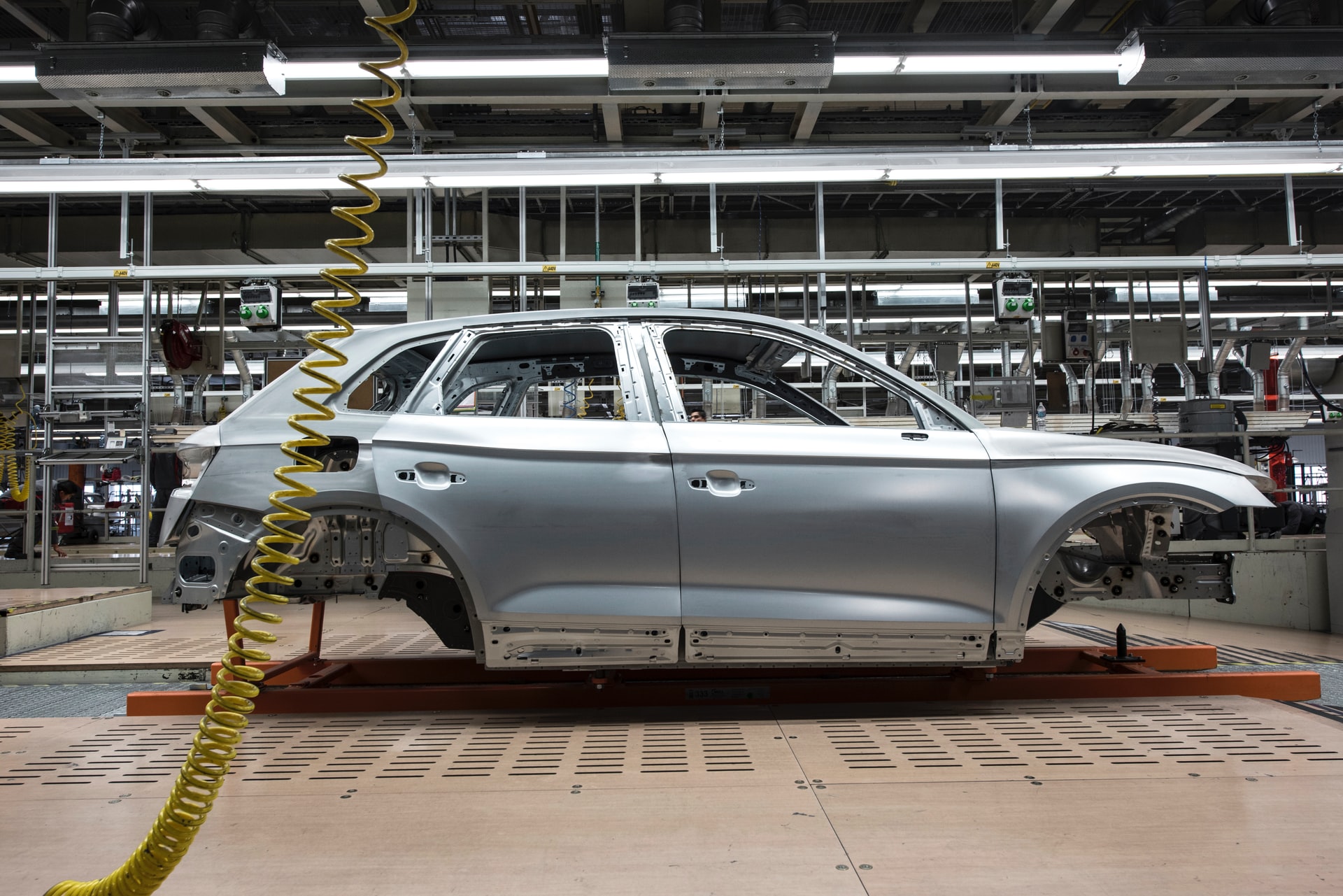
EU car production declines further, 2026 uncertain: Eurofer
The EU automotive industry, which consumes around 20% of European steel, will continue to reduce production this year, according to the European Steel Association – Eurofer.
Output will decline by 2.6% on-year in 2025, despite previous growth expectations, Kallanish notes. This would make 2025 the second year of decline in a row, after 2024 saw EU car production drop 9.7%.
Continued supply chain issues causing order delays, war-related disruptions, low consumer confidence and squeezed incomes due to persistent inflation and economic uncertainty have hampered activity. Nevertheless, there was a consistent improvement in EU car demand throughout 2023 and most of 2024, Eurofer notes.
“As a result, last year, new passenger car registrations rose slightly (+0.8%), reaching around 10.6 million units – still approximately 2.4 million units below pre-pandemic levels (13 million units in 2019),” the association says.
Spain continued to show positive market conditions (+7.1%). In contrast, declines were observed in France (-3.2%), Germany (-1%), and Italy (-0.5%).
According to the association, after a short-term recovery against the background of a low base of the past years, auto production has gone down again in 2025 due to a number of factors. The key ones are weak consumer demand, high inflation, falling real incomes and uncertainty around electric vehicles (EVs) and future environmental standards.
“The sector is particularly negatively affected by instability in foreign trade: new tariffs on European car imports announced by the US are creating additional pressure on the industry,” Eurofer observes. “In addition, the EU market is facing increasing pressure from Chinese EV manufacturers, while European companies’ own investments in this segment are being held back by a lack of charging infrastructure and regulatory uncertainty.”
A full recovery in global trade and external demand from major markets – particularly the US and China – now appears to be unlikely, given escalating global trade tensions, especially in light of US tariffs, the association adds.
A recovery in automotive sector activity – by 1.9% – is possible in 2026 but production volumes will remain far from 2019 levels. A return to stable growth is only possible if the macroeconomic situation improves, consumer confidence rises and trade tensions ease, Eurofer concludes.
Svetoslav Abrossimov Bulgaria
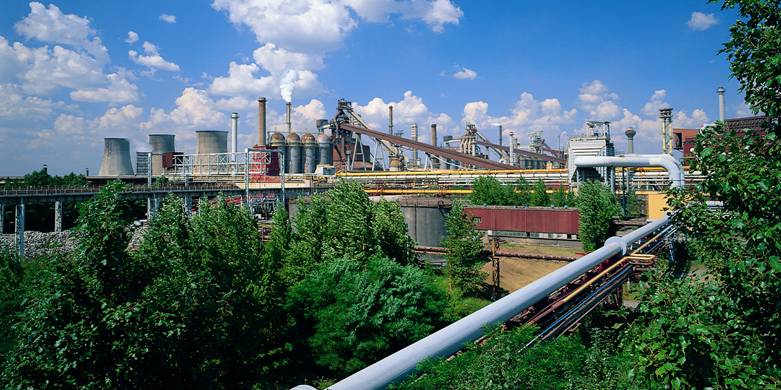
Steelmakers cannot bear decarbonisation cost alone: ArcelorMittal Poland
ArcelorMittal Poland (AMP) says it recognises the need to decarbonise but, amid the high costs of transitioning to new technologies and pressure from low-priced steel imports, European steelmakers cannot bear the costs of this process alone.
The steelmaker was reported earlier this week to be in talks with the Polish government over PLN 1 billion ($268.5 million) in state aid for the modernisation of a blast furnace at the Dabrowa Gornicza steelworks.
The firm did not comment on the sum of state aid being discussed or what work exactly will be done on its production units. However, it said previously it plans to transition the plant away from the blast furnace production route to EAF steelmaking in stages, with long products the first to be produced via EAF.
Decarbonisation “means building new installations and implementing new steelmaking technologies … in a challenging market: the European steel sector already has to bear costs that our competitors in third countries do not,” AMP tells Kallanish. “For example, Europe has the world’s highest energy costs, and the EU ETS – Emissions Trading System – operates only in Europe.”
“This market environment translates into a rapid increase of low-priced steel imports into Europe. Imports from outside the EU, where production costs are significantly lower, already satisfy almost 30% of apparent steel consumption in Europe,” it continues. “Against this backdrop, no steel producer can bear the costs of the transition to low carbon-emissions steelmaking alone.”
The firm is also calling for the reduction of energy costs and effective mechanisms to prevent carbon leakage. It has urged the European Commission to implement quickly the measures outlined in the Steel and Metals Action Plan.
Were AMP to receive state aid for decarbonising its production process, it would be the first steelmaker in Poland to do so. The country’s other producers are all electric arc furnace-based. One of them, Huta Czestochowa, is in the process of being acquired by Poland’s defence ministry. The country is working on a steel industry strategy.
AMP produced 3.8 million tonnes of crude steel in 2024, up from 3.1mt in 2023, but down from 4.8mt in 2019, pre-Covid.
Adam Smith Poland

Italian government reveals Piombino coil mill programme agreement
Metinvest Adria, the entity managing the new Metinvest-Danieli Piombino flat steel mill in Piombino, has achieved a technical consensus on the programme agreement with Italian authorities, Kallanish learns from the Ministry of Enterprise and Made in Italy (MIMT).
A meeting was held in Piombino this week, involving Metinvest Adria, MIMT, the Tuscany region, the city council, the unions, and the port authority, to present the details of the agreement to the unions. MIMT indicates the signing will occur once the unions reach consensus on all terms.
However, a union source claims there are no updates in the programme agreement regarding JSW and rail mill modernisation. He expresses concerns regarding the future employment of the 1,300 workers at Jindal Steel Italy. Another meeting with unions concerning the entire Piombino hub is scheduled for 19 June. The finalisation of the programme agreement is set to occur on 10 July in Rome.
The document consists of 12 articles. It encompasses several essential elements, including the industrial plan, land and port area concessions, future environmental initiatives, energy procurement strategies, state support, and the prospective management of the company, while also acknowledging the project’s public interest.
The agreement indicates the mill is projected to produce approximately 2.7 million tonnes/year of coils, with a total investment amounting to €2.5 billion ($2.8 billion). This encompasses €324 million in state subsidies managed by state financial entity Invitalia.
“We have created a text that is innovative compared to previous agreements by inserting concrete guarantees for Piombino, its citizens and its workers … This project is a concrete act of ‘industrial policy’ that looks to the future of the territory and the country, bringing together public and private interests in an open discussion with the social partners,” the Tuscany region and Piombino city council are quoted as saying jointly by unions.
Natalia Capra France