

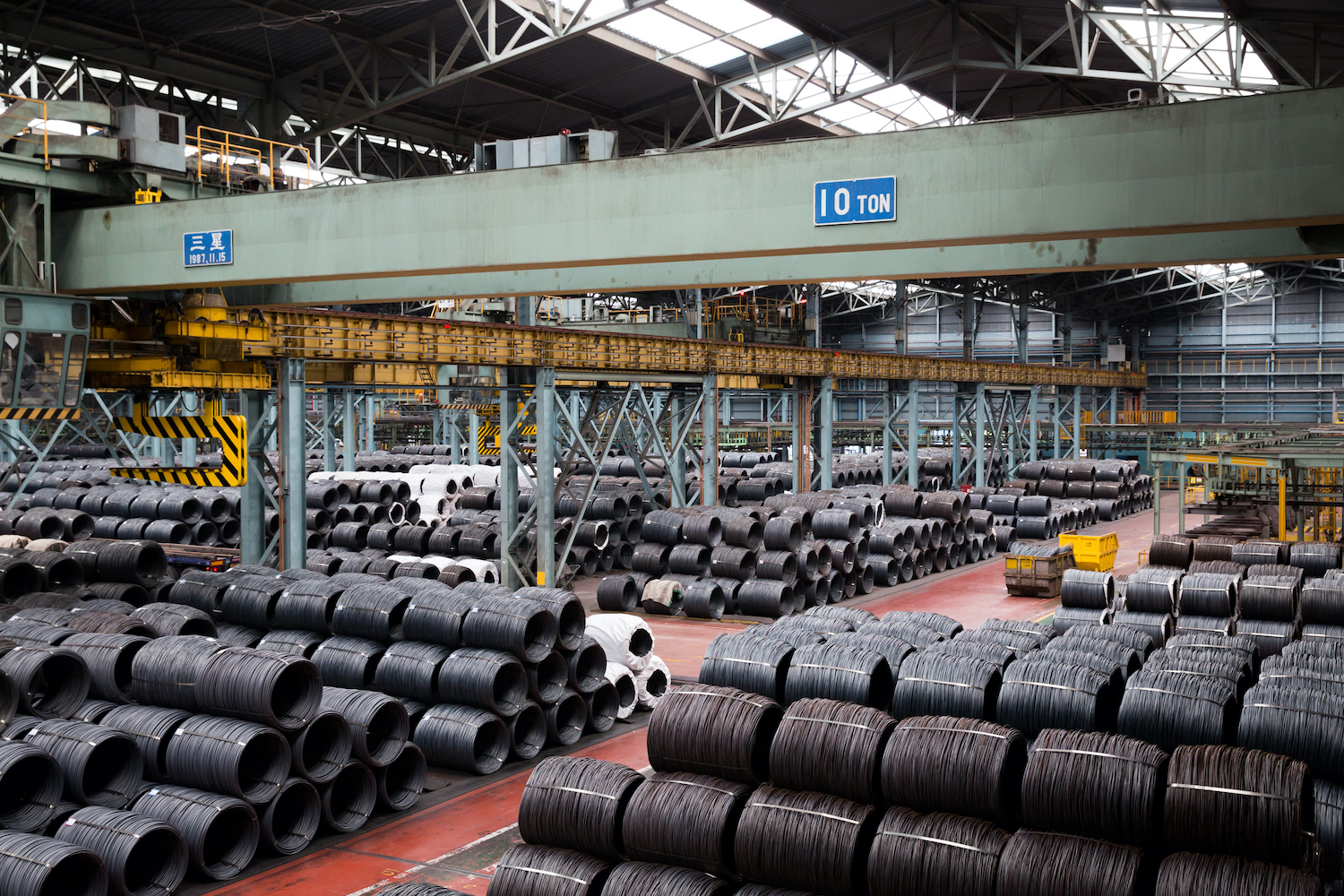
Polish domestic long steel prices stable amid muted demand
Steel rebar and wire rod prices in Poland remained unchanged in the week to Friday July 11, with sources attributing the market mood to a quieter construction sector and the current seasonal slowdown.
“The market is very slow right now because there is not much demand from the construction sector, as well as new investments, which are driving down prices,” a distributor source said.
In the week to Friday, Polish mills were heard offering wire rod around 2,700-2,800 zloty ($741-769) per tonne CPT, the same as the week before.
But market sources estimated the workable price for wire rod at 2,680-2,720 zloty per tonne CPT.
Fastmarkets’ price assessment for steel wire rod (drawing quality), domestic, delivered Poland, was 2,680-2,720 zloty per tonne on Friday, unchanged week on week.
Polish domestic prices for steel rebar were also stable in the week to Friday, trade sources told Fastmarkets.
Offers were heard at 2,480 zloty per tonne CPT in the week, compared with 2,480-2,500 zloty per tonne CPT previously.
Market participants estimated the tradable price for rebar at 2,480-2,500 zloty per tonne CPT on Friday.
Consequently, Fastmarkets’ weekly price assessment for steel reinforcing bar (rebar), domestic, cpt Poland, was 2,480-2,500 zloty per tonne on Friday, also unchanged week on week.


European HRC prices flat amid slow demand, wide offer range; mills resist further cuts
European hot-rolled coil prices were largely flat amid subdued trading on Monday July 14, with mills resisting further price reductions, sources told Fastmarkets.
The range of offers for HRC in northern Europe remained wide, with some suppliers offering as low as €540-550 ($631-643) per tonne ex-works to fill gaps in order books before summer stoppages. Other integrated mills were aiming for higher prices at €570-580 per tonne ex-works.
One supplier reported small-tonnage deals done at €570 per tonne ex-works.
A buyer reported a bid at €530 per tonne ex-works.
But several sources pointed out that recently, even the most aggressive sellers have started rejecting lower bids.
“Looks like the order book situation is somewhat improved and there are hopes for [HRC] prices rebounding in September, so buyers who believe in trend reversal prefer to book [HRC] now,” one mill source told Fastmarkets.
Buyer sources estimated the workable price level for HRC in the region at €530-550 per tonne ex-works.
Fastmarkets’ calculation of the daily steel HRC index domestic, exw Northern Europe was €546.25 per tonne on Monday, unchanged since Friday.
The Northern European index was down by €5.00 per tonne week on week and by €47.75 per tonne month on month.
There was still no clear price direction for the post-summer market in light of slow consumption and fierce competition between suppliers.
Meanwhile, the Italian market was also slow, with very limited tonnages traded.
Fastmarkets’ daily steel HRC index domestic, exw Italy was calculated at €522.50 per tonne on Monday, down from €525.83 per tonne on Friday.
But the Italian index was down by €4.17 per tonne week on week and by €57.50 per tonne month on month.
Offers from local mills were reported at around €550-560 per tonne delivered, which nets back to around €535-€550 per tonne ex-works.
Local buyers estimated the achievable price for HRC at €510-530 per tonne ex-works on Monday.
Meanwhile, import prices were stable day on day.
Indonesia-origin HRC with September shipment was offered at €450 per tonne CFR to Italy.
From India, HRC was on offer at €510 per tonne CFR. In the week to Friday July 11, sources reported a transaction for 20,000 tonnes of India-origin coil at €495-510 per tonne CFR both to Italy and to Northern Europe.
From Turkey, HRC was on offer to Italy at €480-500 per tonne CFR duty paid.
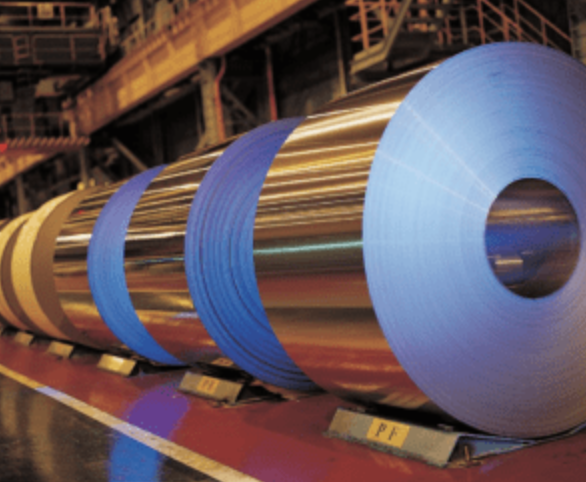
Tata Steel UK launches research initiative to develop AI-driven low-carbon auto steel
Tata Steel UK has launched a research initiative named ADAPT-EAF (Accelerating the Development of Automotive and Packaging steel Technology for Electric Arc Furnace production) to create a new generation of high-performance steel products from electric arc furnace (EAF) technology, aimed at revolutionizing automotive body parts and packaging solutions like food cans, a company statement said on Monday, July 14.
ADAPT-EAF brings together Tata Steel UK and University of Cambridge, Imperial College London, and the University of Warwick, reflecting Tata Steel’s vision of leading green steel innovation in the UK, the statement said.
The announcement comes close on the heels of Tata Steel UK commencing ground breaking for its new EAF at its Port Talbot steel mill.
As the UK steel industry shifts toward EAF processes, ADAPT-EAF will tackle a critical challenge related to controlling residual elements in high-recycled-content steel, which can influence the quality and performance of steels used in automotive and packaging applications, the company said.
The project will develop an AI-powered platform to accurately predict how various scrap materials affect steel quality and processing. This digital tool will be combined with rapid alloy prototyping and testing to generate vital data and design new steel grades optimized for EAF production, it added.
Furthermore, Tata Steel UK and its academic partners will build a comprehensive digital and experimental platform to design innovative, low-CO₂ steel products that can be manufactured in the UK, it said.


EUROMETAL urges practical rules of origin to align with climate goals and steel industry needs
EUROMETAL, the voice of Europe’s steel distribution and service sector, has participated in the European Commission’s Implementation Dialogue on Rules of Origin (RoO), hosted in Brussels by the Directorate-General for Taxation and Customs Union (DG TAXUD) and chaired by Commissioner Maroš Šefčovič, who is responsible for EU trade and economic security.
The dialogue gathered key stakeholders to modernize and simplify the EU’s RoO framework, which is becoming central to trade defense, climate policy (including CBAM), and market access strategies.
EUROMETAL’s core demands
During the event, EUROMETAL president Alexander Julius emphasized the importance of practical, harmonized, and sector-specific RoO rules that reflect industrial realities. According to his recommendations, RoO should align with new climate and circular economy goals, including CBAM and the definition of “green” steel, practical rules should be developed for recycled content, “melted and poured” criteria, and value-added processing, digitization tools should be interoperable and SME-accessible, and origin-based restrictions for steel derivatives should be introduced to close trade defense loopholes.
The European Commission’s RoO reform agenda
Commissioner Šefčovič highlighted upcoming reforms, noting that RoO must be simplified, digitized, and tailored to specific industries. He stated that inconsistent enforcement across member states undermines the system’s effectiveness, emphasizing that harmonizing RoO application is essential to restoring fairness and reducing internal market barriers. Tools such as a European Data Hub, digital product passports, and AI-driven compliance platforms are being developed, with a focus on SME accessibility. According to Šefčovič, RoO will play a larger role in the establishment of CBAM, safeguards, and anti-circumvention measures, and a new EU steel safeguard framework is under development, with updates expected by late summer 2025. The EU will work closely with the US, particularly regarding global overcapacity, he added.
Next steps for the steel industry
The Commission has invited participants to submit sector-specific recommendations to shape the final reform package. EUROMETAL has pledged to maintain close engagement with its members, European policymakers, and trade and customs authorities to ensure that steel distribution and service sector priorities are fully reflected – especially on derivatives and circular economy compatibility.

Green steel premiums steady in Europe amid weak demand and regulatory uncertainty
Green steel premiums were stable in Europe over the past week amid tepid demand while the industry awaits regulatory developments.
Fastmarkets’ methodology defines European green flat steel as “steel produced with Scope 1, 2 & 3 emissions at a maximum of 0.8 tonnes of CO2 per tonne of steel.”
During the assessment week, premiums for steel meeting these criteria were indicated at €200-300 per tonne from major European suppliers – they have been largely stable over the past few months.
Two supplier sources said they would be willing to knock off no more than €20-30 per tonne from their offers of €200 per tonne to around €170-180 per tonne.
For larger volumes of 3,000 tonnes or more, buyer sources said green steel could be booked with lower premiums of around €120-130 per tonne.
No fresh trades were reported during the assessment week.
Fastmarkets’ weekly assessment of the green steel domestic, flat-rolled, differential to HRC index, exw Northern Europe was an unchanged €130-180 per tonne on Thursday July 10.
Fastmarkets’ assessment of the flat steel reduced carbon emissions differential, exw Northern Europe was €40-60 per tonne on Thursday, also stable week on week.
For steel produced in blast furnaces with reduced carbon emissions of 1.4-1.8 tonnes of CO2 per tonne of steel, premiums were indicated at €40-70 per tonne during the assessment week. Buyers’ estimates of tradeable values were €20-60 per tonne.
A deal for flat steel with 1.5 tonnes of CO2 emissions was reported at a premium of €50 per tonne during the week.
Overall, sources continued to report that demand for low-carbon steel was limited and irregular throughout the assessment week.
“Producing green steel ought to be competitive but the high production costs make it unfeasible,” a mill source in Northern Europe told Fastmarkets. “Passing those costs on to end users is extremely difficult in the current economic climate.”
“We need to see how CBAM [Carbon Border Adjustment Mechanism] is phased in starting 2026 – that might drive some demand [for green steel] as well,” a buyer source said.
On July 2, the European Commission opened a public consultation on the Carbon Border Adjustment Mechanism (CBAM), seeking to strengthen the framework and address any potential loopholes. The consultation is open until August 26
The European Commission also plans to present legislative proposals amending the CBAM in the fourth quarter of 2025.

Steel rebar producers in Italy see price rise on higher costs, demand
Steel rebar producers in Italy were heard to be looking for higher prices in the week to Wednesday July 9, amid increased energy costs and improved demand, Fastmarkets understands.
Fresh offers from mills in the north of the country were heard in the range of €260-275 ($304-322) per tonne ex-works base price versus €240-250 per tonne last week, which would correlate to an effective price range for 8-16mm bars estimated by Fastmarkets at €530-545 per tonne.
A trading source and a mill source said that recent deals were agreed at €240-250 per tonne base price, which would net to €510-520 per tonne ex-works.
“[The mills] are still delivering old orders at lower prices of €240-250 per tonne [ex-works base], but the trend is now up ward. Maybe they will try a new increase before the summer holidays,” the trader said.
“Demand is good these days. Customers know that in July prices usually rise and remain high into September,” he added.
In the south of Italy, mills were reported to increase offers to €290 per tonne ex-works from a minimum of €270 per tonne ex-works base a week earlier. That would result in an effective price of €560 per tonne ex-works, but no major tonnages were heard sold at this higher level.
Fastmarkets’ weekly price assessment for steel reinforcing bar (rebar), domestic, exw Italy, remained at €510-550 per tonne on July 9.

Prices edge higher in muted European HRC market
Business continued to be sluggish in European HRC market on Friday July 11, amid seasonally weak demand and despite prices edging higher, there is a widespread expectation that prices will fall, sources told Fastmarkets.
Fastmarkets’ calculated its daily steel hot-rolled coil index domestic, exw Northern Europe at €546.25 ($639.87) per tonne on Friday, up by just €1.77 per tonne from €544.58 per tonne on July 10.
Official offers from mills in the region were heard at €560-570 per tonne ex-works, but buyers said that level was unrealistic and estimated the workable price at closer to €530-550 per tonne ex-works.
A stockist told Fastmarkets that fellow suppliers were keeping their stocks low and had no intention of replenishing them significantly given the generally low demand in the region and the uncertainty over the future direction of prices after the seasonal slowdown.
The stockist said restocking will be minimal after the summer break, which, in the best-case scenario, would help to keep prices stable.
In Italy one of the key producers was heard targeting €540 per tonne ex-works for HRC, while buyer price ideas were closer to €510-530 per tonne ex-works, depending on tonnage, with no major deals reported to Fastmarkets on Friday.
Fastmarkets’ daily steel hot-rolled coil index domestic, exw Italy was calculated at €525.83 per tonne on Friday, up from €520.42 per tonne on Thursday.