


Shifting paradigms: AI reinvents established industry processes
Advances in artificial intelligence, especially agentic capabilities, have the potential to transform chemicals innovation and manufacturing fundamentally, enabling greater efficiencies.
The use of artificial intelligence in chemical research and development is no longer a future concept but a reality that helps companies to accelerate the discovery of new materials. Chemical companies are also increasingly integrating AI into every aspect of their operations while looking for partnerships with academic institutions and technology companies that would enable them to advance their AI capabilities.
AI is rapidly becoming a cornerstone of materials innovation, but significant challenges around computational speed, intellectual property security and trust are tempering its full-scale adoption, according to the findings of the recently published Accelerating Discovery: AI Trends in Materials R&D Report by Matlantis Corp. (Tokyo).
Matlantis is a company that develops tools and services using AI and computational science to advance materials development.
The report is based on a survey that includes companies from the energy, chemicals, semiconductors and automotive industries, and indicates a shift in how these firms approach innovation, with almost half of all R&D teams now using AI in some capacity.
Meanwhile, AI and machine-learning methods now drive an average of 46% of all simulation workloads, signaling a move from experimental trials to routine application, the report said.
Faster discovery is the primary catalyst for AI adoption, with 94% of survey respondents reporting that R&D teams have been forced to abandon promising projects due to prohibitive time requirements or computational resource constraints, the report said.
This pressure has created a strong willingness among researchers to embrace new, faster methodologies, even if it means a slight trade-off in precision, it said. About 73% of respondents would accept minor deviations in accuracy in exchange for simulations that run 100 times faster, it added.
“Nearly every team is experimenting with AI to push past bottlenecks, and they’re hungry for solutions that deliver results in days, not months, securely and accurately,” said the CEO of Matlantis, Daisuke Okanohara, cited in the report.
In addition, the financial incentive is clear, with organizations reporting an average saving of approximately $100,000 for every R&D project by leveraging computational simulation over purely experimental work, according to the report.

GRAF: Two waves of innovation change R&D.
The adoption of AI is not a general replacement of established techniques but rather the evolution of a hybrid workflow, the report said. R&D teams are blending conventional simulation methods with new AI-powered tools, with 42% of teams currently using AI-native platforms and another 34% in the process of piloting AI-augmented tools, it said.
“By harnessing AI and simulation together, we can explore materials faster than ever imagined … We see a future where breakthrough materials [for energy, climate, health] are discovered in a fraction of the time,” Okanohara said.
This hybrid approach extends to the underlying computer infrastructure, with the report finding no single dominant environment for running these complex simulations. Workloads are distributed across a mix of on-premises high-performance computing (HPC) clusters, private clouds, public clouds and hybrid cloud models, reflecting a flexible and diversified IT strategy, it said.
Significant barriers nevertheless remain, with security and intellectual property (IP) protection universal concerns, the report said. All survey respondents expressed caution about using external or cloud-based tools for sensitive research, the report added.
Trust in the output of AI-driven simulations is also still developing, with only 14% of respondents feeling “very confident” in the results generated by AI-accelerated tools, pointing to a need for greater validation, transparency and explainability in AI models, it said.
AI-driven R&D
AI is ushering in a new era for the chemical industry, with two distinct waves of innovation changing the way research and development is being carried out, according to Jeff Graf, global head of business development at SandBoxAQ (Palo Alto, California).
The first wave centers on large language models (LLMs) such as ChatGPT that are increasingly being adopted by chemical companies, Graf said. Many organizations are now developing proprietary, in-house LLMs trained on decades of historical data, including digitized lab notebooks and experimental records, he said. This approach effectively creates a “super scientist” — an AI system that can access and synthesize the collective knowledge of the organization, he added.
This does not represent new scientific discovery, but it revolutionizes knowledge management by making years of research easily searchable and actionable, accelerating scientific workflows, Graf said. Despite the clear benefits, adoption across the sector remains uneven, with some companies still in the process of digitizing and integrating their data, he said.
A second, more disruptive wave of AI is now emerging, mirroring the transformation seen in the pharmaceutical industry following the introduction of AlphaFold, he said. Unlike LLMs, this form of AI goes beyond summarizing existing knowledge, Graf said. It can model and understand complex chemical and biological systems, enabling new scientific discoveries, he added.
AlphaFold, an AI system developed by Google DeepMind that predicts a protein’s 3D structure from its amino acid sequence, has enabled pharma companies to design proteins de novo, fundamentally altering R&D strategies and fostering new partnerships focused on protein engineering, Graf said. “This shift has yet to fully materialize in the chemical sector, but recent developments suggest a similar transformation is imminent,” he said.
SandboxAQ emerged in 2022 as an independent, growth capital-backed company from Alphabet Inc. (Mountain View, California), the parent company of Google LLC (Mountain View). SandboxAQ focuses on the intersection of AI and quantum technology.
SandboxAQ is leveraging advanced AI models, building on the work done at Alphabet under its “moonshot” initiatives program, Graf said. The company has addressed earlier limitations in advanced simulation by enhancing the underlying physical models, incorporating more accurate density functional theory (DFT) calculations and expanding the dataset to include commercially relevant materials such as iron, cobalt and lithium, he said.
The result is a tool designed for industrial discovery, enabling companies to explore chemical space and identify new catalysts and materials with unprecedented speed and accuracy, he added. The public release of these advanced models marks a pivotal moment for the industry, “democratizing” access and fostering collaborative innovation, Graf said.
As AI-driven R&D becomes more sophisticated, companies that embrace these technologies are poised to lead the next wave of chemical innovation, whether in carbon capture, ammonia synthesis or other transformative applications, Graf said. Companies that continue to rely solely on traditional high-throughput laboratory screening risk falling behind, echoing the paradigm shift seen in pharma, he added.
AI for project delivery
Accenture PLC published two reports in its “Powered for Change” research series that focused on the evolving landscape of industrial decarbonization and how best to address it. The recently published second report explores how AI-driven solutions can be deployed consistently to support companies in heavy industries such as chemicals to adopt a multigenerational approach to their decarbonization efforts.
Reducing the unit cost of infrastructure required for decarbonization is a common challenge across heavy industries, including chemicals, power generation and green hydrogen production, according to Rob Hopkin, net-zero infrastructure lead at Accenture.

COLEGRAVE: AI policy aims to foster culture of trust.
Whether constructing new transmission lines, power plants or foundational infrastructure such as concrete and piling, the opportunity to accelerate delivery and improve capital efficiency lies in shifting from a project-centric to a portfolio-based approach, Hopkin said.
Many chemical companies continue to organize their capital project delivery around individual, standalone projects, with dedicated teams and stage-gate processes guiding investment and execution from design to commissioning, he said.
This approach is familiar, but it often results in bespoke solutions that limit opportunities for replication, whether in design, supply chain partnerships or team expertise, which restricts the learning and scale effects that can drive significant efficiencies in capital project execution, he said.
By viewing each project as part of a multigenerational investment portfolio, organizations can maximize repeatability across concepts, designs, supply chain relationships and delivery teams, Hopkin said. This institutionalizes best practices and lessons learned, enabling continuous improvement and driving down costs and timelines with each successive generation of projects, he said.
While this transition poses organizational challenges, the value gains can be substantial, Hopkin said. Other sectors such as shipbuilding have demonstrated the benefits of this approach, where building a series of ships as a single program results in dramatic cost reductions and supply chain optimization by the final vessel, he said.
The principles of standardized, multigenerational infrastructure delivery are highly relevant to the chemical industry, particularly among specialty chemical producers, said Serge Lhoste, global chemicals strategy lead at Accenture.
A typical specialty chemical company may operate several production sites worldwide, and despite similarities in technology across business units, operational commonality is often lacking even within the same business unit, Lhoste said. This fragmentation presents a significant opportunity for improvement, he said. By harnessing AI and embracing repeatable, standardized processes across multiple project cycles, chemical companies can drive substantial gains in cost efficiency at each site, he said. The focus is on leveraging digital tools to identify best practices, optimize operations and enable consistent performance improvements across the enterprise, Lhoste said.
Hopkin added that AI is increasingly recognized as a powerful tool for enhancing repeatability and efficiency in capital project delivery within the chemical sector.
Traditionally, engineering teams select project concepts and carry out front-end design, but this process often leads to divergence from standardized approaches due to a series of complex, incremental decisions, Hopkin said. Such variations can undermine the benefits of replication, making it difficult to identify and assess their impact, he said.
AI offers a solution by analyzing extensive engineering documentation, pinpointing deviations from established standards, and providing visibility into where and why such divergences occur, Hopkin said. This enables organizations to make informed decisions about whether these variations are justified, balancing the advantages of standardized equipment and buying power against potential operational gains from customization, he said.
AI-driven insights facilitate optimization across portfolios, ensuring that repeatability and operational performance are maximized, he added.
AI is also set to revolutionize end-to-end processes, particularly risk management, Hopkin said. Effective risk identification and mitigation are critical to project success, yet current practices are hampered by fragmented data and complex documentation, he said. AI can integrate information across the engineering, scheduling, cost and supply chain domains, rapidly connecting data points to surface risks earlier and providing a richer understanding of their implications, he added.
Existing technologies already analyze historical risk registers and optimize schedules to recover from delays, Hopkin said. The next step is integrating these capabilities through agentic AI, orchestrating the entire risk-management process and compressing the time from risk identification to mitigation, he noted. AI eliminates cognitive biases and siloed communication, enabling seamless access to comprehensive project data and enhancing the quality of decision-making, he said.
Integrating AI in chemistry
Specialty chemicals producer Syensqo SA is integrating AI into its operations. The company has established a dedicated team tasked with advancing AI across the organization. Syensqo.ai has adopted a bottom-up approach over the past two years, soliciting input from across the company and evaluating more than 600 potential use cases for AI deployment, according to Vincent Colegrave, head of AI at Syensqo. “This collaborative effort has enabled the team to identify and test promising applications while concurrently defining several strategic priorities,” Colegrave told CW.
The development of SyGPT, Syensqo’s proprietary internal chatbot launched in June 2024, is such an initiative. SyGPT is designed to foster trust and understanding of generative AI among Syensqo’s employees, Colegrave said. It reflects the company’s commitment to confidentiality and security, which are core values for an IP-driven business, he said. “The chatbot has been made accessible to all staff, enabling widespread experimentation and feedback while ensuring that no employee is left behind in the adoption of new technologies,” Colegrave added.
Meanwhile, Syensqo has introduced its first AI policy, which was developed in close consultation with its European works council and labor unions, he said. Key principles of the policy, now approaching its first anniversary, include maintaining a human-in-the-loop approach to decision-making and a firm stance against using AI for employee surveillance, Colegrave said. “These measures are designed to foster a culture of trust and transparency as AI becomes increasingly embedded in Syensqo’s operations,” he said.
Syensqo’s AI journey is not solely about technology, Colegrave said. It is also viewed as a strategic imperative requiring attention to modify management, adoption and training, he said. Building on this foundation, the company has pursued additional strategic use cases and partnerships, he added.
Syensqo signed a memorandum of understanding with Microsoft last year that is focused on the integration of AI into scientific research. As one of the first partners of Microsoft’s Discovery platform, Syensqo is pioneering agentic AI workflows that leverage advanced agents to analyze publications, patents and internal data, streamlining the process of identifying high-impact research targets, Colegrave said.
Parallel efforts include the deployment of machine-learning models to accelerate the development of new polymers, with successful implementations reported in several business units, he said. “The Discovery platform is expected to scale these capabilities across Syensqo’s research operations, though the company acknowledges that adoption and impact will take time, requiring ongoing engagement and feedback from its diverse scientific community,” he said.
Syensqo is also applying AI to its commercial engine through its SYGROW solution that uses generative AI to identify promising leads and uncover blind spots while aggregating data from multiple systems to produce comprehensive customer reports, Colegrave said. The solution was developed in collaboration with the company’s sales team, and it has been able to streamline internal collaboration and enhance the efficiency of commercial operations, he said.
Syensqo is also exploring AI-driven workflows to optimize maintenance, with a focus on operational uptime and sustainability, Colegrave said. “Initial results have been encouraging, and the company is now evaluating opportunities to scale these approaches more broadly,” he said.

LIN: Redefining chemical synthesis.
Merck KGaA is another chemical company using AI as a “critical enabler” across its chemicals and materials R&D activities, it said. AI is not just a tool for efficiency, but a prerequisite for solving complex scientific challenges and accelerating innovation across the company’s business sectors, Merck told CW.
Merck uses AI to accelerate the discovery and development of next-generation drugs and materials while harnessing data and AI to enhance product quality, improve manufacturing yields and strengthen supply security, the company said. “AI is helping us move from an era of discovery to one of engineering — particularly as we leverage the convergence of chemistry, AI, and high-performance computing. This is central to deliver next-generation materials and chemicals faster and more effectively than traditional approaches allow,” Merck said.
AI-focused partnerships
Partnerships are one of the main ways in which chemical companies are able to advance their AI capabilities. Syensqo announced a partnership with Mohammed VI Polytechnic University (UM6P; Benguerir, Morocco) in October 2025 to advance AI within the chemical industry.
The collaboration is designed to foster creative approaches to technology development, leveraging the expertise and fresh perspectives of UM6P’s College of Computing and AI research teams, Colegrave said. “Recognizing the opportunity to bridge the gap between current capabilities and future ambitions, Syensqo and UM6P have jointly established an AI lab dedicated to exploring cutting-edge solutions,” Colegrave added.
The initiative aims to build a Syensqo-UM6P team, with recruitment efforts underway to attract young graduates and emerging talents who possess a strong understanding of core AI technologies and the scientific foundations central to Syensqo’s business, he said.
The core objective of the AI lab is to deepen Syensqo’s technological capabilities, particularly in transforming data into actionable knowledge, Colegrave said. The partnership will focus on foundational models and advanced scientific topics, with UM6P serving as a key collaborator in these specialized areas, he said.
Syensqo also plans to work with major hyperscale providers to ensure scalability and enterprise-grade implementation, while dedicating significant resources to fine-tuning and customizing solutions at the university level, Colegrave said. “Interest in the initiative has been robust, with students and professionals at UM6P eager to participate. The collaboration strengthens Syensqo’s presence in Morocco and opens doors to the broader African market. Morocco’s strategic geographic position enables effective engagement with Europe and the United States, offering a pragmatic approach to global expansion,” he added.
In addition, Syensqo is actively engaging with industry partners in China, a market recognized for its rapid technological advancement, Colegrave said. The company has initiated the formation of a dedicated team to evaluate opportunities and potential collaborations with leading institutions in the region, he said.
Discussions are ongoing, and Syensqo is taking a measured approach to ensure that it aligns with the right players within the local ecosystem, Colegrave said. “Syensqo adopts a pragmatic approach in navigating its evolving technological ecosystem, recognizing that advancements in AI are fundamentally shifting industry paradigms,” he said.

Meanwhile, in January 2026, Merck signed a memorandum of understanding with ChemLex Ltd. (Singapore) to explore collaboration to enhance the speed, efficiency and reproducibility of chemical research across early discovery and development workflows within Merck’s various business sectors.
ChemLex is a technology startup that has developed a platform for AI-driven automated chemical synthesis. The company’s high-throughput automated laboratory and AI technology platform will provide chemical synthesis and related services to Merck aimed at shortening Merck’s R&D cycle and optimizing resource allocation, Merck said.
ChemLex is building the world’s most advanced self-driving laboratory, which is an R&D engine that enables rapid, low-risk synthesis of molecules that were previously too costly or time-consuming to produce, according to Sean Lin, founder and CEO of ChemLex. “Our strategic priority is to redefine how chemical synthesis is done by creating a ‘new language of discovery,’ reflected in the name, ChemLex: Chemistry meets Lexicon. Through a high-throughput, AI-powered platform and a central AI scheduling system, we make the exploration of chemical space faster, safer, greener and more efficient, allowing scientists to focus on innovation rather than technical constraints,” Lin said.
ChemLex’s AI-powered chemical synthesis is designed to learn in the way human chemists do, but with active learning at machine scale, Lin said. It operates as a closed-loop system that integrates an automated wet lab with an AI-powered dry lab, allowing design, execution and learning to happen continuously, he said.
“In simple terms, the robots are the hands of the chemist, running experiments with speed and precision, while the AI is the brain, designing reactions, analyzing results and deciding what to do next. Each experiment feeds high-quality data back into the system, enabling the AI to improve, adapt and tackle increasingly complex chemistry over time,” Lin said.
This fundamentally changes how chemistry is done, he said. By combining automation with AI, ChemLex turns chemical synthesis from a slow, manual process into a scalable discovery engine, opening up vast areas of chemical space that were previously inaccessible and enabling faster innovation at lower cost across pharmaceuticals, materials and specialty chemicals, Lin said.

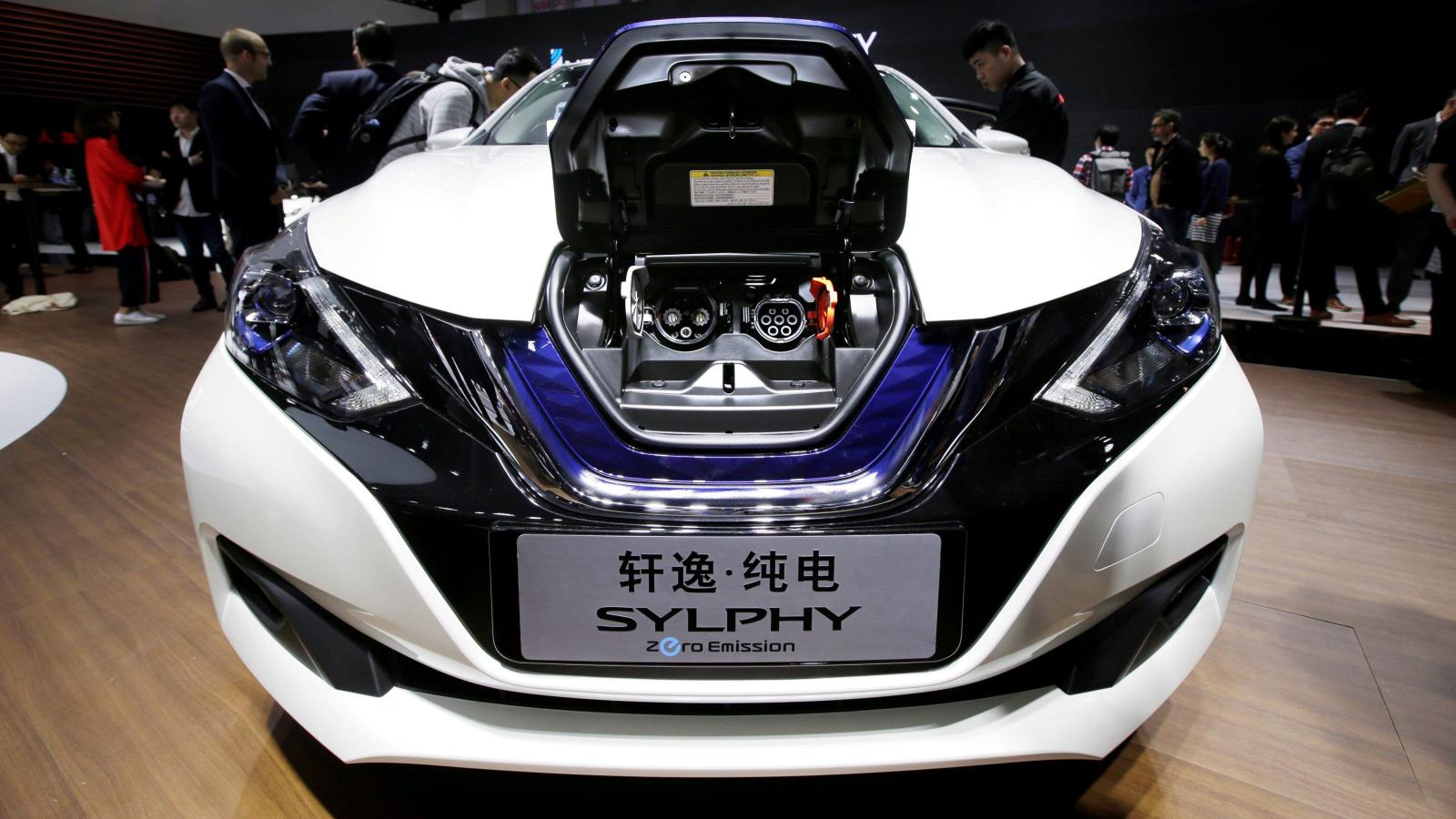
Automakers face Chinese competition, AI integration: Gartner
China’s pace of innovation, simultaneously managing the integration of artificial intelligence (AI), cybersecurity risks, and the complex transition to electric vehicles (EVs), will be major challenges for global carmakers in 2026, says consultancy Gartner, Inc.
The global automotive industry has entered 2026 in an environment of increasing uncertainty, with long-term predictability giving way to volatility. “Beyond 2025, marked by profit warnings, tariff shocks, and slower-than-expected adoption of EVs, the scale and long-term planning are becoming irrelevant due to geopolitical tensions, supply chain instability, and rapid technological change,” the organisation notes.
While many manufacturers see AI as a path to greater agility, Gartner warns of a looming reality check as companies realise their current AI capabilities offer less of a competitive advantage than expected, Kallanish notes.
“The automotive sector is going through a period of euphoria regarding AI, where many companies want to achieve disruptive value even before building solid foundations in artificial intelligence,” says Gartner vice president Pedro Pacheco. “This euphoria will eventually turn into disappointment, as these organisations will not be able to achieve the ambitious goals they have set for AI.”
“China will remain the most complex and crucial market, with experts arguing that success there increasingly determines global leadership,” the consultancy observes. “Strategies such as ‘Made in China, for China’, adopted by groups like Volkswagen and Audi, could become a model for others. Electric vehicles are expected to confidently enter the mainstream in Europe as battery costs fall and smaller, more affordable models emerge, supported by renewed incentives in markets like Germany.”
At the same time, most automakers will reconsider their supply chain reliance on China, even if deep technological interdependence makes complete decoupling unrealistic. Under these circumstances, Gartner concludes that the winners in 2026 will not be large companies, but rather those with agility, speed, and organisational adaptability.

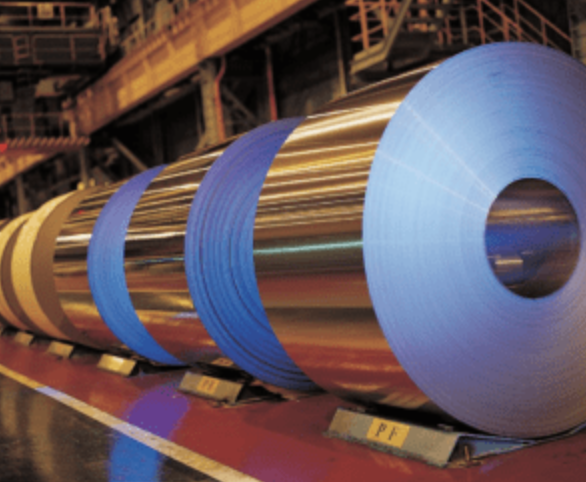
Tata Steel UK launches research initiative to develop AI-driven low-carbon auto steel
Tata Steel UK has launched a research initiative named ADAPT-EAF (Accelerating the Development of Automotive and Packaging steel Technology for Electric Arc Furnace production) to create a new generation of high-performance steel products from electric arc furnace (EAF) technology, aimed at revolutionizing automotive body parts and packaging solutions like food cans, a company statement said on Monday, July 14.
ADAPT-EAF brings together Tata Steel UK and University of Cambridge, Imperial College London, and the University of Warwick, reflecting Tata Steel’s vision of leading green steel innovation in the UK, the statement said.
The announcement comes close on the heels of Tata Steel UK commencing ground breaking for its new EAF at its Port Talbot steel mill.
As the UK steel industry shifts toward EAF processes, ADAPT-EAF will tackle a critical challenge related to controlling residual elements in high-recycled-content steel, which can influence the quality and performance of steels used in automotive and packaging applications, the company said.
The project will develop an AI-powered platform to accurately predict how various scrap materials affect steel quality and processing. This digital tool will be combined with rapid alloy prototyping and testing to generate vital data and design new steel grades optimized for EAF production, it added.
Furthermore, Tata Steel UK and its academic partners will build a comprehensive digital and experimental platform to design innovative, low-CO₂ steel products that can be manufactured in the UK, it said.


Vanilla Steel receives 7-figure funding from the EU for AI project
Vanilla Steel, a startup in the European steel market, is proud to announce the successful acquisition of a 7-figure subsidy from the Pro FIT program of the Investitionsbank Berlin. This milestone, supported by co-financing from the European Union, is aimed at the development of the innovative Smart Forecaster project.
The Smart Forecaster project leverages cutting-edge artificial intelligence to accurately predict future prices and demand for both prime and excess steel. This innovative tool is set to revolutionize decision-making processes within the steel industry by offering precise demand forecasts and pricing trends for a wide array of steel types.
“Even in the traditional steel industry, innovation is possible. At Vanilla Steel, we are committed to pushing the boundaries of technology to bring advanced solutions to the market” said Simon Zühlke, Managing Director at Vanilla Steel. “We are immensely grateful for the financial support from the EU, which enables us to embark on this transformative journey”.
Vanilla Steel aggregates spot steel supply from over 500 suppliers and spot steel demand from more than 3,000 buyers across Europe, facilitating efficient and transparent trading.
The Smart Forecaster project represents a significant leap forward in its mission to streamline and modernize the steel trading process.

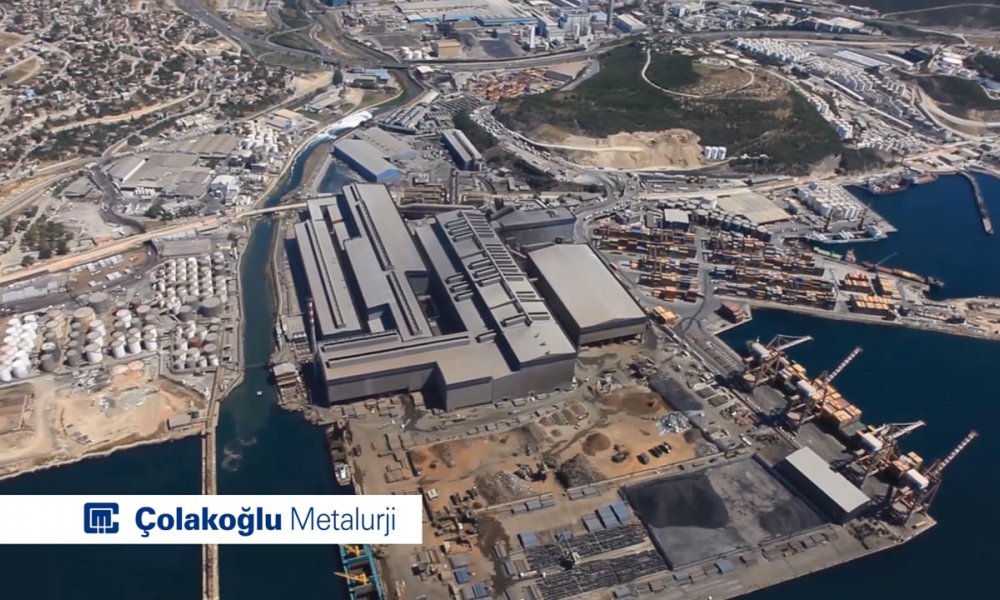
Çolakoğlu focuses on AI-supported sustainable steelmaking projects
Large Turkish steelmaker Çolakoğlu Metalurji has focused on artificial intelligence-supported sustainable production projects while increasing its renewable energy investments, Operations Director Ozgur Ozsoy said.
According to a July 5 statement from Çolakoğlu, citing Ozsoy’s comments to local magazine ST industry’s July edition, the company has new projects to reduce energy consumption and carbon emissions by using AI-connected digital solutions and new renewable energy investments.
“We have reached the final stage in our AI-supported process control project in our meltshop, which will ensure process stability in production,” Ozsoy said.
Çolakoğlu had achieved a heat size of 298.2 mt at its new vacuum degassing plant, Ozsoy said, adding that it has also reached a carbon content of 5 parts per million (ppm) after decarburization, a world record.
He did not, however, provide the company’s current carbon emission levels.
Çolakoğlu is currently able to produce special steels like IF grades, ULC grades and stainless steel at its plant.
Colakoglu commissioned its second reheating furnace in June to increase its hot-rolling capacity and meet demand more effectively.
The company currently has a bar output capacity of 1 million mt/year and an HRC production capacity of 4.5 million mt/year.
Platts, part of S&P Global Commodity Insights, assessed Turkish domestic HRC at $585/mt EXW on June 28, down 18.2% since the start of 2024.

Kaltenbach.Solutions receives “Top 100“ award as top innovator
Smart factory specialist Kaltenbach.Solutions from Freiburg has been recognized as a top innovator by an independent jury. The prestigious “Top 100” seal is awarded annually to particularly forward-looking medium-sized German companies. Kaltenbach.Solutions impressed the expert jury in all the categories tested and received the award for the first time.
The organizer compamedia has been conducting the “Top 100” innovation competition since 1993; innovation researcher Dr. Nikolaus Franke is the scientific director. Together with his team from the University of Vienna, he examines the innovative strength of the participating companies using extensive criteria from the categories of innovation-promoting top management, innovation climate, innovative processes and organizations as well as external orientation and innovation success. Kaltenbach.Solutions was particularly successful in the areas of innovation success, external orientation and top management, making it one of the top innovators in the size category of up to fifty employees for the first time. The official award ceremony will take place on June 28 as part of the German SME Summit in Weimar.
Kaltenbach.Solutions is delighted to receive this award, which it sees as confirmation of its continuous innovation work, and would like to thank all its customers and partners, without whom this success would not have been possible.
Kaltenbach.Solutions GmbH is a smart factory specialist with decades of experience in the steel industry. They develop innovative web- and AI-based industry solutions to increase performance in the area of operations.


The Birth of Industry 4.0 & Smart Manufacturing: A New Industrial Revolution
Industry 4.0 is the fourth industrial revolution, blending cyber-physical systems, IoT (Internet of Things), cloud computing and AI. It shifts from traditional manufacturing to “smart factories,” enabling self-optimization and decision-making, revolutionizing production efficiency and flexibility.
Key Components of Industry 4.0:
- IoT and Connectivity: Interconnected devices enable real-time data sharing, enhancing control and decision-making.
- Big Data & Analytics: Analysing data from machines leads to predictive maintenance, optimized processes and improved quality.
- AI & Machine Learning: AI-driven decisions optimize production and uncover hidden patterns.
- Additive Manufacturing (3D Printing): 3D printing revolutionizes design and minimizes material waste.
- Robotics & Automation: Smart robots collaborate with humans, enhancing precision and efficiency.
- Cybersecurity: Secure measures protect critical systems from cyber threats in a connected environment.
Benefits of Smart Manufacturing:
- Enhanced Efficiency: Optimized production, reduced downtime, streamlined supply chains.
- Quality Improvement: Real-time monitoring, data analysis, consistent product quality.
- Cost Reduction: Optimized operations, minimized waste, long-term savings.
- Customization & Flexibility: Rapid product adaptation, market responsiveness.
- Sustainability: Improved resource management, energy efficiency, reduced waste.
Impact on the Workforce: Industry 4.0 demands new skills. Human workers need a balance of traditional expertise and digital literacy. Adapting to advanced machines, data interpretation, and dynamic environments is crucial.
Challenges & Future Outlook: Industry 4.0 poses challenges—costs, data privacy, upskilling—but offers enhanced productivity and innovation. It spans sectors, promising boundless innovation.
In conclusion, Industry 4.0 transforms industries for efficiency, innovation and sustainability. Embracing change and technology is key for a connected industrial future.
