


Momentum fades in European HRC market amid lackluster demand
The European hot-rolled coil market was at a standstill on Tuesday September 9, with prices steady amid subdued trading, sources told Fastmarkets.
In Northern Europe, HRC prices have been stabilizing in recent days after suppliers managed to push through modest increased at the end of July and in early August. Since then, domestic prices have been broadly stable, with a second round of proposed increased unsuccessful so far.
“Momentum has stalled,” a buyer in Germany said. “[European suppliers] started with [HRC] offers at €620 per tonne delivered three weeks ago, stating [at the time that] it was not possible to [accept] a single euro less, but now [HRC is being sold] at €600 per tonne delivered.
“Demand is not strong enough to keep the momentum going,” the buyer said.
In Germany and the Benelux area, most buyers estimated the tradable level at around €570-580 per tonne ex-works, although one buyer estimated the workable price at €600 per tonne delivered (around €585 per tonne ex-works).
Offers for October-November delivery coil, meanwhile, stood at €600-630 per tonne ex-works. For December, one supplier was said to be aiming for €650 per tonne ex-works. But several market participants told Fastmarkets that that higher offers were “on hold” because of the lack of buying interest.
“We will see how the market develops. So far, uncertainty around the EU’s [Carbon Border Adjustment Mechanism] (CBAM) and new safeguards helped to push [HRC] prices slightly higher in Europe, but demand still slow, so a new round of increases is not happening,” a buyer in the Netherlands said.
Fastmarkets’ calculation of the daily steel HRC index, domestic, exw Northern Europe, was €577.92 per tonne on September 9, up slightly by €0.84 per tonne from €577.08 per tonne on September 8.
The Northern European index was down by €1.87 per tonne week on week, but was up by €2.29 per tonne month on month.
In Southern Europe, meanwhile, Fastmarkets’ daily steel HRC index, domestic, exw Italy was calculated at €549.38 per tonne on Tuesday, down by €1.04 per tonne from €550.42 per tonne on Monday.
The index was down by €0.62 per tonne week on week and by €1.87 per tonne month on month.
Italian buyers were taking cautious approach to new purchases, however, so local mills were also struggling to implement increases.
Offer prices for October delivery HRC were heard at €580-600 per tonne base delivered (€570-585 per tonne ex-works) on Tuesday, but this level was not sealed in deals, sources said.
Buyer estimates of the workable price came in at between €540 per tonne and €550 per tonne ex-works – in line with the most recent transactions.
One buyer source said that transactions at €550 per tonne ex-works were now “rare.”
“Italian mills are struggling to implement a second round of price increases, but they are facing strong resistance from buyers who remain deeply concerned about weak end-user demand,” a local buyer said.
The appetite for imported coil was also limited across Europe, mainly because uncertainty surrounding implementation of the CBAM and the potential for the early introduction of new safeguard measures are continuing to act as a brake on purchasing activity.
Offers from Turkey were reported around €520-540 per tonne CFR, including the EU anti-dumping duty, for late November arrival.
From India, offers were reported at €520-530 per tonne CFR for October-November shipment of HRC. And HRC from Indonesia was on offer at €490 per tonne CFR.

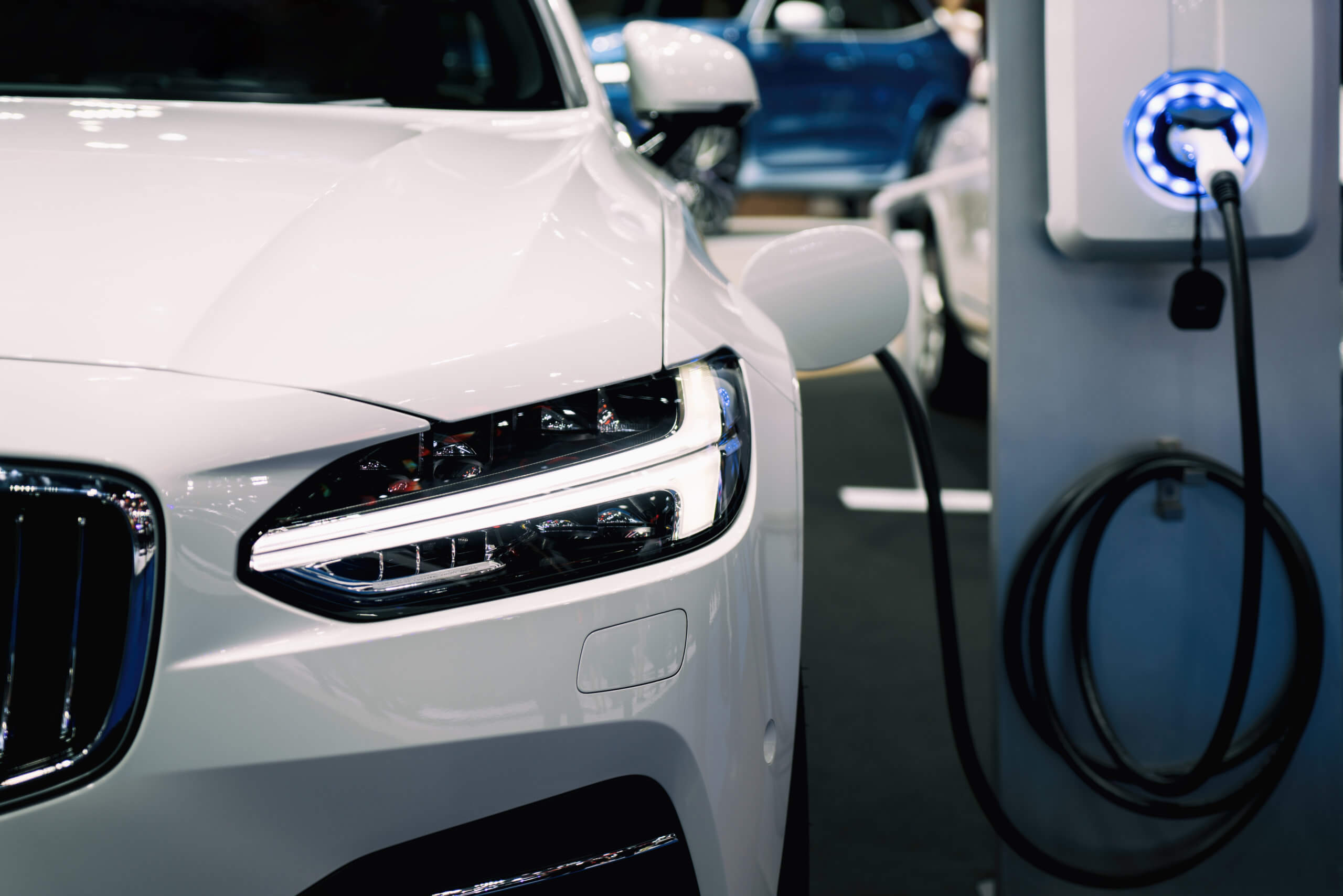
Emission target easing hurts Europe EV industry: T&E
Electric car sales in the EU are expected to number 2 million tonnes lower than previous forecasts between 2025 and 2027 due to the European Commission easing 2025 CO2 targets, averaging them over 2025-2027, the European Federation for Transport and Environment (T&E) points out.
This is despite positive market dynamics which are pushing electric sales. Battery costs are set to fall by 27% between 2022 and the end of this year, and are set to decrease by another 28% by 2027 compared to 2025 levels, T&E forecasts. Charging infrastructure has been deployed on 77% of the EU core highway network and all Member States have already met or surpassed the number of public charging points required by the EU’s 2025 target.
The EU is under pressure from carmakers to weaken their 2030 and 2035 emissions targets. Earlier this year, the Commission said compliance would be measured over a three-year period from 2025 to 2027, rather than a single-year threshold.
“OEMs are painting a terrible picture because they want their targets weakened. But the reality is that electric car sales are surging and emissions rules are key to that equation,” T&E says in a note seen by Kallanish. “By sticking to the agreed rules, Europe can give its automotive industry a fighting chance in the global EV [electric vehicle] race. But weakening the targets could see other manufacturers go the way of Mercedes which is falling behind on electrification and must buy credits from its competitors.”
“While the EU is discussing further relaxing of its emission rules, global markers are going electric fast,” T&E notes. India, Mexico, Indonesia and Thailand have EV market shares of 5%, 5%, 13% and 24% respectively. In the world’s largest car market, China, battery electric vehicle (BEV) sales share will surpass 30% by the end of 2025, it concludes.
Adam Smith Austria


Higher July production pressures Italian long prices
Italian crude steel production increased in July following a decline in the previous month, industry association Federacciai says in a note obtained by Kallanish.
According to long product sellers, the July increase in production came at the expense of prices. Rebar saw significant declines, while attempts by producers to raise other longs such as merchant bar and wire rod prices were largely unsuccessful.
Rebar values are now gradually recovering from the July downturn, but sources warn that September production data may again show higher output, leading to greater availability and downward pressure on prices by mid-September.
One source notes that, despite widespread talk of mill stoppages in July, only a limited number of long product producers actually reduced output.
Federacciai says July production increased by 2.2% on-year to just over 1.7 million tonnes. Output in the first seven months of the year also increased, by 2.8% on-year, to 12.8mt.
“The breakdown of hot rolled production shows … a diverging trend between the two product families [flats and longs],” Federacciai states. Flat steel production decreased by 1.2% to 732,000t in July but increased by 6.7% to 5.6mt in January-July. Longs output, meanwhile, increased both in July and in the first seven months. Production increased by as much as 11.9% in July to 1.1mt and rose 2% to 7.7mt in January-July.
Italian output has declined over recent years, falling by 5% on-year in 2024 to 19.9mt, by 2.5% on-year in 2023 to 21mt, and by 11.5% y-o-y in 2022 to 21.6mt.
Natalia Capra France

Hydnum Steel launches AI spin-off ‘Sbayt’ in Puertollano
Hydnum Steel has announced the launch of its artificial intelligence company, Sbayt, which will be headquartered in Puertollano, Spain. The new tech-focused subsidiary aims to drive digital transformation in the steel industry, offering advanced AI and big data solutions for steelmaking operations.
The announcement was made by Hydnum Steel CEO Eva Maneiro during the presentation of the company’s Citizen Participation Plan results. With a score of 4.8 out of 5 from 150 local stakeholders, the plan highlighted the strong community backing for Hydnum’s clean steel project.
“This is a decisive step in our commitment to industrial transformation and to this region,” said Maneiro. “Sbayt will be the engine of the intelligent steel industry of the future — and it starts here in Puertollano.”
In addition to the launch of Sbayt, Hydnum Steel unveiled the Agustín Escobar Excellence Scholarship, designed to support students from Puertollano and neighbouring areas in sustainability studies.
The President of Castilla-La Mancha, Emiliano García-Page, confirmed that the steel plant will be declared a Project of Singular Interest, accelerating its regulatory timeline. Other dignitaries present included regional ministers and the Mayor of Puertollano, all reaffirming support for the steel plant as a catalyst for regional development, employment, and industrial innovation.
Hydnum Steel is a 100% renewable-energy-powered steel facility and one of the most innovative decarbonisation projects in Europe. The company is backed by the Spanish Government’s PERTE programme and recognised by the World Economic Forum.
Puertollano (Spain) to Host Sbayt, Hydnum Steel Group’s AI Company