


EC promises provisional CBAM benchmarks amid pressure from industry
The European Commission is working to provide provisional benchmarks for its Carbon Border Adjustment Mechanism ahead of the final adoption of CBAM benchmarks in early 2026, an EC official told Platts, part of S&P Global Commodity Insights.
“We strive to ensure that a final list of CBAM benchmarks will be available as soon as possible. Concretely, we are indeed expecting that they will only be adopted in early 2026,” the commission official said. “However, the commission is working towards providing as soon as possible additional guidance to stakeholders through provisional benchmarks.”
The official declined to provide further details on how such provisional benchmarks would function.
The move comes as pressure builds on the EC to provide more details around emissions calculations, default values and carbon costs. Businesses are anxiously waiting for these details to help importers estimate the costs of CBAM on their trade and its impact on global supply chains.
The benchmark value is a reference value used to calculate the embedded emissions of imported goods and determine the cost of CBAM certificates. It is derived from the average greenhouse gas emissions of the 10% most efficient installations in the EU for that product.

Industry reaction
The CBAM benchmarks will be based on the respective EU Emissions Trading System benchmarks to adequately mirror the bloc’s carbon market.
“In order to adequately mirror the EU ETS, the CBAM benchmarks will be based on the respective ETS benchmarks. Currently, these ETS benchmarks are being updated for the period 2026-2030,” the official added.
However, industry groups have expressed skepticism about provisional benchmarks. The European Association of Non-Integrated Metal Importers and Distributors said it would be “rather surprised if the commission intended to publish provisional benchmark values,” noting that the EC had previously confirmed CBAM benchmarks would only be available in early 2026.
“In the meantime, the commission is working on the methodology that will ensure CBAM benchmarks are aligned with the ETS benchmarks, and we expect this methodology to be shared with stakeholders,” EURANMI said in a statement to Platts. “But to our understanding, this will not include provisional or indicative benchmark values.”
CBAM is in a transitional phase, requiring importers to report emissions without financial penalties. The mechanism enters its definitive phase on Jan. 1, 2026, with companies liable for their emissions. This is expected to have significant implications for carbon-intensive industries.
CBAM currently covers only sectors including cement, iron and steel, aluminum, fertilizers, electricity and hydrogen.
Platts assessed EU Allowances for December 2025 at Eur79.28/mtCO2e ($92.43/mtCO2e) on Oct. 3.
The aim of CBAM is to level the playing field for EU companies, as most exporting countries either do not have a carbon price as high as that of the EU ETS or lack a price on emissions altogether.


Thyssenkrupp closes UK sales platform SteelBuy
Online market platform SteelBuy, launched by thyssenkrupp Materials Services in the UK three years ago, ended operations at the end of September, Kallanish reports.
“We have made the decision to discontinue the SteelBuy online steel trading platform,” the parent group says in a statement sent to Kallanish.
“This decision has not been taken lightly, and after careful consideration it was concluded that SteelBuy will discontinue its platform services and wind down operations effective October 1, 2025,” tk Materials Services says.
The closure will be carried out in an organised manner, which means that active transactions will still be completed, but it will no longer accept new transactions, the company notes.
Launched in December 2022, the end-to-end platform primarily targeted excess inventory. Anonymising buyers and sellers, it addressed aspects that had previously presented barriers to trade, the company claimed upon launch.
The company states it has made a proactive decision on how to best leverage the insights gained about digital marketplaces and platforms in the steel market.
“On this basis, we are confident that we have identified the most suitable areas of application for the technology and the expertise we have gained,” it writes. It will now focus on transferring the knowledge it has gained to other areas of its core business.
It adds that this does not mean the end of the SteelBuy brand as it continues to see value and opportunities in the platform technology.

Christian Koehl Germany

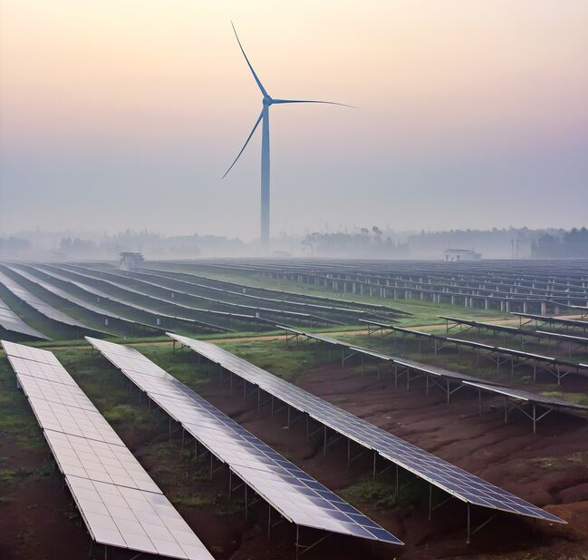
Germany to halve grid fees in 2026, but steelmakers demand permanent solutions
Germany’s four transmission system operators have released preliminary nationwide grid fees for 2026, showing that grid charges will be halved thanks to a planned €6.5 billion federal subsidy. The measure will be financed through the Climate and Transformation Fund and is currently awaiting parliamentary approval.
Under the proposal, the average grid fee will fall from 6.65 ct/kWh to 2.86 ct/kWh. The government hopes this temporary subsidy will alleviate some of the energy-cost pressures weighing on energy-intensive industries, including steelmaking.
Steel industry welcomes the move but warns of short-term fix
The German Steel Federation (WV Stahl) has described the planned reduction as “urgently needed and long overdue relief.” Managing director Kerstin Maria Rippel emphasized that soaring grid fees over the past two years have severely hurt the industry’s international competitiveness, coming at a time when mills are struggling with high energy costs, global overcapacity, and weak domestic demand.
German steel producers have experienced a 130 percent surge in transmission fees since 2023, adding roughly €300 million per year in extra costs. These grid fees are compounded by wholesale electricity prices that remain well above levels in other major steel-producing countries, such as France or the US.
WV Stahl argues that, while the 2026 subsidy is a necessary step, limiting the measure to a single year fails to provide the stability needed for industrial investment decisions.
Industry calls for long-term planning security
The federation has urged lawmakers to extend grid fee relief beyond 2026. Year-by-year political decisions, it warns, create uncertainty that deters capital investment, particularly in green steel transformation projects that require long-term cost predictability.
“We call on the members of the German Bundestag to clarify that the grid cost relief will also apply beyond 2026 and into subsequent years,” Rippel said, adding, “Annual individual decisions mean annual uncertainty, and that is poison for companies’ investment decisions. In times like these, companies need long-term planning security to remain competitive and become climate neutral.”
Structural challenges require broader reforms
WV Stahl also points out that grid fees are structurally high due to massive grid expansion investments, which will continue over the coming decades as Germany integrates more renewable power. Combined with relatively expensive wholesale electricity, these costs risk putting domestic steel producers at a structural disadvantage compared to their global competitors.
The federation reiterated its call for a predictable, internationally competitive industrial power price, with a reliable and permanent cap on grid charges seen as a critical first step.


Save Steel Buy British: a campaign for UK-made steel
The Community trade union and British Steel have launched a new campaign, “Save Steel Buy British”, calling on UK industry to sign a pledge backing the sector, Kallanish reports.
The pledge urges use of British-made steel in major national infrastructure projects such as schools, housing, hospitals, roads and rail. It aims to secure the future of sovereign steelmaking and safeguard skilled jobs at a time when the industry is facing “unprecedented challenges.”
It notes that with major projects such as Hinkley Point C and the Alexander Stadium being built with British steel, the importance of a reliable domestic supply is clear. Other key applications within the country include powering energy and transport networks to strengthening defence capabilities.
The document adds that the industry should step up to commit to using UK-made steel in national projects following government intervention in several of the country’s steel makers, including British Steel and Liberty’s Speciality Steel.
“Steel is a vital strategic industry which powers local economies and underpins the UK’s national security. You can’t build a greener, fairer economy without a resilient steel industry and the thousands of skilled jobs it supports in communities across the country,” says Alasdair McDiarmid, Community assistant general secretary.
“With a range of major national infrastructure projects on the horizon over the years ahead, it is absolutely imperative that we seize opportunities to maximise the procurement of British-made steel. Now is the time for government and businesses across the country to give our steel industry the vote of confidence it needs and deserves. They can do this by buying British,” he adds.
Allan Bell, interim chief executive of British Steel states: “By backing UK-made steel, businesses are helping safeguard jobs, skills and local communities, while securing the capacity to deliver for Britain’s future. This campaign is about ensuring our industry thrives and continues to provide the strength and security the country relies on.”
Carrie Bone UK

Special-grade plate pricing stabilises in NW Europe
Whilst the demand for commodity plate in northwestern Europe is not recovering and prices remain at a low, speciality plate fares somewhat better, market participants say.
In comparison with commodity grades S235 and S355, which easily shed €60/tonne ($70/t) between April and now, boiler plate suffered only half that drop.
“Boiler-grade plate P265GH lost maybe €20-30 during that period, and has been relatively stable recently,” one German buyer tells Kallanish.
Offers of commodity grades still keep softening somewhat to lure customers in an ongoing lull of demand, but boiler grade plate keeps it price level, that source observes. He sees that level at around €800/t delivered ($938/t), a price confirmed by a manager at another large distributor group.
The price applies to the typical German mills specialising in higher grades, and ordering from other European countries could make sense, but not necessarily. The first buyer tells of a recent delivery from a Czech mill to a Czech customer at €725. Deliveries from there to German destinations can be a good option – especially in eastern locations, but probably not to France or Benelux
“You may have to look at availability and lead times. And the origin of the slabs: Are they Russian?” the first buyer cautions. He is used to work with German mills, where the prices may be higher, but the risk factor lower.
At the MBI Stahltag cinference in mid-September, Salzgitter manager Sebastion Bross made the optimistic prediction that expansion of wind power plants could lift the annual plate demand from now 2.4 million tonnes to 2.8mt by 2030.
The distributor’s manager, however, is not so sure the development of wind powerwill benefit domestic mills: “Aren’t towers made in Asia mostly?”
Christian Koehl Germany

High prices, uncertainty slow Iberian coil market demand
The Spanish steel market begins October with prices steady. The post-summer holiday recovery did not materialise since demand from the main consumer sectors remained weaker than expected, market sources tell Kallanish.
“We were expecting a rebound in HRC purchases in September, but customers from the automotive and energy sectors preferred to wait before making their purchases,” one seller comments. The delay in the European Commission’s planned tightening of trade defence policy, coupled with uncertainty over demand, was the main factor affecting trade activity in recent weeks, he explains.
Distributors do not anticipate major changes in October, nor do re-rollers, who are not seeing sales to the downstream sector picking up. They confirm that current demand is mainly driven by small customers in the construction sector who already have their work prepaid and underway, and by supplies for household appliances.
“The combination of weak demand and high coil prices in the Iberian Peninsula is keeping the market in a state of stagnation, with most of the major steel-consuming industries in ‘wait-and-see’ mode. This situation is unlikely to change in October, with steelmakers assessing their production rates,” says another source.
Spanish mills are selling S235JR grade hot rolled coil at around €640-650/t ($749.86-761.58/t) delivered.
Todor Kirkov Bulgaria

ArcelorMittal Luxembourg headquarters takes shape with XCarb
The construction of ArcelorMittal’s new headquarters in Luxembourg is gathering pace, with the building in Luxembourg City acting as a showcase for the brand, Kallanish hears.
The steelmaker says the construction site is the largest in Luxembourg and the Greater Region. The group announced in June 2023 that the first steel beam on the 21-storey building had been installed.
Now standing at more than eight storeys high, the building is scheduled to be ready in 2027. The building is also meant as a showcase for Steligence, which ArcelorMittal calls its proprietary design philosophy, combining sustainability, innovation and flexibility in construction at scale, comprising steel, glass and green spaces.
The building’s exoskeleton is being built with its low-emission steel brand, XCarb, which is made in Luxembourg with 100% recycled steel in an EAF, using 100% renewable energy. The XCarb recycled and renewably produced steel is produced in Differdange and Belval and fabricated in the Steligence Fabrication Centre.
Christian Koehl Germany

European steel heavy plate prices stable; CBAM on market participants’ minds
Italy
Italy’s domestic heavy plate market was flat during the assessment week, though material was heard offered at higher levels of €620 ($727) per tonne, while some indications fell to €590-per-tonne levels.
“Italian plate prices held steady over the past week, with producers struggling to achieve targeted rises,” one European market source told Fastmarkets.
Fastmarkets’ weekly price assessment for steel domestic plate, 8-40mm, exw Southern Europe was €600-610 per tonne on Thursday, unchanged week on week.
Meanwhile, S355 plate prices were reported at levels of €640-650 per tonne delivered.
Northern Europe
Heavy plate prices in Northern Europe were also flat week on week, with slow demand and limited purchasing.
Fastmarkets’ weekly price assessment for steel domestic plate, 8-40mm, exw Northern Europe was €620-655 per tonne on Thursday, flat from a week prior.
EU policy considerations
There was market chatter around an expected European Commission proposal on steel import quota reductions and tariff increases set to be released on October 7.
“Let’s see the reaction once the European Commission proposal on quota reduction comes out,” one producer source said.
Sources were also concerned about recent news that the EU Commission will be confirming Carbon Border Adjustment Mechanisms (CBAM) and Emission Trading System (ETS) benchmarks in early 2026.
CBAM is set to enter its definitive phase on January 1, 2026 with the sale of CBAM certificates to start in February 2027.
Flat market sources have said that trade policy uncertainty has led to muted market trade.
The producer source said that they are “strictly considering CBAM’s effect” when discussing first-quarter trade, adding that recent sales are “still almost entirely for [the fourth quarter]”.


European HRC market steady, eyes on pending changes to import regulations
Several market sources who claimed to have seen the draft document of the measures, which will replace the current safeguard system, said that they will have disruptive effect on import prices. But until this information becomes public, the situation creates a lack of confidence, which also has an effect on the domestic trade.
“There is good business, but it is mostly back to back trade,” a supplier from Northern Europe told Fastmarkets.
Market sources in the region estimated workable prices to vary within the range of €570-580 per tonne ex-works for HRC with lead times of 4-6 weeks, but prices for material traded in the first quarter of 2026 are expected to shift amid the introduction of the Carbon Border Adjustment Mechanism (CBAM), which takes effect on January 1, 2026.
Current sales volumes and prices were, however, said to be somewhat limited by “careful management of stocks” amid approaching year end.
Fastmarkets’ calculation of the daily steel hot-rolled coil index, domestic, exw Northern Europe was €575 ($674) per tonne on Thursday October 2, unchanged day on day.
The Northern European index dropped by €2.71 week on week, but was stable month on month.
The Italian domestic hot-rolled coil market was also determined by limited trading.
One source estimated the workable price range at €540-550 per tonne ex-works, but another source provided an estimate of €550 per tonne ex-works as a level at which most recent business were done, pointing out to the fact that initiation of an anti-dumping investigation targeting import from five countries resulted in higher demand for domestic material and allowed one of the key suppliers to secure significant volumes with local buyers.
Fastmarkets’ daily steel HRC index, domestic, exw Italy was calculated at €548.75 per tonne ex-works on Friday, up by €2.92 per tonne from €545.83 per tonne on Thursday.
The Italian index was down by €1.88 per tonne week on week and by €0.42 per tonne month on month.
Interest in imported material was virtually absent, as buyers reportedly sought to avoid the need for customs clearance in the first quarter of 2026 amid ongoing uncertainty over the final valuation of goods under the incoming Carbon Border Adjustment Mechanism (CBAM), which continues to raise unanswered questions. Therefore, customer’s focus was said to be on domestic supply.
Central European hot-rolled coil prices were stable in the week to Wednesday October 1, with demand remaining mostly moderate.
Market sources estimated workable levels at around €570-585 per tonne ex-works this week, the same as the previous assessments.
Fastmarkets’ weekly price assessment for steel hot-rolled coil, domestic, exw Central Europe was also €570-585 per tonne on Wednesday, unchanged week on week.
Davide Montagner in London contributed to this report