


ArcelorMittal: margins resilient but under pressure
Despite a decline in Ebitda in 2025, ArcelorMittal posted a sharp rise in net profit and defended the solidity of its model, driven by its strategic investments and the expected improvement in the European regulatory framework. However, an analysis of the published figures reveals cash generation constrained by high capex and rising debt, while the group is carrying out a wide-ranging review of its workforce, a third of which is in Luxembourg.
ArcelorMittal closed 2025 with sales of $61.35 billion, down 1.7% on the $62.44bn recorded in 2024 . The Group attributes this decline mainly to a 2.3% drop in average steel selling prices. In a context described as difficult, marked in particular by depressed international prices and tariff effects in North America, Ebitda came to 6.541bn, down 7.3% on the 7.05bn recorded in 2024.
The key indicator highlighted by the group is Ebitda per tonne, which reached $121 in 2025. According to the official communication, this level is “more than double” previous cycle lows. The published documents do not detail here the exact numerical reference to previous cycles; the comparison is therefore a qualitative assessment by management of the structural evolution of margins.
Net income, group share comes out at $3.15bn, compared with 1.34bn in 2024, with earnings per share of 4.13 dollars. On an adjusted basis, net profit came to $2.94bn, or 3.85 dollars per share. The increase in net profit, despite a fall in Ebitda, was mainly due to an improvement in financial and tax items. The press release states that the increase in adjusted net profit reflects in particular lower foreign exchange and other financial expenses, as well as a reduction in the tax charge, partially offset by lower Ebitda and higher interest costs.
Limited cash flow
Analysis by segment shows contrasting dynamics. In North America, annual Ebitda fell to $1.237bn, compared with 1.819bn a year earlier. The Group cites the impact of Section 232 tariffs and maintenance operations in Mexico. In Europe, on the other hand, Ebitda rose to 2.028 billion dollars, compared with 1.624bn in 2024, a trend attributed to a more favourable price-cost effect and operational improvements. In Brazil, Ebitda fell to $1.440bn from $1.803bn, against a backdrop of lower prices. The Mining segment recorded an improvement, with Ebitda of $1.105 billion compared with $1.033bn, driven by higher volumes and shipments, particularly in Liberia. Lastly, the Sustainable Solutions segment saw its Ebitda rise to $422m from $314m in 2024, benefiting from the ramp-up of renewables in India.
In terms of cash generation, ArcelorMittal says it will have generated $4.8bn in operating cash flow by 2025, including a working capital release of $0.5bn. Capital expenditure amounted to $4.3bn, including 1.1bn devoted to strategic projects. Free cash flow came to 0.4 billion dollars. The company highlighted an investable cash flow of $1.9bn over the 12 months, defined as operating cash flow less maintenance capex. This metric, which is specific to the group, differs from strict free cash flow and emphasises that available self-financing capacity after total investments remains limited in 2025.
Net debt reached $7.9bn at 31 December, compared with 5.1bn a year earlier. The Group explains this increase by growth investments and consolidation operations, in particular that of Calvert. Total liquidity was announced at $11.0bn at the end of the financial year. Moody’s and S&P have upgraded the Group’s 2025 credit rating to Baa2 and BBB respectively, with a stable outlook.
Dividend raised slightly
In terms of shareholder return policy, ArcelorMittal says it has returned $0.7bn in 2025. The board of directors will propose to the general meeting an increase in the basic annual dividend to 0.60 dollars per share, compared with $0.55 previously, with a quarterly payment. The company also claims to have reduced the number of diluted shares by 38% since September 2020.
The strategic narrative places a strong emphasis on Europe. The Group believes that the combination of the Carbon Border Adjustment Mechanism (CBAM), fully implemented from 1 January 2026, and the new Tariff Rate Quota (TRQ) tool should reduce imports by around 10 million tonnes and support domestic capacity utilisation. The European Parliament vote on the TRQ is expected in February 2026, for implementation by 1 July 2026 at the latest. The actual impact on margins will, however, depend on the regulatory timetable and market reactions; these future effects are at this stage a matter of expectations formulated by the company.
ArcelorMittal finally indicates that strategic projects already underway have contributed $0.7bn of Ebitda in 2025 and that investments underway could increase the potential for additional Ebitda to $1.6bn from 2026 and beyond. This estimate is based, according to the published documents, on assumptions of ramp-up and normalised market conditions.
All in all, the 2025 accounts reflect a company that is maintaining significant operating profitability in an unfavourable cyclical environment, but at the cost of a high level of investment and an increase in net debt. The improvement in net profit is due more to financial and tax factors than to an expansion of the operational core. The 2026 trajectory will largely depend on the materialisation of regulatory effects in Europe, the ramp-up of industrial projects and trends in steel and iron ore prices.

ArcelorMittal reviews 5.600 EU roles, Luxembourg impact unknown
ArcelorMittal Europe has opened a new review of support functions that a European works council member said could cover 5.600 roles, about 11% of the company’s 48.500-strong European workforce, with Luxembourg exposure still undisclosed.
The European arm of Luxembourg-headquartered ArcelorMittal, one of the world’s largest steel and mining groups, has launched a fresh phase of internal assessment into an efficiency drive covering support functions such as information technology, logistics and maintenance, a review that a member of the European works council claimed could place up to 5.600 roles across 20 European countries within scope.
The council member added the initiative was discussed during an extraordinary meeting held remotely last week and described it as a new phase of analysis into reshaping support functions across the group’s European entities, including potential relocations alongside other restructuring options.
On the basis of ArcelorMittal’s European headcount of 48.500 at the end of 2024, the perimeter under review would equate to about 11% of its European workforce.
Contacted by Paperjam, a representative of ArcelorMittal confirmed the review but did not confirm any numbers. The representative said ArcelorMittal Europe was looking into the possibility of expanding the scope of its project to transform support functions “with the goal of ensuring optimisation and standardisation of activities which are currently fragmented across a large number of sites in Europe”. The representative declined to comment on whether roles in Luxembourg were part of the assessment.
The steelmaker disclosed that the work included the creation of a “business services hub in India” and the expansion of its “business centre of excellence in Poland”. It said the objective was to support a sustainable business model for ArcelorMittal Europe by aligning the company’s performance with other major companies and using global talent, modern processes and advanced IT and AI to deliver “reliable, high-quality service”.
The review comes as European steelmakers face weaker demand in core end-markets such as automotive and construction, alongside intensifying pressure from imports, particularly from Asia and China, where production is sold at significantly lower prices.
According to national statistics bureau Statec, ArcelorMittal had 3.520 employees in Luxembourg on 1 January 2025, making it likely that at least some Luxembourg-based roles could ultimately be affected through relocation or being removed altogether, even if the company has not confirmed any local exposure.
A further meeting is scheduled for 26 February at ArcelorMittal’s Luxembourg headquarters. The company representative told Paperjam that more details would be shared at the appropriate stage but did not provide a timeframe.
Tariffs and energy: ArcelorMittal Luxembourg urges the EU to act
At its New Year’s ceremony on Wednesday 21 January in Differdange, ArcelorMittal Luxembourg drew a harsh assessment of the steel situation in Europe. Faced with global overcapacity, pressure from imports and energy costs, the group is calling for rapid European measures to preserve a competitive, low-carbon steel industry. And it is delighted with its new dust capture installation.
Meeting in Differdange for the 2026 New Year’s ceremony, the directors of ArcelorMittal Luxembourg delivered a detailed analysis of the situation in the steel market and the challenges facing the European steel industry. Valérie Massin, country manager, and Pierre Jacobs, CEO of long products Luxembourg, described a strategic sector weakened by global imbalances, while reaffirming the group’s industrial commitment to the Grand Duchy.
Pierre Jacobs recalled the central role of steel in the modern economy, present in infrastructure, construction, automobiles and now electric vehicles, as well as in the circular economy thanks to its recyclability. However, this indispensability contrasts with the evolution of the global market. In 2024, global steel production reached around 1.8 billion tonnes, almost three-quarters of which was produced in Asia, mainly in China, but also in India, South Korea and Japan. The European Union’s (EU) share now stands at only around 130 million tonnes, or less than 10% of global production, and is down by around 25% on levels before the health crisis.
This contraction is accompanied by a reversal in trade flows. Whereas the EU was still a small net exporter of steel in 2015 and 2016, since 2017 it has become a net importer, with imports sustainably exceeding exports. This development is having a direct impact on European industrial capacity utilisation. After a sharp fall during the 2009 financial crisis and then in 2020 with the health crisis, the production capacity utilisation rate today remains at low levels, often below 70%, reflecting both the scale of imports and an economic climate deemed gloomy in Europe.
Target of zero fatal accidents
There are also social issues at stake. The European steel industry represents around 300,000 direct jobs, over a million indirect jobs and several hundred thousand induced jobs. In terms of added value, the steel ecosystem contributes several hundred billion euros to the EU economy.
At the level of the ArcelorMittal group, Pierre Jacobs recalled the strategic priorities, starting with the health and safety of employees. Since the group was created in 2006, the lost-time accident frequency rate has fallen from around 3 in 2007 to 0.68 in 2025, at a time when the company has set itself the target of zero fatal accidents from 2027. The CEO acknowledged the highly ambitious nature of this objective, pointing out that fatal accidents have still been recorded in recent years, including in Luxembourg.
Installation reliability is another key focus, both for cost control and for meeting the delivery times promised to customers. Any unforeseen breakdown is likely to disrupt the production chain and the service provided. Added to this is the Group’s strategic growth, both organically and through acquisitions, illustrated in particular by expansion projects in India, Brazil and the United States.
The climate issue also plays a central role. As a heavy industry by nature, the steel industry is highly exposed to the challenges of decarbonisation. Pierre Jacobs pointed out that Luxembourg was ahead of the game in the 1990s when it replaced blast furnaces with electric furnaces, which emit at least four times less CO2. This transformation is a model that the group intends to extend to other European and global sites.
If the EU waits until June, the 50% surcharge will come too late
Economic indicators confirm the current tensions. The PMI index, a barometer of industrial activity, has been fluctuating below the 50 threshold since 2023, signalling a lack of real growth, including in Luxembourg. In terms of prices, the hot-rolled coil benchmark shows that European prices are still lower than those in the United States, while Chinese export prices are much lower. China, which accounts for around 50% of the world’s steel production, thus has a major competitive advantage, fuelling pressure on the European market.
Valérie Massin extended the analysis by highlighting the structural deterioration of the market. Global overcapacity is estimated at almost 600 million tonnes, while European demand is contracting and cost differentials between European and non-European producers persist, notably due to energy prices. Faced with this situation, the European Commission presented an action plan on steel and metals in 2025, aimed at strengthening trade defence instruments, limiting imports and implementing the carbon adjustment mechanism at borders.
As far as imports are concerned, a ceiling of around 18 million tonnes of steel that can enter the European market freely is envisaged, above which a surcharge of up to 50% would apply. For ArcelorMittal, the challenge now is to implement these measures quickly. Delayed deployment, particularly after the first half of the year, could significantly reduce their effectiveness for 2026. All the more so as imports have been increased in anticipation by “stockists” who will not only have acquired stocks at lower cost, but who will no longer want Luxembourg products as a result.
A strategy to circumvent the balancing mechanism
The border carbon balancing mechanism, which comes into force on 1 January 2026, is a long-awaited step forward for European producers. However, Valérie Massin pointed to persistent loopholes, in particular practices that allow certain producers to direct lower-emission production towards Europe, while selling higher-carbon volumes elsewhere. In her view, these situations undermine the objective of a level playing field between producers subject to the EU ETS (Emissions trading system) and their international competitors.
Energy costs remain another determining factor. Since the war in Ukraine, gas and electricity prices in Europe have remained well above those in the United States or China, even though energy is a major input in steel production. While the European plan sets out guidelines, the group is still waiting for concrete measures for the wholesale market and for industries that consume a lot of energy.
In Luxembourg, ArcelorMittal employs around 3,510 people across several industrial and administrative sites. The country is ahead of the game in terms of decarbonisation, with 98% of its production based on electric furnaces using mainly recycled scrap metal. The group also highlights emblematic achievements, such as the supply of exceptional parts for the Henry Ford Hospital site in Detroit or the development of XCarb steel, showing around 300 kilos of CO2 per tonne produced thanks to the use of green electricity.
At the same time, ArcelorMittal is continuing to invest in Luxembourg, notably with the construction of its future world headquarters on the Kirchberg plateau, scheduled for completion in the first half of 2027. The building, 14,000 tonnes of steel, will embody the group’s expertise in low-carbon steel and sustainable construction.

ArcelorMittal Luxembourg headquarters takes shape with XCarb
The construction of ArcelorMittal’s new headquarters in Luxembourg is gathering pace, with the building in Luxembourg City acting as a showcase for the brand, Kallanish hears.
The steelmaker says the construction site is the largest in Luxembourg and the Greater Region. The group announced in June 2023 that the first steel beam on the 21-storey building had been installed.
Now standing at more than eight storeys high, the building is scheduled to be ready in 2027. The building is also meant as a showcase for Steligence, which ArcelorMittal calls its proprietary design philosophy, combining sustainability, innovation and flexibility in construction at scale, comprising steel, glass and green spaces.
The building’s exoskeleton is being built with its low-emission steel brand, XCarb, which is made in Luxembourg with 100% recycled steel in an EAF, using 100% renewable energy. The XCarb recycled and renewably produced steel is produced in Differdange and Belval and fabricated in the Steligence Fabrication Centre.
Christian Koehl Germany

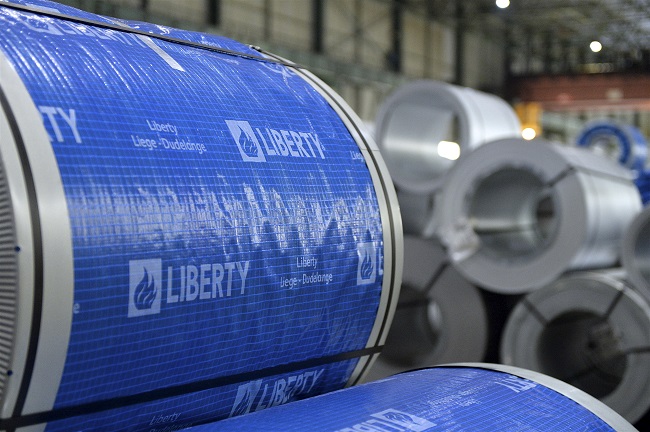
Luxembourg government eyes Liberty Dudelange acquisition, site repurposing
The Luxembourg government has submitted an acquisition offer to the court-appointed liquidator for bankrupt galvanizer and service centre Liberty Steel Dudelange. It aims to repurpose the site for another use and not resume steel operations.
According to Luxembourg’s Ministry of Economy, following nearly three years of production stoppage, the site presents a strategic opportunity for redevelopment. The objective, according to a ministry note obtained by Kallanish, is to optimise land use and repurpose the facility to support industrial renewal and drive economic growth.
“If this offer is accepted, the Ministry of the Economy will proceed with the development of the land with the aim of establishing new industrial activities and promoting the creation of high value-added jobs. The government will also consider the possibility of dedicating part of the site to defence-related projects,” the note says.
No other buyers have emerged for the Dudelange site, nor for Liberty Steel’s Liège facility. Despite ongoing efforts to identify potential investors, both sites remain without viable acquisition prospects, largely due to structural challenges in the European steel market and restrictive trade conditions.
In May, the sales process for the Dudelange plant was suspended after rumoured bidder Tosyali reportedly withdrew its interest. A recent visit by another potential buyer reportedly took place at the Dudelange site, though the interested party is also said to be based outside the EU.
The EU quota system is a major obstacle to any acquisition of both the Dudelange and Liège sites. The fundamental issue lies in its restricted ability to import hot rolled coil feedstock from outside the EU, which significantly undermines the site’s competitiveness and operational viability.
Natalia Capra France
Luxembourg government moves to acquire insolvent ex-Liberty Dudelange plant
“In the context of the bankruptcy of Liberty Steel Dudelange, the Government Council has decided to submit an offer to the trustee to acquire the site,” the Ministry of Economy said in a press release.
“After almost three years of inactivity, the site can be redeveloped in a way that maximizes the use of available space and finally gives it a new purpose to contribute to economic development,” the ministry added.
In 2019, Liberty Steel acquired the Dudelange site, along with several other European steel assets, from ArcelorMittal. Almost all of those acquisitions have faced insolvency or closure in recent years.
The plant in Dudelange is capable of producing around 1 million tonnes per year of galvanized products from both electro-galvanizing and hot-dipped galvanizing lines, according to Fastmarkets’ information. There are two hot-dipped galvanizing lines with combined capacity for 620,000 tpy and two electro galvanizing lines with combined capacity for 360,000 tpy, according to Liberty Steel’s website.
There are 185 workers employed at the Dudelange plant, which lies in the south of Luxembourg, which itself is between France, Belgium and Germany.
The asset was part of Liberty Steel Belgium, along with Liberty Liège, which comprises the Flémalle and Tilleur production sites in Belgium, each producing cold-rolled coil, hot-dipped galvanized coil and tinplate.
In December 2024, the Dudelange plant was declared insolvent and a receiver was appointed, while the Belgian assets entered a process of liquidation.
Liberty Steel’s attempts to organize a reacquisition faltered. Then, in February this year, Turkey’s Tosyali Steel submitted an offer for the potential acquisition of the Dudelange plant, but Fastmarkets understands that the deal did not progress beyond that initial stage.
“If this offer is accepted, the Ministry of Economy will develop the land with a view to developing new industrial activities and promoting the creation of high-value jobs. The government will also examine the possibility of dedicating part of the site to defense-related projects,” the Ministry of Economy said.
Because no other potential buyer has emerged, industry sources familiar with the matter said that the chances were high that the Dudelange site would be nationalized.
Galvanized coil is mainly used in the automotive and construction industries. But these products are also used in the military industry, mainly for their corrosion resistance and durability in extreme conditions. Applications include structural elements, vehicle components and essential parts such as chains and anchors for landing craft.


EUROMETAL: Future of European steel depends on collaboration
As the European steel industry faces historic challenges, the European Federation of Steel, Tubes and Metals Distribution & Trade (EUROMETAL) lately celebrated its 75th Anniversary with a high-profile conference in Luxembourg.
The two-day event gathered over 170 industry leaders to chart a course for the future amid climate policies, trade shifts, and the transition to a low-carbon economy. The Carbon Border Adjustment Mechanism (CBAM), growth of green steel markets, trade defense and regulatory frameworks, and the evolving role of steel distribution in the industrial transition were the key themes in the conference.
Opening the event by underscoring the urgent need for industry alignment and stronger advocacy towards EU institutions as the industry navigates the challenges of CBAM, which is scheduled to take effect in January 2026, climate policy, and regional trade realignment, Alexander Julius, EUROMETAL president, said, “The future of European steel depends not only on innovation and investment, but on collaboration.”
Prominent speakers such as Henrik Adam (Tata Steel Europe), Antonio Marcegaglia (Marcegaglia Steel), Guido Kerkhoff (Klöckner & Co), Edwin Basson (Worldsteel), Axel Eggert (EUROFER), Anthony de Carvalho (OECD) and and Julian Verden (STEMCOR) shared their insights emphasizing the risks and rewards of green steel production; the necessity for clear and fair policies to support European competitiveness; and greater flexibility and specialization in distribution models as clients demand verified emissions data and customized processing solutions. Also, several experts highlighted the role of distributors in driving green demand by integrating Product Carbon Footprints into procurement and customer communications.


EUROMETAL 75th Anniversary: The evolving role of steel distribution
This article is part of a series on steel distribution association EUROMETAL’s 75th Anniversary conference 2-3 July, discussing challenges and opportunities for the sector from its policy background; trade protection; the Carbon Border Adjustment Mechanism; green steel; and the evolving role of European steel distribution.
An oft-neglected aspect of the industrial transition is the growing proximity between steel producers and end-consumers, and in some cases, a perceived isolation of the supply chain’s distributors.
Domenico Martino, Chief Operating Officer of Knauf Interfer, stated in his presentation that direct mill-to-consumer long-term supply contracts for green steel would “redefine distribution’s role,” describing distributors as somewhat hamstrung in their adaptability by the inability of financial institutions to “price-in the opportunities within our reach” when issuing business or credit ratings.
Flexibility is paramount as the steel industry undergoes a period of drastic change and volatility. Attendees at the EUROMETAL Anniversary described a reduced frequency in long-term contract periods; tightening from annual, half-yearly, or quarterly supply agreements to monthly, or purely hand-to-mouth spot market sales.
As described by Ulrich Becker from Becker Consult + Beteiligungs, sales dynamics for European distributors are becoming more volatile – the biggest factor harming distribution profitability. “Lot sizes are decreasing, but frequencies are increasing,” he said.
Becker advised that distributors should attempt to evolve by establishing unique positions in the supply-chain: “business models should be sharpened going forward.” Becker encouraged distributors to ask themselves “what is the value of the company in the wider market?”
A distributor’s size could then be either an advantage, or a disadvantage depending on the specifics of their value offerings across their product and processing lines. “Specialisation will become increasingly important,” Becker concluded.
Indeed, a major theme as the conference neared its conclusion was how distribution could best cope with the evolutions in the steel sector. Ex-President of EUROMETAL, Fernando Espada, lamented growing difficulties in getting customers to pay for distribution’s value-added services, especially given the abundance of market intelligence available to end-consumers and the encroachment of steelmakers into direct-to-consumer sales.
Becker, as well as other conference attendees, instead saw this transparency as an opportunity, giving an example from his consultations with steel end-users. Becker described one project with a large consumer that wanted to better understand how prices asked by distribution mapped to steelmaker and distributor margins – this was not framed as a threat to distributor profitability, but as an opportunity, with the consumer “more than happy” to pay for the distributor’s value-adds when communicated and explained transparently.
As such, Becker, supported by others such as DM Stahl’s Fix, recommended distribution move away from “the sourcing of steel” as its primary business model, focussing more on the specialised processing of material and embracing indexation to evidence the necessity of premiums for their value-added services.
Such an approach would seem to map well to wider economic and geopolitical trends, with demand set to grow in the sustainability, infrastructural, and defense sectors – compounded by increasing protectionism and regionality in worldwide markets and supply chains. While economists at the event – such as World Steel’s Director General, Edwin Besson – emphasised that the steel markets “are, and will remain, very open,” they did expect growing protectionism and regionality in the short-term through mechanisms like melt-and-pour clauses:
“Steel is becoming increasingly attractive around the world,” he said, “it’s moved on from being the child no one wants to talk about.”
As steel’s presence in the spotlight increases, distributors will continue to face a number of challenges, but as identified at EUROMETAL’s 75th anniversary, flexibility and agility could also afford them profitable opportunities.
Benjamin Steven Journalist, Steel


EUROMETAL 75th Anniversary: CBAM “nightmare” to soon become reality
This article is part of a series on steel distribution association EUROMETAL’s 75th Anniversary conference 2-3 July, discussing challenges and opportunities for the sector from its policy background; trade protection; the Carbon Border Adjustment Mechanism; green steel; and the evolving role of European steel distribution.
Doubtless the largest change on the horizon of the European steel industry, and for its distribution sector specifically, is the upcoming definitive phase of the Carbon Border Adjustment Mechanism (CBAM), mandating the payment of carbon duties on the embedded emissions content of imported material from January.
A majority of frustrations expressed at EUROMETAL’s 75th Anniversary concerned these incoming, and uncertain, liabilities under CBAM once it enters its definitive phase. To no one’s surprise, distributors were overwhelmingly negative, describing the instrument as – alongside more colourful language – a “nightmare by nature,” “insane,” “a fiasco” and, most illustratively: “a molotov cocktail for the entire supply chain.”
While many acknowledged the necessity of CBAM in ensuring European industry does not bear the weight of global decarbonisation alone – and welcomed last-minute, patchwork amendments such as the simplification package, plans to extend CBAM’s remit to downstream products, and possible rebates for European exporters – certain legislative or reference gaps were said to be hindering the industry’s preparations for January.
For producers, this concerns gaps in the instrument potentially incentivising carbon leakage, with Eurofer Director General Axel Eggert detailing that over 70% of the almost 30 mt – or EUR50-65bn – of European steel and steel-containing products are exported to countries without comparable climate policies.
“CBAM is at a critical point, it has the potential to save, or destroy, industry in Europe,” said Dr Henrik Adam, President of Eurofer. “But it is very easy to see how this nice cocktail could become a molotov cocktail by overconsidering technical arguments, not action.”
For distributors, a lack of clarity as to the financial burdens of CBAM, as well as arduous administrative obligations, risk overwhelming their activity and profitability.
“Decarbonisation has been taken as a mantra without proper consideration for pragmatism and competitiveness,”; said Antonio Marcegaglia, CEO of Marcegaglia. “It could now be too late.”
Foreign exporters such as Turkey largely see CBAM as an opportunity if they can predict and quickly align to EU regulatory requirements: with a high-weighting of electric-arc furnace production, and abundant solar supply; exporters in adjacent regions could see strong demand from European importers stocking green steel. However, even within Europe, incumbent producers with existing low-carbon productions have struggled to turn this advantage into green premiums, as seen in the long steel market.
Most notably, the European Commission is yet to release the benchmark Emission Trading System (ETS) values for 2026-2030, a core part of the formula dictating an importer’s exposure to European carbon costs. This leaves importing distributors in the dark as to the specific costs of importing under CBAM, with material from some origins already likely to fall liable to CBAM costs.
Speaking at the event, Managing Director of trading house STEMCOR, Julian Verden, estimated from his industry sources that the benchmark value for the blast furnace route – by which the majority of the world’s steel is produced – would be around 1.4t CO2e per tonne of steel. In attempting to pass relevant carbon costs downstream, however, Verden found that his customers were “completely unwilling” to commit to variable costs, instead insisting on a fixed price structure for purchasing that has already led STEMCOR to embed an estimated CBAM premium into recent trading – despite lacking an authoritative reference.
“The get-off-the-pot moment is quickly approaching,” said Verden, describing a rush in demand to import and customs clear international steel before CBAM duties become due in January. “This year is going to be a bit of a nightmare for us all, but I do believe we’ll make it through.”
STEMCOR estimates that, assuming a benchmark for blast-furnace route production of 1.4t CO2e/t and an EU Emissions Allowance (EUA) price of EUR76, imported steel of 2.1t of embedded CO2e would see additional costs of around EUR56/t from January – though in reality the spotlight on and greater demand for EUAs should see this increase, with McCloskey’s affiliated carbon team CAMIRO forecasting prices above EUR80 from January.
Verden quashed hopes – including his own – that CBAM could be further delayed to better map to the realities of the industry, stating that from his conversations with senior CBAM authorities the upcoming transition into the definitive stage was “basically inevitable.”
Verden’s own preference would be for a hybrid of the definitive and transitional periods, seeing the Commission publish benchmark values early alongside a flat CBAM duty for 2026 and moving to payment on verified emissions in 2027, potentially launching fully in partnership with the UK’s own version of CBAM.
Benjamin Steven Journalist, Steel

EUROMETAL 75th Anniversary: Political will requires political action
This article is part of a series on steel distribution association EUROMETAL’s 75th Anniversary conference 2-3 July, discussing challenges and opportunities for the sector from its policy background; trade protection; the Carbon Border Adjustment Mechanism; green steel; and the evolving role of European steel distribution.
Distributors attending European steel distribution association EUROMETAL’s 75th anniversary conference last week identified both challenges and opportunities from the sector’s changing regulatory landscape, with many believing distribution would have to adapt its role in the steel supply chain.
Following the United States’ lead, nations worldwide are continuing to pass protectionist measures for their domestic steel industries, leading many – especially more import- dependent distributors – to question the resilience of their position in regional and global supply chains in a new era of steel market isolationism and regionality.
Distributors have certainly suffered under prevalent uncertainties so far this year. Already in what has commonly been termed a ‘crisis,’ the European steel industry has seen changes to its safeguard and anti-dumping framework; tariff offensives from the US on both steel exports and their dependent markets; an uncompetitive demand and consumption landscape; and of course the upcoming definitive period of the Carbon Border Adjustment Mechanism (CBAM) and its role in securing the decarbonisation strategy of domestic industries.
It is no surprise then that many in the distribution segment lament the concurrence of these different factors, pulled by pressures from the top and bottom of the steel supply chain. That said, while conference attendees painted a negative picture of how the European steel industry reached this point of crisis, many speakers at EUROMETAL’s anniversary were optimistic about a recent change in tone from European political authorities. Representatives from steel producers in particular identified new policymaker recognition of the issues plaguing the steel sector, with a desire to support not only steel producers, but also the distributors facilitating the processing and movement of steel to its consuming industries.
Market participants at the event shared insights into ongoing consultations on lead market generation for green steel, namely low-carbon and “Made in Europe”; labels under the Clean Industrial Deal and upcoming Industrial Accelerator Act; simplification and downstream extension proposals surrounding CBAM, and import monitoring and the proposed long-term replacement to the European steel safeguard system.
Attendees at the conference have been consulting with the European Commission (EC) to ensure that new initiatives respect the real dynamics of the steel industry and trade, but while this new protective “political will” was widely cited by relevant parties, a common theme surrounded doubts on policymakers’ powers to execute pragmatic change, stymied by an abundance of overly technical, defeatist, or naïve arguments from the European civil service.
“I see keen policymakers that are repeatedly subjected to negative arguments from their services,” said Dr Henrik Adam, President of Eurofer. “We have the political will – the question now is: do we have the power to exert real change?”
“After three days with Commission staff I am completely brain-busted, many of them cannot understand the realities of our industry,” agreed Marcus Fix of service center DM Stahl.
“Sometimes I get the impression the European Commission wants to ride a white unicorn on a rainbow,” he continued. “They lack any urgency; we need to be fast but instead we’re stuck in regulatory hell.”
Adam admitted a degree of envy for American political dynamism, though was careful to clarify that he was in support of its style rather than content:
“While I am not a fan of the new way the Americans are conducting their business, the effectiveness of its policies on American reindustrialisation is evident”, said Adam. “The sentiment is important, the point is that we often hear a “no”; from Brussels and its services.
“The US has a “can-do” attitude, but in Europe we are often missing this “will to win”.”
Benjamin Steven Journalist, Steel