


EURANIMI: ‘Shortages and skyrocketing prices’ from CBAM, new steel import quota
As part of the EU’s “plan to address the negative trade-related effects of global overcapacity on the EU steel market” published on October 7, the EU proposes for import quotas to drop by 50% – and 60% for stainless steel – and out-of-quota levies to rise from 25% to 50%.
The existing EU steel safeguard measures have been in place since 2018 and are intended to protect EU steelmakers from a potential surge in imports. They are set to run until June 30 2026, and a new trade regime with tighter quotas is expected to replace it. However, several European stats have been pushing for earlier introduction of new trade regime, Fastmarkets reported.
“We heard April 1 [2026] as a possible date of a new system coming into force, but it might not be feasible, considering the complexity of the new system. July 1 2026 looks like a more realistic date [for new trade regime introduction].,” a steelmaker source told Fastmarkets.
If the existing safeguard measures are not replaced by the proposed new trade regime, it “would leave a substantial gap in the level of protection currently afforded to the EU steel industry,” the European Commission warned on October 7 in its draft regulation aimed at addressing the negative trade-related effects of global overcapacity on the EU steel market.
As such, the Commission proposes to introduce “an appropriate and effective protective measure beyond 30 June 2026 that will contribute to preserving a competitive and sustainable EU steel industry,” in line with suggestions first made in the Steel and Metals Action Plan (SMAP), published in March 2025.
And, crucially for EURANIMI, this will begin after the introduction of the EU’s CBAM policy “which, alone, will easily drive steel prices up by an additional 10% or more when it takes effect on January 1 2026,” the association said in a statement.
EURANIMI states that, combined, the two policies will result in “skyrocketing prices and structural shortages for the European manufacturing industry.” This will occur through lack of capacity within the EU, an influx of cheap imports of finished products into the EU – that are also exempt from CBAM liability – and a loss of European competitiveness. In addition, European exporters could lose market share through heightened costs.
To prevent any further European deindustrialization, EURANIMI requests the European Commission to reconsider its proposal and extend the quota to include end products.
They suggest applying a 50% import duty, calculated based on the steel content of imported products containing at least 20% steel. This would “ensure European manufacturers are not penalized simply because they produce within the Union,” the statement said.
“Protecting EU steel production is legitimate, but not at the expense of the manufacturing industry. Otherwise, we will lose even more production, jobs and autonomy. A strong steel industry exists by virtue of a strong European market,” Rob Greve, executive board member of EURANIMI said in the press release.
European steel distributors federation EUROMETAL has earlier made a similar request to the Commission to include steel derivatives in the scope of both CBAM and the new trade regime to protect the European manufacturing industry.
On October 21 EUROMETAL sent another letter to the European Commission, warning that the proposed safeguard measures risk “accelerating the displacement of EU downstream industry” unless equivalent protection is extended to steel derivatives and finished products.
The federation said the current framework “leaves a significant vulnerability” by shielding primary steel but not the companies that process it, exposing EU manufacturers to cheaper imports of pre-processed and finished goods. EUROMETAL called on the Commission to immediately extend safeguard coverage to include downstream steel-based products, warning that without such action, Europe could become a “dumping ground for low-cost, high-impact processed steel products.”
In the meantime, the European steel market has already started feeling the effects of CBAM and the new trade regime, with flat steel prices in particular climbing up gradually, driven by a shifting trading framework, while real demand remained subdued.
For example, Fastmarkets’ daily steel hot-rolled coil index domestic, exw Northern Europe was €602.50 per tonne ($701) on Tuesday, up slightly from €602.00 per tonne on Monday October 27. The index was up by €7.50 per tonne week on week and by €24.79 per tonne month on month.
Local suppliers were looking to achieve €620-650 per tonne ex-works for January delivery material.


European CRC market braces for steeper price rises when new trade regime, CBAM reshape supply dynamics
Price rises were “very likely,” they added, because the CRC market in Europe is traditionally dominated by imports. especially for base grades. And the introduction of the Carbon Border Adjustment Mechanism (CBAM), a new trade regime, and a pending anti-dumping investigation that covers nearly 70% of traditional import flows, have the potential to gradually shift the balance in that market.
Northern Europe
Mills in Northern Europe were heard offering CRC for delivery in the first quarter of 2025 at €730-750 per tonne ex-works, sources said.
And most first-tier suppliers were already sold out for November-December delivery coil, Fastmarkets understands.
But sources said the new price levels were not being achieved in deals and buyer estimates of the workable market level came in at €680-700 per tonne ex-works.
“Offers of CRC from European mills were very rare due to the high cost of production and tough competition with imports in commodity grade market,” a buyer in Germany said.
And a mill source said: “Batch annealing [the heat treatment procedure for CRC production] is very energy-intensive and, therefore, CRC production is not commercially viable [and] we’re unable to match the import prices.”
Most EU mills use the batch annealing process to make CRC, with only three suppliers able to make CRC via continuous annealing, which is more energy-efficient.
“Mills are reducing our output of commodity-grade CRC and are instead focusing on special grades and thicknesses, or producing more HDG,” a buyer source in Europe said.
However, sellers told Fastmarkets that local mills in Europe will be able to “fill the gap” left in the market by lower import volumes.
“[A lot of CRC] is used to produce very basic-quality, value, galvanized coil, which we won’t need to do if the price of CRC increases,” one seller said. “It depends on the balance that you make.”
Buyers agree that the CRC market will be one of the most “difficult” ones, once CBAM comes in, with prices likely to climb fast.
“CRC will be critical market, especially at the end of the first quarter and the beginning of the second,” a second buyer in Germany said. “That’s when buying new imports will get risker because of the new trade regime,” which is widely expected to come into force on July 1, 2026.
Fastmarkets’ weekly price assessment for steel cold-rolled coil domestic, exw Northern Europe was €690-700 tonne on Wednesday, up by €10-20 per tonne
compared to €670-690 per tonne the previous week.
Southern Europe
In Southern Europe, mills were also pushing for higher prices, with some buyers suggesting bullish moves will be successful due to a lack of alternative sources of supply.
“In Italy, there is basically only one reliable supplier for cold-rolled coil, so without imports there are not so many options,” an Italian buyer said.
Offers were reported at a base price of €750 per tonne ex-works in Italy for January delivery CRC.
No deals have been confirmed at that level yet, but Fastmarkets understands that local suppliers are now sold out for 2025.
In Spain and Portugal, offers were heard at a base price of €730-750 per tonne ex-works.
Buyers in Southern Europe estimated achievable prices for January at €690-710 per tonne ex-works. But suppliers have argued that prices below €700 per tonne ex-works won’t be possible.
Fastmarkets’ weekly price assessment for steel cold-rolled coil, domestic, exw Southern Europe was €690-700 per tonne on Wednesday, up by €10-20 per tonne from €670-690 per tonne on October 22.
Imports
Import CRC offers were scarce in the week to Wednesday, mainly due to the impending introduction of CBAM and other trade measures.
Additionally, CRC from India, Japan, Taiwan, Turkey and Vietnam is subject to an anti-dumping investigation, leaving European buyers looking for alternative suppliers.
Sources reported hearing CRC on offer from Pakistan at €635 per tonne CFR to Southern Europe, excluding CBAM costs.
Offers from South Korea, meanwhile, were heard at €570-580 per tonne CFR to Antwerp, excluding CBAM costs – although this price could not be widely confirmed prior to publication.
Japanese coil was sold at “slightly below $700 per tonne CFR to Italy,” excluding CBAM cots, sources said, while offers for CRC from Japan were heard a $720 per tonne CFR to Italy.
Fastmarkets’ price assessment for steel cold-rolled coil, import, cfr main port Southern Europe was €590-620 per tonne on Wednesday, stable week-on-week.

EU underestimates new safeguard measure price impact
The new safeguard measure the EU proposes to implement in 2026 will be exclusively in the interest of steelmakers, and much to the disadvantage of steel users, says German consultant Andreas Schneider.
“The European Commission has adopted all steelmakers’ demands to an extent hardly seen before in the interest of one particular industry,” Schneider writes in his blog on Stahlmarkt Consult. According to his calculations, imports of flat products will be reduced by 8.5 million tonnes/year, equalling more than 10% of EU consumption.
It is clear that all EU mills will use these conditions to bring up their prices, Schneider states. “Steel buyers need to adjust their costs forecasts for 2026 notably upwards,” Kallanish reads in the blog. He cites an estimate from a European Commission document, which predicts a price increase of 3.25%, which he calls “very much understated”.
He argues that Europe’s core crisis – a lack of industrial demand – will be aggravated by the measures, as they fail to also cover steel-containing manufactured goods, otherwise known as steel derivatives. This will exacerbate the cost disadvantages of EU fabricators against international competition, he concludes.
That point is also underlined by Alexander Julius, president of EUROMETAL. Unlike Schneider, he advocates safeguard measures in principle, but criticises that they stop short of including steel derivatives. “If steel derivatives are not added to the measures, I wonder who the European mills want to sell their steel to in future,” he said in a recent BBC interview.
He noted that exports of steel derivatives from China to Europe have grown by 20% annually in recent years.
Christian Koehl Germany

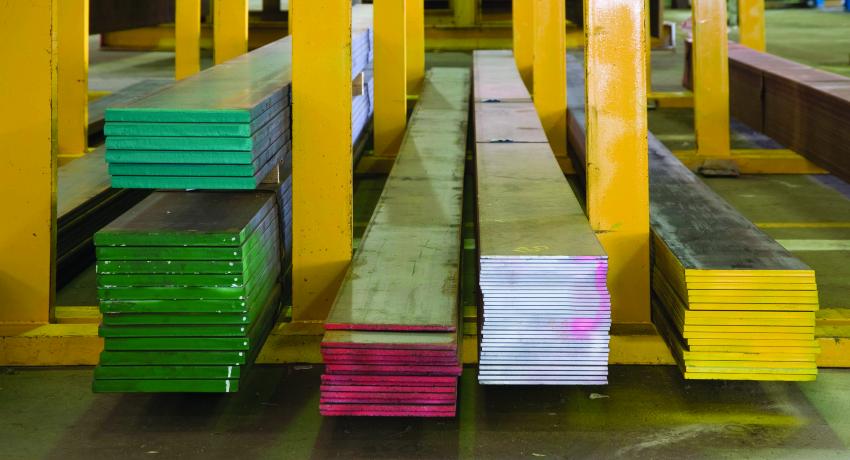
Italian longs flatten amid weak demand, quiet exports
Italian long steel prices have flattened after modest increases earlier this month failed to gain traction, as weak consumption continues to weigh on the market.
Demand for merchant bar remains structurally subdued, while sections and rebar are also seeing limited activity. Attempts to raise merchant bar prices by €10-20/tonne ($11.6-23.2/t) in October have largely fallen flat, market sources tell Kallanish. Domestic prices are now stabilising at around €650-660/t, ex-works, including size extras. Sources report the presence, particularly in the south, of lower-priced Turkish merchant bar.
Sections prices are likewise steady, but European producers continue to face pressure on margins as production costs remain high. Market participants describe October as a “quiet month” for sales. “It was not a catastrophe, but not a strong month for sales either,” one source says.
Export activity has also been muted, with central European demand weak and Germany, traditionally a key buyer of Italian longs, “stuck”, according to a source. German buyers are reportedly absorbing far smaller volumes than usual from Italy.
The first category of sections in the domestic market is holding at €740-750/t delivered on average.
Meanwhile, Spanish suppliers remain active in the Italian market for both merchant bar and beams, offering prices at roughly €30/t below domestic levels. Their competitive presence continues to add pressure to Italian mills struggling to pass through higher production costs to end-users.
Natalia Capra France

Bauta Metal: New Norwegian player opens service centre in Vestnes
Norwegian company Bauta Metal has officially inaugurated its upgraded steel cutting and storage facility in Vestnes, Møre og Romsdal, on Norway’s west coast.
Positioned between the cities of Molde and Ålesund, the facility lies at the heart of the Norwegian maritime cluster and shipbuilding industry, Kallanish understands. With a deepwater quay and direct access to the region’s main highways, the location offers significant logistics advantages for customers, Bauta Metals says. It acquired the site in 2024 and says it has since upgraded it to a state-of-the-art standard.
The 3,200-square-meter production hall is equipped with crane capacities and advanced machinery for shot blasting and priming. It has a plasma cutter with two cutting robots and a 3.6 x 34-metre cutting table capable of handling plate up to 300mm thick. It features Norway’s only 5-axis fibre laser, designed for plate up to 2,000 x 6,000 mm. The facility also includes industrial saws for cutting pipes and profiles.
In addition, it has a 2,000-square-meter storage hall for aluminium and stainless steel, plus 20,000 square meters of outdoor storage.
Bauta Metal is a new activity within the larger Norwegian conglomerate Bauta Group, which is present in construction, fish farming, and much more. It therefore notes that the inauguration included a symbolic moment with the cutting of the first steel for the closed Varig fish cage, developed by Bauta Fishfarms.


Christian Koehl Germany