


Domestic steel HRC prices in Europe firm as CBAM, trade defenses curb appetite for imports
Trading was still limited in the spot market for HRC in Europe, but prices were firm, with sentiment mainly fueled by policy shifts, market sources said.
Buyers held sufficient inventories and took a cautious approach to new bookings.
“We bought enough [HRC to last] until the end of 2025 and even for the first quarter [of 2026],” a buyer in Germany said. “The next round of restocking will be in December. Mills have some flexibility on HRC orders, but zero on downstream products – cold-rolled and galvanized.”
In the Benelux area, transactions for January-delivery HRC were reported within the range of between €605 and €615 ($698-710) per tonne ex-works, and at €610 per tonne ex-works in Germany.
Some sellers claimed to have achieved €620 per tonne ex-works for January volumes.
Offers from integrated mills in Northern Europe stood at €620-650 per tonne ex-works.
European suppliers continued to prioritize long-term contract negotiations with original-equipment manufacturers (OEMs) in the automotive industry and were not very active in the spot market. Long-term negotiations were at an “advanced stage,” market sources said, but nothing has been finalized so far.
As a result, Fastmarkets’ daily steel hot-rolled coil index, domestic, exw Northern Europe, was €613.54 per tonne on Wednesday, up by just €0.21 per tonne from €613.33 per tonne on November 18.
The index was up by €1.21 per tonne week on week and by €22.08 per tonne month on month.
Meanwhile, Fastmarkets’ daily steel hot-rolled coil index, domestic, exw Italy, was calculated at €603.33 per tonne on Thursday, up by €1.66 per tonne from €601.67 per tonne on Wednesday.
The index was up by €4.45 per tonne week on week and by €18.33 per tonne month on month.
In Italy, there was “barely any trading,” market sources said.
“We have enough material in stock – no rush,” a local distributor said.
Italian suppliers had mostly sold out of coil for December delivery, with the latest bookings reported at €580-590 per tonne ex-works.
For January delivery, offer prices increased to around €600-620 per tonne ex-works, depending on the producer.
Buyers, however, indicated that January material could likely be secured at €590-600 per tonne ex-works
Market sources noted that there was “plenty of imported coil” available at €560-600 per tonne DDP Italy, including CBAM costs, for first-quarter 2026 delivery. One market participant said that the wide gap between import prices and domestic offers was making it difficult for Italian mills to justify any further price increases.
Traders have increasingly stepped in to offer DDP-based import deals – taking on the associated risks on the seller’s side – but buyers remained cautious.
With CBAM costs particularly high for some origins, such as Indonesia – at more than €500 per tonne for HRC if default emissions values are used – buyers expressed concern that certain contracts could face cancellation.
“We have DDP prices with CBAM costs included up to a certain threshold, but not up to 500 per tonne, certainly. Such additional costs can easily be considered force majeure,” a local buyer said.
Trade sources preferred to look into booking imports from “safer” origins with lower default values under CBAM, such as Turkey and South Korea.
HRC from Turkey and South Korea was available around €580-600 per tonne DDP, including CBAM costs.
HRC was on offer from India and Indonesia round €475-490 per tonne CFR.
But preliminary default emission values for both India and Indonesia were quite high, so buyers were cautious about booking coil from those origins.
Indeed, for Indian HRC, for example, the CBAM cost would be €218 per tonne, assuming EUA prices are below €100 per tonne, default values are 4.27 CO2e per tonne and the benchmark is 1.53 CO2e per tonne, Fastmarkets estimates. Under the same conditions, but with default values of 8.23 CO2e per tonne, CBAM costs for Indonesia HRC will be as high as €529 per tonne.
“Default emissions values by country are preliminary and very inconsistent. I think, in the end everyone, will aim for reporting using actual emission values,” a source in the Italian market said.
“The problem with CBAM rollout is a lack of consistent information,” a second market source said. “All the data we have in hand is not finalized, so we basically make new import bookings ‘blindfolded’.”


Steel hollow sections prices in Europe pulled up by CBAM-cost pressures
European steel hollow-sections prices widened upward in the week to Wednesday November 19, with market participants attributing the upward pressure to expected future costs related to the EU’s Carbon Border Adjustment Mechanism (CBAM) amid broader trade-policy uncertainty.
“The rise in prices can only be [because of] CBAM,” one trader said.
Fastmarkets’ monthly price assessment for steel sections (medium), domestic, delivered Northern Europe, was €710-760 ($819-877) per tonne on Wednesday, widening upward by €20 per tonne from €710-740 per tonne a month earlier.
Similarly, Fastmarkets’ monthly price assessment for steel sections (medium), domestic, delivered Southern Europe, was also €710-760 per tonne on Wednesday, also widening upward by €20 per tonne month on month.
A second trader and importer said that sections customers have been very quiet while “waiting for the start of 2026,” with CBAM’s phase 2 scheduled to begin on January 1. It will see EU importers move from reporting only, to paying CBAM charges on embedded emissions, via the purchase of CBAM certificates linked to the EU carbon price.
The same source added that CBAM considerations were causing slight price increases but that most traders would not be fully exposed to the associated risks, with the uncertainties being faced only by those involved in importing goods.
Hot-rolled coil feedstock costs have also moved up over the month, due largely to CBAM-cost considerations for the first quarter of 2026. Market participants said, however, that this was largely due to uncertainty around CBAM and new safeguards and the effect on imports, rather than real demand improvement.
Fastmarkets’ daily calculation of its steel hot-rolled coil index, domestic, exw Northern Europe, was €613.33 per tonne on Wednesday, up by €22.08 per tonne compared with €591.25 per tonne a month earlier.
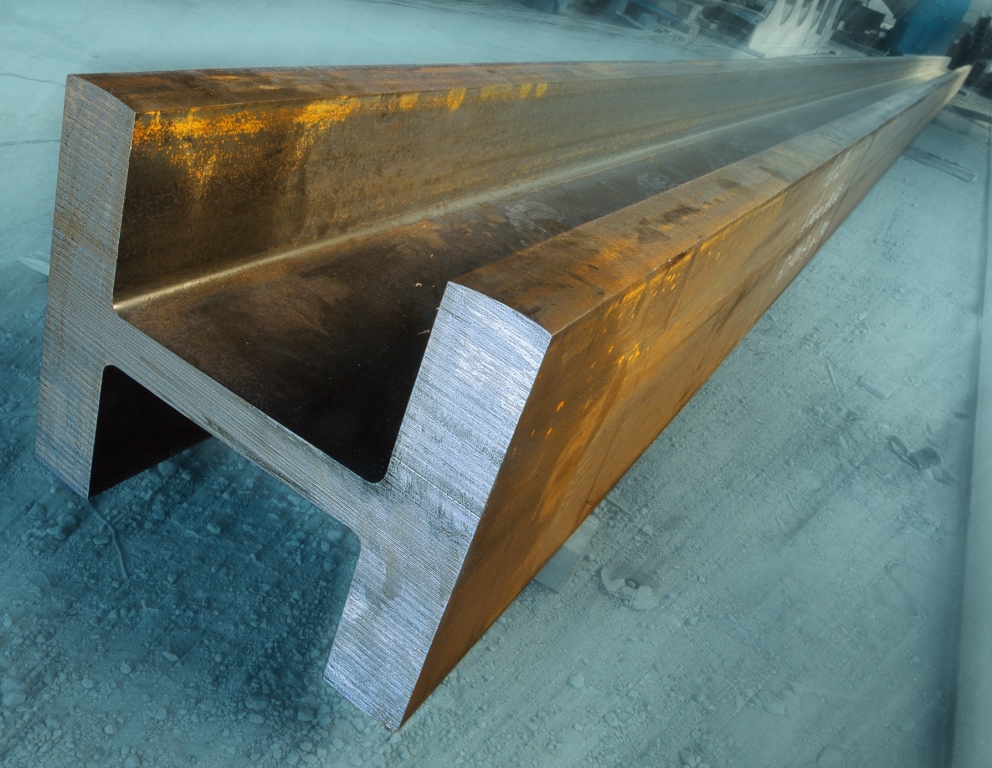
European steel-beam prices fall despite CBAM-driven gains in other steel segments
European steel-beam prices have fallen in the month to Wednesday November 19, even as other steel markets – particularly hot-rolled coil (HRC), plate and hollow sections – have strengthened.
Fastmarkets’ monthly price assessment for steel beams, domestic, delivered Northern Europe was €700-740 ($806-853) per tonne on Wednesday, down by €10-30 per tonne from €730-750 per tonne a month earlier.
Similarly, Fastmarkets’ monthly price assessment for steel beams, domestic, delivered Southern Europe was €700-740 per tonne on Wednesday, down by €10-30 per tonne month on month from €730-750 per tonne.
Flat steel prices have risen sharply in recent weeks, with expectations of future Carbon Border Adjustment Mechanism (CBAM)-related carbon costs underpinning higher levels, while broader trade-policy uncertainty – including around CBAM and possible EU safeguard measures – has contributed to reduced import competition.
Phase 2 of CBAM, set to begin on January 1 2026, will see EU importers move from reporting only to paying CBAM charges on embedded emissions, via the purchase of CBAM certificates linked to the EU carbon price.
The recent strength in HRC has led to the hollow-sections market widening upward because HRC is the product’s main feedstock.
Beams prices, however, have moved against the trend. The product continues to face weak demand in Europe, and its scrap-based production route is expected to incur significantly lower CBAM-related costs than flat steel, which is largely produced via a higher-emissions blast-furnace/basic-oxygen-furnace (BF/BOF) route.
As a result, domestically delivered beams in European markets have not benefited from the same CBAM-driven price support seen in flat steel markets in recent weeks.
One trader noted that while CBAM could lend support for higher beam prices next year, “the main effect will be on flat products,” adding that market sentiment currently remains clouded by political uncertainty around both CBAM and possible safeguard measures.
Despite these structural factors, any sustained recovery in European steel prices will still depend on improvements in underlying economic activity and demand, the source added.
Market participants also said it was still too early to gauge exact CBAM costs, noting the provisional nature of the latest leaked EU’s draft benchmarks and adopting a wait-and-see approach.
Meanwhile, scrap feedstock costs moved up in the month.
Fastmarkets’ calculation of its daily index for steel scrap HMS 1&2 (80:20 mix) North Europe origin, cfr Turkey was $351.33 per tonne on Wednesday, up $7.40 per tonne month on month from $343.93 per tonne.

Orgalim warns: new EU steel safeguards could severely damage Europe’s industrial competitiveness
Orgalim, the association representing Europe’s technology industries, has published a detailed assessment warning that the European Commission’s proposed reform of the EU steel safeguard system could have severe consequences for downstream industrial users. In its paper, released on 14 November 2025, the organisation argues that the draft regulation risks becoming a “devastating threat” to the competitiveness of sectors that depend heavily on steel as a critical input.
According to the analysis, the Commission’s proposal introduces a far more restrictive safeguard regime than the one currently in place. The reduction of tariff-free quotas, the sharp increase in out-of-quota duties, and stricter origin-verification requirements would significantly raise costs for manufacturers across Europe. Orgalim notes that these changes come at a moment when technology industries are already experiencing their third consecutive year of economic decline, with falling turnover, reduced investment capacity, and growing pressure from global competitors. Companies that rely on specialised steel grades, many of which are produced outside the EU or only in limited quantities within Europe, would face particularly serious sourcing challenges.
The position paper highlights that the financial impact on steel users could be dramatic. Orgalim estimates that the proposed system could increase annual tariff costs to more than €5.4 billion—almost seven times higher than in 2024—and potentially even more if importers are unable to fully utilise their quotas. In addition to these direct costs, the organisation points out that trade measures implemented since 2018 have already contributed to domestic steel price increases of more than 40 percent. The new proposal, it argues, would further intensify this upward price trend, placing downstream manufacturers at a structural disadvantage compared with their international competitors.
Orgalim emphasises that the proposal does not adequately consider Europe’s broader industrial objectives. The EU’s commitment to reindustrialisation, resilient value chains, and decarbonisation relies on manufacturers having stable and affordable access to steel. By raising costs and limiting flexibility, the new safeguard regime risks triggering relocations of production away from the EU, reducing investment, and weakening innovation ecosystems. The paper also criticises the lack of a cumulative impact assessment, noting that the combined effect of the safeguard proposal, CBAM implementation, the phase-out of ETS free allowances, and upcoming sustainability requirements under the ESPR may be far more damaging than what has been evaluated so far.
You can read Orgalim’s full position paper here.

Portuguese manufacturing sounds alarm over new EU steel tariffs
An interview published by ECO highlights deep concern across Portugal’s metalworking and mechanical engineering industries regarding the European Commission’s proposed tightening of steel import measures. The sector — Portugal’s largest exporting industry, responsible for €24 billion in exports and over 250,000 jobs — warns that the new tariff regime risks triggering large-scale industrial delocation, loss of competitiveness, and structural damage to Europe’s manufacturing base.
According to ECO, the Commission’s proposal to halve tariff-free steel import quotas and double the out-of-quota duty from 25% to 50% is seen by industry leaders as a one-sided policy designed to protect EU steelmakers at the expense of downstream manufacturers.
“Europe is becoming a disadvantage for industry”
At a high-level event organised by ECO and AIMMAP, CEOs from leading Portuguese industrial groups described a rapidly deteriorating business environment.
António Pedro Antunes (photo), CEO of Metalogalva (VigentGroup), warned that 70% of the company’s business is now at risk. The firm already shifted significant production to the United States in response to previous U.S. steel tariffs and fears it may now have to relocate further activities to remain competitive.
Companies report that steel import quotas from key origins are exhausted in the first quarter, making planning nearly impossible.
Downstream industry: high costs, no alternatives
Executives stressed that downstream manufacturers — which depend on competitively priced steel inputs — are becoming “reféns” (hostages) of rising EU steel prices and tightening trade defence rules. With energy prices still far higher in Europe than in competing regions, the sector argues that EU steelmakers have not improved competitiveness despite years of tariff protection.
Paulo Sousa, CEO of Colep Packaging, warned that the new measures could force companies to move production outside the EU simply to access affordable raw materials. Once relocated, these firms can export back into Europe without tariffs, undermining the purpose of the safeguard system.
“The industry will become trapped,” Sousa said. “If companies cannot buy competitive steel in Europe, they will have to relocate. Europe will lose jobs, investment and value creation.”
AIMMAP: “We have been warning for years — the wolf is at the door”
Rafael Campos Pereira, Executive Vice-President of AIMMAP, criticised the Commission for defending a sector that employs 300,000 people in Europe, at the risk of collapsing a downstream industry that employs 13 million across the EU and 250,000 in Portugal alone.
He warned that escalating tariffs, the arrival of CBAM costs, and a growing administrative burden could push many SMEs beyond their limits.
“We are compromising the future of manufacturing with unrealistic measures,” he said. “Most companies cannot relocate. If nothing is done, the damage will be enormous.”
A call for balanced policy — and urgent action
Portugal’s industry leaders call on both national authorities and Brussels to rethink the tariff strategy and adopt a full value-chain approach, aligning with concerns EUROMETAL has repeatedly raised at European level.
As Europe discusses reindustrialisation and strategic autonomy, industry representatives warn that policies must not force factories out of the continent.


CBAM steel calculations leaked; sources warn data is misleading
The European Union’s recently leaked draft document on the Carbon Border Adjustment Mechanism (CBAM) benchmarks establishes the formal methodology for calculating the free allocation adjustment (FAA) that importers may deduct from the number of CBAM certificates they are required to surrender.
For each imported good, FAA is defined as the product of the specific embedded free allocation (SEFA) for that good and the total mass imported during the reporting year. The document sets out reporting-period definitions, production-route classifications, SEFA calculation rules, and the provisional CBAM benchmark values that apply across covered sectors, including a detailed chapter for iron and steel. Meanwhile, market sources told SteelOrbis that, even though the draft makes it possible to calculate costs, many people consider that these data are misleading.
Methods for determining SEFA values and calculating benchmark calculations
The SEFA of a good can be determined either through actual data or through default values. When actual emissions data are used, the operator is required to calculate a process-level specific free allocation on the basis of three parameters: the CBAM factor applicable to the reporting year, the cross-sectoral correction factor (CSCF), and the process-related CBAM benchmark value. In the case of simple goods, SEFA corresponds directly to the process-level value. For complex goods, SEFA must also incorporate the embedded free allocation of each precursor used during production. This is done through a recursive calculation in which precursor SEFA values are determined either through benchmark-based calculations aligned with the reporting period, or through verified producer-level data if sufficient evidence of the precursor’s actual year of production is provided.
There are precise instructions on determining the mass share of each precursor. The operator must calculate the specific mass of every precursor consumed per metric ton of the final good, using the total mass of the precursor consumed during the reporting period divided by the relevant activity level of the production process. These rules ensure consistency between SEFA calculations, activity levels, and the production boundaries defined in the broader CBAM methodological regulation.
When default values are used instead of actual data, the SEFA of a good is calculated using a simplified formula. It multiplies the CBAM factor and the cross-sectoral correction factor by the default benchmark value. To identify the correct default benchmark, the country of origin, the CN code, and, where applicable, the default production route assigned to that country under the separate implementing regulation on embedded emissions are required.
Benchmark and precursor selection rules
The EU has also provided detailed rules for selecting the appropriate CBAM benchmark for each product when using either actual or default data. For default values, the production route must follow the default route assigned to the country of origin in the corresponding emissions-calculation regulation. For actual data, there are product-family-specific rules. In the iron and steel sector, these rules distinguish between carbon steel, stainless steel, low-alloy steel, and high-alloy steel, and specify the relevant precursors for each CN code. For goods under heading 7201, sintered ore may serve as a precursor; for goods under heading 7205, pig iron or crude steel may be used; and for goods under headings 7206 to 7224, pig iron or crude steel after continuous casting is referenced as the precursor. For products classified at CN 7225 and above, crude steel is used unless the product belongs to cast-iron categories, in which case pig iron is designated as the precursor.
Identifying correct production route
The draft prescribes specific rules for selecting the production route for iron and steel goods. When more than half of the mass of crude steel in the final good originates from scrap, the route must be classified as Scrap-EAF. When more than half derives from direct reduced iron (DRI), the correct route is DRI-EAF. When more than half originates from a blast furnace or smelting-reduction route, the route is BF-BOF. If none of these routes exceed the 50 percent threshold, the production route is assigned based on the component contributing the highest mass share to the final steel. These rules apply across both simple and complex steel goods and serve as the basis for determining which benchmark value applies.
Provisional benchmarks for iron and steel
A comprehensive table of provisional CBAM benchmark values for iron and steel products is also provided. Each CN code receives both a process benchmark for use in actual-data calculations and a default benchmark for default-value calculations. For many flat and long products, including hot rolled coil, cold rolled coil, galvanized products, slab, billet, rebar, and wire rod, three separate benchmark values are provided reflecting the BF-BOF, DRI-EAF and Scrap-EAF routes. In addition to these, benchmark values for ferroalloys such as ferromanganese, ferrochromium and ferronickel, as well as for direct reduced iron (DRI) and spongy ferrous products, are included.
| Product | Default benchmark Co2e/t (BF/BOF) | Default benchmark Co2e/t (DRI/EAF) | Default benchmark Co2e/t (Scrap/EAF) |
| Hot rolled flats | 1.530 | 1.033 | 0.288 |
| Cold rolled flats | 1.641 | 1.124 | 0.350 |
| Coated products | 1.692 | 1.175 | 0.400 |
| Bars and rods | 1.520 | 1.023 | 0.279 |
| Semis | 1.520 | 1.023 | 0.279 |
Meanwhile, according to the calculations of McCloskey, a division of the US-based Oil Price Information Service (OPIS), based on the leaked draft, CBAM costs for HRC imported into the EU would range between €43-140/mt for Turkish material depending on the production route, €223/mt for ex-India HRC, and climb as high as €540/mt for Indonesian material.
Indirectly, it is implied that complex goods will require a multi-layered interpretation of the benchmark table, particularly when the final product incorporates multiple steelmaking stages or alloy elements. The presence of multiple benchmark levels within a single CN code, for example, distinctions between carbon steel and low-alloy steel, demonstrates the importance of correctly identifying both the product type and the production route. The draft also defines temporal indicators within the benchmark table, specifying which benchmark values apply to production years 2026-2027 and which apply to 2028-2030. This allows operators to align SEFA and FAA values with the appropriate reporting year, ensuring consistency with ETS benchmark-revision cycles.


Italian apparent consumption decreases, Germany trade becomes deficit
Italy’s apparent consumption of primary steel products continued the decline in 2024 that has been underway since 2022, mirroring the slowdown in manufacturing, Italian steelmakers association Federacciai says in its annual report obtained by Kallanish.
Apparent consumption fell by 2.1% on-year to 26.1 million tonnes. This level remained close to the decade’s average low, surpassed only by the 2020 level of 23.9mt.
A breakdown by product highlights diverging trends. Consumption of non-alloy and other alloy steels worsened, with a 2.3% decline, reaching 24.7mt. Stainless steel moved differently. After the sharp fall of 2023, when apparent consumption declined to 1.4mt with a 25.8% drop, volumes stabilised in 2024, inching up 0.3%.
Overall, the Federacciai document indicates a deterioration in the performance of domestic producers, partly due to falling exports, while imports were steady. Deliveries from Italian mills fell by 4.7% to 24.1mt, which touched a new decade low.
The contraction in exports was even more pronounced. Total foreign sales fell by 7% to 10.1mt, also marking a ten-year low. The breakdown by destination shows declines. Exports to EU countries, which account for more than 80% of Italy’s external shipments and totalled 8.4mt, fell by 6.6%, while deliveries to non-EU markets declined by 9.2% to 1.7mt.
Import trends moved differently. Total inflows reached 17mt in 2024 and remained in line with 2023 levels, decreasing by 0.8%. This overall stability reflects two opposing trends: imports from EU countries rose to 7.4mt, 1% on-year, while shipments from non-EU suppliers fell to 9.5mt, a 2.1% decline. Despite recording a third consecutive annual drop since 2022, non-EU origins continued to account for more than 55% of total Italian imports.
For the first time in the past decade, trade with Germany, Italy’s main import and export partner, moved into deficit due to a sharp fall in exports to Germany, which dropped by 13.2% on-year to 1.9mt, a level below that of 2020. German shipments into Italy however increased 5.3% to 1.9mt.
On the import side, India continued to expand its presence in the Italian market. With a 4.4% increase, Indian shipments reached 1.9mt last year, the highest level of the decade, confirming India as Italy’s second-largest source of steel imports in 2024. Turkey also recorded a strong surge, doubling its exports to Italy from 511,000t in 2023 to 1.1mt in 2024.
For exports, there was year-on-year stability. All of Italy’s top ten destination markets were EU member states.
In 2024, apparent consumption of long products reached 9.4mt, unchanged from the previous year. Flat products consumption fell by 1.6%. At 14.7mt, demand reached one of the lowest levels of the past decade, affected by the slowdown in the automotive and white goods sectors, the Federacciai report states. The weakening of consumption hit both non-alloy and other alloy steels as well as stainless products.
Natalia Capra France
