


ArcelorMittal calls for immediate enforcement of EU’s new tariff quota
ArcelorMittal has reiterated its call for the urgent implementation of the new tariff quota announced by the European Commission in October 2025.
The company emphasized that the regulation is critical for the survival of the European steel industry and the long-term security of the manufacturing sector. Record levels of steel imports into Europe are putting significant pressure on EU steel producers.
With the implementation of the new tariff quota, ArcelorMittal aims to assure producers and distributors of uninterrupted steel supply. The company is preparing to increase production at its facilities across Europe and anticipates demand shifts that the tariff quota regulation may create. Through these measures, ArcelorMittal will be able to respond swiftly to customer demand, maintain supply chain stability, and simultaneously contribute to employment and economic value in Europe.
Geert Van Poelvoorde, CEO of ArcelorMittal Europe, acknowledged that some steel users have concerns about the new trade tool’s potential effects, such as supply shortages, price volatility, and access to specialized products. Van Poelvoorde emphasized that steel produced in Europe is sufficient to meet demand, stating, “We are ready to increase production accordingly.”


Türkiye has fully used its quota capacity in 6 product categories under the EU safeguard system
Türkiye recorded full quota utilization in six product categories for its steel exports to the EU during the period of 1 October-31 December 2025. The highest usage was seen in HRC and hollow sections.
According to data compiled by SteelRadar from the European Commission, Türkiye fully used its quotas for 16,048 tons of organic coated sheets, 479,925 tons of HRC, 100,456 tons of hollow sections, 38,882 tons of welded pipes (other welded), 15,246 tons of large welded pipes and 96,390 tons of rebar.
In the final quota period of the year, Türkiye fully utilized most product quotas for the first time in recent periods.
With these products, Türkiye achieved 100% utilization in a total of five categories. Additionally, it used 99.9% of its 120,200-ton wire rod quota, 86.4% of its 111,166-ton merchant bars and light sections quota, 58.6% of its 22,184-ton stainless HR quarto plate quota, 50.4% of its 53,767-ton merchant bars and light sections quota (other category), and 44.3% of its 1,683-ton railway materials quota.
Among other countries, China fully used its quotas for 129,758 tons of 4B metallic coated sheets, 5,019 tons of stainless HR quarto plate, 143,225 tons of merchant bars and light sections, 7,148 tons of sheet piles, 39,196 tons of seamless pipes (other) and 8,243 tons of welded pipes (other). India fully utilized its quotas for 80,249 tons of organic coated sheets, 32,403 tons of stainless merchant bars and light sections, 6,004 tons of seamless stainless pipes and 304,720 tons of HRC. South Korea, also among the countries reaching full capacity, fully used its 37,973-ton quota for 4A metallic coated sheets and its 72,527-ton quota for organic coated sheets, while Taiwan fully used its quotas for 23,244 tons of organic coated sheets and 29,716 tons of hollow sections.


Ponant to build ships with ArcelorMittal low-carbon steel
France’s Ponant Explorations Group has signed a memorandum of understanding with ArcelorMittal that aims to integrate the steelmaker’s XCarb recycled and renewably produced low-carbon heavy plate, manufactured in Gijón, Spain, into Ponant’s shipbuilding. The long-term goal is to construct vessel hulls entirely with XCarb steel.
ArcelorMittal guarantees availability of XCarb low-carbon plate across a broad range of grades, dimensions and certifications, supported by independently verified environmental product declarations. Under the MoU, Bureau Veritas Marine & Offshore will certify XCarb materials and production processes to ensure compliance with marine standards. Ponant will also work with its shipyards worldwide to commit, where possible, to the use of XCarb plate.
The two companies will evaluate a steel traceability system that would enable the recovery and reuse of steel at the end of a vessel’s lifecycle, supporting a closed-loop circular model. The initiative aligns with the Hong Kong International Convention for the Safe and Environmentally Sound Recycling of Ships, which entered into force on 26 June 2025 and requires shipowners to maintain an Inventory of Hazardous Materials and use certified recycling facilities.
“This MoU reflects a shared commitment to accelerating the maritime industry’s transition to net-zero emissions. By combining Ponant Explorations Group’s pioneering sustainability goals with ArcelorMittal’s advanced steel solutions, the partnership sets a new benchmark for more responsible shipbuilding,” says a joint note from the partners obtained by Kallanish.
The partnership forms part of Ponant’s broader Swap2Zero programme, combining wind-assisted propulsion, solar panels and renewable fuels to develop what is described as the first near-zero-emission ocean-going cruise ship. The project is co-financed by the EU Innovation Fund and the France 2030 programme, marking a significant step for the company’s newbuilding and R&D teams.
Natalia Capra France


Europe and the UK steel markets face 2026 concerns: Demand weak, prices being tested
In the UK and EU markets, where cost pressures from CBAM are steadily increasing, the expected tightening of supply towards 2026 alongside shrinking imports points to faster price rises in the medium term. However, current order flow remains cautious.
While interest in green steel in the European steel sector is seen as a strategic focus for the coming years of increasing pressure, buyer interest remains low under present market conditions. Companies believe the green transition will accelerate only when free emission allowances are reduced, and most buyers are reluctant to bear additional costs in today’s weak demand environment. It is noted that only project-based users with special budgets may prefer to pay a premium, with a reasonable premium range for green HRC discussed between €50–80/ton.
In the UK market, imports are expected to contract significantly due to CBAM and new protectionist measures coming into effect in 2026. With additional tariffs of £30–130 per ton, a 50% reduction in quotas, and increased penalties for over-quota imports, the EU and UK could recover the 18–20 million tons of lost business volume. Prices are anticipated to have short-term upside potential of £80/ton and could exceed £200/ton by 2026.
Rising uncertainties around CBAM, a shift of buyers back to European sources, declining Asia-origin supply, and cautious behavior from importers indicate a serious supply tightening by 2026. Producers continue aggressive pricing in the short term, but rising domestic purchases could rapidly tighten the market. Service centers prefer to hold wide stocks and warn that pricing may be updated quickly in response to market movements.
Looking at prices, suppliers in European countries have recently made limited attempts to raise prices, but buyers remain very resistant to these efforts. Weak demand is creating an environment where prices are merely being tested.
In Germany, prices stand at €615/t EXW for hot-rolled coil (HRC), €710/t EXW for cold-rolled coil (CRC), €710–715/t EXW for galvanized products, €685/t EXW for plates, €600/t CPT for rebar, and €585–600/t CPT for wire rod. Despite small attempts by producers to increase prices, buyers have not backed down, showing that upward pressure is not sustained in the market.
A similar picture is seen in Italy, with HRC at €605/t EXW, CRC at €700–705/t EXW, galvanized products at €720/t EXW, plates at €625–630/t EXW, rebar at €530–550/t EXW, and wire rod at €580–600/t CPT. Suppliers try to push prices up, but low order activity mostly limits any increases.
In Poland, wire rod is at €600–615/t CPT and rebar at €570–575/t CPT. Although traders attempt price hikes, cautious buyer behavior keeps prices from moving above the current range.
On the slab side, offers from China at $520/t, Vietnam at $515/t, Indonesia at $510/t, and Libya at $490/t CFR Italy indicate that existing cost advantages remain strong, preventing successful price increase attempts.
In the January order cycle, buyers maintain a cautious stance. Adequate stock levels and uncertainty over whether any price rise will be sustained slow order momentum. Suppliers are trying to reduce spot sales pressure by pushing for long-term contracts, but no significant progress has been made yet. German buyers state that producers imposed a €100/t price hike on HRC, but the market did not accept this increase.
Imported HRC in Italy is very active. Including CBAM costs, a broad stock range is available for Q1 2026 deliveries at €560–600/t DDP. Some of these products are waiting at ports, some are in transit, and a significant portion has already been booked for Q1 delivery around €580/t DDP. Offers for January deliveries from India, Indonesia, and Türkiye at €580–600/t DDP confirm that CBAM-related cost increases are now fully reflected in prices.
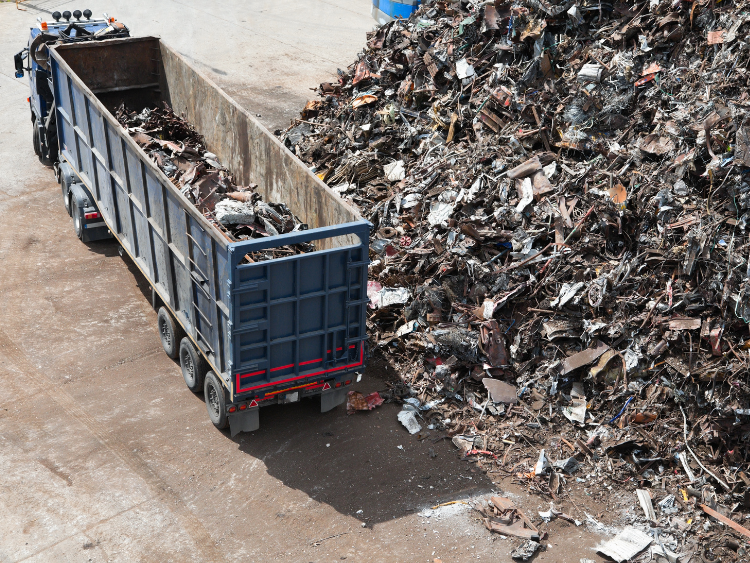
European EAFs, scrap suppliers seek low-emission labelling revision
Representatives of Europe’s scrap processing and electric arc furnace segments are urging the European Commission (EC) to reconsider emerging proposals for a green steel labelling methodology. They warn that current approaches risk disadvantaging recycling-based EAF production and undermining existing climate progress.
Recycling Europe – the former Euric association – EAF steelmakers including Aperam, Pittini, Sidenor, Ovako, Megasa, Duferco, Feralpi, and large scrap sellers such as Galloo and Derichebourg, have appealed to the EC in a letter.
They recommend the Commission avoid applying a single sliding-scale label across all steelmaking routes, arguing that such a system would fail to recognise the low CO2 profile of Europe’s EAF industry. The latter’s output accounts for roughly 45% of EU steel production and is already largely electrified, circular and low-emission.
Sliding-scale concepts were developed primarily for coal-based primary steelmaking. Applying the same metric to EAF production would be counterproductive and could distort competition by favouring higher-emission imports.
“We find it difficult to believe that the European Commission would pursue such an unbalanced and discriminatory policy and not realise the dire consequences it would have for half of the EU steel industry and its value chain. Nor do we believe that the Commission would overlook the political and legal challenges such a course would inevitably face,” reads the letter obtained by Kallanish.
The signatories warn that a “one-size-fits-all” label would fail to reflect the different challenges faced by the BF-BOF and EAF routes, and could lead to inconsistent policy outcomes across markets. They add that the initiatives shaping the sliding-scale methodology have so far consulted almost exclusively with primary producers, leaving the recycling segment under-represented.
The signatories warn that misaligned criteria could displace EU EAF production in favour of higher-carbon primary steel from abroad, increasing Europe’s dependence on imported raw materials and undermining decarbonisation targets.
They are calling for a more balanced approach aligned with existing carbon footprint methodologies that integrate both circularity and decarbonisation. They add they are ready to work with policymakers to ensure future frameworks support Europe’s climate ambitions while safeguarding the competitiveness of its recycling-based steel value chain.
Natalia Capra France

German power cap disadvantages Czechia, unbalances EU
Czech energy-intensive industry urgently needs government support with energy prices following Germany’s announcement of a power price cap, which will disrupt the European single market and hurt Czech competitiveness, according to the Czech and Slovak steel association, Steel Union.
The German government plans to cap electricity at 5 euro cents (6 US cents) per kilowatt hour from January 2026 through end-2028 at a total cost of €6.5 billion ($7.5 billion), Kallanish notes.
Trinecke zelezarny (TZ), currently the Czech Republic’s sole crude steel producer, consumes approximately 1 TWh of electricity per year. While German steelmakers are set to pay €50/MWh as a result of the subsidies, those in the Czech Republic pay around double, meaning a cost disadvantage for Trinecke zelezarny of some CZK 3-4 billion ($140-190 million) annually, the association points out.
“We understand the support of the German government as an effort to stabilise the industry at a time of high costs and uncertain energy policy. Without comparable conditions … the Czech steel industry will be unsustainable in the long term. If the government does not come with clear support, there is a risk that crude steel production will disappear from the Czech Republic. This would mean the loss of not only jobs, but also part of our industrial self-sufficiency,” says TZ chief executive Roman Heide.
Brussels has opened up the possibility for member states to adopt temporary national measures to support industry, including energy subsidies and investment incentives, as part of the new Clean Industrial Deal.
“However, this gradually shifts responsibility for industrial policy from the European to the national level, and the stronger a state is in terms of budget, the more it can protect its companies. The original ambition of the European Green Deal was to create a level playing field across the Union. However, these rules are now fragmented according to the possibilities of national budgets,” Steel Union notes.
“Thanks to the new tariff, German industry will have energy approximately half as cheap as Czech companies. For such a closely interconnected region as Central Europe, this represents a systemic risk,” concludes association chair Marcela Kubalová.
Adam Smith Austria

Crowe: One of the biggest issues regarding CBAM remains data availability and quality
SteelOrbis talked to Jamie Mcleod, director at Crowe U.K. LLP on EU’s trade measures and CBAM effects.
How do you evaluate the latest announcement from the EU regarding its safeguard policy?
The transition to a permanent framework for steel safeguard duties introduces several notable shifts, and the introduction of the “melt and pour” origin rule origin verification requirement may complicate compliance for UK exporters. From a UK customs and trade perspective, this poses serious risks. The EU remains the UK’s largest steel customer, accounting for 78 percent of UK steel exports in 2024. Without a carve-out for UK origin steel, British exporters could be priced out of the EU market.
The proposed quota reduction intensifies this threat. For the UK, the risk of trade diversion is also significant, and the UK’s own safeguard regime, managed by the Trade Remedies Authority (TRA), is also under review, with increased pressure on reforms as a result of the EU announcement.
Are these trade measures effective in ensuring a level playing field, or do they distort competition?
The EU’s motivation in trying to protect its steel industry from global overcapacity and subsidised imports is clear, and in principle, this is about restoring fair competition. In practice, however, trade measures like these often have unintended and nuanced consequences. Some EU manufacturers, for example, have voiced concerns about rising input costs and likely inflationary effects. So, while the measures may help upstream producers, they risk creating friction elsewhere in the economy.
Other EU trade bodies, meanwhile, are pushing for further extension of the measures to downstream products, which are currently excluded, creating potential loopholes and uneven protection across the supply chain.
It’s a complicated picture and the full impact remains uncertain. The proposal still needs to pass through the EU legislative process and WTO negotiations, both of which could take months and may result in amendments. Until then, businesses are operating in a climate of uncertainty.
What do you think the main challenges of CBAM are and what effects do you anticipate on trade flows?
CBAM continues to present significant operational and strategic challenges for businesses, and this is intensifying as we approach the definitive phase starting in January 2026, at which point a CBAM cost will come into play. One of the biggest issues remains data availability and quality. Importers must obtain detailed emissions data from third-country suppliers, many of whom lack the systems or incentives to provide it. Even with recent simplifications, such as excluding final production steps from emissions calculations, the reporting burden remains high.
Another challenge is uncertainty. Key elements like benchmark emissions values and default emissions rules are still pending, making it very difficult for businesses to forecast costs or plan contracts. The requirement for Authorised Declarant status from 2026 adds further pressure on importers to build robust compliance frameworks quickly.
In terms of trade flows, I expect some realignment of supply chains. EU importers may favour suppliers with transparent carbon data or shift sourcing to countries with recognised carbon pricing systems. Conversely, exporters unable to meet CBAM requirements may lose access or face pricing disadvantages.
From a UK perspective, the situation is evolving. The UK CBAM is due in 2027, and, while there’s political agreement on UK–EU ETS linkage, the timeline is unclear. Without an interim arrangement, UK exporters could face CBAM exposure despite regulatory alignment, potentially distorting trade until exemptions are formalised.
Do you think current EU funding mechanisms are sufficient to support green transition in steel?
While broader funding policy isn’t my area, I am particularly interested in how CBAM revenues, which in time will become highly significant, will be used – for now, this remains unclear. There are concerns that using CBAM revenues to subsidise EU producers could undermine the environmental goals of CBAM and raise WTO compatibility issues.
How do you see the balance between environmental targets and global competitiveness?
It’s a very difficult balance to strike. The EU is right to push for stronger climate action, and CBAM, the phase-out of free allowances, and tighter carbon pricing are all part of that. But the trade and competitiveness impacts are often more nuanced.
Whilst the EU has been firm in sticking to CBAM and the planned timeline, there’s a broader concern that other sustainability measures are being diluted. The delays and simplifications around the EU Deforestation Regulation (EUDR), for example, reflect growing pressure to ease compliance burdens – raising questions about consistency and ambition across the EU’s green agenda.
At the same time, the global trade environment has become increasingly volatile. With Mr. Trump back in office and actively applying tariffs, the risk of retaliatory measures and friction over climate-linked trade instruments like CBAM is real.


EU steel industry pushes for early adoption of new steel trade measure
The European Steel Association (EUROFER) and the European trade union federation IndustriAll Europe have warned that waiting until June 2026 to implement new steel trade measures risks leaving the sector exposed during a period of unprecedented import pressure.
According to the organizations, the sector is “under water” with no improvement in the economic outlook, with steel demand in Europe remaining deeply depressed with no significant recovery expected. Capacity restructuring and plant closures continue, while global competitors expand production and global overcapacity accelerates. In addition, in EU, unfair, low-priced imports now hold a 27 percent market share, double their 2012 level.
Massive stockpiling is already taking place, driven by anticipation of the future trade measure. EUROFER and IndustriAll warned that, if the new rules only take effect in June 2026, importers will continue flooding the market throughout next year, weakening the impact of the measure before it is even implemented. They argue that:
- the measure must start no later than April 1, 2026,
- amendments delaying adoption in Parliament or Council would worsen the crisis,
- 2026 risks becoming “another lost year” for EU steelmakers if action is slow.
EUROFER and IndustriAll Europe urged EU institutions to act decisively adopting the – European Commission’s proposal as a priority, implementing the trade measure by April 2026, and pairing it with a credible industrial strategy to safeguard Europe’s metals value chain. The organizations concluded that the steel industry – and the hundreds of thousands of workers it employs – cannot wait until June for relief.

Romanian longs market still struggles amid slow demand and liquidity pressures, but local prices hold firm
Given the persistently slow demand, limited sales volumes and ongoing liquidity pressures affecting both buyers and sellers, the outlook for the Romanian longs market has remained gloomy over the past week. Despite these challenges, domestic prices have generally held steady for both the country’s sole rebar producer and local traders. However, the weak pace of business continues to push some traders to offer prices below workable levels in an attempt to attract buyers’ interest and generate a minimal turnover. Meanwhile, the import market has remained quiet after quota exhaustion, reducing interest in new deals with Turkey or other non-EU suppliers. Market sources report that, when restocking is necessary, Romanian buyers increasingly lean toward nearby suppliers such as Bulgaria and Moldova due to shorter lead times and more flexible supply options.
As a result, domestic rebar offers have shown no change over the past week. The country’s sole producer continues to keep prices at €550-555/mt ex-works, while spot traders have maintained quotations at €550-565/mt ex-warehouse, in line with last week’s levels. Even so, some traders are still willing to negotiate lower prices to generate sales, with discounted levels of €535-540/mt ex-warehouse reported for larger-volume orders.
In the wire rod segment, prices have likewise remained unchanged. Despite weak demand, traders continue to quote material in the range of €560-570/mt ex-warehouse, with no significant adjustments reported during the week.
On the import side, no significant new purchases have been reported from Romanian buyers, aside from occasional medium-sized cargoes sourced from nearby suppliers. Overall, import prices have remained largely stable. According to market sources, EU suppliers continue to hold their offers steady, with the Bulgarian mill quoting at €570-580/mt CPT for rebar and the Moldovan supplier maintaining levels at around €550/mt CPT, unchanged from last week. Among non-EU suppliers, Egyptian mills have also kept their pricing unchanged, offering rebar at €485-490/mt CFR and wire rod at €495-500/mt CFR. In contrast, Turkish suppliers have raised their offers by approximately €10/mt over the past week, supported by firmer scrap prices. Current Turkish offers stand at €495-510/mt CFR, calculated on an exchange rate of €1 = $1.15 and estimated freight costs of €15-20/mt.

Stable EU HRC offers contrast with weak imports and rising CBAM confusion
European HRC producers have held their January delivery offer prices steady at elevated levels this week. Import activity has continued to be weak, hindered by ongoing CBAM-related compliance issues and quota constraints. Besides, a leaked document released this week revealed the European Commission’s long-anticipated draft CBAM benchmark values, providing EU importers with the critical data needed to assess steel import costs from January 1, 2026. However, market sources claim that the numbers are provisional and may be adjusted, with most industry voices already questioning them.
More specifically, local mills in northern Europe are reported to be targeting €630-650/mt ex-works for new orders for January and February deliveries, the same as last week. However, according to sources, the tradable price levels for January delivery coils have been estimated at €600-620/mt ex-works for mainly January delivery, the same as last week. Sources also report that EU mills are in ongoing talks with automotive equipment makers for 2026 supply agreements, prompting them to maintain firm spot prices to preserve their negotiating power.
Meanwhile, in Italy, while mills have been targeting €620-630/mt for January delivery, the same as last week, the tradable price level for January delivery is still estimated at €590-600/mt ex-works.
In the import segment, indicative offer prices for HRC have settled at €475-520/mt CFR, compared to €470-520/mt CFR last week. The lower end of the range corresponds to offers for ex-Indonesia, ex-Malaysia and ex-India HRC at €475-490/mt CFR, mainly the same as last week. All prices exclude CBAM costs.
Offers for ex-Turkey HRC have been heard at around €520/mt CFR, duty included, mainly the same as last week, but without CBAM costs, though, according to sources, EU traders have this week been offering ex-Turkey HRC at €580-600/mt DDP, including CBAM costs.
Furthermore, market insiders have continued to report HRC import offers from different global suppliers coming to the region including CBAM costs on DDP basis at €560-600/mt levels, depending on the supplier, up by €20/mt on the higher end of the range week on week. “We heard several transactions have been done at €580-600/mt DPP for HRC from Vietnam, Algeria and Indonesia through traders this week,” a Spanish trader told SteelOrbis. This means the spread between import prices without CBAM and import offers on DDP basis, including CBAM-related costs, has reached €90-100/mt.
It is worth mentioning that this week’s leaked document unveiled the European Commission’s long-expected draft CBAM benchmark values, offering EU importers key inputs for estimating steel import costs beginning January 1, 2026. Yet the benchmarks are not final, and some in the sector have cast doubt on them. According to McCloskey calculations based on the leaked draft, CBAM costs for HRC imported into the EU would range from €43-140/mt for Turkish material depending on the production route (BF-BOF, DRI-EAF, scrap-EAF), reach around €223/mt for Indian HRC, and climb as high as €540/mt for Indonesian material. The market reaction to these figures has been overwhelmingly negative, with most participants doubting their accuracy and questioning whether the draft values can be taken as credible.