


EU Commission finalizes CBAM benchmarks, default values ahead of January 2026 launch
These measures lay down the rules for the practical application of the CBAM regulation as of January 2026.
It’s important to note that, as of December 10, the CBAM steel benchmark values and default values have not yet been published in the EU Official Journal.
Market sources circulated draft annexes and technical implementing acts earlier this week, outlining these benchmarks and default values.
The European Commission CBAM Committee has voted today to accept the final revisions to these documents, sources said.
Sources familiar with the matter told Fastmarkets that these benchmarks and default values are considered technically final and will become legally binding as of January 1, 2026.
“Vote was positive on benchmarks and defaults. So all data confirmed,” a source familiar with the matter said.
The Commission is expected to publish the final, legally binding benchmarks before December 25, Fastmarkets heard.
Benchmarks
The Commission used the same approach as in leaked drafts seen by Fastmarkets in November.
Benchmarks for different steel products vary depending on production route — blast furnace-basic oxygen furnace (BF/BOF), direct reduced iron/electric-arc furnace (DRI/EAF), and scrap-based EAF. Importantly, benchmarks also vary depending on whether actual emissions data or default emissions values are used.
Therefore, for each product, the benchmark is expressed in tonnes of CO2 equivalent (tCO2e) per tonne of steel produced, with separate values for different production routes. For example, flat-rolled products and semi-finished products have distinct benchmarks for BF/BOF, DRI/EAF and scrap-EAF routes, reflecting the differing carbon footprint of each process. Where actual emissions data is available and verified, it can be used to determine the specific embedded emissions for a given import. If not, default values — often set at the higher end of the range — apply.

It’s important to note that the finalized benchmarks are lower than those seen by Fastmarkets in November. For example, in the November leaked drafts, steel hot-rolled coil carried benchmark values of 1.530 tCO2e per tonne of steel for BF/BOF production, 1.033 tCO2e per tonne of steel for DRI/EAF and 0.288 tCO2e per tonne of steel for scrap-based EAF routes. These have been revised to 1.370 tCO2e per tonne of steel for BF/BOF, 0.481 tCO2e per tonne of steel for DRI/EAF, and 0.072tCO2e per tonne of steel for scrap-based EAF in the finalized document.
Default values by country
The document seen by Fastmarkets also established default emissions values that importers must use under CBAM when actual emissions data is not reported and/or cannot be verified. It applies to all CBAM goods except electricity and provides a harmonized, country-specific and product-specific framework to calculate embedded emissions for customs declarations.
The document also clarifies how default values must be selected: if a country is not listed, importers must use the “other countries and territories” table; if a country is listed but no value is provided for a particular CN code, the “other countries” figure still applies, Fastmarkets understands.
This is supposed to ensure that no imported CBAM good enters the EU without an emissions reference point.
For each CN code, the document provides default values for:
- Direct emissions,
- Indirect emissions (electricity-related),
- Total emissions
It also includes future annual mark-ups for 2026, 2027 and 2028-onward. Notably, default values generally rise annually through 10% (2026), 20% (2027) and 30% (2028-onward). These mark-ups reflect CBAM’s phase-in and the declining availability of free allowances in the EU Emission Trading System (ETS).

Using the information from the documents’ drafts, Fastmarkets has calculated CBAM costs for a range of steel products.

Calculations were made without the 10% markup.
Market reaction
Sources noted that, for some origins, default values were set at higher levels compared with previous leaked drafts, pushing costs of these products significantly upward.
For China, for example, December review default values for steel slab were set at 3.167 tCO2e per tonne produced, compared with 1.75 tCO2e per tonne outlined in the previous documents. That will push CBAM costs for Chinese slab to around €144 ($168) per tonne — “quite unmanageable,” according to market sources.
For Brazil, defaults were only slightly higher, which makes it a “manageable” supplier under the CBAM regulation.
For Indonesia and India, very high defaults were confirmed in the documents.
“Recently big cargoes of Indian and Indonesian hot-rolled coil were booked to Europe. I wonder how those can be custom-cleared, considering the CBAM update,” a buyer in Italy said.
Notably, a deal for Indonesian HRC was reported at €490 per tonne CFR earlier in December.
A transaction for a large tonnage of India-origin HRC was heard around $510 per tonne CFR recently, for first-quarter 2026 arrival.
“The price was extremely low, with CBAM risks on the buyer side, but with [CBAM] costs for Indian HRC over €200 per tonne — the final price doesn’t look so sexy anymore,” a second buyer said.
Another source noted the “punitive nature” of default values markups.
“If you have default value of over 3 [tCO2e per tonne of steel], it’s quite impossible to move to under 2 [tCO2e per tonne of steel] within a year. These [high default values and mark-ups] are supposed to stimulate countries to report and verify actual emissions,” a buyer in the Benelux area said.

Eurofer: EU Electrification Plan could boost steel competitiveness
The European Steel Association (Eurofer) announced that, following the completion of the public consultation on the EU Electrification Action Plan (EAP), they expect a comprehensive strategy aimed at restoring access to affordable electricity for industrial sectors to be adopted in early 2026.
According to Eurofer, rapidly and effectively reducing electricity costs is critically important both for accelerating the decarbonization of the steel sector and for strengthening Europe’s international competitiveness.
Eurofer emphasized that increasing the share of fossil-free electricity consumption would not only support progress toward climate neutrality but also contribute to the EU’s strategic industrial autonomy targets. To achieve this, electricity-related costs must be substantially and swiftly reduced. The association stated that this objective will require a broad set of policy measures — ranging from lowering wholesale market prices to effectively decoupling fossil fuel prices from electricity prices in long-term contracts.
The statement also highlighted the importance of enhancing transparency around the removal of fossil fuel-based power plants from the merit order in short-term markets. Eurofer noted that such transparency is essential for both consumers and investors, as it allows them to track whether new generation capacity is effectively exerting downward pressure on prices.
Eurofer further underlined the need for timely assessment of alternative market design models that reflect the EU’s rapidly changing energy landscape. In this context, the forthcoming Action Plan should include “consumer-focused and bold” measures to support the transformation of the European steel sector.
The association concluded that improving energy cost conditions will unlock investment in low-carbon steel production and reinforce the sector’s global competitiveness, making the EAP a strategic opportunity for EU industry.

Worldsteel: China’s steel overcapacity won’t be easy to resolve
Edwin Basson, Director General of the World Steel Association (Worldsteel), stated that China’s long standing steel overcapacity can’t be reduced quickly, as it is deeply linked to the structure of the country’s economy.
Speaking to Bloomberg, Basson emphasized, “Shutting down a steel plant creates a chain reaction across other domestic sectors. Therefore, there is no viable short term solution.”
The steel sector was among the first targets of the import tariffs introduced earlier this year by US President Donald Trump, and many countries, including Vietnam, have begun imposing antidumping duties on Chinese steel. Basson said that this trend has reversed roughly 20 years of relative openness in global steel trade: “The open market that existed from 2000 to 2020 is now disappearing. Free movement of goods between continents is a critical issue for the sector.”
China’s demand decreases, exports reach record levels
According to Worldsteel, steel demand in China is expected to decrease by 2% in 2025 and by 1% in 2026. This decline is driving producers to export record volumes despite rising protectionism. China’s steel exports are moving toward an all-time high in 2025, with shipments exceeding 100 million tonnes in the first 11 months of the year. This momentum has also pushed the country’s total trade surplus above 1 trillion USD for the first time in history.
Meanwhile, iron ore futures in Singapore decreased by 0.9% on the first trading day of the week, falling to 102.45 USD per tonne.
A fragmented global market complicates carbon reduction
Rizwan Janjua, Head of Technology at Worldsteel, said that fragmentation in the global steel market is jeopardizing the sector’s climate goals. He noted that steel accounts for around 8% of global carbon emissions and emphasized, “Cleaning up the sector requires unprecedented levels of international cooperation. However, as markets become more divided, ensuring this coordination becomes more difficult.”
Janjua added that the technologies required for emission reduction already exist, but issues related to energy supply and policy misalignment continue to slow progress: “If everyone doesn’t act together, each country will try to optimize only its own system.”
Worthington’s play for Germany’s Kloeckner rings out a year of intense M&A in steel processing sector
The news of US-based steel processor Worthington Steel being in talks with Kloeckner for a “voluntary public takeover” broke in two successive press releases on Saturday December 6, a development termed “crazy” by a market watcher.
Both companies released statements on Saturday to confirm they were in negotiations, with the German metals firm noting that Worthington Steel is conducting a due diligence review with the aim of potentially launching a voluntary public takeover offer for its shares.
“It is currently uncertain whether, or under which conditions, a potential voluntary public takeover offer will be pursued,” Kloeckner said in its statement.
Worthington Steel said in its statement that no investment decision had been made, and that the talks might not result in a deal.
Fastmarkets reached out to Worthington Steel on Monday December 8 for additional details, and a company spokesperson responded that, “at this time, we are still in negotiations and we will not be making any additional comments beyond what we shared on Saturday.”
If successful, the takeover will not be Worthington Steel’s first foray into international investments, especially against the backdrop of the 50% tariff on steel imports that US President Donald Trump implemented in 2025.
Earlier this year, Worthington Steel completed the acquisition of a 52% stake in Italy-based Sitem Group, which makes electric motor laminations and related products for automotive and industrial applications across six facilities in Europe.
Worthington Steel has publicly stated its aim of investing in value-added and specialty steel products in niche markets due to the higher margins the segments provide.
Another example is Worthington Steel expanding its Tempel Steel facility in Apodaca, Mexico, to capture a larger chunk of the growing North American laminated electrical steel market.
Worthington Steel reported net sales of $872.9 million in the third quarter of 2025, an increase of 5% compared with $834 million in the previous year’s corresponding quarter, while quarterly earnings rose by 11.29% to $48.3 million.
Kloeckner is pursuing its own multiyear growth strategy, dubbed “Leveraging Strengths – Step up 2030,” and is focusing on higher value-added segments and its service center business.
As part of the plan, Kloeckner agreed to sell eight distribution sites of its US subsidiary, Kloeckner Metals Corporation (KMC).
Georgia-based KMC sold seven US-based seven service centers to Canadian processor and distributor Russel Metals for approximately $119 million, in a deal announced in late September this year.
KMC sold an eighth US distribution site to Service Steel Warehouse, according to Kloeckner’s financial report for the first nine months of 2025.
The Kloeckner Metals Americas segment generated earnings before interest, taxes, depreciation, and amortization (EBITDA) of €158 million ($183.87 million) in the first nine months of 2025, compared with €112 million in the prior-year period.
The positive trend in Kloeckner’s Americas division comes despite the negative impact of “increased economic uncertainty over the course of the year,” the German company said in its report.
Kloeckner & Co is also focused on expanding its capabilities in the defense and infrastructure sector in Germany to take advantage of increased defense spending across Europe, according to the report.

Triple-S Steel Holdings makes major investment in European steel distributor
The investment comes in the form of a major injection of equity capital into Zimmer Staal, the statement said.
Zimmer Staal is strategically located in the Port of Antwerp, where it operates a purpose-built warehouse with a permanent stock of approximately 60,000 tonnes of hot-rolled heavy plate. The distributor offers various dimensions and grades of heavy plate, including commercial grades and shipbuilding steels.
Triple-S is one of the largest steel service centers in the US, with over 50 locations across North America and a turnover of over 1,000,000 tonnes annually, offering structural steel, tubing, specialty metals and value-added processing in construction, manufacturing and infrastructure.
The substantial increase in equity will provide the necessary liquidity for Zimmer Staal to achieve its goals for further growth in revenue and product range, while the company’s management and workforce will remain unchanged, according to Luc Cools, Zimmer Staal’s managing director.
“The entire Zimmer Staal team are extremely pleased about the investment from our new partners. This influx of capital will allow us to accelerate our development plans,” Cools said in the statement. “Equally important, however, is that we have found partners who understand our business, offer genuine added value and can support us in our strategic direction. We are thrilled to be working with these two leading international steel groups from Europe and America.”

European steel HRC trading slow, limited flexibility on offers, buyers well-stocked
Fastmarkets’ daily steel hot-rolled coil index, domestic, exw Northern Europe, was calculated at €622.81 ($725.23) per tonne on December 9, up by €0.56 per tonne from €622.25 per tonne on December 8.
The index was up by €4.48 per tonne week on week and by €16.14 per tonne month on month.
Offers from integrated mills in the region continued to be significantly higher, at €620-650 per tonne ex-works.
Market sources noted that some suppliers showed some flexibility in sales, with deal prices for January-delivery HRC around €610-630 per tonne ex-works in Germany and the Benelux area.
But suppliers were mostly sold out for January tonnages and not very active in the spot market recently.
“[A leading European supplier] was selling HRC below target offers in November to fill order books but, now that they are comfortably booked, there is practically no flexibility from their current offer of €650 per tonne delivered,” a buyer in Germany said.
Market sources said that trading volumes of HRC remained limited and that business was mainly “hand to mouth” in the region.
“Stocks are high at buyers, but order bools are also quite good at mills, so there is no rush from either side,” a second buyer said. “Mills are negotiating long-term contracts with the automotive industry now – that’s the priority.”
In Italy, meanwhile only limited volumes were transacted recently, with local suppliers aiming for €620-630 per tonne ex-works for January and February delivery HRC, with “only limited flexibility in pricing,” market sources said.
“[A local supplier] was accepting €590-600 per tonne ex-works in November, but since the beginning of December it pushed offers to €620 [per tonne ex-works] with very limited opportunity for discounts,” a buyer in Italy said.
Buyers were estimating achievable prices at €600-620 per tonne ex-works.
Fastmarkets’ daily steel hot-rolled coil index, domestic, exw Italy, was calculated at €613.75 per tonne on Tuesday, up by €2.50 per tonne from €611.25 per tonne on Monday.
The index was up by €10.62 per tonne week on week and by €17.75 per tonne month on month.
Appetite for new imports was limited by the EU’s upcoming Carbon Border Adjustment Mechanism (CBAM) and new trade regime, as well as caution over quotas available under existing safeguard measures, market sources said.
A deal for Indonesian HRC was reported at €490 per tonne CFR earlier in December.
A transaction for India-origin coil was heard at $570 per tonne CFR in late November.
Asian suppliers could offer March-April delivery, market sources said, adding that there were two large import coil buyers in Italy and “they will keep booking [HRC] from imports despite regulations.”
At the same time, smaller market participants were cautious with new bookings or preferred to book imports on a DDP basis “to at least partially account for CBAM costs,” Fastmarkets heard.
Indonesian coil for April arrival was on offer at €595-600 per tonne DDP into Antwerp.
Turkish coil with March arrival was offered at €600-620 per tonne DDP in Italy.

ArcelorMittal Spain shuts Avilés pickling line as part of €18 million upgrade
ArcelorMittal Spain has shut down the pickling line at its Avilés plant as part of an €18 million modernization program, according to media reports.
The stoppage comes amid broader operational challenges across the company’s Asturias facilities, including ongoing issues restarting blast furnace “B” in Gijón and planned maintenance work on sinter plant “A”.
The Avilés pickling line, which removes oxide scale from hot rolled steel using diluted hydrochloric acid, will remain offline for three weeks. The €18 million upgrade includes replacing the hydrochloric acid storage tanks that feed the process, which treats coils coming out of the hot strip mill.
Ongoing failure of blast furnace “B” causing serious disruption
This modernization forms part of a broader €168 million investment package announced earlier this year for ArcelorMittal’s facilities in Avilés, Gijón, Sagunto, Etxabarri and Lesaka. A significant share of the total investment is earmarked for the hybrid electric arc furnace project in Gijón, while the Avilés pickling line revamp represents a key component of ongoing downstream improvements.
The shutdown will have immediate downstream effects, as the pickling line supplies strip to the tandem mill, temper mill and tinplate lines in Avilés.
ArcelorMittal has been unable to restart blast furnace “B” in Gijón for two months, following a maintenance shutdown during which the unit suffered several fires. Three attempts to restart the furnace using the oxy-lance method, injecting oxygen and propane, have failed due to a large mass of solidified iron inside the vessel.
As a result, the plant is facing an acute shortage of hot metal. With only blast furnace “A” operational, production levels are insufficient to supply all rolling and steelmaking units.
Hot metal shortages force prioritization and interruptions
Due to limited hot metal availability, ArcelorMittal is prioritizing hot strip production for the automotive sector, to avoid penalties, and rail manufacturing, which currently has strong order volumes.
Other downstream facilities are experiencing intermittent stoppages. The company informed employees that the shutdown of the Gijón heavy plate mill would be extended due to a lack of slabs available for rolling.
The Gijón plate mill sources its slabs from the Avilés melt shop, which is currently running at 60 percent of capacity because of the shortage of hot metal. Most of its limited output is being directed to the Avilés hot strip mill.

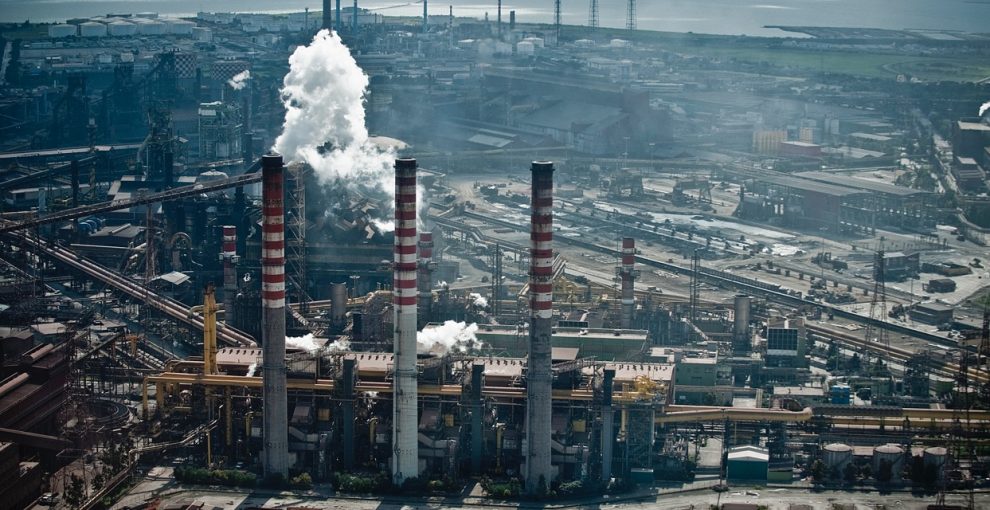
Ilva commissioners to seek €5 billion in damages from ArcelorMittal
The special commissioners of the former Ilva plants, now Acciaierie d’Italia (ADI), located in Taranto in southern Italy, plan to launch legal action against ArcelorMittal to obtain €5 billion in damages. The move was announced by Minister of Enterprises and Made in Italy Adolfo Urso, who referred to the damage suffered by the steel group during the years of management by the Franco-Indian giant.
According to the minister, the requested amount reflects the losses generated by the deterioration of the facilities, the lack of ordinary and extraordinary maintenance, and the loss of ETS quotas accumulated in previous years. The lawsuit is expected to be filed between December 15 and December 18, with the Morselli management period at the centre of the complaint. Minister Urso reiterated that there is no plan to close the Taranto steelmaking hub. On the contrary, almost one year ago the commissioners launched an emergency maintenance program with the aim of delivering safe and operational plants to a future buyer by March, ensuring a minimum production capacity of 4 million mt of steel per year.
In parallel, the search for a new private investor continues. The competitive procedure, launched after ADI was brought under state control at the beginning of 2024, has attracted interest from several players, but so far only the consortium led by Baku Steel with Azerbaijan Investment Company and India’s Jindal Steel has expressed willingness to acquire the entire assets. Since 2022, the state has already provided more than €2 billion in loans, subsidies and emergency support measures to keep production running.
As previously reported by SteelOrbis, the Italian government has recently announced new funds to secure the former Ilva’s operations, while confirming the continuation of the current rules on access to short-time work schemes and the ongoing negotiations with potential buyers. In another key step, talks on the decarbonization plan have led to the establishment of an inter-institutional technical committee tasked with assessing gas supply options and the feasibility of the four DRI plants planned for the future pre-reduced iron hub in Taranto, with the still-open issue of a possible floating storage and regasification unit (FSRU).
The industrial side of the story is closely linked to the environmental side. Brussels has sent Italy another letter of formal notice for violations related to emissions from the Taranto site, keeping open an infringement procedure that has been under way for more than ten years and that requires a rapid shift towards lower-impact technologies. In this context, low-carbon transition projects are gaining weight, including initiatives related to DRI production and pilot schemes for the use of green hydrogen in steelmaking.
The outcome of the lawsuit against ArcelorMittal and the choice of a new investor will be decisive for the relaunch of ADI. While the government aims to close the international tender in the coming months, the outlook for the Taranto hub remains uncertain, amid pressure from EU institutions, trade union demands for stronger employment guarantees and the need to finance a decarbonization path that is expected to require total investments of more than €5 billion.
EU Commission looks to update methodology for CBAM default values after industry concerns
The first draft of the default values was published on November 7 and outlined provisional carbon emission numbers for CN Codes under CBAM. In response, some industry participants and member states said that for some CN codes and origins the default values were too low if compared with alternative sources.
The EU’s CBAM is set to enter its definitive phase on January 1, with costs depending on the EU’s Emission Trading System (ETS) auction price and the embedded emissions in the CBAM good.
To calculate embedded emissions, importers have the choice of using benchmark rates which are specific to the CBAM good, or default values which are average embedded-emission intensities for each product and production route.
While leaked provisional benchmarks were largely in line with market expectations for aluminium and steel industries, the default values released by the European Commission in early November were not.
The feedback from member states centered around the methodology for calculating default values, with stakeholders saying the proposed method was unreliable.
The Commission subsequently published an approach for revising the default values.
With just over three weeks to go before carbon liabilities at the border kick in, the EU Commission suggested the following approach in the interest of time.
Firstly, it would identify priority cases for values that require updating most urgently. This will be determined by an analysis of the reliability of default values developed by the Joint Research Centre (JCR), which will include consideration of feedback received from stakeholders and the data model used by the JRC for calculating the values.
Once priority cases have been identified, the Commission’s JRC will seek to “improve the reliability of some of their estimates, taking into account additional information provided by stakeholders,” according to the document. Where concerns could be addressed and rectified the new values will be used as default values.
If it is not possible to improve the reliability of default values, the Commission suggests basing the default values for certain products on emission data from the CBAM Transitional Registry.
In limited instances, where the reliability of default values cannot be improved via either of these methods, default values should be based on the average emission intensity of the ten exporting countries with the highest emission intensities.
In addition, the Commission proposed to “revise more structurally the approach to determining default values, with a view to updating the values by 2027 at the latest,” it said.
The analysis for this revision will start immediately after the adoption of the Implementing Act containing the default values for 2026.
Mark-ups to be phased in gradually to compensate for issues with default values
Elsewhere, the Commission noted that to compensate for issues with calculating default values, it will phase-in the use of mark ups from 2026 onward.
CBAM mark ups are essentially an additional penalty which is applied when a CBAM declarant uses default values instead of actual emission data.
As the Commission continues to amend its methodology, default values are still up in the air. To account for this, it proposed a “balanced approach” for most CBAM sectors for the use of mark ups.
The mark up will be 10% in 2026, 20% in 2027 and — pending final confirmation of the default values — 30% in 2028.
EU Commission identifies two shortcomings for calculating iron and steel default values
The European Commission identified two shortcomings in the calculation of default values. The first is that the calculation approach used relies on energy balance data from the International Energy Agency (IEA), which could contain errors.
Secondly, the approach to calculate the values used by the JRC uses a model that attempts to reflect if a high-carbon good is additionally processed in another country then it is included in the default values of the more processed good. This, however, does not cover the entire value chain of the CBAM good and could result in too low values for some stainless-steel goods.
The Commission also identified a series of calculation errors across steel alloy grade, American castings, US forgings and emissions from the foundry casting process, among other things.
To solve issues with the methodology and subsequent default values, the Commission has changed its approach to calculating these default values.
The default values have been checked against those on the CBAM Transitional Registry. For each group, the default value will be compared with the 90th percentile (Q90) of actual emission data on the registry.
If the Q90 actual emission data on the registry is higher than the default value and lower than the average emission intensity of the ten exporting countries with the highest emission intensity, the default value will be updated.
If the Q90 actual emission data on the registry is higher than the existing default value and higher than the average emission intensity of the ten exporting countries with the highest emission intensity, then further action is required.
To avoid “extreme increases that may be difficult to justify,” the Commission has placed a 400% cap on how much the default value can change to “mitigate data quality issues in the CBAM registry.”
Concerns over discrepancies in default values for primary and secondary aluminium
Following the publication of the draft default values in early November, the aluminium industry raised concerns around the data for primary and secondary aluminium.
According to feedback from the market, some of the values for primary aluminium were “very low in comparison to data from commercial providers” for countries like Cameroon, Brazil, Egypt, Ghana, Iran, Tajikistan, Turkey, US and Venezuela.
The market also noted that for secondary aluminium, the default values were “too low, and do not sufficiently consider the trade in precursors made of primary aluminium.”
While the Commission did not offer a solution for these concerns, it said that an assessment is continuing which will suggest scope for correction, however it is likely to be to a “lesser extent than for the steel sector.”
Going forward, the Commission said that a more “granular” analysis is needed to “define an appropriate way forward.” The Commission did not disclose when this would be published, but it provided an overview of what country default values could be subject to change. These included Egypt, India, Mozambique, Turkey and the US, among others.
CBAM is entering its definitive phase on January 1, 2026, while CBAM certificates will only be able to be purchased from 2027 onward.
List of National Competent Authorities for CBAM published
The European Commission has published the List of National Competent Authorities (NCAs) responsible for administering the Carbon Border Adjustment Mechanism (CBAM).
Importers should note that access to the CBAM Registry must be requested through the NCA of the EU Member State in which the importing company is established. This step is essential for ensuring compliance with reporting requirements and for the proper functioning of the mechanism.
The full list of NCAs is available on the European Commission’s official CBAM page.