


Pittini revamps southern Italian plant
Italian long steel producer Pittini is investing in revamping its SiderPotenza rolling mill in the south of the country.
With hot start-up scheduled for 2027, the project will improve production efficiency while reducing billet reheating gas consumption and overall CO2 emissions, in line with Pittini Group’s sustainability strategy, Kallanish notes.
Italian equipment maker Danieli was awarded the contract. It explains that the revamp will include a new rolling mill featuring 20 SHS cartridge stands, enabling a billet size increase to 165mm. This configuration is designed to prepare the plant for the installation of a spooler line, initially producing coils of 2.5 tonnes, with provisions for a future upgrade to 5t coils through the addition of a horizontal billet welder (HBW).
The upgraded mill will supply the existing bar line, producing sizes from 2x8mm up to 40mm, as well as a future spooler line for coils ranging from 10mm to 25mm. Safety and working conditions will be improved through advanced design solutions, Danieli notes.
One of the main challenges is carrying out the project within a 45-day shutdown, achieved through customised engineering and extensive pre-assembly to minimise on-site installation and commissioning time, it adds.

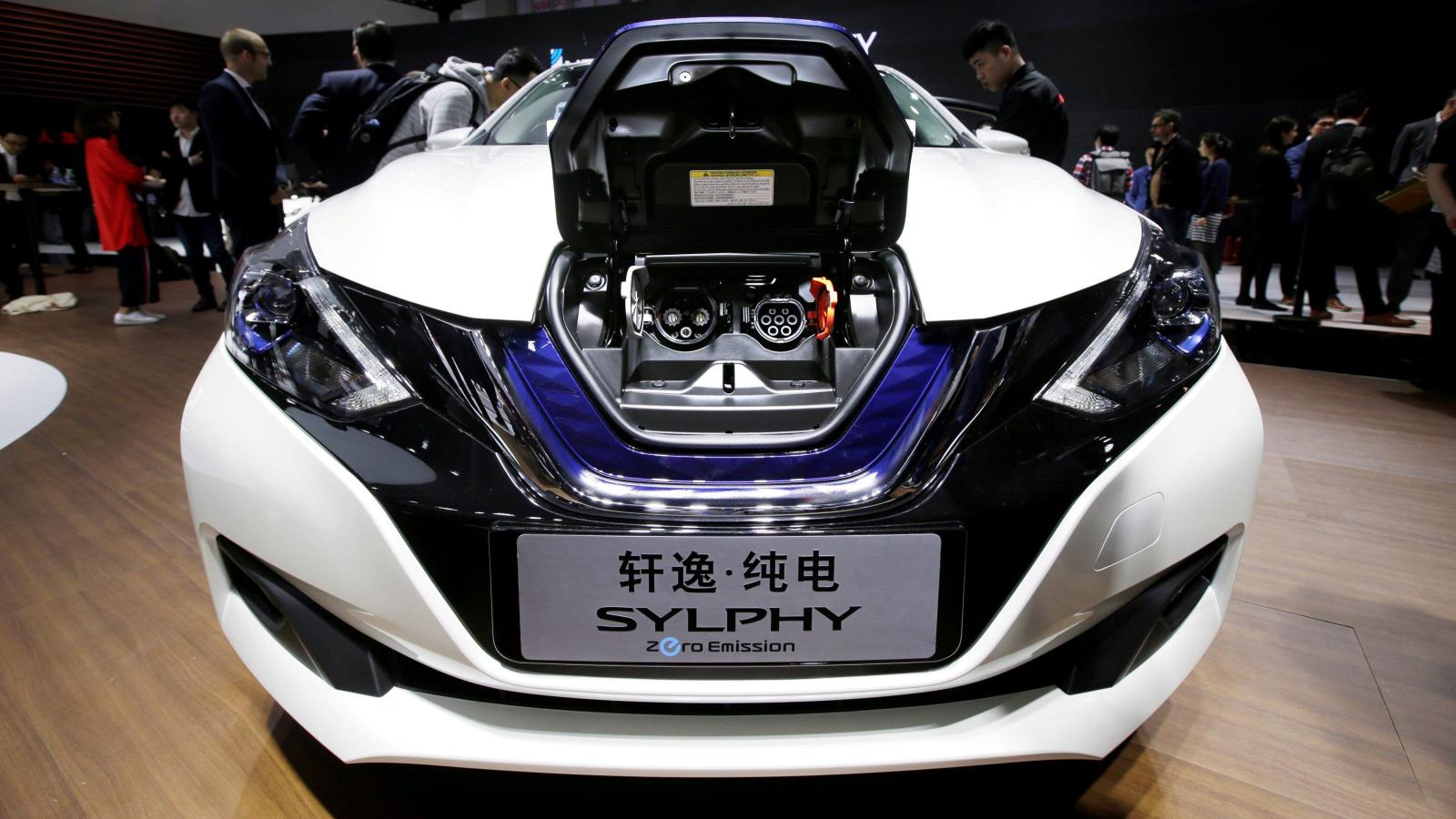
Automakers face Chinese competition, AI integration: Gartner
China’s pace of innovation, simultaneously managing the integration of artificial intelligence (AI), cybersecurity risks, and the complex transition to electric vehicles (EVs), will be major challenges for global carmakers in 2026, says consultancy Gartner, Inc.
The global automotive industry has entered 2026 in an environment of increasing uncertainty, with long-term predictability giving way to volatility. “Beyond 2025, marked by profit warnings, tariff shocks, and slower-than-expected adoption of EVs, the scale and long-term planning are becoming irrelevant due to geopolitical tensions, supply chain instability, and rapid technological change,” the organisation notes.
While many manufacturers see AI as a path to greater agility, Gartner warns of a looming reality check as companies realise their current AI capabilities offer less of a competitive advantage than expected, Kallanish notes.
“The automotive sector is going through a period of euphoria regarding AI, where many companies want to achieve disruptive value even before building solid foundations in artificial intelligence,” says Gartner vice president Pedro Pacheco. “This euphoria will eventually turn into disappointment, as these organisations will not be able to achieve the ambitious goals they have set for AI.”
“China will remain the most complex and crucial market, with experts arguing that success there increasingly determines global leadership,” the consultancy observes. “Strategies such as ‘Made in China, for China’, adopted by groups like Volkswagen and Audi, could become a model for others. Electric vehicles are expected to confidently enter the mainstream in Europe as battery costs fall and smaller, more affordable models emerge, supported by renewed incentives in markets like Germany.”
At the same time, most automakers will reconsider their supply chain reliance on China, even if deep technological interdependence makes complete decoupling unrealistic. Under these circumstances, Gartner concludes that the winners in 2026 will not be large companies, but rather those with agility, speed, and organisational adaptability.
EU’s new steel import quota period makes strong start
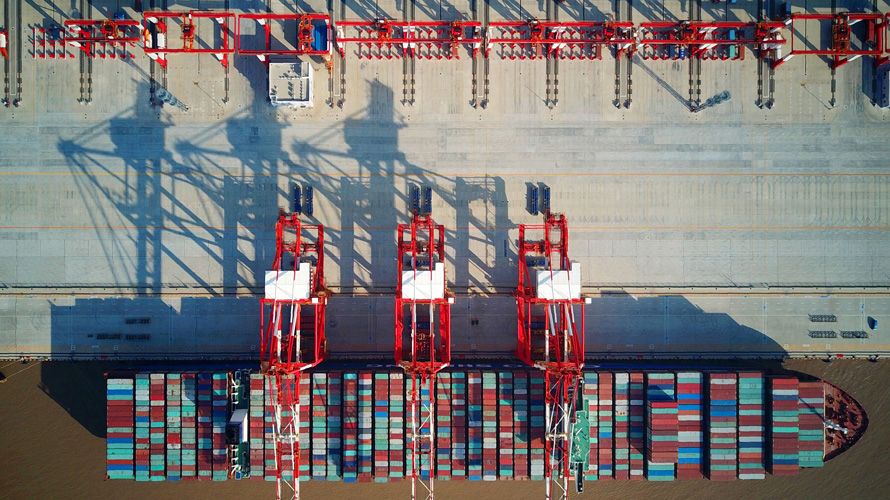
Within the first seven days of January, within the new EU quota period between January 1 and March 31 some of the import quotas for certain steel products allocated for India, China, Turkey, and certain countries under the “other countries” category have been exceeded, while over 70 percent of quotas for some steel products have been used up.
Looking at the exceeded quotas, India has exceeded the quotas of 222,829 mt for HRC (1A) and 31,416 mt for stainless bars and light sections, with 289,320 mt and 49,361 mt of the given products respectively waiting at EU ports. The country has also exceeded the quotas of 7,347 mt for tin mill products and 5,955 mt for other welded pipes, with 18,569 mt and 8,206 mt of the given products respectively waiting for customs clearance. China has exhausted its quotas of 126,937 mt for metallic coated sheets (4B), 138,863 mt for merchant bars and light sections, 34,005 mt for other seamless pipes, and 6,929 mt for sheet piling, with 192,566 mt, 192,643 mt, 36,837 mt and 7,123 mt of the given products respectively waiting at EU ports. In addition, the country has also exceeded its quota of 5,504 mt for hollow sections allocated under “other countries”.
Regarding the quotas allocated for Turkey, the country has exceeded its quotas of 83,109 mt for hollow sections, 48,938 mt for gas pipes, and 14,782 mt for large welded tubes (25B), with 111,528 mt, 54,716 mt and 19,553 mt of the given products respectively waiting for customs clearance.
The countries’ EU steel import quota usage over 70 percent can be seen in the table below.
| Product | Country | Quota tonnage (mt) | Used (%) |
|
HRC (1A) |
Turkey | 393,977 | 79.41 |
| Taiwan (under “other countries”) | 110,266 | 71,38 | |
|
CRC |
Turkey (under “other countries”) | 43,033 | 92.94 |
| Vietnam (under “other countries”) | 43,033 | 75.43 | |
| Taiwan (under “other countries”) | 43,033 | 113.22 | |
|
Metallic coated sheets (4A) |
Turkey (under “other countries”) | 116,832 | 90.88 |
| Vietnam (under “other countries”) | 116,832 | 111.21 | |
| Taiwan (under “other countries”) | 116,832 | 74.03 | |
|
Organic coated sheets |
India | 77,805 | 74.7 |
| South Korea | 70,318 | 72.89 | |
| Taiwan | 22,536 | 99.06 | |
| Turkey | 15,559 | 94.28 | |
| Vietnam (under “other countries”) | 10,608 | 156.02 | |
|
Tin mill products |
Taiwan | 13,256 | 96.25 |
| Turkey (under “other countries”) | 7,347 | 154.04 | |
|
Angles and sections |
China (under “other countries”) | 4,912 | 132.39 |
| UAE (under “other countries”) | 4,912 | 89.64 | |
|
Gas pipes |
India | 18,833 | 73.49 |
| UAE (under “other countries”) | 3,298 | 147.76 | |
| Other welded pipes | China | 7,992 | 74.46 |


European domestic HRC market still mostly quiet but mood remains positive
“There is no change in the market as people are coming back,” a trader said, adding that they expect changes in the future with the rollout of new trade regulations.
The EU’s Carbon Border Adjustment Mechanism (CBAM) came into full effect on January 1. This is expected to increase the cost of imported steel products while supporting domestic production.
In Northern Europe, offers for HRC varied within the range of €630-650 ($738-761) per tonne ex-works, depending on the month of delivery and the supplier. The upper end of the range reflected offers for March delivery.
Meanwhile, estimates of workable prices were heard at €630 per tonne ex-works.
Fastmarkets’ daily steel hot-rolled coil index domestic, exw Northern Europe was €631 per tonne on Wednesday, up by €1 per tonne since Tuesday January 6.
The index was up by €3.50 per tonne week on week and by €8.50 per tonne month on month.
Fastmarkets’ daily steel hot-rolled coil index domestic, exw Italy was calculated at €624 per tonne on Wednesday, up by €0.88 per tonne since Tuesday.
The index was up by €0.88 per tonne week on week and by €10.67 per tonne month on month.
Estimates of workable levels were heard within the range of €610-620 per tonne ex-works, while offers were reported within the range of €630-640 per tonne ex-works.


New EU Steel Quota period kicks off with several products already full
The new quota period in the EU has started as of January 1. Although the volumes awaiting at the ports are not cleared through customs yet, given the high volumes of imports waiting at the ports, for some products, the quota volumes have already been exhausted.
In the table below, you can see the products for which quotas have already been exhausted and also those for which more than 70 percent of quotas have been used up.
