

Northwest European rebar market debates hike attempt success
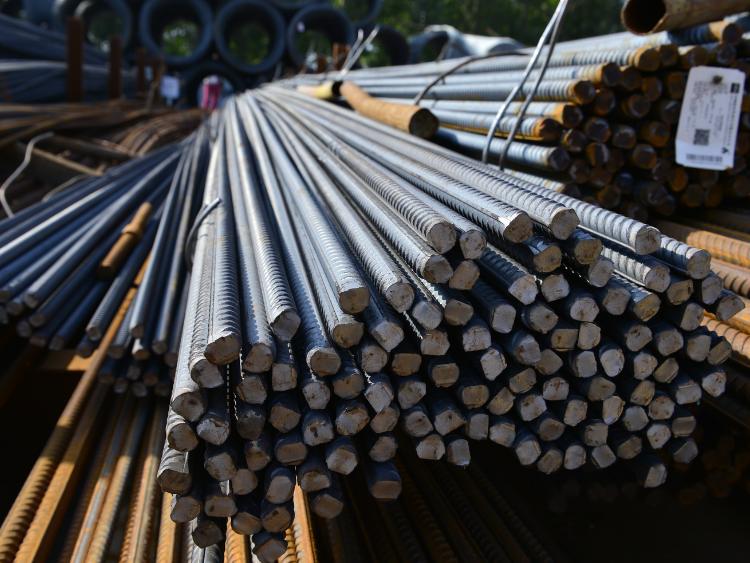
Rebar mills in northwestern Europe are expected to lift their offers somewhat this month, but not by much, and their acceptance by the market will be mixed.
So far, new offers have not come in. Most German states saw extended holidays and some, as well as Austria, observed the Epiphany holiday on 6 January. Players therefore expect new offers to arrive next week at the earliest, with a €20/tonne ($23) hike seen at the most. “Benders with good orders in construction will pay, but others won’t bother filling their inventories,” an Austrian cut-and-bender manager believes.
“The market remains dull and crazy,” an eastern German manager tells Kallanish, referring to the willingness of many benders to snatch jobs from construction groups at what he calls dumping prices. His company is “well-engaged for the next half year, and it remains to be seen what’s after that”.
The introduction of the Carbon Border Adjustment Mechanism (CBAM) and other political circumstances means many players expect rising prices, but demand in the broader market does not really support that, observers say.
In December, mills could not lift their prices by as much as in previous years once they had filled their order books. “We expected some surge, but it did not happen,” the buyer of a German distributor group confirms. He sees the current base price at around €340/tonne ($396), now inching towards €350, partly because scrap prices went up some €10.
A buyer of an Austrian group tells of a deal done still at €330/t in December, “but I would not expect that [low price] now anymore”. Mills’ modest target could be €350/t, which plus the standard size extra of €265 would give €615/t delivered. However, “they might get €10 more for some weeks, and then might have to take €10 back,” says one player, describing the shakiness of the market.
Author: Christian Koehl


European domestic steel plate prices rise after year-end holidays
CBAM officially launched on January 1, and the products named above, among others, will become more expensive with the cost of the necessary certificates being added to the actual price of the material.
Moreover, there was still a lot of uncertainty over how import activity will be affected by the mechanism, which has pushed market participants to delay buying activity.
Fastmarkets’ weekly price assessment for steel domestic plate, 8-40mm, exw Northern Europe, was €700 ($816) per tonne on January 8, compared with €650-730 per tonne on January 2.
The assessment was in line with a deal heard agreed by a German supplier during the assessment week.
In Italy, fresh business was heard within the range of €670-690 per tonne ex-works, and offers heard as high as €700 per tonne ex-works on January 8. Before Christmas, workable prices were hovering in the range of €660-680 per tonne ex-works.
Fastmarkets’ weekly price assessment for steel domestic plate, 8-40mm, exw Southern Europe, was €670-690 per tonne on January 8, up from €650-680 per tonne on January 2.
“Customers will need more material from European suppliers,” an Italian producer told Fastmarkets, speaking in support of the upward trend.
Import
Import markets for both slab and plate were extremely quiet in the reporting week, with buyers returning gradually after holidays and trying to gauge the situation.
“Europeans are beginning to make inquiries [for slabs] but they will not pay more than $485 per tonne CFR,” one trader said, adding that Asian suppliers were still asking a minimum of $500 per tonne CFR for their material.
“We will see where [the price] settles next week when someone buys,” he added.
“I have not started any offers yet. [I am] looking for the demand first,” a source trading Asian slab to Europe said.
A third source reported offers of Asian material varying within the range of $500-520 per tonne CFR.
Fastmarkets’ weekly price assessment for steel slab, import, cif Italy, was $485-520 per tonne on January 8, versus €500-520 per tonne on January 2.
Market sources said that buyers would be looking for discounts to offset the cost of CBAM certificates.

European HRC markets restart slowly; mills push prices up as CBAM creates structural strain on imports
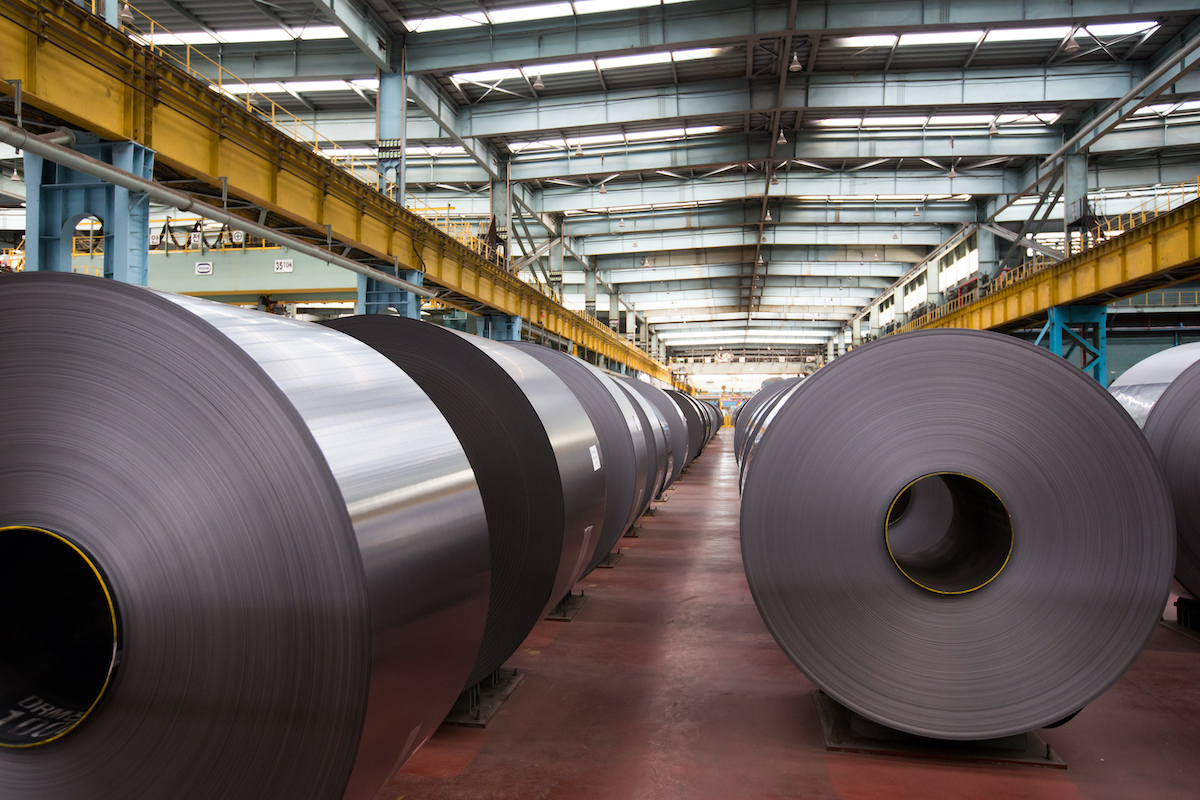
Starting January 1, CBAM became legally and financing binding, pushing imports costs up by roughly €35-600 ($41-700) per tonne, depending on the origin, Fastmarkets reported.
Sources indicated that, upon customs clearance of new imports in January 2026, customs agents request down payments to account for CBAM costs.
“Imports [have] become unmanageable. There is no shortage of coil in the market so far, but domestic mills are definitely a more reliable option,” a buyer in Germany said.
“The [European] mills’ bullishness is driven entirely by regulations impact on imports supply. Real demand remains low,” a second source said.
In Germany, one supplier reportedly still had February delivery HRC offers at €630 per tonne ex-works. Price ideas for March delivery were heard at a minimum of €650 per tonne ex-works, and at €700 per tonne ex-works for April.
Offers from other German suppliers were ranging between €650-670 per tonne ex-works for February-March delivery coil.
In the Benelux area, integrated mill increased offers for March delivery HRC to €650 per tonne ex-works, compared with around €630 per tonne ex-works for January and February.
Buyers in Germany and Benelux area estimated achievable prices at €630-635 per tonne ex-works on Thursday.
However, most sources said, they were expecting spot prices to rise “in a short period of time,” supported by CBAM and new trade regime rollout, both limiting imports.
“The target of €700 [per tonne ex-works] is still wishful thinking, but €650 [per tonne ex-works] can be achieved quite fast, all things considered,” a second buyer in Germany said.
As a result, Fastmarkets’ daily steel hot-rolled coil index domestic, exw Northern Europe was €634.25 per tonne on Thursday, up by €3.25 per tonne from €631.00 per tonne on Wednesday January 7.
The index was up by €6.75 per tonne week on week and by €12.00 per tonne month on month.
Fastmarkets’ corresponding daily steel hot-rolled coil index domestic, exw Italy was calculated at €630.00 per tonne on Thursday, up by €6.00 per tonne from Wednesday.
The index was up by €6.88 per tonne week on week and by €18.75 per tonne month on month.
The Italian market was very quiet, with only sporadic trading reported, sector sources said.
Offers of February and March delivery HRC were heard around €630-650 per tonne ex-works, depending on supplier.
A deal was reported at €630 per tonne ex-works for a small tonnage of March delivery HRC.
Buyers estimated tradable prices at €620-640 per tonne ex-works on Thursday.
Several sources, however, argued, that prices below €630 per tonne ex-works “were no longer possible, considering situation with imports.”
Very few new import offers were reported on Thursday.
Sources said there was a clear two-tier import market, with offers on a CFR basis excluding CBAM costs and CBAM-accounted offers on a DDP basis.
So far, to manage unpredictable CBAM costs, European buyers were prioritizing import bookings on DDP basis — to at least partially accounted for CBAM costs of imported goods, Fastmarkets understands.
For HRC, an offer at €620 per tonne DDP was reported for Turkey-origin HRC.
As of Wednesday January 7, customs data were not updated yet on the European Commission website, but indicative tonnages of Turkish HRC awaiting custom clearance were 291,411 tonnes, while total allocation for January-March 2026 for the nation was 393,978 tonnes. Estimated CBAM costs for Turkish HRC were around €105 per tonne, provided default emissions values were used, Fastmarkets reported.
For India, for example, the situation was even more dramatic, with indicative tonnages of Indian HRC awaiting custom clearance amounting to 289,320 tonnes, exceeding the country’s 222,829-tonne allocation for the first quarter of 2026. Estimated CBAM costs for Indian HRC were around €264 per tonne, provided default emissions values were used.
“Unless actual emissions values are enabled soon, the lion’s share of imports will become unworkable,” a buyer in Italy said.
“Hundreds of installations are unlikely to be verified on time, despite acting in good faith,” EUROMETAL, the European Federation of Steel, Tube and Metal Distribution & Trade said in December. “This creates a structural mismatch between legal obligations and operational reality… As a result, companies will be forced to rely on CBAM default values, not due to non-compliance but because verification is unavailable.”
Thyssenkrupp continues talks on the sale of its steel unit TKSE to Jindal Steel
Germany-based Thyssenkrupp is reportedly considering transferring its steel division TKSE (Thyssenkrupp Steel Europe), known for its complex structure and high cost base in Germany, to India-based Jindal Steel International.
According to sources, the parties are working on a deal based on a phased sale model.
It is reported that Jindal Steel began its due diligence process in October after submitting an indicative offer for TKSE, one of Europe’s leading steel producers. The potential sale is seen as a critical step in Thyssenkrupp’s strategy to transition toward a leaner and more focused corporate structure.
Sources indicate that Jindal Steel would initially acquire a majority stake of around 60% in TKSE. The remaining 40% could be transferred either in two separate tranches of 20% each or in a single transaction, depending on progress achieved in the restructuring process.
One source noted that Thyssenkrupp is receptive to a phased sale plan due to pension liabilities of approximately €2.5 billion, which had previously complicated sale processes, adding that this approach could provide the company with greater flexibility.
While the due diligence process is ongoing and final terms have not yet been determined, Thyssenkrupp shares rose by as much as 4.9% following the sale reports, becoming the day’s top gainer in Frankfurt’s mid-cap index. One investor commented, “After years of an inconclusive process, the likelihood of a sale now appears to be taking concrete shape.”
Jindal Steel delegation to visit Germany in January
The potential sale of TKSE is viewed as the strongest development yet that could bring Thyssenkrupp’s long-running search for a buyer to an end. A key part of Germany’s industrial heritage, TKSE has been facing a challenging period, particularly due to intensifying competition from Asian rivals and high operating costs.
Jindal Steel International, the global steel arm of the Naveen Jindal Group, entered the European market in 2024 through the acquisition of Czech producer Vitkovice Steel. The acquisition of TKSE would represent the company’s largest move in the region to date.
In a statement, Thyssenkrupp said that all aspects, including valuation, liabilities and future investment requirements, would be addressed during the discussions, adding: “As the talks are still at an early stage, we are unable to comment in detail at this time.” Jindal Steel International did not issue a comment.
Following a postponed visit originally scheduled for December, the Jindal delegation is expected to travel to Germany in January to carry out technical inspections at TKSE’s Duisburg facilities. Another source noted that the phased sale model would mean Thyssenkrupp remains actively involved in the restructuring process.
Source: Reuters

Salzgitter strengthens green steel production with Iberdrola’s new solar power plant
Salzgitter AG, one of Germany’s leading steel producers, is taking a major energy step as part of its transition toward low-emission steel production.
The company will strengthen its green steel production by sourcing renewable electricity from a new 65 MWp solar power plant completed by Iberdrola Germany in the Saxony-Anhalt region.
The 15-year power purchase agreement (PPA) signed between Salzgitter AG and Iberdrola guarantees a total of 900 GWh of renewable electricity to be supplied directly to steel production processes. This energy will play a critical role within SALCOS (Salzgitter Low CO₂ Steelmaking), Salzgitter’s carbon-neutral steel transition program.
Annual output of 60 GWh – 23,000 tons of CO₂ reduction
Covering an area of approximately 45 hectares and comprising more than 92,000 solar panels, the facility is expected to generate around 60 GWh of electricity annually — equivalent to the annual consumption of more than 20,000 households.
The clean energy supplied from the plant is expected to prevent more than 23,000 tons of CO₂ emissions each year, directly supporting Salzgitter’s objective of reducing the carbon footprint of its steel production.
Local partnerships strengthened the project
Regional companies including Solarpro, P&Q and EMT were involved in the construction of the solar power plant. These local partnerships contributed both to the regional economy and to the project’s operational strength.
With this agreement, Salzgitter AG is accelerating its transition toward a renewable energy-based production model in the steel industry. The company emphasizes that this clean energy supply, which will be integrated with hydrogen-based production processes in the future, is of critical importance for Europe’s green steel supply security.
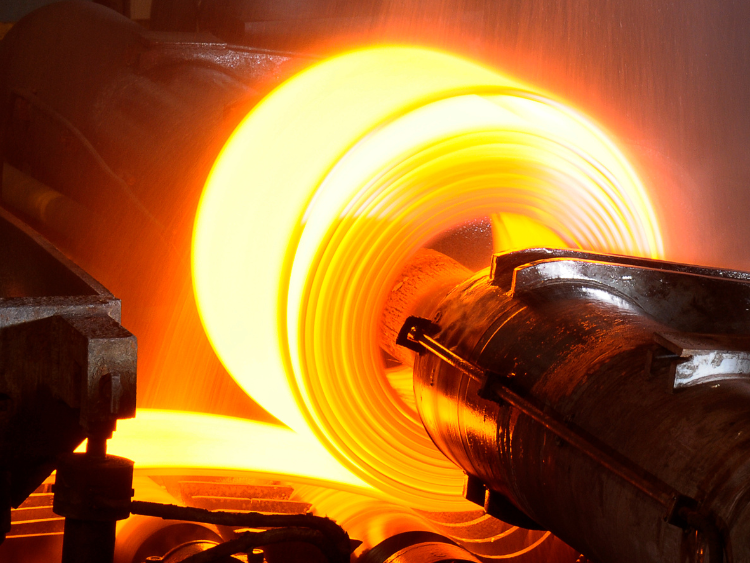
European CRC and HDG prices rise marginally, market still slow after holidays
European CRC and HDG prices have edged slightly higher since late December, with mills in both northern Europe and Italy still targeting elevated levels for February deliveries. Import trade has all but stalled, as most buyers prefer to avoid exposure to new bookings due to the CBAM regulations.
Specifically, in the domestic CRC market, most mills in Italy and northern Europe have continued to target €730-750/mt ex-works, the same as before the holidays. Meanwhile, the tradable prices have been estimated at €720-730/mt ex-works levels both in Italy and in northern Europe, which means prices have increased by around €10/mt over the past two weeks.
At the same time, market participants anticipate that mills will push prices higher in the near term, likely raising offers by about €10–20/mt in the next sales cycle. The expected increase is driven by tighter supply as CRC availability has been heavily dependent on imports, but more than half of the import volumes are now subject to antidumping (AD) investigations, affecting material from India, Japan, Taiwan, Turkey and Vietnam.
In the import segment, offers for CRC have settled at €620-660/mt CFR, depending on the supplier, compared to €600-620/mt CFR in late December. Offers for ex-Indonesia CRC have settled at around $750/mt CFR, which translates to around €640/mt CFR, up by €20/mt since late December. Besides, offers for ex-Thailand CRC have been voiced at €660/mt CFR southern Europe. Furthermore, more offers from traders have been reported on DDP basis, with indicative prices standing at €700-730/mt DDP this week.
In the HDG segment, domestic tradable prices both in Italy and in the north of Europe have settled at €730-735/mt ex-works, versus €710-735/mt ex-works two weeks ago, while mills have been targeting HDG offers for January delivery as high as €750/mt ex-works.
In the import segment, trade has remained limited, with offers for ex-Asia HDG Z100-120 voiced at €730-740/mt CFR, depending on the supplier, versus €700-730/mt CFR two weeks ago. Offers for ex-Vietnam 0.55 mm Z100 HDG have been voiced at €740/mt CFR.
$1 = €0.86


European longs market cautious at end of winter holidays, but talk about increases persists
The European longs market has remained mainly cautious after returning from the winter holidays this week, but several market players already believe that prices will increase in the coming days amid rumors about the scrap price trend and speculation related to CBAM.
In the local Italian rebar market, prices have remained stable compared to the pre-holiday levels, i.e., at around €290-300/mt ex-works base (€550-560/mt ex-works including regular extras). Italian producers already aim to increase this level as soon as the market returns to full capacity – some production facilities will remain idled for a few more days – but for the moment no official movement has been recorded. “Local [Italian steel] producers certainly aim to increase [finished steel] prices, also in the wake of international rising trends,” a source commented. Another Italian trader, however, stated, “It will be difficult to increase prices. Production restarts will lead to an increase in [rebar] supply, which is already higher than domestic demand.”
Still regarding Italy, wire rod prices in the local market in January have been reported in a range of €565-590/mt delivered for mesh quality and €585-620/mt delivered for drawing quality, although contracts at the lower ends are increasingly rare. Based on what some market sources have reported, in fact, €10-20/mt increases will materialize in the wake of CBAM speculations, the beginning of the new quota period in the EU and the upward trend in the international markets.
It is also worth mentioning that an important Italian producer let drop that it will not be in a hurry to conclude sales in January and so he can afford to further increase list prices higher than the average.
It is also significant that yesterday, January 8, ArcelorMittal announced some price increases of €40-50/mt due to the increase in costs related to CBAM, although this information has not been confirmed by the time of publication.
In the wire rod markets in central and eastern Europe, rising price hypotheses might be more modest, by around €10/mt, but even in this case this is not confirmed information, since, as mentioned, no concrete movements have been recorded this week.
In the export market, rebar prices from Spain to UK ports have been reported at around €580/mt FOB, up €10/mt from the last level recorded by SteelOrbis, whereas no price changes have been reported from Greece as many market players there are still inactive after the winter break.
Finally, in the import market, increases of about €10/mt have been recorded in rebar and wire rod prices from Turkey, which currently stand at about €520/mt CFR and €525/mt CFR, respectively. As for Egyptian material, rebar and wire rod prices have been reported at €495/mt CFR and €505/mt CFR respectively, whereas rebar from Algeria has been reported at around €490/mt CFR. To conclude. prices of Indonesian-origin wire rod to southern European ports have been reported at €465/mt this week.