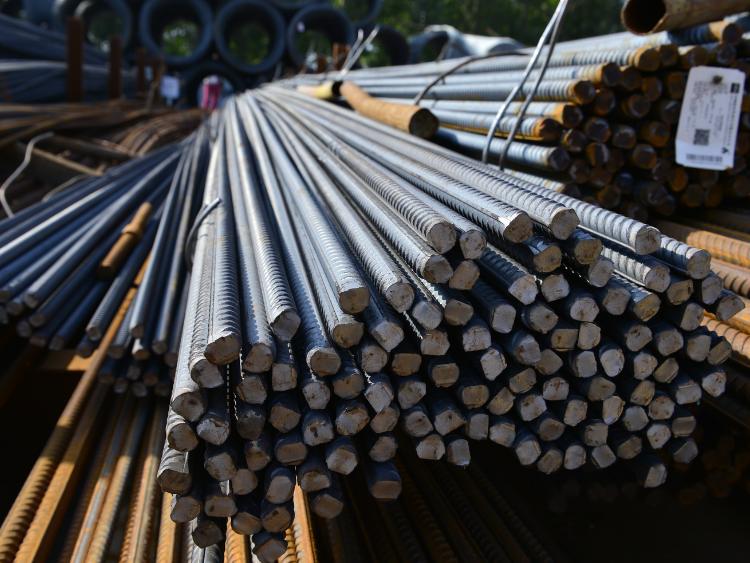
European rebar buyers push back on mills’ attempts to raise prices
European rebar producers continued their attempts to raise prices during the week to Wednesday January 28 amid higher scrap and electricity costs and uncertainty in the import sector caused by the introduction of the Carbon Border Adjustment Mechanism (CBAM).
But customers resisted the higher offers amid slow construction activity and ample stocks.
In Northern Europe, offers varied within €620-640 ($742-766) per tonne delivered. Levels of €620-630 per tonne delivered were heard in Germany, while the higher end referred to Belgium and the Netherlands.
Estimates of workable levels mostly varied within €610-620 per tonne delivered, but some sources indicated €590-600 per tonne delivered as a workable level in Germany, which was considered somewhat undervalued amid increasing feedstock costs.
Trading was muted because of slow construction activity which has been hampered by the seasonal slowdown and harsher-than-normal winter conditions, according to sources.
Sufficient inventories of domestic and import material built in the fourth quarter of 2025 added to tepid buying.
Fastmarkets’ weekly price assessment for steel reinforcing bar (rebar) domestic, delivered Northern Europe was unchanged week on week at €610-620 per tonne on Wednesday.
“We should wait until real demand comes back to see price increases. This should be in the second half of February,” one producer told Fastmarkets.
Mills in Italy also increased rebar asking prices, with new offers at €600-620 per tonne ex-works, but these also faced resistance from buyers.
“Scrap prices have increased by around €7-8 per tonne over the course of the month while energy costs have remained high. In addition, CBAM is creating concern in the market and is leading many market participants to believe that the increase we are already seeing in flat products can now realistically be transferred to long products as well, including rebar and reinforcing steel,” an Italian cut and bend mill said.
“We will see how the situation develops over the course of the week, but steel mills are currently very firm on the price levels communicated,” the source said. “But they are not able to achieve everything they are asking for mainly due to the low level of sales.”
“I think this is all speculation since it’s been raining for days and everything seems to be stopping,” another cut and bend producer told Fastmarkets.
Tradable levels were reported within €560-590 per tonne ex-works, which was reflected in the corresponding Fastmarkets assessment.
Fastmarkets’ weekly price assessment for steel reinforcing bar (rebar) domestic, exw Italy was €560-590 per tonne ex-works on Wednesday, narrowing downward by €10 from €560-600 per tonne on January 21.
Spain was one of the few markets where suppliers managed to achieve higher levels, supported by good demand and favorable market sentiment amid the strong performance of the economy in 2025 and expected gross domestic product (GDP) growth of 2.1-2.4% in 2026.
Some bookings were said to have come through at €665 per tonne delivered, the level suppliers had been trying to achieve for several weeks.
Fastmarkets’ price assessment for steel reinforcing bar (rebar) domestic, delivered Spain was €665 per tonne on Wednesday, up by €15-20 from €645-650 per tonne on January 21.


European HRC prices firm as CBAM tightens supply; buyers slowly accept increases
European hot-rolled coil (HRC) suppliers were pushing for higher offers for second-quarter delivery material. Buyers held back, but prices were increasing step by step, supported by the Carbon Border Adjustment Mechanism (CBAM), Fastmarkets heard on Thursday January 29.
HRC prices in Northern Europe were still lagging behind official offers. Since the beginning of January, however, domestic prices had been gradually increasing and, in the past couple of weeks, buyers have started showing more acceptance of higher prices.
“There are not many alternatives. The pool of import suppliers is smaller because of CBAM, safeguards, antidumping duties, so European mills are comfortably booked and managed to slowly push prices up,” a buyer in Germany said.
In Germany and the Benelux area, levels of €650 ($778) per tonne ex-works were gradually achieved in deals.
Buyers’ estimates of workable levels were reported at €650-660 per tonne ex-works.
Offers from integrated mills in Northern Europe were reported at €670-685 per tonne ex-works for April delivery coil. March delivery HRC was heard to be largely sold out, with only limited availability left at some suppliers.
Italy-origin coil was offered to Germany at €680-700 per tonne delivered, but so far buyers were reluctant to accept higher offers, so no new business was reported.
As a result, Fastmarkets’ daily steel hot-rolled coil index domestic, exw Northern Europe was €655.83 per tonne on Thursday, up by €0.83 per tonne from €655.00 per tonne on Wednesday January 28.
The index was up by €12.08 per tonne week on week and by €28.33 per tonne month on month.
Fastmarkets’ corresponding daily steel hot-rolled coil index domestic, exw Italy was calculated at €643.33 per tonne on Thursday, increasing by €0.83 per tonne from €642.50 per tonne a day earlier.
The index was up by €7.70 per tonne week on week and by €20.21 per tonne month on month.
Several market sources indicated that Italian producers could still offer March-delivery coil.
Target prices were reported around €650-660 per tonne ex-works.
But buyers suggested that achievable prices were closer to €630-640 per tonne ex-works, reflecting recent transaction levels.
Supplier sources estimated workable levels at no lower than €640-650 per tonne ex-works, while one producer set the bar at €650 per tonne ex-works minimum.
“Demand is slow, waiting for real discussions,” a mill source said.
“The current market situation is still dull, there is still no real restart of demand,” another supplier said.
In the secondary market, 4mm HR sheet was offered at around €750 per tonne delivered, but some steel service centers were still able to sell at €720-730 per tonne CPT using old HRC feedstock, sources said.
Meanwhile, market participants said appetite for fresh import bookings remained limited because of the EU’s forthcoming CBAM rules, the shift to the new trade regime and uncertainty around the quota volumes still available under existing safeguard measures.
Interestingly, several sources pointed out that for actual import bookings currently happening in the market, parties were using actual emissions data for CBAM cost calculations.
“Final emissions verification is expected in early 2027 based on 2026 reporting,” a source familiar with the matter said.
A minor tonnage of HRC from India, meanwhile, was heard booked in Italy at €600 per tonne DDP, CBAM costs included. Turkish HRC was on offer to Italy at €630-640 per tonne DDP, CBAM costs included.
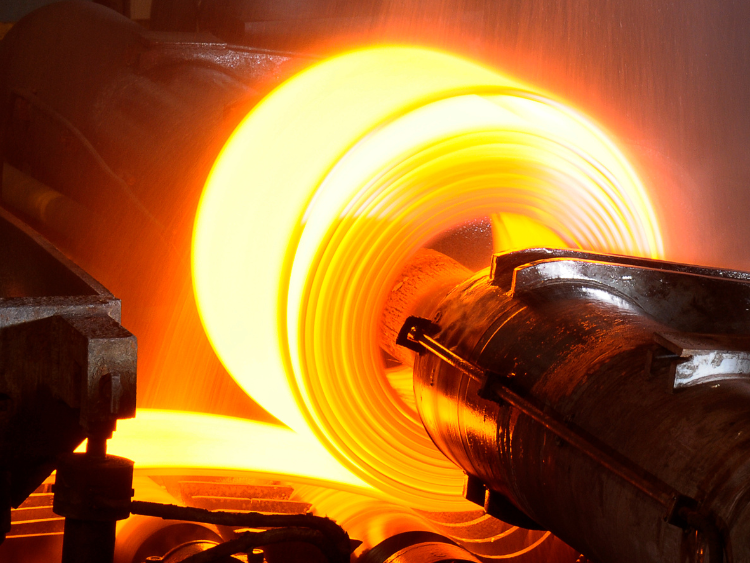
European HRC prices in slow, steady rise amid fears over higher-cost imports
The uptrend in the European steel hot-rolled coil market continued on Wednesday January 28, with suppliers insisting on higher offers and buyers gradually accepting the increases, sources told Fastmarkets.
Sources said the rising prices were being driven by fears of a shortage of imports at higher costs due to EU safeguard measures and the introduction of the Carbon Border Adjustment Mechanism (CBAM).
In Northern Europe, integrated mills still had some limited availability of March-delivery coil, while some suppliers claimed to be already completely sold out of first-quarter volumes.
Offers for April delivery were hovering around €670-680 per tonne ex-works, depending on supplier, sources said.
Buyers, however, estimated achievable prices at €640-650 per tonne ex-works, with the top end of that range most likely, in line with recent transactions.
“[HRC] prices are slowly climbing – not driven by demand but, rather, by fear of higher import costs due to CBAM and safeguards,” a buyer in Germany told Fastmarkets.
Despite buyer resistance to higher new offer prices so far, the mood remains largely optimistic, buoyed by the regulations limiting new imports.
“At the beginning of January, there was a lot of resistance to the uptrend, but now we are seeing more acceptance on the buyer side. Prices [for HRC] are moving up slowly, but steadily,” a second buyer said.
Fastmarkets’ daily steel hot-rolled coil index, domestic, exw Northern Europe, was €655 ($781.21) per tonne on January 28, up by €5.50 per tonne from €649.50 per tonne on January 27.
The index was up by €12.41 per tonne week on week and by €27.50 per tonne month on month.
Some limited availability remained for March-delivery coil in Italy.
“Prices are gradually improving,” a supplier source said. “Earlier we were testing the market with higher numbers, but now [those are] our firm offers.
“Our order book is strong, which is why we can wait until the higher offers are accepted,” the source added.
Offers were heard at €650-660 per tonne ex-works, while estimates of the workable level were about €630-635 per tonne ex-works.
Fastmarkets’ daily steel hot-rolled coil index, domestic, exw Italy, was calculated at €642.50 per tonne on Wednesday, increasing only by €4.54 per tonne from €637.96 per tonne a day earlier.
The index was up by €7.50 per tonne week on week and by €19.38 per tonne month on month.
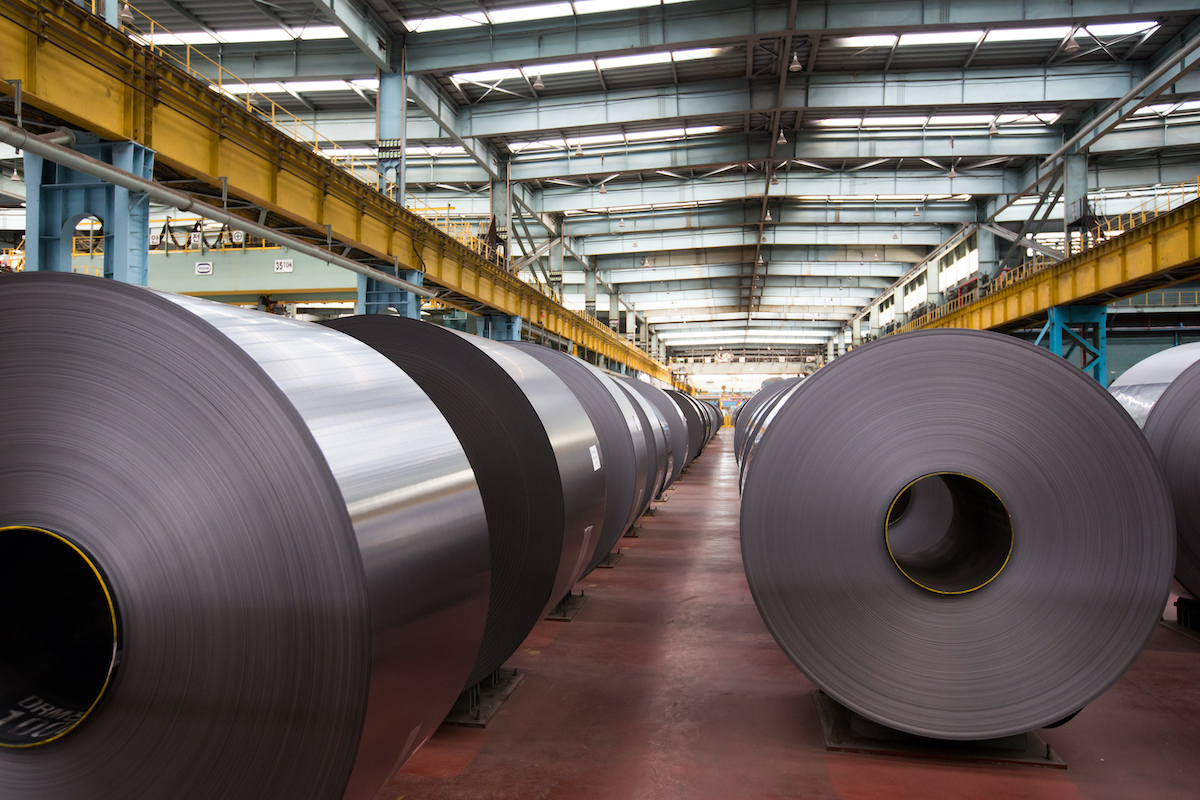
Downstream flat steel prices in Europe steady while CBAM, AD probe limit import options
European domestic prices for cold-rolled (CRC) and hot-dipped galvanized (HDG) steel coil were stable to slightly higher in the week to Wednesday, with limited import availability, especially in the CRC sector, playing a central role in recent upward price momentum, Fastmarkets heard on Tuesday January 27.
Northern Europe
During the assessment week, producers in Germany and the Benelux area followed market leader ArcelorMittal’s move and also announced higher offer prices for second-quarter delivery CRC and HDG.
In the week to January 23, ArcelorMittal came to the market with higher offers for hot-rolled, cold-rolled and hot-dipped galvanized coil. New offers for April-delivery HDG from the supplier were reported at €820 ($980) per tonne delivered (around €805 per tonne ex-works), compared with €780 per tonne delivered for March.
A supplier in the Benelux area was hoping to get €790 per tonne ex-works for HDG and €795 per tonne ex-works for CRC.
In Germany, offers were reported at €790-810 per tonne delivered (€775-795 per tonne ex-works) for both CRC and HDG, depending on supplier.
Integrated suppliers in Northern Europe had no CRC and HDG availability for first-quarter delivery, market sources said.
New offers were not yet accepted, but buyer sources overall agreed that increases were “inevitable,” considering the lack of new imports because of the EU’s Carbon Border Adjustment Mechanism (CBAM).
Buyers in Germany and the Benelux area estimated workable prices for CRC no higher than €750-770 per tonne ex-works during the week to January 28, and €750-760 per tonne for HDG.
Fastmarkets’ weekly price assessment for steel cold-rolled coil, domestic, exw Northern Europe, was €750-770 per tonne on Wednesday, up by €10 per tonne from €740-760 per tonne the previous week.
The weekly price assessment for steel hot-dipped galvanized coil, domestic, exw Northern Europe, was €750-770 per tonne on Wednesday, stable week-on-week.
Southern Europe
In Italy, meanwhile, local suppliers managed to achieve €780 per tonne delivered (€765-770 per tonne ex-works) for April CRC volumes. But several sources claimed that €780 per tonne ex-works had already been agreed in deals and that suppliers were hoping for “more than €800 per tonne delivered” for the second quarter.
“In the CRC sector, we have a lack of supply. New imports are a complete disaster because of CBAM, and domestically we only have [one re-roller],” a buyer in Italy said.
Fastmarkets’ weekly price assessment for steel cold-rolled coil, domestic, exw Southern Europe, was €770-780 per tonne on Wednesday, stable week-on-week.
Meanwhile, the weekly price assessment for steel hot-dipped galvanized coil, domestic, exw Southern Europe, was €760-780 per tonne on Wednesday, also stable week-on-week.
Offers of galvanized coil in the region were reported around €790-805 per tonne ex-works, depending on supplier, while achievable prices were estimated at €750-780 per tonne by buyers in Italy, Spain and Portugal.
Despite buyers’ resistance to price rises, sentiment was largely positive, with CBAM expected to further curb new imports, supporting domestic prices.
Imports
Market sources said that new import offers of CRC and HDG were extremely scarce, due to CBAM’s effects and also the continuing anti-dumping (AD) probe against CRC originating in India, Japan, Taiwan, Turkey and Vietnam.
“There is a very limited pool of [CRC] suppliers left outside of the AD [investigation] – South Korea, Brazil, Thailand. But then we have CBAM costs for everyone, so it’s still challenging to negotiate the price,” a buyer in Italy said.
Several sector sources said that they were even considering booking CRC from Japan, despite an AD probe, and China, which is already a subject to AD duties for CRC. But long lead times were another concern.
“There are concerns that CRC from Asia might arrive too late – end of second quarter or early third quarter 2026 – and we are still lacking clarity on how quotas will be distributed under the new safeguards regime. It’s all very risky,” a second buyer said.
And CRC offers from South Korea was heard at €750-760 per tonne DDP in Spain and Italy earlier in January – CBAM costs included – but during the assessment week marker sources reported no new offers and said that these tonnages were sold out.
Buyers estimated achievable prices for imported CRC at €720-730 per tonne DDP in Southern Europe.
To manage unpredictable CBAM costs, European buyers have been opting for import bookings on a DDP basis recently. Trading houses in Europe were offering imported coil partially or fully accounted for CBAM costs on a DDP basis, but deals were still scarce.
Fastmarkets’ weekly price assessment for steel cold-rolled coil, import, ddp Southern Europe, was €720-750 per tonne on Wednesday, stable week-on-week.
The weekly price assessment for steel cold-rolled coil, import, ddp Northern Europe, was €720-750 per tonne on the same day, also unchanged week-on-week.
On a CFR basis, no new CRC offers were heard during the assessment week.
For HDG, trade sources reported a transaction for Vietnamese material, 0.5mm, zinc coating z100, at €700 per tonne CFR to Antwerp, for a minor tonnage, excluding CBAM costs.
Market sources estimated that, with CBAM costs, the price of the material would be around €780-790 per tonne DDP.
According to Fastmarkets’ CBAM calculator, costs for Vietnamese HDG, using default emissions values including 10% mark-up, would be around €91-161 per tonne, depending on carbon credits prices (Carbon EU Allowance).
Fastmarkets’ weekly price assessment for steel hot-dipped galvanized coil, import, cfr main port Northern Europe, was €700-720 per tonne on Wednesday, narrowing upward from €680-720 per tonne seven days before.
Overall, new import offers for HDG material were scarce, with CBAM and tight safeguard quotas keeping trading extremely quiet.

Austria ramps up steel production in 2025
Austria increased crude steel production in December compared with the previous month, according to worldsteel data. Output amounted to 619,853 tonnes, up 5.7% month-on-month and 15.8% higher year-on-year, Kallanish notes.
In 2025, the country produced 7.55 million t of steel, versus 7.13mt in 2024, bucking the overall EU and global output decline trend.
Austria remained 22nd in the ranking of top global steel producers in December, data show.
Overall EU output in December was up 11.4% on-year to 9.86mt. January-December production was 126mt compared with almost 129mt in 2024.
Primetals Technologies is implementing a software upgrade across the process control systems at voestalpine Stahl’s BETA 2 pickling line and tandem cold mill (PLTCM) in Linz, Austria.
Voestalpine is pursuing production cutbacks and layoffs in Austria and Germany, because it does not expect the economic situation to improve in the coming months (see Kallanish passim).
In the group’s first fiscal half-year – April through September 2025 – revenue declined by 5.6% on-year to €7.6 billion ($9.1 billion). Consolidated earnings before taxes increased by 12% to €278 million, while profit after tax rose by 8.6% to €199m.
The Austrian steelmaker previously expressed optimism over economic stimulus in the form of the infrastructure spending programme announced by the German government.
Voesalpine will supply steel to Chinese electric vehicle producer BYD for its new car factory in Hungary. The company was chosen by BYD because of its geographical proximity to the Hungary plant, and the high quality and excellent reputation of Austrian steel, the Chinese company noted.


EU trade committee backs slashing steel import quotas, moves for quick implementation
The European Parliament’s INTA trade committee has voted to approve proposed new EU trade measures, including steel tariffs and import quotas, aimed at counteracting the effects of the global steel production surplus on the bloc’s market.
The committee voted 36-2 — with five abstentions — to adopt the measures that would cut annual tariff-free steel import volumes to 18.3 million metric tons, down 47% from 2024 levels, while applying 50% customs duties on imports exceeding quota levels.
The measures as backed by INTA are at core the same as those voted on by the European Council back in December, reducing tariff-free quotas by nearly half, but the latest version does not support the reintroduction of the carry-over of unused quotas.
The committee has also tightened up the “melt and pour” rules, specifying that quota allocation should be determined by the country of “melt and pour”, supported by robust and verifiable documentation, such as mill test certificates, European steel association Eurofer said in a note following the vote.
INTA also imposed a complete ban on Russian and Belarusian steel, as the EU moves to shield its struggling industry from global overcapacity ahead of expiring World Trade Organization safeguards
“Steel production is a strategic priority for Europe,” according to MEP Karin Karlsbro, part of Renew Europe Group. “In times of geopolitical uncertainty, the strength of our steel industry is central to Europe’s resilience. Today, we have said yes to continued tariff-free trade with Ukraine and no to Russian steel imports into the EU. This is a clear demonstration of European resolve.”
The committee said negotiations with the European Council will now start, with the aim of reaching agreement on a final version of the bill in the spring.
Platts, part of S&P Global Energy, assessed on Jan 27 domestic HRC in Northern Europe at Eur640/mt ex-works Ruhr and in Southern Europe at Eur630/mt ex-works Italy, both unchanged day over day.