

European manufacturers warn of industrial exodus over regulatory gaps
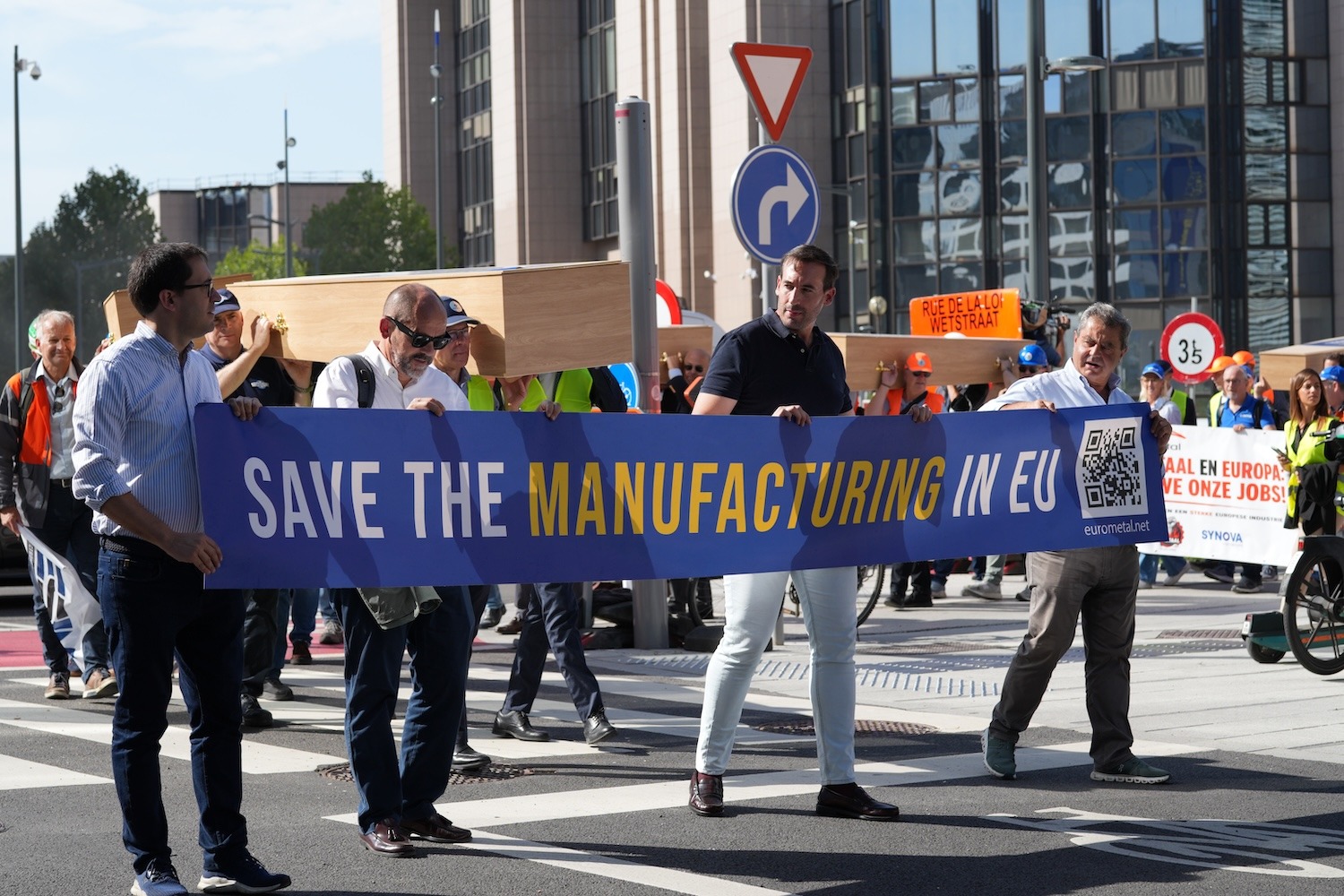
European manufacturers staged a dramatic protest in Brussels Sept. 7, carrying symbolic coffins around the European Commission’s headquarters, to warn that the continent risks losing critical industrial capacity unless policymakers close regulatory gaps that give cheaper, foreign-made goods an unfair advantage over domestically produced alternatives.
The European Convoy for Industrial Competitiveness, which brought together companies, workers, business associations and industrial stakeholders from across Europe, delivered what organizers called a “wake-up call” for EU policymakers.
The protesters highlighted a structural tension at the heart of EU industrial policy that has direct implications for commodity trade flows: while primary finished steel products such as hot-rolled coils, rebars and sections, are shielded from imports thanks to the new trade defense measures and the Carbon Border Adjustment Mechanism (CBAM), finished and semi-finished products manufactured from steel outside the EU are not and they can enter into the European market without facing equivalent obligations.
Steel-intensive finished products made outside the EU are not subject to the same carbon or trade requirements as those manufactured within the bloc. This disparity means European manufacturers bear higher production costs than competitors who import finished goods, a dynamic that is accelerating decisions to relocate production outside Europe and threatening what organizers describe as investment, industrial know-how, value creation and quality jobs.

EUROMETAL, the European associations of steel traders, service centers and overall main end users, said the convoy “does not call for protectionism” but for “fair competition,” arguing that extending appropriate trade and carbon measures to relevant steel derivatives and manufactured components would help establish “a genuine level playing field across the entire manufacturing value chain.”
The timing of the protest is significant. The EU’s CBAM, which entered its transitional phase in October 2023 and is due to become fully operational, currently covers direct imports of carbon-intensive materials, including steel, cement, aluminum, fertilizers and electricity. However, critics argue the mechanism does not adequately capture the carbon embedded in downstream manufactured goods that use these materials as inputs — a gap that EUROMETAL and its allies say distorts competition at the finished-product level.
If European manufacturers continue to face structurally higher input and compliance costs relative to non-EU producers of finished goods, demand for domestically produced steel and other industrial inputs could weaken over time as manufacturing activity migrates. That shift would have knock-on effects for European steel consumption, scrap flows and energy demand from heavy industry — all of which feed into refined products and industrial fuel markets across the region.
The EU’s new steel trade measure for primary finished steel products went into force July 1, with the commission presenting it as the first step toward regaining 34 million metric tons of steel production and capacity utilization lost since 2019.
Crude steel production fell 2.9% in 2025 to its lowest level on record, coming in almost 60 million mt below pre-2008 financial crisis levels, data from the European steel association, Eurofer, showed. Apparent steel consumption grew by 4.4% in 2025 in the EU, ending a prolonged downturn, although volumes remained well below pre-crisis levels. Last year, before the new measures were implemented, imports of semi-finished and finished steel products rose 14% year over year, reaching a record share of around 30% of EU steel consumption.
Author: Annalisa Villa
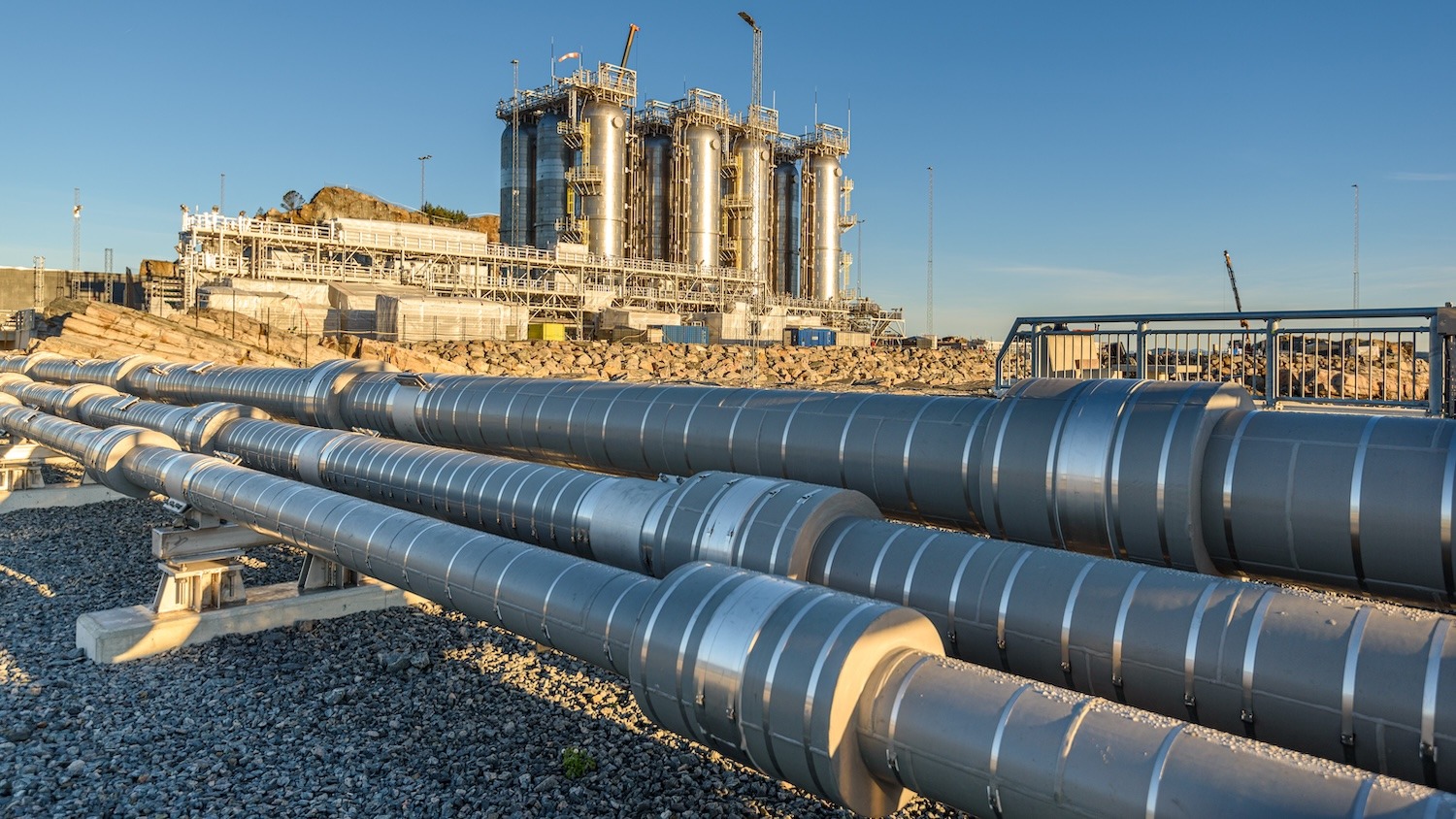
Europe’s largest commercial carbon capture and storage project begins operations


Merz calls on Commission to strengthen EU trade defence tools
At a joint 9 September press conference with European Council President António Costa, German Chancellor Friedrich Merz called for stronger EU trade defence tools, signalling a tougher stance from Berlin.
“We are seeing increasingly unfair trade practices,” Merz said, implicitly referring to China.
“We are in favour of free trade, but we’re anything but naive,” he added.
EU leaders had in June tasked the Commission with strengthening dialogue with Beijing while also reinforcing the EU’s existing trade defence toolbox — under which tariffs can be deployed to protect Europe from unfair foreign competition.
New instruments are needed “to effectively defend [the bloc’s] interests”, Merz said.
He said he expected “intensive negotiations” on the issue with Commission President Ursula von der Leyen at the 15–16 October European Council.
Germany is due to present proposals to tackle unfair trade practices ahead of then.


EPP, S&D propose lowering CBAM application threshold for aluminium to 5 tonnes per year
In an amendment to the proposed extension of the CBAM carbon border levy, the centre-right and centre-left groups suggest modifying the current threshold of 50 tonnes per year.
This current limit was agreed in a 2025 deal to simplify and limit the application of CBAM only to imports exceeding this yearly threshold.
In a separate amendment, some 40 MEPs from groups ranging from The Left to the EPP suggest relaxing the conditions for granting a temporary CBAM derogation to the EU’s outermost regions, which include territories such as the Azores or the Canary Islands.
This provision was included in the environment committee ENVI’s report. The energy committee (ITRE) also proposed an amendment to bring more steel products under CBAM’s scope in order to prevent risks of circumventing the levy.
Parliament is due to adopt its position on the CBAM extension proposal on 15 September.
A parliamentary source told Contexte that MEPs will also vote on whether to exclude methanol from CBAM’s scope on the same date.
Salzgitter AG appoints Christoph Martin as new CFO
Assofermet calls for continued production at Taranto steel plant

EU registers steel mesh imports from Türkiye and China
Alan Lovell appointed Chairman of British Steel

Federrec, A3M sign ‘unprecedented’ Green Steel Pact
French industry associations Federrec and A3M (Alliance of Ores, Minerals and Metals) signed an “unprecedented” cooperation agreement to stimulate French steel decarbonisation on 9 September, aiming to increase the share of recycled steel in national steel production.
Federrec represents France’s recycling sector, and A3M the French mining, metallurgy, steelmaking and metal recycling industries. The objective of the pact is to bring together both ends of France’s electrified steelmaking supply chain.
The press statement describes how France’s steelmaking and recycling sectors will enter a new era of collaboration under the pact, a “shift in perspective” to better appreciate that “recyclers and steelmakers now form two links in the same value chain.”
The partnership aims to “reindustrialise and transform French steelmaking” by bringing France into the top three European steel producers by 2035, increasing national production from 12 to 14 million tonnes annually, primarily via expanded electric-arc furnace (EAF) capacities.
According to the associations, realising this goal will require sufficient availability of affordable low-carbon electricity, additional investment, increased demand for low-carbon steels, regulatory alignments, and upstream development in the recycling sector to ensure French steelmakers can access necessary materials at increasingly mature technical standards.
“Today, we face a turning point rarely seen in history. […] A competitive, sovereign, and decarbonised industry can only be built with a strong and efficient circular economy,” said Raphaël Rey, President of A3M.
Federrec and A3M want the pact to build on the growing “momentum” in Europe to revitalise its industrial sovereignty, citing the European Commission’s efforts in implementing the Carbon Border Adjustment Mechanism (CBAM) and incoming lead market support policies in public procurement.
As such, the associations want to optimise scrap collection, processing, and utilisation for the benefit of its electrified steelmakers, considering France’s industries as well-positioned for the low-carbon transition due to strong national supply of scrap and low-carbon electricity.
Centered around five “strategic pillars” the pact seeks to:
- Support demand for low-carbon steel via the standardisation of green steel definitions and classifications, compatible with existing legislation, and integrated into public procurement mandates;
- Improve the scrap-to-steel supply chain for French steelmakers, working on scrap collection and traceability, trade flow monitoring (including potential export controls), and averting potential dependencies on e.g. direct-reduced iron imports (DRI).
- Improve steel scrap quality via technological upgrades, allowing recyclers to better align to steelmaker specification needs, and facilitate the production of a wider range of specialised or high-value steels (citing flat products).
- Strengthen economic and financing mechanisms within the French electrified steel supply chain, using “tailored financial mechanisms to secure long-term investments.”
- Promote industrial and regulatory “recognition” of recycled processes, via prioritisation in administrative procedures, such as project permitting, and better visibility of the strategic nature of Europe’s circular economy in policymaking.
A3M has a strong membership across France’s steelmakers, particularly electric-arc furnace producers, including national divisions of Aperam, CELSA, Dillinger, Marcegaglia, NLMK, Riva, and Saarstahl.
Author: Benjamin Steven


Czech Nova Hut granted EAF construction approval
Moravian-Silesian Region authorities have granted Czech steelmaker Nova Hut approval to build an electric-arc furnace (EAF), a company spokesperson told McCloskey.
The company plans to replace its currently idled blast furnaces (BFs) with an EAF as part of a decarbonization initiative. To learn more about decarbonization projects in Europe and globally, see McCloskey’s Global Green Steel Profile.
“We are one step closer to producing our own steel again in Ostrava. The construction of an electric arc furnace means full control over quality, self-sufficiency in input materials, and a sustainable future for the entire company,” said Radek Strouhal, CEO of Nova Hut.
The project will require further permits as it progresses. The final decision on whether Nova Hut proceeds with the EAF project is expected in October. The company will disclose the exact construction timeline once the final decision is announced.
The EAF will have a capacity of approximately 200 tonnes of steel per heat, Nova Hut said. Earlier this year, the steelmaker unveiled plans to invest in the decarbonization of the Ostrava steel plant, including the construction of an EAF that will have a capacity of up to 1.5 mt/y.
Nova Hut has no plans to resume BF operations and is currently operating rolling mills on imported slab and billet. In August this year, it reached an agreement under which 7 Steel Nordic, an EAF-based producer in Norway, will supply low-CO2 billets to be used as feedstock.
Nova Hut is equipped with hot strip, medium section, and wire rod rolling mills with a total capacity of around 3 mt/y.
In October 2025, a Czech consortium bought the Ostrava plant and rebranded it Nova Hut after Liberty Ostrava, the previous owner, was declared insolvent.
Author: Maria Tanatar