

EU rapporteurs seek expanded green steel demand support
European authorities are moving toward increasing lead market support afforded to steelmakers under the Industrial Accelerator Act, according to a draft report by rapporteurs dated 8 September, re-introducing domestic content requirements in public procurement.
The report comes from the rapporteurs for the European Commission’s proposed Industrial Accelerator Act (IAA), each representing the committees jointly responsible for consulting on the IAA drafting process: the Committee on International Trade; the Committee on Industry, Research and Energy; and the Committee on the Internal Market and Consumer Protection.
The European Commission presented its proposal for the IAA back in March, seeking to deliver on commitments to implement policy stimulus for domestic low-carbon steel demand.
Unfortunately for steelmakers, contrasting industrial priorities between member states resulted in the ‘low-carbon steel label’ being cut from the Commission’s proposal, instead pursued under delegated acts of the Ecodesign for Sustainable Products Regulation (ESPR).
The published IAA proposal still contained requirements that public procurement of steel products source at least 25% of the total volume from low-carbon suppliers, but did not attach a requirement that these producers be based in the EU, as the Commission considered further restrictions on international supply unnecessary in view of July’s intensification to the EU’s steel trade framework.
Parliamentary committees have since been reviewing the IAA document, and on 8 September drafted just under 200 amendments to the proposal.
The committees’ suggestions contain two core developments: the re-introduction of domestic content requirements for the public procurement of steel, and the extension of “melted and poured” provisions to the interpretation of “Union origin.”
Public procurement mandates
The draft report brings a “Union origin” requirement back into the public procurement of steel products from 2029 – covering “steel, and any product the performance of which depends mainly on steel, intended for use in buildings, infrastructure and motor vehicles for civil purposes” – alongside the existing “low-carbon” requirement, both at 25% of the total volume.
This 25% low-carbon and Union origin threshold would then be increased to 35% from 2032, and to 50% from 2036.
Other amendments clarify the boundaries of what qualifies as low-carbon, unfortunately not yet in terms of specific numerical classification thresholds, but instead that material “shall be considered low-carbon where it falls within the two highest performance classes.”
These performance classes are still under review, though the Commission’s Joint Research Centre (JRC) has published its initial recommendations as part of its preparatory study for the ESPR delegated act for steel.
The JRC set these thresholds at a significantly higher level than most in the market expected, intending to ensure there was sufficient supply already contained within the highest classification (30% of availability) for a low-carbon mandate to be effective. However, this could compound in a lack of regulatory ambition across performance classes if drafting rationales are not aligned across the EU’s political institutions, for example if the JRC’s top classification remains inflated, despite the IAA’s acceptance of the runner up.
Union origin
On Union origin, the committees have tabled significant amendments, to the benefit of domestic steelmakers. Not only would Union origin be re-included in the procurement requirements, but the definition of Union origin would include an intensified version of the “melted and poured” clause newly contained in the EU’s July revision of its steel tariff rate quota (TRQ) framework.
To qualify as Union origin, a steel product – including “components and assembled final products containing steel” – must:
- have been originally melted and poured in the EU, referencing the same definition as the EU’s July steel TRQ regulation;
- have been produced using primary iron inputs of at least 75% Union origin, defined as iron ore “processed” via direct reduction or blast furnace within the EU.
Further committee amendments clarify that “processed” means the “solid-state reduction of iron ore into metallic iron through the application of a reducing gas or agent, excluding any subsequent briquetting, handling or transportation operations,” and that steel scrap is explicitly excluded from consideration as a “primary iron input.”
This would effectively mean that only steels within the required low-carbon classification thresholds, melted and poured in the EU from EU-origin DRI or pig iron would quality for the 25-50% procurement requirement. Scrap-based EAF producers could also presumably qualify, due to the percentage-based nature of the primary iron input requirement.
The draft report containing the amendments is scheduled for committee vote on 1 December, with an indicative first reading in the European parliament scheduled for 14 December.
Author: Benjamin Steven


German construction association lowers forecast for 2026
Germany’s construction industry has revised down its forecast for revenue in 2026 from a real increase of 2.5% to 1%, Kallanish hears from industry federation Hauptverband der Deutschen Bauindustrie.
The federation is echoing the scepticism expressed by research institutes regarding developments in the current year. “In view of the sharp slowdown in the construction sector up to and including May, and rising construction costs, our original forecast is no longer tenable. Residential construction, in particular, will take a hit: we now expect only a slight real increase of 0.5%, whereas in January we were still forecasting +2%,” says managing director Tim-Oliver Müller.
“The fact that we have not slipped into negative territory is solely due to the June figures, which showed a significant rise in orders and a slight increase in turnover (see Kallanish 21 August 2026). But it remains to be seen whether this really represents an unexpected turnaround or is merely a one-off monthly flash in the pan.”
The association’s assessment is confirmed by a recent survey among its member companies, according to which only 30% of respondents expected their revenue to rise this year, whilst just as many anticipated a decline. Three quarters of participants reported that they cannot hand down rising costs for materials and energy.
The federation cites recent figures from the federal statistics office, which show higher order intake in June by 11.3% year-on-year and by 6% compared with May. This suggests an improvement in the trend will come in the new year, Bauindustrie notes.
ING Bank recently issued a German construction growth forecast for 2027 of 2%. Although the assumed growth rates are modest, they would mean an end to downturn and stagnation. While European construction output recorded an average annual growth of 1.75% over the past five years, Germany’s sector declined by more than 10% between 2020 and 2025, ING writes.

French flats prices rise, longs flat amid uncertainty
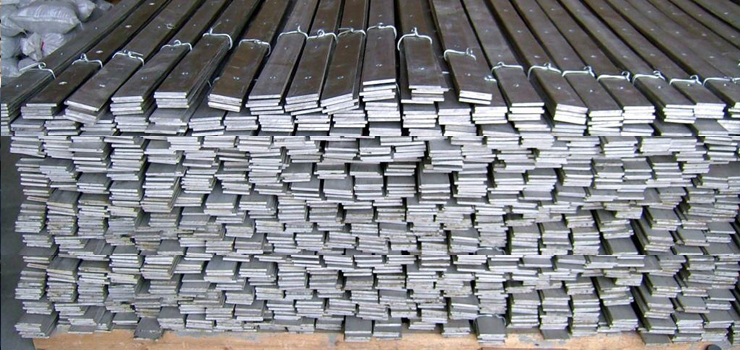
French long product prices are remaining mostly stable compared to the pre-holiday levels, though in some contracts and certain products moderate decreases are reported, Kallanish hears.
Since the activity resumption last week, the market has been uneventful with little appetite for material. Large steel processors report some financial difficulties and struggle to afford price increases.
Broadly speaking, with the flats and longs price increases seen in recent months, since the Middle East conflict started, margins have recovered, and volumes downstream are mostly stable year-on-year.
Over the course of the year, however, downstream margins have come under pressure from rising costs.
Looking ahead, pessimism is growing in the downstream sector as the French economy remains subdued and, according to the latest quarterly data, has only narrowly avoided recession. The construction sector, particularly private residential, remains weak, and the new infrastructure projects supported by post-Covid recovery funds are ending this year.
One large buyer, also pessimistic about the outlook, says the upcoming elections will slow activity. “Elections will have a strong impact on our business and this is happening during a period of great uncertainty,” he says.
In flat products, black hot rolled sheet prices are on the rise to €820-840/tonne ($957-980/t) delivered, in line with higher coil prices across Europe. This is up significantly from the level of €800/t seen at the end of July, just before the sector’s August shutdown.
Long product consumption remains limited as companies try to reduce exposure. Domestic merchant bar is at €290-300/t base delivered, excluding size extras of around €410/t, slightly below July levels as many buyers turned to Spanish producers offering competitive prices.
New contracts, however, are seen higher, with domestic merchant bar expected to recover to €310-320/t base delivered. Meanwhile, despite the several increase attempts for sections over the past months, prices for the first category material have remained stable at €800-810/t delivered.
Rebar levels are also flat compared to the pre-holiday levels with an uncertain market and limited volume orders. Values remain between €680-710/t delivered, sources suggest.

CBAM/TRQ impact remains undetermined, downstream support critical: panel
The impact of new EU trade barriers on imports has so far been distorted by stockpiling, but market participants are generally optimistic, panellists said at the inaugural edition of the Future Mining Forum and Expo in Katowice on Tuesday. However, the lack of downstream protection threatens the EU supply chain.
It is still too early to fully judge the impact of CBAM and the new tariff-rate quota (TRQ) system on EU trade. EU steel imports fell 2% on-year in the six months after CBAM was implemented, led by a drop in long products, although China-origin intake saw a 30% rise despite anti-dumping measures, said Polish Steel Association (HIPH) president Miroslaw Motyka.
Poland imported 1.2 million tonnes of steel in the first half of 2026, down 6% on-year. This compares to over 1.4mt of imports in the fourth quarter of 2025 alone. The decline in EU imports could therefore just be the result of stockpiling by importers before CBAM was implemented to ensure material availability.
“When it comes to CBAM, it’s too early to say [what the impact is]. We see a certain limitation, re-routing, certain volume pressure, which has reduced; there are more countries after a smaller pie,” Motyka said at the event attended by Kallanish. The TRQs have meanwhile been in place for only two months and have seen a significant rise in imports of slab – which is not covered by the measure – mainly from Brazil.
ArcelorMittal Poland (AMP) chief financial officer Adam Preiss said there was “cautious optimism” about the new measures. “CBAM and TRQs may not be ideal but they work,” he noted. ArcelorMittal has restarted blast furnaces in Poland, France and Spain this year, indicating a certain market revival, but this does not mean an improvement in demand. It is replacing imports with domestic production, he pointed out.
Another topic of discussion was the extension of CBAM to downstream steel products, which Cognor chief executive Przemyslaw Sztuczkowski said he has been lobbying for. He gave the example that a set of keys and tools made from steel can be bought online in Poland for an equivalent price less than that of steel scrap. “This is a drama; it makes a mockery of the EU and all its regulations,” he exclaimed.
“Without the immediate extension of CBAM to products where the steel component comprises 80-90% of costs … our distributors will lose their market. If they lose their market, then we as steel mills will also lose our market,” he warned.
Henryk Orczykowski, chief executive of distributor Stalprofil, said CBAM and TRQs are “going in a very good direction”. Given the weak steel demand in Europe, “there would be drama” if the measures were not in place. The huge steel stockpiles on the continent are yet to be fully worked through but stocks are now depleting.
Prices in the EU will be the main indicator of whether these measures are working. “CBAM and TRQs are most evident in the area of hot rolled coil; prices are rising steadily because this product is the most imported,” he noted. Inventories should deplete in Q4, at the same time as steel demand should improve in Poland, driven by investments, he added.