


Marcegaglia rethinks tube pricing, segment faces deep transformation
Italian pipe and steelmaker Marcegaglia has published a new price list that changes the pricing structure for welded tubes, in line with recent changes in the coil market, Kallanish notes.
Sources in the sector believe the company is modelling the new structure on the coil pricing mechanism. Under the new list, welded tubes prices will consist of a base price plus specification-based extras, mirroring the pricing formula used for coil. On tubes, the base price will remain fixed, while the extra will vary by specification. Discounts will be applied to the base, whereas under the previous system discounts were applied to the total value.
The new price list has been published, with full implementation expected by late September or early October as customers adapt to the revised pricing model, Kallanish understands. The update will include price increases, although Marcegaglia has yet to set final levels as it assesses the recent rise in coil prices.
Updated transport costs have also been integrated into the new list. Freight rates have surged in recent months, and finding trucks and drivers is increasingly difficult. Logistics are becoming a serious financial burden on the price of steel per tonne with bottlenecks causing delays across the value chain.
According to one source, the rising cost of fuel and freight will push the tube business towards greater regionalisation. Globalisation is fading due to protectionism, and regional presence will become increasingly important to improve customer service and contain costs.
Several other European pipe makers are also considering price increases in response to higher coil and transport costs. On the coil side, rising costs pushed ArcelorMittal to increase prices across Europe in September. The revised base price for hot rolled coil in Southern Europe is at €790/tonne delivered, and €770/t for Northern Europe, levels seen as workable for October and November. With HRC purchase prices now well above €700/t base ex-works, tube makers are expected to raise prices despite uncertain downstream demand.
Another source expects a broader transformation of the welded tube sector as European protectionism reshapes supply chains. With competitively priced imported HRC no longer readily available, producers will need to focus more on value-added services, quality and processing capabilities than on raw-material sourcing.
Tube demand in central and southern Europe remains subdued, with no clear recovery in consumption. However, market sentiment is improving as imports decline. Buyers built inventories ahead of the July quota changes but are expected to return to the domestic market in October and November as stocks are depleted.
Author: Natalia Capra

Italian rebar prices edge higher amid rising costs, tentative demand recovery
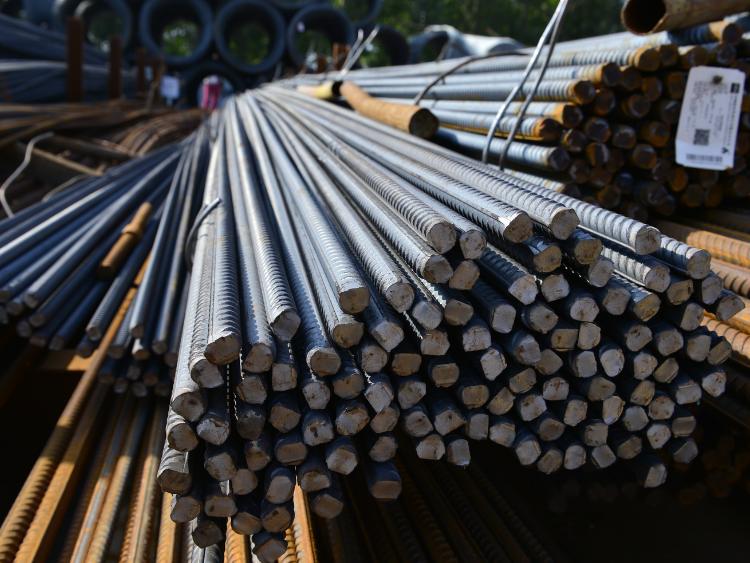
Italian domestic rebar prices narrowed upward in the week to Wednesday September 17 amid rising production costs and a modest improvement in speculative demand, as producers continued to push for higher prices.
“Energy and fuel prices continue to move higher, particularly considering the current global macroeconomic and geopolitical situation, and this is adding further pressure on production and logistics costs,” a buyer source told Fastmarkets.
Market participants noted a slight improvement in speculative demand across Europe compared with the end of August and the first days of September, although not enough to support significant price increases sought by producers.
“The Italian rebar market, however, remains relatively slow, with demand still not strong enough to fully support a significant price increase,” the source told Fastmarkets.
In northern Italy, tradable levels were heard at €700-730 ($808-842) per tonne ex-works, while transactions in southern Italy were heard at €730-750 per tonne ex-works. Higher offers of €760-770 per tonne ex-works were also heard, although those levels were not supported by transactional activity.
Fastmarkets’ weekly price assessment for steel reinforcing bar (rebar), domestic, exw Italy, was €700-750 per tonne on September 17, narrowed upward from €690-750 per tonne the previous week.
Fastmarkets’ weekly price assessment for steel reinforcing bar (rebar), domestic, delivered Spain, remained unchanged at €750 per tonne.
Meanwhile, German domestic rebar prices edged higher, with tradable levels heard at €715-720 per tonne delivered.
Fastmarkets’ weekly price assessment for steel reinforcing bar (rebar), domestic, delivered Northern Europe, was €715-730 per tonne on September 17, narrowed upward from €710-730 per tonne the previous week.
Wire rod prices remained largely stable during the assessment week, with weak demand and low liquidity continuing to constrain market activity.
Fastmarkets’ weekly price assessment for steel wire rod (mesh quality), domestic, delivered Southern Europe, was unchanged at €660-680 per tonne on September 17.
Fastmarkets’ weekly price assessment for steel wire rod (mesh quality), domestic, delivered Northern Europe, was unchanged at €690-715 per tonne on the same day.
European sections and beams
European domestic section prices remained stable month on month.
Fastmarkets’ monthly assessment for steel sections (medium), domestic, delivered Southern Europe, was €800-870 per tonne, unchanged month on month.
Domestic beam prices increased month on month, with tradable levels heard at €810-860 per tonne delivered across Europe.
Fastmarkets’ monthly assessment for steel beams, domestic, delivered Northern Europe, was €810-860 per tonne, up from €780-820 per tonne the previous month.


UK government to seek nationalisation of SSUK
The UK government is developing a plan to nationalise Speciality Steel UK (SSUK), Business Secretary Jonathan Reynolds announced in the UK’s House of Commons on 14 September, seeking to revive production at the troubled steelworks.
Sources close to the matter consider the restart of SSUK’s electric arc furnace (EAF) capacities to be all but certain for December, reporting that the Official Receiver has been releasing funds in line with what would be required for a restart before end-of-year.
A winding-up order was granted for SSUK in August 2025, putting the steelmaker’s administration process under the Official Receiver.
Since then, the government has been keen to find a private sector solution for SSUK – with private investment featuring heavily across March’s UK steel strategy – as was the case with British Steel, following government seizure from the Chinese owner Jingye, in April last year.
Against those intentions, the government failed to find a suitable buyer for British Steel, instead taking the steelmaker into state ownership in July.
According to sources, finding commercial synergies – potentially via consolidation of the UK’s primary and downstream steelmaking assets – has long been in the government’s sights, particularly in relation to British Steel and SSUK while under state administration.
Greenfield steelmaking company Blastr, which is developing new green direct-reduced ironmaking (DRI) capacities in Finland, was granted preferred bidder status for SSUK earlier this year, prior to the lapse of the exclusivity period in June.
Dow Jones Energy understood that Blastr was still actively involved in the bidding for SSUK despite the end of preferred bidder status, and so – it seems – did Blastr, expressing disappointment at the news of nationalisation:
“We are disappointed by the Government’s decision today concerning Speciality Steel UK, and we were not informed in advance,” Blastr replied to Dow Jones Energy on 14 September. “Over the course of several months, we have advanced our plans for a private sector solution to acquire SSUK – and were today on site in South Yorkshire with investors and strategic partners. We have a fully-funded proposal – at no cost to the British taxpayer – that is ready to complete within 12 weeks.”
Sources attribute the long negotiation period between the government and SSUK to frictions on project financing, suggesting that the government was dissatisfied with how far Blastr’s proposal would expose UK taxpayers. Sources also expect that the government’s nationalisation of British Steel could have altered its willingness to take ownership of SSUK, potentially able to find greater sector synergies for the steelmaking assets under mutual ownership.
Author: Benjamin Steven

EU steel industry calls for further work as lawmakers widen CBAM scope
The European steel industry has warned that Europe still falls short of a level playing field after the European Parliament backed an extension of the Carbon Border Adjustment Mechanism to downstream steel and aluminum products on Sept. 15.
The Parliament approved the expansion of CBAM’s scope to finished goods such as fasteners, wire, springs and household articles by a 464-50 vote, with 159 abstentions. The move aims to address carbon leakage in downstream manufacturing, where imported steel‑containing goods increasingly enter the EU market without facing the carbon costs borne by European producers.
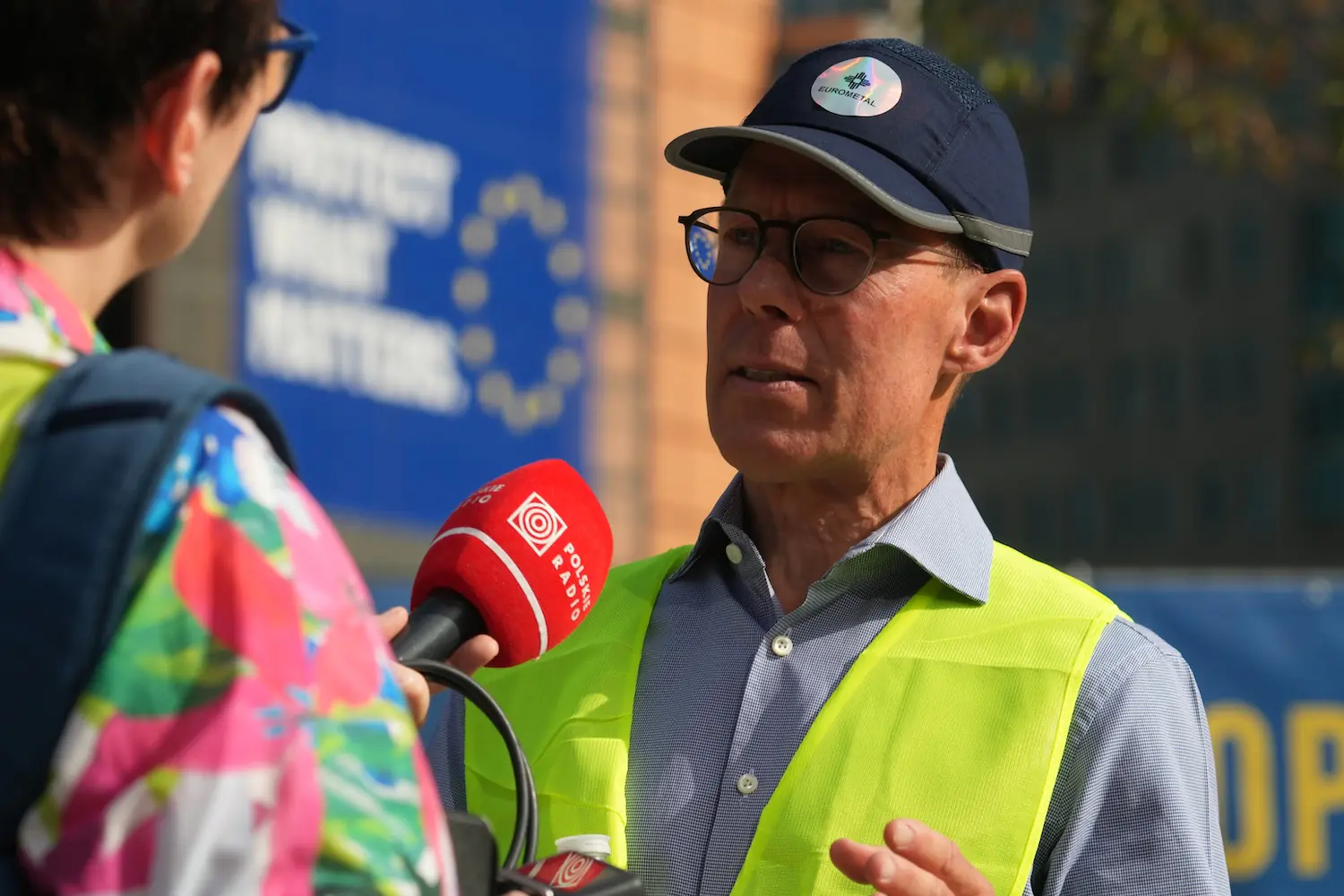
“Today’s vote is a step in the right direction, but it does not yet deliver a level playing field for European industry. The proposed scope remains incomplete, implementation is too slow, and there is still no solution for EU exporters carrying carbon costs when competing globally,” said Alexander M. Julius, president of Eurometal. “Moreover, CBAM alone cannot offset the broader cost disadvantage faced by European manufacturers due to higher steel prices and regulatory burdens. Europe must protect the entire value chain if it wants to prevent carbon leakage and deindustrialization,” he added.
The federation has called for CBAM coverage to be extended to all relevant steel and aluminum-intensive products with an acceleration in implementation timelines, as well as greater support to EU exporters and making sure the EU protects industrial activity rather than encouraging its relocation in its climate policies.
German steel industry association Wirtschaftsvereinigung Stahl also called for increased protection of EU exporters, who still bear European carbon costs, and said it was now crucial for the Parliament to quickly reach an agreement with the European Commission and Council to implement the regulation.
Ahead of the vote, the European Steel Association (Eurofer) supported the motion but called for stronger rules to prevent circumvention, noting the scale of investment required for steelmakers to decarbonize. “Europe’s steelmakers are investing billions to produce cleaner steel, but they cannot make that transition without a level playing field. MEPs have the opportunity to strengthen CBAM so that investing in low‑carbon steel production in Europe makes economic sense,” said Axel Eggert, director general of Eurofer. “Europe should be creating the conditions to produce more clean steel here, not incentives to move production elsewhere.”
European steel prices have risen in 2026 following CBAM’s implementation and the revised steel safeguard mechanism, with domestic mills holding firmer positions in negotiations as importers seek to mitigate their regulatory risks.
Platts, part of S&P Global Energy, assessed domestic hot-rolled coil in Northern Europe at €730/mt ex-works Ruhr, and in Southern Europe at €725/mt ex-works Italy, both up €110/mt since the start of the year.
Platts assessed imported HRC in Northern Europe at €585/mt CIF Antwerp, and in Southern Europe at €580/mt CIF S. Europe, both up €85/mt across the same period.
Author: Annalisa Villa
Italy’s ADI starts hot-end shutdown; future still hangs on High Court ruling
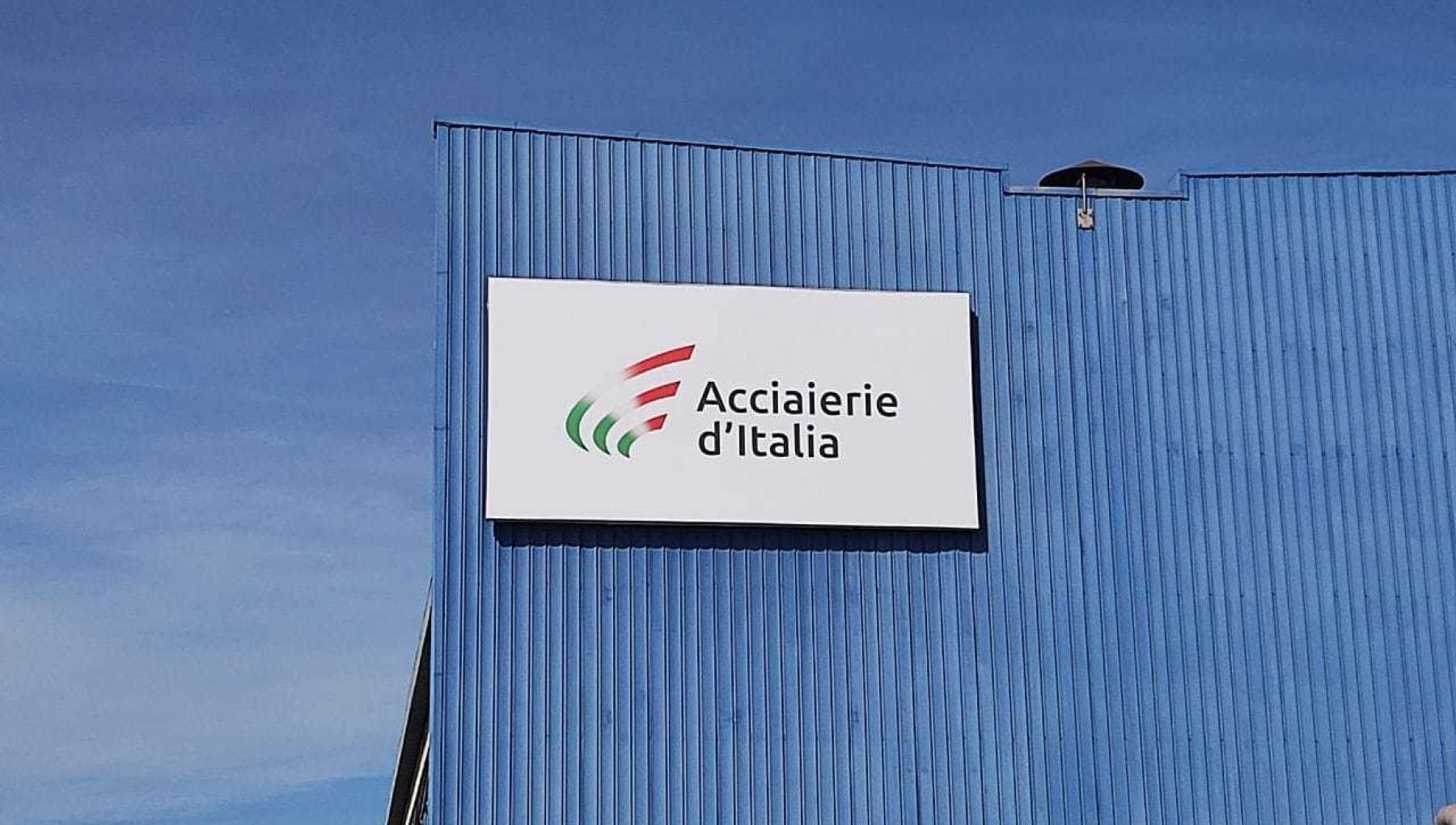
Acciaierie d’Italia (ADI) has begun a gradual shutdown of hot-end operations at its Taranto steelworks — the only integrated blast-furnace plant in Italy — after a Milan court rejected the company’s appeal against an earlier closure order, raising fresh uncertainty over the future of steel production at the site and its impact on European flat steel supply.
The shutdown, which started Sept. 16, follows a Milan Court of Appeal ruling Sept. 11 that dismissed an ADI challenge to a previous order mandating the closure of the hot-end section of the former Ilva plant. The court has ordered the suspension of the entire hot end of the company, which mainly comprises the coking plant units and blast furnace No. 2, with an annual capacity of about 2 million metric tons — the only one among the five blast furnaces operating — by Oct. 28.
An ADI press officer declined to comment when reached by S&P Global Energy.
Legal proceedings
The special commissioners managing ADI under extraordinary administration have lodged another appeal, and the Court of Cassation — Italy’s highest court — is scheduled to hold an Oct. 20 hearing to consider the challenge to the Milan Court of Appeal’s shutdown order, unions said to S&P Global Energy after a Sept. 16 meeting with the government.
Sources close to ADI also confirmed the development, but it remains unclear when the Court of Cassation will issue its ruling following the Oct. 20 hearing.
The Taranto plant has a nominal crude steel capacity of about 8 million metric tons/year, produced from iron ore and coal through blast furnaces — making it the largest steelworks in Italy and one of the most significant integrated facilities in southern Europe. Its prolonged legal and operational difficulties have weighed on domestic Italian steel output.
ADI has argued that closing the hot-end facilities risks jeopardizing all steel production at the site, as the company’s northern sites reroll the coils produced in Taranto. The Italian government, which is seeking a buyer for the company now under extraordinary administration, faces mounting pressure to secure an alternative industrial solution ahead of a national election next year.
The former Ilva assets were placed under extraordinary administration Feb. 20, 2024, when special commissioners were appointed at the request of the Italian state investment agency, Invitalia, despite opposition from steelmaker ArcelorMittal, which was then the largest shareholder in ADI. The Taranto plant has long been at the center of disputes over public health, with environmental and safety concerns cited in successive court orders targeting its hot-end operations.
Platts, part of S&P Global Energy, assessed domestic hot-rolled coil in Southern Europe at €725/mt ex-works Italy Sept. 15, stable day over day, and imported HRC in Southern Europe at €580/mt CIF Southern Europe, also stable day over day.
Author: Annalisa Villa
EU regulators open review as Arvedi moves to acquire steel distributor AMCLN
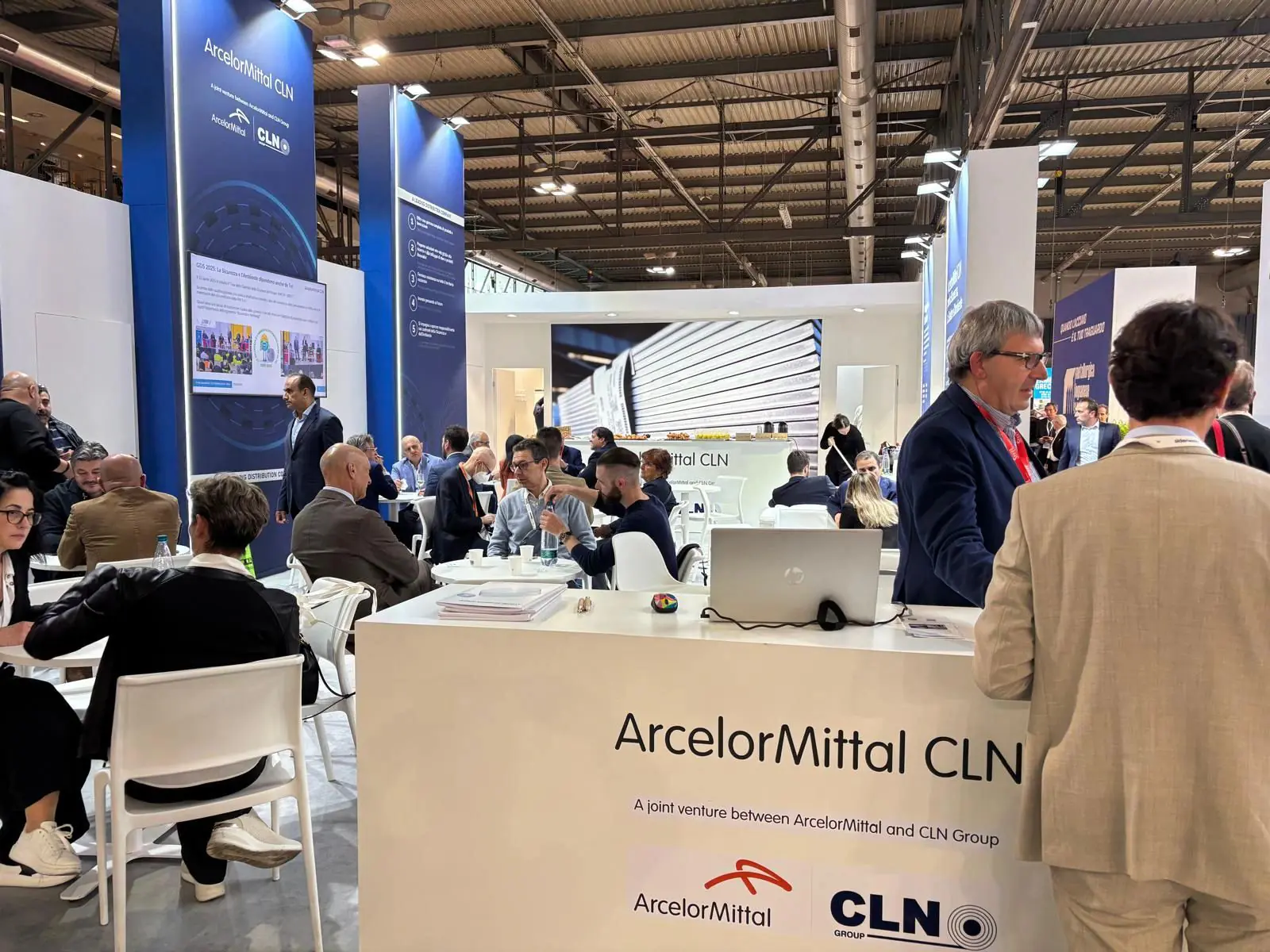
Italy’s largest flat-steel producer Acciaieria Arvedi S.p.A. has moved to take sole control of automotive-focused steel distributor ArcelorMittal CLN Distribuzione Italia S.r.l. after Rome’s golden power veto forced ArcelorMittal to abandon its own acquisition bid, according to a Sept. 17 merger notification published by the European Commission.
The EC in its Official Journal confirmed that Acciaieria Arvedi S.p.A. has notified its intention to acquire sole control of ArcelorMittal CLN Distribuzione Italia S.r.l., known as AMCLN, through a purchase of shares.
The Commission received the notification on Sept. 10, under case reference M.12598.
ArcelorMittal had originally planned to acquire the remaining 51% of AMCLN it did not already own, but withdrew after Rome invoked its golden power framework to impose conditions on the deal.
Steel consolidation
AMCLN distributes flat carbon steel products — including hot-rolled and cold-rolled coil — through service centers across Italy, supplying the automotive, construction, and white goods sectors. Full ownership would give Arvedi an integrated position from mill to end-customer.
The Commission designated the case a candidate for its simplified procedure, signaling it does not expect the deal to raise significant competition concerns. Third parties have until Sept. 27 to submit observations.
Acciaieria Arvedi did not reply when contacted by Platts, part of S&P Global Energy, for a comment.
Platts assessed domestic hot-rolled coil in Southern Europe at €725/mt ex-works Italy Sept. 16, stable day over day.
Author: Annalisa Villa
EU’s trade defences for steel shift overseas competition downstream
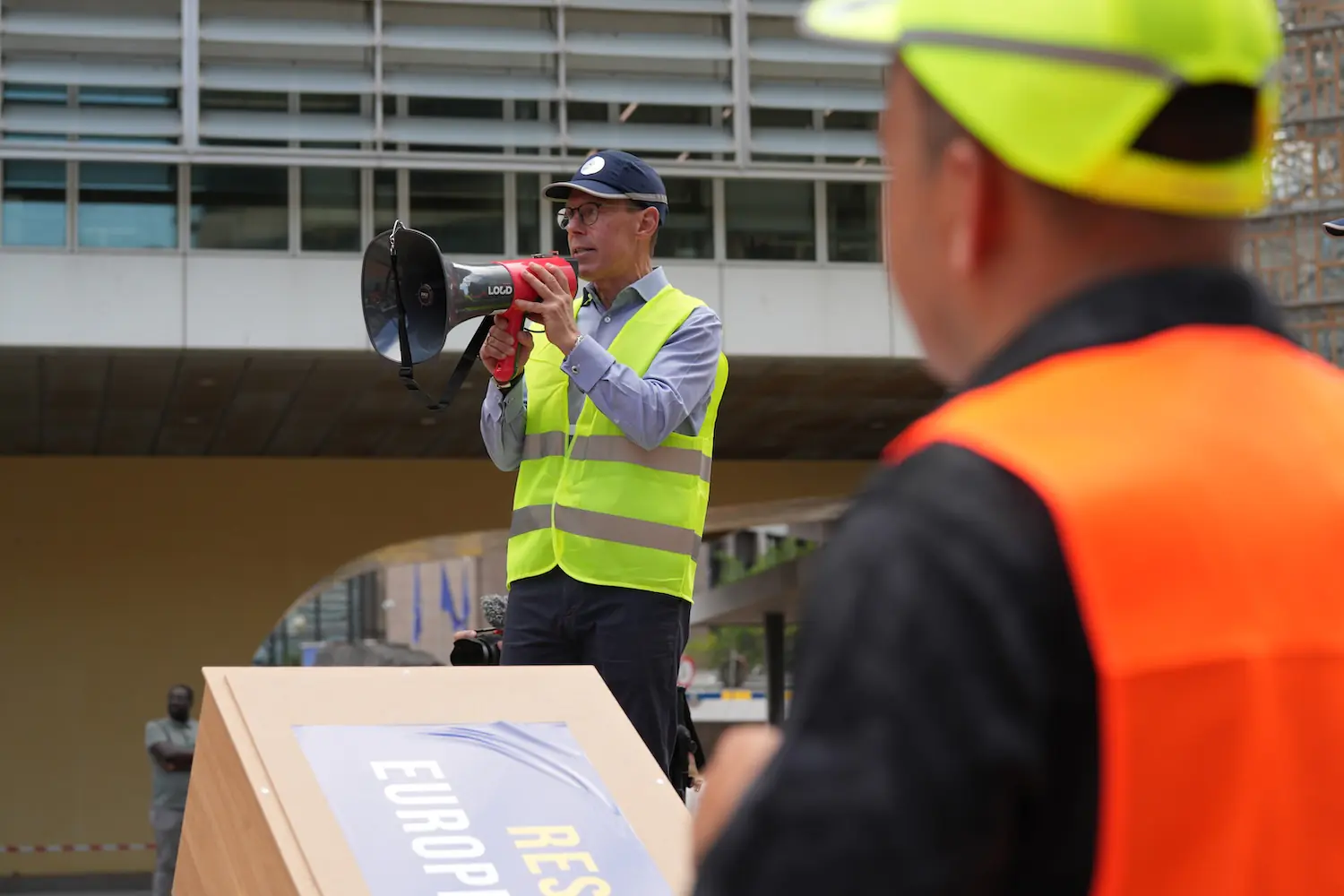
Steel distributors and service centres were represented at a demonstration in Brussels to highlight the issue of increased competition from imports of downstream steel products, this month.
In June, the European Commission adopted a proposal to extend CBAM to around 180 additional steel- and aluminium-intensive downstream products from 2028. However, more than 200 representatives from across the EU’s steel supply chain joined September 7’s European Convoy for Industrial Competitiveness, organised by Eurometal, to highlight the need for more comprehensive action.
The demonstration came just days before a crucial vote on the future scope of CBAM. On September 15, the European Parliament subsequently voted in support of a significant broadening of CBAM which could see it cover well over 400 downstream products. The measure will now be subject to negotiations between Parliament and EU member states.
EUROMETAL says that current EU trade and climate policies protect domestic steelmakers from overseas competition while leaving other businesses in the steel supply chain exposed to imports of downstream products. Such products are not currently subject to CBAM or the Steel Regulation’s tariff-rate quotas (TRQs).
Current trade defences “undermine” downstream operators
EUROMETAL argues that stringent trade defences on steel imports therefore “shift rather than eliminate import pressure”, undermining the competitiveness of Europe’s downstream steel supply chain. They will also result in carbon leakage as third countries’ steel and manufacturing processes, which may be more emissions intensive than those in EU countries, are used to create products that are imported into the EU, EUROMETAL says.
MEPS respondents increasingly highlight the influx of subtly modified steel products, which bypass the EU’s trade defences. This increased low-cost competition for European manufacturers, service centres and rerollers comes as EU steel prices continue to rise after new TRQs significantly reduced their access to imports, raising their input costs.
The MEPS Europe Average hot rolled coil price has risen by over 16% between January and September as buyers increasingly source material from domestic steelmakers. However, this month’s research indicated that high inventories and low demand will mitigate the scale of further increases during the coming months.
Large distributors and service centres are better placed to navigate the EU’s stringent legislation covering steel imports than their small, independent counterparts. An ability to fund port warehousing facilities leaves these businesses well placed to clear imported material through customs at the start of each quarterly quota period. Significant stock funding also allows large operators to maintain their inventories ahead of any anticipated increase in steel prices.
This month, MEPS respondents said that some European distributors are selling material at prices “significantly below” those now being asked by mills. Many are attempting to convert stock into cash before the end of the year.
Further measures required to protect wider sector
The proposed changes to the EU CBAM should strengthen Europe’s downstream steel industry, just as the Steel Regulation and CBAM have improved the outlook for domestic steelmakers. Voicing his support for the wider application of CBAM, the director general of the European steel association (Eurofer), Axel Eggert, said: “Extending CBAM to more steel-intensive products would help ensure that steel produced in Europe and steel contained in imported products compete under comparable carbon conditions.”
However, following this month’s vote in the European Parliament, EUROMETAL is already broadening the scope of its appeal for greater import protection. Association president Alexander M. Julius is calling for a new mechanism to support downstream steel processors and end-users competing in export markets where rivals are not exposed to carbon costs equivalent to those levied in the EU. He said that there remained “no solution for EU exporters carrying carbon costs when competing globally”.
European steel buyers say that import legislation has shifted the balance of power towards domestic steelmakers. Increasing calls for reform suggest new measures are now required to preserve the downstream sector that forms a vital part of their customer base.


Sülzle supplies stainless rebar for Helgoland port
Sülzle Stahlpartner has started the supply of approximately 2,500 tonnes of stainless rebar for the West Pier of Helgoland port in the North Sea.
The West Pier protects the port in the island’s south and, with it, the lifeline of this rocky island in the German Bight, Sülzle explains to Kallanish. To ensure that the 563-metre-long protective structure can continue to withstand the enormous forces of the North Sea in the future, it will undergo extensive repairs and technical modernisation until 2028.
A key component of the project is the highly corrosion-resistant Top12 stainless steel reinforcement from Steeltec AG, Sülzle notes. The steel used is grade 1.4003: stainless, with a chromium content of over 12%, and developed for components exposed to high chloride loads. In the highly stressed splash and tidal zones, it offers significantly greater resistance than conventional reinforcing steel.
The steel will be delivered from Sülzle’s shop for stainless steels in Bad Säckingen in southern Germany. Sülzle says it plans to also establish production of stainless steel reinforcement at its site in Seelze, Lower Saxony.
Author: Christian Koehl

German rebar mills strive for modest increase
Following a period of mixed signals during summer, with deals of base rebar prices below €400/tonne ($461), and then trying to return to that threshold, German mills are now ambitious to take one step further.
“You will not get €400 any more now,” several buyers said unanimously at the beginning of the week. Meanwhile, “at least two mills only today announced that they want €420 now,” one buyer told Kallanish on Wednesday confirming expectations expressed by others earlier.
The increase appears modest in comparison with Italian domestic base price offers of €440/t, and meanwhile way above that, too. One German purchasing manager dismisses those figures completely. “I have not heard €440, let alone more, neither from Germany nor from Italy.” He tells of a deal with an Italian mill only last week over a three-digit tonnage at below €400/t still, “but we were probably the last to enjoy that,” he says.
The mills have good reasons to ask for higher prices. “From north to south, all of them argue with energy costs,” which keep climbing because of the conflict on the Persian Gulf, the manager points out.
Another manager at a bending firm says he does not believe in a pronounced increase so soon. “I was expecting jobs from the construction industry to come back now that the summer break is over. They did, but to a lesser extent than I had wished,” he says. He also points at continued cannibalism among benders, with many of them making offers at dumping prices to secure orders.
Another source tells of a project in Hanover over a volume of 10,000 tonnes, which was won at a bid of €680/t. All the while mills would charge €685/t delivered, provided they can exert the base price of €420, plus the average size extra of €265.
Author: Christian Koehl
European stainless flats market subdued amid high inventories
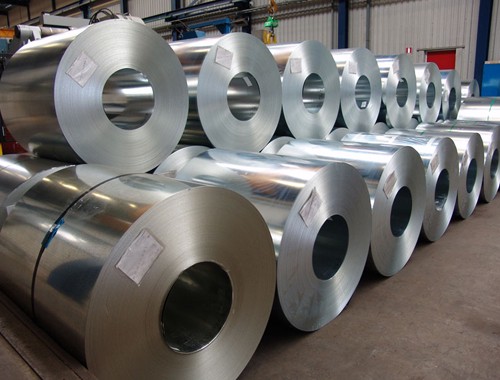
The European stainless flat products market remains subdued, with demand flat at very low levels following a sluggish summer across the region. Prices have slipped because of the standstill, sources tell Kallanish.
Market participants do not expect prices or demand to improve until buyers reduce their elevated inventories, a process that could take a few months. One large Southern European processor expects stability until the end of the year, as producers’ costs remain too high to allow price reductions. Weak demand is limiting price increases. A separate source expects prices and demand to improve from January 2027, as European inventories are depleted and imports are constrained by EU quotas and CBAM.
Another source notes that in the first half of the year buyers purchased around 30% more material than usual, encouraged by a generally optimistic outlook as prices were rising along with new trade measures. That extra stock is now being used very slowly. Demand from both end-users and service centres remains weak and is expected to stay that way in the coming months.
There are variations, with some European markets holding better prices than others despite generally subdued volumes everywhere. In France, sheet prices stand at around €2,850/tonne ($3,289/t) delivered, some €100/t above Germany and Italy where prices remain at €2,750/t or below.
End users remain cautious, pushing for lower prices given weak market conditions. While some sellers are holding firm and losing orders, others are cutting prices to retain business. One source expects weakness to persist, with long-term contract buyers increasingly negotiating lower prices.
As Europe is overstocked, several sources say they are not buying coils and may resist without buying for some time. “What I see is against logic,” a northern European coil buyer tells Kallanish. “Prices were supposed to increase. With the quota system and CBAM, mills should be able to raise prices, but downstream demand is too weak, and the recovery anticipated for September is not happening.”
European cold rolled coil prices have eased to €2,580-2,600/t delivered, while Italian prices have fallen from €2,580/t in early July to €2,530-2,560/t. Polished edge Italian HRCs stand at €2,350/t and €2,400/t delivered in the rest of Europe. Mills in Europe are quoting October and November lead-times. The level of €2,650/t quoted for November delivery is not yet achieved.
Meanwhile, stainless steel producer Aperam is extending its product range in Europe, with its 304L and 316L grades now available in thicknesses up to 15mm in 1,500mm width, in both coils and sheets.
Aperam says in a note it is the only European producer offering this combination, expanding options for demand applications while maintaining the quality and consistency of continuously rolled stainless steel.