

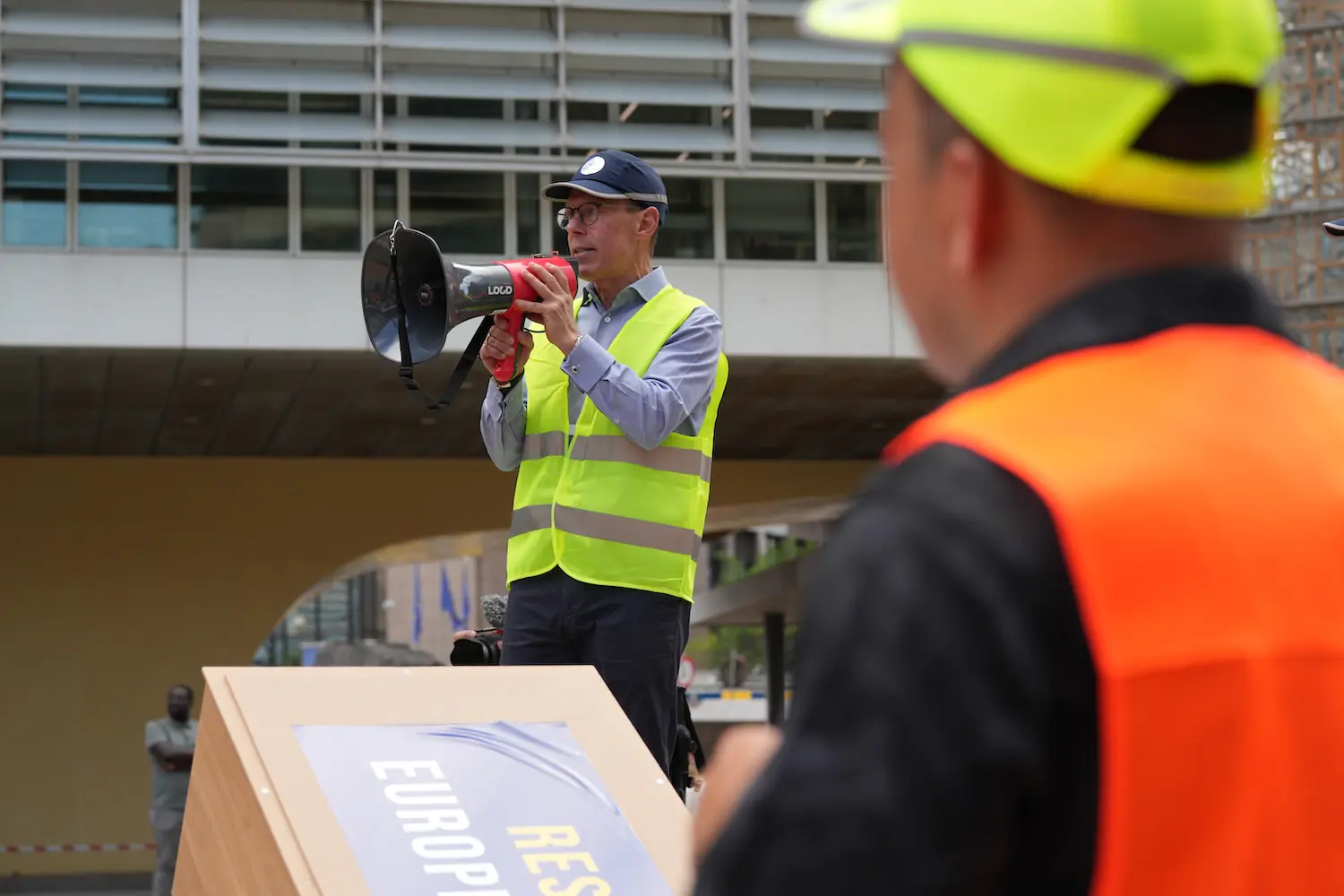
Steel distributors and service centres were represented at a demonstration in Brussels to highlight the issue of increased competition from imports of downstream steel products, this month.
In June, the European Commission adopted a proposal to extend CBAM to around 180 additional steel- and aluminium-intensive downstream products from 2028. However, more than 200 representatives from across the EU’s steel supply chain joined September 7’s European Convoy for Industrial Competitiveness, organised by Eurometal, to highlight the need for more comprehensive action.
The demonstration came just days before a crucial vote on the future scope of CBAM. On September 15, the European Parliament subsequently voted in support of a significant broadening of CBAM which could see it cover well over 400 downstream products. The measure will now be subject to negotiations between Parliament and EU member states.
EUROMETAL says that current EU trade and climate policies protect domestic steelmakers from overseas competition while leaving other businesses in the steel supply chain exposed to imports of downstream products. Such products are not currently subject to CBAM or the Steel Regulation’s tariff-rate quotas (TRQs).
Current trade defences “undermine” downstream operators
EUROMETAL argues that stringent trade defences on steel imports therefore “shift rather than eliminate import pressure”, undermining the competitiveness of Europe’s downstream steel supply chain. They will also result in carbon leakage as third countries’ steel and manufacturing processes, which may be more emissions intensive than those in EU countries, are used to create products that are imported into the EU, EUROMETAL says.
MEPS respondents increasingly highlight the influx of subtly modified steel products, which bypass the EU’s trade defences. This increased low-cost competition for European manufacturers, service centres and rerollers comes as EU steel prices continue to rise after new TRQs significantly reduced their access to imports, raising their input costs.
The MEPS Europe Average hot rolled coil price has risen by over 16% between January and September as buyers increasingly source material from domestic steelmakers. However, this month’s research indicated that high inventories and low demand will mitigate the scale of further increases during the coming months.
Large distributors and service centres are better placed to navigate the EU’s stringent legislation covering steel imports than their small, independent counterparts. An ability to fund port warehousing facilities leaves these businesses well placed to clear imported material through customs at the start of each quarterly quota period. Significant stock funding also allows large operators to maintain their inventories ahead of any anticipated increase in steel prices.
This month, MEPS respondents said that some European distributors are selling material at prices “significantly below” those now being asked by mills. Many are attempting to convert stock into cash before the end of the year.
Further measures required to protect wider sector
The proposed changes to the EU CBAM should strengthen Europe’s downstream steel industry, just as the Steel Regulation and CBAM have improved the outlook for domestic steelmakers. Voicing his support for the wider application of CBAM, the director general of the European steel association (Eurofer), Axel Eggert, said: “Extending CBAM to more steel-intensive products would help ensure that steel produced in Europe and steel contained in imported products compete under comparable carbon conditions.”
However, following this month’s vote in the European Parliament, EUROMETAL is already broadening the scope of its appeal for greater import protection. Association president Alexander M. Julius is calling for a new mechanism to support downstream steel processors and end-users competing in export markets where rivals are not exposed to carbon costs equivalent to those levied in the EU. He said that there remained “no solution for EU exporters carrying carbon costs when competing globally”.
European steel buyers say that import legislation has shifted the balance of power towards domestic steelmakers. Increasing calls for reform suggest new measures are now required to preserve the downstream sector that forms a vital part of their customer base.


