European coil and green steel round-up: EU coil prices rise despite subdued trading activity
The standoff between buyers and sellers continued in the European steel coil market in the week to 25 September as buyers have sufficient stocks and do not need to restock significant volumes, while steelmakers remain firm on prices as fundamentals support the uptrend in the long run.
Distributors have sufficient inventories booked earlier at lower prices, and the recovery in prices for material from stock was slower compared with prices ex-mills. Real demand remained stable, and it could take until year-end for inventories to decline to levels requiring restocking, market sources estimated.
Although trading activity has remained limited, domestic coil prices have seen a slight recovery over the week. Domestic prices have been supported by a combination of higher costs and reduced import availability caused by the new quota system and the Carbon Border Adjustment Mechanism (CBAM). The new regulations have made imports riskier, and buyers have been showing greater interest in European material.
“The demand is not good, but buyers understand that they have no argument for a price decrease and will have to pay more for coil soon,” a service center said.
Technical issues at some European mills are expected to reduce domestic supply and support the bullish sentiment in the market. Notably, ArcelorMittal has reduced output from blast furnace (BF) 5A at its Eisenhüttenstadt plant in Germany, and Italian steelmaker Arvedi has suspended one of its hot rolling mills.
In addition, BF stoppages have started at Acciaierie d’Italia (ADI) following a Milan Court of Appeal ruling. The plant needs to close its hot area by 28 October this year. Although the steelmaker had no volumes available to spot buyers, the removal of the volumes from the market would push ADI’s contract buyers to search for alternative supply in the spot market.
Market participants unanimously believe that any cuts in availability, combined with the effects of regulations, would push domestic prices further up.
Northwest Europe
A few deals for domestic hot-rolled coil (HRC) have been heard at EUR740-760/t ex-works, while mills were aiming for EUR770-800/t ex-works.
Import offers were limited due to the impact of regulations in the EU, with few offers reported at EUR725-735/t DDP Antwerp from traders.
The availability of cold-rolled coil (CRC) has declined since a major steelmaker in Germany sold out of the product for 2026, while other producers have been focused on sales of either less cost-intensive HRC or products with higher added value, such as hot-dipped galvanized coil (HDG).
As a result, domestic prices for CRC in the region were reported at EUR860-890/t ex-works, with deals settled at the lower end of the range.
Domestic prices for HDG have been heard at EUR830-870/t ex-works in Northwest Europe, with the majority of sources reporting prices at EUR840-850/t ex-works.
South Europe
Domestic prices for HRC in Italy have been reported at EUR720-740/t ex-works. The full impact of Arvedi’s rolling mill stoppage remains unclear, but prices are likely to move up faster.
Import offers increased due to rising costs of ferrous scrap and freight. HRC from Turkey was offered at around EUR620/t CIF, including anti-dumping duties, while offers from Egypt and South Korea were at EUR630/t CIF.
On a DDP basis, material from Asia and Turkey was available at EUR720-760/t.
Italian buyers have started to substitute the missing import HRC volumes with slab from Asia for rolling in the EU. Imports of semi-finished steel are not subject to quotas or anti-dumping duties in the region.
Green steel
Spot demand for green steel coil remains weak, with market activity largely limited to small trial purchases. Interest has been seen mainly from automotive and construction customers, where the higher cost of low-CO2 steel can be incorporated into overall manufacturing expenses.
Green steel premiums for trial volumes have typically been assessed at around EUR150/t, while spot premiums for electric arc furnace (EAF)-produced green HRC have been reported in the EUR80-130/t range.
Most buyers have instead been prioritising new trade restrictions and ensuring availability of conventional steel. Among distributors, demand for low-CO2 material has remained limited, with purchases generally made only when an existing end-user order allows the distributor to secure the material on a back-to-back basis.
| Weekly European steel coil | |||||
| EUR/t | Term | 25-Sep-26 | Change | ||
| Weekly Northwest Europe steel coil | |||||
| Northwest Europe ex-works HRC | EX-WORKS | 750.00 | 5.00 | ||
| Northwest Europe ex-works CRC | EX-WORKS | 860.00 | 10.00 | ||
| Northwest Europe ex-works HDG | EX-WORKS | 845.00 | 5.00 | ||
| Northwest Europe CIF HRC | CIF | 620.00 | 40.00 | ||
| Northwest Europe DDP port HRC | DDP Port | 730.00 | 0.00 | ||
| Weekly South Europe steel coil | |||||
| Italy ex-works HRC | EX-WORKS | 730.00 | 5.00 | ||
| South Europe CIF HRC | CIF | 620.00 | 40.00 | ||
| South Europe DDP port HRC | DDP Port | 730.00 | 0.00 | ||
| South Europe CIF CRC | CIF | 680.00 | 0.00 | ||
| South Europe DDP port CRC | DDP Port | 825.00 | 0.00 | ||
| Show less… | |||||
| Source: McCloskey by OPIS. | © 2026 Dow Jones Energy Limited. | ||||
| Weekly green steel | |||
| EUR/t | Term | 25-Sep-26 | Change |
| Green Northwest Europe HRC premium (scopes 1-3 CO2 under 0.8t) | 100.00 | 0.00 | |
| Green Northwest Europe ex-works HRC (scopes 1-3) | EX-WORKS | 850.00 | 5.00 |
| Green HRC premium (scopes 1-2 CO2 under 0.5t) | 100.00 | 0.00 | |
| Green Northwest Europe ex-works HRC (scopes 1-2) | EX-WORKS | 850.00 | 5.00 |
| Green HRC reduced carbon price (scopes 1-3) | 65.75 | 0.24 | |
Author: Maria Tanatar

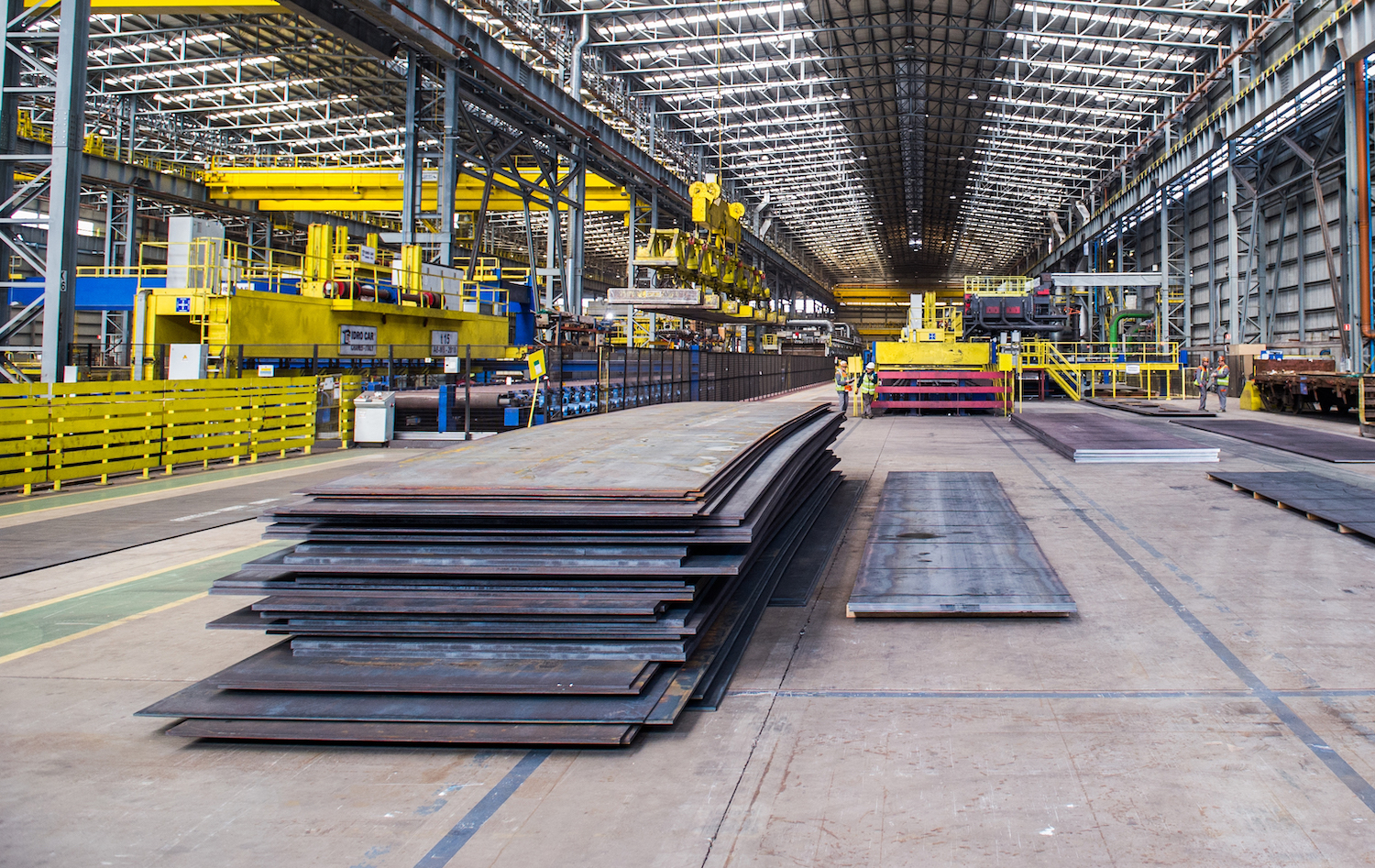
European heavy plate round-up: Italy’s heavy plate prices rise on higher costs
Italian heavy plate prices inched up in the week to 25 September, and the country’s re-rollers are seeking further increases due to rising costs.
Deals for s235jr/s275jr-grade heavy plate in Italy have been settled around EUR750/t ex-works. Steelmakers were aiming for prices closer to EUR800/t ex-works in their offers. Prices, however, are unlikely to see a recovery in the short term, and an increase is expected in deals for material produced in the first quarter.
“In general, demand is not getting better and price increases require time, but the recovery is needed because energy, fuel and logistics costs are getting higher,” an Italian trader said.
Offers for imported slab, the main feedstock for European re-rollers, have also increased, adding pressure to increase plate prices.
Offers of slab from China and Vietnam have been heard at $590-595/t CIF Italy, with some deals for Chinese material reported at $585/t CIF Italy.
Turkish steelmakers have pushed slab offers higher due to rising ferrous scrap prices, reaching $630/t CIF Italy.
Limited volumes of slab from European integrated mills have been heard at EUR650/t ex-works Germany.
Slab availability increased in July-August as exporters shifted their focus towards semi-finished steel sales to Europe after the new quota system restricted access to finished steel in the EU. However, more European buyers are considering substituting hot-rolled coil (HRC) imports with slab in order to roll the material within the EU, since the latter is not subject to quotas.
German mills had limited heavy plate volumes to offer on the spot market and kept prices stable at EUR850/t ex-works.
| Weekly European heavy plate, slab and green steel | |||||
| Unit | Term | 25-Sep-26 | Change | ||
| Weekly heavy plate | |||||
| Northwest Europe ex-works heavy plate | EUR/t | EX-WORKS | 850.00 | 0.00 | |
| Germany delivered heavy plate (Northwest Europe) | EUR/t | DEL | 870.00 | 0.00 | |
| Italy ex-works heavy plate | EUR/t | EX-WORKS | 750.00 | 5.00 | |
| Weekly steel slab | |||||
| Italy CFR slab | $/t | CFR | 585.00 | 5.00 | |
| Weekly green steel | |||||
| Green heavy plate premium (scopes 1-3 CO2 under 1t) | EUR/t | 25.00 | 0.00 | ||
Author: Maria Tanatar

Local HRC prices in Europe remain unchanged on Friday amid slow market sentiment
Steel hot-rolled coil (HRC) prices in Northern Europe and Italy were stable day on day, with sources quoting slow market activity and limited demand, Fastmarkets heard on Friday September 25.
In Northern Europe, market participants said the market remained somewhat flat and had not heard of any significant activity on September 25.
A buyer source said offers were being quoted within €760-790 ($865-899) per tonne ex-works but added that mills would have to wait to achieve these prices in deals, so they were discarded from the daily index.
A second buyer indicated levels at €720-730 per tonne ex-works, saying they were unchanged from a week earlier. However, this price was discarded due to a lack of fresh confirmation in the market.
The HRC market was mostly quiet on Friday, and no other price points were collected during the day. For this reason, prices included in Thursday’s index were carried over to Friday’s index, in line with Fastmarkets’ methodology.
On Thursday, two buyer sources indicated workable levels in the range of €740-750 per tonne ex-works. The second buyer also reported higher offers at €750-760 per tonne ex-works for October-November delivery.
A price point on the sell side of Thursday’s index was copied over from Wednesday, when a supplier reported an indication of achievable levels at €730-740 per tonne ex-works, based on the prices that steel service centers in Germany were willing to pay for limited stock replacement.
Thus, Fastmarkets’ daily steel hot-rolled coil index domestic, exw Northern Europe was calculated at €741.67 per tonne on September 25, stable day on day from September 24.
The index was up by €4.17 per tonne week on week and by €15.42 per tonne month on month.
In Italy, no fresh activity was reported either, as demand remained limited.
Latest indications of workable levels were quoted by sources on Thursday September 24 within the range of €730-745 per tonne ex-works.
As a result, Fastmarkets’ daily steel hot-rolled coil index domestic, exw Italy was calculated at €737.50 per tonne on September 24, also stable day on day.
The index was up by €6.75 per tonne week on week and by €18.75 per tonne month on month.

Italian steel heavy plate prices edge up on higher production costs; Northern Europe steady
Domestic prices for steel heavy plate in Italy narrowed upward week on week, while mills were targeting higher levels for November delivery due to rising energy and slab prices, sources told Fastmarkets in the week to Thursday September 24. Meanwhile, the Northern Europe market was mostly stable despite mills’ ambitions to achieve higher levels.
Southern Europe
In Italy, re-rollers were heard selling base-grade plate at €740-750 ($842-853) per tonne ex-works for October-early November delivery, while targeting higher levels of €760-780 per tonne ex-works for November deliveries, sources said during the week.
One trade source said that workable levels were still within €730-750 per tonne ex-works, but the lowest price of the range was not supported by other participants. This range was in line with previous deals reported on September 17.
Prices above €750 per tonne ex-works were reported achievable mainly for project-related deals, the same source said.
They added that customers were slowly accepting price increases in the market, as demand remained moderate. At the same time, mills were under pressure due to higher production costs, such as rising energy and slab prices.
A producer said that the energy inflation was “adding up to €20 per tonne to costs of production” in the third and fourth quarter of the year, compared to the June-July period.
However, a second trade source did not support this narrative. “I know nothing about increases, just [the] opposite, mills are earning a very nice profit, despite gas price increases or higher slab prices,” the source said on Wednesday.
As a result, Fastmarkets’ weekly price assessment for steel domestic plate 8-40mm, exw Southern Europe was €740-750 per tonne on September 24, narrowed up by €10 per tonne from €730-750 per tonne a week earlier.
Meanwhile, latest offers for Asian slab were mainly reported within the range of $580-590 per tonne cost, insurance and freight (CIF), with prices from China being closer to $590 per tonne CIF and with earlier possible shipment in December, sources said.
They added that material with earlier delivery was already sold out in the market, so these prices were included in the assessment, despite Fastmarkets’ methodology delivery window of 8-10 weeks.
Some higher offers from China were heard at $600 per tonne CIF and above, a buyer told Fastmarkets, but other sources did not confirm these levels yet.
And a lower offer was reported from Southeast Asia to the port of Ravenna at $575 per tonne CIF, but details and specifications were unclear so it was not considered in the final assessment.
Fastmarkets’ weekly price assessment for steel slab import, cif Italy was $580-590 per tonne on Thursday, narrowed up by $10 per tonne from $570-580 per tonne a week earlier.
Fresh offers for plate imports from Indonesia to Spain were reported at $790 per tonne delivered duty paid (DDP) for arrival in the first quarter of 2027, but no new information was reported on a cost and freight (CFR) basis.
Thus, Fastmarkets’ weekly price assessment for steel plate (8-40mm), import, cfr main port Southern Europe, was €710-750 per tonne on Thursday, stable week on week.
Northern Europe
In Germany, mills were heard offering plate within the range of €850-900 per tonne ex-works, with latest deals reported around €850 per tonne ex-works, sources said.
A trade source said that levels as high as €900 per tonne ex-works did not attract buying interest and that they expected no commodities to be bought at such price.
Thus, Fastmarkets’ latest weekly price assessment for steel domestic plate 8-40mm, exw Northern Europe was €850-880 per tonne on September 24, unchanged from the previous week.
The import offers for plate from Indonesia at $790 per tonne DDP were also reported to Antwerp, while a trade source said the actual offers to the market were above €800 per tonne free carrier (FCA) Antwerp. However, no fresh activity was reported on a CFR basis.
Fastmarkets’ weekly price assessment for steel plate (8-40mm), import, cfr main port Northern Europe, was €710-750 per tonne on Thursday, stable week on week.
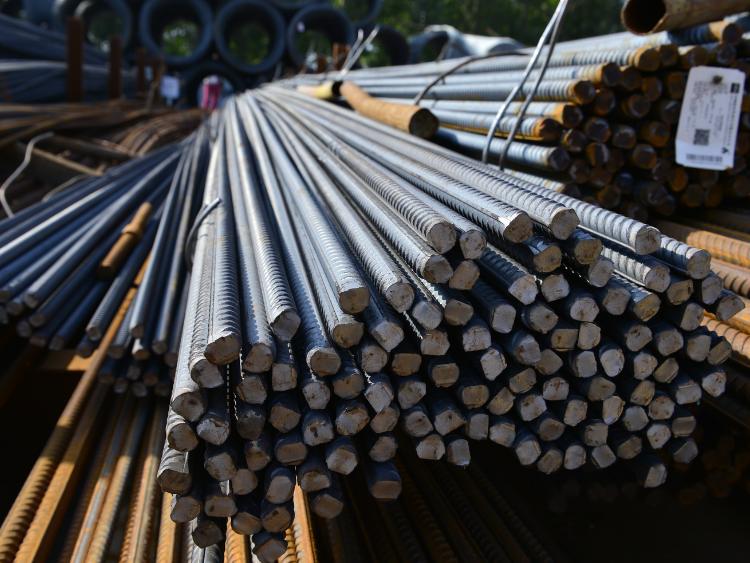
Polish domestic rebar prices edge higher on mounting production costs
Polish domestic rebar prices narrowed upward in the week to Friday September 25, amid high production costs and slow demand.
“Demand remains weak,” a distributor source told Fastmarkets.
Market participants said mills were targeting higher prices due to rising oil and energy costs. Some mills adjusted their working hours in response to elevated energy prices.
Deals for domestic rebar were heard at 2,750-2,800 zloty ($724-737) per tonne, with offers and workable levels also heard within that range.
Fastmarkets’ weekly price assessment for steel reinforcing bar (rebar), domestic, CPT Poland, rose to 2,750-2,800 zloty per tonne on Friday, up from 2,740-2,800 zloty per tonne the previous week.
In the wire rod segment, indications were heard at 3,150 zloty per tonne delivered.
Fastmarkets’ weekly price assessment for steel wire rod (drawing quality), domestic, delivered Poland, remained unchanged at 2,900-3,150 zloty per tonne on Friday.

EU Steel Distribution: Improving outlook for Q4 as activity and price expectations strengthen
The September 2026 EUROMETAL Market Sentiment Survey points to a more constructive outlook for the European steel distribution sector as it enters the final quarter of the year.
While the assessment of current activity remains predominantly stable, sentiment has improved compared with the summer months. More significantly, expectations for activity over the next quarter remain positive, with the largest share of respondents anticipating an increase. Price expectations also maintain a clear upward bias.
Stock expectations, meanwhile, remain largely stable, suggesting that distributors continue to manage inventories cautiously despite improving expectations for activity and prices.
Overall, the September results indicate growing confidence for Q4 2026, although the significant number of neutral responses across several indicators suggests that market participants remain measured in their expectations.
Assessment of Current Activity
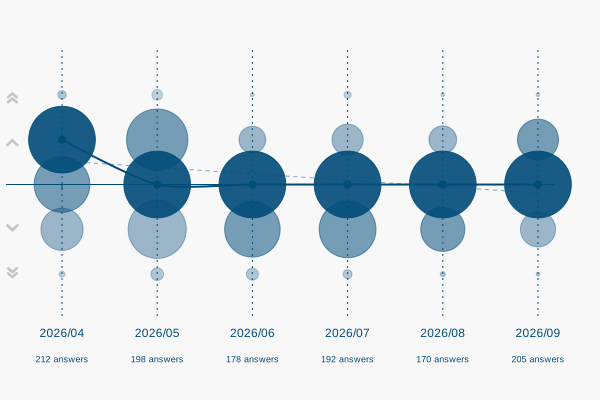
The assessment of current activity in September remains centred on the neutral line, meaning that the largest group of respondents considers activity to be stable.
However, compared with August, the distribution shows a small positive balance. The share of respondents reporting activity above the neutral level has strengthened, while fewer participants report weaker activity.
The results therefore point to stabilisation with some signs of improvement, rather than a broad recovery in current market activity.
Future Activity Forecast
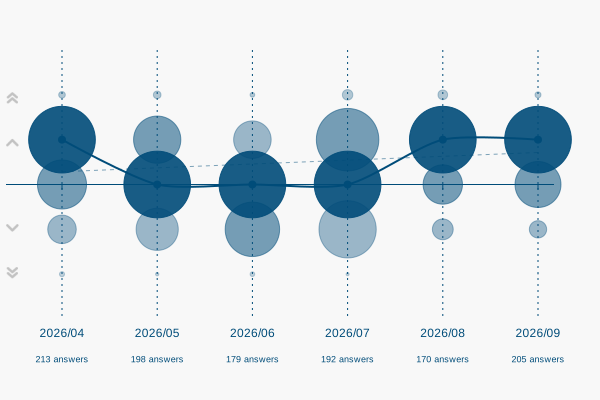
Expectations for activity over the next quarter remain positive in September, with the largest share of respondents forecasting an increase in activity.
This positive outlook, already visible in August, is maintained in September, with the dominant response remaining above the neutral line. A significant proportion of respondents still expects activity to remain stable, while comparatively fewer anticipate a decline.
The results therefore point to growing confidence in market activity for Q4 2026, although the sizeable neutral response suggests that this optimism remains measured rather than signalling expectations of a strong recovery.
Stock Position Outlook
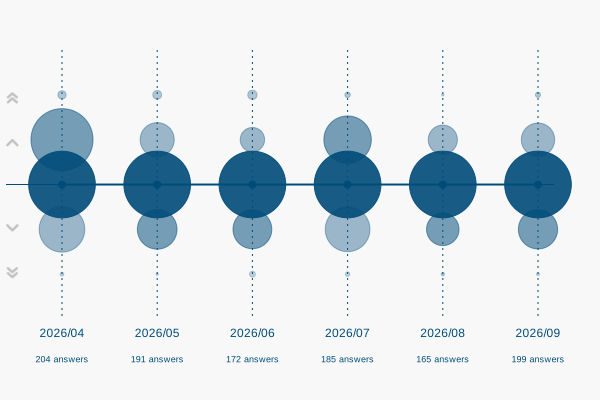
Stock expectations remain largely stable, reinforcing the cautious approach to inventory management seen across the European steel distribution sector.
The September results suggest that most distributors do not intend to make significant changes to their stock positions over the next three months. Expectations of increases or decreases remain secondary to the dominant view that inventories will remain broadly unchanged.
This continued focus on stability suggests that distributors are avoiding aggressive restocking and keeping inventories closely aligned with actual market requirements.
Price Development Expectations
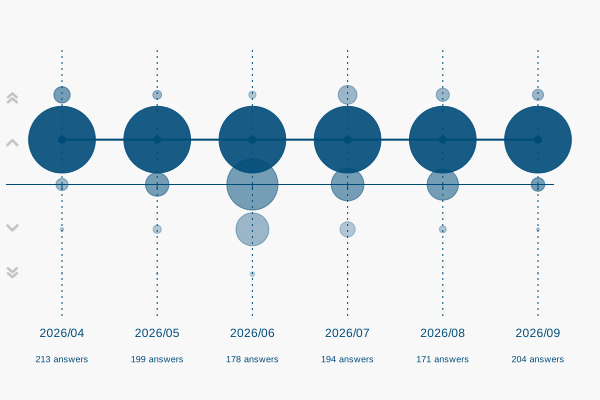
Price expectations remain one of the clearest positive signals in the September survey.
The largest concentration of responses is above the neutral line, indicating that respondents expecting price increases over the next three months outweigh those anticipating stable or declining prices.
A significant share of respondents nevertheless expects prices to remain stable, while comparatively fewer foresee downward price developments.
The September results therefore maintain a clear upward bias in price expectations, reinforcing the more constructive outlook for the final quarter of 2026.
Outlook for Q4 2026
The September survey presents a more encouraging picture of the European steel distribution market as Q4 begins.
Current activity remains predominantly stable but shows signs of improvement. More importantly, respondents are increasingly positive about activity over the next three months, while price expectations continue to point upwards. At the same time, stock positions are expected to remain broadly unchanged, highlighting the continued discipline of distributors in managing inventories.
Taken together, the results suggest that the sector is entering Q4 2026 with cautious optimism and greater confidence than during the summer months. Expectations of stronger activity and firmer prices provide encouraging forward-looking signals, although the continued importance of neutral responses indicates that distributors remain cautious about the strength and pace of any market recovery.
This analysis is based on the EUROMETAL Market Sentiment Survey, with 205 participants responding to the activity questions and 199 participants to the stock and price questions in September 2026. EUROMETAL surveys the market monthly, publishing the results by distribution (stockholding, flat steel service centers or trading); but also by region and industry.
Interested in our Sentiment Tool? Contact us.