


Lower imports support European HRC producers’ order books despite muted demand
Market participants said European hot-rolled coil producers’ order books are well-filled for 2026 despite muted demand in recent weeks. Reduced imports following the introduction of a stricter safeguard system in July this year were one of the key factors supporting local producers.
In these conditions, mills in Northern Europe are gradually testing the market with higher prices. The market leader was heard voicing offers at €800 ($896.27) per tonne delivered, equivalent to €780-785 per tonne ex-works. Another seller from Northern Europe said he expects the price to reach €800 per tonne ex-works by the end of the year.
These levels, however, have not yet materialized in transactions, with the highest price heard achieved at €760 per tonne ex-works during the day.
A buyer source reported a recent transaction in the region at €750 per tonne ex-works, while another buy-side source provided an indication at €740-750 per tonne ex-works.
Fastmarkets’ daily steel hot-rolled coil index, domestic, exw Northern Europe, was calculated at €753.75 ($844.456) per tonne on Monday, October 26, up by €4.75 per tonne day on day from €749 per tonne on Friday, October 23.
The index was up by €5 per tonne week on week and by €12.08 per tonne month on month.
In the Italian market, suppliers were also trying to achieve higher prices.
“Everyone is trying to increase to €760-770 per tonne delivered (€740-755 per tonne ex-works),” a buyer from Italy said, adding that the lowest sales prices available now are €740 per tonne ex-works.
Another market source estimated tradeable levels in Italy within a wider range of €730-750 per tonne ex-works.
Fastmarkets’ daily steel hot-rolled coil index domestic, exw Italy was calculated at €741 per tonne on October 26, up by €1.94 per tonne day on day from €739.06 per tonne on October 23.
The index was down by €0.88 per tonne week on week but up by €3.5 per tonne month on month.
Several market sources reported that Northern European suppliers were increasing activity in the southern region due to reduced availability of material, caused by production issues that local suppliers encountered over the past few months, as well as lower imports.
One source said transactions took place at €780-790 per tonne delivered, but this information could not be confirmed by the time of publication.


Polish domestic rebar prices narrow amid weak demand, exports to Ukraine
Polish domestic rebar prices narrowed in the week to Friday October 23, amid high production costs, weak demand and exports to Ukraine, sources told Fastmarkets.
“There is some deficit of the material in the market, but demand is traditionally low,” a seller source told Fastmarkets.
One market participant reported an offer for rebar from local producers at €636 ($714) per tonne CPT, equivalent to 2,780 zloty per tonne.
Another source reported an offer at 2,800 zloty per tonne, while a seller source reported offers at 2,840 zloty per tonne.
As a result, Fastmarkets’ weekly price assessment for steel reinforcing bar (rebar), domestic, CPT Poland narrowed to 2,780-2,840 zloty per tonne, from 2,773-2,850 zloty per tonne the previous week.
“Demand remains weak, and customers say that ‘the season is over.’ Our mills are attempting to raise prices, but without success,” another distributor source told Fastmarkets.
“A lot of material is being exported to Ukraine,” another market participant told Fastmarkets.
The increased exports to Ukraine followed Russian attacks on Ukrainian steel mills in August and September this year, which caused critical damage to infrastructure.
Workable levels for drawing quality wire rod were heard from market participants at 2,900-3,150 zloty per tonne. Another source reported an offer at 3,000 zloty per tonne.
Fastmarkets’ weekly price assessment for steel wire rod (drawing quality), domestic, delivered Poland, widened downward to 2,900-3,150 zloty per tonne from 2,950-3,150 zloty per tonne the previous week.
Liberty Steel Newport enters liquidation
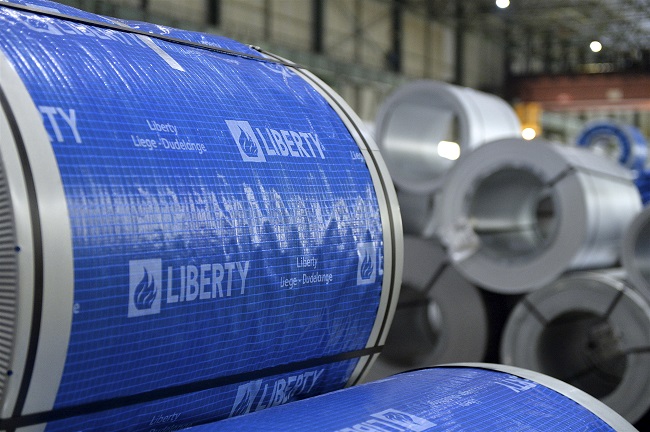
Liberty Steel Newport has entered voluntary liquidation following a petition to wind up by a creditor, Kallanish learns from public record, The Gazette.
A petition to wind up was initially launched in July by Siemens Financial Services. This was followed by a meeting of creditors.
A further petition to wind up was launched by the same company on 12 October, when the meeting of creditors took place. The resolution saw Iain Hunter, director of the company, confirm that it was to be wound up voluntarily.
A notice to creditors was issued on the same day, naming TG Begbies Traynor and Kroll Advisory as joint liquidators of the company.
According to Companies House, its accounts have been overdue since 31 March 2021, with the last accounts made up to 31 March 2019.
Production at the site is believed to have been idled for several years.
A Liberty Steel spokesperson declined to comment when approached by Kallanish.
This insolvency follows GFG-owned UK business Speciality Steel (SSUK) business being placed into compulsory liquidation by the high court in London in August 2025.


European coil hike attempt defies continued lull
Despite demand from European steel users remaining modest, one attempt for a bold increase was made in the run-up to the Euroblech fair in Hanover last week.
The market leader lifted its offer for hot-rolled coil by some €60/tonne ($67/t), on its customer portal and in some direct correspondence, Kallanish hears from German and Scandinavian buyers of HRC.
“That’s an attempt as a prelude to the trade fair; this is not unusual,” a Scandinavian buyer says. He concedes that paid market prices currently can be above €750/t ex-works, but doubts that many people will currently pay anything above €800/t.
The move was not communicated widely, and not echoed by other mills. One other mill source at the time of the fair still indicated the market price at €740-750/t and did not mention any noteworthy hike attempt from his firm.
A German service centre manager believes that the attempt has gone up in smoke. “It does not make sense other than confusing the market,” he says.
Still, many sources do believe that mills in the longer run can bank on rising prices and demand, although at a slower pace. Lead times are seen at three months now although one mill manager tells of some residual rolling capacities in December.
It should be noted that spot prices are now at least €120/t above those one year ago. This is largely attributed to the EU’s measures on imports, but also considers hefty hikes of costs. According to the mill manager, costs for HRC production have risen by €100/t within one year, and for hot-dip galvanized by as much as €130/t, with the zinc price roughly tripling in that period.
Still, these factors stand against the ongoing lack of demand, and the difficulty of handing down price hikes to steel consumers. “With the end of the year in sight, many European steel buyers remain cautious about their purchases… and prefer to keep their inventories low,” a Dutch service centre manager states.

Egypt NSF secures 4,500 mt structural steel order for Saarstahl’s German plant
Egypt-based National Steel Fabrication (NSF) has announced that it has secured an order from German plant manufacturer SMS group for the supply and fabrication of 4,500 mt of structural steel for German steelmaker Saarstahl’s plant.
According to the company’s statement, the order forms part of an industrial project at Saarstahl’s facility in Germany and will be carried out in cooperation with SMS group.
SMS group to supply new EAF for Saarstahl’s Völklingen plant
As previously reported by SteelOrbis, in October 2024, SMS group announced that it would supply an alternating current electric arc furnace (EAF) and auxiliary equipment for Saarstahl’s Völklingen plant in Germany. Saarstahl is part of Stahl-Holding Saar (SHS), which aims to achieve carbon neutrality by 2045.
The new EAF will have a capacity of 185 mt and a transformer capacity of 300 MVA, making it one of the world’s most powerful electric arc furnaces, according to SMS group. The furnace will be capable of processing up to 100 percent scrap, or a combination of 80 percent cold direct reduced iron (DRI)/hot briquetted iron (HBI) and 20 percent scrap. The first heat is scheduled for September 2028, with the facility expected to produce various steel grades, including bearing steel, free-cutting steel and spring steel.
Author: SteelOrbis Editorial Team

Steel Networking Summit 2026: Global steel capacity growth outpaces demand
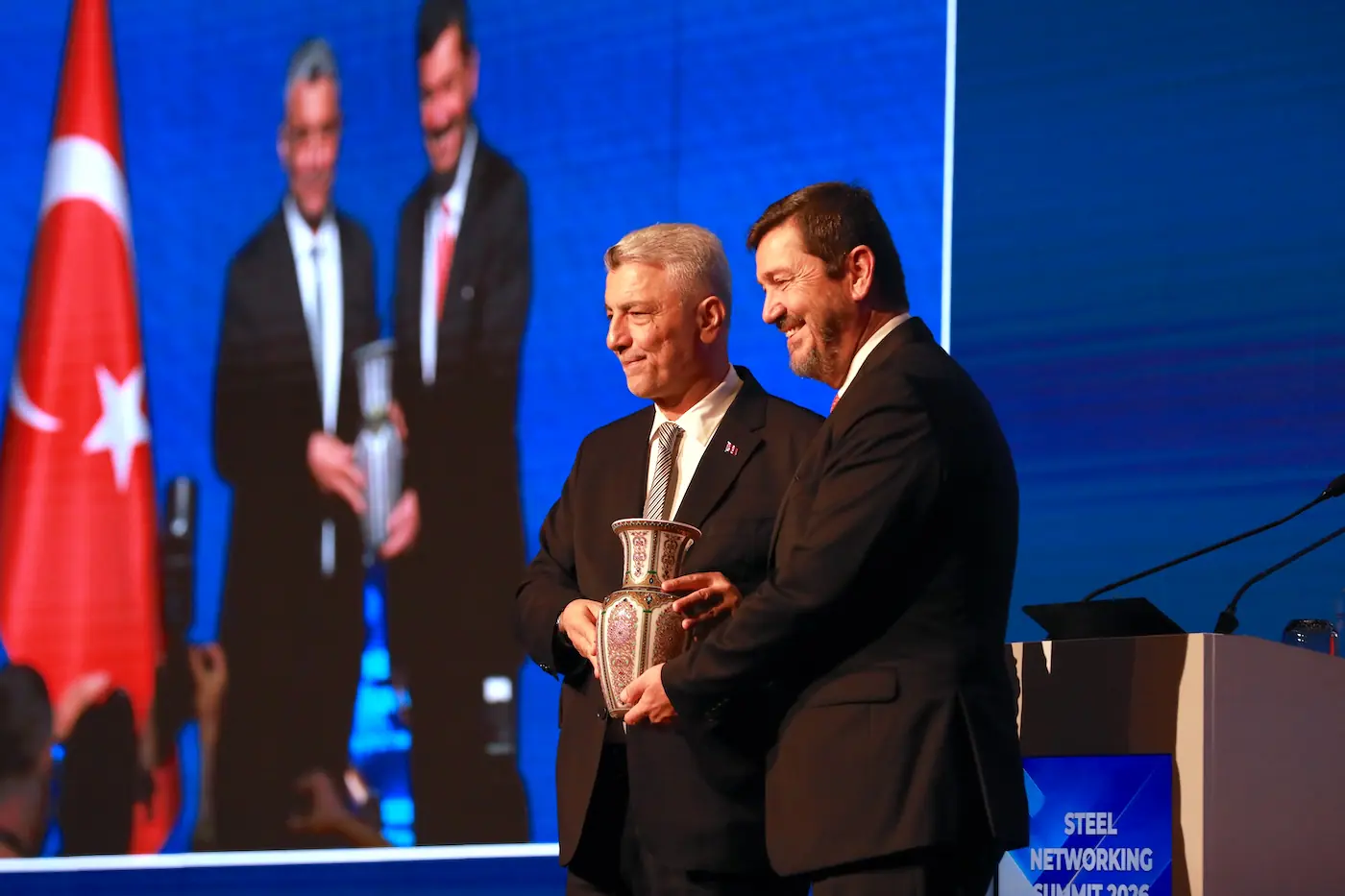
At the first Steel Networking Summit 2026 conference, organized by the Turkish Steel Exporters’ Association (ÇİB) at Swissôtel the Bosphorus in Istanbul on October 26-27, industry representatives discussed global steel market conditions and shared their expectations for the sector’s future.
In his opening speech, Ömer Bolat, trade minister of Turkey, emphasized Turkey’s position among the world’s leading steel producers and trading centers, supported by its extensive production capacity and international trade network. He stated that additional US tariffs on steel and the EU’s import quotas and protection measures were making market access more difficult for Turkish producers and exporters. Highlighting Turkey’s role as a reliable supplier to European industry, minister warned that excluding Turkish steel producers from European supply chains would also undermine the competitiveness of EU manufacturers. He added that trade restrictions limiting the circulation of scrap-based, low-carbon steel could hinder green transition objectives.
Uğur Dalbeler, chairman of ÇİB and president of the World Steel Association, stated that capacity expansions unsupported by demand were increasing export pressure and encouraging protectionism, while broad trade restrictions were also harming competitive producers. He called for decarbonization policies to consider differences in producers’ access to energy, financing and technology, warning against carbon regulations becoming additional trade barriers. Meanwhile, Fuat Tosyalı, chairman of Tosyalı Holding and the Turkish Steel Producers’ Association (TÇÜD), emphasized Turkey’s Customs Union relationship with the EU and the integration of their industrial value chains. He argued that Türkiye should not be treated in the same way as other third countries under EU steel policies. Mr. Tosyalı identified protection against unfair competition, predictable trading conditions and financing mechanisms for low-carbon steel production as key priorities.
Global steel capacity utilization remains at 75-76%
During the first session, titled “World Economic Outlook and the Steel Industry”, Henrik Adam, director general of the World Steel Association and former president of EUROFER, stated that global steel capacity utilization currently stands at approximately 75-76 percent. He noted that around 140 million mt of additional capacity is expected to come online in the coming years, while demand growth is unlikely to keep pace. Mr. Adam also highlighted increasing trade barriers and the growing localization of steel production.
Edwin Basson, former director general of the World Steel Association, stated that global steel demand is expected to remain largely stable at approximately 1.7 billion mt in 2026 before increasing in 2027. He identified geopolitical uncertainty and financial pressures as major risks to the economic outlook, while suggesting that growing steel consumption in Southeast Asia over the next decade could offset declining demand in China.
Market fragmentation and energy costs remain major challenges
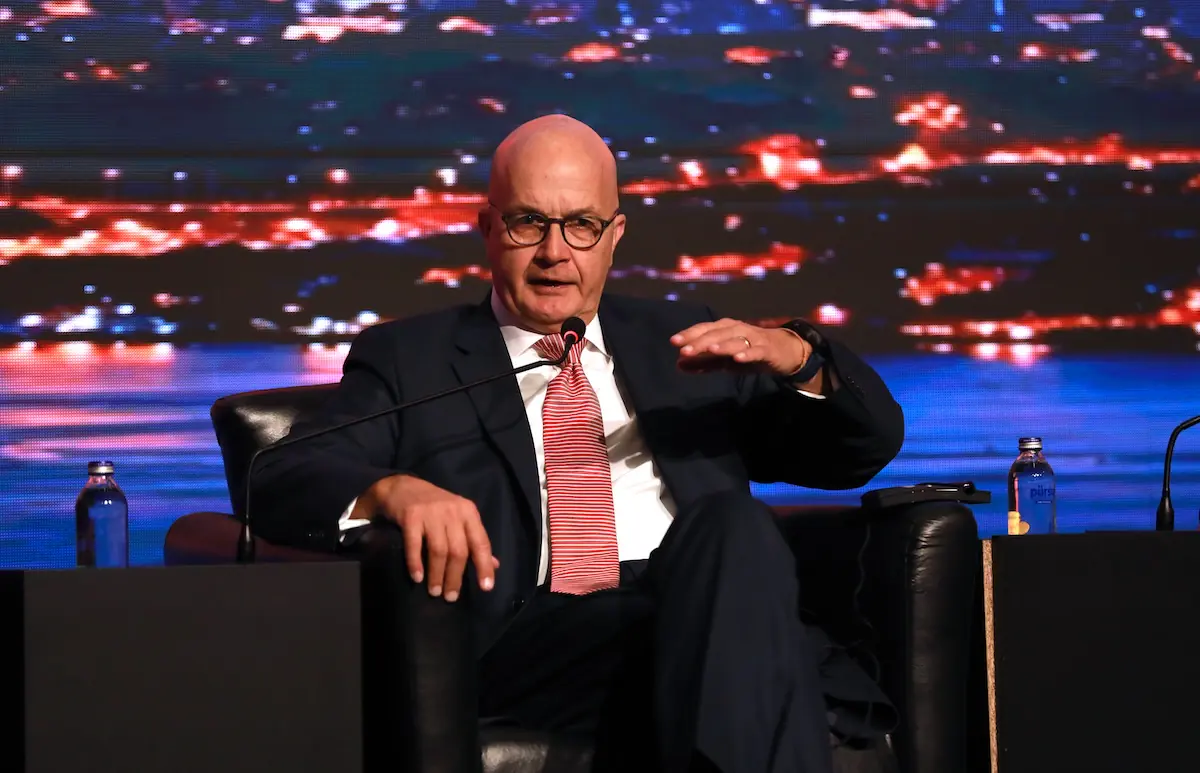
During the panel moderated by Hakan Güldağ, chairman of the board of media at Nasıl Bir Ekonomi, Mr. Dalbeler, Mr. Adam and Mr. Basson focused on excess steelmaking capacity, market fragmentation, rising trade barriers and geopolitical uncertainty as major challenges for the global steel industry. The need for fair competition and rules-based trade was highlighted, alongside concerns that protectionism could encourage further capacity expansion. Decarbonization was identified as a long-term challenge requiring substantial investment and technological development, while access to competitively priced energy was seen as increasingly important for production costs and the location of new steel plants. The discussion also addressed uncertainty over emissions verification under the EU’s Carbon Border Adjustment Mechanism and calls for Turkey to adopt steel import measures similar to those of the EU to counter unfair competition.
Author: SteelOrbis Editorial Team