


Voestalpine chief sees opportunities with Chinese carmakers
Herbert Eibensteiner, chief executive of voestalpine, finds that Chinese carmakers active in Europe could offer a lifeline for European manufacturers of steel and components that suffer from cutbacks at traditional domestic brands.
“When [the Chinese] come in and produce cars it can be a positive,” Eibensteiner gets quoted as saying in the Financial Times. He cites Chinese carmaker BYD as one example. “They are really close to us in Hungary . . . and it’s logical that we see them as a new customer,” he told the paper.
The year has seen a succession of bad news at European carmakers, with production cutbacks announced by brands like VW and BMW, and automotive supplier groups like Schaeffler. So far, though, voestalpine has stated that it could keep up the volumes it supplies to the automotive industry.
Author: Christian Koehl Germany


Meta, Stegra sign multiyear green steel certificate deal
Swedish low-carbon steel developer Stegra has signed a multiyear agreement to supply Meta, part of the RMI sustainable steel buyers platform, with environmental attribute certificates linked to its under construction Boden plant in northern Sweden, the companies said in a joint statement Nov. 12.
The accredited third-party-verified certificates will allow Meta to claim the emissions benefits associated with lower-carbon steel without directly receiving the underlying material. Meta said the purchase would address supply-chain emissions, stimulate demand for lower-carbon construction materials and help finance early-stage manufacturing capacity.
RMI’s Sustainable Steel Buyers Platform is a group of companies active in sectors with high steel usage and helps facilitate low-emission steel procurement. EACs allow companies to address their steel-related emissions where direct procurement of the physical product is challenging.
Steel represents one of the largest sources of embodied carbon in data center construction, with the agreement that comes as data center developers increasingly seek lower-carbon materials to cut emissions.
Stegra did not detail certificate volumes as well as financial terms.
“The market for green steel is still in its early stages, and physical supply has not caught up with demand,” Devon Lake, head of Net Zero Strategy, Meta, said.
“Environmental attribute certificates let us act on those emissions now, with third-party verification, and direct demand toward production that is still coming online. That is how the market for green steel gets built.”
Stegra’s planned production route will use renewable power and green hydrogen, which the company said could reduce CO2 emissions by as much as 95% compared with conventional blast furnace-based steelmaking.
Stegra’s steel EACs
Stegra’s environmental attribute certificates (EACs) use a “book-and-claim” system. This means the environmental benefits are separated from the physical steel. The steel linked to the certificates is produced using green hydrogen and renewable electricity, resulting in close to zero emissions compared with conventional steelmaking.
The physical steel is sold without the environmental attributes, so its buyer cannot claim the emissions reductions. Those benefits belong to the EAC holder. Stegra applies this system to nonprime steel, which is steel that does not meet all the required specifications for prime products. New steel mills typically produce more nonprime steel during their early operating years, but it is made using the same low-emission process as Stegra’s other steel.
Platts, part of S&P Global Energy, launched Northwest Europe hot-rolled coil carbon-accounted prices in May 2023, with the assessment calculated in line with the sum of Platts daily carbon-accounted steel premium assessment and Platts daily HRC ex-works Ruhr price assessment.
Since its monitoring, prices moved from €920/metric ton base EXW to €820/mt base EXW Nov. 11, reaching their bottom in November 2024 and July 2025 at about €595/mt base EXW.
Author: Annalisa Villa

Nations collaborate in OECD Framework to tackle worsening global steel overcapacity
A group of countries has stepped up collaboration under the auspices of the Organisation for Economic Co-operation and Development to mitigate the impact of excess global steel capacity, which is increasingly impacting the overall health of the steel industry and eroding value chains, Anthony de Carvalho, OECD Steel Unit Head, said at the Latin America Steel Association (Alacero) annual conference.
“The number of like-minded countries is growing.… Coordinated action will have stronger impact,” de Carvalho said in a presentation to delegates at the event in Mexico City on Nov. 10.
The OECD’s Global Forum on Steel Excess Capacity (GFSEC) a G-20 initiative founded in 2016, is a policy body seeking solutions for overcapacity and now groups together 28 country members, including Mexico, Brazil and Argentina from Latin America, he noted.
In recent weeks, GFSEC met in Milwaukee, establishing a Milwaukee Framework to promote committed action by industry and government representatives willing to coordinate efforts to eliminate market-distorting subsidies and financing that contribute to excess steel capacity, and to enhance supply chain transparency. Prevention of trade circumvention is one of the actions envisaged, de Carvalho said.
The Framework will later report to ministers of the countries involved in a move to strengthen action against creation and utilization of excess capacity.
“At the OECD we’re really excited about this…. we’re on the cusp of a new era,” said de Carvalho, referring to the new atmosphere of industry and government collaboration.
OECD is also working specifically with Alacero on a regional study on Latin America’s absorption of global excess capacity, to be launched at an OECD meeting next week, de Carvalho noted.
Calls for international collaboration to combat global steel overcapacity and underpriced imports were made by speakers from various countries at the Alacero event.
“The global steel industry’s excess capacity situation is persisting and getting worse; it’s accelerating,” de Carvalho said.
In June, the OECD estimated global steel overcapacity would reach 745 million metric tons in 2028 in a “business as usual” scenario, with an additional 139 million mt of new steelmaking capacity set to come on stream between 2026 and 2028, with this increase amounting to more than the entire steelmaking capacity of Latin America, de Carvalho said. Global steel demand is projected to grow by just 34 million mt over the same period, he noted.
Total global steelmaking capacity is forecast to reach up to 2.58 billion mt in 2028, according to OECD figures.
Market-distorting subsidies for steel production, particularly in China, are the root cause of both excess production and capacity, de Carvalho said.
“How can we [in the rest of the world] protect ourselves from this? It’s difficult unless we see subsidy reform in China… where the steel subsidy rate has nearly doubled since 2019,” he said. “This excess capacity is structural in nature because market forces are not working effectively: Chinese steel will continue to flood into international markets.”
Steel exports from China soared to a record 131 million mt in 2025, up 153% since 2020 and exceeding the total steel production of the EU in 2025, de Carvalho said.
Direct and indirect steel imports into Latin America’s six biggest economies surged 47% since 2019 to reach 55.4 million mt in 2025 — virtually equivalent to the region’s entire crude steel production last year — with 39% of the total coming from China, “and we don’t see this stopping,” de Carvalho said. This surge has displaced Latin American steel production and brought about a collapse in intraregional trade, he said.
“Regional consumption is rising, but production is falling, with average capacity working rates in Latin America down to 60% last year… we’re seeing an erosion of value chains…. that could result in steel plant closures,” he said.
Decline in Chinese steel demand
Rafael Scott, partner at McKinsey & Company, said at the event that the consultancy expects a continuous decline in Chinese steel demand over the next decade as economic development in China becomes less steel-intensive, with less construction as the economy matures.
Mainland China’s finished steel demand should fall from 2020’s 1.009 billion mt to 769 million mt in 2035, also contributing to an ongoing squeeze in mills’ margins, encouraging exports to nations where prices may be higher, according to McKinsey’s data.
Altagracia Gomez Sierra, coordinator of the Mexican government’s Advisory Council for Regional Economic Development and Relocation, spoke at the Alacero conference Nov. 11 of the need to speed development of the so-called “Mexico Plan” to boost national content, increase domestic added value and take measures to further protect Mexican industries including steel, described as “strategic.”
The Mexico Plan has been under development in Mexico since 2024. Maximo Vedoya, CEO of Latin American steelmaker Ternium, said that other countries in the region might also benefit from developing similar national plans.
Gomez Sierra emphasized the need for Latin American nations to collaborate to protect their domestic markets. “Regionalism is essential,” she said.
The Mexican economy ministry’s undersecretary of foreign trade, Luis Rosendo Gutierrez Romano, told the congress that a recent strengthening of trade defense actions in Mexico has resulted in about 90% of the country’s steel product types having some form of trade defense, helping to protect domestic steel industry investments.
Author: Diana Kinch
EU industrial emissions decreased by 3.3%, carbon market revenue reached EUR 43.2 billion

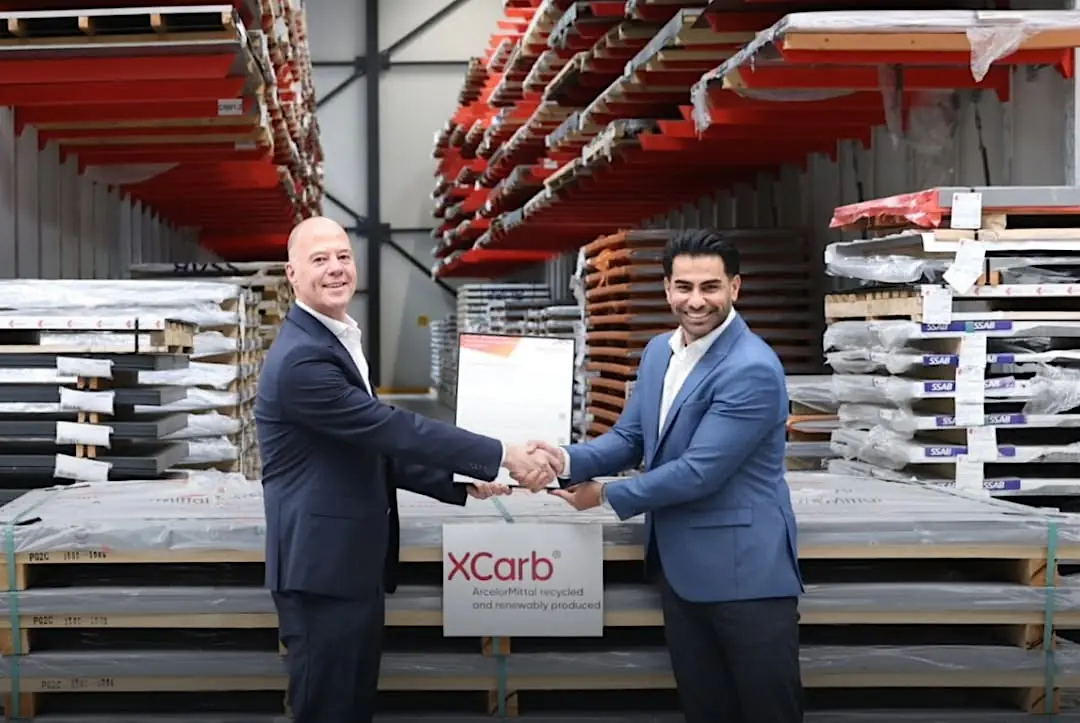
Galvano Metaal expands hot-rolled portfolio with XCarb
Luxembourg-based steel producer ArcelorMittal has announced that Dutch metal distributor Galvano Metaal has added its XCarb recycled and renewably produced steel to its hot rolled pickled sheet product portfolio, expanding the availability of lower-carbon steel products for manufacturers.
According to statement, the addition is aimed at providing Galvano Metaal’s customers with more steel options that can help reduce the carbon footprint of their products while maintaining the quality and functionality of conventional steel.
Galvano Metaal expands low-carbon steel offering
ArcelorMittal stated that its XCarb recycled and renewably produced steel is manufactured using recycled steel and renewable electricity, enabling manufacturers to reduce the carbon footprint of their products.
Sohail Rahimi, purchasing manager at Galvano Metaal, noted that decarbonization is receiving increasing attention in the market and that the company aims to provide customers with different steel options, including XCarb. Meanwhile, Erwin De Proost, ArcelorMittal account manager for Galvano Metaal, stated that demand for XCarb steel with a physically low carbon footprint is increasing across almost all market segments. He added that replacing conventional steel with XCarb recycled and renewably produced steel can significantly reduce the carbon footprint of finished products without compromising their quality or functionality.
The company also highlighted that the use of lower-carbon steel can contribute to reducing Scope 3 emissions across the supply chains of steel processors, manufacturers and end users, including those operating in the consumer goods and construction sectors.
Galvano Metaal, which sources its products exclusively from European steel producers, also implements sustainability measures in its own operations, including the use of solar energy, LED lighting, waste separation, efficient transport planning and a vehicle fleet consisting largely of hybrid or electric vehicles.
According to ArcelorMittal, the expansion of Galvano Metaal’s portfolio builds on the companies’ longstanding commercial relationship and combines the distributor’s market knowledge and customer network with ArcelorMittal’s expertise in lower-carbon steel production.
Author: SteelOrbis Editorial Team

Assofermet calls on EU to raise CBAM exemption threshold to 500 mt
Assofermet, the association representing Italian companies active in the trading, distribution and processing of steel, has urged the European Commission to raise the de minimis exemption threshold under the Carbon Border Adjustment Mechanism (CBAM) from 50 to 500 metric tons per importer per year, in view of the planned extension of the mechanism to downstream steel and aluminum products. The aim is to reduce administrative burdens on businesses, particularly operators importing relatively small volumes of finished products.
The request was formally submitted in a letter addressed to European Commission President Ursula von der Leyen and the Directorate-Generals for Taxation and Customs Union (TAXUD) and Climate Action (CLIMA), with a copy also sent to the Italian government.
According to the association, the amendments approved by the European Parliament on September 15 envisage bringing approximately 500 additional product categories within the scope of CBAM, covering finished and semi-finished steel and aluminum products, including hardware, tools, machinery components and metal fittings for the construction sector.
The expansion of the mechanism would therefore affect a growing number of small and medium-sized enterprises (SMEs), distributors and importers, potentially imposing additional administrative requirements even on companies purchasing relatively limited volumes. Assofermet also points out that, in the case of manufactured goods, the total weight of a product may differ significantly from the weight of the materials actually covered by CBAM, making the application of a uniform threshold potentially disproportionate.
To support its position, the association refers to previous analyses by the European Commission indicating that a 500 mt threshold would exempt approximately 97 percent of importers while still covering 96.43 percent of the embedded emissions in the sectors originally included in the mechanism.
Assofermet is therefore calling for a new impact assessment that takes into account the specific characteristics of downstream products, import volumes and the associated administrative costs, while also considering the introduction of differentiated thresholds by product category. The proposal also calls for appropriate monitoring mechanisms and anti-circumvention measures to ensure a more proportionate application of CBAM without undermining its environmental objectives.
Author: SteelOrbis Editorial Team
European domestic HRC market squeezed between sluggish end-user demand and mills’ price hike attempts
European domestic hot-rolled coil market faced conflicting pressures in mid-November, with mills continuing to seek higher prices while end-user demand remained sluggish, leaving businesses further down the supply chain caught between rising procurement costs and resistance to price increases from their customers.
The suppliers justified price rises by lower imports due to the effect of protectionist measures such as safeguard and Carbon Border Adjustment Mechanism (CBAM) as well as growing energy and transportation costs.
In Italy, meanwhile, the situation is complicated by reduced domestic production due to the shutdown order for the hot-end area at Acciaieria d’Italia (formerly Ilva) steelworks in Taranto from October 29.
In such conditions, mills in Europe are currently in a strong position to seek price rises.
Latest offers from the leading producer of HRC in Italy were reported at €760-780($845-868) per tonne ex-works, with the lower end linked to December delivery and the higher end to January delivery.
Sources said December volumes were very limited in the market and reserved for regular customers, with mills mainly focusing on securing orders for January.
A number of buyer sources agreed that tradeable levels for January production volumes from the producer are mainly varying within the range of €770-780 per tonne ex-works.
A third Italian supplier (a re-roller) was not yet offering material for January production, saying it would theoretically target €760 per tonne ex-works for the material.
Fastmarkets’ daily steel hot-rolled coil index domestic, exw Italy was calculated at €772.71 per tonne on Thursday November 12, down by just €0.04 per tonne from €772.75 per tonne on Wednesday November 11.
The index was up by €27.21 per tonne week on week and by €31.71 per tonne month on month.
The corresponding Fastmarkets’ daily steel hot-rolled coil index domestic, exw Northern Europe rose to €770.83 per tonne on November 12, up by €6.45 per tonne day on day from €764.38 per tonne on November 11.
The index was up by €11.25 per tonne week on week and by €29.16 per tonne month on month.
A seller source provided an indication of a tradeable level for the “bulk” of January volumes within the range of €770-780 per tonne ex-works.
A buyer source reported an indication at €800 per tonne delivered or €780-785 per tonne ex-works, adding that if someone wants to buy material now, they have to pay that price.
Meanwhile, a second buyer source reported an indication of a tradeable level at €770-780 per tonne delivered or €750-765 per tonne ex-works, adding that it is difficult to push through price rises to end users due to their limited demand and expectations of a deterioration in performance in 2027.
In Central Europe, market sources also reported reduced availability of the material, with at least two regular suppliers heard not to be providing offers at the moment.
“The situation in the HRC market remains quite challenging, particularly in terms of material availability. Unfortunately, replacing the volumes previously supplied by Ukraine’s Metinvest is not easy due to the limited quantities currently offered by other producers,” a Polish buyer said.
Metinvest stopped supplying its products for export following Russian attacks on the company’s Ukrainian assets earlier this summer and autumn.
The market leader offered HRC at €820 per tonne CPT, which is equivalent to €805 per tonne ex-works. A German producer was said to be offering its material to Poland at a similar level on a CPT basis.
This level was, however, considered unworkable, with deals reported at €750-770 per tonne ex-works.
Fastmarkets’ weekly price assessment for steel hot-rolled coil domestic, exw Central Europe, was €735-755 per tonne ex-works on November 12, versus €745-760 per tonne ex-works on November4, in line with market participants’ estimates of tradeable levels.
Import trade quiet
Meanwhile, the import segment turned quiet.
Market sources mainly said that Turkish suppliers were absent from the market during the reported week, with one source reporting offers at €600-605 per tonne CFR. This is €10-15 per tonne higher than previously heard levels.
Some stakeholders said it is possible that Turkish producers will raise export offers following the explosion at the Turkish producer Habaş leading to rising demand for imports into the country.
On the other hand, the rapid exhaustion of import quotas by Turkish producers, combined with the subsequent application of out-of-quota duties, CBAM-related costs, and anti-dumping measures, may limit the scope for significant price increases by Turkish suppliers.
Indian suppliers were also largely absent this week due to the Diwali holiday. However, early in the week sources reported offers within the range of $720-740 (€645-650) per tonne CFR, which is $10-20 per tonne lower than a week ago.
Fastmarkets’ weekly assessment for steel hot-rolled coil import, cfr main port Southern Europe was €600-650 per tonne on November 11, versus €595-670 per tonne on November 4.
Offers from Taiwan and Japan for customers in Southern Europe came at €780-790 per tonne DDP. South Korean material was heard available as high as €810 per tonne DDP.
A source reported some transactions taking place at €800 per tonne DDP, without specifying the country of origin.
Fastmarkets’ weekly assessment for steel hot-rolled coil import, ddp Southern Europe was €780-800 per tonne on November 11, up from €750-765 per tonne on November 4.

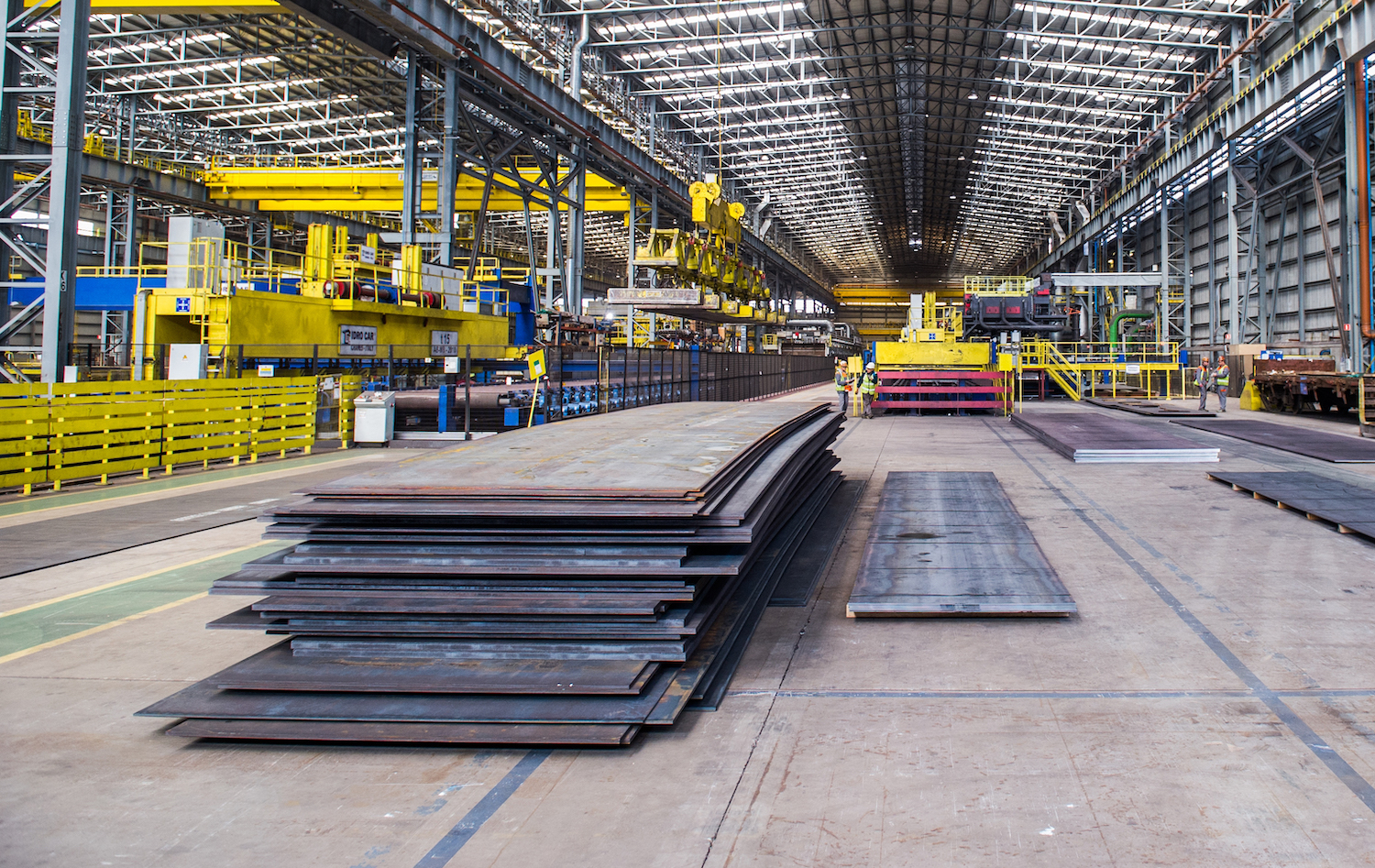
Local Northern European steel plate prices rise on tight availability; Italian market edges up
Local steel plate prices narrowed upward in Italy as mills sought higher levels amid rising production costs but buyers were slow to accept them, while a bigger increase was seen in Northern Europe, where mills are targeting 2027 deliveries, sources said on Thursday November 12.
Italy
In Italy, trading was slow, as sources said only marginal volumes were available for December but mills were struggling to reach targets for deliveries in 2027.
Latest indications were reported in the range of €740-760 ($823-846) per tonne ex-works, while a trade source said it was hearing deals at €745-760 per tonne ex-works.
A re-roller in the country said it was sold out for plate deliveries in the fourth quarter of 2026 and was targeting levels of €780-800 per tonne ex-works for January delivery in 2027.
The same source, however, described them as “not workable yet,” adding that stockists were not considering anything higher than €750-760 per tonne ex-works so far.
“Be it coils or plate, the key counterargument against price increases is the weak downstream activity and concerns about possible corresponding price increases for retail customers. Everything is slowed down by this purchasing stance,” the producer said.
The re-roller added that the cost pressure was “serious” and estimated production cost of plate in the range of €750-770 per tonne ex-works, adding that it would need to reach €780 per tonne ex-works to keep selling material in the first quarter of 2027. Achieved levels, however, had not yet met these targets.
“The market is simply not strong enough yet demand-wise to enter in any real shortage phase. Might happen later as we will be moving through Q1 deliveries but not really the case so far,” the supplier said.
Meanwhile, offers in the market reached as high as €800 per tonne ex-works, with the full range for January-February delivery in 2027 reported at €770-800 per tonne ex-works, but acceptance from buyers remained slow.
“Market participants expect purchasing activity to slow in the coming weeks,” a trade source said during the week.
As a result, Fastmarkets’ weekly price assessment for steel domestic plate 8-40mm, exw Southern Europe was €745-760 per tonne on Thursday November 12, narrowed upward by €5 per tonne from €740-760 per tonne a week earlier.
On the import side, plate offers were heard from India and Indonesia at €720-760 per tonne CFR Spain, but market sources said demand for imported material was limited due to stronger EU safeguards.
Fastmarkets’ weekly price assessment for steel plate (8-40mm), import, cfr main port Southern Europe was stable at €710-750 per tonne on Thursday.
Meanwhile, latest slab offers into Italy were reported at $580-600 per tonne CFR from Asian suppliers, with China quoted closer to $590-600 per tonne CFR. A trade source reported an indication of workable levels within $585-595 per tonne CFR.
A second trade source said it heard deals from China done at $590-610 per tonne CFR, but the upper end of the range was not considered in the assessment due to a lack of corroboration.
Fastmarkets’ weekly price assessment for steel slab, import, cif Italy, was $580-600 per tonne on Thursday November 12, unchanged from the previous week.
Northern Europe
In Northern Europe, sources said producers were aiming higher but buyers were not in a rush to order material, so a clearer picture of the market was pending.
Participants reported higher offers from mills at €870-890 per tonne ex-works for deliveries in the first quarter of 2027, saying no material was available for 2026 delivery.
The range was included in the assessment, despite the delivery time of up to six weeks in Fastmarkets’ methodology, because no material was available for earlier delivery.
Customers were “not really in the need to purchase,” a trade source said, adding that the new market price would be developed in the coming one to two weeks.
“The market is actually in a kind of standstill, as all stockists or cutting centres have ordered quite big volumes of November-December rolling to safe volumes and prices,” the same source said.
“Now mills are offering increased prices, but so far the purchasing needs are not very big, and customers are carefully checking the market,” the trade source added.
Two other trade sources reported an indication of workable levels at €840-860 per tonne ex-works, but the lower end of the range was not considered in the assessment due to a lack of interest from suppliers to offer at this level.
One of these traders reported offers at €850-880 per tonne ex-works citing mills in the region with availability for delivery in 2026.
However, most participants argued there were no free volumes for this period, after Fastmarkets reported on November 5 that producers in Germany were fully booked for 2026 due to strong demand coming from pipe projects.
For this reason, Fastmarkets’ latest weekly price assessment for steel domestic plate 8-40mm, exw Northern Europe was €860-885 per tonne ex-works on Thursday November 12, narrowed upward from €840-880 per tonne on November 5.
For plate imports, a trade source said offers into the region were “not available, or absolutely out of interest.” No fresh information was reported during the week.
Fastmarkets’ weekly price assessment for steel plate (8-40mm), import, cfr main port Northern Europe was €710-750 per tonne on Thursday, stable week on week.

Mercedes-Benz and HyIron advance hydrogen-based steel production following successful pilot project
German automotive manufacturer Mercedes-Benz has announced that it has signed a memorandum of understanding with hydrogen-based ironmaking technology company HyIron to advance the technical validation of a steel production process using hydrogen and iron ore fines, following the successful completion of a pilot project involving Anglo American’s Kumba Iron Ore business.
According to the statement, the pilot project demonstrated the technical feasibility of producing direct reduced iron (DRI) directly from iron ore fines using hydrogen, without requiring energy-intensive pelletization. The resulting material was subsequently used in steelmaking and processed into a demonstration component for the Mercedes-Benz EQS vehicle.
Pilot project achieves low emissions in hydrogen-based DRI production
As part of the project, iron ore fines sourced from the Sishen mine in South Africa’s Northern Cape province, operated by Anglo American’s Kumba Iron Ore business, were processed by HyIron into DRI using hydrogen and its proprietary rotary kiln technology.
According to HyIron, the production process generates Scope 1 and Scope 2 emissions of only 10 kg of CO2 per metric ton of DRI produced, indicating significant potential for reducing emissions in steelmaking.
Mercedes-Benz noted that iron ore fines are currently used mainly in blast furnaces, while their direct use in DRI production could expand the range of raw materials available for lower-emission steelmaking.
The company also stated that the Sishen and Kolomela iron ore mines have achieved the IRMA75 performance level following independent audits under the Initiative for Responsible Mining Assurance standard. This level indicates that the mining operations have substantially met all 40 critical requirements of the standard and at least 75 percent of its criteria in each of four assessment areas.
Mercedes-Benz stated that the project forms part of its efforts to reduce emissions across its steel supply chain, covering activities from raw material extraction to finished automotive components.
Meanwhile, the company has outlined its broader decarbonization targets, including a 90 percent reduction in emissions from its own production operations and an overall 70 percent reduction in carbon emissions across relevant stages of its value chain by 2039, compared with 2019 levels. It also aims to reduce vehicle use-phase emissions by 80 percent, subject to market conditions.
Author: SteelOrbis Editorial Team

Italian rebar prices stable amid weak demand, high costs; German prices rise
Italian rebar prices were stable in the week to Wednesday November 11, as persistently weak demand limited trading despite rising production costs and mills pushing for further increases, while German rebar prices rose amid high energy costs and constrained production.
In Italy, market participants reported weak demand, while high energy and fuel costs continued to put pressure on long steel production.
“Very few deals are being concluded because demand is extremely low,” a producer source told Fastmarkets.
At the same time, sources said rising energy costs were making current production levels increasingly difficult to sustain.
“In Germany, prices have risen a lot,” a seller source told Fastmarkets.
Another seller source said high production costs were prompting mills to manage output carefully, with export orders helping to balance lower domestic demand.
“Our costs are very high, and all producers have their stocks under control, with a mix of export orders and lower production levels,” the source said. “We all try to stop production when energy costs are at their highest during the day.”
A buyer source similarly reported little sign of a recovery in demand and pointed to sharply rising costs, adding that some market participants were considering steel mill stoppages lasting one to two weeks.
In northern Italy, deals, offers and workable levels were reported at €760-780 ($851-874) per tonne ex-works, with mills pushing to raise the minimum workable level to €770 per tonne.
In southern Italy, deals, offers and workable levels were reported at €770-790 per tonne ex-works. Mills were also pushing for prices of up to €800 per tonne, although this level was not considered workable by market participants.
Fastmarkets’ weekly price assessment for steel reinforcing bar (rebar), domestic, exw Italy was therefore unchanged at €760-790 per tonne on November 11.
Fastmarkets’ weekly price assessment for steel reinforcing bar (rebar), domestic, delivered Spain was unchanged at €750 per tonne.
In Northern Europe, offers and workable levels for rebar were heard at €740 per tonne delivered during the assessment period.
Production was also reported to be constrained in Germany, where mills faced higher energy costs, while low river levels were said to be affecting operations.
“In Germany, the cost of energy rose, and the mills are not running at full capacity because of the level of rivers,” another producer source told Fastmarkets.
Fastmarkets’ weekly price assessment for steel reinforcing bar (rebar), domestic, delivered Northern Europe was therefore €740 per tonne on November 11, up from €660-700 per tonne the previous week.
European wire rod prices remained stable during the assessment period.
In Southern Europe, workable levels for wire rod were heard at €670-680 per tonne delivered.
Fastmarkets’ weekly price assessment for steel wire rod (mesh quality), domestic, delivered Southern Europe, was unchanged week on week at €670-680 per tonne.
In Northern Europe, workable levels for wire rod were heard at €705-715 per tonne delivered.
Fastmarkets’ weekly price assessment for steel wire rod (mesh quality), domestic, delivered Northern Europe was therefore stable week on week at €705-715 per tonne on November 11.