


EU sets rules for deducting carbon prices paid in third countries under CBAM
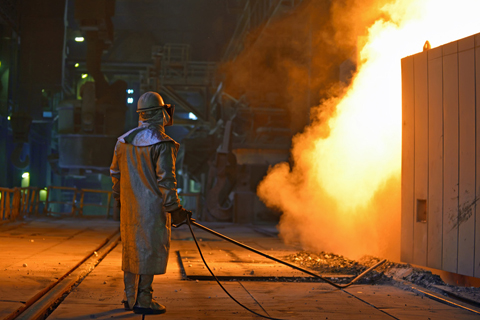
Steel production halted at some EU facilities due to high energy costs.
Author: SteelRadar Editorial Team


Salzgitter AG CEO: steel industry needs competitive electricity prices and lead markets

Pittini Group to halt production at two plants amid rising energy costs
Pittini Group, one of Italy’s leading long steel producers, is scaling back production amid soaring electricity and gas costs, which are putting further pressure on steelmaking and rolling operations.
According to information obtained by Metal Expert, Pittini Group is set to halt steelmaking and rolling mill operations at its Siderpotenza and Acciaierie di Verona plants for a full week, from 30 November to 4 December. Persistently high energy and production costs make steelmaking increasingly expensive, while mills have limited room to absorb further cost increases. “The move comes in response to soaring and increasingly unsustainable energy costs. A further week-long shutdown is also likely in December,” a company source told Metal Expert.
The temporary shutdown is expected to restrict supply and support further price increases, Metal Expert learnt. One of the producers already intends to increase drawing quality wire rod (5.5 mm) prices to EUR 740/t DAP, a local source told Metal Expert.
“All Italian longs producers have suspended sales and withdrawn offers since the middle of last week, initially following Pittini’s lead. I presume when we resume quoting, prices will be raised again, by at least another EUR 20-30/t,” another Italian longs producer told Metal Expert.
Before the sales were stopped, workable prices for drawing quality wire rod were reported at EUR 690-700/t DAP, against offers of EUR 700-715/t DAP. Mesh quality material was available at EUR 670-685/t DAP, while offers were heard at around EUR 690/t DAP.
Rebar workable prices for Italian rebar were reported at EUR 480-490/t EXW, base (equivalent to EUR 740-750/t EXW for 12 mm B450C grade material), while offers stood at around EUR 510/t EXW, base (EUR 770/t EXW for 12 mm B450C grade material).
Other Italian steelmakers have also announced production stoppages due to high electricity costs. ORI Martin halted production for the whole of last week and partially resumed operations this week, scheduling output during cheaper electricity hours. AFV Acciaierie Beltrame also has announced several full-day production stoppages in November and December, Metal Expert reported earlier..
Acciaierie di Verona has a 1.1 million tpy EAF and a 950,000 tpy wire rod and rebar mill. Siderpotenza plant has a 1 million tpy EAF and a 700,000 tpy rebar mill.

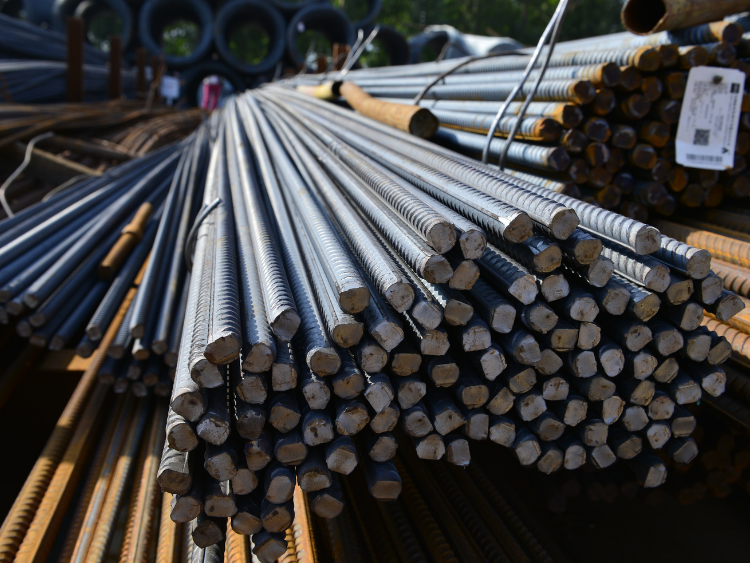
Polish rebar prices widen upward amid tight supply, high energy costs
Polish domestic rebar prices widened upward in the week to Friday November 13 amid limited availability and high production costs, while drawing-quality wire rod prices were unchanged, sources told Fastmarkets.
Workable levels for rebar were heard at 2,900-3,000 ($729-754) zloty per tonne CPT, with market participants indicating that transactions below 3,000 zloty per tonne delivered were becoming increasingly difficult to achieve, except for material secured under previous contracts.
An offer for rebar at 3,100-3,250 zloty per tonne was reported for January-production material, but it was not considered because it fell outside the assessment period.
As a result, Fastmarkets’ weekly price assessment for steel reinforcing bar (rebar), domestic, CPT Poland widened upward to 2,900-3,000 zloty per tonne on Friday November 13, from 2,900-2,950 zloty per tonne the previous week.
Polish producers were reported to be largely sold out until the end of the year, while high electricity and gas prices continued to push production costs.
Limited mill production has also contributed to increased activity in the secondary market, sources said.
Fastmarkets’ weekly price assessment for steel wire rod (drawing quality), domestic, delivered Poland was unchanged week on week at 3,100-3,200 zloty per tonne on Friday November 13.


European Commission imposes anti-dumping duties on cold-rolled coil imports from India, Japan, Taiwan, Turkey, Vietnam
The definitive duties are 9.5% for India, 27.9% for Japan, 20.7-27% for Taiwan, 3-7.8% for Turkey and 16% for Vietnam.
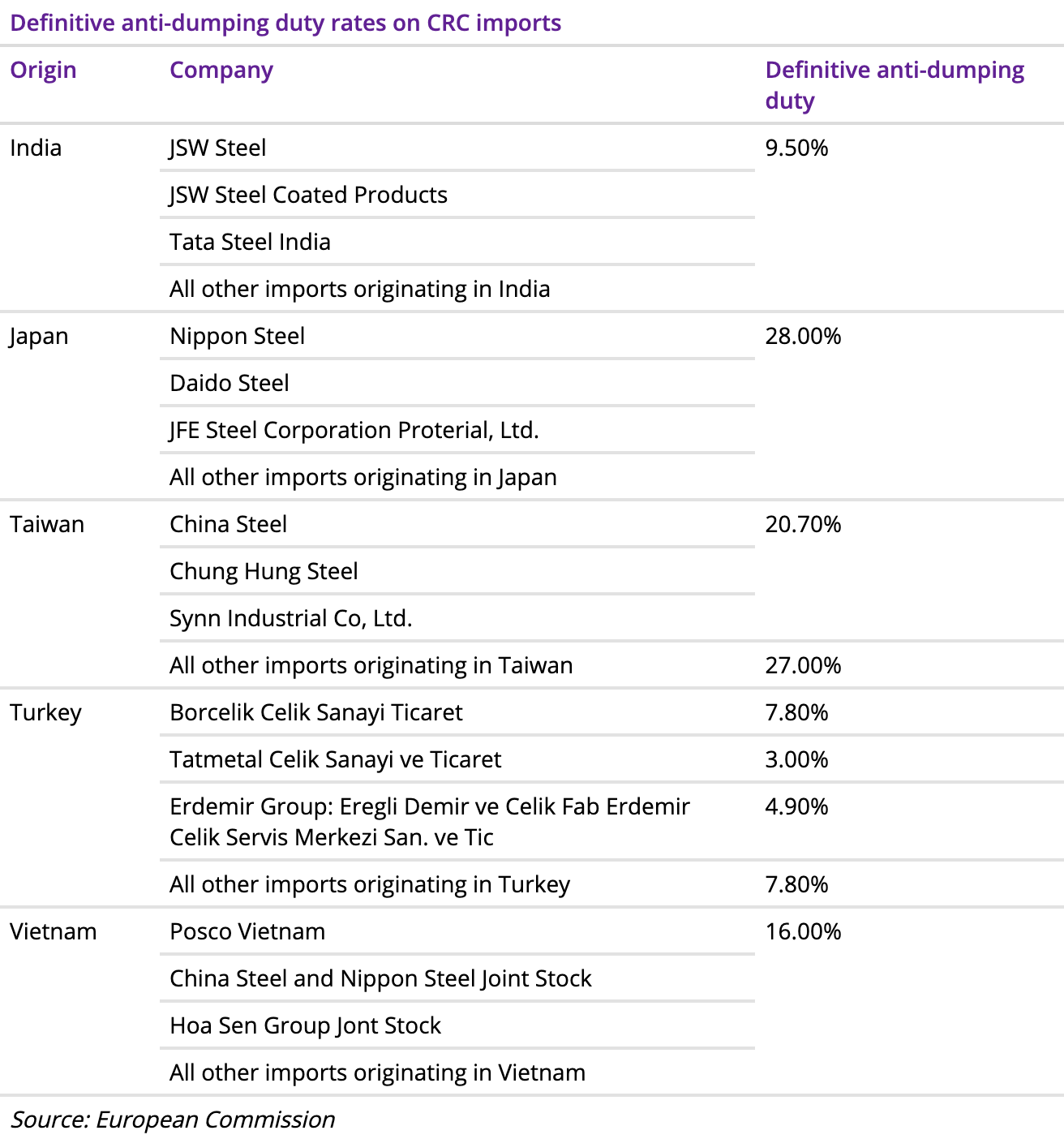
Imposition of the duties followed an investigation started in September 2025, which found that cold-rolled flat steel products from these origins were entering the EU at dumped prices.
This probe is the first in which the Commission has established the existence of Particular Market Situations in some of the markets investigated, the Commission said.
“As such, the Commission considers this investigation to be of systemic importance for trade defence, beyond the products and industry sectors it concerns. This investigation demonstrates the Commission’s ability to develop credible, evidence-based and innovative solutions to address evolving trade-distorting practices,” it added.
A Particular Market Situation arises when conditions in an exporting country’s domestic market prevent a fair comparison between domestic and export prices. Under EU anti-dumping rules, the Commission may calculate a constructed normal value rather than rely on domestic sales prices when such market distortions are established, subject to applicable legal provisions.
In this investigation, the Commission established Particular Market Situations in India and Taiwan. In India, government measures were found to have influenced domestic iron ore prices, affecting a key raw material used in cold-rolled flat steel production. In Taiwan, excess steelmaking capacity in China led to increased imports of Chinese cold-rolled flat steel, putting downward pressure on domestic prices and weakening the profitability of Taiwanese producers. The Commission subsequently introduced corrective measures to address these distortions.
The EU imported 1.7 million tonnes of CRC in the first nine months of 2026, according to Global Trade Tracker data. That was down by 13.26% from 1.96 million tonnes in the same period of 2025. The EU imported 2.9 million tonnes of CRC in full-year 2025.
The Commission announced preliminary duties in August this year.
Nevertheless, market sources said buying activity had been cautious well before that.
The introduction of a new safeguard system in July 2026, and of the Carbon Border Adjustment Mechanism (CBAM) since the beginning of the year, also had an effect.
Market sources expect the official imposition of the anti-dumping duties to result in “further tightening of CRC supply from abroad”.

Beltrame halts production until year-end on energy costs
Italian long steel producer Acciaierie Beltrame will halt production for the remaining weeks of November and throughout December because of soaring energy costs, the company says.
Beltrame joins local steel association Federacciai in warning about high energy prices (see separate article). Federacciai says the situation has become unsustainable, with several producers already stopping or preparing to stop their plants. According to economy minister Giancarlo Giorgetti, energy at current prices makes it impossible to compete internationally. On Monday, the Italian electricity price reached its highest level of the year at €311/MWh ($343.9/MWh), Kallanish notes.
Beltrame will stop production for days, not just a few hours, because of the nature of its process. The group’s production runs in very long, continuous sequences. While some mills can cut activity for a few hours a day to follow hourly electricity prices, this is not possible for Beltrame, as the cycle must run without interruption once it has started.
“It is not sustainable to ask electric steelmaking to lead European decarbonisation and, at the same time, leave it exposed to an energy cost that compromises its competitiveness. An industry that works on a continuous cycle lives on planning, but today a steelworks is no longer able to plan production, guarantee certain delivery times to customers, or organise people’s work continuously,” vice president of Beltrame Group, Barbara Beltrame Giacomello says in a note.
“It is the price of energy that decides when and how much to produce, no longer the company. The stoppages we have planned are the concrete consequence of this imbalance. However, the stop of a steelworks is never just the stop of one company: it is the stop of an entire supply chain.”
She called on the government for structural and timely measures for energy-intensive companies.
“An energy policy for industry that supports companies is needed. The current risk is not only reducing production, but progressively losing industrial capacity in Italy.”
The warning comes after the shutdown of Taranto’s hot end, which leaves Italian steel production almost entirely based on electric arc furnaces, exposing the whole system to the risk of collapse, the company adds.


ArcelorMittal halts mills on energy costs, Italians follow
ArcelorMittal is reportedly pausing its long product mills in Hamburg, Germany, and Warsaw, Poland, with immediate effect, and restricting production at its Duisburg and Sosnowiec plants because of soaring energy costs, sources tell Kallanish.
The steelmaker has raised its prices for bars and rods but has failed to achieve the increases, as customers refuse to pay them, the sources say. As a result, ArcelorMittal has been forced to halt production and is not taking any new orders for new contracts.
The company may resume production only if customers accept increases of more than €100/tonne ($110.5/t) for high-grade wire rod and around €100/t for commodity-grade rods and bars, according to the sources. At current energy prices and production costs, its operations are not viable, they add.
Energy prices have climbed sharply across Europe in recent weeks. In Germany, the day-ahead electricity price jumped to €314.85/MWh on 29 October and has stayed above €250/MWh, according to the Bundesnetzagentur’s SMARD platform. In Poland, the day-ahead electricity price averaged PLN 751.71/MWh ($188.37/MWh) in October, the highest in over three years, while day-ahead gas rose to PLN 408.58/MWh, according to the Polish Power Exchange (TGE).
In Italy, the national single electricity price averaged €225.21/MWh in the week of 12-18 October, according to power exchange operator GME. The gas raw material price set by regulator ARERA rose to €88.36/MWh in October from €78.80/MWh in September.
Meanwhile, Italian steelmakers are also halting production as energy costs soar. “At current price levels, continuing production for extended periods is economically unsustainable, resulting in a serious competitive disadvantage compared with European competitors,” steel association Federacciai says in a note.