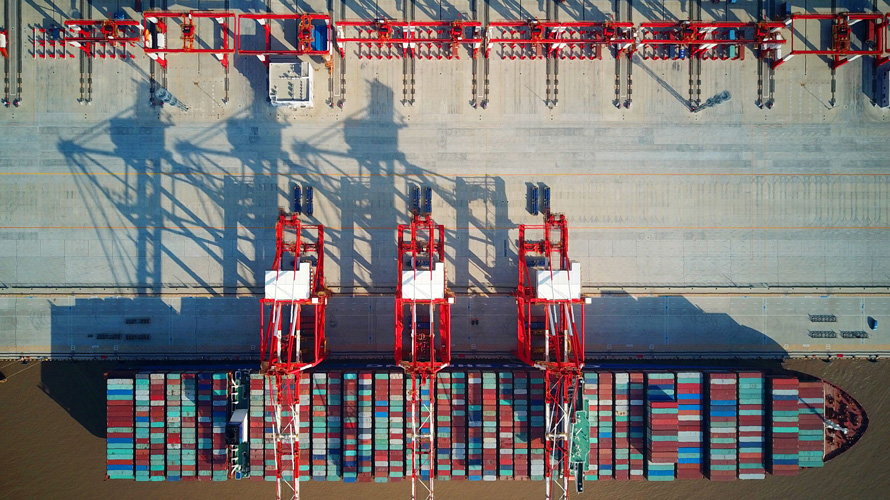
EU and Trans-Pacific partners launch Supply Chain Early Warning Network
The European Union and the members of the Comprehensive and Progressive Agreement for Trans-Pacific Partnership (CPTPP) launched a joint Supply Chain Early Warning Network on 26 November 2026, during their second Trade and Investment Dialogue in Hanoi, Vietnam.
The initiative aims to strengthen economic security and supply chain resilience by enabling earlier identification of potential disruptions, faster exchanges of information and coordinated responses to emerging risks.
The network will bring together government officials to assess potential supply chain disruptions, evaluate their consequences across upstream and downstream value chains, and exchange best practices. Its first meeting is scheduled for early 2027.
The mechanism will operate on a voluntary and non-binding basis, in accordance with participants’ domestic legislation and international obligations.
The CPTPP currently comprises 12 countries: Australia, Brunei, Canada, Chile, Japan, Malaysia, Mexico, New Zealand, Peru, Singapore, the United Kingdom and Vietnam.
During the dialogue, participants also expressed concerns about market-distorting practices, industrial excess capacity and economic coercion, highlighting their impact on international trade, supply chain resilience and the viability of critical industries.
Officials were tasked with exploring ways to strengthen the implementation of rules of origin and customs procedures, including measures to address illegal transshipment and the circumvention of customs duties.
Further areas of cooperation include: digital trade and trade facilitation; trade-related environmental measures; supply chain diversification; logistics and supply chain services; reform of the World Trade Organization (WTO).
The EU and CPTPP members also reaffirmed their commitment to open, predictable and rules-based international trade.
Source: policy.trade.ec.europa.eu
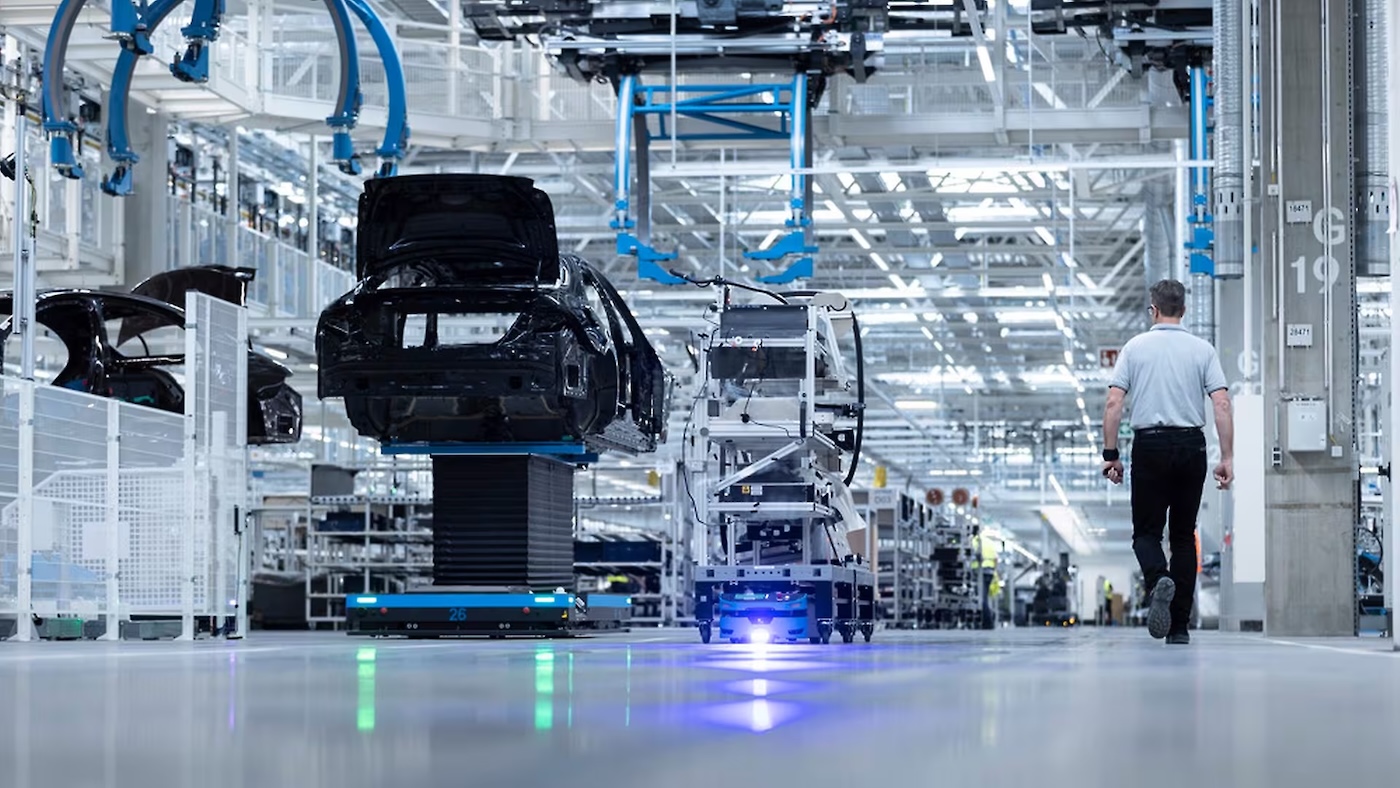
EU caps hybrid car imports with provisional quotas, halving China’s pace
The European Commission is imposing provisional quotas on its imports of hybrid passenger vehicles following their 49% surge since 2023 that threatens serious injury to domestic producers, the EC said Nov. 25. While applied globally, the safeguard measure acts primarily as a cap on China.
According to findings, almost 1.1 million hybrid vehicles were imported into the EU during the investigation period from July 2025 to June 2026, compared to 821,300 in 2023, the commission said in a statement.
Per-country quotas will be in effect from 1 December 2026 to 18 June 2027, and any volumes exceeding these limits will be blocked. Imports from EEA countries, Kenya, and Ukraine are exempt from this provisional safeguard measure.
Under the regulation, nine major suppliers, led by China and Japan, receive individual quotas; all other origins share an annualized residual quota of 1,500 vehicles.
Brussels set quotas at 2025 import volumes plus 15%. That baseline hits China’s rapid 2026 expansion hard while sparing stable or slower-growing exporters.
In 2025, China sold 300,000 hybrids in the EU, but its exports in 2026 would annualize to at least 700,000 if they remain unlimited, according to the commission.
The quota of 191,780 hybrid cars allocated to China, when annualized, amounts to 350,000 vehicles; it could therefore halve the country’s sales to the EU.
By contrast, quotas distributed to other significant exporters, including Japan, Turkey, the UK and South Korea, have their ceilings set higher than the number of cars these countries currently ship to the EU, so their trade can continue uninterrupted without hitting the cap.
However, unlike surging Chinese exports, shipments from Japan, the UK, and South Korea to the EU declined during the investigation period, while Turkish exports grew marginally.
Like internal combustion engine cars, hybrids rely on standard structural and catalytic metals, but also use battery metals and need more electrical metals. They also share many core metals — like steel, aluminum, copper and rare earth elements — with battery electric vehicles, but hybrids use much smaller batteries.
Procurement strategies are key
“There is no benefit for metals or mining from this [safeguard measure], as there is no local content requirement for sourcing metals for cars in Europe,” James Watson, the director of European Metals, the association representing Europe’s non-ferrous metals industries, told Platts, part of S&P Global Energy.
Such requirements must be enacted to ensure that at least 25% of domestic OEM demand is supplied with EU-made aluminum, he said.
Annex II of the EU’s proposed Industrial Accelerator Act sets out specific Union-origin content and low-carbon thresholds, but these are not yet in force.
Starting in January 2029, the annex is meant to apply new rules to public procurement of energy-intensive industrial products. For aluminum — and derivatives whose performance depends mainly on it — intended for buildings, infrastructure, and civil motor vehicles, at least 25% must be both low-carbon and of Union origin. Steel, by comparison, must meet only a 25% low-carbon minimum, with no requirement for Union origin.
Until those requirements are mandatory, “the OEMs and suppliers take the metal from where it is cheapest,” Watson said.
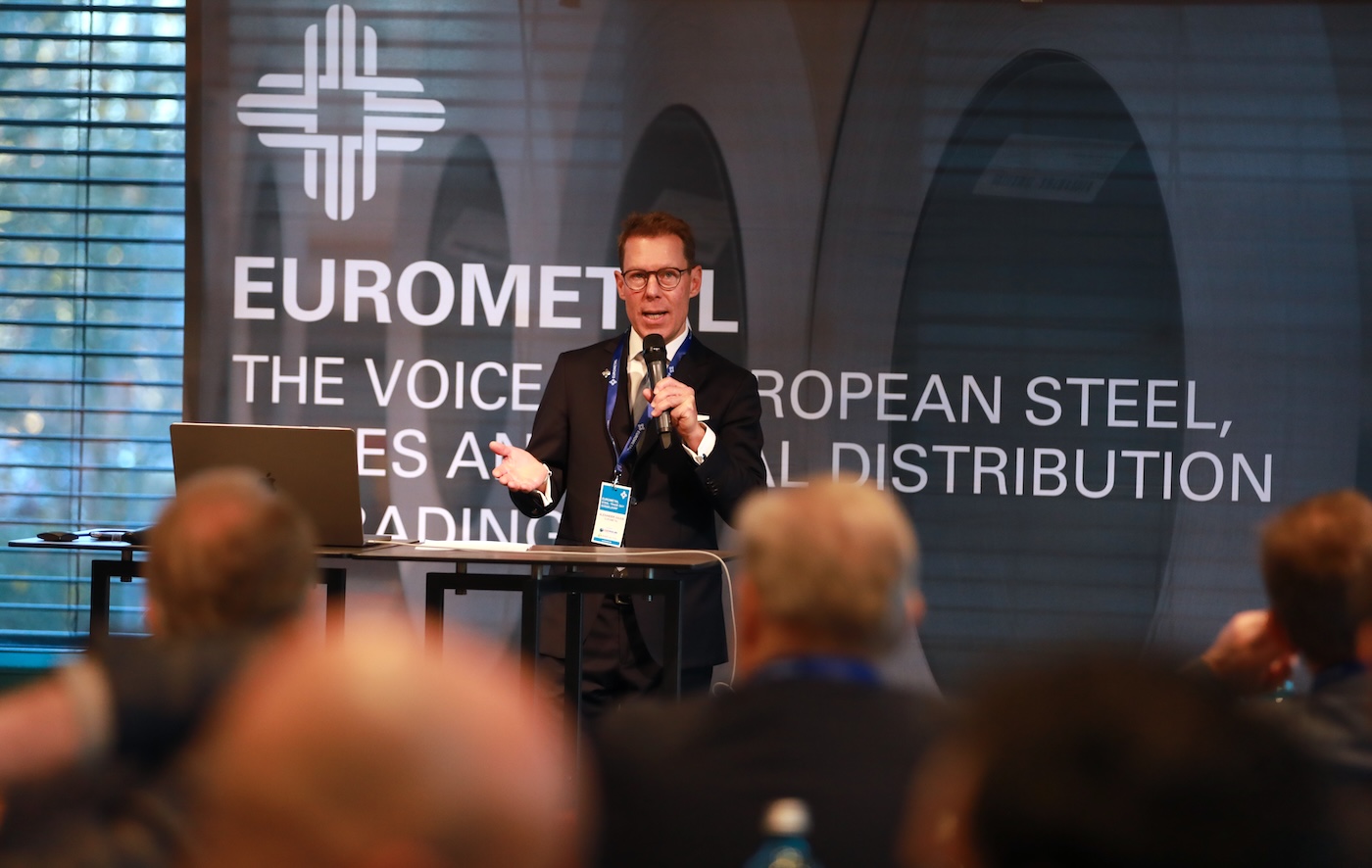
Similarly, EUROMETAL, the European federation for steel and metal distribution, maintains that Europe must ensure its automotive industry is European not only in branding and final assembly, but also in material sourcing, industrial employment and economic value creation.
It welcomed the commission’s move to curb import pressure on domestic industry but warned the quotas would only help European steel and metals producers if they boost EU car production and increase local sourcing.
Potential beneficiaries include producers and processors of automotive flat steel, galvanized and advanced high-strength steels, as well as aluminum and copper suppliers. However, any immediate impact on European metals production or mining will likely remain limited and heavily dependent on automakers’ procurement strategies, Alexander Julius, the president of EUROMETAL, said in an email to Platts.
He mentioned that the new Renault Twingo E-Tech, although assembled in Slovenia, relies on Chinese suppliers for about 46% of its components, and that Mercedes-Benz has reportedly frozen investments in its German plants.
“What is the benefit for the European steel industry of protecting a European-made vehicle if a substantial proportion of its steel-intensive components is manufactured outside Europe?” Julius said, and alerted to “a real risk” that restrictions on vehicle imports could trigger a surge in imports of components “without generating the expected benefits for European steel producers and downstream manufacturers.”
Julius also pointed out that the quota implementation period is too short to drive major investment decisions, shift industrial sourcing strategies, or spur new mining and metals production in Europe, all of which require long-term regulatory certainty and a competitive industrial environment.
The 200-day period corresponds to the maximum duration permitted for provisional safeguard measures under World Trade Organization rules. It should therefore be understood as a temporary instrument pending the outcome of the investigation, according to Eurometal.
The federation calls for a holistic approach to safeguarding the industry; an isolated restriction could punish the end-user.
“We recognize that vehicle affordability remains essential,” Julius said. “Trade protection alone cannot resolve the structural cost disadvantages faced by European manufacturers. Competitive energy prices, reduced regulatory burdens, investment incentives and stronger domestic demand must complement trade measures.”
Summarizing the points, he stressed that protecting the European automotive industry from car imports is only part of the solution from the standpoint of the European metal industries.
“Europe needs to safeguard its entire industrial value chain, not just its final assembly lines,” he said.

German steel distributors’ October sales fall faster than stocks
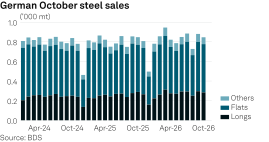
German steel distributors’ sales fell 4.2% year on year to 845,949 metric tons in October, while stocks declined 0.8% to 1.83 million mt, according to data from trade association BDS.
Sales also fell more sharply than inventories in monthly terms, dropping 3.8% from September compared with a 1.9% monthly decline in stocks.
The declines came against a backdrop of weak demand and lower domestic steel production, with German crude steel output down 9.6% year on year to 2.78 million mt in October, according to German steel federation WV Stahl.
Flat steel product sales, the largest segment by tonnage, totaled 492,459 mt, down 2.2% year on year and 2.1% month on month.
Long steel product sales fell 1.8% on the year and 4.3% month on month to 283,518 mt.
Sales of other steel products fell 23.3% on the year and 13.1% month on month to 69,972 mt, and accounted for more than half of the year-over-year decline in total sales.
Distributors held 1.83 million mt of steel in stock at the end of October, down 1.9% on the month and by 0.8% from a year earlier.
Flat steel inventories were down 2.5% on the month and 0.8% on the year to 1.18 million mt, accounting for 84% of the monthly decline in total stocks.
Long steel stocks fell 0.8% on the month and 1.9% on the year to 614,122 mt.
Stocks of other steel products fell 2.1% on the month to 36,868 mt but were 18.4% higher year over year.
Platts-assessed hot-rolled coil prices on an ex-works Ruhr basis were broadly stable at around €745/mt in October.
Platts last assessed HRC ex-works Ruhr at €780/mt on Nov. 25, unchanged day on day but up from €620/mt at the beginning of 2026. Platts is part of S&P Global Energy.
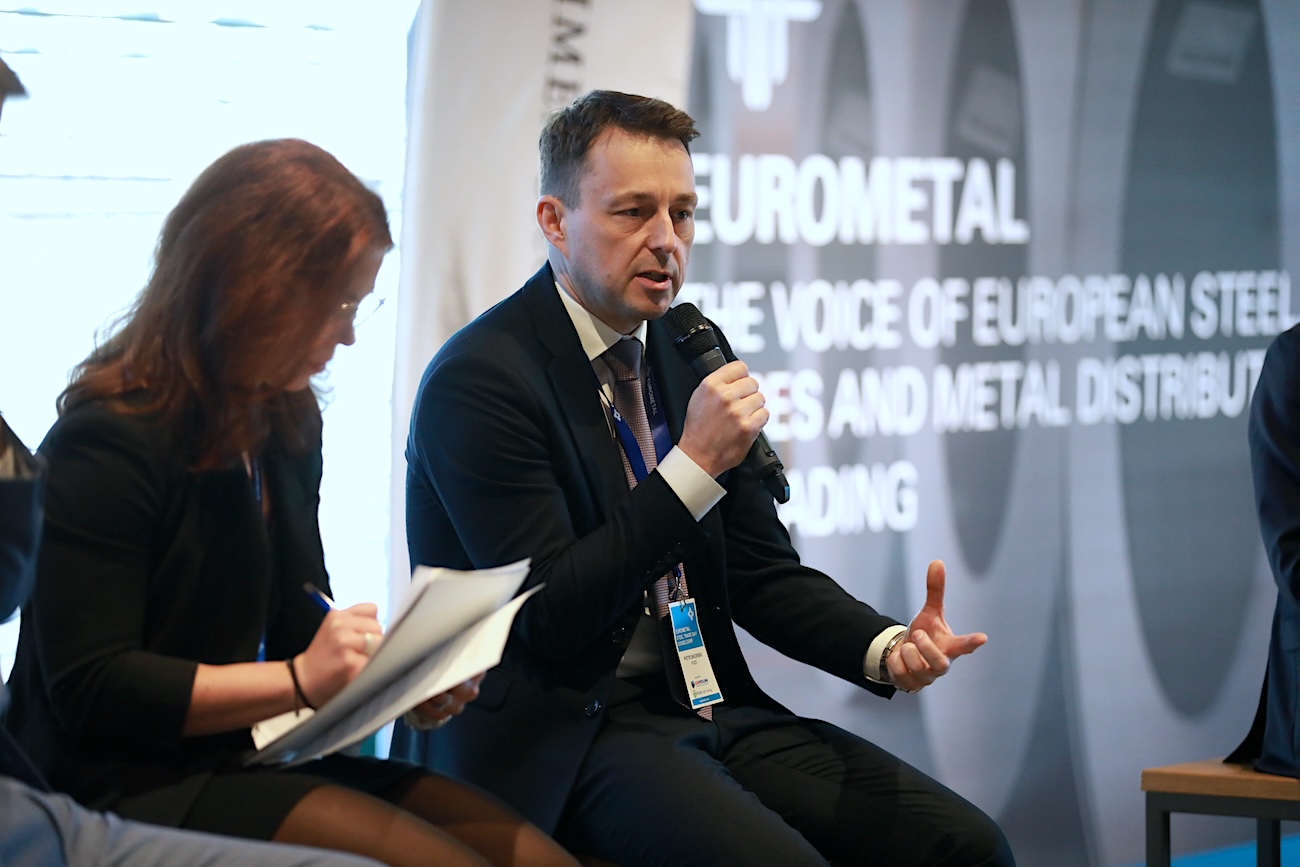
EUROMETAL Steel Trade Day 2026: Polish steel market struggles with structural changes in demand
Despite the resilience of the Polish economy and considerable investment potential in infrastructure, energy and defence, the country’s steel consumption remains subdued. The growing disconnect between economic growth and steel demand reflects structural changes in the manufacturing sector rather than a temporary economic downturn, Metal Expert learnt during EUROMETAL Steel Trade Day 2026, held on November 23-24 in Duesseldorf, Germany.
Polish steel consumption is expected to reach 13-13.5 million t in 2026, remaining broadly in line with the previous year’s level and around 2 million t below its historical peak, according to Piotr Sikorski, President of the Polish Union of Steel Distributors and Processors (PUDS). Although Poland remains one of the largest steel-consuming markets in Central Europe, prospects for a meaningful recovery in 2027 remain limited. “It has nothing to do with the economic cycle, because the 13 million t we are dealing with right now has been with us for a very long time,” the source noted.
The changing structure of domestic manufacturing represents one of the major challenges for the Polish steel market. The country’s economic growth and investment needs are no longer translating into a corresponding increase in steel consumption. “Steel demand is a sick patient of our market for a very long time, and we have to finally admit that there is something going on with steel demand, and it is going through a structural change that we haven’t seen before,” the PUDS president pointed out.
Growing imports of steel-containing products, particularly parts and components from Asia, are contributing to the gradual transformation of Poland’s manufacturing sector into an assembly-oriented economy. Although such operations continue to generate employment, tax revenues and economic growth, their contribution to local steel consumption remains limited. “It is a disaster because no steel is being used when we assemble parts imported from Asia,” Piotr Sikorski explained.
Meanwhile, the prospects for a recovery in the European automotive industry, one of the key steel-consuming sectors, remain questionable, especially in view of challenging export. “The share of foreign automotive brands in the Chinese market had reportedly declined from around 60-70% five years ago to approximately 25%, while Chinese vehicle exports were estimated to increase from 7 million units in 2025 to 12 million units in 2026,” he added.
The considerable gap in production costs further complicates the situation for European automotive manufacturers. According to the approximate figures cited by the PUDS president, the average cost of manufacturing an electric vehicle in China stands at around $20,000, compared with more than $30,000 in Europe. Although additional trade protection measures could restrict Chinese suppliers’ access to the European market, they would not necessarily address the underlying competitiveness issues. “But the competitive gap is always there. So we have to dig deeper to change the structure,” Piotr Sikorski stressed.
Moreover, the ongoing debate over extending the production timeline for internal combustion engine vehicles in Europe could give Chinese manufacturers additional time to strengthen their technological advantages and export positions. “I’m not that optimistic as EUROFER when it comes to the automotive industry in 2027,” the PUDS president noted.
The key challenge for the Polish steel market is therefore not necessarily insufficient economic growth or a lack of investment opportunities, but the declining steel intensity of domestic economic activity. Unless European manufacturers retain more value-added production within the region, the Polish steel market could remain stagnant despite relatively favourable macroeconomic fundamentals, Metal Expert understands.
Author: Metal Expert Editorial Team

EU processors hurting most from imports
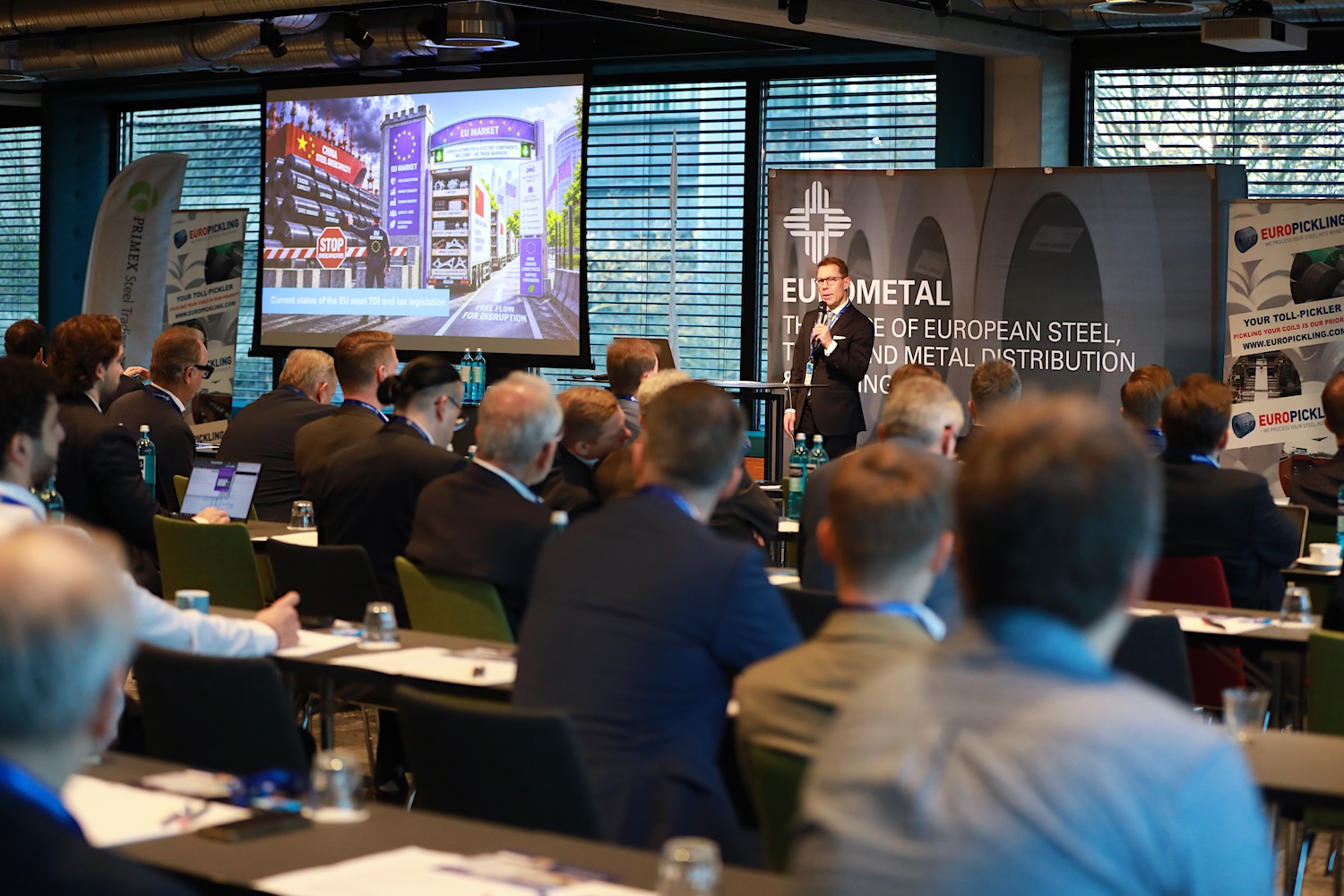
Steel service centres, stampers and other steel processor companies would be the first to collapse under the pressure of imports, according to Alexander Julius, president of EUROMETAL. Julius made the comments during its Steel Trade Day in Düsseldorf, attended by Kallanish.
The European Carbon Border Adjustment Mechanism (CBAM) and the recently reduced tariff-rate quotas (TRQ) do not cover steel-made downstream products. As imports of those products have risen notably, fabricators have two alternatives – insolvency or relocating to other countries with lower costs, Julius suggests. That means that first-level processers like SSCs will lose their customers. “They will be the first ones to cut back or disappear,” he said.
The open loophole in the European Union’s set of trade measures was also addressed by Alexander Syrik of Metals Consulting International. “Asian countries are suppliers of both steel and steel-containing products. In the latter, they are dominating,” he emphasised.
Julius noted that a planned review of the TRQs could see the extension of safeguards on downstream products in 2027, but an extension of CBAM cannot be expected before 2028.
“The Chinese only use what’s being offered; the gates are open and it is getting worse,” he said. He reiterated how the USA and Canada have solved this challenge through stricter import rules. “They have tackled it well, but now 50% of their imports are rerouted, elevating the import pressure on Europe.”
In line with Julius, Marcus Fix of German service centre DM Stahl criticised the measures for their shortcomings. “What drives us mad is that we do not have clear rules. We [the EU] introduced something that is absolutely not clear,” he said. “We are an economic ecosystem. If you take one piece out, the system will collapse.”
These new trade barriers in the EU, as well as the US, are likely to become a structural feature of international markets, according to Matthew Watkins of CRU. A gap of $1000/tonne between Chinese hot rolled coil prices and the US highlights the impact of these polices.
He did not expect China to take measures to tackle its overcapacity during 2027. Meanwhile, the US continues to see strong demand in construction from data centre projects, as well as the Mexican border wall, which could consume 1 million tonnes of steel.
Julius expects China to subside its steel industry “longer than anybody else” due to its population and volume of employees in the sector.
Author: Christian Koehl Germany

Swedish, German mills announce new financing agreements
SSAB has signed a new €800 million ($879m) syndicated multi-currency revolving credit facility agreement (RCF). The committed facility has a maturity of five years with two one-year extension options, Kallanish learns from the Swedish producer.
The new facility involves fourteen banks, coordinated by Crédit Agricole Corporate and Investment Bank and DNB Carnegie. It refinances the existing €700m RCF dated May 2022 and can be used for general corporate purposes, SSAB says.
Meanwhile, Germany’s Sarland mills Saasrtahl and Dillinger have extended a financing facility dedicated to investments for their Power4Steel transformation project, though also for financial flexibility for day-to-day operations.
Stahl-Holding-Saar, the parent of the two mills, says it has extended commercial credit facilities totalling €660m for a further year. The banking consortium unanimously approved the extension, it notes.
The steelmaker group underlines that this sends a strong signal of confidence, given the backdrop of challenging economic and regulatory conditions, especially of confidence in the transformation towards climate-friendly steel production.
Author: Christian Koehl Germany
Aperam repositions to move beyond stainless
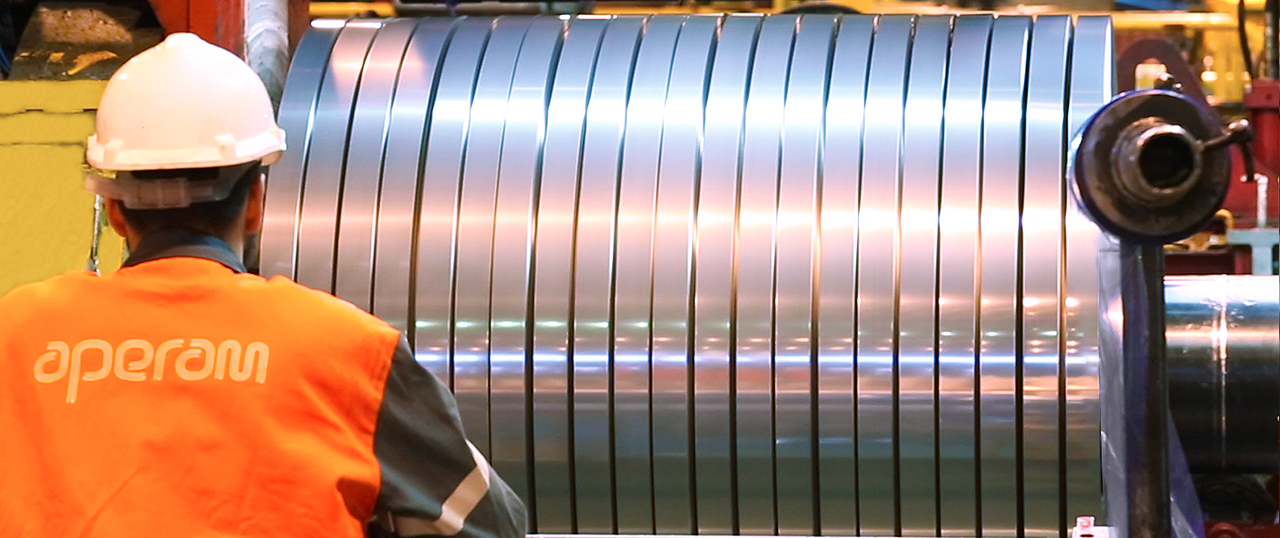
Aperam is repositioning itself from a purely stainless steel producer into a diversified global producer of high-value materials, the company recently said at its capital markets day in Paris.
The group has an integrated value chain spanning across different business activities. Its sale offering and production is not dependent on a single region or industry, the producer says in a note obtained by Kallanish.
“Looking ahead, we see the upside to our already benchmark Ebitda once the energy cost pressure in Europe disappears and the trade defence measures take full effect. Adding to this strong tradition of value creation in Europe, we are excited by the earnings improvement from our growth segments,” said Aperam ceo Sud Sivaji.
“We aim to leverage our strong market positions in sectors expected to grow by 3–7% annually, including aerospace, energy, electrical and electronics engineering, recycling and renewables,” he added.
He added that this positions the company well to deliver long-term value creation and achieve its €700-800 million ($768-877.2m) Ebitda ambition by 2028.
Stainless Europe shipped 1 million tonnes in 2025, for an adjusted Ebitda of €65m. Aperam targets €200-325m by 2028, depending on trade defence. Imports fell to around 340,000t in the first half of 2026 following the new trade measures, it noted.
The new trade rules have already lifted Aperam’s cold rolled 304 margins over scrap by €75/t. The company expects EU27+1 stainless demand to reach around 4.3mt by 2030.
Rodrigo Villela, ceo for South America, targets Ebitda of €100m by 2028, up from €75m in 2025. Aperam is the only stainless producer in Latin America.
Services & solutions handles more than 60% of Aperam’s mill volumes. Its Ebitda is targeted at €85m in 2028, up from €25m in 2025. Aperam sees trade defence as a chance to win back distribution volumes from imports.
Recycling ceo Jan Hofmann targets doubling Ebitda to €100m by 2031. With nickel pig iron output from Indonesia plateauing, the presentation stated that stainless scrap “becomes the most contested resource”.
Renewables, Aperam’s Brazilian forestry and charcoal business, plans around 20% more charcoal output by 2030. Recycling & renewables targets combined Ebitda of €150m by 2028, up from €70m in 2025.
Alloys & specialties posted adjusted Ebitda of €114m in 2025, on shipments of 61,000t. Ceo Frédéric Mattei targets €142m by 2028 and €200m by 2031, driven by electrical and electronics, aerospace and defence, and energy markets.
Author: Natalia Capra France

ArcelorMittal increases coil prices across Europe
ArcelorMittal is raising coil prices across Europe, several market sources tell Kallanish. The steelmaker reportedly needs to pass on higher energy costs while a return of demand is also emerging.
The revised headline offers for hot rolled coil are said to stand at €850/tonne ($932.6/t) delivered for Southern Europe and €840/t delivered for Northern Europe.
Cold rolled coil and hot-dip galvanized coil prices in new contracts are also being increased to €940/t and €920/t, respectively, for Northern Europe. For Southern Europe the revised delivered headline offer for CRC is €980/t and €940/t for HDG. Several sources confirm that CRC continues to be in tight supply.
According to sources, the steelmaker has filled December order books and is now quoting January lead times.
ArcelorMittal was not available for comment when approached by Kallanish ahead of publication.
One notable point is that the gap between CRC and HDG has narrowed. CRC still fetches a higher premium than HDG, but compared with the former hike announcement two weeks earlier, it has not risen from the earlier target of €940/t in Northern Europe. Against that, HDG has been brought up by €20/t to now €920/t.
This is line with a source at a northern mill, who points at significantly higher zinc costs pushing up the price of HDG. “This means that the effective prices for metal coated products probably will increase significantly more than only the base price increase,” he says.
Author: Christian Koehl Germany , Natalia Capra France

EU flats and longs exports down 16.9 percent in January-September 2026
According to preliminary Eurostat data compiled by SteelOrbis, the European Union exported a total of 6.653 million metric tons of flat and long steel products to non-EU countries in the January–September period of 2026, down 16.9 percent from 8.005 million metric tons in the same period of 2025. The total export value fell by 17.0 percent year on year, from €7.81 billion to €6.49 billion.
More specifically, exports of flat steel products totaled 3.596 million metric tons, down 23.4 percent from 4.694 million metric tons in the same period of 2025. Their value fell by 23.7 percent, from €4.93 billion to €3.77 billion, while the average export price declined by 0.4 percent, from around €1,051/mt to €1,047/mt.
Meanwhile, exports of long steel products fell by 7.7 percent to 3.057 million metric tons, compared with 3.311 million metric tons in January–September 2025. Their value declined by 5.4 percent to €2.72 billion, while the average export price rose by 2.4 percent, from €869/mt to €890/mt.
Top five non-EU destinations for flat steel products in January-September 2026
| Country | Jan-Sept 2025 (mt) | Jan-Sept 2026 (mt) | Y-o-y change (%) |
| United Kingdom | 1,087,226 | 882,442 | -18.8% |
| Turkey | 674,828 | 458,402 | -32,1% |
| US | 828,417 | 386,898 | -53.3% |
| Switzerland | 319,746 | 315,099 | -1.5% |
| Mexico | 196,443 | 179,934 | -8.4% |
Top five non-EU destinations for long steel products in January-September 2026
| Country | Jan-Sept 2025 (mt) | Jan-Sept 2026 (mt) | Y-o-y change (%) |
| United Kingdom | 706,162 | 747,998 | +5.9% |
| Switzerland | 686,458 | 725,994 | +5.8% |
| US | 283,604 | 362,698 | +27.9% |
| Canada | 273,815 | 231,531 | -15.4% |
| Turkey | 141,311 | 143,383 | +1.5% |
SteelOrbis’ analysis is based on Eurostat data on EU-27 exports to non-EU countries and cover HS categories 7208-7212 for flat steel products and HS categories 7213-7217 for long steel products.
Author: SteelOrbis Editorial Team

EU steel needs protection, preference: EUROMETAL’s Steel Trade Day
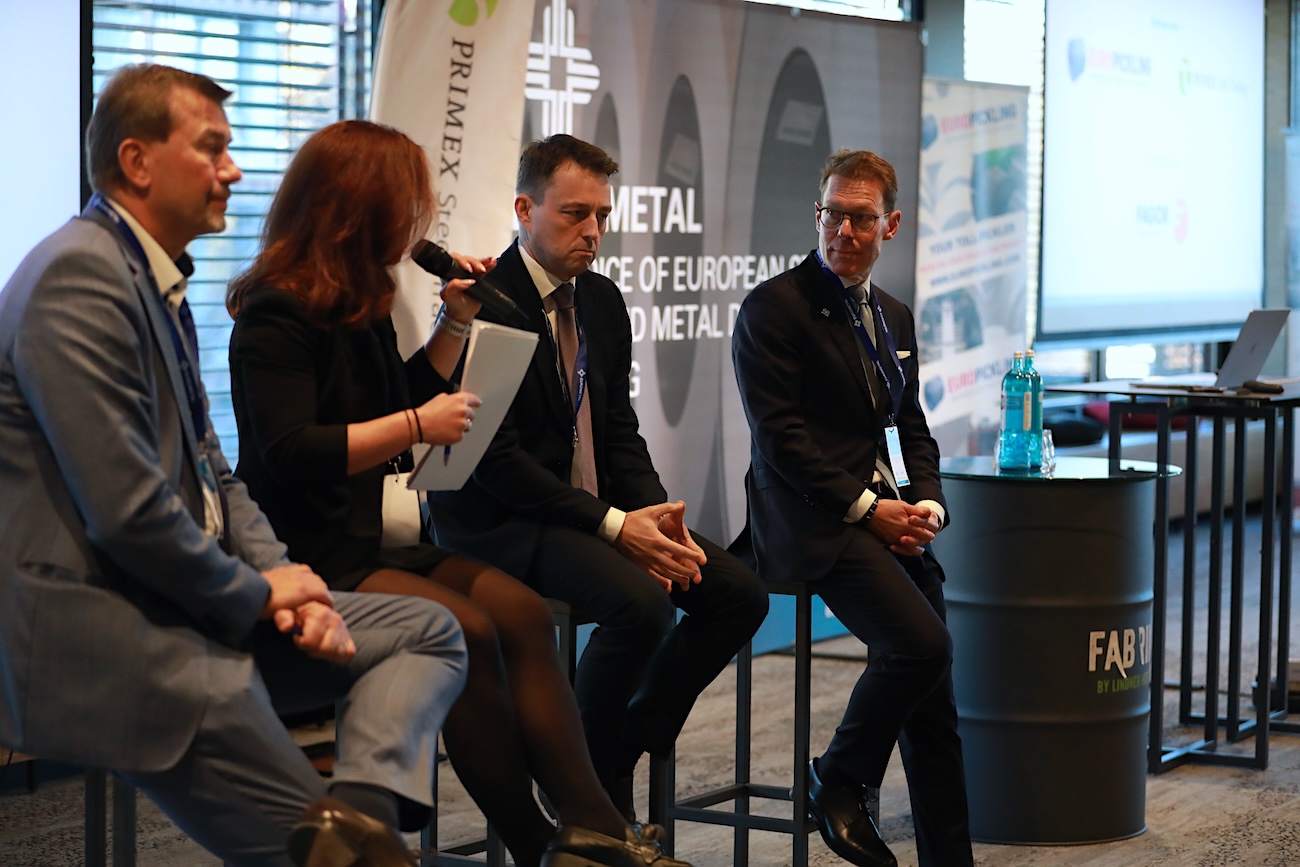
Immediate protection for steel derivatives and measures to promote the preferential use of European steel are needed to address falling steel demand in Europe, speakers said at EUROMETAL’s Steel Trade Day in Dusseldorf yesterday.
The European Commission is actively consulting on adding downstream steel products to its trade defence quotas while finalising legislation to expand the carbon border adjustment mechanism (CBAM) to steel derivatives in 2028 and continuing work on the proposed Industrial Accelerator Act.
But industry representatives said progress has been too slow.
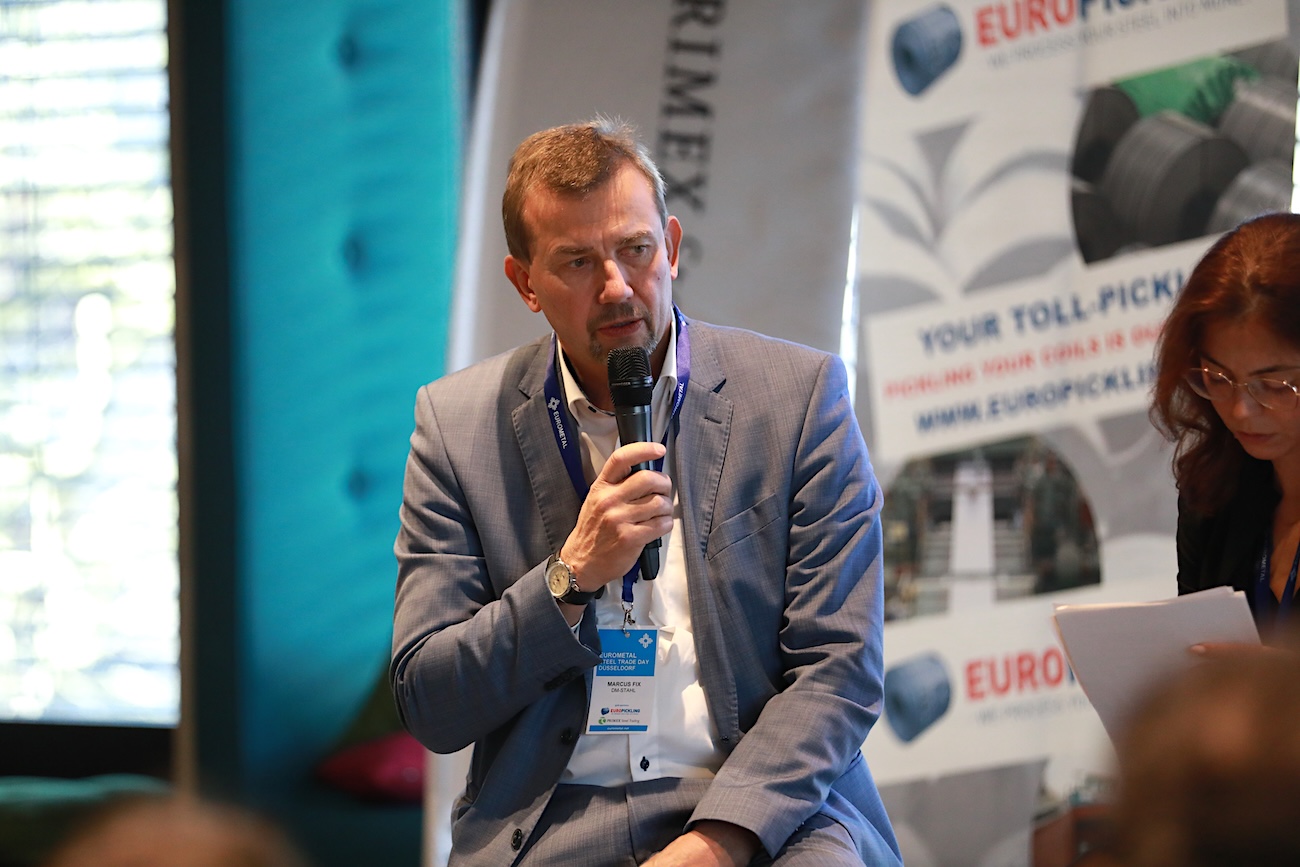
“These initiatives are taking too much time and are coming years late,” DM Stahl managing director Marcus Fix said. Polish Union of Steel Distributors (PUDS) secretary-general Piotr Sikorski described the Industrial Accelerator Act as disappointing, adding that details of the proposal remain unclear.
Sikorski went on to outline that higher economic growth, especially in reference to Poland, was not translating into higher steel use. Current annual steel consumption was estimated at around 13mn t/yr in Poland, roughly 2mn t/yr below historical highs, and with little expectation of any near-term changes, according to Sikorski.
Adherence to international trade rules had left European manufacturers at a competitive disadvantage, particularly as the World Trade Organization had become a “toothless tiger”, Fix said.
The automotive sector was highlighted as an early example of industrial relocation. EUROMETAL president Alexander Julius and other panellists pointed to several European carmakers that have shifted production abroad, notably to China, while Serbia was also cited as an increasingly important manufacturing base.
“The EU is set to become only an assembly line if things do not change,” Julius said.
The outlook for the automotive sector remained weak, with hopes for a recovery next year amounting to “wishful thinking”, Fix said.
Panellists also raised concerns about Europe’s declining export competitiveness, arguing that European producers were competing on an uneven playing field in third-country markets. While no specific measures were proposed, one audience member suggested a mechanism similar to Turkey’s inward processing regime to support exports.
But most speakers said restoring competitiveness within the domestic market should take precedence over export-focused measures.
Participants also described the spot steel market as tight. Mill lead times have extended and availability has become limited, according to Fix.
“Offers are even hard to find sometimes — mills are operating on extended lead times and might not always be on the market,” he said. “There is no restocking at the moment when we usually see it, and this is worrying,” Fix added.
Distributors attending the event said they continued to face pressure from rising steel prices while underlying demand from end users remained subdued.
Author: Carlo Da Cas