

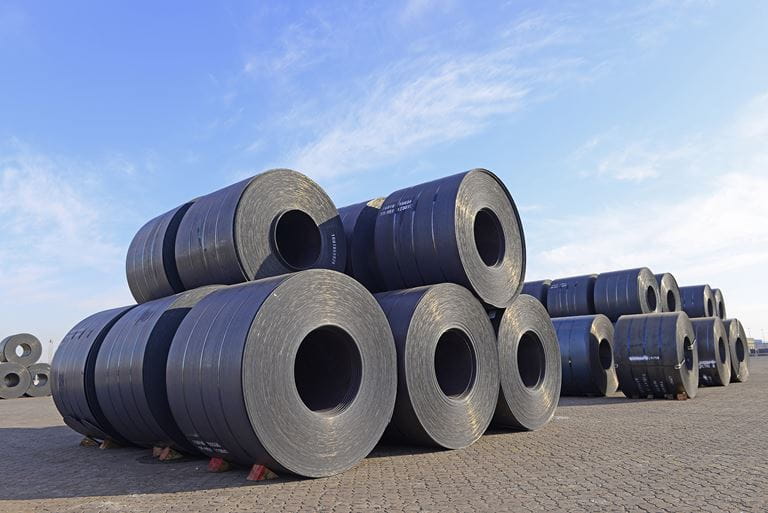
European hot-rolled coil prices rise following mills’ push for higher prices for early 2027 deliveries
Domestic hot-rolled coil prices increased in both Northern Europe and Italy, while market sources continued to cite rising production costs and limited imports as reasons for mills’ push for higher prices for first-quarter 2027 deliveries, Fastmarkets heard on Monday November 23.
In Northern Europe, a supplier provided an indication within €780-800 ($855-877) per tonne ex-works on Monday and reported offers at €800-820 per tonne ex-works for January delivery, saying the higher levels were possible to achieve due to limited options in the market.
A buyer source provided an indication of workable levels at €775-785 per tonne ex-works on the same day.
A second buyer reported an indication at €840 per tonne delivered, equivalent to €820-825 per tonne ex-works after deducting delivery of €15-20 per tonne, saying this level was possible for relatively high grades. The price was discarded due to lack of details about the grade specifications.
The same buyer reported an indication within €800-810 per tonne ex-works on Monday, saying it was “very much a case by case negotiation.”
Fastmarkets reported on Friday November 20 that raw material costs, particularly coking coal, were weighing on producers’ rising offers. The wider push for higher prices was linked to rising production and energy costs, as well as limited import availability, sources have told Fastmarkets in November.
As a result, Fastmarkets’ daily steel hot-rolled coil index domestic, exw Northern Europe was calculated at €794.38 per tonne on Monday November 23, up by €6.98 per tonne from €787.40 per tonne on Friday November 20.
The index was up by €21.05 per tonne week on week and by €45.38 per tonne month on month.
In Italy, indications of workable levels were reported within €760-800 per tonne ex-works by two buyers on Monday, with one of them saying that the higher end of the range was already possible to achieve in the market.
A third buyer said it was hearing deals at €810-820 per tonne ex-works, but this price was discarded from the index due to a lack of details surrounding the reported orders.
Fastmarkets reported on Friday November 20 that the latest offers in the market were at €800 per tonne ex-works for January delivery, with a buyer saying then that mills were aiming to reach €820 per tonne ex-works in the first quarter of 2027.
Fastmarkets’ daily steel hot-rolled coil index domestic, exw Italy was calculated at €785 per tonne on Monday November 23, up by €7.50 per tonne from €777.50 per tonne on Friday November 20.
The index was up by €12.50 per tonne week on week and by €45.94 per tonne month on month.

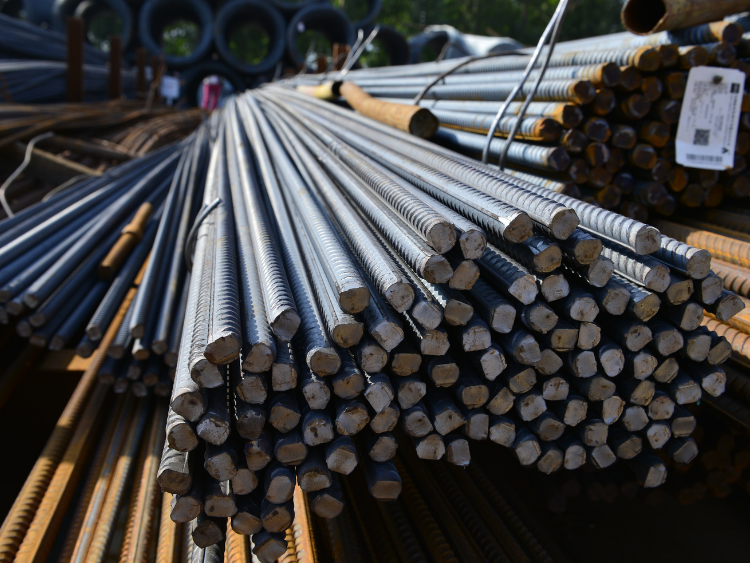
Polish rebar prices rise amid high energy costs
Polish domestic rebar prices rose in the week to Friday November 20 amid persistently high energy costs, market participants told Fastmarkets.
Offers for rebar were reported at 3,000-3,050 zloty ($744-757) per tonne CPT, while workable levels and indications were heard at 3,000-3,100 zloty per tonne.
An indicative offer was heard at 3,200 zloty per tonne, but no transactions had been concluded at that level.
As a result, Fastmarkets’ weekly price assessment for steel reinforcing bar (rebar), domestic, CPT Poland rose to 3,000-3,100 zloty per tonne on Friday November 20, from 2,900-3,000 zloty per tonne the previous week.
In the wire rod market, meanwhile, prices remained stable.
Fastmarkets’ weekly price assessment for steel wire rod (drawing quality), domestic, delivered Poland was unchanged week on week at 3,100-3,200 zloty per tonne on Friday November 20.
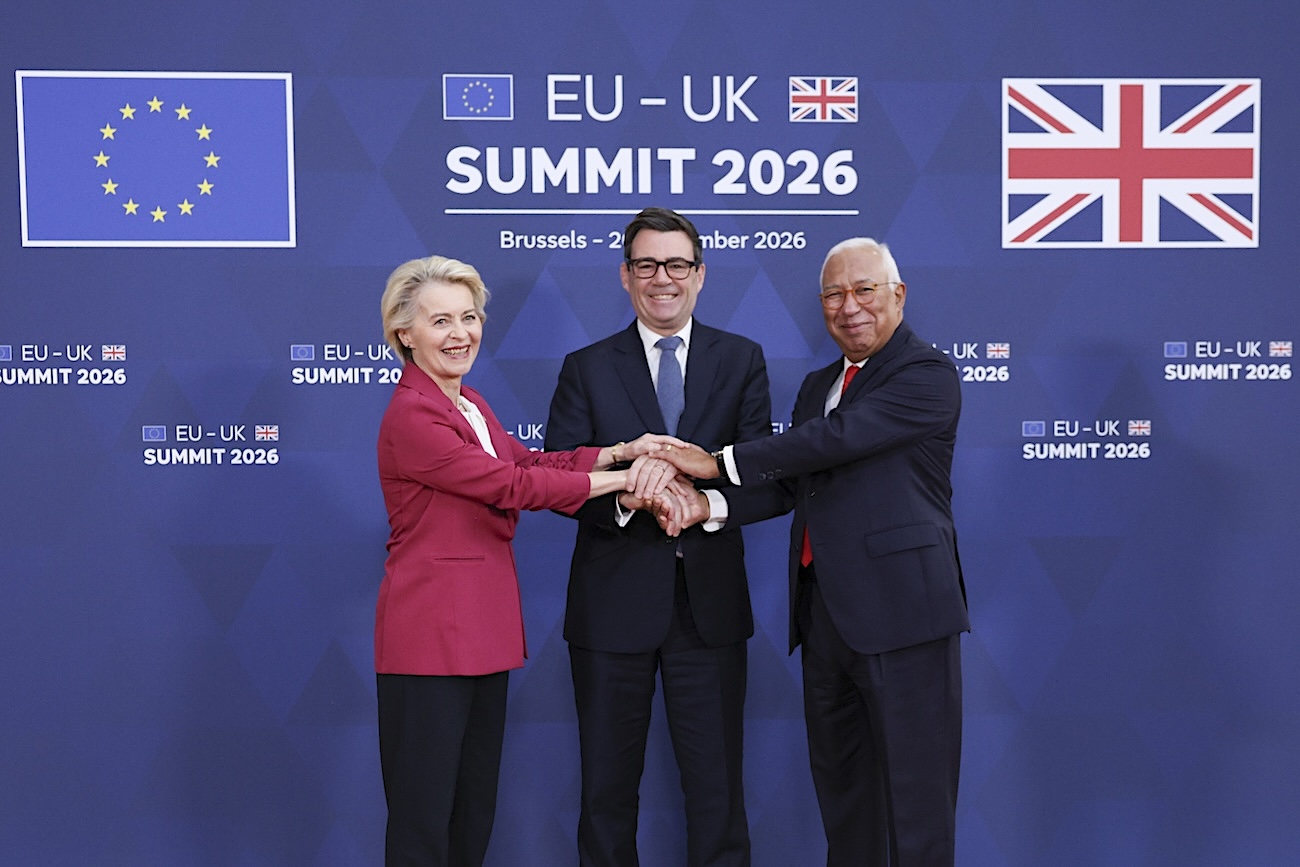
EU and UK agree to strengthen steel trade cooperation and link emissions trading systems
The European Union and the United Kingdom have announced that they have agreed to strengthen cooperation on steel trade, industrial supply chains and carbon pricing following their second bilateral summit, held in Brussels on November 20, 2026.
According to the joint statement issued after the summit, both sides committed to addressing the negative trade effects of global steel overcapacity, developing more resilient industrial supply chains and advancing the integration of their emissions trading systems (ETS).
Emissions trading systems aimed to be linked by 2028
The EU and UK welcomed the conclusion of negotiations on linking their respective emissions trading systems, with the agreement intended to enable mutual recognition of carbon allowances.
The proposed arrangement would also provide a basis for exempting goods traded between the EU and UK from their respective Carbon Border Adjustment Mechanisms (CBAM), subject to applicable legislation and procedures. Both sides aim to begin applying the agreement in 2028, following the necessary legal procedures.
Stronger cooperation planned to address steel overcapacity
The EU and UK reaffirmed their commitment to protecting their steel industries against the negative trade effects of global overcapacity. They agreed to explore additional arrangements to address overcapacity and its impact on steel trade, while strengthening cooperation on diversified and resilient steel supply chains.
The two sides also committed to coordinating economic security policies, including measures concerning critical raw materials, supply chain vulnerabilities and potential disruptions. Under the proposed cooperation framework, the EU and UK will seek to minimize the negative effects of their respective trade and industrial measures on each other’s supply chains, with progress in the steel and electric vehicle sectors to be reviewed every four months. The joint statement also highlighted plans to establish a long-term solution for the movement of UK-origin steel into Northern Ireland, taking into account the existing arrangements under the Windsor Framework.
The EU and UK also agreed to extend the energy provisions of their Trade and Cooperation Agreement until March 31, 2028. Meanwhile, both sides committed to concluding negotiations on the UK’s participation in the EU’s internal electricity market in 2027, subject to final agreement. According to the joint statement, closer electricity market integration is expected to improve energy security, facilitate cross-border electricity trading and contribute to lower energy costs. The two sides emphasized that closer cooperation on steel, energy and industrial supply chains would support economic resilience and competitiveness while advancing their shared climate objectives.
Author: SteelOrbis Editorial Team

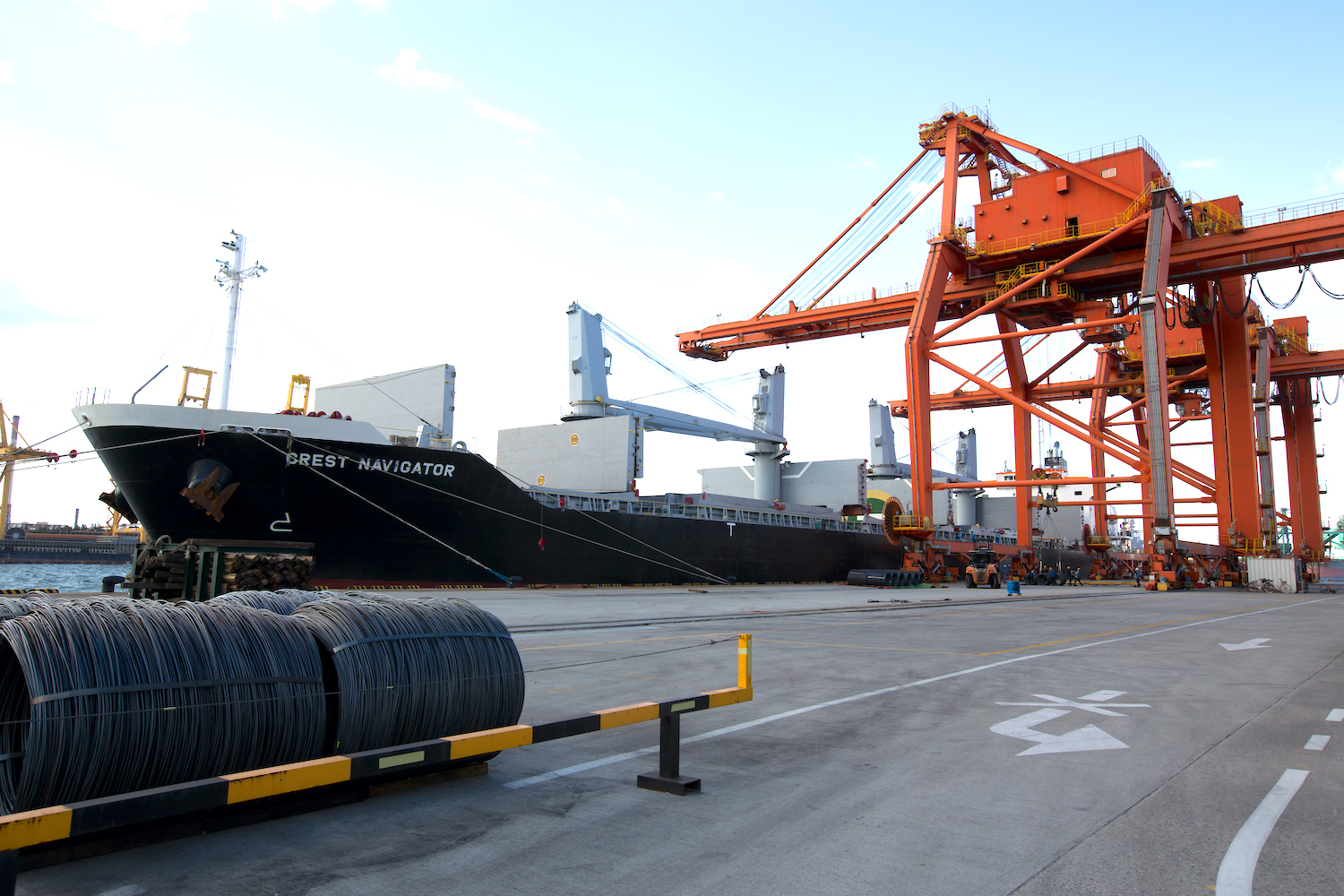
EU’s flats and longs imports fall in January-September 2026
According to Eurostat data compiled by SteelOrbis, the European Union imported a total of 15.504 million metric tons of flat and long steel products from non-EU countries in the January-September period of 2026, down 17.6 percent from the same period in 2025. The total value of these imports fell by 18.5 percent year on year to €10.44 billion.
Imports of flat steel products totaled 12.343 million metric tons in the given period, down 12.9 percent from 14.170 million metric tons a year earlier. The value of flat steel imports fell by 15.2 percent to €8.24 billion, compared with €9.73 billion in the same period of 2025. The average price per metric ton also declined by 2.7 percent, from around €686/mt in the first nine months of 2025 to €668/mt in the same period of 2026.
Imports of long steel products fell by 31.8 percent to 3.161 million metric tons in the first nine months of 2026, compared with 4.636 million metric tons in January-September 2025. The value of these imports fell by 28.8 percent to €2.195 billion, compared with €3.081 billion in the same period a year earlier. The average price rose by 4.5 percent year on year to around €694/mt, up from €664/mt.
Top five suppliers of flat steel imports to the EU in January–September 2026
| Country | Jan-Sept 2025 (mt) | Jan-Sept 2026 (mt) | Y-o-y change (%) |
| Turkey | 2,308,572 | 1,890,208 | -18.1% |
| South Korea | 2,129,480 | 1,723,631 | -19.1% |
| India | 1,361,392 | 1,216,831 | -10.6% |
| Indonesia | 1,137,340 | 1,211,631 | +6.5% |
| China | 693,731 | 1,187,576 | +71.2% |
Top five suppliers of long steel imports to the EU in January–September 2026
| Country | Jan-Sept 2025 (mt) | Jan-Sept 2026 (mt) | Y-o-y change (%) | Turkey | 1,223,943 | 943,440 | -22.9% | China | 610,114 | 496,625 | -18.6% | United Kingdom | 388,208 | 264,449 | -31.9% | Ukraine | 527,062 | 249,321 | -52.7% | Norway | 225,967 | 238,496 | +5.5% |
SteelOrbis’ analysis is based on Eurostat data on EU imports from non-EU countries and covers HS codes 7208–7212 for flat steel products and HS codes 7213–7217 for long steel products.
Author: SteelOrbis Editorial Team
Global steel excess capacity could exceed 700 million tonnes by the end of 2026


thyssenkrupp Steel launches new hydrogen supply tender for Duisburg plant
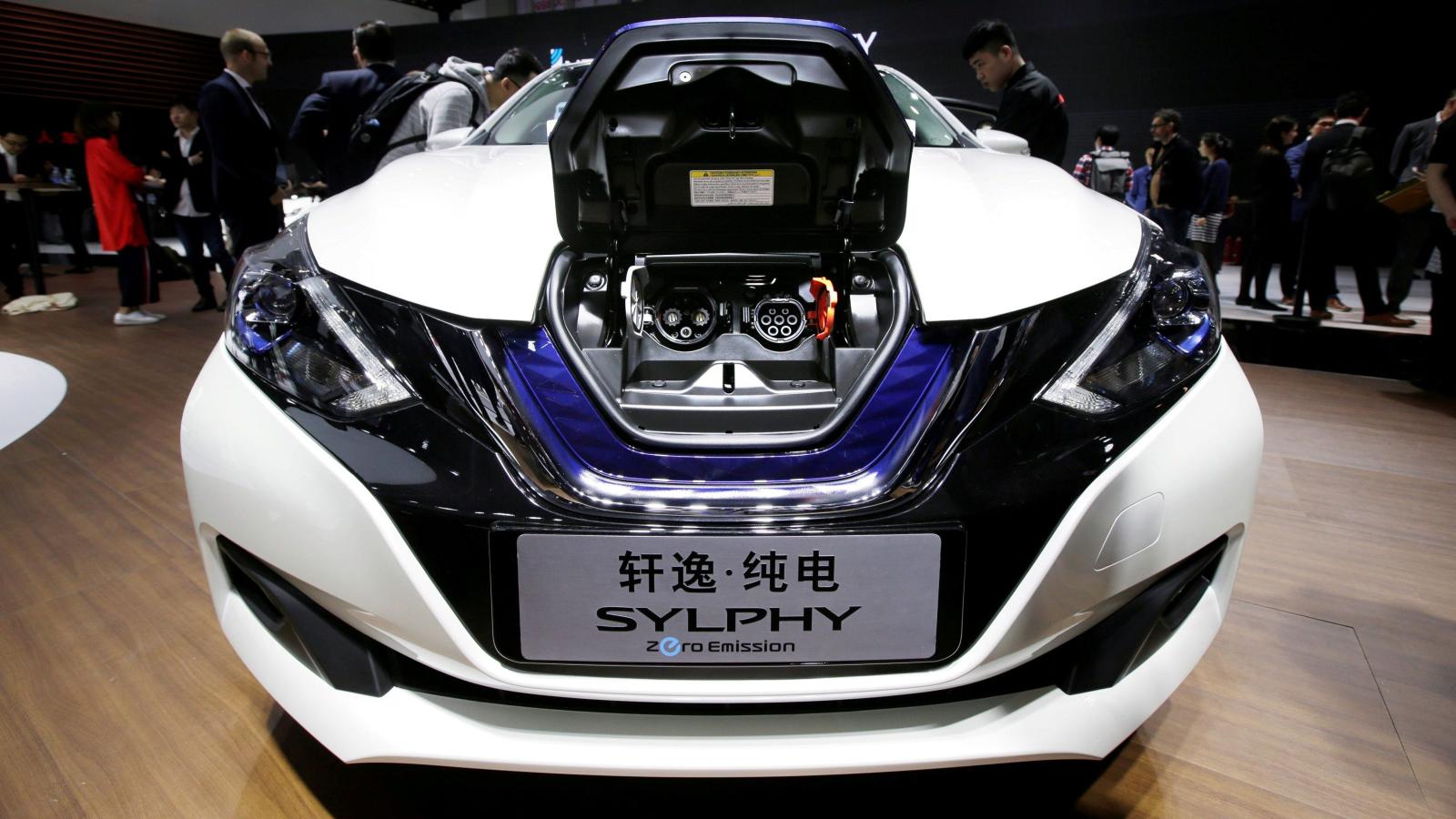
EU to impose quotas on hybrid car imports from 1 December
|
Country
|
1 December 2026–28 February 2027
|
1 March–31 May 2027
|
1–18 June 2027
|
Total
|
|---|---|---|---|---|
|
China
|
86,301
|
88,219
|
17,260
|
191,780
|
|
Japan
|
76,900
|
78,609
|
15,380
|
170,889
|
|
Türkiye
|
56,844
|
58,107
|
11,369
|
126,320
|
|
United Kingdom
|
47,431
|
48,485
|
9,486
|
105,402
|
|
South Korea
|
30,566
|
31,245
|
6,113
|
67,924
|
|
Mexico
|
15,640
|
15,987
|
3,128
|
34,755
|
|
Morocco
|
10,779
|
11,019
|
2,156
|
23,954
|
|
Serbia
|
8,709
|
8,902
|
1,742
|
19,353
|
|
US
|
8,317
|
8,502
|
1,663
|
18,482
|
|
Other countries covered by the measure (joint quota)
|
370
|
378
|
74
|
822
|

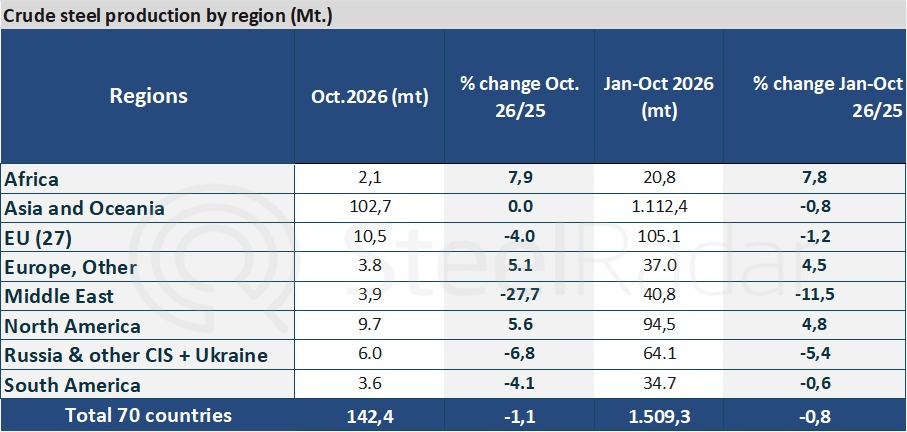
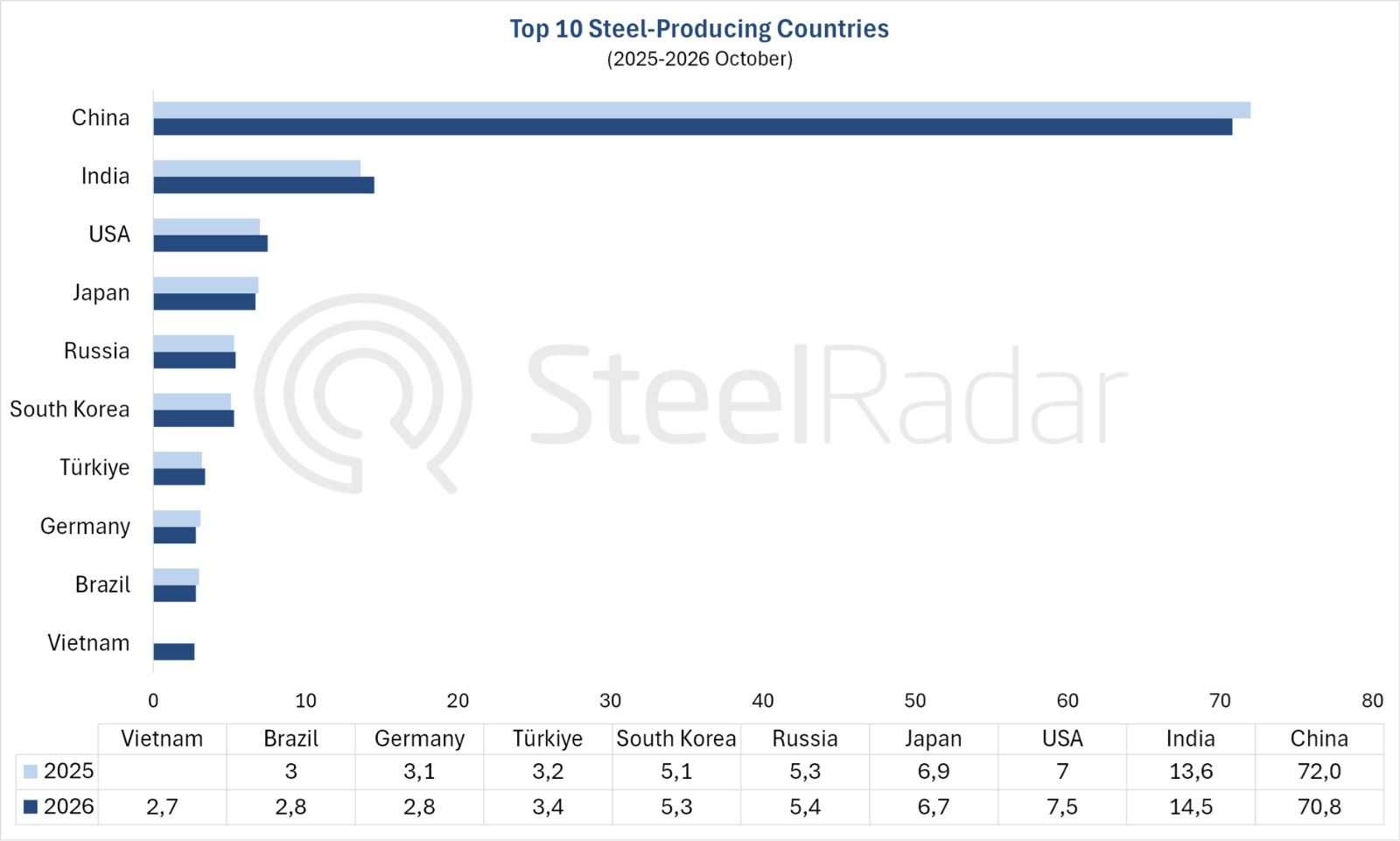
Global crude steel production falls by 1.1% in October

ArcelorMittal selects Danieli for 2 million mt EAF project in Dunkirk
Italian plantmaker Danieli Technologies has announced that it has been selected by Luxembourg-based steelmaker ArcelorMittal to supply electric steelmaking equipment for its €1.3 billion decarbonization project at its Dunkirk steelworks in France, with commissioning scheduled for 2029.
The new steelmaking facility will feature a 300 mt Danieli Digimelter electric arc furnace (EAF), powered by Danieli’s Q-ONE digital power system, with an annual production capacity of two million mt. The order also covers a fume treatment plant, material handling systems and a complete electrical and automation package.
Using a combination of scrap, hot briquetted iron, direct reduced iron and hot metal, the new EAF is expected to generate 0.6 mt of carbon per metric ton of steel produced, around one-third of the emissions associated with the conventional blast furnace route.
The investment, officially announced on February 10, 2026, forms part of ArcelorMittal’s strategy to reduce its global carbon intensity by up to 10 percent by 2030 and achieve net-zero emissions by 2050.
Author: SteelOrbis Editorial Team

UK proposes CBAM exemption for EU, EEA, Swiss steel from 1 January 2027
The UK government has published draft legislation proposing to exempt steel and other carbon-intensive goods originating in the EU, European Economic Area (EEA) and Switzerland from its Carbon Border Adjustment Mechanism (CBAM) from 1 January 2027.
Under the proposal, no UK CBAM charge would apply to emissions embodied in eligible goods from these countries. Their value would also be excluded from the GBP 50,000 registration threshold, and importers would not need to include them in CBAM returns, according to draft legislation published by HM Revenue and Customs (HMRC) on 23 November.
The exemption follows an agreement between the UK and the EU to link their respective emissions trading systems (ETS), announced on 20 November. The two sides said the link would allow goods originating in the UK and EU to benefit from mutual exemptions from their respective carbon border mechanisms, Metal Expert learnt.
The proposed exemption would be determined by the origin of goods rather than the country from which they are shipped. Therefore, steel produced outside the EU, EEA and Switzerland would remain subject to UK CBAM even if exported to Britain through one of these markets.
The legislation is expected to receive Royal Assent after 1 January 2027, so the exemption would take effect retrospectively once enacted. Until then, importers must continue to meet current requirements, including keeping records and evidence of the origin of goods.
HMRC noted that the draft is subject to the parliamentary process and may change before it is enacted.
The UK CBAM takes effect on 1 January 2027 and covers iron and steel, aluminium, cement, fertilisers and hydrogen.
