

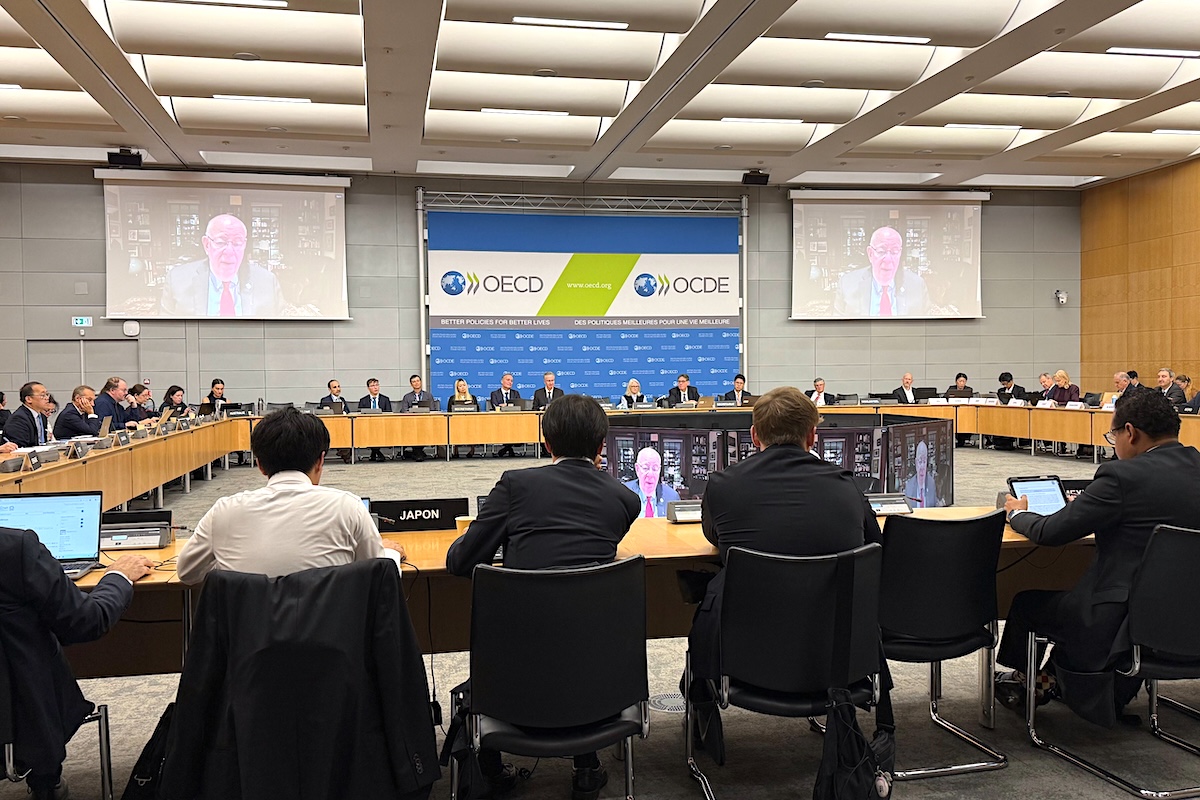
OECD: Latin America’s steel imports surge 47 percent as global excess capacity threatens regional producers
Latin America’s steel industry is facing mounting pressure from global excess capacity and rising imports, particularly from China, according to a new report published by the Organization for Economic Co-operation and Development (OECD) on November 17.
The report reveals that combined direct and indirect steel imports into the region’s six major steel-producing economies increased by 47 percent from 37.6 million mt in 2019 to 55.4 million mt in 2025, highlighting the region’s growing exposure to international steel trade imbalances. The OECD noted that approximately 40 percent of these imports consisted of indirect steel trade, referring to steel incorporated into manufactured products such as machinery, vehicles and fabricated metal goods.
China’s growing steel exports intensify competitive pressure
According to the OECD, China remained the dominant source of direct and indirect steel imports into Latin America, with combined volumes more than doubling between 2019 and 2025.
Meanwhile, Southeast Asian countries, particularly members of the Association of Southeast Asian Nations (ASEAN), have gained importance as suppliers to the region. However, the OECD found that Chinese steel reaching Latin America through third countries accounted for a relatively limited share of total flows, indicating that direct trade remains the principal transmission channel.
The report emphasized that conventional steel import statistics do not fully capture the region’s exposure to global excess capacity, as substantial volumes of steel also enter Latin American markets through downstream manufactured products.
Import penetration rises as capacity utilization remains low
The OECD highlighted that increasing import penetration has significantly weakened the competitiveness of Latin American steelmakers.
In the six major steel-producing economies, steel import penetration increased from 33.8 percent in 2019 to 40.3 percent in 2025. Direct steel imports from China alone accounted for approximately 13 percent of regional steel demand in 2025, compared with 7 percent in 2019.
Despite regional steel demand reaching approximately 76.7 million mt in 2025, domestic steel producers continued to face difficulties maintaining production levels, with capacity utilization remaining at an unsustainably low level of around 60 percent.
The OECD also found that steel originating from China and ASEAN, whether imported directly or incorporated into manufactured goods, accounted for more than half of foreign-sourced steel consumed in the region in 2024.
Regional steel trade and exports decline sharply
The report revealed that growing import competition has also undermined regional steel trade, with trade among the six major Latin American economies falling by 45 percent between 2019 and 2025.
Chile and Colombia recorded particularly sharp declines in regional sourcing. The share of Chile’s steel imports originating from other major Latin American economies decreased from 18 percent in 2019 to 5 percent in 2025, while Colombia’s corresponding share fell from 40 percent to 9 percent.
Meanwhile, Brazil and Mexico experienced substantial losses in export competitiveness. Brazil’s steel exports declined by approximately 34 percent from nearly 12 million mt in 2019 to 7.8 million mt in 2025, while Mexico’s exports fell by the same percentage from around 5 million mt to 3.3 million mt.
The OECD warned that rising import competition, combined with high energy and logistics costs, infrastructure constraints and insufficient investment, has increased concerns over potential deindustrialization and the loss of high-quality manufacturing jobs across the region.
OECD highlights need for stronger trade defense and international cooperation
In response to these developments, the OECD emphasized the importance of coordinated international action to address the underlying causes of global steel excess capacity, particularly market-distorting subsidies and other non-market policies and practices.
The report raised the question of whether Latin American countries should strengthen their regional trade defense framework as excess-capacity-related exports and trade diversion increasingly affect domestic steel industries.
The organization also highlighted the importance of cooperation with international partners through existing plurilateral mechanisms, particularly the Global Forum on Steel Excess Capacity (GFSEC), to address structural market distortions rather than focusing exclusively on individual import flows.
Furthermore, the OECD’s analysis underscored the importance of monitoring indirect steel trade and tracing the original production sources of steel embedded in manufactured goods, as conventional customs statistics alone may underestimate the region’s exposure to global excess capacity.
The report concluded that stronger international policy coordination is essential to limiting the adverse effects of excess capacity on Latin American steel producers, preserving regional industrial competitiveness and addressing the long-term risks associated with increasingly distorted global steel markets.
Author: SteelOrbis Editorial Team


Italian rebar prices stable amid production cuts; Northern European prices rise
Italian rebar prices were unchanged in the week to Wednesday November 18, with mills cutting production and suspending new quotations amid high energy costs and weak demand, while Northern European prices moved higher.
Market participants across Europe reported continued pressure from rising electricity and gas costs, with some Italian mills reducing output, temporarily halting production or suspending new price quotations.
“Energy and gas costs are continuing to rise significantly, and as a result, many steel mills are stopping production because they can no longer sustain these costs,” a producer source told Fastmarkets.
In Italy, rebar prices remained stable during the assessment period, with weak demand continuing to constrain trading activity.
“Demand remains weak, and producers are trying to offset the limited domestic consumption through exports, although demand in international markets does not appear particularly strong either,” a buyer source told Fastmarkets.
Sources said Italian mills were managing production and inventories carefully, while some producers had temporarily stopped providing new quotations.
“We are currently stuck with quotations,” a seller source said.
Another seller source said mills had sufficient export orders and had already started reducing production in November, ahead of the traditional Christmas holiday stoppages.
A distributor source similarly described the market as flat, adding that unfavorable weather conditions were weighing further on activity.
“Producers are currently holding back on quoting prices,” the distributor said. “Despite weak demand, rising production costs continue to put upward pressure on prices.”
In northern Italy, deals and offers for rebar were reported at €760-780 ($836-858) per tonne ex-works, while in southern Italy deals and offers were heard at €770-790 per tonne ex-works.
Fastmarkets’ weekly price assessment for steel reinforcing bar (rebar), domestic, exw Italy was therefore unchanged at €760-790 per tonne on November 18.
In Northern Europe, rebar prices increased during the assessment period, with deals and offers heard at €800 per tonne delivered and workable levels reported at €750-800 per tonne.
Fastmarkets’ weekly price assessment for steel reinforcing bar (rebar), domestic, delivered Northern Europe was therefore €750-800 per tonne on November 18, up from €740 per tonne one week earlier.
Fastmarkets’ weekly price assessment for steel reinforcing bar (rebar), domestic, delivered Spain was unchanged at €750 per tonne on November 18.
European wire rod prices remained stable during the assessment period.
In Southern Europe, workable levels for wire rod were heard at €670-680 per tonne delivered.
Fastmarkets’ weekly price assessment for steel wire rod (mesh quality), domestic, delivered Southern Europe was unchanged week on week at €670-680 per tonne.
In Northern Europe, workable levels for wire rod were heard at €705-715 per tonne delivered.
Fastmarkets’ weekly price assessment for steel wire rod (mesh quality), domestic, delivered Northern Europe was also unchanged week on week at €705-715 per tonne on November 18.
Beams and sections
European beam prices increased month on month, with latest workable levels reported at €890-920 per tonne and deals and offers heard within the same range in both Northern and Southern Europe.
Fastmarkets’ price assessment for steel beams, domestic, delivered Northern Europe was therefore €890-920 per tonne on November 18, up from €840-860 per tonne the previous month.
European section prices also increased month on month, with workable levels reported at €900-950 per tonne in both Northern and Southern Europe.
Fastmarkets’ price assessment for steel sections (medium), domestic, delivered Southern Europe was therefore €900-950 per tonne on November 18, up from €850-870 per tonne the previous month.


Romanian longs market faces price pressure amid limited demand, tight liquidity
The Romanian long steel market continues to face limited demand and growing cash flow difficulties, with domestic prices showing some signs of softening despite the impact of transportation cost increases recorded in previous weeks. Trading activity, which was already slow, has come under additional pressure as liquidity problems have become more pronounced among traders following recent import purchases. With substantial funds tied up in previously booked material and domestic sales remaining sluggish, some traders are showing greater flexibility in payment terms to support sales and accommodate their customers. Despite these efforts, trading activity remains limited, while differences in delivery conditions continue to result in varying price indications across the domestic market.
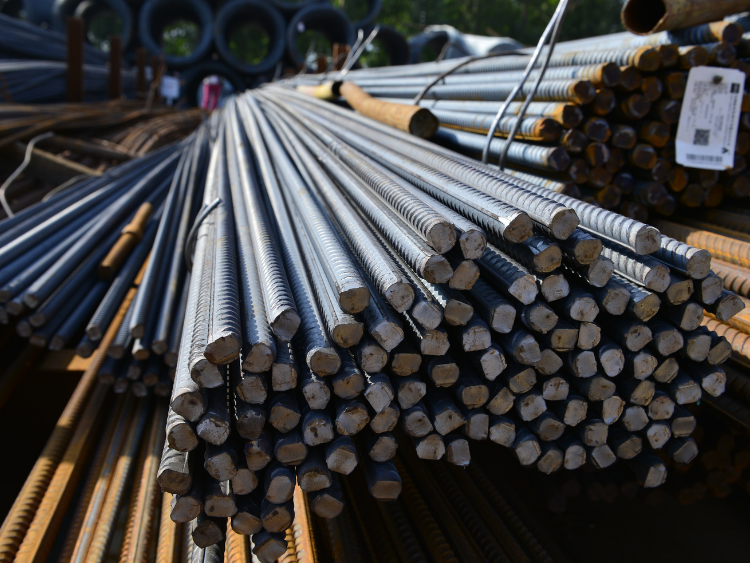
In the domestic rebar market, quotations continue to vary depending on delivery terms, with some suppliers offering material on CPT basis, while some larger traders are quoting prices FCA port. Delivered rebar offers have declined by around €10/mt compared with last week, falling to €670-685/mt CPT, equivalent to approximately €640-665/mt ex-warehouse based on transportation costs of €20-30/mt. For more distant destinations, freight expenses can reach €35-40/mt. Meanwhile, one of the larger Romanian traders continues to offer rebar at €650-655/mt FCA port.
As for Romania’s sole long steel producer, Beltrame, its rebar quotations are reported to have remained unchanged at €640-650/mt delivered, corresponding to approximately €620/mt ex-works. However, according to market sources, the material currently available does not fully match buyers’ required sizes and specifications, resulting in limited sales.
In the wire rod segment, domestic quotations have edged down slightly on the upper end to €675-680/mt CPT, compared with €675-685/mt delivered last week. Based on current transportation costs of €20-30/mt, this corresponds to approximately €645-660/mt ex-warehouse. Meanwhile, another major Romanian trader has been offering wire rod at €670/mt FCA port.
Turning to imports, no fresh bookings have been reported from Romanian buyers this week following purchases concluded in previous weeks, with concerns over exhausted or nearly exhausted EU import quotas continuing to limit purchasing interest. Bulgarian rebar offers have remained unchanged at €680-700/mt CPT Romania, while Italian rebar quotations have increased to €680/mt FCA from €610/mt last week, equivalent to approximately €755-760/mt delivered. Hungarian offers have also risen, to €705/mt CPT Romania, compared with €660-670/mt delivered previously. As for overseas suppliers, Turkish rebar offers have remained at $610-625/mt FOB, corresponding to approximately €580-600/mt CFR Romania, including estimated freight of $35-40/mt. Egyptian rebar quotations have increased to $640-650/mt FOB from $630-650/mt last week, equivalent to around €610-620/mt CFR Romania, while wire rod offers have reached $650-660/mt FOB, compared with $640-660/mt previously, corresponding to approximately €620-630/mt CFR Romania.
Bulgarian rebar prices extend gains despite weak market outlook
Rebar prices in Bulgaria have continued to move higher this week, as larger domestic mills maintain firm quotations, prompting traders to raise their offers and gradually pushing lower-priced material out of the market. However, the continued upward movement in prices has not been accompanied by any significant improvement in trading activity, with limited demand and ongoing liquidity constraints still affecting sales. Market participants remain cautious about the outlook for the coming weeks, particularly as the approaching holiday season is expected to bring a further slowdown in purchasing activity. Meanwhile, import purchasing has also slowed, with uncertainty over EU quota availability and persistent shipping difficulties continuing to discourage new orders.
In the domestic market, rebar quotations have increased to €710-730/mt CPT, compared to €690-730/mt CPT last week. The adjustment has been concentrated at the lower end of the range, as traders have continued to raise their offers, while larger domestic mills have kept their quotations at €720-730/mt CPT. However, higher rebar indications reaching €740/mt CPT have also been heard in the market. Wire rod prices, meanwhile, have remained largely unchanged at €730-740/mt CPT following the sharp €50/mt increase recorded last week, although some quotations have been heard at levels approaching €750/mt CPT.
In the import market, no new transactions have been reported this week, following several bookings of Turkish material in previous weeks. Concerns over the exhaustion of EU import quotas, together with ongoing shipping difficulties, have continued to discourage importers from committing to additional purchases. Turkish rebar offers remain at $610-625/mt FOB, unchanged week on week, equivalent to approximately €560-575/mt CFR Bulgaria based on estimated freight of $20-25/mt. Egyptian rebar quotations have been heard at $640-650/mt FOB, compared to $630-650/mt FOB last week, while wire rod offers have increased to $650-660/mt FOB from $640-660/mt FOB. With freight estimated at $30/mt, the latest Egyptian offers correspond to approximately €595-605/mt CFR Bulgaria for rebar and €600-610/mt CFR for wire rod. Meanwhile, according to a market source, this week Hungarian rebar has been offered at €710-715/mt CPT Bulgaria.

Supply disruptions and model changeovers weigh on Czech car production
The Czech automotive industry records decline in passenger car production amid supply disruptions and model changeovers.
Passenger car production in the Czech Republic fell by 30.2% year on year to 86,996 units in October, according to the Czech Automotive Industry Association (AIA). Over January-October, output also declined by 2.6% year on year to 1.18 million units.
The decrease was partly attributed to supply disruptions at Skoda Auto, which faced limited deliveries of components from one of its suppliers in October, forcing the automaker to partially reduce the number of shifts at affected production facilities. Meanwhile, Hyundai’s plant in Nosovice is preparing to launch production of the new-generation Tucson, while Toyota is carrying out modifications and expanding its facility in Kolín, including preparations for the production of its first battery-electric vehicle in Europe, Metal Expert learnt.
Electric vehicle production also recorded a decline, marking a reversal after a prolonged period of growth. Output of battery electric vehicles (BEVs) and plug-in hybrid electric vehicles (PHEVs) fell by 62.9% year on year to 9,172 units in October, accounting for 10.5% of total passenger car production. Over the first ten months of the year, production of these vehicles reached 239,474 units, up by 1.8% year on year.
“Despite a slight year-on-year decline, the Czech automotive industry is maintaining a high production pace. In addition to global factors, this year’s results also reflect circumstances at individual manufacturers – limited October deliveries of components to Skoda Auto, the planned start of production of the new-generation Tucson at Hyundai’s Nosovice plant, and modifications and expansion at Toyota’s Kolín facility. The slight decline in production is therefore attributable to operational difficulties as well as preparations for the further development of manufacturing,” said Zdenek Petzl, executive director of the Automotive Industry Association.
Author: Metal Expert Editorial Team

EUROMETAL attended the OECD Steel Committee’s 100th session in Paris
EUROMETAL Director General Ricardo Silva attended the 100th session of the OECD Steel Committee, held on 18–19 November 2026 at OECD Headquarters in Paris. He also participated in the Global Forum on Steel Excess Capacity (GFSEC) Stakeholder Event on 17 November.
The meetings brought together government and industry representatives to discuss growing global steel excess capacity, market-distorting practices and the need for stronger international cooperation.
The Steel Committee’s milestone session gathered 279 participants representing 46 delegations. According to the Chair’s statement, global steel excess capacity was on track to exceed 700 million tonnes by the end of 2026.
World steel demand fell by 1.6% year on year in the first half of 2026, while steelmaking capacity increased by an annualised 88 million tonnes, reaching a record 2,533 million tonnes. More than 90% of net capacity expansion occurred outside the OECD.
Delegates examined how stronger monitoring, enforcement and information sharing could help governments address the scale and underlying causes of these imbalances.
Downstream steel-intensive goods in focus
Of particular relevance to EUROMETAL, the Committee highlighted that steel from sources of excess capacity was increasingly reaching importing markets through downstream steel-intensive goods, including motor vehicles and machinery.
The discussions recognised the implications for domestic steel supply chains, alongside continuing challenges related to circumvention and trade diversion.
These findings reinforce EUROMETAL’s call for coordinated policies covering the entire steel value chain. Measures affecting steel inputs must be considered alongside the competitive pressures facing European processors and manufacturers, whose activities sustain steel demand.
Safeguarding steelmaking must go hand in hand with preserving competitiveness, investment and employment in distribution, processing and downstream manufacturing.
A coordinated international response
The Committee welcomed the GFSEC’s adoption of the Milwaukee Framework as an important step towards joint action on excess capacity and its root causes.
Delegates also examined subsidies and other non-market practices, overseas steelmaking investment, raw-material restrictions and supply-chain vulnerabilities. They underlined that the effects of excess capacity could not be addressed solely by targeting imports from a single country.
Looking ahead, the Committee discussed its proposed Programme of Work and Budget for 2027–2030, including broader subsidy analysis across the steel value chain, early warnings of suspicious trade patterns and an assessment of the effectiveness of trade measures.
Read the statement by the Chair of the OECD Steel Committee’s 100th session.

UK to make declaration of melt and pour country mandatory for steel imports


EU to extend CBAM to Norway and Iceland from 2027

Eugen Carauleanu: Southeast Europe is becoming a value creation platform in steel

Local HRC prices rise in Northern Europe on higher costs, edge down in Italy on slow acceptance
Local hot-rolled coil (HRC) prices increased in Northern Europe on rising production costs and limited imports but edged down slightly in Italy on slow acceptance of higher mill targets from buyers, sources told Fastmarkets on Wednesday November 18.
In Northern Europe, a buyer source reported higher offers from German mills in the range of €775-795 ($853-875) per tonne ex-works, saying that this “will be shock for buyers.”
Fastmarkets reported on November 17 that regional producers were increasing offers due to higher production costs and limited import availability.
When asked about the price buyers were ready to pay, the first buyer source reported a range within €740-755 per tonne ex-works but it was discarded from the index due to a lack of corroboration.
A trade source said that prices lower than €785 per tonne ex-works were no longer seen in the market, adding that this level was possible to achieve for bigger orders at European mills for deliveries in 2027.
The same source said that there still might be some stock available at lower prices at ports, but according to it, such levels were not possible to achieve currently at local mills.
The trade source also reported an offer from a re-roller at €800 per tonne ex-works and said it expected prices to rise further to €850 per tonne ex-works in the first quarter of 2027 due to rising production costs, as well as Carbon Border Adjustment Mechanism (CBAM) and safeguards impact on trade flows in Europe.
Due to a lack of input from suppliers, prices provided by a seller source on November 17 were carried over to the following day, in line with Fastmarkets’ methodology.
On Tuesday, the seller reported deals at €750-760 per tonne ex-works for deliveries in December and higher offers at €770-785 per tonne ex-works.
As a result, Fastmarkets’ daily steel hot-rolled coil index domestic, exw Northern Europe was calculated at €775.63 per tonne on Wednesday November 18, up by €4.28 per tonne from €771.35 per tonne on Tuesday November 17.
The index was up by €11.25 per tonne week on week and by €30.63 per tonne month on month.
In Italy, trading was muted on Wednesday after producers announced higher prices in the market a week earlier.
Two buyer sources provided an indication of workable levels at €760-780 per tonne ex-works on November 18.
One of them reported an offer at €800 per tonne ex-works, but this price was discarded due to a lack of buying interest and limited trading.
As a result, Fastmarkets’ daily steel hot-rolled coil index domestic, exw Italy was calculated at €770 per tonne on Wednesday November 18, down by €2.50 per tonne from €772.50 per tonne on Tuesday November 17.
The index was down by €2.75 per tonne week on week but up by €26.25 per tonne month on month.
In terms of imports, HRC offers from Turkey were reported at €600-620 per tonne CFR and at €780-800 per tonne DDP into Southern Europe.
Taiwanese and South Korean material were heard being offered in the same range of €780-800 per tonne DDP in the region.