


European longs prices uneven amid weak demand and widespread caution
The European long steel market has shown differing trends over the past week. Producers continue to defend their price requests amid high energy and logistics costs, but downstream demand remains insufficient to support the widespread consolidation of increases.
While the Italian longs market has remained largely lacking in momentum, Polish mills have raised their rebar quotations to €630-640/mt CPT from €620-635/mt CPT in the previous week, with increases of €10/mt and €5/mt at the respective ends of the range. According to sources, distributors have followed this movement, offering material at €640-650/mt CPT. However, the increase has taken place in a context of cautious purchasing, with no indications of a sharp acceleration in consumption.
In Spain, market participants have reported a recovery to €735-740/mt, following previous levels of around €720/mt, all ex-works, with peaks of up to €750/mt ex-works. However, Spanish distributors remain cautious regarding the possibility of sales returning to normal by the end of the year. In addition to the slowdown in the local market, they have also reported greater difficulties in shipping material to other European countries such as Bulgaria and Romania due to insurance restrictions and the reduced willingness of shipowners to operate on these routes.
In Germany, a general slowdown in production and a shortage of material have been reported, as the low water levels of the Rhine continue to prevent deliveries by river and to drive up freight rates.
Apart from Italian offers, exports are currently available mainly from Greece, standing at €630-640/mt FOB for rebar and €620-650/mt FOB for wire rod. Rebar in coils from the same origin is being offered at around €650/mt FOB. “We have also been forced to seek increases due to high energy costs,” a Greek source stated.
As for imports, Turkish offers have been reported at €585-595/mt CFR for rebar and €595-605/mt CFR for wire rod, both down by €5-10/mt week on week. Both ranges mainly refer to shipments in November. Some Indonesian wire rod offers have also been reported at €510/mt CFR for shipment in January. Finally, Egypt is offering rebar at €580-590/mt CFR and wire rod at €590-600/mt CFR, while Algeria continues to remain largely absent from negotiations, except for a few small sporadic deals.
Overall, sentiment in Europe remains cautious. Mills are trying to preserve their margins, while distributors and end-users are limiting purchases to their actual requirements. Opportunities in eastern Europe provide a partial outlet, but market feedback does not indicate enough demand to absorb producers’ price requests.
€1 = $1.12
Author: SteelOrbis Editorial Team


Romanian flats spot trading continues at moderate pace, prices largely stable
Romania’s flat steel spot market has maintained a relatively balanced trading environment this week, with demand remaining at acceptable levels despite the absence of any noticeable recovery.
Purchasing activity has continued at a moderate pace, allowing traders to maintain their recently increased quotations without significant downward pressure. However, further upward adjustments have proven difficult to achieve, as buyers are becoming more reluctant to accept additional increases. Although some suppliers are still attempting to raise their offers, the market has shown little movement overall, with transactions largely continuing at last week’s levels.
In the domestic spot market, HRS prices have remained at €780-790/mt ex-warehouse, while CRS quotations have held at €890-900/mt ex-warehouse, with both ranges unchanged week on week. Some traders are still testing increases of €5-10/mt, although these higher quotations have attracted little interest from buyers so far.
Meanwhile, Romania’s sole flat steel producer, Liberty Galați, continues to face financial and operational difficulties. In the latest development, Romanian trade union confederation Cartel Alfa has called for investigations into alleged irregularities involving the sale of plant assets, mounting debts and unpaid wages. With production still suspended, uncertainty over the plant’s future persists.
In the import segment, buying activity has remained quiet, with no fresh transactions reported despite the circulation of offers from several origins. Ukrainian suppliers have revised their quotations upward, with HRS now offered at €800-810/mt CPT Romania, compared with around €800/mt CPT last week, while CRS prices have reached €890-900/mt CPT, up from approximately €890/mt CPT. Meanwhile, a Slovakian producer has been heard offering HRS at €737-760/mt FCA Slovakia, equivalent to approximately €787-810/mt delivered to Romania after adding around €50/mt for transportation. Turkish HRC export quotations have shown no further movement, remaining at $630-645/mt FOB, or approximately $655-675/mt CFR Romania based on estimated freight costs of $25-30/mt. However, despite the availability of foreign offers, import activity remains limited, as EU quota restrictions and additional CBAM-related costs continue to make fresh purchases from overseas suppliers more difficult for Romanian buyers.
Author: SteelOrbis Editorial Team

Steel claims 31% of European construction-stage H2 demand
Steel accounts for 31% of planned clean hydrogen end-use demand from electrolysis projects currently under construction in Europe, Kallanish finds from a new report by trade body Hydrogen Europe.
A total of 3.7 gigawatts of electrolytic capacity is now under construction, with refineries constituting 54% of the end-use demand, followed by clean steel, notes the Clean Hydrogen Monitor 2026 report. Of the total capacity under construction, 78% is concentrated in just five countries: Germany, Sweden, Spain, the Netherlands, and France.
Within steel, demand is largely driven by a single project, Stegra’s Boden green steel plant in Sweden, which accounts for around 20% of the total production under construction. The prospective steelmaker installed the final module of the 740-megawatt electrolyser in April. The plant is designed to produce up to 5 million tonnes/year of green steel by 2030. However, Stegra last month flagged additional capital requirements to complete the project, as estimated costs soared.
Hydrogen demand in industry is currently dedicated mostly to fertiliser and chemical products, the trade body points out. “Under the Industrial Accelerator Act, the European Commission has proposed the creation of lead markets for clean steel, cement, and aluminium, which could strengthen the business case of green products and support investment into hydrogen-based steelmaking,” it notes.
Last month, Hydrogen Council said that while clean hydrogen remains a key decarbonisation solution for steelmaking, near-term deployment is favouring alternative technologies. Its annual report found steel accounts for just 5% of binding clean hydrogen offtake agreements globally.

ArcelorMittal advances Dunkirk EAF, Mardyck electrical steel projects
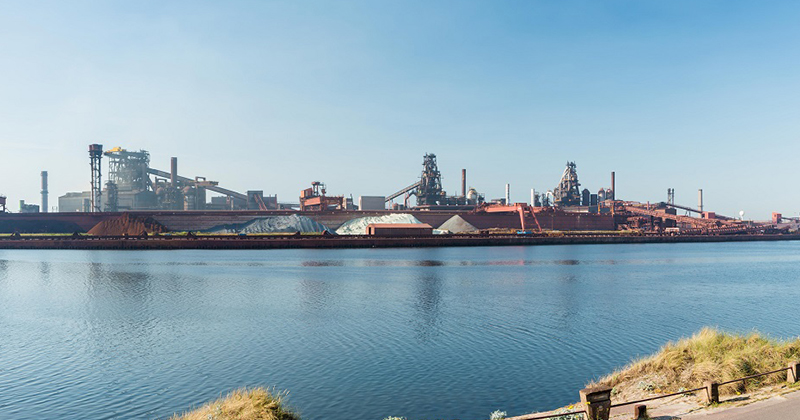
ArcelorMittal has advanced two significant investments at its Dunkirk and Mardyck sites in northern France, a new electric arc furnace at Dunkirk and new electrical steel production line at Mardyck, the company says.
At Dunkirk, ArcelorMittal is building a 2 million tonnes/year EAF and a ladle furnace. Preparatory work has been under way for several months, and €300 million ($336m) has already been spent on preparing the site and securing equipment.
The public consultation held with France’s National Commission for Public Debate (CNDP) has been published, and permit applications have been filed. A further public consultation opened on 15 October, with a first public meeting scheduled for 16 October, the company details in a note obtained by Kallanish.
The EAF will produce steel emitting three times less CO2 than the blast furnace route, at 0.6t of CO2/t of steel. It will run on a mix of scrap, HBI or DRI, and pig iron.
At Mardyck, the first three lines of the new electrical steel unit started operating in March and now employ 200 people. Two more lines, an annealing and pickling line and a reversing mill, are under construction. Equipment installation is nearly complete, and first tests are expected in spring 2027. Once these lines start up, the unit will be fully integrated.
All of ArcelorMittal’s electrical steel in Europe is now produced in France, at Mardyck and Saint-Chély-d’Apcher. Electrical steel is a key material for electric motors and generators.
“In Mardyck, our teams are continuing to ramp up a new strategic production line to support the decarbonisation of our customers. In Dunkirk, the milestones already reached and the work now visible demonstrate the concrete progress of our low-CO₂ steel production project,” notes general director of ArcelorMittal France Bruno Ribo.
The Dunkirk and Mardyck projects represent investments of €1.3 billion and €500 million, respectively. They are ArcelorMittal’s largest in Europe in the past ten years (see Kallanish passim).

French processors caught between mills and weak demand
A tug of war is under way in France between mills and the downstream sector. Long and flat steel processors are caught between weak demand from their customers on one side, and mills pushing for increases on the other, Kallanish hears.
Mills are said to be putting pressure on customers to accept higher prices, particularly for flat products, but the wider picture keeps darkening. Credit insurance is tight for many companies, and processors must cut their own prices or lose sales, several sources say.
Long product prices are mostly stable on-month. For tube and sheet, however, there is a strong push for increases in line with rising coil prices. Service centres are struggling to keep pace with coil increases and are sometimes forced to decrease their prices to hold on to orders. “If these increases do not slow, customers will end up buying lower volumes because they cannot afford the high prices,” a purchasing group source says.
Customers are resisting longs price increases, while tight credit insurance availability also leaves them unable to buy large volumes.
Demand has been weak since the second half of June. July was subdued, August was seasonally dead, and September never really got going after the holidays. October is confirming the downward trend for both longs and flats.
“There is turbulence in France, the economy is seriously slowing and we will see the situation of orders worsening with the upcoming elections. Companies will buy for their immediate needs to await the result of the elections,” another source says.
Long product consumption remains limited as companies try to reduce their exposure. Domestic merchant bar is stable at €300-320/tonne ($335-358/t) base delivered, excluding size extras of around €410/t.
Despite several attempts to raise sections prices in recent months, first category material is holding at €810/t delivered on average, against producers’ asking prices of €830/t. Rebar is also flat on-month at €690-710/t delivered, amid an uncertain market and small order volumes, sources suggest.

Stegra selects three new logistics partners in Europe


7 Steel UK and Heathrow sign memorandum of understanding on steel supply

Worldsteel cuts global steel demand forecast on China slowdown
Worldsteel has lowered its global steel demand growth forecast for 2026 to flat from a previous estimate of 0.3% growth, citing a downturn in China and ongoing conflicts in the Middle East.
The association also decreased its 2027 growth outlook to 1.7% from 2.2%.
In its latest Short Range Outlook, published Oct. 12, worldsteel forecast global steel demand at 1,722 million metric tons in 2026, virtually unchanged from 2025, before rising to 1,752 million mt in 2027.
“The trajectory we set out in April holds, but the anticipated recovery is proving slower and more gradual than we had expected,” said Alfonso Hidalgo De Calcerrada, chairperson of the worldsteel Economics Committee. “Almost the whole of that revision is a China story.
“Outside China, demand grows by 1.5% this year and accelerates to 4% in 2027 — precisely the rate we projected six months ago, and one rarely seen in recent times,” De Calcerrada continued. “The recovery we described in April is therefore not weaker; its momentum is being masked by the scale of China’s structural contraction and compounded by energy-market disruptions stemming from ongoing instability in the Middle East.”
China demand set to contract
Chinese steel demand is now expected to contract by 2% in 2026, a downward revision from April’s forecast, as property investment continues to decline and infrastructure spending remains in negative territory. Manufacturing demand has grown on the back of strong exports, but has not been sufficient to offset weakness elsewhere.
In 2027, the contraction is expected to narrow to 1%, with the real estate downturn forecast to decelerate while manufacturing sustains moderate growth, although trade frictions represent a significant risk.
Outside China, the picture is markedly more positive. India remains the world’s fastest-growing major steel market, with demand forecast to expand by 7.9% in 2026 to 172.4 million mt and by 8% in 2027 to 186.2 million mt, driven by infrastructure-led construction, private real estate, renewables investment, and automotive growth.
The Gulf Cooperation Council presents the starkest regional contrast. After GCC steel demand surged 17.7% in 2025, worldsteel now expects a fall of about 11% in 2026, as the ongoing Middle East conflict has deferred project awards, construction starts and financing decisions. The association forecast an 11.3% rebound in 2027, contingent on the security situation resolving and the Strait of Hormuz reopening. Vietnam is another standout, with double-digit steel demand growth projected in 2026, pushing apparent steel use to about 30 million mt for the first time, supported by record residential and commercial construction activity.
Outside of China and the GCC, steel demand is forecast to grow 1% in 2026 and 2.2% in 2027. EU apparent steel use is expected to decline 0.3% this year before recovering 3.1% in 2027, partly reflecting stock-building ahead of the Carbon Border Adjustment Mechanism taking effect in 2026. US steel demand is projected to grow 2% in 2026, driven by data center investment and energy infrastructure, with about 1.5% growth expected in 2027. Japan and South Korea are both set for modest recoveries, with neither market returning to pre-downturn volumes within the forecast horizon.
Author: Annalisa Villa


Inside CBAM’s first year: what traders, importers and policymakers learned
In this week’s episode of Energy Evolution, host Eklavya Gupte takes stock of the EU’s Carbon Border Adjustment Mechanism nearly a year into its definitive phase, and asks a pointed question: Is it working?
To answer this, he is joined by Alwyn Hopkins, director and sustainability leader for Industrials and Energy at EY UK; Dan Maleski, director at the EY Global Tax Center of Excellence; and Irina Breilean, senior carbon price reporter at Platts, part of S&P Global Energy.
Together, they examine how punishing default emissions values are rewriting the economics of steel, fertilizer and other carbon-intensive imports, how traders are building proxy hedges to manage exposure to volatile EU carbon prices, and why 2027 will mark a decisive shift from compliance accounting to live cash flow pressure.
The episode also looks beyond Europe, tracing how CBAM is accelerating the development of carbon pricing regimes from India to Brazil, and what the UK’s own version of the mechanism, launching in January 2027, means for global trade flows.
Energy Evolution Podcast from S&P Global Commodity Insights
Author: Eklavya Gupte, Irina Breilean

Turkey and EU to cooperate in green transition and CBAM
Turkey and the EU confirmed their willingness to cooperate in the green transformation of their economies during the third Turkey-EU High Level Dialogue on Trade meeting held in Brussels, according to a statement from the Turkish Ministry of Trade Oct. 15.
The statement said that the two regions confirmed their will to act together in new areas of cooperation, such as the circular economy and the carbon border adjustment mechanism (CBAM).
To comply with the EU’s climate change policies, Turkey announced its Emission Trading System (ETS) Aug. 27, which was published in the Official Journal, to expand regulation, monitoring, reporting, and verification processes to align with the EU’s ETS.
“In the context of the Industrial Acceleration Law (Made in EU), which has recently been at the center of our agenda with the EU, our legitimate expectations to protect our integrated supply chains connected by the 30-year Customs Union and to have our country included in this process as an equal partner,” have also been discussed, the Ministry said.
The EU and Turkey underlined the strategic importance of their trade relationship and reaffirmed their shared interest in promoting growth, competitiveness, and resilient value chains, they said in a joint press statement following the meeting.
There were, however, concerns among Turkish steelmakers that the new EU steel safeguard measures introduced in July and the EU’s Industrial Acceleration Law could result in a notable loss of Turkey’s steel and automotive exports to the region.
Noting that the loss in steel product exports to the EU, Turkey’s traditional top export destination, could reach around 4 million mt/year, Turkish Steel Producers’ Association said in a recent statement to Platts, part of S&P Global Energy, that, although the impact had only been partially reflected during January-August, total steel exports to the EU had already declined by 21.7% year over year to 3.2 million mt.
Platts assessed Turkish exported rebar at $615/mt FOB Turkey Oct. 14, unchanged day over day.
Author: Cenk Can