


European CRC and HDG mills hold offers firm despite subdued demand
European CRC and HDG prices have remained largely unchanged over the past two weeks, with mills holding their offers firm on the back of elevated HRC prices. Buyers, however, have stepped up pressure for discounts amid subdued consumption. Import prices have also been broadly stable, but trading has remained slow, with only sporadic deals reported as CBAM-related uncertainty and other trade restrictions continue to weigh on purchasing decisions.
More specifically, in the domestic CRC market, most offers for mills in Italy and northern Europe have been voiced at €850-880/mt ex-works and up to €890-920/mt ex-works across the EU, the same as two weeks ago. However, tradable prices have been estimated at around €850-860/mt ex-works.
In the import segment, offers for CRC have remained rare this week, with indicative prices settling at €730-740/mt CFR, depending on the supplier, mainly the same as two weeks ago. Very few offers have been heard on CFR basis this week, due to AD duty and considering that customers are unwilling to take the risk of purchasing without clarity on CBAM costs. In particular, offers for ex-India CRC have been voiced at around $735/mt CFR, which translates to €727/mt CFR.
Furthermore, offers for import CRC on DDP basis, including CBAM costs, have been estimated at €870-890/mt DDP, with offers mainly coming from South Korea.
In the HDG segment, mills both in Italy and in the north of Europe have been targeting €850-870/mt and up to €880/mt ex-works in some cases, the same as two weeks ago, while domestic tradable prices have settled at €840-850/mt ex-works in both regions.
According to sources, European customers are rumoured to have booked sizable volumes or around 100,000 mt of HDG from Vietnam over the past few weeks, at around $795-800/mt CFR, which translates to €710-715/mt CFR, while offers have been voiced at $810/mt CFR this week. Besides, last week a deal for ex-Vietnam Z100-150 HDG was reported at €920/mt DDP.
$1 = €0.89
Author: SteelOrbis Editorial Team


ArcelorMittal commits €300 million to Dunkirk steel project, targets spring 2027 tests for new line in Mardyck
ArcelorMittal has announced progress on its €1.3 billion low-carbon steelmaking project at Dunkirk and €500 million electrical steel expansion at Mardyck, France, supporting emissions reductions across its operations and customers’ industries.
Dunkirk EAF project secures €300 million in commitments
The Dunkirk investment includes a 2 million mt/year electric arc furnace (EAF) and a ladle metallurgy furnace, with preparatory work underway and €300 million already committed to site preparation and long-lead equipment and supplies.
Using recycled steel, hot-briquetted iron or direct reduced iron, and pig iron, the new production route is expected to emit approximately 0.6 mt of CO₂ per mt of steel, around two-thirds below the blast furnace route. Permit applications have been submitted, with public consultation scheduled to begin on October 15.
Mardyck targets additional line tests in spring 2027
Mardyck’s first three electrical steel lines began operating in March, as previously reported by SteelOrbis, employing 200 people. Equipment installation for an annealing-pickling line and a reversing mill is nearing completion, with initial tests expected in spring 2027.
The additional lines will complete the integrated production chain supplying electrical steels for motors and generators.
Author: SteelOrbis Editorial Team

WV Stahl: Germany’s steel demand to recover through 2027, but industry challenges persist
The German Steel Federation (WV Stahl) has warned that Germany’s steel market remains under pressure despite projections of a recovery in demand, as global steel consumption is expected to return to growth in 2027, according to the latest Short Range Outlook published by the World Steel Association (worldsteel).
According to worldsteel, Germany’s apparent steel consumption is expected to increase from 29.2 million mt in 2025 to 30.3 million mt in 2026, up 3.8 percent year on year, before rising by a further six percent to 32.1 million mt in 2027. However, WV Stahl emphasized that the projected growth reflects a recovery from historically low demand levels rather than a sustained improvement in market conditions. Germany is expected to rank eighth among the world’s largest steel-consuming countries in 2027, compared with sixth place in 2017.
Faster industrial and infrastructure investments needed
Kerstin Maria Rippel, CEO of WV Stahl, stated that the outlook does not signal an end to the challenges facing German industry. She stressed the need to accelerate industrial investments and improve the conditions for domestic production to ensure that the projected recovery develops into a sustainable turnaround.
Rippel highlighted the importance of planned infrastructure investments in supporting steel demand. Although their full impact is expected to emerge gradually, she called for faster implementation of projects and greater preference for products manufactured within the EU to support European industrial production and employment.
International competition and trade diversion remain major concerns
Meanwhile, Rippel warned that international competitive pressure remains high, particularly as declining steel demand in China coincides with rising consumption in other regions. Against this backdrop, she emphasized the importance of protecting the European steel market against trade diversion and unfair competition.
Rippel welcomed the European Commission’s efforts to introduce a new steel trade defense instrument and establish conditions for more competitive electricity prices. However, she stressed that further improvements and national implementation are necessary. According to her, competitive energy costs, effective trade defense measures and preferential treatment for European-made products in public investments will be essential to ensure that the anticipated recovery in steel demand benefits production facilities in Germany.
Author: SteelOrbis Editorial Team
European domestic HRC prices remain steady as sluggish demand limits momentum
Prices in the domestic hot-rolled coil (HRC) market in Europe remained largely unchanged on Thursday October 15 with modest demand limiting momentum.
Market participants agreed that customer stocks remain high with key consuming sectors such as automotive not rendering enough support amid a gloomy economic outlook in the region, whereas hot-rolled sheet prices remain low.
In such conditions HRC prices in Europe are largely moving sideways.
A trading source reported transactions from the market leader taking place in Northwestern Europe at €760 per tonne delivered, which is netting back to €740 per tonne ex-works.
Another buyer source provided an indication of tradeable levels within the range of €740-760 per tonne ex-works, adding that some small-tonnaged deals are coming through at the upper end of the range.
Fastmarkets’ daily steel hot-rolled coil index, domestic, exw Northern Europe, was calculated at €745 ($832.40) per tonne on October 15, down by €1 per tonne from €746 per tonne on October 14.
The index was up by €5 per tonne week on week and up by €6.67 per tonne month on month.
The Italian market was also described as relatively quiet. This was despite limited availability of the material as practically every supplier in the country is facing production issues.
Acciaria d’Italia is soon to stop its blast furnace. Metinvest’s Ferriera Valsider has a significant backlog following the resumption of production in early September after announcing force majeure. And the market leader Arvedi has reportedly one of its hot-rolling lines stopped due to technical issues.
This, however, is not preventing customers from submitting low bids. One of the sellers reported on October 15 that customers placed bids as low as €730-740 per tonne delivered, which is netting back to €710-725 per tonne ex-works. At the same time, offers come at €760 per tonne delivered and above, which is equivalent to €740-745 per tonne ex-works plus.
Nevertheless, many buyers admit that if a customer needs material it will have to pay what mills are asking for due to the reduced availability of the material.
Fastmarkets’ daily steel hot-rolled coil index domestic, exw Italy was calculated at €743.75 per tonne on October 15, down by €1.25 per tonne day on day.
The index was up by €3.75 per tonne week on week and by €7.92 per tonne month on month.
The import market was extremely quiet this week with Turkish and Indian quotas being already significantly exceeded.
Some Indian offers were heard coming within the range of $750-770 (€670-689) per tonne cost and freight (CFR), but sources reported there is no interest in material considering the situation with the quota.
Egyptian HRC was said to be available at $750 per tonne (€670 per tonne) CFR including $25-30 per tonne Carbon Border Adjustment Mechanism (CBAM) allow.

Italian rebar prices hold steady despite weak demand, rising costs; MEGASA eyes Stahlwerk Thüringen acquisition
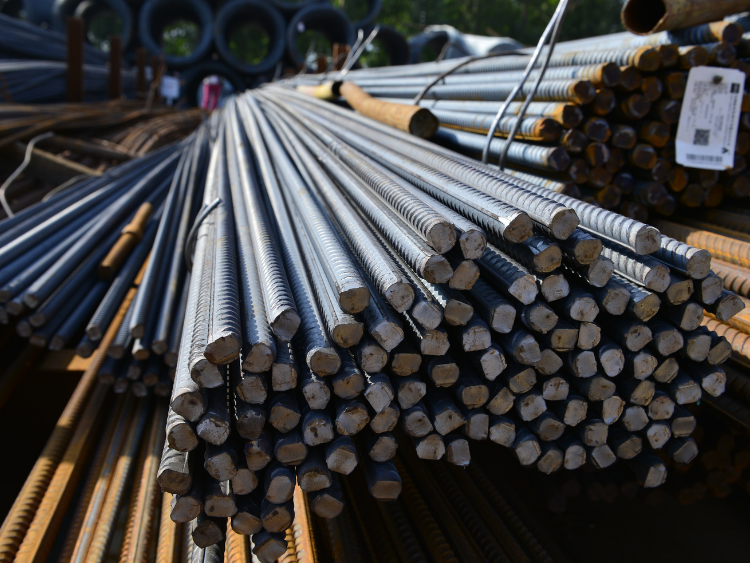
Italian rebar prices remained stable in the week to Wednesday October 14, with weak demand, rising energy and logistics costs pressuring prices, sources told Fastmarkets during the week.
Deals and indications in Northern Italy were reported within €730-760 ($816-849) per tonne ex-works, with one buyer expecting prices to reach €770 per tonne ex-works due to higher energy costs. However, no transactions were confirmed at this level.
“Prices are holding up and they [producers] are threatening new increases,” the same source said, while adding: “Energy costs are rising more and more, and some operators have already told me that current pricing is still insufficient to cover production costs.”
A distributor source said that customers were not willing to buy big quantities at €760 per tonne ex-works in the North yet.
“Demand is so and so, at this price level customers don’t want to buy big quantity, so we are going on day by day, without big orders,” the same source said, with another market source adding that energy and logistics costs remained under pressure.
Meanwhile, in Southern Italy, latest deals and offers were reported in the range of €750-780 per tonne ex-works during the week.
A buyer source said that some very small transactions were possible to achieve for €790 per tonne ex-works, but this level was not widely accepted in the market as workable yet.
A producer in the region said this was the new minimum level for transactions, but there was a lack of details about such orders and a lack of corroboration among other sources about this higher price.
“Gas and electricity are driving up inflation and costs. Prices must be adjusted accordingly,” the same producer said.
As a result, Fastmarkets’ weekly price assessment for steel reinforcing bar (rebar), domestic, exw Italy, was stable week on week at €730-780 per tonne on October 14.
In Spain, a trade source said that rebar prices remained stable at €750 per tonne delivered. “Although, when [the] winter starts, usually a price reduction comes due to less of works, but let’s see,” the same source said.
Fastmarkets’ weekly price assessment for steel reinforcing bar (rebar), domestic, delivered Spain, remained unchanged at €750 per tonne on October 14.
In Northern Europe, latest deals for rebar were heard at €660-680 per tonne delivered during the week, in line with indications in the market, while offers reached €690 per tonne delivered, sources said.
“Italians are keeping prices up in Italy, while selling their unused capacity elsewhere at (much) lower prices,” a buyer source in the region said.
This was reflected in Fastmarkets’ latest weekly price assessment for steel reinforcing bar (rebar), domestic, delivered Northern Europe, which was €660-690 per tonne on October 14, down from €715-720 per tonne the previous week.
Sources indicated workable levels for wire rod in Southern Europe within €670-680 per tonne delivered, unchanged from previous levels.
Fastmarkets’ weekly price assessment for steel wire rod (mesh quality), domestic, delivered Southern Europe, was €670-680 per tonne on Wednesday, stable week on week.
In Northern Europe, wire rod was indicated in the range of €705-715 per tonne delivered, also stable from previous prices heard in the market.
Thus, Fastmarkets’ weekly price assessment for steel wire rod (mesh quality), domestic, delivered Northern Europe, was unchanged week on week at €705-715 per tonne on October 14.
MEGASA targets expansion into German structural steel market
Earlier in the week, on Monday October 12, Brazilian integrated steel producer CSN (Companhia Siderúrgica Nacional) signed a term sheet for the potential sale of Stahlwerk Thüringen to Bipadosa, the holding company of the MEGASA Group, the German steel producer announced in a press release.
Stahlwerk Thüringen is a long steel producer focused on manufacturing structural steel sections, beams and profiles at its site in Unterwellenborn.
The steelmaker has been part of the Brazilian CSN Group since 2012 and has an installed production capacity of 1.1 million tonnes of steel per year, with Europe being its main consumer market, according to company information.
MEGASA (Metalúrgica Galaica) is a Spanish industrial group with many years of experience in the European steel industry. The company focuses on long steel products and operates production sites in Spain, Portugal and France.
Fastmarkets asked Stahlwerk Thüringen and MEGASA about potential changes to operations at the German site, including its product portfolio, capacity and market position, but the companies had not responded by the time of publication.
A Spanish trade source said that they did not expect the potential transaction to have a wider impact on the market.
“Frankly speaking, I do not think so [that there will be wide impact]. Stahlwerk is specialized in profiles and MEGASA only had a small plant for small beams and angles in Zaragoza. So, for them it is a new market,” the same source said on Tuesday October 13.
As part of the sales process, the parties have agreed to an exclusivity period of up to ten weeks, according to Stahlwerk Thüringen’s announcement. During this period, the potential transaction will be reviewed, with any completion subject to customary regulatory approvals, the producer said.
Nia Radenkova in Sofia, Bulgaria, contributed to this article.
British Steel highlights the role of steel production in the UK’s construction sector
Author: SteelRadar Editorial Team


European Commission approves Tenaris’ acquisition of Artrom Steel Tubes
Author: SteelRadar Editorial Team

Nippon Steel Slovakia assesses impact of EU’s new steel measures
EU to review anti-dumping measures on Chinese wire rod
Local HRC prices hold steady in Northern Europe, Italy on limited trading activity
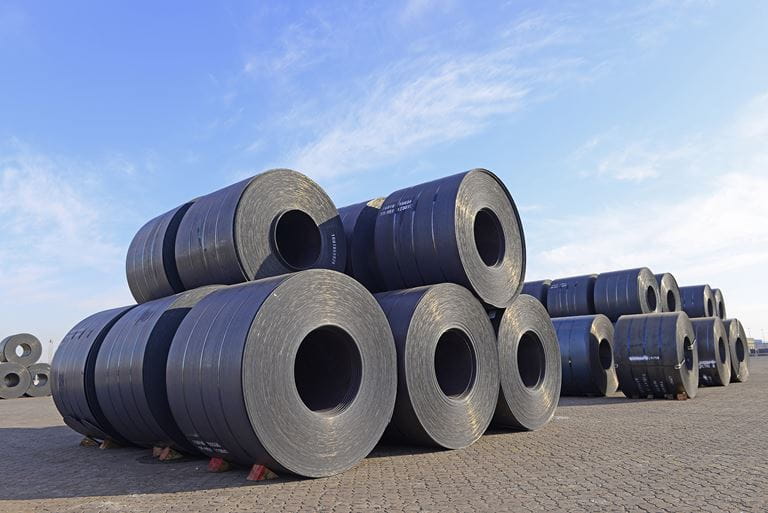
Daily local steel hot-rolled coil (HRC) prices were mostly stable in Northern Europe on Wednesday October 14, with sources quoting weak demand and high stock levels. In the Italian market, requests for orders were increasing despite the limited transactions, market participants told Fastmarkets.
In Northern Europe, sources said weak demand and high stocks were limiting price increases in the market.
A buyer source reported offers within the range of €750-770 ($839-861) per tonne ex-works on Wednesday but said that workable prices should be around €740 per tonne ex-works. The higher offers were discarded from the index calculation due to a lack of buying interest for the upper end of the range.
A second buyer said that tradeable levels varied within €740-750 per tonne ex-works, adding that it was “hard to get anything below €740 per tonne ex-works.” The same source reported offers in the range of €750-760 per tonne ex-works.
A third buyer said tradeable levels were at €760 per tonne ex-works, but this price was discarded due to lower confidence in the participant’s view of the market.
Due to one source accounting for more than 50% of the final input, prices collected on Tuesday October 13 were copied over to Wednesday’s index, in line with Fastmarkets methodology.
On Tuesday, a seller source provided an indication of tradeable level within the range of €740-750 per tonne ex-works. A buyer source reported an indication within €740-760 per tonne ex-works on the same day and a second buyer source indicated prices at €740-750 per tonne ex-works.
Market participants said at the time that they expected some price increases by the end of 2026, linked to restocking and lower import activity because of the safeguard measures.
However, a fourth buyer disagreed with this scenario on Wednesday and said that they were not that optimistic about prices moving up toward the year end.
“Restocking for Q1 [first quarter] has not, and will not, take place to the extent needed to support price increases. I’m rather worried that the EU mills will not find sufficient orders for January-February rolling and therefore will adjust pricing downward to generate interest,” the same source said.
Thus, Fastmarkets’ daily steel hot-rolled coil index domestic, exw Northern Europe was calculated at €746 per tonne on October 14, down by €0.25 per tonne from €746.25 on October 13.
The index was down by €0.88 per tonne week on week but up by €8.50 per tonne month on month.
In Italy, the market was mostly quiet on Wednesday, with sources saying transactions remained limited, but added that the number of requests was increasing day by day.
A buyer indicated workable levels at €750 per tonne ex-works, in line with the latest deals and indications reported within €740-750 per tonne ex-works on Tuesday.
Fastmarkets’ daily steel hot-rolled coil index domestic, exw Italy was calculated at €745 per tonne on October 14, up by €0.31 per tonne from €744.69 per tonne on October 13.
The index was up by €3.75 per tonne week on week and by €8.75 per tonne month on month.