


Worldsteel elects Hadeed’s Almubarak as chairman, welcomes five new members
The World Steel Association (worldsteel) announced the newly elected members of its Executive Board of Directors for the 2026/2027 period on October 13.
The association elected Hadeed CEO Abdulqader Almubarak as its new chairman, while Çolakoğlu Metalurji CEO Uğur Dalbeler, who chaired the association during the previous term, was elected vice-chair. Nippon Steel president and COO Tadashi Imai was elected as the other vice-chair, while EMSTEEL group CEO Saeed Al Remeithi was named Audit Committee chair.
Bangladesh’s Anwar Ispat and China’s Hunan Iron and Steel Group joined as regular members, while UAE-based Metaluck Global Resources and Steel Producers Committee, alongside the Uzbekistan Metallurgy Association, were admitted as affiliated members.


Trading remains muted in European domestic HRC market
Trading remained muted in the European domestic HRC market on Tuesday October 13 with market participants reporting sufficient stocks and little urgency to restock, while prices were largely unchanged.
Fastmarkets’ daily steel hot-rolled coil index, domestic, exw Northern Europe, was calculated at €746.25 ($834.39) on October 13, up by €4.58 per tonne from €741.67 on October 12.
The index was up by €1.25 per tonne week on week and similarly month on month.
A seller source provided an indication of tradeable level within the range of €740-750 per tonne ex-works.
A buyer source reported an indication of tradeable level within the range of €740-760 per tonne ex-works.
A second buyer source provided an indication within the range of €740-750 per tonne ex-works.
Sources said that the market remains largely quiet with limited trading activity. They added that stocks remain high with some service centers in the region still using foreign material booked earlier at lower prices, which is preventing prices from rising as expected.
A seller source even mentioned that stocks are high enough to affect purchasing in 2027. However, market participants’ mood in general was that towards the end of 2026 prices should increase somewhat amid restocking activity and lower import volumes due to the effect of safeguard measures.
The Italian market was also said to be quiet despite limited availability of the material with few deals heard during the day made within the range of €740-750 per tonne ex-works, whereas offers were heard up to €760 per tonne ex-works.
“Stocks are still too high. We will see more demand around December I guess,” one buyer said.
Fastmarkets’ daily steel hot-rolled coil index domestic, exw Italy was calculated at €740 per tonne on October 12, down by €2.50 per tonne from €742.50 per tonne on October 9.
The index was down by €0.31 per tonne week on week but up by €9.69 per tonne month on month.


Norway establishes ship scrapping for reuse in construction
Norway has lined up NOK 244 million ($25m) to support the establishment of a circular value chain in which steel from decommissioned ships is recovered and recertified for use in new buildings, Kallanish hears.
The money will be granted by state-owned development organisation Enova to the partners in the project, metals recycler Nordic Circles and processor company Alsaker Stål, part of Tertnes Holding.
“We know that buildings can be made using steel from ships because this has been tested in a number of pilot projects,” says Astrid Lilliestråle, director of technology and market development at Enova. “We are now supporting efforts to explore how new technology can make this commercially viable.”
Every year, 10 million tonnes of steel from European ships are scrapped, mainly in Asia, Enova notes. If successful, the new project could represent a significant industrial opportunity for Norway and Europe, the organisation says.
Enova estimates that recovering steel from decommissioned European ships could reduce emissions from European steel production by up to 17mt of CO₂ annually, provided that all the steel is used in new buildings.
“I am pleased that we can now use steel from old ships in new buildings. This could create new jobs in Norway and provide Europe’s steel industry with a local and reliable supply of steel,” says Norway’s Minister of Climate and Environment, Sigrun Aasland.


CSN sells Stahlwerk Thüringen to Spain’s Megasa
Brazil’s Companhia Siderúrgica Nacional (CSN) has agreed to sell its German subsidiary, Stahlwerk Thüringen (SWT), to Spain’s Megasa Group.
The companies have signed a non-binding agreement setting key terms and conditions for the sale of a 100% share in SWT. The transaction will be carried out through CSN Steel, the Spanish company that controls CSN’s European assets in Europe, and Megasa subsidiary Bipadosa, Kallanish learns from the Brazilian steelmaker.
The agreement provides for an exclusivity period of up to ten weeks. The deal is valued at €550 million ($616.2m).
SWT is a long steel manufacturer. Its plant in Unterwellenborn has an installed production capacity of 1.1 million tonnes/year of steel. The company became part of CSN in 2012.
The Brazilian company is currently executing a divestment programme aimed at lowering indebtedness and optimising its assets in line with strategic financial objectives.

Sections prices remain stable in northwestern Europe
Northwestern European sections mills and distributors are both seeking to keep current price levels firm towards year-end.
The prices for sections category 1, as seen from mills and buyers, are in the range of €830-850/tonne ($928-950/t). Mills are striving for €850/t, but deals are often struck at around €830/t, both sides confirm. Prices are also expected to remain firm in the coming weeks. Sources note that low offers from Spain in summer have prevented domestic mills from being able to increase prices too sharply.
Currently, distributors, too, feel that they can largely maintain their sale prices, which is unusual in the fourth quarter when they try to deplete their inventories for the end of the year. “In our group, we are clearly advised to bring the inventories down to one third by the end of December,” one source tells Kallanish. This year, however, distributors are not selling out at bargain offers, as they have kept their inventories low for quite a while, in an environment of modest demand.
This is followed by a period of replenishment at the beginning of the year. Mills might still accept orders for delivery this year for another three to four weeks. Pretty soon, the run for delivery in the first quarter of 2027 will kick off, one manager remarks. This is why mills can keep their prices stable for little while, even if demand does not recover on a large scale, he says.

European local HRC prices mixed as weak demand persists; worldsteel cuts 2026 EU outlook
Local steel hot-rolled coil (HRC) prices in Northern Europe were largely stable on Monday October 12, with sources reporting limited demand and sufficient stock in the market, while Italian prices declined slightly, with buyers reluctant to order larger volumes, market participants told Fastmarkets.
In Northern Europe, sources said demand was still missing, while stockholders and fabricators were well filled.
Trading in the region has been slow, with latest deals reported at €740-750 ($829-840) per tonne ex-works for 2,000-3,000-tonne orders on Friday October 9.
On Monday, sources reported indications of workable market levels in a wider range of €730-760 per tonne ex-works, quoting €740 per tonne ex-works as current prices in Northwest Europe.
A trade source said that some northern mills have reported “closing or nearly exhausting their fourth quarter bookings,” but this was not independently confirmed by suppliers in the region.
A producer said that mills were waiting to see how much buyers were willing to pay, with demand remaining the key factor.
Thus, Fastmarkets’ daily steel hot-rolled coil index domestic, exw Northern Europe was calculated at €741.67 per tonne on October 12, unchanged from Friday October 9.
The index was down by €0.21 per tonne week on week and by €3.33 per tonne month on month.
Meanwhile, ArcelorMittal has restarted its blast furnace No. 5A at Eisenhüttenstadt on October 6 after halting operations on September 25, the producer told Fastmarkets on Monday.
“There was a process-related disruption at the blast furnace, which has now been resolved, and normal operations have been resumed,” the steelmaker said, without providing further details about the reason for the stoppage and the impacted production volume.
The mill produces slabs, hot-rolled, cold-rolled and hot-dipped galvanized products, according to company information.
In Italy, the tight HRC supply was limiting room for negotiations, sources said, adding that demand remained limited.
Latest indications of workable levels came within €730-750 per tonne ex-works on Monday, reported by two buyer sources.
A third buyer said that mills were not receiving enough orders to secure sufficient coverage for longer-term business. “Demand remains rather weak, and buyers still seem reluctant to commit to larger volumes or longer delivery periods,” the same source told Fastmarkets.
Meanwhile, market participants said that they were not hearing any recent price negotiations with the former Ilva steelworks in the spot market anymore, after the producer was ordered to suspend hot-end operations by October 28.
At the same time, Metinvest’s Ferriera Valsider mill in Italy had been offering minor December allocation in the HRC domestic market after declaring a force majeure in late August due to engine issues, according to a company source.
This has left buyers dependent on Arvedi as the country’s sole active domestic producer, sources said.
Fastmarkets’ daily steel hot-rolled coil index domestic, exw Italy was calculated at €740 per tonne on October 12, down by €2.50 per tonne from €742.50 per tonne on October 9.
The index was down by €5 per tonne week on week but up by €5 per tonne month on month.
On the wider picture, the World Steel Association (worldsteel) expects EU steel demand to decline by 0.3% in 2026 to 146.3 million tonnes from 146.7 million tonnes in 2025 before recovering by 3.1% in 2027 to 150.8 million tonnes, revising down its 2026 forecast by 1.5% in its Short Range Outlook, published on October 12.
According to worldsteel, stronger-than-expected demand in 2025 was partly driven by stock-building ahead of the introduction of the Carbon Border Adjustment Mechanism (CBAM) in 2026, while underlying market conditions have remained weak due to a slower-than-expected recovery in construction and continued weakness in the automotive sector.
However, the association expects steel demand to improve from 2027, supported by infrastructure and defense spending, rising household incomes, and investment in energy and rail projects.

Polish long steel prices edge higher amid production cost pressures
Polish long steel prices moved higher in the week to Friday October 9, amid increasing production costs. Producers were targeting higher levels due to rising oil and energy costs; however, their efforts were constrained by slow demand.
“Demand is indeed weak and is not driving prices up; if anything, it is exerting downward pressure,” a distributor source told Fastmarkets.
Deals for drawing-quality wire rod were reported at 2,950 zloty ($754) per tonne for larger tonnages and 3,000-3,150 zloty per tonne for smaller volumes. Workable levels were heard at 3,000-3,150 zloty per tonne.
As a result, Fastmarkets’ weekly price assessment for steel wire rod (drawing quality), domestic, delivered Poland narrowed upward to 2,950-3,150 zloty per tonne, from 2,900-3,150 zloty per tonne the previous week.
The domestic rebar market also showed signs of strengthening. Deals and offers for domestic rebar were heard at 2,750-2,780 zloty per tonne CPT.
Fastmarkets’ weekly price assessment for steel reinforcing bar (rebar), domestic, CPT Poland rose to 2,750-2,780 zloty per tonne, from 2,700-2,750 zloty per tonne the previous week.

Assofermet Acciai: Italy’s steel sales down by up to 20% as low demand clouds Q4 outlook
The Italian steel market continues to show signs of weakness, despite the recovery in prices recorded in some segments. According to the market report issued by Assofermet Acciai on October 9, sales by carbon flat steel service centers are down by an average of 15 percent, with declines exceeding 20 percent in some cases. The outlook for the final quarter of 2026 remains uncertain, while market participants are expressing concerns about the impact of European trade and environmental policies on the competitiveness of the steel supply chain.
Carbon flat steel – September recovery quickly loses momentum
Following a rebound in activity in early September, characterized by relatively lively trading and stronger demand, the carbon flat steel market began showing signs of weakness again after the first ten days of the month, disappointing expectations of a possible turnaround in the final part of the year. The first week of October confirmed the negative trend and, according to Assofermet, there are currently no indications of a significant improvement during the remainder of the month. Concerns also extend to the entire fourth quarter, against a backdrop of persistently weak demand, international conflicts and complex economic and trade relations with the United States.
The association also draws attention to the consequences of the European Union’s environmental and protectionist policies. “The measures currently in place have a particularly significant impact on raw materials and basic steel products, without equivalent forms of protection being applied with the same effectiveness to semi-finished products and, above all, finished goods imported into the European Union,” the report states, adding, “This creates a clear risk of a loss of competitiveness for the entire European processing and distribution supply chain.”
Stainless steel – Volumes decline amid structurally weak demand
The stainless flat steel service center segment also recorded a negative September, with volumes significantly below those registered in the same month of 2025. Forecasts for October point to a further slowdown in activity.
According to Assofermet, the trend in actual demand is particularly concerning, as the contraction appears to be not only cyclical but also structural. Producers’ lead times remain very short, indicating limited order books despite restrictions on imports.
The sharp increase in energy costs is also weighing on the sector. Although inventories are lower than at the beginning of the year, they remain at average levels and do not indicate any particular supply-side pressure.
Stockholding and distribution – Prices recover, but volumes continue to decline
For the stockholder segment, Assofermet describes a situation in which prices and demand “continue to move independently”: producers are seeking to consolidate price increases, but demand remains insufficient to fully absorb them.
In the long steel segment, volumes are down compared to September 2025, while prices have gradually improved thanks to the cumulative increases recorded during the July-September quarter.
In the flat steel segment, sales value has also proved more resilient than volumes. Hot rolled coil (HRC) prices have consolidated above the levels reached during the summer, and autumn price increases are beginning to take shape, although they have not been accompanied by a convincing recovery in demand. Cold rolled coil (CRC) prices are following the HRC trend with the usual time lag.
The situation is more challenging in the hollow sections segment, where both sales volumes and value are declining.
In the stainless steel segment, meanwhile, tubular products are recording a sharp decline in both volumes and value, long products are showing a positive trend on both fronts, and flat products are benefiting from the return of alloy surcharges, with a recovery for 316 grade.
Outlook – Caution in the fourth quarter amid new EU requirements
The fourth quarter of 2026 has therefore begun with mixed signals. On the one hand, producers are seeking to consolidate autumn price increases; on the other, demand remains too weak to support a sustained market recovery.
An additional source of uncertainty is the mandatory melt and pour documentation requirement for imported products, which came into force on October 1. According to Assofermet, the new requirement imposes additional administrative burdens on market participants and could contribute to changes in sourcing patterns over the medium term.
Against this backdrop, the association emphasizes the need for a cautious approach while awaiting more concrete signs of a recovery in demand and greater clarity regarding the evolution of the European trade and regulatory framework.

European heavy plate round-up
Italian heavy plate prices increased in the week to 9 October, supported by restocking activity and rising slab costs.
Deals for s235jr/s275jr heavy plate in Italy have been reported at EUR745-755/t ex-works for bigger lots of material for fourth-quarter delivery. Some transactions for smaller volumes for delivery next year have already reached EUR770-780/t ex-works.
Restocking by distributors supported the price recovery. Re-rollers, traditionally reliant on imported slab, also face mounting costs due to exchange-rate fluctuations, energy costs and transportation costs.
Market participants reported that the lowest prices achievable for Asian slabs were $590/t CIF Italy.
In addition, slab imports that are customs-cleared in the first quarter of 2027 will be affected by the evolution of the CBAM framework, which will require importers to hold certificates covering at least 50% of their rolling emissions liability before the end of each quarter. As exporter emissions verification is inherently retroactive, CBAM rules demand that this rolling liability be assessed using either default values or values equivalent to those underlying the certificates surrendered in the prior year, where origin and CN codes match. As European re-rollers are not able to surrender any CBAM certificates until declarations are due in September 2027, this 50% requirement would fundamentally have to be assessed using higher default values.
While importers would be able to recover the cost of excess CBAM certificates purchased against default values if more competitive actual emissions values were successfully verified, the working capital burden would still be significant. As an example, the per-tonne default value cost of a 2027 Chinese slab import could reach EUR200/t at current EU carbon prices of around EUR80/t.
German steelmakers, in the meantime, continued to focus on long-term contracts and projects, limiting their presence in the spot market. Offers for s235jr-grade material were reported at EUR850-890/t ex-works Germany.
A Northwest European re-roller settled deals for s355jr plate within the region at EUR860/t delivered, compared with offers from competitors at EUR880-890/t delivered.
| Weekly European heavy plate, slab and green steel | |||||
| Unit | Term | 09-Oct-26 | Change | ||
| Weekly heavy plate | |||||
| Northwest Europe ex-works heavy plate | EUR/t | EX-WORKS | 860.00 | 0.00 | |
| Germany delivered heavy plate (Northwest Europe) | EUR/t | DEL | 860.00 | -20.00 | |
| Italy ex-works heavy plate | EUR/t | EX-WORKS | 750.00 | 5.00 | |
| Weekly steel slab | |||||
| Italy CFR slab | $/t | CFR | 590.00 | 5.00 | |
| Weekly green steel | |||||
| Green heavy plate premium (scopes 1-3 CO2 under 1t) | EUR/t | 25.00 | 0.00 | ||
| Source: McCloskey by OPIS. | © 2026 Dow Jones Energy Limited. | ||||
Author: Benjamin Steven

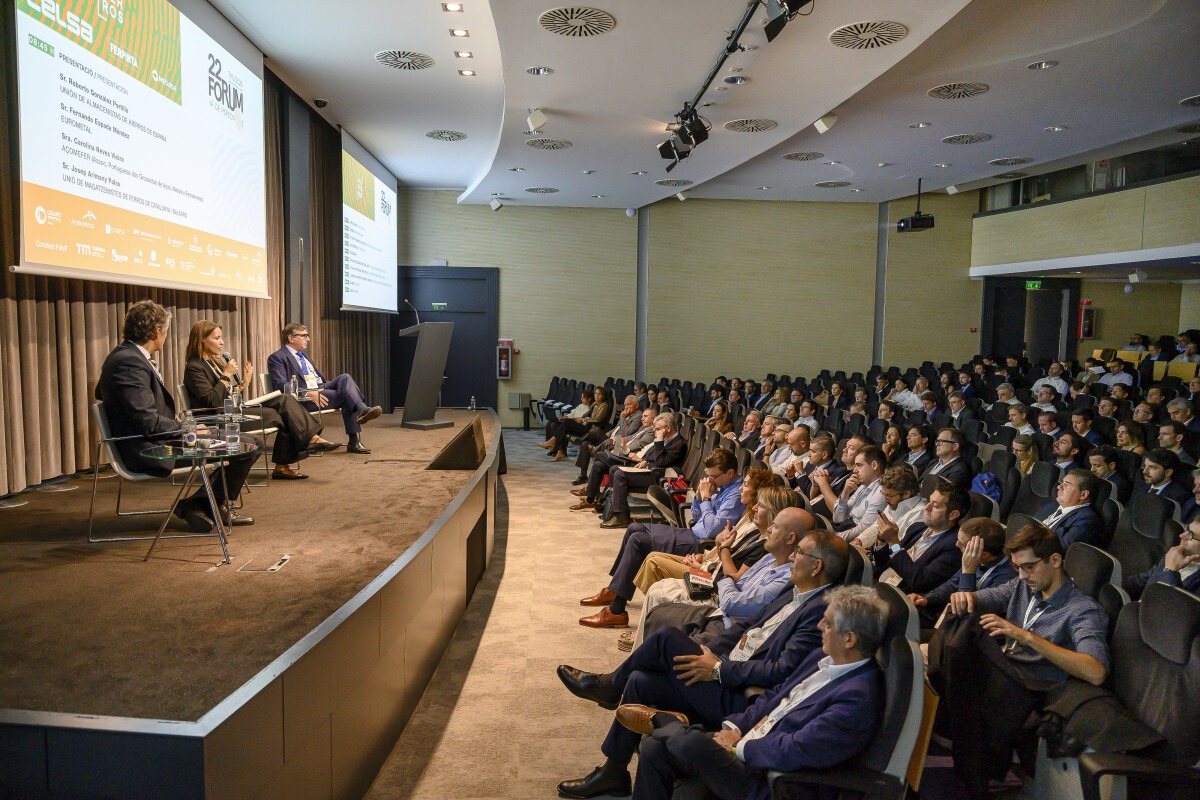
EUROMETAL participates in the 22nd steel distributors forum in Catalonia
EUROMETAL participated as a collaborating organisation in the 22nd Forum of the Unió de Magatzemistes de Ferros de Catalunya i Balears, held on 6–7 October 2026 under the theme “Va de Persones” (It’s about people).
EUROMETAL was represented by Fernando Espada, Vice-President of EUROMETAL, reinforcing the federation’s commitment to cooperation with national and regional steel distribution associations and to strengthening dialogue across the European steel value chain.
Organised by the Unió de Magatzemistes de Ferros de Catalunya i Balears, the annual forum brought together over 200 representatives of the steel distribution industry, steel producers, business leaders and sector experts to discuss the economic, geopolitical and industrial developments shaping the market.
The 2026 edition placed people at the centre of its discussions, highlighting the importance of leadership, innovation and human capital in an increasingly challenging business environment.
At a time when the European steel value chain faces significant structural and market challenges, opportunities for dialogue and cooperation remain essential to reinforcing the competitiveness and resilience of the sector.
More information: magferros.com