


Bulgarian longs prices soften amid weak demand as discounts fade
The resistance seen in Bulgaria’s longs market earlier in August has finally started to break, with domestic quotations moving lower this week as the prolonged lack of demand leaves sellers with increasingly little room to defend previous levels. The seasonal slowdown, persistent liquidity constraints and sufficient inventories continue to restrict purchasing, while discounts that had previously been available mainly during negotiations are now being reflected more clearly in official quotations. With business still scarce, sellers have started to adjust prices in an effort to stimulate buying ahead of September.
Rebar quotations have accordingly declined to around €620-630/mt CPT, compared to €630-640/mt CPT last week. For serious buyers and larger-volume inquiries, however, levels close to €610/mt CPT are understood to be achievable. Wire rod has followed the same direction, with offers falling to approximately €660-670/mt CPT from €670-680/mt CPT previously, while around €650/mt CPT may be possible in negotiations.
Import demand remains very limited, as local consumption is weak, stocks are sufficient and many buyers are still in vacation mode. Nevertheless, following the recent increase in Turkish prices, some buying interest has been heard elsewhere in the Balkans, particularly in Romania, and similar activity may emerge in Bulgaria in the coming days. Turkish rebar offers have risen to around $575-590/mt FOB, compared to $570-580/mt FOB last week. With freight to Bulgaria estimated at around $25/mt, this corresponds to approximately €520-535/mt CFR Bulgaria, versus about €515-525/mt CFR previously. Egyptian rebar is meanwhile offered at around $580-590/mt FOB, resulting in an indicative level of approximately €530-540/mt CFR Bulgaria with freight of around $30/mt, compared to roughly €530-535/mt CFR last week. Egyptian wire rod offers have increased to $600-610/mt FOB from $590-600/mt FOB, bringing the corresponding delivered level to around €545-555/mt CFR Bulgaria, versus approximately €540-550/mt CFR previously. No notable European offers have been heard this week, as the regional holiday period continues, while fresh quotations are expected to return from the beginning of September.


European local steel heavy plate markets largely quiet amid summer slowdown; higher offers emerge in Italy
Domestic prices for steel heavy plate remained stable in Northern Europe in the week to August 20 and edged up slightly in Italy, but the market was still in summer mood with muted trading activity, sources told Fastmarkets on Thursday.
Southern Europe
In Italy, S235-grade plate was mainly indicated at €690-700 ($802-814) per tonne ex-works, unchanged from the latest deals reported by mills on August 6.
A trade source said the most recent transactions were heard at €690-710 per tonne ex-works for September delivery, with one re-roller expecting prices to rise to around €720 per tonne ex-works after the summer holidays.
Higher plate offers were heard in the market at €730-740 per tonne ex-works for 800-1,000-tonne orders linked to September or early October production, sources said, but no deals were reported at these levels, as many participants were still away.
“No doubt that mills’ sales managers are trying to increase offer prices,” a second trade source said on Thursday, adding that sales managers were gradually coming back to customers with firm order proposals, so it was expected that higher offers would emerge in the market.
However, trading had not yet resumed across the region due to the traditional August slowdown, with expectations for activity to pick up in early September.
A major re-roller in northern Italy was reported to have a technical problem that “will lead to a longer stoppage of the mill,” a third trade source said.
Fastmarkets contacted the producer for official comment but had not received a response by the time of publication. Other sources could not provide comments about the expected wider market impact, but confirmed the news.
The same mill experienced technical issues that led to an unplanned stoppage in late March, with maintenance extended through May-June, a source at the producer said at the time.
Fastmarkets’ weekly price assessment for steel domestic plate 8-40mm, exw Southern Europe was €690-710 per tonne on Thursday, widening upward by €10 per tonne from €690-700 per tonne a week earlier.
Plate import offers were heard at €750 per tonne CFR from India to Spain, but no transactions were concluded.
As a result, Fastmarkets’ weekly price assessment for steel plate (8-40mm), import, cfr main port Southern Europe, was €710-750 per tonne on Thursday, unchanged week on week.
Northern Europe
Very limited domestic plate activity was heard in Northern Europe, as the market was slow and some sources could not indicate current workable levels.
One supplier indicated prices in Germany at €850 per tonne ex-works, a trade source said, while offers were reported at €850-880 per tonne ex-works, unchanged from a week ago, but for deliveries with longer lead times.
Two of Germany’s three major plate producers were reportedly booked until the end of the year with project-related orders, according to market participants.
However, they were still expected to have capacity available for regular customers, a second trade source said, noting that many buyers commit to fixed quarterly tonnages and therefore expect mills to reserve volumes for them.
The same source said that stockholders were increasing inventories due to improving consumption and were also attempting to raise prices, although trading in commodity-grade plate remained limited.
Therefore, Fastmarkets’ weekly price assessment for steel domestic plate 8-40mm, exw Northern Europe was €820-850 per tonne on Thursday, stable week on week.
Plate import offers from India were also reported to Denmark at €750 per tonne CFR but no major activity was heard during the week.
The corresponding Fastmarkets’ weekly price assessment for steel plate (8-40mm), import, cfr main port Northern Europe, was €700-750 per tonne on Thursday, unchanged week on week.

European long steel market quiet as summer holidays curb trading activity
European domestic long steel prices remained stable in the week to Wednesday August 19 amid thin liquidity, seasonal mill closures and subdued demand.
“Market is on holiday at the moment,” a seller source told Fastmarkets.
Market participants said activity remained limited during the assessment week, with ongoing production stoppages across Europe restricting both buying and selling activity.
No new transactions were heard during the assessment week.
In Italy, tradable levels for rebar were heard at €690-730 ($799-845) per tonne ex-works.
Fastmarkets’ weekly price assessment for steel reinforcing bar (rebar), domestic, exw Italy, remained unchanged at €690-730 per tonne on Wednesday August 19.
Fastmarkets’ weekly price assessment for steel reinforcing bar (rebar), domestic, delivered Spain, was unchanged at €750 per tonne on the same day.
Tradable levels for rebar in Northern Europe were heard at €710-730 per tonne delivered.
Meanwhile, Fastmarkets’ weekly price assessment for steel reinforcing bar (rebar), domestic, delivered Northern Europe, was unchanged at €710-730 per tonne on August 19.
Wire rod prices followed a similar trend, with weak demand and limited trading activity supporting stable prices during the assessment week.
In Southern Europe, tradable levels for mesh-quality wire rod were heard at €660-680 per tonne delivered.
Fastmarkets’ weekly price assessment for steel wire rod (mesh quality), domestic, delivered Southern Europe, was unchanged at €660-680 per tonne on August 19.
In Northern Europe, tradable levels for mesh-quality wire rod were heard at €705-715 per tonne delivered.
Fastmarkets’ weekly price assessment for steel wire rod (mesh quality), domestic, delivered Northern Europe, was unchanged at €705-715 per tonne on the same day.

Italy’s Ferriera Valsider declares force majeure at north Italian steel plant
Italian steel reroller Ferriera Valsider declared force majeure at its plant located in Vallese di Oppeano on Aug. 17, owner Metinvest confirmed to Platts, part of S&P Global Energy.
“Ferriera Valsider has experienced a force majeure event that has resulted in the suspension of production,” Metinvest said in a statement shared via email. “The company has informed its customers, suppliers and other relevant stakeholders accordingly.”
Metinvest said technical teams are working to “define and implement the shortest possible action plan for the necessary repairs,” with the aim of restoring production as soon as possible, it added.
However, Metinvest said that assessment of the incident is still underway and that it cannot yet provide a timeframe for the restart of operations.
In a letter dated August 2026, sent to its buyers and seen by Platts, Ferriera Valsider said the event had triggered clause 8, the force majeure provision in its general terms and conditions of sale governing customer contracts. The letter described the incident as an “extraordinary, sudden and unforeseeable breakdown” that was beyond the company’s reasonable control.
The incident resulted in the “immediate and complete shutdown” of Ferriera Valsider’s production lines, according to the letter.
“At this time, we are unable to determine the duration of the force majeure event, which is expected to be significant,” the company said in the letter.
Ferriera Valsider said it had taken “all necessary and appropriate actions to manage the emergency,” and told customers it would provide an update on the situation by the end of August.
The company also said sales representatives would contact buyers individually to discuss current orders.
Ferriera Valsider did not disclose the nature of the issue, the equipment affected or the expected volume impact.
Ferriera Valsider is based in Vallese di Oppeano, in the province of Verona, northern Italy, and operates as one of Metinvest’s European steel rerolling facilities, producing steel plate and hot-rolled coil. The company supplies steel plate for shipbuilding, energy, construction and infrastructure applications in the EU, according to Metinvest’s Ferriera Valsider website.
Along with Metinvest Trametal in San Giorgio di Nogaro, Ferriera Valsider is part of Metinvest’s Italian plate rerolling platform, with the two units having about 1.2 million metric tons/year of flat-product capacity across plate and hot-rolled coil, according to the company’s website.
Platts assessed heavy plate in Italy at €710/mt ex-works on Aug. 14, stable week over week but down €60 from the 2026 high in April. Platts assessed imported slab in Italy at $550/mt CIF on Aug. 14, unchanged week over week and down $50/mt from the 2026 high in June.

Salzgitter reshuffles HKM management after acquisition
Salzgitter is appointing a new management team for its Duisburg slab mill after the acquisition of Hüttenwerke Krupp Mannesmann (HKM).
As part of the reorganisation, Andreas Betzler has assumed the role of chief financial officer and spokesperson for the management board, Kallanish learns.
As head of post-merger integration, La-Toya Müller will support and drive the organisational and cultural integration of HKM into the Salzgitter group.
Heiko von Hagen has been appointed as the new managing director of production. He was most recently responsible for the allocation of HKM slabs within the group and draws on extensive experience from his collaboration between HKM and Salzgitter.
Martin Zappe, programme director of decarbonisation campaign SALCOS, will shape the next crucial steps in the construction of Germany’s largest electric arc furnace in Duisburg, Salzgitter says,
At the same time, Peter Biele, who has served as HKM’s chief technology officer, will be leaving the company. “Peter Biele led HKM with great dedication and a high level of professional expertise during challenging times, providing important impetus for the company’s further development,” says Salzgitter ceo Gunnar Groebler.
Carsten Laakmann, will remain as managing director of human resources, with the executive team alongside Andreas Betzler, Heiko von Hagen, and Martin Zappe.


Local European HRC prices edge up slightly in slow market; import levels into Southern Europe narrow downward
Domestic prices for steel hot-rolled coil edged up on August 19 in both Northern Europe and Italy, but market activity was still mostly slow in the region due to the summer holiday period, sources told Fastmarkets on Wednesday.
In Northern Europe, latest transactions were reported within the range of €710-730 ($822-845) per tonne ex-works, but a buyer said “these levels were unlikely to be repeated,” while indications were heard at the same range.
Offers were heard at €730 per tonne ex-works in Germany. Higher levels from mills were reported at €760-790 per tonne ex-works, but the first buyer said that “the new offer levels have yet to be tested, as many buyers are either away for the summer holidays or maintaining a wait-and-see approach.”
Fastmarkets’ daily steel hot-rolled coil index domestic, exw Northern Europe was calculated at €723.33 per tonne on August 19, up by €0.83 per tonne from €722.50 per tonne on August 18.
The index was up by €6.33 per tonne week on week and up by €13.33 per tonne month on month.
In Italy, the market was still mostly quiet because of the traditional slowdown in trading activity during August.
An offer was reported at €715 per tonne ex-works on Wednesday, while an indication was heard at €700-720 per tonne ex-works.
Fastmarkets’ daily steel hot-rolled coil index domestic, exw Italy was calculated at €712.50 per tonne on August 19, up by €1.25 per tonne day on day from €711.25 per tonne on August 18.
The index was down by €1.25 per tonne week on week but up by €7.50 per tonne month on month.
Meanwhile, latest HRC import activity included offers from Turkey at €575 per tonne CFR with added anti-dumping duties of €35 per tonne, and some Italian buyers were keen to pay this price, according to sources.
Offers from Indonesia were reported at $620-625 per tonne CFR, but in order to accelerate delivery time, extra freight costs of $30 per tonne were applied, so the final price was around $650-655 per tonne CFR.
However, there was no buying interest for material with this origin because of higher costs under the Carbon Border Adjustment Mechanism (CBAM).
And offers from India were within the same range as Indonesia, at $650 per tonne CFR, or around €560 per tonne CFR, sources told Fastmarkets on Wednesday, but no bookings were done.
Fastmarkets’ weekly price assessment for steel hot rolled coil import, cfr main port Southern Europe was at €560-575 per tonne on August 19, narrowing downward from €565-600 per tonne a week earlier.
–Vlada Novokreschenova in Dnipro contributed to this article.

EC relaxes funding conditions for thyssenkrupp’s transition
The European Commission has eased the conditions for the public funding of the technical transition undertaken by thyssenkrupp Steel to convert its oxygen mills into hydrogen-fuelled DRI plants.
“The EU has approved the legal grounds for the newly adjusted logic of subsidisation of our direction reduction plant,” tk Steel confirms to Kallanish in a statement.
It is believed that the Commission’s concession is linked to the postponement of hydrogen usage in the converted process.
According to EUToday, the original public-funding conditions assumed that sufficient renewable hydrogen would be available at an affordable price. That assumption has not been met on the expected timetable, and it is more likely that the converted mill will have to run on natural gas during an extended transition period.
The Commission has allowed the project to proceed under altered assumptions.
The project in its entirety has an investment budget of €3 billion ($ 3.5 billion), of which two thirds will be publicly funded.
Following the Commission’s nod, the German government must now adjust the formal funding decisions, tk Steel says in its statement.
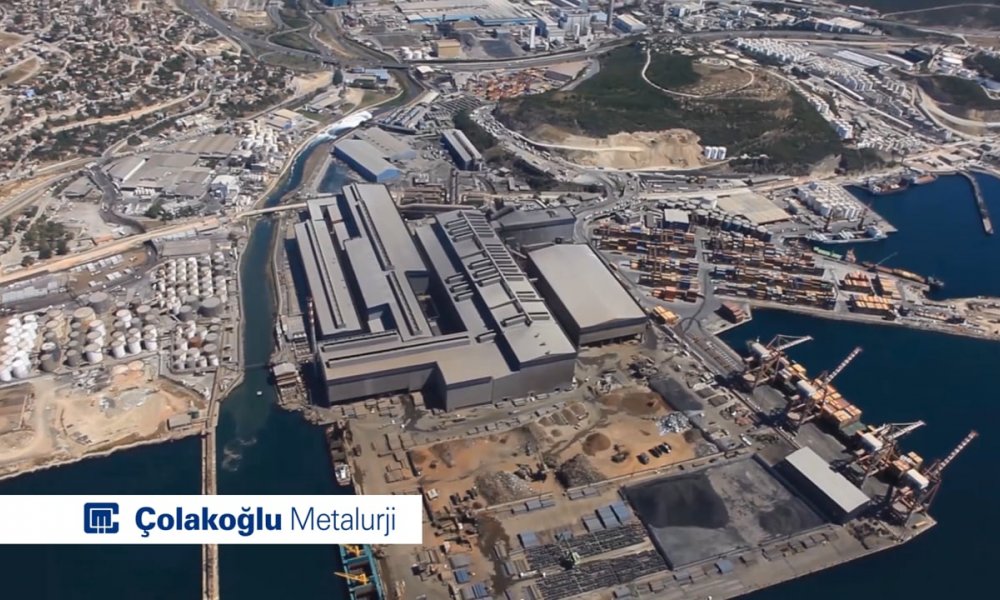
Çolakoğlu Metalurji: EU quota decision will impose greatest cost on its own steel consumers
We spoke with Gökhan Erdem, sales and marketing director at Çolakoğlu Metalurji, about the potential impact of the EU’s new steel import quotas on Turkey’s exports and European steel consumers.
As is known, the EU has revised its steel import regime, reducing the steel import quota allocated to Türkiye in the HRC 1A category by 60 percent. Ultimately, the greatest cost and risk arising from this measure will be borne by steel consumers within the EU. European consumers will have to assess the additional costs they will need to bear in order to continue their operations in the future and assume increasing risks to maintain their activities under these conditions.
As domestic steel prices in the EU continue to rise, the resulting cost burden on steel consumers may also lead to uneven cost impacts among EU member states depending on their respective steel production capacities. Turkey’s steel exports to the EU will continue, albeit at lower levels, but the majority of the additional costs will ultimately be borne by steel consumers based in the EU.
Another factor is that, as the impact of CBAM becomes increasingly pronounced over time, the advantages offered by Turkish production in terms of carbon footprint, geographical proximity, quality, clean steel and reliable imports will create additional pressure on EU steel consumers.
Following these developments, the Turkish steel industry has the ability to adapt in steel export markets thanks to its experience with such measures and its capacity to respond rapidly and flexibly under changing conditions. As the impact of the new measures becomes increasingly apparent over time, higher costs in the EU will continue to put pressure on EU labor markets. In addition, more significant structural shifts, such as EU-based steel consumers relocating their operations outside the region, could also be among the potential consequences of this process.

EC publishes sector-specific CBAM guidance for iron and steel to help non-EU operators
The European Commission (EC) has published its sector-specific guidance for iron and steel under the Carbon Border Adjustment Mechanism (CBAM) to help non-EU operators, providing detailed rules on calculating and monitoring embedded emissions during the definitive period beginning in 2026.
According to the guidance, iron and steel imports are divided into six main aggregated goods categories: sintered ore, ferro-alloys, pig iron, direct reduced iron (DRI), crude steel and iron or steel products. The latter category covers a wide range of products, including flat steel, bars, rods, wire, sections, tubes, pipes, structural products, tanks, containers and fasteners.
Direct emissions generally apply to steel products
For iron and steel products, only direct emissions are generally included in embedded emissions during the definitive period. The main exception is sintered ore classified under CN 2601 12 00, for which electricity-related indirect emissions must also be calculated. When sintered ore is subsequently used as a precursor for another steel product, these indirect emissions are carried forward into the embedded emissions of the downstream product.
The Commission also clarified that complex steel goods must incorporate emissions embedded in their relevant precursors, including sintered ore, pig iron, DRI, ferro-alloys and crude steel. Post-consumer scrap is assigned zero embedded emissions, as are relevant precursors produced in the EU or CBAM-exempt countries and territories.
EAF electricity emissions excluded from crude steel calculations
For electric arc furnace-based steelmaking, electricity-related emissions are not included in the definitive-period embedded emissions of crude steel despite electricity being the route’s principal energy input. However, direct emissions arising from fuels, electrodes, carbon-containing materials and other relevant sources must be calculated.
According to the guidance, operators are allowed to combine several production stages into a single production process, or “bubble,” under certain circumstances. For example, an integrated steel producer may combine sinter, pig iron and crude steel production with downstream operations when internally produced precursors are entirely consumed within the installation and are not sold or transferred separately.
Weighted averages apply to different production routes
Where the same goods are produced through different routes at one installation, their specific embedded emissions must generally be calculated using a weighted average. A similar principle applies to precursors sourced from different installations or production periods unless sufficient evidence allows particular batches to be attributed to a specific production process.
The document also establishes additional reporting requirements for steel producers. For pig iron and DRI, required information includes the main reducing agent and certain alloying-element contents. For crude steel and finished steel products, operators must report information including scrap consumption per ton of product and the proportion of pre-consumer scrap.
Actual emissions require monitoring and verification
Operators seeking to use actual emissions values must maintain an English-language monitoring plan and retain supporting documentation for at least six years.
Actual emissions data for externally sourced precursors may be used only when supported by a verification report from an appropriately accredited verifier. Otherwise, the relevant default values must be applied.
CBAM calculation examples for steel products
In a worked example for an integrated blast furnace-basic oxygen furnace steelworks, the Commission calculates specific embedded emissions of 1.567 mt of CO₂ per mt of finished steel, including indirect emissions associated with sinter production. For a hypothetical 2027 import of 10,000 mt of rails, this results in 15,670 mt of embedded emissions and, following the applicable free-allocation adjustment, an obligation to surrender 3,690 CBAM certificates, before accounting for any eligible carbon price paid in the country of origin.
In another example covering stainless steel produced through the EAF/AOD route, finished products have calculated embedded emissions of 1.783 mt of CO₂ per mt. A hypothetical 100 mt import of stainless steel pipes in 2027 results in an obligation to surrender 95.9 CBAM certificates following the free-allocation adjustment and before any deduction for an eligible foreign carbon price.
Material losses can increase embedded emissions
The guidance also addresses downstream products such as screws and nuts. Since material lost during cutting and machining does not carry over into the final product, these losses can increase embedded emissions per ton of finished goods. In the Commission’s example, specific embedded emissions reach 2.039 mt of CO₂ per mt for carbon steel screws and nuts and 2.371 mt per mt for stainless steel screws and nuts.
Lastly, the EU emphasized that the sector-specific guidance is explanatory rather than legally binding, with applicable EU legislation taking precedence.

European hot-rolled coil trading remains subdued in summer slowdown
Trading activity remained subdued across the European domestic hot-rolled coil market on August 18 as summer holidays continued to keep many buyers and sellers away from business.
Sources contacted by Fastmarkets said they would start returning to work the following week, with business activity expected to recover by September.
As of August 18, the most recent deals for October-delivery material heard in Northern Europe were from the end of the previous week, with prices in the range of €715-730 per tonne ex-works.
Market participants confirmed this range remained workable, with offers at €740-750 per tonne ex-works.
Fastmarkets’ daily steel hot-rolled coil index domestic, exw Northern Europe was calculated at €722.50 per tonne on August 18, up by €2.50 per tonne from €720.00 on August 17.
The index was up by €5.62 per tonne week on week and up by €36 per tonne month on month.
The Italian market was similarly quiet, with market participants indicating a tradable level of €705-710 per tonne ex-works, versus offers at €720 per tonne ex-works.
Fastmarkets’ daily steel hot-rolled coil index domestic, exw Italy was calculated at €711.25 per tonne on August 18, up by €0.25 per tonne day on day from €711.00 per tonne on August 17.
The index was down by €2.50 per tonne week on week but up by €6.25 per tonne month on month.