

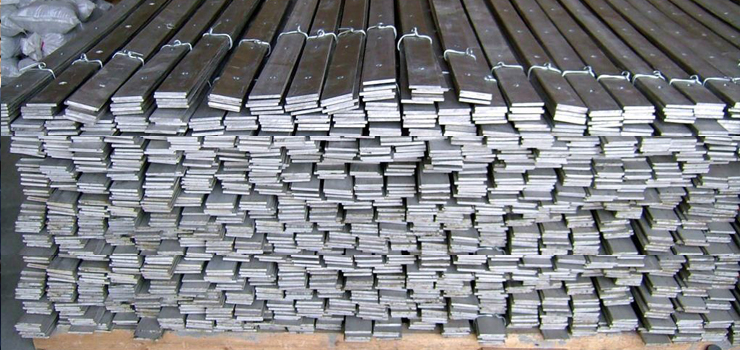
Flats surge lifts Ukraine July steel imports: MCI
Ukraine imported 199,706 tonnes of steel products in July, up 20% on-year. This lifted January-July imports by 7.1% on-year to 1.14 million tonnes, according to Metals Consulting International (MCI) data monitored by Kallanish.
The strongest July growth came from flat products, where imports surged 50% on-year to 140,624t, accounting for more than 70% of total steel imports during the month. Metallic coated sheet imports jumped 87% to 48,731t, an increase of almost 22,700t, while organic coated sheet rose 55% to 29,007t, adding more than 10,300t. Imports of non-alloy hot-rolled sheets and plates increased 81% to 21,246t, while cold-rolled sheet rose 79% to 13,381t.
Despite the strong July performance, January-July flat products imports were virtually unchanged on-year at 728,181t, up just 0.3%.
Long products were the main driver of cumulative import growth. July imports increased 54% on-year to 44,651t, taking January-July volumes 25% higher to 280,341t. The most striking development was with wire rod, with July imports reaching 15,851t versus virtually zero a year earlier. January-July wire rod imports consequently more than tripled, rising 214% to 52,105t. Rebar also recorded an exceptional cumulative increase to 30,342t from just 4,170t, although July itself was negligible at only 35t.
Imports of angles, shapes and sections more than doubled to 10,366t from 4,508t. However, January-July imports of this category remained 21.2% lower at 45,119t.
Railway material imports fell 61% in July to 3,045t, although cumulative imports remained 10.2% higher at 31,954t.
The most significant negative monthly movement was in semis. Imports collapsed 95% on-year to only 1,588t in July from 31,016t. This contrasts sharply with the cumulative trend: January-July semis imports were still 46.8% higher on-year at 68,738t.
Tubes and pipes were comparatively stable, rising only 4% in July to 12,843t, while January-July imports fell 7.6% to 57,861t. Hollow sections were at 5,041t in July, virtually unchanged on-year for the month but remained 12% lower cumulatively.
Overall, the 7.1% increase in January-July steel imports was driven primarily by long products and semis, which rose 56,200t and 21,900t respectively, while total flat imports were essentially unchanged.
| Products | Jul-26 | Jul-25 | Jul 26/25 % | Jan-Jun 2026 |
Jan-Jul 2025 |
Jan-Jul 2026/2025 % |
||
| Flat products | 140,624 | 93,713 | +50 | 728,181 | 726,251 | +0 | ||
|---|---|---|---|---|---|---|---|---|
| Non alloy HR coils | 7,595 | 7,237 | +5 | 46,767 | 53,247 | -12 | ||
| Non alloy HR sheets, plate | 21,246 | 11,715 | +81 | 99,469 | 98,084 | +1 | ||
| Non alloy HR narrow strip | 317 | 145 | +119 | 2,510 | 2,559 | -2 | ||
| Alloy HR flat products | 392 | 236 | +66 | 1,658 | 3,830 | -57 | ||
| CR sheets | 13,381 | 7,480 | +79 | 83,566 | 73,169 | +14 | ||
| Electrical sheets (other than GOES) | 243 | 0 | – | 657 | 227 | +189 | ||
| Metallic coated sheets | 48,731 | 26,054 | +87 | 216,738 | 205,573 | +5 | ||
| Organic coated sheets | 29,007 | 18,656 | +55 | 132,278 | 120,520 | +10 | ||
| Tin mill products | 4,872 | 6,931 | -30 | 29,325 | 38,086 | -23 | ||
| Quarto plates | 11,297 | 11,016 | + | 3 | 92 | ,062 | 105,863 | -13 |
| Wide flats | 0 | 10 | -100 | 1 | 91 | -99 | ||
| Stainless HR coils | 0 | 13 | -100 | 0 | 33 | -100 | ||
| Stainless cut to length | 388 | 419 | – | 7 | 2 | ,881 | 3,326 | -13 |
| Stainless HR narrow strip | 23 | 35 | -34 | 113 | 48 | +137 | ||
| Stainless CR | 2,545 | 3,149 | -19 | 15,271 | 15,780 | -3 | ||
| Stainless CR narrow strip | 73 | 167 | -57 | 1,015 | 1,268 | -20 | ||
| Stainless quarto plate | 98 | 82 | +19 | 741 | 906 | -18 | ||
| Flat of alloy steel >600 mm, of high speed steel | 0 | 0 | -100 | 0 | 0 | -79 | ||
| Grain-oriented electrical sheet | 415 | 366 | +13 | 3,131 | 3,640 | -14 | ||
| Long products | 44,651 | 28,993 | +54 | 280,341 | 224,184 | +25 | ||
| Non alloy merchant bars, light sections | 5,797 | 6,496 | -11 | 62,989 | 51,279 | +23 | ||
| Alloy merchant bars, light sections | 1,792 | 917 | +95 | 6,561 | 8,926 | -26 | ||
| Other bars/rods; tool steel | 10 | 15 | -37 | 124 | 190 | -35 | ||
| Rebars | 35 | 8 | +339 | 30,342 | 4,170 | +628 | ||
| Stainless bars, light Shapes | 1,323 | 1,140 | + | 16 | 7 | ,609 | 7,257 | +5 |
| Stainless wire rod | 0 | 0 | – | 72 | 199 | -64 | ||
| Stainless steel wire | 103 | 91 | +13 | 496 | 608 | -18 | ||
| Wire rod | 15,851 | 1 | +1,585,040 | 52,105 | 16,608 | +214 | ||
| Angles shapes, sections of iron, non alloy steel | 10,366 | 4,508 | +130 | 45,119 | 57,237 | -21 | ||
| Stainless angles, shapes, sections | 0 | 0 | – | 1 | 1 | -44 | ||
| Bars, rods | 0 | 15 | -100 | 899 | 300 | +200 | ||
| Sheet piling | 0 | 95 | -100 | 561 | 331 | +70 | ||
| Non alloy cold finished bars | 241 | 228 | +5 | 1,926 | 2,741 | -30 | ||
| Alloy cold finished bars | 5 | 73 | -94 | 124 | 188 | -34 | ||
| Non alloy cold finished profiles | 144 | 549 | -74 | 2,360 | 3,013 | -22 | ||
| Non alloy forged bars | 3 | 15 | -84 | 365 | 315 | +16 | ||
| Alloy forged bars | 145 | 131 | +10 | 536 | 911 | -41 | ||
| Non alloy wire | 612 | 624 | – | 2 | 3 | ,362 | 4,432 | -24 |
| Railway material | 3,045 | 7,884 | -61 | 31,954 | 28,990 | +10 | ||
| Special products | 15 | 768 | -98 | 151 | 1,450 | -90 | ||
| Alloy wire | 524 | 504 | +4 | 2,869 | 3,093 | -7 | ||
| Fasteners | 4,642 | 4,928 | -6 | 29,815 | 31,945 | -7 | ||
| Tubes & pipes products | 12,843 | 12,360 | +4 | 57,861 | 62,621 | -8 | ||
| Gas pipes | 1,759 | 1,229 | +43 | 4,192 | 5,731 | -27 | ||
| Hollow sections | 5,041 | 5,018 | 0 | 22,414 | 25,481 | -12 | ||
| Seamless stainless tubes, pipes | 54 | 64 | -16 | 221 | 213 | +4 | ||
| Bearing tubes, pipes | 2,180 | 2,599 | -16 | 15,772 | 14,134 | +12 | ||
| Other seamless tubes | 0 | 0 | – | 6 | 1 | +688 | ||
| Other welded pipes | 2,150 | 2,104 | +2 | 8,994 | 10,035 | -10 | ||
| Large welded tubes | 45 | 70 | -35 | 385 | 402 | -4 | ||
| Large welded tubes | 792 | 688 | +15 | 2,220 | 2,742 | -19 | ||
| Tubes, pipes, hollow profiles, of cast iron | 438 | 173 | +153 | 1,139 | 562 | +103 | ||
| Flanges (stainless steel) | 59 | 35 | +67 | 382 | 345 | +10 | ||
| Flanges (other than stainless steel) | 325 | 379 | -14 | 2,137 | 2,975 | -28 | ||
| Semis products | 1,588 | 31,016 | -95 | 68,738 | 46,829 | +47 | ||
| Total | 199,706 | 166,081 | +20 | 1,135,121 | 1,059,885 | +7 |
Source: MCI

Ferriera Valsider declares force majeure after ‘unforeseeable breakdown’
Metinvest’s Italian hot-rolled coil and heavy plate producer Ferriera Valsider has reportedly declared force majeure after an unexpected breakdown caused the complete shutdown of its production lines, according to a customer notification seen by Kallanish.
The company says the incident occurred in recent days and has impacted its ability to fulfil existing supply contracts.
“In the past days, our production facility was affected by an extraordinary, sudden, and unforeseeable breakdown. This event, entirely beyond our reasonable control and not due to our fault or negligence, resulted in the immediate and complete shutdown of our production lines,” the notification says.
The producer says the incident falls under the force majeure provisions contained in Article 8 of its general terms and conditions of sale and has therefore suspended contractual performance terms while the disruption continues.
“At this time, we are unable to determine the duration of the force majeure event, which is expected to be significant,” the company says.
Ferriera Valsider adds that it has “already taken all necessary and appropriate actions to manage the emergency” and plans to provide customers with an update on the situation by the end of August. Sales representatives will meanwhile contact customers individually to discuss existing orders.
The notification provides no details on the nature of the breakdown, or the equipment affected. However, Kallanish understands the suspension follows a major incident at the rolling mill, although this remains unconfirmed at the time of publication.
Metinvest has separately confirmed to Kallanish that production has been suspended and technical teams are working to establish the necessary repair programme.
“Our technical teams are working to define and implement the shortest possible action plan for the necessary repairs, with the objective of restoring production as soon as possible,” it says.
“At this stage, the assessment is still ongoing and we are therefore not in a position to provide a reliable timeframe for the resumption of operations. We will keep our stakeholders informed as the situation develops,” it adds.
Ferriera Valsider, located in Vallese di Oppeano near Verona, is part of Ukrainian steelmaker Metinvest’s Italian operations. The company is a large importer of slab from Asia, including China, Vietnam and Indonesia, according to market participants.
That the disruption comes shortly after Metinvest halted operations at its Zaporizhstal steelworks in Ukraine following a Russian ballistic missile strike on the company’s Zaporizhzhia industrial site overnight on 10-11 August. The attack, which killed seven Zaporizhstal employees and injured 21, damaged energy infrastructure and equipment serving coke and blast furnace operations.

European steel sector urges EU to include downstream products in CBAM


Polish long steel prices stable amid weak demand, summer lull
Polish domestic long steel prices remained stable in the week to Friday August 14 amid weak demand, thin liquidity and low buying appetite, with the summer slowdown continuing to curb trading activity.
No new transactions were heard during the assessment week as market participants continued to adopt a wait-and-see approach.
“Demand is still weak,” a distributor source told Fastmarkets.
In the rebar segment, workable levels were heard at 2,650-2,680 zloty ($709-717) per tonne CPT.
Offers were heard at 2,650 zloty per tonne CPT. Higher indicative offers were also heard; however, those levels were not supported by transactional activity.
Fastmarkets’ weekly price assessment for steel reinforcing bar (rebar), domestic, CPT Poland, was 2,650-2,680 zloty per tonne on Friday, unchanged week on week.
Trading activity in the wire rod segment also remained limited during the assessment week, with workable levels heard at 2,990-3,100 zloty per tonne delivered.
Fastmarkets’ weekly price assessment for steel wire rod (drawing quality), domestic, delivered Poland, was 2,990-3,100 zloty per tonne on Friday, unchanged week on week.


How does the European market view quota system changes?
The European Commission’s new safeguard measures, which entered into force on July 1, have had a significant impact on the steel market, with the restructuring of country-specific quotas, the introduction of additional quota mechanisms under Free Trade Agreements (FTAs), the increase in the out-of-quota duty to 50 percent, and bureaucratic delays. European steel producers and traders speaking to SteelOrbis shared their views on the measures, which have now been in effect for more than a month.
European steel market players view the new EU steel import quota system as an important step in reducing import pressure, while the actual impact is expected to become clearer over the coming quarters. Producers expect prices to remain strong, while they see inflation as one of the most challenging factors the market will have to manage.
Egypt has emerged as one of the beneficiaries of the quota allocation, while Algeria has been assigned a lower official quota and China’s quota has been reduced to a very low level. In addition, according to a producer speaking to SteelOrbis, although Turkey’s quota has been reduced on paper, the additional quota mechanism available to countries with FTAs will allow Turkish suppliers to offset a significant portion of the access they have lost.
According to producers, the increase in the out-of-quota duty from 25 percent to 50 percent will raise risks, particularly for companies importing high tonnages. However, the additional quota opportunities granted to countries that have free trade agreements with the EU could limit the impact of the quota cuts. With lower quota volumes and the 50 percent duty, importers are expected to be more cautious about clearing large volumes of material through customs.
Overall, while some producers view the measures positively, others believe that the quota cuts are insufficient and that mechanisms within the system that continue to allow imports reduce the effectiveness of the protection. Meanwhile, the outlook for flat steel products is said to be more negative.
Assofermet criticizes complexity of new quota mechanism
Assofermet president Paolo Sangoi said the association has serious criticisms of the new regulation, arguing that it contains numerous problems, including issues that raise questions regarding constitutional legitimacy and compliance with World Trade Organization rules.
According to Sangoi, one of the main concerns is the new quota allocation mechanism, which combines country-specific quotas with two separate “Other Countries” quotas. Sangoi stated that one of these additional quotas is accessible only to countries that already benefit from country-specific quotas, while the other is reserved for certain countries. According to Assofermet, this structure could lead to significant market imbalances by effectively giving an advantage to countries that exhaust their own quotas first, as they can subsequently access additional quota tonnages.
Assofermet also criticized the distribution of quotas among exporting countries. Speaking to SteelOrbis, Sangoi stated that relatively high quotas had been allocated to some countries that are less attractive to European buyers due to being subject to antidumping measures. By contrast, the association pointed out that quota tonnages for some countries that have traditionally supplied high-quality steel to the EU have been significantly reduced.
In addition, the association linked the publication of quota tonnages only one day before the regulation entered into force to the complexity of the new system, arguing that this increased the likelihood of calculation errors and resulted in quota allocations that do not adequately reflect actual trade flows or the needs of the European market.
Federacciai satisfied with quota allocation
Italian steel producers’ association Federacciai stated that they are highly satisfied with the European Commission’s quota allocation decisions. According to Federacciai, the calculation of quotas based on pre-pandemic import levels indicates that the European Commission carried out a detailed assessment.
Federacciai attributed the late publication of the quota allocations primarily to administrative procedures in Europe and the need to carefully assess the EU’s trade and institutional relations with its trading partners.


7Steel Nordic supplies billet to Czech Nova Hut
Czech Republic-headquartered Sev.en Global Investments has agreed to supply Ostrava steelworks Nova Hut with square billet from its 7 Steel Nordic plant in Norway, Kallanish notes.
The Ostrava mill plans to install an electric arc furnace with a capacity of up to 1.5 million tonnes/year of crude steel, after its blast furnaces were decommissioned when the firm became insolvent under former owner Liberty Steel. It has since been running as a re-rolling operation on a tolling basis, sourcing feedstock from Vítkovice Machinery Trade (VMT) and Donquixote.
Nova Hut, owned by former Czech interior minister Martin Pecina through his Iromet SICAV investment fund, took over the Ostrava plant last October.
Sev.en Global Investments, owned by Czech businessman Pavel Tykač, acquired Celsa’s Norway- and UK-based steelworks last year. The former operation, a renewable hydropower-based EAF and rolling mill in Mo i Rana, made its first steel shipment to the Czech Republic earlier this year.
Nova Hut requires several hundred thousand tonnes/year of semi-finished steel feedstock for its rolling mills, which 7 Steel is capable of providing, Sev.en Global Investments head of steel business Libor Cerny tells Kallanish. This cooperation could continue until the Ostrava plant commissions its EAF.
The billet will be shipped from 7 Steel’s port in Mo i Rana across the Baltic Sea to a port in Poland and then transported by rail to the steelworks in Ostrava.
“This is the start of cooperation between Nova Hut and the Sev.en Group in the field of green steel supplies. We are pleased that this cooperation has been successfully launched and that the Sev.en Group is thus supporting the recovery of Nova Hut,” says a Nova Hut spokesperson. “The contracted volume is in the range of several thousand tonnes of steel. Both sides expect long-term cooperation.”
Cerny adds: “We are also considering the possibility of supplying billets to Nova Hut from 7 Steel UK in Cardiff, Wales. However, this remains only a potential option at this stage and no specific agreement has been reached.”
He declined to comment on how pricing is calculated in the supply agreement, emphasising it is “commercially attractive and creates long-term value for both parties”.
Prices will depend on market conditions, “mostly the price of scrap”, the Nova Hut spokesperson concludes.

Romanian flats prices fall further amid weak demand and lower offers
The downward trend in Romania’s flat steel market has extended into another week, as persistently weak demand and increasingly aggressive pricing from some larger traders continue to drag workable levels lower. With August business already at a seasonal low, buyers are showing little urgency to purchase amid sufficient stocks, tight liquidity and weaker activity in the construction sector. In this environment, larger sellers are cutting prices to stimulate sales, forcing smaller and medium-sized traders to either follow the downward trend or offer wider discounts despite growing pressure on their margins.
Hot rolled sheet prices have consequently fallen to around €765-770/mt ex-warehouse, compared to €780-790/mt ex-warehouse last week. Some larger traders are still heard at around €745-750/mt ex-warehouse, while smaller and medium-sized sellers generally try to stay closer to the upper end of the market and negotiate only for serious inquiries. Discounts of around 5-8 percent remain possible depending on tonnage and payment terms. Cold rolled sheet prices have also softened to around €870-880/mt ex-warehouse, down from €880-890/mt ex-warehouse last week. Even at the lower levels, however, buying remains scarce and most transactions continue to be limited to immediate requirements.
There has, meanwhile, been no notable progress regarding the sale of Liberty Galati, with no new buyer or concrete development heard in the process. Nevertheless, concerns surrounding the group’s financial position have deepened after Liberty Services Center Galati entered bankruptcy proceedings amid significant outstanding debts. Although the company is separate from Liberty Galati itself, the development has further worsened sentiment around the group’s Romanian operations and added to the already uncertain outlook for the producer.
Import activity has also remained very limited, with Romanian buyers seeing little reason to enter the market while stocks remain sufficient and much of Europe is still affected by the August holiday period. Market participants expect discussions to gradually resume in September, as suppliers return with fresh quotations and buyers get a clearer indication of the post-summer price direction. Ukrainian offers have remained unchanged at around €790-800/mt CPT Romania for hot rolled sheet and €880-890/mt CPT for cold rolled sheet, levels which are still considered too high to attract much interest. Meanwhile, Turkish HRC offers are heard at around $570-585/mt FOB, with freight to Romania estimated at $25-30/mt, resulting in an indicative delivered level of approximately €515-530/mt CFR Romania, compared to around €520-530/mt CFR last week. Despite the competitive level, quota limitations and uncertainty over CBAM-related costs continue to restrict Romanian buyers’ interest in Turkish material.

Thyssenkrupp’s Duisburg DRI plant could initially operate without hydrogen
Germany steelmaker thyssenkrupp is in advanced discussions to adjust the funding framework for its new direct reduction plant in Duisburg to reflect changed economic conditions and allow the facility to initially operate without hydrogen, according to a report by Reuters.
Around two-thirds of the €3 billion in funding for the project is being provided by the German federal government and the state of North Rhine-Westphalia. The funding was initially linked to the use of hydrogen in the direct reduction plant. However, thyssenkrupp now considers this requirement unrealistic for the plant’s initial operations.
Funding amendment discussions with Germany and EU
As a result, the company has been holding discussions with the German government and the European Union to amend the funding conditions and ensure that financial support can still be provided even if hydrogen is not used initially.
“We are very pleased that the European Commission has approved the planned amendment to the funding rules currently in force and has already confirmed that they are fully compliant with EU state aid law,” thyssenkrupp chief financial officer Axel Hamann stated. According to Hamann, the approval allows the German federal government to implement the amendment and subsequently adjust the funding decisions. The revised funding rules will come into effect following these adjustments.

European domestic CRC, HDG prices firm, import stocks, summer cap further gains
European domestic cold-rolled coil and hot-dipped galvanized remained largely firm in the week to Thursday August 13, having gained around €20 per tonne on average in the previous weeks.
Further upward movement is limited by high stocks of import material in ports as well as reduced activity during the traditional market slowdown at the end of summer.
In Northern Europe, basic cold-rolled coils scheduled for delivery in October onwards were available within the range of €830-850 per tonne ex-works.
A source from Germany reported deals at €825 per tonne ex-works, while another German source confirmed this figure as a tradeable level, adding that the higher end of the range targeted by the mills has yet to be seen in transactions.
Fastmarkets’ weekly price assessment for steel cold-rolled coil domestic, exw Northern Europe was €825-830 per tonne on August 13, narrowing down from €825-840 per tonne on August 5.
“Antwerp is full of cold-rolled coils,” the source said, explaining that availability of the competitively priced import material is still weighing down on domestic prices.
Last week, however, the European Commission announced definitive anti-dumping duties on imports of cold-rolled coil (CRC) from India, Japan, Taiwan, Turkey and Vietnam.
While Turkey and India received duties of 5.6-9.5%, Japan, Taiwan and Vietnam received duties of 16-28%, which is expected to affect shipments from these countries as, together with other limitations such as safeguard duties and the Carbon Border Adjustment Mechanism (CBAM), the final cost of these products may become uncompetitive.
“Formerly the buyer paid only the highest duty of all. Let’s say if the anti-dumping duty was 6% and the out-of-quota safeguard duty was 25%, the buyer paid only 25%. Now it has changed and all duties are applied together,” a German buyer said, adding that if Asian suppliers do not cut their initial price it will be difficult for them to sell to Europe.
The hot-dipped galvanized (HDG) segment was also stable with offers coming at €830-850 per tonne ex-works, while indications of tradeable level came at €820 per tonne ex-works, which was reflected in the corresponding Fastmarkets’ assessment.
The weekly price assessment for steel hot-dipped galvanized coil domestic, exw Northern Europe was €820-830 per tonne on August 13, stable week on week.
A market source said that mills in the region have lately been preferring to produce HDG rather than CRC, because some types of HDG can be produced directly from hot-rolled coil (HRC), skipping the CRC stage, and because the annealing process happens naturally during galvanizing, while producing CRC requires the steel to be heated and softened separately, incurring additional energy costs.
Southern Europe was comparatively quieter, with the majority of market participants on holiday.
Nevertheless, some HDG transactions came through at €830 per tonne delivered or €815 per tonne ex-works, while offers came at €825-835 per tonne ex-works.
Fastmarkets’ weekly price assessment for steel hot-dipped galvanized coil domestic, exw Southern Europe was €815-825 per tonne on August 14, versus €800-830 per tonne the previous week.
The most recent CRC offers in the region came at €840-850 per tonne ex-works; however, buyers found these levels elevated.
The assessment for steel cold-rolled coil domestic, exw Southern Europe was €815-825 per tonne on August 12 versus €820 per tonne on August 5.
“In September you can bet on a big jump,” a buyer from Italy said.
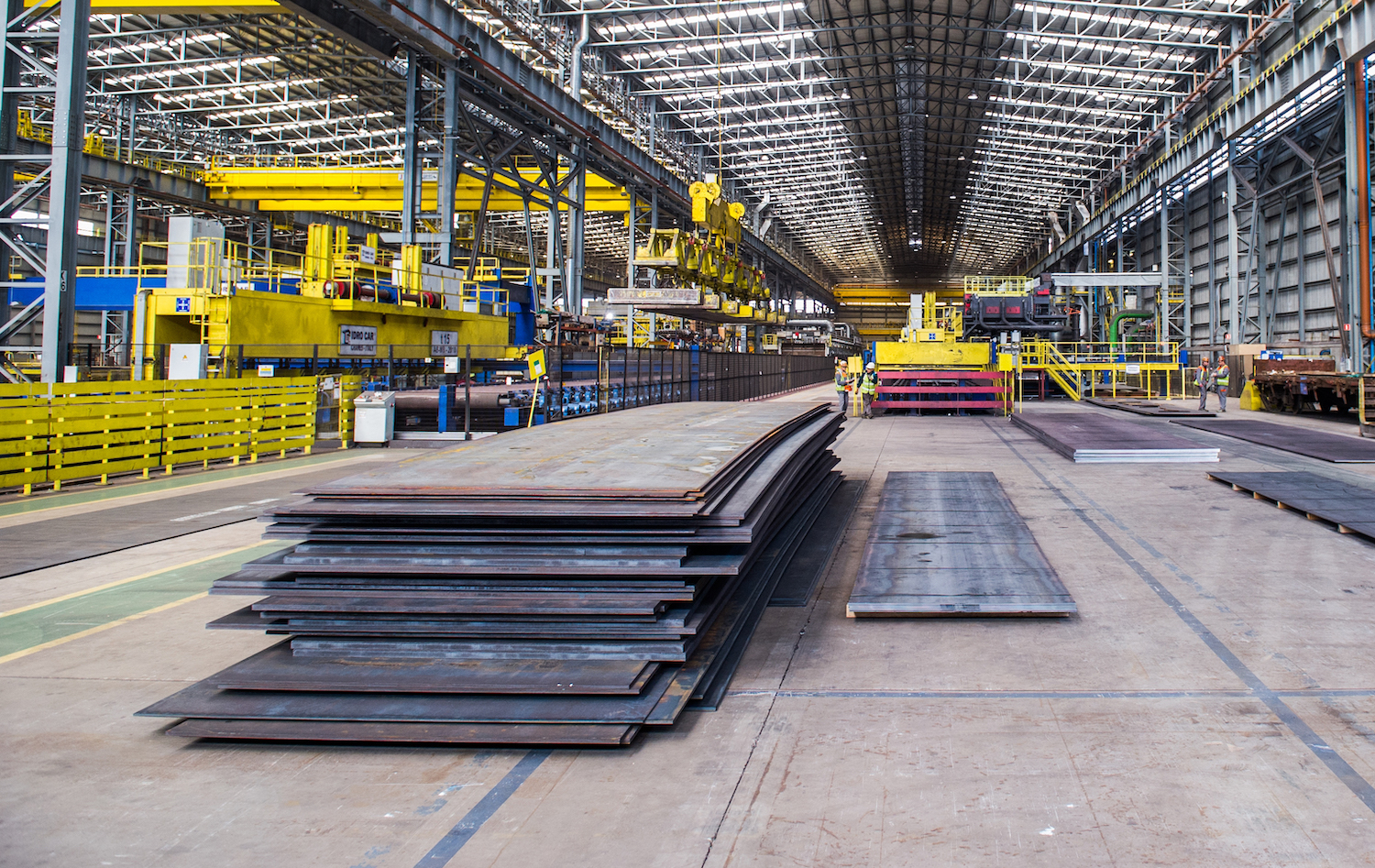
European local steel heavy plate markets quiet amid summer lull; Italian slab imports stable
Domestic prices for steel heavy plate remained broadly stable in European markets, while trading activity was slow during the summer slowdown period, also stabilizing Italian slab import prices, sources told Fastmarkets on Thursday August 13.
Italy
Sources indicated workable prices for base-grade plate at €690-700 ($797-809) per tonne ex-works in Italy on August 13, on the same level as the latest deals heard a week earlier. They also confirmed the offer reported by a supplier at €720 per tonne ex-works on August 6, but it was considered unworkable.
Market participants have said that the levels at €690-700 per tonne ex-works were a potential price floor in the market, linked to the traditional summer slowdown in August.
Fastmarkets’ weekly price assessment for steel domestic plate 8-40mm, exw Southern Europe was €690-700 per tonne on Thursday, narrowing downward by €10 per tonne from €690-710 per tonne a week earlier.
Meanwhile, the latest offers for steel slab imports into Italy were reported in the range of $545-565 per tonne CIF on August 13 for material originating from Southeast Asia, while Chinese mills were quoting slab at $560 per tonne CIF.
One trader said Indonesian slab might be even a few dollars cheaper than $545 per tonne CIF, but did not report any achieved transactions at lower levels.
A buyer source said there were “no real changes” in slab prices over the week, while most Italian mills were out of the market for the August holiday period. “A couple of Chinese offers were renewed around $560 [per tonne CIF] but no deals or real changes [were done],” the same source added.
As a result, Fastmarkets’ weekly price assessment for steel slab import, cif Italy was $545-560 per tonne on Thursday, unchanged week on week.
Northern Europe
No significant market activity was seen in the domestic plate market in Northern Europe during the week.
Market participants continued to cite tight supply from integrated German plate producers, linked to a previous price increase in the market, but no fresh transactions were heard to support the sharp rise in prices.
Offers for base material were reported at €850-880 per tonne ex-works, while workable prices were indicated at €820-850 per tonne ex-works, all unchanged from a week earlier.
Fastmarkets’ weekly price assessment for steel domestic plate 8-40mm, exw Northern Europe was €820-850 per tonne on Thursday, stable week on week.