


GravitHy files permits for hydrogen-based low carbon steel plant in France
Hydrogen-based, direct-reduced iron project developer GravitHy has filed building permit and environmental authorization applications for its planned low-carbon iron project at Fos-sur-Mer, France, marking a key regulatory step for one of Europe’s emerging hydrogen-based steel decarbonization projects.
The French industrial company is targeting an annual production of 2 million metric tons of hot briquetted iron at the Fos-sur-Mer location, a strategic location due to the area’s port and logistics infrastructure, access to industrial water, available land and proximity to steel value-chain participants, such as Marcegaglia Fos-sur-Mer and ArcelorMittal.
The material is intended for use in electric arc furnaces, offering European steelmakers a lower-carbon feedstock as the sector seeks to reduce reliance on coal-based blast furnace routes.
GravitHy’s process is based on the direct reduction of iron ore using low-carbon hydrogen produced on-site through water electrolysis. The company says the project could help steelmakers cut emissions by about 90% compared with conventional processes, while the plant could avoid up to 4 million mt/year of CO2 emissions at full capacity.
The company said the permit filing is a decisive step ahead of a final investment decision, underscoring the commercial and policy momentum behind hydrogen-based iron production in Europe.
Platts, part of S&P Global Energy, assessed Northwest European hot-rolled coil carbon-accounted at Eur775/mt ex-works Ruhr July 22, stable day over day.
Author: Annalisa Villa

Spain’s Acerinox flags positive H2 on trade measures, CBAM support
New trade measures applied since July 1 are seen as “a game-changer” in the European steel market, Spanish stainless producer Acerinox said July 24, with the company forecasting a turnaround in profitability for its domestic operations.
“The measures are fundamental to mitigate production surpluses exported from countries with overcapacity and to restore competitiveness to the European industry,” CEO Bernardo Velzaquez said.
Coupled with the Carbon Border Adjustment Mechanism (CBAM), which was introduced in January, imports into the bloc have given local producers a supply gap to fill, and with this backdrop, the company’s 1 million metric tons/year Acerinox Europa plant in Spain is expecting to return a positive EBITDA from the third quarter, he said.
As a result of the CBAM, imports are down from 24% of the market to a 16% market share, and with the new measures, this may drop to 12% or 13%, Velzaquez told analysts on a call.
The overall impact has been a 31% drop in imports to Europe in the first half of the year, he said. This has seen “customers seeking local suppliers” to the point that Acerinox’s Spanish unit reported a positive EBITDA in June and is forecasting a turn to a positive figure for the third quarter following a difficult first half in which the plant had to recover from a fire in the fourth quarter of 2025.
The damaged hot material pickling line was back at full operation by April, allowing it to boost output 20%, the company said, without providing volume figures.
However, European demand remains subdued “due to geopolitical uncertainties,” the company said.
The market is “waiting for investment projects” particularly in the oil and gas sector, Acerinox said. The unit in Spain will go offline for two weeks in August for the usual summer shutdown, management said.
Production uptick
The company’s worldwide melt shop steel production in the second quarter amounted to 540,000 mt, up 10% quarter over quarter, boosted by the restart of the Acerinox Europa line.
Cold rolling output was 318,000 mt, down 1% year over year and long product output 42 million mt, up 6% year over year.
Acerinox operates steel production sites in Spain, Germany, the US and South Africa, with a nameplate melting shop capacity of about 3.5 million mt/year, according to the company.
In the US, the company said demand from the aerospace and industrial gas turbine sectors had been strong, and it had seen “consistent order entry improvement.”
It reported that a $244 million expansion project at North American Stainless had been completed, with a new cold-rolling mill fully operational from June as well as planned upgrades to its annealing and pickling line.
The expansion will increase production capacity at the largest integrated stainless steel factory in the US by 20% to 1.2 million mt/year.
Author: Gianluca Baratti

World crude steel output up 1.7 percent in June 2026
Global crude steel production in June this year increased by 1.7 percent year on year to 155.7 million mt, according to the World Steel Association (worldsteel).
In the January-June period this year, global crude steel production decreased by 0.7 percent year on year to 931.5 million mt.
In June, crude steel output in Asia and Oceania amounted to 115.2 million mt, up 1.5 percent year on year, with China’s output at 83.7 million mt, up 0.4 percent, Japan’s output at 6.8 million mt, increasing by 1.3 percent, India’s output at 14.1 million mt, rising by 4.5 percent, and South Korea’s output at 5.3 million mt, moving down by 0.9 percent, with all comparisons on a year-on-year basis.
EU-27 countries produced 10.8 million mt of crude steel in June, up by 4.6 percent year on year. In the given month, Turkey’s output amounted to 3.3 million mt, up 14.7 percent year on year. Germany produced 2.9 million mt of crude steel in June, indicating a 9.5 percent increase compared to the same month in the previous year.
The CIS registered crude steel output of 6.8 million mt, falling by 2.2 percent on a year-on-year basis, with Russia’s estimated output at 5.6 million mt, down 3.4 percent year on year.
In North America, crude steel output totaled 9.5 million mt in June, up by five percent year on year, with the US producing 7.2 million mt, rising by 3.5 percent year on year. Crude steel output in South America in June amounted to 3.5 million mt, decreasing by 0.3 percent compared to the same month in the previous year, with Brazil’s output totaling 2.8 million mt, increasing by 0.1 percent year on year.
In the given month, Africa produced 2.2 million mt of crude steel, up by 20.0 percent year on year. In the Middle East, crude steel output totaled 4.0 million mt, moving down by 13.4 percent.
Shares in global crude steel production June 2026

Author: SteelOrbis Editorial Team

New car registrations in EU up 5.7 percent in H1 2026
In June this year, new passenger car registrations in the EU increased by 13.6 percent year on year to 1.15 million units, according to the European association of car manufacturers ACEA.
In the given month, Germany (+15.7%), France (+11.4%), Italy (+10.6%) and Spain (+7.8%) reported positive results.
In the first half of this year, new car registrations in the EU rose by 5.7 percent year on year to 5.90 million units. Italy (+9.5%), Spain (+6.2%), Germany (+5.8%) and France (+1.8%) posted increases.
Author: SteelOrbis Editorial Team
European longs market stabilizes in Italy, downtrend persists elsewhere
The European longs market has shown overall more stable sentiments this week compared to previous weeks. Following the decreases recorded in June and July, most market players believe that the downward trend in prices is losing momentum.
In the rebar segment, some Italian producers have brought their price back to around €440/mt ex-works base (€700/mt ex-works including regular extras), stating that previous offers in the range of €410-420/mt ex-works base (€670-680/mt ex-works including regular extras) will remain valid only until the end of the month. Market sources have underlined, however, that “attempts to increase prices are not translating into purchases”, while demand continues to be very slow. According to several players, the market has reached a stabilization phase, with producers determined to defend current levels ahead of the autumn recovery.
In the wire rod segment, the picture also appears relatively stable. According to sources active in the Italian market, prices between June and July have remained mostly unchanged, with slight downward adjustments linked to the conclusion of specific orders. The situation is different in other European markets, where orders booked in July were reportedly concluded on average at lower levels than in June, with reductions of around €5-8/mt. A further possible decrease of around €10/mt is expected in August, though much will depend on the extent to which logistics costs affect customers’ willingness to buy.
The differences between the Italian market and the wider European market remain clear. While Italy is seeing an attempt to consolidate prices, several sources have reported further downward pressure in some continental European countries. In Germany, for instance, market players have reported reductions of €20-30/mt, while in Poland rebar prices are said to have come to around €610/mt DAP for delivery by truck, in a context influenced by unfavorable exchange rate movements (€1 = PLN 4.33 on July 23, versus €1 = PLN 4.28 on June 23).
On the cost side, energy and transport costs have started to rise again. However, the combined effect of weak demand and the summer stoppages is making it difficult to pass these increases on to the market.
Another issue concerns the safeguard quota system and, in particular, the position of imports from Turkey. Several sources have reported that a recent customs interpretation has allowed excess volumes from Turkey’s country-specific quota to be automatically transferred to the available additional quota, thereby avoiding the immediate application of duties which many importers had considered likely.
According to market players, this interpretation has come as a positive surprise to the market. Some customers were in fact preparing to bear significant customs charges on Turkish supplies, while the latest indications have significantly changed expectations. However, uncertainties remain over the future application of the mechanism, and several market players have stressed that the situation will depend on the remaining availability of the additional quota.
Finally, in the import market, prices from Turkey have increased slightly compared to last week due to exchange rate movements. Rebar offers have been reported at €540-550/mt CFR, up slightly by €5/mt, while wire rod offers have been reported at €550-555/mt CFR, also up slightly by €5/mt on the lower end of the range. Meanwhile, the remaining import quota allocated to Egypt stands at 24,778 mt for rebar and 2,213 mt for wire rod.
€1 = $1.1408
Local steel heavy plate prices increase in Northern Europe on tighter spot availability, remain stable in Italy on limited trading
Northern European domestic steel heavy plate prices rose in the week to July 23 as German mills remained well booked with project-related orders and offered little spot tonnage, sources told Fastmarkets on Thursday. In Italy, prices were stable, with no significant fresh transactions reported during the week.
Italy
Market participants indicated base-grade plate prices in Italy at €700-750 ($796-853) per tonne ex-works on Thursday July 23, with the upper end linked to offer levels.
A trade source said Italian mills were offering plate at €690-700 per tonne ex-works, although these levels were not supported by other market sources.
“For the time being, re-rollers may benefit from competitive slab prices and sufficient tonnages from imports and domestic markets,” the same source said.
A second trader said that Italian mills were selling plate at €710-730 per tonne ex-works into Germany for mid-end September delivery.
The latest transactions for steel plate in Italy were heard at €700-730 per tonne ex-works on July 16, with the lowest price at €700 per tonne ex-works linked to larger-volume orders.
Plate prices in the market have been under pressure in July due to increased competition among producers seeking to secure orders ahead of the August holiday season. Falling slab import prices have also weighed on sentiment.
As a result, Fastmarkets’ weekly price assessment for steel domestic plate 8-40mm, exw Southern Europe was €700-730 per tonne on Thursday, unchanged week on week.
Meanwhile, Fastmarkets’ weekly price assessment for steel slab, import, cif Italy, was $560-570 per tonne on July 23, down from $570-590 per tonne a week earlier.
Northern Europe
In Northern Europe, German mills were heard to be very well booked with project-related orders, leaving limited volumes available for the spot market, sources told Fastmarkets on Thursday.
A trader said spot offers were not available below €820 per tonne ex-works, with the upper end reaching €850-860 per tonne ex-works.
“German mills have booked nice projects and a sizable volume of linepipe orders. Therefore, commodity offers are few; lead time, meanwhile, is end of October, so I see no prices below €820 [per tonne ex-works],” the same source said.
These offers were included in the assessment despite delivery times exceeding Fastmarkets’ methodology window of “up to 6 weeks” because no material was heard available for earlier delivery.
Meanwhile, a second trader reported offers at €765-793 per tonne ex-works, but these levels were not supported by other market participants.
A supplier source said their mills were fully booked for the next two to three months, with prices around €890-900 per tonne ex-works, but mainly including grades for projects rather than commodity plate.
As a result, Fastmarkets’ weekly price assessment for steel domestic plate 8-40mm, exw Northern Europe, was €820-850 per tonne on Thursday, up from €800-830 per tonne a week earlier.


Italian rebar prices move lower amid weak demand, market uncertainty
European domestic long steel prices remained largely stable in the week to Wednesday July 22 amid weak demand and limited buying interest, though Italian domestic rebar prices moved lower.
“The situation remains very uncertain at the moment, and I believe prices are equally uncertain as a result,” a buyer source told Fastmarkets.
Market participants reported limited purchasing activity across the region, while elevated fuel and electricity costs continued to weigh on market sentiment.
In Italy, tradable levels were reported at €690-760 ($787-867) per tonne ex-works.
In northern Italy, indications were heard at €690-710 per tonne ex-works, with offers and deals reported at those levels. In the south, offers and deals were heard at €710-730 per tonne ex-works. Higher indications and offers of €760 per tonne ex-works were also reported in the region, although those levels were not supported by transactions.
Fastmarkets’ weekly price assessment for steel reinforcing bar (rebar), domestic, exw Italy, narrowed downward to €690-730 per tonne on Wednesday July 22, from €690-750 per tonne a week earlier.
Fastmarkets’ weekly price assessment for steel reinforcing bar (rebar), domestic, delivered Spain, remained unchanged at €750 per tonne.
Meanwhile, German domestic rebar prices remained stable at €710-730 per tonne, which was reflected in Fastmarkets’ weekly price assessment for steel reinforcing bar (rebar), domestic, delivered Northern Europe.
Wire rod prices showed mixed trends across Europe during the assessment week.
In Southern Europe, tradable levels for wire rod (mesh quality) were reported at €660-680 per tonne delivered.
Fastmarkets’ weekly price assessment for steel wire rod (mesh quality), domestic, delivered Southern Europe, fell to €660-680 per tonne on July 22, from €670-720 per tonne the previous week.
Fastmarkets’ weekly price assessment for steel wire rod (mesh quality), domestic, delivered Northern Europe, remained unchanged at €705-715 per tonne on July 22.
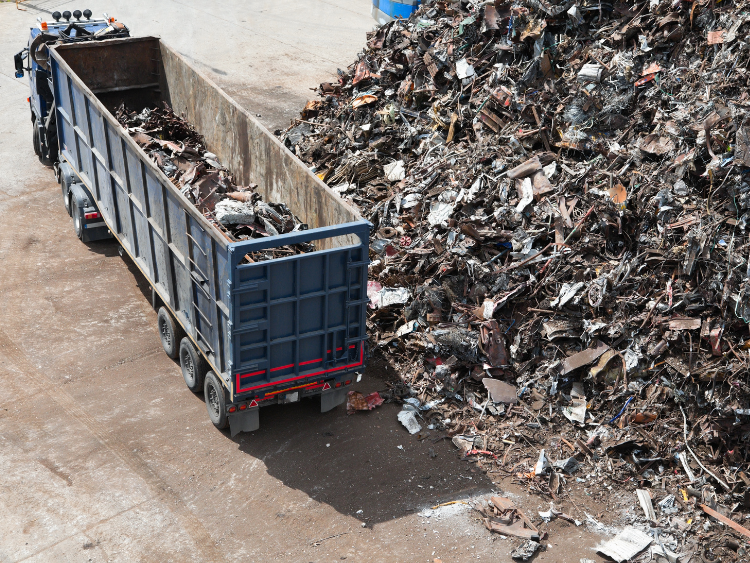
Spain’s scrap consumption slips despite steel production growth
Spanish steel industry scrap consumption decreased sequentially in May, despite crude steel output growing. Both indicators were weaker year-on-year, Kallanish learns.
Scrap consumption fell by 24,000 tonnes month-on-month in May to 823,000t. Compared with a year earlier, consumption dropped by 12%, according to Spanish steelmakers’ association Unesid. Five-month scrap consumption reached 4 million tonnes, compared to 4.25mt a year earlier, representing 87.3% of total crude steel production in January-May.
The local steel industry produced around 1.04mt of crude steel in May alone, 97,000t higher than April but 8% less on-year. Cumulative output reached 4.58mt, a fall from 5.54mt in January-May 2025, Unesid data show.


ArcelorMittal, Moeve sign Spain’s largest energy-saving certificates agreement
ArcelorMittal and Spanish multinational energy company Moeve – formerly Cepsa – have signed an agreement for the purchase of Energy Saving Certificates (CAE) covering an annual volume of 2.1 terawatt-hours (TWh ), Kallanish learns from the steelmaker.
The CAE certifies an energy savings equivalent to 1 kilowatt-hour, thanks to implemented efficiency measures. It makes it possible to quantify the energy saved over a year using high technical methodologies and, based on this, receive financial compensation that helps recover part of the investment.
The deal is the largest of its kind in Spain to date. According to ArcelorMittal, it reinforces the role of the CAE mechanism as an effective tool to support industrial decarbonisation. It also marks a significant step forward in the transition towards more sustainable steel production.
“The emphasis on energy savings has been a key factor in enabling the implementation of our decarbonisation plan for the longs production unit in Gijón, through investment in a new electric arc furnace, which is currently in the final stages of construction,” ArcelorMittal says.
The agreement is expected to reduce the company’s annual energy consumption by up to 2.1 TWh, equivalent to more than 5% of the Principality of Asturias’ total energy use. Once the transition is complete, it will cut an estimated 1 million tonnes/year of CO₂ emissions from the region’s steel industry.

Muted market activity ahead of summer break weighs on Northern European HRC prices
Northern European and Italian domestic HRC markets remained largely quiet on Wednesday July 22, with limited activity ahead of the summer holiday period. Prices edged down in Northern Europe despite higher buyer indications being included due to thin liquidity, while Italian prices were unchanged amid a lack of fresh transactions.
In Northern Europe, a buyer reported latest deals at €710 ($810) per tonne ex-works on Wednesday, for September delivery and an order of a couple of thousand tonnes. The same source said offers were at €740 per tonne ex-works, adding those were “not accepted” in the market yet, so they were discarded from July 22’s index.
A second buyer reported an indication of achievable levels at €720 per tonne ex-works, while a third buyer provided an indication at €720-730 per tonne ex-works on the same day. Although these levels were above the latest deals, they were included in the index calculation because of limited market activity.
Some market participants were off on Wednesday, and the market remained quiet throughout the day. No significant new moves were announced by suppliers ahead of the summer holiday period.
Fastmarkets’ daily steel hot-rolled coil index domestic, exw Northern Europe was calculated at €711.14 per tonne on July 22, down by €1.15 per tonne from €712.29 per tonne on July 21.
The index was up by €1.14 per tonne week on week and by €29.89 per tonne month on month.
In Italy, a supplier reported deals for HRC at €740-750 per tonne delivered (€725-735 per tonne ex-works), saying that they “see transaction price for decent quality at €740 base [per tonne] delivered minimum.”
However, the same source could not name any specific supplier selling material at this price, and it was discarded in Wednesday’s index due to low confidence and a lack of corroboration from other market participants.
No other price points were received on July 22, as the market was mostly quiet ahead of the summer holidays.
The latest deals in the market were reported in the range of €700-710 per tonne ex-works on Monday and Tuesday.
Fastmarkets’ daily steel HRC index domestic, exw Italy was €702.50 per tonne on Wednesday, unchanged day on day.
The index was up by €1.50 per tonne week on week and by €28.12 per tonne month on month.
Latest HRC import activity into Southern Europe was reported on July 22, including a deal at €605-610 per tonne CFR from Egypt, while India offered material at €552-556 per tonne CFR, but market participants could not confirm this lower level.
The corresponding Fastmarkets weekly assessment for steel hot-rolled coil import, cfr main port Southern Europe was €570-615 per tonne on July 22, narrowing downward by €30 per tonne from €570-645 per tonne a week earlier.