


Assofermet criticizes EC’s “incomprehensible and unjustifiable” delay in publishing country-specific safeguard quotas
The Italian association representing the trade, distribution and processing of steel products Assofermet published a press release today, June 26, in which it urges the European Commission to “proceed with the utmost urgency to adopt the country-specific quotas” of the new safeguard regulation, “putting an end to a situation that risks compromising the regular functioning of supply chains and the competitiveness of European industry.”
A few days before the implementation of the new safeguard regulation that will define the tariff quotas for the import of steel products into the European Union, the EU Commission has not yet defined the distribution of the quotas of origin.
“This is an extremely serious omission, which generates a climate of total uncertainty for market players, as well as a source of inevitable new complexities in the management and execution of contracts at international level and in the customs clearance phase,” Assofermet claimed, defining the delay as “incomprehensible and unjustifiable”.
In this scenario, companies operating in the steel sector, including importers, distributors, as well as end-users, are forced to plan their activities in a context of total uncertainty, unaware of the operating methods to be implemented once the new rules come into force on July 1.
Another issue mentioned by Assofermet concerns the questions that this situation generates regarding customs obligations and the timing of operators’ adaptation to the new regulatory framework.
The association’s position is firm, defining the behavior of the EU Commission as “incompatible with the principles of legal certainty, administrative transparency and protection of the legitimate expectations of companies towards the institutions”.
Author: SteelOrbis Editorial Team


IMF: Shipping and supply chains need time to normalize after Hormuz reopening
Julie Kozack, director of communications at the International Monetary Fund (IMF), commented on the broader global economy and the impact of the conflict in the Middle East during a briefing on recent international developments.
Kozack said the conflict had once again tested the resilience of the global economy and reiterated that the IMF continues to assess developments through three main transmission channels: commodity prices, particularly oil; second-round effects on inflation and inflation expectations; and financial conditions. She added that countries that are net energy importers and have limited fiscal or foreign exchange buffers remain the most vulnerable to the economic consequences of higher energy prices.
Commodity markets recover but normalization will take time
Discussing recent commodity market developments, Kozack said oil prices have fallen from their recent peaks and are now approximately 10 percent above pre-war levels. She added that prices for natural gas, jet fuel, base metals, urea and several fertilizer products have also declined.
However, Kozack cautioned that a full normalization of commodity markets will take time because shipping routes and supply chains need time to recover following the reopening of the Strait of Hormuz under the memorandum of understanding between the US and Iran regarding the reinstatement of peace between the parties. According to Kozack, the outlook also depends on the durability of the current ceasefire.
IMF to update global outlook in July
Kozack said inflation expectations have generally remained well anchored despite recent shocks, although several central banks have tightened monetary policy while others have kept interest rates unchanged. She added that financial conditions have remained supportive, with relatively low sovereign spreads allowing many emerging and developing economies to continue accessing international capital markets.
The IMF will publish a comprehensive reassessment of the global economic outlook, including updated forecasts, in its World Economic Outlook Update on July 8.
Author: SteelOrbis Editorial Team
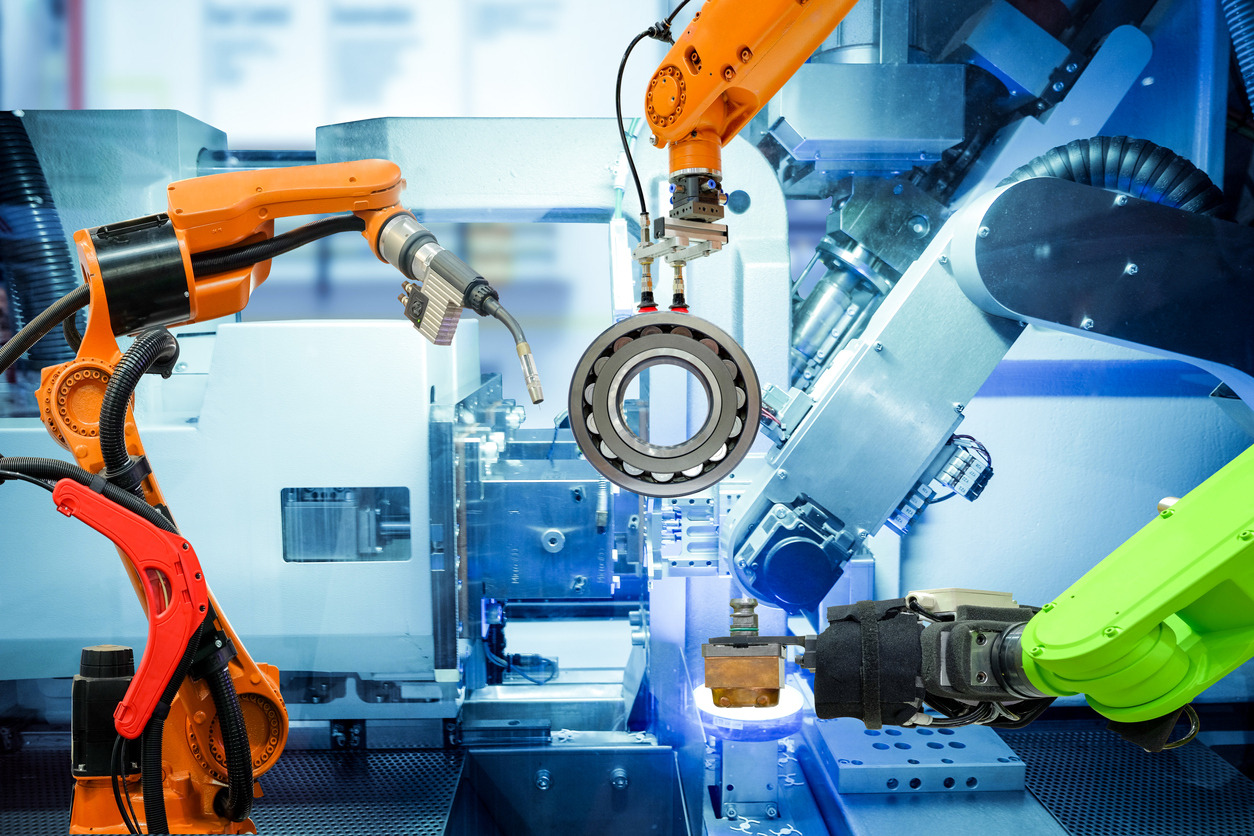
Europe to see modest steel demand growth in 2026 amid weak manufacturing
European steel demand is expected to rise 0.4% in 2026 and 2.2% in 2027, following a stronger-than-expected 4.4% rebound in 2025, as continued weakness in the automotive sector offsets gains in construction, according to Eurofer’s latest market outlook, published on June 25.
Apparent steel consumption in the EU reached 134 million metric tons in 2025, driven by exceptional factors, including a sharp rise in imports in the second half of the year. However, consumption remains about 10 million mt below pre-pandemic levels, while crude steel production fell to a record low of 125.8 million mt last year, down 2.9% year over year.
The modest 2026 growth forecast reflects ongoing economic uncertainty, geopolitical tensions, and weak industrial demand, Eurofer said. Real steel consumption is expected to increase by 1.4% in both 2026 and 2027.
“Modest improvements in demand should not be mistaken for a genuine recovery,” Axel Eggert, Director General of the European Steel Association (EUROFER), said.
“Manufacturing remains weak, energy costs remain elevated, and uncertainty linked to global trade and geopolitical tensions continues to weigh on investment and industrial activity.”
Industrial demand remains under pressure
Demand from steel-using sectors declined again in 2025 by 0.1%, marking a second consecutive year of contraction. Although a modest improvement is forecast for 2026, up by 1.3%, a more meaningful recovery is not expected before 2027.
Construction, the EU’s largest steel-consuming sector, is expected to continue growing in 2026, rising 1.5% despite an interest rate hike linked to accelerating inflation. The sector grew 1.3% in 2025. The automotive sector remains the weakest major steel user, with output declining for six consecutive quarters. Production contracted 9.7% in 2024 and a further 4.3% in 2025, partly due to uncertainty surrounding US tariffs and weak manufacturing conditions. A further 0.2% decline is expected in 2026, with recovery not anticipated until 2027, when output is forecast to grow 2.9%. As a highly export-oriented industry, the EU automotive supply chain remains especially exposed to energy and trade shocks, Eurofer said.
Record import surge
Steel imports accounted for 37% of apparent steel consumption in the fourth quarter of 2025, the highest level on record. Throughout 2025, imports represented 30% of apparent consumption.
Total imports surged 53% in the fourth quarter of 2025 but dropped 23% in the first quarter of 2026. The main sources of finished steel imports were Turkey, with a 17.2% share, followed by South Korea at 11.5%, China at 9.9%, India at 8.9%, Ukraine at 7.3% and Indonesia at 5.4%.
EU steel exports to third countries fell sharply by 33% in the first two months of 2026. The main destinations were the UK, Turkey, Switzerland, the US, and India, which together accounted for 61% of total EU finished product exports.
The EU trade deficit narrowed to about 1.5 million mt/month in early 2026, compared with 2 million tonnes per month in 2025.
Capacity utilization remained subdued at 65.4% in the first quarter of 2026, Eurofer said.
Platts, part of S&P Global Energy, assessed domestic HRC in Northern Europe at Eur680/mt ex-works Ruhr, and in Southern Europe at Eur670/mt EXW Italy on June 24 , both stable day over day. Platts assessed imported HRC in Northern Europe at Eur585/mt CIF Antwerp, and in Southern Europe at Eur585/mt CIF Southern Europe, both unchanged day over day.
Author: Annalisa Villa


EU approves steel, aluminum trade deal with the US ahead of July 4 deadline
The EU Council gave its final approval to the bloc and US steel and aluminum trade deal on June 25, clearing the way for the deal to take effect before the July 4 deadline set by US President Donald Trump.
The Council formally adopted two regulations implementing the tariff-related commitments set out in the EU-US Joint Statement of Aug. 21, 2025.
The two regulations will now be signed and published in the Official Journal, entering into force on the day following their publication.
The agreement strengthens oversight of steel and aluminum trade flows between the two economic blocs by empowering the European Commission to suspend tariff preferences if the US continues applying tariff rates above 15% on EU steel and aluminum derivatives.
The main regulation will cease to apply at the end of 2029. By June 30, 2029, the Commission will present a comprehensive assessment of their impact on EU-US trade flows, tariff revenue and economic effects, including on SMEs, and will accompany it with a legislative proposal to extend the application of the regulations, where appropriate.
Author: Annalisa Villa

UK steel safeguards continue to face industry backlash despite updates
The UK’s new finalized steel safeguard quotas, published by the Department for Business and Trade June 25, have done little to ease concern in the market, according to sources.
“It doesn’t satisfy anybody, it adds complexity, and my view is that it will destroy manufacturing companies,” Nigel Roberts, Managing Director of Megasteel Ltd., told Platts, part of S&P Global Energy.
Roberts also highlighted expectations of a difficult Q1 2027, with the addition of the UK’s Carbon Border Adjustment Mechanism adding further cost pressure on top of the safeguards. “Q1 next year will be a disaster, there will be no stocks left and only uncertainty, not enough people know about this [CBAM] at the moment,” he said.
Some of the government’s measures were less restrictive than previously proposed. There will be a 51% overall reduction across all tariff-free steel imports, instead of the proposed 60% back in March, and some commodity codes will be exempt due to a lack of domestic capacity.
“It’s better than the levels we expected, but it’s still not enough. We expect prices to go up in the UK, but as importers, we expect to take a quarter of the European quota for hot-rolled coil. The market will be gambling to buy stuff from Europe,” one UK-based distributor said.
The International Steel Trade Association also expressed disappointment in the overall safeguard package, citing limited opportunities for buyers to source products unavailable via domestic production in the UK, and that they would continue to engage with the government in hopes of a review.
“This is not a good day for the industry that they passionately believe in. They predict steel shortages and a flight to products made from steel manufactured overseas,” ISTA said in a statement.
“Whilst we support UK steel manufacturing, the UK mills are ill-prepared to service the market, both in terms of what the end users need and when and financially in terms of the provision of usual credit payment terms.”
The trade association UK Steel, meanwhile, welcomed the measures but said some of the changes were overly expansive and may leave the supply chain exposed to cheap imports. “It is vital that the UK has effective measures in place to support domestic capability, jobs and investment,” it added
“The final arrangements for galvanized steel, packaging steels, hollow sections and certain wire products leave parts of the UK steel supply chain exposed to continued import pressure.”
The group also requested additional clarity on how the measures would evolve, as UK domestic production capacity expanded.
Tata Steel UK, the sole producer of flat steel in the country, said the measures did not reflect current market dynamics and warned that this may undermine domestic production.
“A sustainable domestic steel industry depends on a policy framework that supports investment, protects jobs and provides a level playing field for UK steel producers,” Rajesh Nair, CEO of Tata Steel UK, said.
“Steel remains a strategically important foundational industry for the UK economy and wider manufacturing base. We do not believe the final quota levels published today reflect UK market conditions or the pressures facing the domestic steel industry,” he added.
Despite backlash from some producers, the UK British Chamber of Commerce said that overall changes to its planned steel tariffs were a “welcome tilt” toward the needs of the UK’s downstream steel users, “but the government is walking a precarious tightrope in trying to balance the needs of steel producers and users and its hand has been forced by the actions of other global players,” William Bain, the BCC’s Head of Trade Policy, said.
“There will still be many losers. The government has committed to review these measures in a year’s time but should act more quickly if firms face severe financial distress. We will be speaking to firms in our network to gauge the impact these revised quotas will have on costs and jobs,” he said.
Platts, part of S&P Global Energy, last assessed HRC in the UK on June 18 at GBP 705/metric ton ($931/mt) DDP West Midlands, stable week over week, but up GBP180 since the start of the year.


Nippon Steel plans EAF investment at Slovakia’s Košice steelworks
Japan-based steelmaker Nippon Steel has submitted plans to Slovak authorities to build an electric arc furnace at its Košice steelworks in eastern Slovakia, according to local media reports.
The planned electric arc furnace will have an annual steel production capacity of 1.5-2.1 million mt, depending on the use of scrap and hot briquetted iron. While the investment will replace part of the site’s coal-intensive production with lower-emission technology, the plant’s overall annual steelmaking capacity is expected to remain unchanged at 4.5 million mt.
Nippon Steel’s project is expected to reduce carbon monoxide emissions at the Košice plant by 56 percent, while nitrogen oxide emissions may fall by around 25 percent. Total industrial emissions at the site could decline by nearly one third, depending on the pollutant measured.
The value of the investment has not been disclosed. Previous plans prepared under US Steel, which included two electric arc furnaces, were estimated at more than €1.25 billion. Construction of the new facility is scheduled to begin in 2027, with operations expected to start by 2030, while existing production continues.
Author: SteelOrbis Editorial Team

Nextpower agrees to acquire Germany’s Zimmermann PV-Steel
California-based Nextpower has agreed to buy Germany’s Zimmermann PV-Steel Group, a move that broadens its steel-intensive solar structures portfolio in Europe and strengthens its position in utility-scale solar support systems.
The acquisition centres on the fabrication of steel structural solar products rather than power electronics alone. Nextpower says the deal adds four product lines, extends its reach into 15 more countries and brings in a business with more than 20GW deployed, Kallanish learns from Nextpower’s statement.
Zimmermann, founded in 1950, supplies PV (photovoltaic) substructures engineering to support solar panels. The company has delivered more than 2,500 projects across 58 countries.
For steel markets, the significance lies in the expansion of fabricated mounting and support systems used in large solar plants. Nextpower chief executive Dan Shugar notes that the acquisition will “significantly expand our product platform” and add supply chain capability in Europe.
“Zimmermann’s structural solutions, including fixed tilt, carports, high-density trackers, innovative agriPV solutions, and floating PV will expand our European portfolio,” Shugar adds. The company says fixed tilt accounts for about half of Europe’s utility PV market, particularly in Germany, France and Poland. Combined with the recent launch of its NX Gemini tracker, the acquisition is expected to more than double Nextpower’s addressable solar opportunity in Europe.
The transaction is valued at up to €330 million ($377m) in cash and stock. It is expected to close in the second half of fiscal 2027, subject to regulatory clearance.
The Zimmermann deal follows several moves that underline Nextpower’s growing exposure to steel consumption in solar manufacturing.
In February 2026, Nextpower said it had secured a multi-year deal to supply more than 1GW of US-made steel module frames to Jinko Solar US Industries for its Jacksonville, Florida, plant, scalable to 3GW over three years. In December 2025, Nextpower opened an expanded hub in Nashville, Tennessee, and said partner MSS Steel Tubes USA in Memphis would double fabrication capacity for solar tracker systems. That expansion was especially important for steel because it tied regional solar growth directly to new domestic processing capacity, jobs and localised supply for utility-scale projects.
In the US Southeast alone, solar capacity reached nearly 28GW at the end of 2024 and is forecast to climb to 54GW by 2030, according to figures cited from the Southern Alliance for Clean Energy in Nextpower’s December press release. Growth is not confined to that region, however, and utility-scale build-outs across the US continue to support demand for fabricated steel components.
Utility-scale solar relies heavily on fabricated steel in trackers, frames, posts and related balance-of-plant structures. Based on wide estimates from a solar engineer in California, each 5GW of solar capacity can consume roughly 150,000-700,000 tonnes of steel depending on design, location, climate and weight of solar panels.
Author: Zulma Herrera


Dacapo to build new warehouse in Denmark
Stainless steel stockholder Dacapo plans to build a new 7,200m² warehouse at its headquarters in Silkeborg, Denmark. Groundbreaking is expected shortly after the summer holidays, Kallanish hears.
The company so far operates one warehouse for sheet, tubes and bars in Silkeborg, and another one for fittings in Helmond, Netherlands.
In 2025, Dacapo increased its revenue by 9% to DKK 1.57 billion ($240 million) and deliver a positive net profit of DKK32m, three times higher than in 2024. It notes that 2026 has started better than 2025 ended, and is expected to be on par with the strong years seen in 2021 and 2022.
The company highlights availability as one of its key strategies, and it significantly increased its inventory during 2025. “While the industry often focuses on reducing stock toward year-end, we went the other way. In fact, we entered 2026 with the highest inventory level ever,” says Kristian Sylvest, managing director. “Customers do not have time to buy a little here and a little there. They want everything on one truck,” he notes.
Parallel to that, Dacapo has created 15 new positions for sales staff in its countries of activity. Its sales offices are in the Netherlands, Germany, Belgium, Sweden, Norway, Slovakia, Poland and France.
Dacapo will concentrate on a lower number of customers in the future, and has parted ways with the 25% least profitable customers. Meetings in future will take place with concrete agendas with shared goals to be discussed.
“This kind of intelligent sales takes longer to prepare than coffee meetings. As a result, more time is spent on fewer customers, which leads those customers to buy more,” Sylvest explains.
Author: Christian Koehl
Green steel must be assessed on emissions
The Circular Metals Association (CMA) – formerly BDSV & VDM – and BVSE are calling for the European Commission to create a credible European green steel label. This is to make tangible climate benefits visible, strengthen the circular economy, and provide reliable guidance for customers, investors, and public procurement.
The two associations also strongly warn against the introduction of the sliding scale as the basis for defining green steel, Kallanish notes.
According to the associations, a green steel label must follow a simple principle – it must be steel with low, traceable, and verifiable emissions.
“The decisive factor should be the actual product carbon footprint, not the question of which production route a steel product originates from or how difficult the transformation of individual plants is,” they add.
“The sliding scale fails to meet this requirement and it adjusts emission limits to the proportion of scrap steel used. The higher the recycling rate, the stricter the limit becomes,” the associations say.
“Conversely, production routes with lower use of recycled raw materials are granted more lenient thresholds. This allows steel with higher actual emissions to receive a favourable ‘green’ classification, while recycling-based production methods, which are already significantly lower in emissions, are subject to stricter requirements. A green steel label must not lead to higher emissions being methodically masked,” they continue.
CMA and BVSE are particularly critical of the potential consequences on leading markets and public procurement.
“If products with significantly different actual CO2 footprints are classified into comparable performance categories, the label loses its function as a guide. Public funds could then flow into products that only appear ‘green’ due to methodological adjustments. This would not contribute to effective climate policy, but rather represent a considerable risk of greenwashing,” they note.
The associations instead support the approach of further developing the methodology within the framework of the European Ecodesign Regulation for sustainable products.
The basis developed by the European Commission’s Joint Research Centre rightly focuses on the Product Carbon Footprint and comparable environmental performance classes. This approach should be retained but made more ambitious so that the label actually promotes decarbonisation and does not merely certify the status quo, they add.
At the same time, CMA and BVSE warn against linking the debate on green steel with demands for export restrictions on recycled steel.
Author: Svetoslav Abrossimov

Italian plate prices decline on low consumption
Italian heavy plate prices have decreased since mid-June on persistent weak demand, Kallanish hears.
Producers remain unconcerned, anticipating an inevitable price recovery driven by slab-related CBAM costs and the new safeguard measures.
Meanwhile, distributors see no short-term pickup, considering the low downstream order volumes. They expect demand to recover in September, with some activity possible in July ahead of the August shutdown.
Sources do not see prices increasing, however, until at least September. Producer sources expect some consumption to resume in July.
Trading and distribution sources as well as mills describe the market as stagnant and uneventful.
Mills are slowly filling July order books. Ex-works prices for S275 grade currently at €720/tonne ($825.1/t), down around €20/t compared to mid-June. Asian slab prices are stable at $600/t cfr Italy, with some €30/t less for larger volumes, sources say.
Author: Natalia Capra