

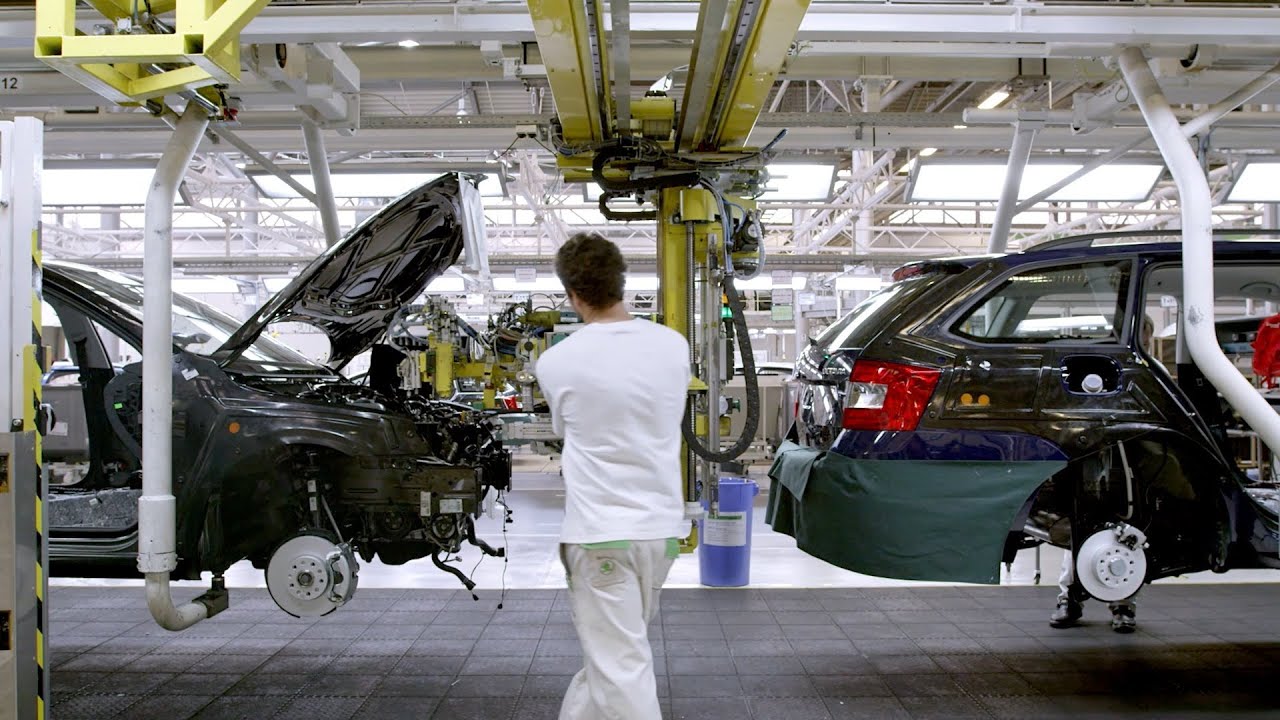
Italian car production continues positive trend
Italian passenger car production increased in the first quarter of the year, showing a trend reversal compared to 2025, Kallanish learns from preliminary data by automotive association Associazione Nazionale Filiera Industria Automobilistica (Anfia).
March car production rose by 7.7% year-on-year to 32,100 units. January-March output also increased by 9.3% on-year to 73,300 cars.
By comparison, the UK recorded a slight 0.8% y-o-y decline in March to 69,800 units and an 6.7% fall in the first quarter to 200,900 cars. Spain also saw a production decrease of 0.6% to 170,800 units in March and 4.7% in Q1 to 500,000 cars.
German production ticked up in March by 3% to 400,800 units but decreased by 2% to 1.1 million units in January-March, Anfia says.
The most recent data indicates that in 2025, French car production experienced a y-o-y increase of 16.6% to 1 million cars.
“The automotive sector is operating within a broader context of a slightly increased Italian industrial production in March 2026 compared with the levels of the same month last year. The overall industrial production index recorded a 1.5% increase in March and closed with a slightly positive figure (+0.5%) in the first three months of the current year compared with the same period in 2025,” Anfia says in a note.
“There is considerable anticipation ahead of the Stellantis Group’s industrial plan presentation… from which clearer indications are finally expected regarding the future of Italian plants, with hopes that production levels can gradually return to those appropriate for a market the size of Italy,” Anfia director Gianmarco Giorda adds.
In 2025, car output stood at 237,800, down by 23.2% y-o-y, Kallanish notes.


Nippon to join EU steelmaking elite
Nippon Steel will form a 5.5 million tonnes/year crude steel capacity European steelmaking operation when it consolidates US Steel Kosice (USSK) and Ovako under direct ownership. The Japanese steelmaker aims to capture policy-supported regional demand and leverage its technological strengths to serve high-grade steel segments, Kallanish notes.
Nippon announced last week it will transition USSK to direct ownership and rename the unit to Nippon Steel Slovakia effective 1 October. The same will happen to Sweden-headquartered special steelmaker Ovako once Nippon completes in April 2027 its merger by absorption of subsidiary Sanyo Special Steel, which owns Ovako.
Nippon says it is “aiming to develop our European business through the formulation and execution of a growth strategy from a long-term perspective, including maximising synergies with Nippon Steel, upgrading product mix, and strengthening products and distribution channels.”
Ovako is a 1m t/y electric arc furnace-based crude steelmaking capacity specialty steel bar and wire rod producer with sites in Sweden and Finland, while USSK is a major blast furnace-based flat and electrical steelmaker, with 4.5m t/y of crude steel capacity situated in Slovakia.
In Central and Eastern Europe, USSK’s main markets, steel demand is expected to increase in the medium to long term due to factors such as the relocation of customer bases to the eastern regions, Nippon said last week.
The new structure would make Nippon a top ten EU crude steelmaker by capacity – unprecedented for a Japanese firm – behind heavyweights such as ArcelorMittal, thyssenkrupp Steel, Tata Steel, SSAB, voestalpine, Salzgitter, Celsa and Riva. Although Acciaierie d’Italia used to be near the top of this list, its effective capacity has dropped considerably due to well-publicised problems.
The move should also provide relief for USSK’s workforce which has faced some uncertainty over future plans for the Kosice plant since US Steel was acquired by Nippon last year.
Iberian HRC prices remain steady, demand volatile
Hot rolled coil prices have remained stable so far in May in the Iberian market. However, demand has failed to pick up due to buyers’ cautious stance, market sources tell Kallanish.
“Higher prices reflect increased costs resulting from the effects of the US-Israel-Iran war,” says one seller. “It is difficult to predict when the market will recover.”
According to another source, steelmakers are limiting production whilst attempting, albeit in vain, to secure higher prices for new contracts.
“HRC values have been stable for a couple of months now. The anticipated adjustment, which was expected to set the selling price at €800/tonne [$931.1], has not materialised,” he explains.
“Although we suppliers have accepted in recent weeks that we need to reduce our profit margins, consumers and the market in general seem to have reached a limit in terms of what price adjustments they are willing to accept. The pressure is now on the producers,” comments a distributor. Orders are currently limited to small-scale projects, he adds.
In addition to the effects of rising energy prices and the disruption to trade flows resulting from the conflict in the Gulf, the Spanish steel market is also concerned about the impact of the EU’s new steel trade regime from July.
“We are currently going through a period of difficult transformation in the sector. CBAM and the new protectionist measures will keep selling prices, which are already higher, considerably above those of imported goods. This, combined with rising transport costs, is significantly dampening consumer interest at the moment,” a market participant observes.
Despite the general optimism for a recovery in demand expressed during the recent Eurometal Steel Net Forum Iberia in Santander, most suppliers recognise that, in the short term, end-users will find it very difficult to prioritise value-added offers when making decisions about new projects. This is particularly the case if local steelworks are reluctant to make concessions.
Spanish HRC prices stand at €730-740/t ex-works. Distributors’ levels have surpassed €750/t delivered.
BCC warns UK steel quota changes could disrupt supply chains
The British Chambers of Commerce (BCC) has warned that planned changes to the UK’s steel import quota and tariff system could significantly increase costs for manufacturers and create major disruptions across industrial supply chains.
In a letter sent to Peter Kyle, UK Business secretary, the BCC argued that the proposed measures risk causing “real financial and logistics problems” for downstream industries including construction, engineering, and manufacturing. Business groups warned that higher steel costs could encourage offshoring of manufacturing, increased imports of finished products, and sourcing from lower-cost overseas suppliers.
Under the new system scheduled to take effect on July 1, the UK plans to reduce tariff-free steel import quotas by 60 percent overall, as SteelOrbis previously reported, exceeding the European Union’s recently announced 47 percent reduction. Some steel product categories reportedly face quota cuts of up to 90 percent.
At the same time, tariffs on imports exceeding quota limits are set to increase from 25 percent to 50 percent, substantially raising costs for companies dependent on imported steel products.
Manufacturers warn of major cost increases
According to the BCC, many UK manufacturers rely on imported steel grades that are not available from domestic suppliers. Industry representatives warned that the proposed changes could add millions of pounds in additional costs, reduce international competitiveness, delay production, and disrupt existing supply chains. Some firms reportedly indicated they may need to halt production entirely if specialist steel products become unavailable or prohibitively expensive.
Manufacturers also warned that the measures could undermine the UK’s climate and industrial policy objectives. According to the BCC, companies may be forced to purchase cheaper steel from less sustainable overseas sources if access to competitively priced imported steel becomes restricted. This could negatively affect domestic industrial investment, supply chain resilience, and net-zero transition efforts.
Businesses call for policy adjustments
The BCC proposed several measures to reduce potential disruption, including:
- reducing the scale of quota cuts,
- phasing in the proposed 50 percent tariff increase,
- extending transitional easements for existing contracts,
- publishing a full impact assessment,
- accelerating negotiations on a UK-EU steel trade agreement.
The organization urged the government to rebalance the policy framework to support the entire steel ecosystem rather than only domestic primary steel production.
Author: SteelOrbis Editorial Team


New EU steel import regime enters law, effective 1 July
The European Parliament successfully adopted the EU’s new steel import regime, 19 May, introducing significant restrictions to steel importaccessibility to combat the negative impact of global steel overcapacity on the European steel industry.
Members of the European Parliament voted to adopt the regulation at first reading, as well as a joint statement from EU authorities on the continuedaccess of Russian steel slabs to the single market. The regulation was adopted with votes of 606 in support; 16 against; and 39 abstentions.
Approximately halving overall tariff quota volumes, and doubling the out-of-quota duty rate to 50%, the new regulation will serve as a long-termreplacement to the EU’s existing steel safeguard system from 1 July, ensuring no gap is left in the EU’s steel trade defenses as the safeguardreaches its maximum eight year term under WTO rules. Continuing any steel protections (besides anti-dumping and countervailing duty measures)past this eight year deadline is legally complex, requiring negotiations under the WTO General Agreement on Tariffs and Trade (GATT) Article XXVIII toseek trading partner agreement to increase the EU’s base tariff rate to 50%, from its current 0% or minimal level.
Further complicating matters are the EU’s various Free Trade Agreements (FTA), which cover the majority of steel imports to the bloc. The regulationwill apply the tariff increase, and quotas restrictions, on all steel trading partners regardless of FTA status, though FTA partners will very likelyreceive higher volume allocations to relevant quotas, than non-FTA WTO members.
Adopted alongside the regulation is a joint statement from the EU Commission, Council, and Parliament, that clarifies that existing sanctionsexemptions for Russian steel slabs will continue until the end of September 2028. While the new import regime specifically prevents the opening ofquotas for sanctioned countries (i.e Russia), semi-finished steel – including slabs – are not included in the scope of the regulation, and so theiraccess to the single market remains unaffected from July.
Rapporteur for the drafting of the regulation, Karin Karlsboro, spoke in the European Parliament the evening prior, stating that EU authorities hadreached an agreement to bring a “sharp end” to Russian steel imports, describing the blocking of Russian supply as the “lowest-hanging fruit” inthe context of tackling overcapacity. However, it is unclear how the statement, or wider regulation in any way adjusts the existing treatment ofRussian steel slabs, leaving the existing phase-out schedule untouched despite industry calls for an early ban to the exemption.
McCloskey has closely followed the drafting process of the new steel import framework since it was first announced in the European Commission’sSteel and Metals Action Plan (SMAP). McCloskey exclusively broke details of the regulatory proposal in October last year, confirmed by the official publication of the proposal the following week.
Since then, the regulation has undergone several amendments as part of the EU’s trilogue process, including bringing back a temporarycontinuation of the previous carry-over mechanism for the new regulation’s first year, allowing unused quota allocations to be transferred to thenext quarter. The Commission announced
that lawmakers had reached a provisional agreement to adopt the regulation in mid-April – with McCloskey’s sourcing and analysis of the finalnegotiated text detailing:
- factors for consideration in the Commission’s allocation of quota volumes to specific trading partners (details remain unavailable);
- how quotas for Free-Trade Agreement (FTA) partners will be administered;
- the inclusion of “melt and poured” criteria as a traceability mechanism, to be considered as the basis for allocation to country-specific quotas;
- the logistical and temporary continuation of the carry-over mechanism, to be reviewed after the new regulation’s first year;
- review processes to potentially extend protections to downstream products, with first products to be assessed before end-of-year;
- the scope and oversight of the Commission’s power to adjust quota levels.
Ultimately, the official adoption of the regulation clarifies little for European importers of steel that they did not already know – both due to the timesince the original regulatory proposal, and the lack of details on the allocation of these adopted quota levels to specific origins. Operationally, theseimporters remain in the dark when trying to assess cost risks on the international market, and distributors are either holding back from importing asa result, or have already shifted the burden to traders via DDP purchasing as a result of 2026’s other regulatory blow to trading confidence: theCarbon Border Adjustment Mechanism (CBAM).
Speaking in the European Parliament the evening prior, the Commission stated EU trade representatives were actively negotiating with “over twentytrading partners” in Geneva as part of the Article XXVIII process – commenting that the EU was being “very transparent” about its desired outcome,and methods, for the discussions.
The adopted text can be found here.
Author: Benjamin Steven

European longs market at a standstill, further price hikes possible
The European longs market has shown no major movements this week, as prices remain high due to the lack of material but, despite this, final consumers are not willing to buy, waiting for prices to roll back.
As for the Polish market, the situation seems to have reached a standoff. Long steel buyers are trying to resist price hikes, and those who can buy from the largest producers are the most favored. A wire rod seller in Poland has stated that the market is becoming more and more difficult, as the prices they are offering are too high for the local market. “This is the situation in Poland. The ones who can buy from the major producer can find material at €680/mt [delivered]. However, this producer only sells to selected customers. As a consequence, those who cannot buy from them must accept higher prices up to €720/mt [delivered], but this trend will not be sustainable for long”.
“Buyers misread the market. They had fixed projects at low prices at the beginning of the year and now they are trying to avoid incurring losses. Eventually they will accept the inevitable,” another source commented about the Polish market.
Further price hikes are expected in the local Polish market in June, by at least €25/mt, but most sources believe that – in the end – a €5/mt hike will materialize.
According to market sources, there have been offers for rebar and wire rod from Ukraine to the Baltic region at around €660/mt CPT and €680-690/mt CPT, respectively, and import offers from Algeria to the same region at €570/mt CFR for rebar and €580/mt CFR for wire rod.
In Spain, the average wire rod price in the domestic market has been reported at €690-720/mt CPT. No variations have been observed in exports towards the UK.
As for imports, Turkey has been offering at unchanged levels compared to last week, and rebar and wire rod have been reported at €550-565/mt CFR and €560-570/mt CFR, respectively. Egyptian offers have been reported at €560-565/mt for rebar and at €565-575/mt for wire rod and wire rod in coils. Finally, Algerian prices have been observed at €540-555/mt for rebar and around €560/mt for wire rod.
€1 = $1.16

Bulgarian longs prices mostly unchanged amid balanced demand, sufficient stocks
The Bulgarian longs market has maintained a relatively stable performance this week, as balanced demand conditions and sufficient stock availability have continued to limit significant price fluctuations on both the supplier and trader sides.
Although overall trading activity remains somewhat slow, market participants report that regular purchasing activity has continued, helping the market preserve its current stability. In addition, the absence of fresh import activity has further contributed to the relatively unchanged market environment in Bulgaria. Market sources note that EU-origin material is becoming less preferred due to rising prices in surrounding markets, while offers from non-EU suppliers have become increasingly limited following previous bookings, particularly amid ongoing CBAM-related pressure and reduced quota volumes. Under these conditions, both local producers and traders have largely maintained their previous workable price levels, although traders are still reported to remain open to discounts for larger tonnages.
In the local market, rebar prices from both producers and traders are currently heard at around €640-650/mt CPT, while wire rod prices are reported at around €680-690/mt CPT.
In the import segment, fresh purchasing activity remains very limited, as most buyers are considered to have sufficient stocks from earlier bookings and continue to source material locally whenever needed. In the non-EU import segment, Turkish rebar indications are currently estimated at around $590-605/mt FOB, which, after adding freight costs of around €20-25/mt, would correspond to approximately €525-545/mt CFR Bulgaria. Meanwhile, Egyptian suppliers are estimated to be offering rebar at around $600-610/mt FOB and wire rod at around $620-625/mt FOB. Considering freight costs of around €25-30/mt, these levels would theoretically correspond to approximately €535-550/mt CFR for rebar and €555-565/mt CFR for wire rod. However, despite the relatively attractive theoretical levels, no fresh bookings have been heard recently from either Turkish or Egyptian suppliers.
As regards imports from EU countries, according to sources, Italian origin rebar offers have recently been heard at around €635-645/mt DAP Bulgaria, while Romanian origin rebar indications are estimated at around €660-670/mt delivered Bulgaria, based on current ex-works levels of around €630-640/mt and freight costs estimated at approximately €30/mt. However, these Romanian levels are currently considered to be relatively high for Bulgarian buyers, and no fresh purchases have been heard recently. Meanwhile, Greek wire rod offers have lately been heard at around €650/mt CPT for some small tonnage requirements.

Huta Częstochowa signs agreement to support Polish defense industry supply chain
Polish steelmaker Huta Częstochowa, a subsidiary of Poland-based coking coal exporter Węglokoks, has signed a cooperation agreement aimed at supporting the development of Poland’s defense industry supply chain, according to an announcement from the Polish Ministry of National Defence.
In addition, as part of the broader restructuring and strategic development plans for the plant, Poland’s Military Property Agency is expected to become a co-owner of Huta Częstochowa. The move is intended to strengthen state involvement in the steelworks and secure long-term production capacity for strategically important steel products used in the defense sector. The planned ownership structure reflects Poland’s increasing focus on protecting critical industrial assets linked to national security and military production.
Government stresses industrial sovereignty
Officials participating in the agreement highlighted the importance of maintaining domestic steelmaking capacity and ensuring reliable access to strategic materials.
The initiative forms part of broader Polish efforts to:
strengthen industrial sovereignty,
increase defense manufacturing capacity,
reduce dependence on imported strategic products.
Huta Częstochowa continues operational recovery
The agreement comes as Huta Częstochowa continues rebuilding production volumes and market activity following previous operational and financial difficulties. The company recently surpassed 500,000 mt of steel production under its current management structure, reflecting ongoing operational stabilization, as SteelOrbis previously reported.

UNESID urges EU to maintain open and balanced steel trade with UK
The Spanish steelmakers association UNESID has stated that it supports cooperation with the UK government to address global steel overcapacity and unfair competition following a meeting in Madrid with UK Secretary of State for Business and Trade Chris Bryant.
During the discussions, UNESID addressed the potential impact of recent changes to UK steel safeguard measures on steel trade flows between the UK and the European Union.
The association emphasized that maintaining open and balanced steel trade between the UK and the EU is in the mutual interest of both sides amid the current complex international market environment.
Association supports balanced EU-UK agreement
UNESID expressed support for a constructive agreement designed to preserve traditional trade flows between the closely connected European and British steel markets.
The association also stated that it is willing to support an arrangement based on historical trade exchanges while strengthening cooperation between the European and UK steel sectors in combating global overcapacity and unfair trade practices.
According to UNESID, the European Union should prioritize market access for historical trading partners that share European economic, environmental, and social standards. It also welcomed the ongoing dialogue between the UK, Spain, and the EU and said it expects the discussions to contribute to a more stable and predictable framework for cooperation between strategic partners.
Industry warns against uncoordinated trade measures
Carola Hermoso, director general of UNESID, stated that the European and British steel industries are facing common challenges within an increasingly complex global market environment. She added that trade measures should be designed in a coordinated manner in order to avoid disproportionate impacts and preserve balanced bilateral relations.
UNESID also stressed the importance of strengthening cooperation at a time when the global steel market continues to face structural imbalances and trade practices that may distort international competition.

European domestic steel HRC market still subdued on public holidays
Trading remained subdued in Europe’s domestic markets for steel hot-rolled coil on Monday May 18, with public holidays curbing demand.
Last week, several countries in the region celebrated Ascension Day on April 14 and had a public holiday on April 15.
And at the end of the current week, most countries in the region will celebrate Whit Sunday on May 24, followed by Whit Monday. And on June 4, they will celebrate Corpus Christi.
As a result, market participants did not expect to see any increase in demand in the coming weeks, with prices remaining relatively stable.
In Northern Europe, HRC offers scheduled for delivery in July were heard around €700 ($833) per tonne ex-works. Indications of workable prices varied within the range of €680-695 per tonne ex-works, with no major bookings heard during the day.
Trade sources indicated that June delivery volumes were largely sold out by the mills.
Fastmarkets’ daily steel hot-rolled coil index, domestic, exw Northern Europe, was calculated at €688.75 ($819) per tonne on May 18, up by €5.00 per tonne from €683.75 per tonne on May 15.
The index was up by €5.83 per tonne week on week but down by €19.58 per tonne month on month.
The Italian market was also largely quiet with offers heard at €700 per tonne ex-works.
Some bookings were reported within the range of €670-675 per tonne ex-works and indications of tradeable levels were in a slightly wider range of €670-680 per tonne ex-works.
As a result, Fastmarkets’ daily steel hot-rolled coil index domestic, exw Italy, was assessed at €680.63 per tonne on May 18, down by €3.54 per tonne from €684.17 per tonne on May 15.
The index was up by €4.38 per tonne week on week but down by €17.87 per tonne month on month.
On the import, side information was circulating in the market about a cargo of Turkish material being booked within the range of €660-690 per tonne DDP Italy, as well as an Algerian cargo at $750-760 per tonne CFR, but these could not be widely confirmed at the time of publication.
Market sources also reported offers of Algerian HRC at €670 per tonne CFR Italy, and Turkish coil at €600 per tonne CFR excluding anti-dumping duty. Asian HRC was heard available at €640-660 per tonne DDP.
In Northern Europe, interest in imported material was minimal, with buyers saying that higher freight rates were making import prices less competitive than domestic options, while there were a lot of risks connected with trade protection measures and delivery.
