


Green steel standards and CBAM reshape Turkish steel industry
Within the scope of the “Decarbonization of the Turkish Steel Industry” project coordinated by the Istanbul Policy Center, industry representatives, public institutions, researchers, and participants from steel-consuming industries came together at the “Information Session on the Turkey Steel Industry Network Working Program.” During the meeting, topics such as the European Union’s Carbon Border Adjustment Mechanism (CBAM), low-emission steel definitions, green steel standards, financing challenges, and the sector’s transformation process were discussed.
Speaking at the opening of the meeting, Project Coordinator Dursun Baş from the Istanbul Policy Center stated that the “Decarbonization of the Turkish Steel Industry” project, which started in June 2022 and will complete its fourth year as of June 2026, initially focused on crude steel producers in Turkey. Baş explained that the project involved not only crude steel producers, but also public institutions, industry associations, financial organizations, and steel-consuming sectors through collaborative efforts. He emphasized that the decarbonization of the sector is not solely the responsibility of crude steel producers and stated that this transformation must be addressed together with the energy, natural gas, logistics, financing, public policy, and steel-consuming sectors. Noting that the Turkish steel industry’s emissions burden does not stem only from integrated mills, Baş said that electric arc furnace-based plants also generate significant indirect emissions due to their high electricity consumption. He additionally pointed out that emissions arising from natural gas usage, transportation, and logistics are also significant.
Verified emissions data and financing pressures mark new phase
Speaking during the meeting, Muammer Bilgiç, executive board member of Bilecik Demir A.Ş., stated that the benchmark and default emission values announced by the EU under CBAM mark the beginning of a new era for the sector. Bilgiç noted that in the past, companies were evaluated based on indicators they defined themselves, whereas verified emission data will now serve as the basis. He stressed that companies are now considered green only to the extent of their verified values. Bilgiç also remarked that electric arc furnace-based facilities may not be as advantageous as previously believed, noting that under CBAM, arc furnace-based facilities and basic oxygen furnace-based facilities are evaluated within their own respective categories. Emphasizing that sustainability efforts in the steel sector should no longer remain solely the responsibility of environmental departments, Bilgiç said that procurement, production, finance, and management processes must all be integrated into the transformation process.
Hasan Akbulut from the Turkish Steel Producers’ Association stated that the world is entering a new era in trade, with globalization increasingly giving way to trade nationalism. Akbulut noted that pressure on the sector has intensified during the EU’s emissions trading system revision process, saying, “This transformation is being carried out in the EU with substantial state support. Without resolving the financing issue, it will not be easy to move this process forward.” Akbulut stated that the Turkish steel industry continues to invest in energy efficiency, material efficiency, and renewable energy, but companies are forced to prioritize due to high investment costs. He also noted that the EU is developing new mechanisms to protect its own steel industry, while emphasizing that Türkiye should not lose access to the EU market despite these developments.
Barış Bora, environmental manager at İçdaş, stated that uncertainties surrounding CBAM practices are making trade more difficult. Bora explained that the CBAM-related costs arising from sales to the EU in 2026 will only become clear in 2027, creating significant risks for producers and importers. He also stated that the methodologies published by the EU contain uncertainties regarding verification processes, adding that differences may emerge between the verification systems used in Türkiye and the EU’s practices. Furthermore, Bora said that imported raw materials and the use of Russia-origin billet create additional complications in CBAM calculations. Referring to the the EU’s sanctions against Russia, Bora noted that uncertainties have emerged in the calculation methodologies and that under the current system, producers may in some cases effectively appear as though they are using Russian steel.
Bahar Güçlü, deputy permanent representative at permanent delegation of Turkey to the EU, stated that the world is entering a new era of trade wars centered on technology and the green transition. Noting that the EU aims not only to increase its own production but also to support low-emission manufacturing, she said, “While the EU protects its own industry, it is also placing green transition pressure on its producers.” Güçlü stated that efforts to expand the scope of CBAM in the EU are ongoing and that including sectors such as automotive and white goods in the system is also being discussed. She added that the EU is trying to encourage the use of green steel through public procurement, funding mechanisms, and new regulations, and emphasized that Türkiye should also establish mechanisms to increase demand for green products in its domestic market.
EU green steel criteria could favor high-emission producers
In the second part of the meeting, Daniel Pietikäinen, steel policy manager at Belgium-based non-governmental organization Bellona Europa, delivered a presentation on the EU’s low-emission steel classifications and eco-design regulations. Pietikäinen stated that the classification system developed by the EU covers products such as hot rolled coil, wire rod, galvanized steel, stainless steel, and electrical steel. He said the Industrial Accelerator Act is intended to create “lead markets” for low-carbon steel and other products, while the Ecodesign for Sustainable Products Regulation (ESPR) will establish the definition of low-carbon steel for intermediate products. According to Pietikäinen, the Construction Products Regulation (CPR) will later define low-carbon steel specifically for construction products, particularly long products.
Pietikäinen noted that the EU’s low-carbon steel classifications are based on emissions values per ton and that steel used in public procurement will be categorized into specific classes. The draft system applies a sliding-scale classification based on scrap content, with Class A and Class B corresponding to categories eligible for green public procurement. He described the methodology as relatively lenient. According to Daniel, the methodology incorporates Scope 1, Scope 2, and Scope 3 emissions data, using ETS data for EU-based facilities, CBAM default values for non-EU plants, and modeled life-cycle emissions for production outside the EU.
He argued that the methodology relies on global production data rather than data limited to the EU market, while also applying inflated CBAM default values in a way that shifts more plants and products into the greener classification categories. In his view, this approach allows many blast furnace-basic oxygen furnace (BF-BOF) and electric arc furnace (EAF) products produced in the EU to qualify for the highest green classes, making the labeling framework overly permissive.
Daniel specifically noted that for wire rod products, Class A covers emissions ranging from zero to 0.87 mt of CO2 per mt, while Class B ranges from 0.87 mt to 2.43 mt of CO2 per mt. For hot rolled coil, he said the proposed thresholds are similarly high, meaning nearly all EAF-based products and a significant portion of EU BF-BOF products would qualify under green public procurement criteria. Stating that the EU aims for 25 percent of the steel used in public procurement to consist of low-emission steel by 2030, Pietikäinen said that the current drafts contain relatively advantageous thresholds, particularly for high-emission producers in Europe. He also noted that the classification methodology prepared by the European Commission using global production data and CBAM default values has sparked debate. According to Pietikäinen, the current system may allow many high-emission facilities in Europe to fall into the “green” category, which could send misleading signals to the global steel industry.


Timeline of EU post-safeguard steel measures
The European Parliament’s Committee on International Trade (INTA) adopted last week the provisional agreement on the proposed steel safeguard replacement measure resulting from last month’s interinstitutional negotiations, Kallanish notes.
The text will be voted on in plenary by the European Parliament, likely on 18 May.
| Timeline | Requirement / action | Details |
| 30-Jun-26 | Current safeguard expiry | Existing EU steel safeguard regime expires |
| 01-Jul-26 | New regime starts | New post-safeguard regulation to enter into force with annual tariff quotas and 50% out-of-quota duty |
| Before 1 July 2026 | Urgent quota allocation acts | Commission may adopt urgent implementing acts to ensure country quota distribution is ready before the regime starts |
| 01-Jul-26 | Stakeholder consultations begin | Commission must launch consultations on possible expansion of product scope ahead of the first review |
| 31-Aug-26 | Melt-and-pour evidence rules | Commission must define acceptable evidence importers will need to provide under the melt-and-pour system, while considering SMEs and administrative burden |
| 01-Oct-26 | Melt-and-pour reporting obligation starts | Importers must provide verifiable evidence, such as mill test certificates, proving where steel or iron was first produced in liquid form and cast into its first solid state |
| 31-Dec-26 | First product scope review | Commission must assess whether additional CN-coded products, including certain cast iron tubes, wire products and bars, should be added to the regime |
| 01-Jul-27 | Quarterly quota carry-over decisions begin | Commission starts deciding whether unused quarterly quotas can continue to be carried over, depending on quota utilisation, import pressure and downstream supply conditions |
| 30-Jun-27 | Downstream products review | Commission must assess whether the regime should expand to downstream products made of, or containing, significant amounts of steel |
| 01-Oct-27 | Melt-and-pour data used in quota allocation | Melt-and-pour information formally becomes one of the criteria considered in country quota distribution |
| 30-Jun-28 | Melt-and-pour quota eligibility review | Commission must assess whether melt-and-pour origin should become the formal basis for benefiting from tariff quotas |
| 30-Jun-28 | First implementation report | Commission must publish a report covering quota utilisation and out-of-quota imports. Reports continue every two years thereafter |
| 30-Jun-29 | First effectiveness review | Commission must evaluate the regulation’s effectiveness, including impacts on prices, capacity utilisation, downstream sectors, consumers and decarbonisation. Reviews continue every three years thereafter |
Source: European Parliament Committee on International Trade (INTA) amendment report
Author: Elina Virchenko


US trade court rules Trump’s 10% global tariff illegal
The US Court of International Trade ruled that the 10 percent global tariff imposed by president Donald Trump under Section 122 of the Trade Act of 1974 is illegal, marking the second judicial defeat this year for the administration’s tariff regime.
Trump invoked Section 122, a never-before-used provision allowing temporary import surcharges of up to 15 percent for 150 days to address balance-of-payments deficits, back in February after the Supreme Court struck down his earlier sweeping tariffs imposed under the International Emergency Economic Powers Act. The Section 122 surcharge was set to expire July 24.
The court rejected the administration’s argument that the statute’s reference to “balance-of-payments deficits” is equivalent to a trade deficit. The majority wrote that permitting the president to select among sub-accounts to identify such a deficit would grant the executive virtually unlimited tariff authority that belongs to Congress. The third judge dissented, finding the law allows the president broader leeway.
The injunction applies only to the plaintiffs, namely, two small businesses and the state of Washington, while collections continue for most importers. Claims brought by a larger group of Democratic-led states were dismissed for lack of standing. The Department of Justice filed a notice of appeal on May 8 with the US Court of Appeals for the Federal Circuit.
The ruling does not affect steel and aluminum tariffs, which were imposed under Section 232 of the Trade Expansion Act of 1962 on national security grounds and remain in force.

Tenaris acquires Artrom Steel Tubes to expand seamless pipe capacity in Europe
Luxembourg-headquartered international steel tube producer Tenaris has announced a definitive agreement to acquire Romanian steel and seamless pipe manufacturer Artrom Steel Tubes S.A. The deal is set to strengthen Tenaris’s production base in Europe and expand its product offering for customers in the industrial pipe segment.
According to the company’s announcement, Tenaris will acquire 100% of the share capital of Artrom Steel Tubes S.A. from GLGH Steel, LLC, a US-based company. The aggregate purchase price has been set at €86 million on a cash-free and debt-free basis, including a normalized level of working capital. The transaction is expected to close during the fourth quarter of 2026.
Artrom Steel Tubes S.A. manufactures steel and seamless steel pipes in Romania. The company operates two major production sites:
Reșița facility: annual steelmaking capacity of approximately 450,000 mt
Slatina facility: seamless pipe rolling capacity of up to 200,000 mt per year
These assets are expected to support Tenaris’s European industrial pipe operations and strengthen its regional manufacturing network.

European heavy plate round-up: EU plate stable as CBAM costs suggest price floors
Activity in the European heavy plate market has been limited in the week to 8 May, but this has not resulted in any significant change in prices.
“Demand for plate in on the lower side, but the market is not completely dead and some volumes are traded,” an Italian buyer said.
Italian re-rollers have been settling deals for s235jr/s275jr grade plate at around EUR750/t ex-works for big tonnages and at EUR760-780/t ex-works for smaller lots.
Despite a lack of support from demand, plate prices are unlikely to slide due to high costs for steelmakers, particularly re-rollers.
European re-rollers traditionally rely on imported semi-finished products and after taking into account Carbon Border Adjustment Mechanism (CBAM) duties, they have little room for discounts.
Slab offers have been heard at $600-610/t CIF for material from China. The next round of purchases is expected to be settled at around $600/t CIF.
Re-rollers must take CBAM duties into account, which they estimate to be around EUR50-80/t. However, until exporters secure the required verification, which will take place in 2027 for imports custom cleared in 2026, European importers face the risk that duties will be calculated using default values, potentially leading to significantly higher costs.
Domestic prices were supported by reduced capacities, as two Italian re-rollers – Metinvest and Marcegaglia – had production stoppages at their rolling mills.
In Germany, domestic s235jr plate prices have been reported at EUR800-850/t ex-works.
| Weekly European heavy plate, slab and green steel | |||||
| Unit | Term | 08-May-26 | Change | ||
| Weekly heavy plate | |||||
| Northwest Europe ex-works heavy plate | EUR/t | EX-WORKS | 820.00 | 0.00 | |
| Germany delivered heavy plate (Northwest Europe) | EUR/t | DEL | 860.00 | 0.00 | |
| Italy ex-works heavy plate | EUR/t | EX-WORKS | 765.00 | -10.00 | |
| Weekly steel slab | |||||
| Italy CFR slab | $/t | CFR | 605.00 | -5.00 | |
| Weekly green steel | |||||
| Green heavy plate premium (scopes 1-3 CO2 under 1t) | EUR/t | 25.00 | 0.00 | ||
Author: Benjamin Steven & Maria Tanatar


European coil and green steel round-up: EU coil market stable, muted trading activity
European coil prices remained largely stable in the week to 8 May while trading activity remained muted and the majority of steelmakers still have June shipment coil.
Buyers have been avoiding restocking beyond filling gaps for particular specifications in their portfolio. The slowdown in apparent demand has also been driven by a lack of clarity regarding new import quotas to be implemented as part of new safeguard measures due to take effect from 1 July. While the general framework is clear, including a reduction of quotas by 47% and doubling duties to 50%, no decision has been announced regarding country-specific quotas.
The lack of clarity has led buyers to shift from import to domestic suppliers, but overseas material already custom-cleared in the EU has been available at more competitive prices compared to domestic coil, according to market sources.
Some revival in demand is expected once the new quotas are revealed, and buyers will be able to plan their purchases.
The reduced availability of imported coil and impact of the Carbon Border Adjustment Mechanism (CBAM) failed to prevent domestic price declines.
“European prices lost momentum and the support from CBAM, reduced import volumes, and tougher trade measures did not prevent the decrease,” a distributor said.
While the majority of market sources agreed that different mills aligned their hot-rolled coil (HRC) prices on an ex-works basis at the lower end of last week’s range, they also do not see a significant decline in delivered prices due to rising transportation costs.
In Northwest Europe, deals and workable prices for June-July shipment domestic HRC have been reported at EUR680-695/t ex-works. Some official offers remained higher – at around EUR700/t ex-works.
In Italy, domestic HRC prices have been heard at EUR570-590/t ex-works.
Import availability remained limited as some exporters were holding back offers awaiting a final decision on quotas.
In South Europe, a Turkish steelmaker has been offering HRC at EUR590-600/t CIF Italy, including anti-dumping duties. Buyers showed limited interest in the material as Turkish mills have already sold significant volumes to the EU and they are likely to exceed quotas, exposing potential importers to 50% duties.
Offers of HRC from Thailand have been reported at EUR660-670/t CIF and from Algeria – at around EUR670/t CIF.
Availability of imported HRC custom-cleared in 2025, before CBAM came into force, remained high and at prices more competitive than both new import offers and domestic prices – around EUR640-650/t DDP.
New offers of HRC from Asia have been reported at EUR700/t DDP European ports.
Green steel market
Spot buyers have largely continued to avoid booking green steel due to concerns over additional cost risks. However, demand from end users and projects has shown some improvement amid efforts toward meeting decarbonisation targets.
In particular, the construction and automotive sectors find lower-CO2 steel an effective and relatively straightforward way to reduce their carbon footprints.
End users have been accepting higher premiums, whereas spot buyers have generally only been willing to pay EUR80–100/t, mainly for back-to-back transactions.
| Weekly European steel coil | |||||
| EUR/t | Term | 08-May-26 | Change | ||
| Weekly Northwest Europe steel coil | |||||
| Northwest Europe ex-works HRC | EX-WORKS | 685.00 | 0.00 | ||
| Northwest Europe ex-works CRC | EX-WORKS | 820.00 | 0.00 | ||
| Northwest Europe ex-works HDG | EX-WORKS | 820.00 | 5.00 | ||
| Northwest Europe CIF HRC | CIF | 620.00 | 0.00 | ||
| Northwest Europe DDP port HRC | DDP Port | 720.00 | 0.00 | ||
| Show more… | |||||
| Source: McCloskey by OPIS. | © 2026 Dow Jones Energy Limited. | ||||
| Weekly green steel | |||
| EUR/t | Term | 08-May-26 | Change |
| Green Northwest Europe HRC premium (scopes 1-3 CO2 under 0.8t) | 100.00 | 0.00 | |
| Green Northwest Europe ex-works HRC (scopes 1-3) | EX-WORKS | 785.00 | 0.00 |
| Green HRC premium (scopes 1-2 CO2 under 0.5t) | 100.00 | 0.00 | |
| Green Northwest Europe ex-works HRC (scopes 1-2) | EX-WORKS | 785.00 | 0.00 |
| Green HRC reduced carbon price (scopes 1-3) | 74.66 | 0.00 | |
Author: Benjamin Steven & Maria Tanatar

Ahmet Özkan elected president of YİSAD
Ahmet Özkan has been elected as the new President of YİSAD – Flat Steel Exporters and Industrialists Association following the association’s 12th Ordinary General Assembly Meeting, held on 8 May 2026 at the Kavacık Trade Center in Türkiye.
Özkan, who also serves as Chairman of Dempaş Demir, succeeds to the presidency of the association after elections which also confirmed the appointment of new members to the Board of Directors and Audit Committee.
In the new administration, Metin Tayfun İşeri and Ahmet Soybaş were elected as vice-presidents. Murat Eryılmaz was the general secretary and Hakkı Can Şaylan assumed the role of accountant.
The members of the Board consisted of Gökhan Demiruz, Mehmet Ali Fincan, Akın Tatoğlu, Abdullah Akgün, Tolga Erdoğdu and Ahmet Koyuncu. Ersoy Yılmaz, Halil Bayık and Mustafa Kemal Akmermer were elected as members of the Supervisory Board.
YİSAD represents companies active in the flat steel sector and plays an important role within the Turkish steel industry and export community.
EUROMETAL congratulates Ahmet Özkan on his appointment and wishes him success in his new role.
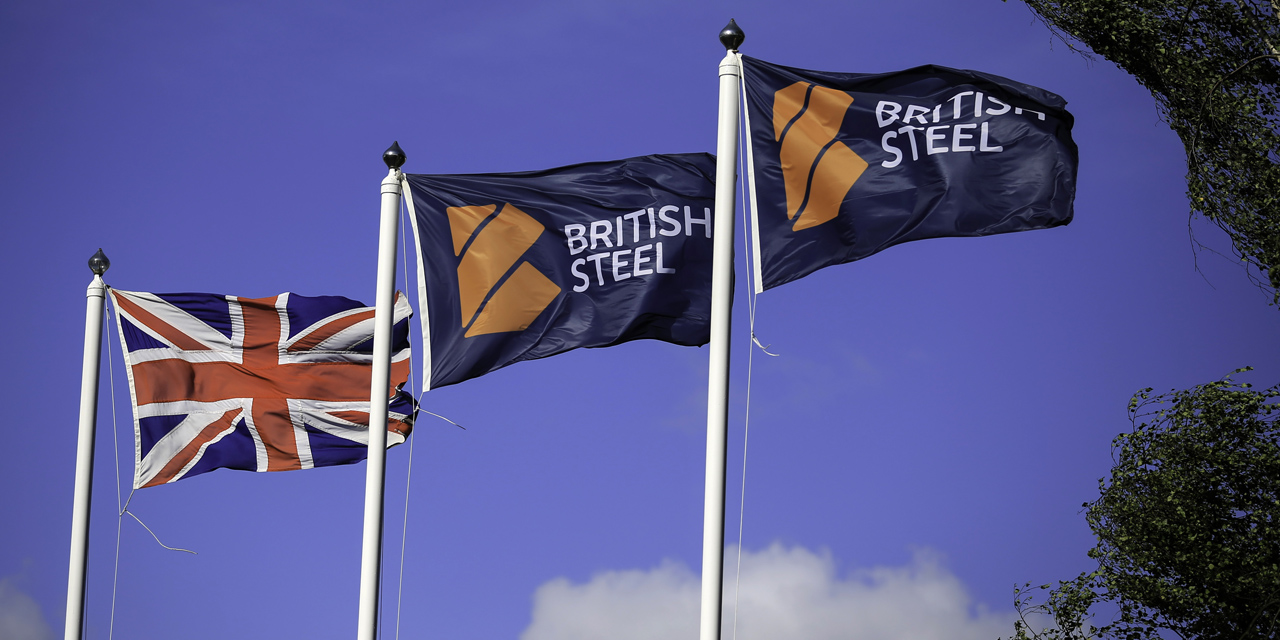
British Steel nationalisation proceeds as Jingye talks fail
The nationalisation of British Steel looks set to go forward after the UK government announced it will introduce legislation that will give it powers to bring the steelworks into public ownership, Kallanish learns.
UK Prime Minister Keir Starmer made the comments on Monday morning in a speech.
“Steel is the ultimate sovereign capability. Strong nations in a world like this need to make steel. That’s why we’re backing steel in Port Talbot and across the UK. But in Scunthorpe we’ve been negotiating with the current owner and a commercial sale has not been possible. And now a public interest test could be met,” he said.
“So, I can announce that legislation will be brought forward this week to give the government powers, subject to that public interest test, to take full national ownership of British Steel. Public ownership in the public interest,” Starmer added.
The public interest test considers factors including national security, maintaining critical national infrastructure and supporting the economy.
The government notes in a statement that it does not believe an agreement could be reached with the current owners which would deliver acceptable value for money for taxpayers.
The new legislation will be part of the King’s Speech, which will take place on Wednesday.
The statement adds that “primary legislation would give Government a route to safeguard UK steelmaking capacity and avoid sudden halt of production at Scunthorpe, while it considers options for British Steel to help deliver on government’s Steel Strategy ambitions.”
The UK government took control of the Scunthorpe works on 12 April 2025, and had spent at least £419 million ($570m) on working capital, raw materials and salaries as of March 2026.

Morocco and Norway sign carbon market agreement to reduce emissions
