


Downstream struggles as EU HRC soars: Tube Düsseldorf
Sentiment in the flat downstream segment is decidedly cautious this week according to sources at the Tube and Wire trade show in Düsseldorf.
They are describing a market weighed down by unreliable downstream demand and the difficulty faced by service centres and re-rollers in passing hot rolled coil (HRC) price increases through to customers.
The market mood at the show appears two-tiered: producers with a broadly positive outlook and preparing further price increases, while the manufacturing sector is grappling with demand weakness and financial pressure, overwhelmed by the geopolitical uncertainty, Kallanish notes.
No further coil price increase announcements are expected during the event, according to multiple sources. However, mills are said to be readying additional hikes to be implemented around the time of the European Commission’s new safeguard announcement.
One steelmaker source tells Kallanish that demand is not exceptional, but order books are filling steadily, adding there is no urgency to sell. No price increase is being considered at present, the source confirms, as the market continues to gradually absorb recent HRC hikes. European HRC prices are currently stable week-on-week at €700-720/tonne ($825.01-848.59/t) base delivered or ex-works depending on order size.
According to traders, the level of import transactions remains low as only large processors are continuing to buy globally. Import offers for service centres have dried up, with buyers staying away from the import market due to CBAM charges and the approaching new safeguard measures. The sole exception is cold rolled coil, where structural European shortages are forcing buyers to continue sourcing on a ddp basis at €860-880/t on average.
Service centre sources report improved margins despite unreliable demand, supported by rising sheet prices. Many are still depleting stocks of lower priced HRC purchased on the import market ahead of the CBAM implementation, providing several months of financial relieve.
However, the uncertainty emerging in Dusseldorf is that service centres will now need to reassess their HRC costs on the basis of more recent purchases, meaning their selling prices will have to move higher. Hot rolled sheets are currently at €770-780/t delivered on average, but with the market leader quoting HRC at €750/t for Southern Europe and the current lower imports, margins will soon come under pressure and profitability is at risk for many service centres.
Author: Natalia Capra


NASS to close; ISTA to absorb name rights
The National Association of Steel Service Centres (NASS) is to close, with the International Steel Trade Association (ISTA) being passed exclusive rights to its name, Kallanish learns from a joint statement.
Ian Darby, NASS director general, says “it is with deep regret” that the association, which was established in 1927, has come to an end in its current format. He notes the “challenging” financial viability of the organisation since he became director general in May 2023.
“It is with deep sadness that I could not reverse the trend of falling subscriptions to keep the organisation going to its 100th year,” he adds.
ISTA has been granted full and exclusive right to the use of the NASS name. In a statement, ISTA says it is “most honoured to have been passed by NASS the great names of both the National Association of Steel Stockholders and the National Association of Steel Service Centres.”
ISTA is to reach out to all existing NASS members and invite them to join the association, which has more than 100 members, including traders, downstream manufacturers, service centres, stockholders, fabricators, shipowners, port handlers, and insurers. These members account for approximately 25% of imports into the combined UK and EU market.
ISTA says it has built a sound relationship with the Trade Remedies Authority with regards to current safeguarding and anti-dumping investigations. It is closely liaising with the DBT and government ministers with regard to the replacement of safeguarding from 1 July.
UK steel industry associations are continuing to evolve, with the North Eastern Association of Steel Stockholders (NEASS) rebranding as the National Steel Association (NSA) last year. NSA says it is the largest steel trade association membership in the UK & Northern Ireland. Membership has been growing, now reaching more than 170 members, up from 100 last year.
Author: Carrie Bone
ETS needs revision, critical for energy independence
The European Emissions Trading System (ETS) needs to be adapted to ensure the cost of decarbonisation can be borne by industry and security of supply is not jeopardised, according to a Euractiv panel discussion held in Brussels on Wednesday.
“We must not give up the free allocation in ETS to sectors exposed to carbon leakage,” secretary of state at Poland’s climate and environment ministry Krzysztof Bolesta warned during the discussion monitored by Kallanish. “This is the best and proven way to actually protect their competitiveness and make sure that they don’t have a big incentive to leave Europe.”
ETS has received increasing attention in the weeks since the Middle East conflict erupted and lifted global energy prices, further impacting European industry’s already shaky competitiveness. Free allowances have started to be phased out since 1 January and are scheduled to disappear by 2034, unless the European Commission amends the timeline as part of its ETS review, expected in July.
Italian, Austrian and Czech steelmaking representatives have been particularly vocal in recent months about the need to delay the phase-out.
“The linear [free allocation] reduction factor needs to be a bit lowered to give industries more space and time to decarbonise. So, there’s still room in the system towards 2050; we don’t need to close the system in the late 2030s because then companies don’t know what to do,” Bolesta continued.
EU climate policy has converged firmly with industry and security concerns. “It is existential for Europe, not just for protecting the climate, but even maybe more so for economic competitiveness reasons, that we continue this transition,” said director general of DG CLIMA, European Commission Kurt Vandenberghe. “It’s getting fossil out of our system as quickly as possible, but in a cost efficient manner that does not jeopardise our security of supply.”
The ETS revision will be part of an overall revision of the post-2030 framework for EU energy and climate. “The line that we will follow is very clear. We keep the direction, we stay the course, but we make it less prescriptive. It has to be really a big machine to drive investment and innovation, so that we modernise on the energy system, and that we have a renewal of our industry in Europe.”
ETS nevertheless remains crucial as a driving force for energy independence. Only a few months ago, “the narrative was quite different … where it was not so clear this consequence of the over reliance that we have on fossils”, said deputy director & head of policy, Bellona Europa Lina Strandvåg Nagell. “And that seems to be a mistake we’re doing as a society repeatedly, where we make the rules for the good times, and we forget why we were actually doing them in the first place.”
Any revision to the system should not punish the first movers who have already spent big sums on decarbonisation, she added.
The system would benefit from the establishment of an institution to govern the ETS price, “like a central bank … essentially the MSR [Market Stability Reserve] but equipped with some new powers”, suggested Bolesta. Vandenberghe countered saying “the mood is not for creating new institutions of any kind”, but that the rules-based management of the MSR will ensure credible pricing.
The Commission supports the inclusion of international carbon credits in the European climate policy framework, but there will be “strict conditions on the integrity of these credits” to ensure they can be trusted, he added.
There is meanwhile “no hesitation” that nuclear energy “will play a big role” in the EU’s energy mix by 2050, he continued. The Commission will use part of the Innovation Fund to help finance the development of small, modern reactors in Europe. CCUS will also be required, he added.
“We don’t do climate policy for the climate only anymore. It’s really for industry and security. Secondly, there will be no green transition with red finance numbers for business, but it will also be no black numbers for business if there is no green transition,” Vandenberghe concluded.
Author: Adam Smith
Denmark offshore windfarm installs CO2-reduced steel towers
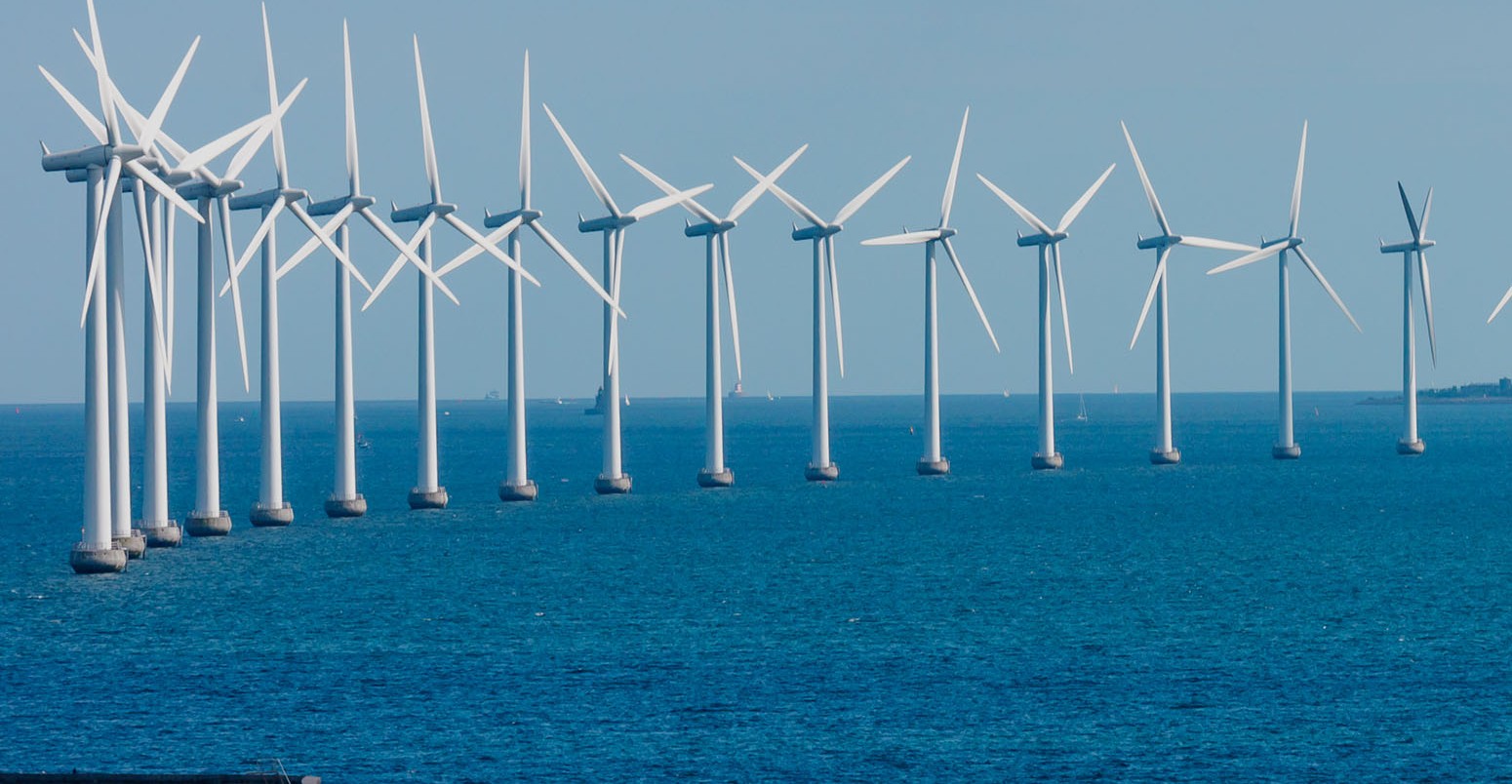
Denmark’s largest offshore wind farm, known as Thor, says it has installed the world’s first turbine with CO2-reduced steel towers and recyclable rotor blades, according to project operator, RWE.
The German-based energy group says it is the first company worldwide to use Siemens Gamesa’s GreenerTower. The tower plates are made from steel with at least 63% lower CO2 emissions than conventional steel by using renewable-powered furnaces and scrap steel, Kallanish understands.
In addition, the Thor windfarm will feature Siemens Gamesa’s recyclable rotor blades. Due to an innovative resin, the composite materials in these blades can be separated and reused, for instance in new casting applications in the automotive or consumer goods industries. RWE explains.
The Thor offshore wind farm off Denmark’s west coast will be laid out for a capacity of 1.1 gigawatts. In total, 72 wind turbines, each with a capacity of up to 15 megawatts, will be installed by the end of 2026. Half of them will be equipped with steel towers produced with a lower carbon footprint, and 40 turbines will feature a total of 120 recyclable rotor blades.
When fully operational in 2027, Thor will be capable of producing enough green electricity to supply the equivalent of more than one million Danish households. Thor offshore wind farm is a joint project between RWE (51%) and Norges Bank Investment Management (49%). RWE is in charge of construction and operations throughout Thor’s lifecycle.

Stegra to boost Boden construction after new funding
Swedish green steel start-up Stegra says it will accelerate construction activities following an in-principle €1.4 billion ($1.65 billion) financing agreement, Kallanish reports.
Wallenberg Investments has led the financing round with a consortium with Temasek and IMAS. Existing Stegra shareholders, including Altor, Hy24 and Just Climate, also participated. The new capital, subject to credit approvals, will enable the completion and commissioning of Stegra’s green steel plant in Boden.
“After several slower months during the funding activities, Stegra will now ramp up construction activities,” the company says, noting the project timeline is currently under review.
The plant is designed to produce up to 5 million tonnes/year of green steel by 2030, running an electrolysis capacity of 700 megawatts.
The first steel production was initially expected this year. However, the company previously confirmed a temporary construction break late last year. It denied that financial struggles were risking the viability of a new Swedish start-up, following the downfall of battery maker Northvolt.
Stegra’s chief executive Henrik Henriksson says the financing reflects the “strong conviction” in its business model amid a “very challenging macro-environment”.
“We are convinced of the competitiveness of Stegra and the commercial attractiveness of green steel … while remaining clear-eyed about the challenges that lie ahead,” comments Leif Johansson, adviser to the consortium led by Wallenberg Investments. “We also consider the project to be of great importance to Sweden’s position as an industrial nation.”
SteelWatch executive director Caroline Ashley welcomes the announcement saying it signals the change towards “truly clean” steelmaking at scale is happening. “Naysayers have had their day,” she adds.
Stegra expects the deal to close in June, when Johansson will become Stegra’s new chair of the board. Wallenberg Investments’ senior industrialist Håkan Buskhe and Altor’s managing partner Paal Weberg will also join the board.
Kallanish has contacted Stegra for clarification on the new timeline.

Marcegaglia advances Fos-sur-Mer coil mill plans
Italian steelmaker and processor Marcegaglia has awarded a contract worth approximately €450 million ($530.37m) to equipment maker Danieli for its coil mill project in Fos-sur-Mer, southern France, Kallanish learns from the company.
A final investment decision for the project is expected by end-2026, subject to completion of the permitting process.
The total investment for the mill, known as the Mistral Project, will amount to approximately €1 billion, the largest investment in Marcegaglia’s history, a company source confirms. The plant will have an annual capacity of up to 3 million tonnes of stainless and carbon steel hot-rolled coil, covering roughly 35% of the group’s total coil and slab requirements. Output will primarily supply its Italian downstream facilities.
The new mill will have an electric arc furnace, a single‑strand continuous slab caster producing thick slab, and a hot-strip mill. This will ensure “the utmost flexibility by applying different charging mix, stable production performance, consistent product quality, and operational robustness across a wide range of flat steel grades,” a company note explains.
The use of scrap, low-carbon HBI, and nuclear and renewable energy is expected to cut greenhouse gas emissions by up to 80% compared to conventional steelmaking routes.
The complex will be engineered to meet European environmental and safety standards, incorporating advanced automation and energy-efficient technologies.
Price hikes, geopolitics temper European stainless flats sentiment
Sentiment in the stainless flat steel market remains cautious with the geopolitical situation weighing on downstream activity and the outlook mixed for European end-users, sources attending the Tube and Wire trade show in Düsseldorf tell Kallanish.
European stainless flats prices continue to rise sharply, with further increases being implemented across cold and hot rolled coil, sheet and tube. While demand has recovered compared to a difficult 2025, one source at the event expresses disappointment at persistently subdued end-user activity.
European mills are reported to be closing June order books and beginning to quote for July. For May delivery, mills have quoted and agreed CRC deals at €2,550-2,570/tonne ($3,005-3,029/t) delivered. They are offering and obtaining CRC at around €2,600-2,630/t delivered for June delivery while quoting at €2,700/t delivered for July.
Mill sources say they are concerned by cost pressure linked to the US-Iran conflict, and fast-rising scrap prices. Grade 304 scrap has reached €1,400/t delivered across most EU countries this month.
Additional pressure is emerging from Indonesia, where the Ministry of Energy and Mineral Resources has revised its HPM benchmark calculation for nickel ore with a recent ministerial decree. The new HPM formula, effective 15 April, is seen lifting the price of 1.5% nickel ore from $26.66/wet metric tonnes (wmt) to $48.42/wmt. This is seen impacting the entire supply chain.
One mill source at the trade show notes the Indonesian decree will primarily affect imported coil prices but adds that nickel values have risen by $1,000/t this week, which could impact finished steel prices.
The outlook among several sources for the coming months is cautious, with slower activity expected as geopolitical uncertainty and rising costs continue to weigh on market sentiment.
According to a mill source, however, prices will be able to sustain the upward trend. No European buyer, large or small, who spoke to Kallanish expects prices to decline in the medium term, with all sources reporting improved margins thanks to the recent increases.
Stainless CRC imports have fallen sharply in recent weeks, driven by CBAM charges, the upcoming safeguard changes and geopolitics. Two large processors, one in southern Europe and one in northern Europe, confirm that imports from Asia have effectively ceased.
Stocks in Italy and Poland remain high, although slightly lower than last month. Italian coil buyers confirm they are purchasing only to fill gaps in their stock rather than building inventories at current price levels.
Italian prices continue to lag behind the European market, though the gap is narrowing. CRC contracts for June delivery have reached €2,600/t delivered, with some variation depending on buyer.
Downstream, European sheet prices are also rising. While European mills are quoting sheet at €2,750-2,800/t, Italian levels remain at €2,700/t. Service centre sources argue that sheet prices need to rise by at least €100/t given CRC quotes of €2,700/t for July delivery.

Italian re-rollers mull increases at trade show
Italian tube makers at the Tube and Wire trade show in Düsseldorf are considering price increases of around €50/tonne ($58.93/t), with changes depending on re-roller, as they look to align tube values to coil increases, sources tell Kallanish.
One tube maker confirms they have suspended sales and will take a few days to come up with new quotes. No formal announcements have been made as companies use the trade show to gauge market sentiment, though several are expected to potentially announce these before the event closes.
While prices of coils continue to steadily tick up, with further increases expected from the new safeguards, Italian tube prices have been stagnating over the past month.
The sector is dealing with weak demand with a particularly quiet market in March. Tube discount levels remain between 40-42 points. Re-rollers are considering decreasing them by three points.
Downstream clients are bracing for price increases in the coming months but report concern over weak demand and their ability to remain profitable with the current elevated costs.
As current coil stock levels deplete in the coming weeks, some sources anticipate that hot rolled coil could reach €900/t after the summer.
Payment defaults and delays are beginning to emerge downstream, adding to the current complexity. The main concern among buyers at the trade show appears to be the disconnect between the reality of the current market consumption and continued upstream price increases.
One large buyer of sheets and tubes tells Kallanish that the manufacturing sector is now starting to feel the full weight of high prices driven by protectionism and eroding competitiveness, caught between rising upstream prices and a market unable to absorb further increases.
An Italian purchasing group reports high stocks and weak downstream demand for coil derivatives, with most steel processors recording negative performance and no visibility on tube orders.

EU steel industry unites behind downstream protections
Supported by over 330 signatories across the EU’s steel value chain, steel distribution association EUROMETAL issued a “call-to-action” to safeguard Europe’s steel and metals value chain at a press conference on 14 April during the Tube & Wire trade fair in Düsseldorf.
Titled “Safeguarding the European steel and metals industry,” the briefing document will be sent to representatives of the EU’s national governments and the European Commission on 15 April, stressing the urgency of extending regulatory protections to the EU’s steel consuming industries.
Spearheaded by EUROMETAL, the campaign outlines a number of measures considered necessary to “safeguard and revitalise” European industry:
- a new trade regime “to follow up” the EU steel safeguard, effective across all CN codes under headings 73-95 and ready for implementation on 1 July;
- a similar extension of CBAM to steel derivatives and steel intensive products;
- “Made in EU” mandates across public procurement and funding schemes;
- “Cost-relief measures” that would limit industrial electricity prices to a maximum 5ct/KWh, slow the free allowance phase-out under the ETS/CBAM, and reduce EU-level and national bureaucracy (including the “suspension of additional regulations and corrections of existing rules”).
Speaking at the press conference, EUROMETAL President Alexander Julius described how recent and ongoing geopolitical developments necessitate a new regulatory reality, citing a “Trumpish” approach as the EU’s last chance to prevent further erosion of its industrial base to substitute steel derivative imports in undermining its national and social security.
EUROMETAL thus calls for a stark change in the Commission’s approach to trade regulations, seeing the EU’s strict – and increasingly solitary – adherence to the WTO framework as outdated in today’s geopolitical context. The European Commission did commit to a reduced threshold for trade defence investigations in last year’s Steel and Metals Action Plan, but market sources see little improvement in authorities’ trade reactivity, exemplified by the lack of progress on ongoing anti-dumping investigations, such as on cold-rolled coil.
While the WTO framework is something of a ‘boogeyman’ in today’s fraught global trade context, the European Commission has leveraged WTO instruments at pace in the past, implementing its original steel safeguard between May and July 2018 in reaction to President Trump’s original section 232 steel tariffs and displacement risks. Trilogue negotiations for the EU’s new steel protections were finalised this week, and the communications from EU’s various authorities commonly centralise the measure’s WTO compliance as an institutional success.
The European Commission has also introduced safeguard measures or investigations into ferroalloys and electrical steels in the last year, but has not indicated that downstream protection would be pursued via a safeguard instrument, instead assessing a possible extension of its new replacement steel trade measure in the coming years – a pace deemed far too slow by EUROMETAL and associated signatories.
Protectionist efforts from the US and Canadian steel markets were presented as a lead for the EU to follow – with both jurisdictions expanding existing or new steel steel trade measures to derivative products at relatively short notice to protect their domestic consuming industries from substitutive import pressure.
EUROMETAL highlights that the global intensification of steel trade barriers – with US tariff offensives as the catalyst – will see both steel and steel-containing goods deflected to the EU, compounding the stranglehold on European manufacturing, especially as upstream steel prices rise as a result of their own protection coverage.
Questioned by McCloskey on the form of the potential downstream tariffs, panel speakers advocated for a “holistic” approach, seeing an urgent need to establish protections as a baseline without a need to consider every technicality. Describing the steel value chain as at “5 minutes to midnight” – or even “5 past midnight” for sectors such as automotive – speakers consider industry as no longer able to deflect or absorb non-competitive pressures from outside EU borders – an existential threat.
According to the speakers, the steel industry – characterised as a “chain” by press conference speakers – risks collapsing entirely if allowed to break at a single point (steel-consuming industries), and so must be protected “holistically” as an absolute priority, without the “over-engineering” associated with EU bureaucracy.
EUROMETAL’s ‘call-to-action’ will be updated as new signatories join the campaign, with company profiles and interviews to come in the near-term, intended to better illustrate the specific burdens undermining – and ultimately eroding – the EU’s industrial competitiveness.
Author: Benjamin Steven


Commission welcomes political agreement on new EU steel measure
The European Commission has welcomed the political agreement reached between the European Parliament and the Council on a new measure aimed at protecting the EU steel sector from the effects of global overcapacity.
The measure is intended to ensure the long-term viability of the European steel industry and will replace the current EU steel safeguard regime, which has been in place since 2018.
Under the new framework, tariff-free quotas will be set at 18.3 million tonnes per year, with an out-of-quota duty of 50% applied to 30 categories of steel products imported into the EU. In addition, the measure introduces a “melt & pour” requirement to enhance traceability and transparency across the steel supply chain.
The rules will apply to imports from all countries, with the exception of EEA countries, which will remain subject to the “melt & pour” requirement. The agreed text reflects the key elements of the Commission’s proposal presented in October 2025.
The measure aims to address the impact of global steel overcapacity, which is projected to reach 721 million tonnes by 2027, and to support approximately 2.5 million jobs linked to the European steel sector. It also contributes to the EU’s broader decarbonisation objectives.
The new system will replace the current safeguard mechanism, which operates through tariff rate quotas across 28 product categories.
The agreement will now be submitted for formal adoption by the European Parliament and the Council, with the objective of entry into force on 1 July 2026, coinciding with the expiry of the current safeguard measure.
The Commission is preparing implementing acts on the allocation of quotas by country and on the documentation required to comply with the “melt & pour” requirement. In parallel, discussions with trading partners are ongoing under WTO procedures to ensure the compatibility of the measure with international trade rules.
Stéphane Séjourné, Executive Vice-President for Prosperity and Industrial Strategy, stated: “The steel industry has been at the foundation of our European unity. There is no prosperous Europe without a sustainable, strong and sovereign steel industry. On this strategic sector, like many others, we will do whatever it takes to maintain production, jobs and skills alive in our continent.”
Maroš Šefčovič, Commissioner for Trade and Economic Security, added: “The shape and global standing of Europe’s steel sector are fundamental to our strategic autonomy and industrial strength. We therefore cannot afford to turn a blind eye to global overcapacity reaching critical levels. Today’s outcome helps bring much-needed stability for our producers to thrive in Europe — because this is, at its core, about people and jobs. I welcome the shared urgency of the co-legislators to turn our proposal into action, as we also continue engaging with partners worldwide.”
The initiative forms part of the EU’s broader industrial and trade policy framework, including the Steel and Metals Action Plan adopted in March 2025 and ongoing efforts to address global steel overcapacity through international cooperation.