


Florange galvanizing line starts production
The new galvanizing line, Galsa 2, at ArcelorMittal’s mill in Florange in north-eastern France has started production, Kallanish learns from the company.
The new line has produced the first coil and will produce 800,000 tonnes of high-strength automotive steel in time. The investment in the project was €89 million ($98m).
Galsa 2 is the second galvanizing line in Florange, ArcelorMittal says in a note. Galvanizing line No. 1 at the site attained an output of 500,000t of galvanized product in 2018, a record for the site. In time, the new line will increase the total capacity of galvanized steel to 1.3 million tonnes/year.
Liberty restarts idled pickling line in Piombino
After having been idled for a number of years, the pickling line at the Italian La Magona plant in Piombino has been restarted, a union source tells Kallanish.
The new owner Liberty House has invested €5 million ($5.5m) to revamp the line and is also carrying out repair works on coating line no. 2 which is to be restarted later this year.
Liberty has purchased La Magona and a number of plants controlled by ArcelorMittal, put onto the market following the acquisition of Italian group Ilva by the latter. The plants include ArcelorMittal Ostrava (Czech Republic), ArcelorMittal Galati (Romania), ArcelorMittal Skopje (North Macedonia), , and ArcelorMittal Dudelange (Luxembourg) (see Kallanish passim).
La Magona has an agreement with ArcelorMittal for hot rolled coils sourcing. The Piombino plant is being supplied by the ArcelorMittal plant in Fos Sur Mer in France. However, the company will also source HRC from other European and third-country producers. The new management of Magona under ceo Giovanni Carpino intends to increase the plant production and sell mainly in the European market, the union source adds.

China steel demand to climb 2% in 2020: CISA
China’s finished steel consumption will increase 2% on the year to 889.8 million mt in 2020, driven by demand from construction sector, according to China Iron & Steel Association estimates released last week.
The total steel consumption rose by 6% on the year in 2019 to 875.3 million mt, according to CISA.
Steel market sources considered a further 2% rise in steel demand in 2020 as decent growth, considering domestic steel demand in 2019 had been strong enough to absorb most of China’s incremental steel production.
CISA warned that China’s steel production would also likely increase further in 2020. China’s crude steel output in 2020 is expected to increase mildly by 2% year on year, keeping supply and demand largely in balance, according to S&P Global Platts.
The construction sector — property and infrastructure combined — will remain the biggest steel demand driver in 2020, consuming 498 million mt of finished steel, up 2% on year, according to CISA. The construction sector’s steel consumption increased 8% on the year in 2019 to 486 million mt.
The association said growth in property new starts will slow in 2020, but infrastructure construction will accelerate and offset the downward pressure on steel demand from weaker property construction.
CISA expects healthy steel demand growth rate in the machinery sector, due to steady demand growth from the petrochemical and construction industry.
However, CISA said steel demand from vehicle, ship and container manufacturing will decline in 2020.
The association predicted China’s passenger car production and sales will decline by 2% in 2020.
A source at a major Chinese steel mill said overcapacity was the main problem for the passenger car market, which would probably take two to three years to resolve.
— Analyst Jing Zhang
EU retroactively changes safeguard for auto HDG imports
The European Union has again amended the rules relating to to the safeguard system for the import of HDG for the automotive sector. The change, effective from this week, applies retroactively as from the beginning of October 2019 and any duty paid in this regard will be refunded, Kallanish notes.
According to the latest change, the European Union has decided to cancel the request for importers of HDG using the 4b quotas to prove the use of the material in the automotive sector. The request, included from the safeguard review in October last year, has created problems and delays at customs due to the complexity of the system.
“A significant proportion of category 4b products is held at the Union’s customs border awaiting customs clearance. That seriously and negatively affects, or even disrupts, supply chains based on a ‘just-in-time’ system, in particular because the Union’s automobile industry heavily relies on highly specialised steel grades,” the European Commission (EC) explains.
As consequence of the new change, the system is reverting to the way it worked before the revision, but further reviews are expected in the coming months. A European trader points out that many have used 4a quotas for automotive material during the last month, something that might well become difficult to do again going forward.
“The Commission remains of the view that, in the Union interest, a specific mechanism, either the end-use procedure (once the implementation issues are resolved), or an alternative system, however set up, may be required at a later stage in order to ring-fence imports of automotive steel grades under product category 4B. These issues will accordingly, be re-assessed in the context of a future review investigation, based on the comments and proposals made by the interested parties, as well as other developments affecting this product category,” the EC explains. “In this respect, it is also noted that the Commission recently initiated an anti-circumvention investigation of anti-dumping measures on imports of certain corrosion resistant steel originating in the People’s Republic of China, which fall within product category 4.”

Investition in E-Commerce-Aktivitäten
Materials Services, der Werkstoff-Händler und -Dienstleister des thyssenkrupp Konzerns, investiert weiter in seine E-Commerce-Aktivitäten: Das Unternehmen hat von der Mapudo GmbH, einem ehemaligen Online-Marktplatz für Stahlprodukte, das Datenmodell für Werkstoffe sowie anonymisierte Produktdaten gekauft. Damit will thyssenkrupp Materials Services die Produktdatenqualität optimieren und den Kunden auf den Online-Plattformen des Unternehmens ein noch besseres Einkaufserlebnis ermöglichen.
„Relevante und genaue Produktdaten sind wichtige Entscheidungshilfen für unsere Kunden und eine unerlässliche Voraussetzung für die weitere Digitalisierung der Branche“, so Volker Hewing, als Head of IT Foundation zuständig für das Stammdatenmanagement von thyssenkrupp Materials Services.
Die erworbenen Daten enthalten Produktbeschreibungen wie Qualitätsmerkmale und Spezifika, womit sich die Werkstoffe in den Online-Shops und -Portalen von thyssenkrupp Materials Services besser identifizieren und abbilden lassen. Kunden profitieren so beispielsweise von einer optimierten Suche und Auswahl einzelner Produkte. thyssenkrupp Materials Services hat im Rahmen der eigenen digitalen Transformation mit der Verbesserung der Datenqualität begonnen und wird dies zusammen mit den digitalen Prozessen in der Industrie weiter vorantreiben. „Mapudo hat in den letzten Jahren eine wichtige Basis gelegt“, so Hewing.
Branchenspezifische Herausforderung
„Es gibt keine händler- sowie produzentenübergreifende Standards für metallische Werkstoffe, wie beispielsweise EAN Codes. Dementsprechend müssen Werkstoffe anhand ihrer Eigenschaften identifiziert werden. Bei Mapudo haben wir eine mehrschichtige Produkttypologie erstellt, die einen effizienten und konsistenten Vergleich der Werkstoffe sowie gleichzeitig eine Anreicherung der Produktdaten ermöglicht“, so Niklas Friederichsen, Mitbegründer und gemeinsam mit Christian Sprinkmeyer Geschäftsführer der Mapudo GmbH.
Quelle und Vorschaufoto: thyssenkrupp Materials Services GmbH
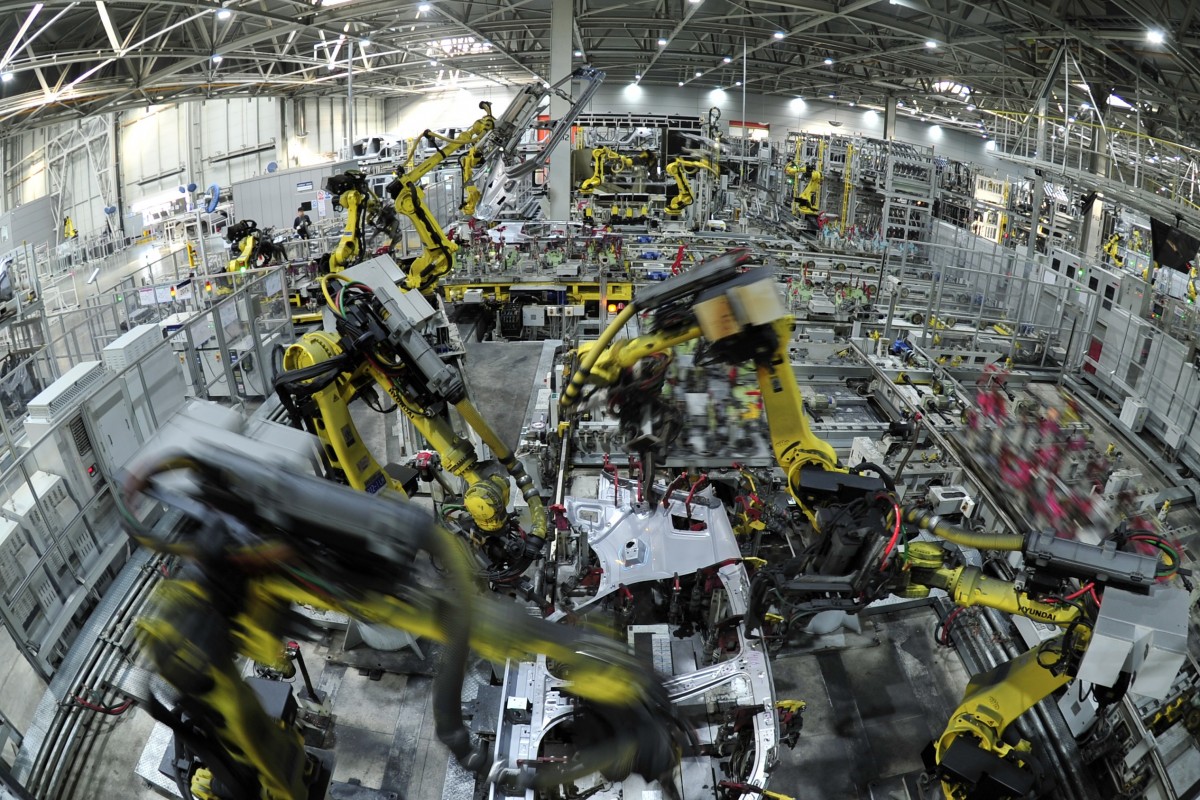
China-made exports of Ford, Tesla, BMW set to surge as Beijing opens auto industry, government says
- New report reveals exports of foreign-branded cars assembled in China are expected to rise as the domestic market matures and Beijing opens auto industry
- China has introduced reforms in the sector, including permitting overseas firms to wholly own local ventures and use the country as a global export base

Beijing is aiming to boost exports of China-made foreign vehicles in coming years as domestic car sales slump and restrictions on overseas firms are loosened, according to a government report.
Manufacturers like Ford Motors, GM, BMW and Honda are expected to expand manufacturing in China as Beijing allows foreign firms to have wholly owned local ventures that will increasingly serve the global market, said the report from the Ministry of Commerce and China Automotive Technology and Research Centre.The analysis, which serves as a reference for industrial policymaking, sheds new light on the central government’s thinking about an industry that provides one in six jobs in China.
The traditional “market for technology” strategy, under which China attracted foreign car brands to make vehicles for the local market, is giving way to a new approach of permitting overseas firms to own factories in China and use the country as a production base for the rest of the world.
Car sales in China slipped 5.4 per cent in November, marking a 17th consecutive monthly decline, according to the China Association of Automobile Manufacturers (CAMM).
Despite predictions of a boost to China-made car exports in the future, shipments of finished vehicles in November accounted for just 3.2 per cent of the 2.6 million vehicles manufactured in the country, according to CAAM.
Car exports were expected to dip by about 5 per cent in 2019, as exports to the United States fell drastically amid the US-China trade war, which has seen car manufacturers like GM and Ford Motors hit with tariffs, the China Association of Automobile Manufacturers said in October.
“China’s small scale of automobile exports and the low percentage in overall exports are really not in line with China’s position as the world’s largest production base and consumer market,” said the report.
The report’s publication this week came as electric vehicle manufacturer Tesla delivered 15 Model 3 sedans assembled at its new Shanghai factory to company employees. The US car company said it would deliver a second batch of Model 3 sedans from its US$2 billion factory to customers on Tuesday.While the trade war has forced many other international firms to shift production out of China, Tesla broke ground on its first overseas plant, Gigafactory 3, early in 2019. It will target the domestic market with its China-made cars, as exports to the US would be hit by tariffs.
The factory’s construction was a bright spot in a year marked by souring ties between Beijing and Washington, who have slapped billions of dollars of tariffs on each other’s goods over the past 18 months.
China is showering Tesla with favours because the government has identified the new energy sector as one of 10 key industries for self-sufficiency and global leadership under its “Made in China 2025” economic blueprint.
Tesla said on Friday that it would cut the starting price for its China-made Model 3 vehicles to 299,050 yuan (US$42,910.85) after receiving Chinese subsidies for electric vehicles, according to its China website.
The government has also allowed the carmaker to operate a fully owned plant without the usual requirement of taking a local partner and exempted imported Model 3 cars from consumption tax, making it cheaper for local buyers.China has introduced a range of reforms to open up its auto industry and boost exports, scrapping limits on companies making fully electric and plug-in hybrid vehicles in 2018, commercial vehicle makers from January 1, and lifting restrictions on foreign ownership of local firms by 2022.
Foreign carmakers were previously required to set up a joint venture with a local firm in which there was a 50 per cent investment cap.
In addition to lifting the investment cap limit, preferential conditions under the Belt and Road Initiative and low tariffs included in free trade agreements will help to boost exports, the report said.
In the next few years, major domestic car companies will expand their overseas market too, the report said.
Chery Automobile, China’s largest automobile exporter, plans to export 500,000 vehicles in 2025, with a total value of US$5 billion, the government research said. Chery exported 126,993 vehicles in 2018 and 107,700 vehicles in 2017, according to the company’s annual report.
Chery is targeting sales in the US and European markets in the future and already manufactures cars in Algeria and Brazil.
New energy vehicle manufacturers are also expanding overseas. “In 2018, China’s market share of new energy buses in Europe exceeded 20 per cent and the market share in the United Kingdom exceeded 60 per cent,” the report said.
In the first half of 2019, China’s new energy vehicle exports increased by 99.3 per cent year-on-year and are expected to become a major driving force for car exports, according to the China Automobile Industry Association.
South China Morning Post

Bamesa joins Sumitomo as Czech steel distributor owner
Bamesa, the Spanish steel service centre, has received approval from European authorities to acquire 50% of Czech steel distributor Steel Centre Europe.
The other 50% of the company will continue to be held by Japan’s Sumitomo, Kallanish notes.
With the acquisition, Bamesa further extends its presence globally, being already active in the Spanish, Portuguese, Moroccan, Romanian and Turkish markets.
Steel Centre Europe was established in 2004 by Sumitomo and Toyota Tsusho, and processes mainly coil products.
Salzgitter acquires Dutch plate stockholder
Salzgitter AG has expanded its European distribution network with the takeover of Statendam Steel Plates B.V. in the Netherlands. Statendam will be merged with Salzgitter’s Dutch distribution house, Salzgitter Mannesmann Staalhandel B.V. Both companies are located in Oosterhout.
Statendam Steel Plates B.V. was founded in 2000 and was formerly 100% privately owned, Kallanish understands. It supplies companies in the Netherlands in the sectors of construction, trading, boiler manufacturing, mechanical engineering, metalworking, offshore and shipbuilding.
The acquisition enables Salzgitter Mannesmann Staalhandel to extend its product portfolio and strengthen its market presence in the Netherlands, Salzgitter notes. Its Dutch unit is part of the international trading organisation of Düsseldorf-based Salzgitter Mannesmann Handel GmbH that encompasses distribution and trading within the Salzgitter Group.
In the Netherlands, Salzgitter owns another plate distributor, Universal Steel in Papendrecht, a unit of subsidiary Universal. This is dedicated to plate and also operates sites in Germany, France, Czech Republic, Poland and the USA.
The parties have agreed to keep the purchase price confidential.
Leeco moves to larger Canadian plate facility
North American service centre chain Leeco Steel is shifting its Hamilton, Ontario, plate distribution operations to a larger facility, Kallanish reports.
The new 45,000-square-foot facility replaces a smaller Hamilton facility Leeco has operated since 2014. Leeco currently maintains one service centre in Canada, one in Mexico, and nine in the US.
Financial terms for the new facility were not disclosed. The new facility will employee three people, Leeco says.
“As we’ve expanded our customer base in Canada, we outgrew our original warehouse,” says Leeco ceo Denton Nordhues. “Our new facility is much larger and allows us to house a more extensive plate inventory and provide improved service to enable our team to get Canadian customers the plate they need faster.”
Plate mill Huta Czestochowa resumes output after holiday
Huta Czestochowa resumed operations this week after the year-end break, which began towards the end of December and lasted till January 7.
The company is scheduled to start operations from mid-January and plans to produce 30,000 mt this month, said Marek Frydrych, managing director of Sunningwell International Polska, the Warsaw-based financial firm holding the mill’s lease.
“We are planning to increase the production of plates to 40,000 mt in February and reach 45,000-50,000 mt in the following months,” Frydrych told S&P Global Platts Thursday.
When asked whether the mill had to suspend production due to dwindling scrap supplies, the director said the mill is reconsidering the supply channels, including supply of slabs, optimizing slab production at the EAF-based meltshop, and is seeking input material alternative to scrap.
“We go selectively with scrap suppliers – we do not accept all the scrap and at all prices, but have enough scrap to secure our orders,” said Frydrych.
Since its restart in late October and until the 2019 year-end, Huta Czestochowa made and sold 40,000 mt of plate.
— Ekaterina Bouckley