

Schaeffler sells fine blanking business to Swiss tool maker
German automotive and industrial bearings supplier Schaeffler is selling its fine blanking business to Swiss tool maker Güntensperger in order to streamline its activities, the company said.
Schaeffler’s blanking business based in Romanshorn, Switzerland, part of the company’s industrial division, has 20 fine blanking lines and processes strip steel and non-ferrous metals. The business generated CHF 50 million (€46.6 million) of revenue in the previous business year. The details of the transaction were not disclosed, but the takeover is scheduled for finalisation in the first half of 2017.
The move is part of its cost savings measures through consolidation of plants in Europe and Americas. “The sale of the fine blanking activities is an important first step towards a concentration on our core competencies and portfolio optimization,” said Klaus Rosenfeld, CEO of Schaeffler.
While Schaeffler was able to continue its growth trend in Q3 (ending 30 September 2016), it was hampered by its industrial division. Whereas revenue in the automotive division grew by 2.6% year-on-year to €7.7 billion in the first nine months of the year, the industrial division saw a revenue drop of 7.1% y-o-y to €2.3 billion, hit by a weak industrial market in all regions. The industrial division accounts for 22.8% of Schaeffler’s revenue. Nevertheless, the company expects positive effects from steel price increases.
Laura Varriale, PLATTS
IMS S+B Distribution to restructure 2017: sources
German special steel service center IMS Schmolz+Bickenbach Distribution is to undergo further restructuring and cut up to 105 jobs, according to local sources.
“It is well-known that the there is something in upheaval and that the company is in a restructuring phase. There are a lot of things on the plate right now,” the company told Platts on Monday, without giving further information.
According to local media, the service center will drop the Schmolz + Bickenbach branding and will be divided into five individual entities in the beginning of next year, which will entail a reduction of the workforce by 105. The service center was bought by French special steel distribution group Jacquet Metal Service (JMS) last year.
In its latest financial results report, JMS said: “For 2016, the division is focusing mainly on integrating and turning around the business of Schmolz+Bickenbach Distribution.”
Sales of engineering steels fell by 4%, as JMC cited “difficult” market conditions in Germany and a decision to no longer offer certain products designated as non-strategic.
Laura Varriale, Platts
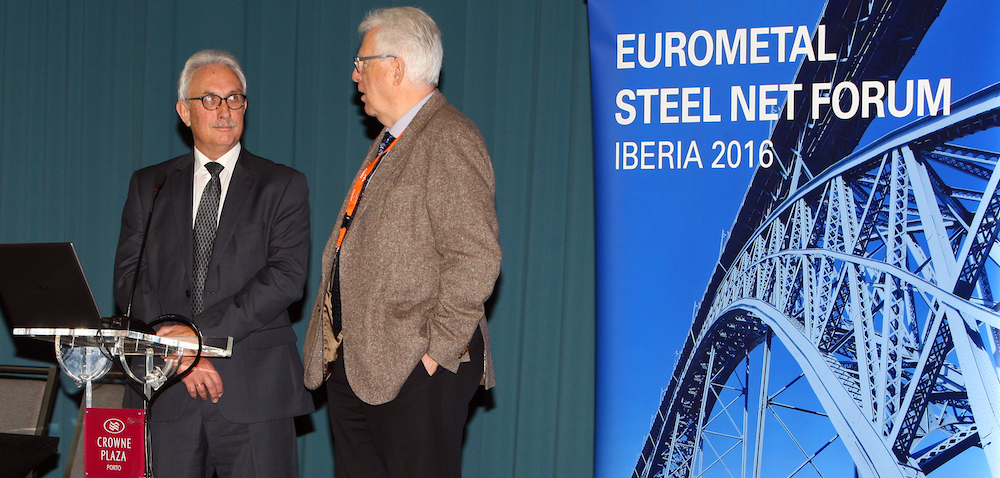
EUROMETAL IBERIA: EU steel consumption to stagnate in 2017, Eurofer exec says
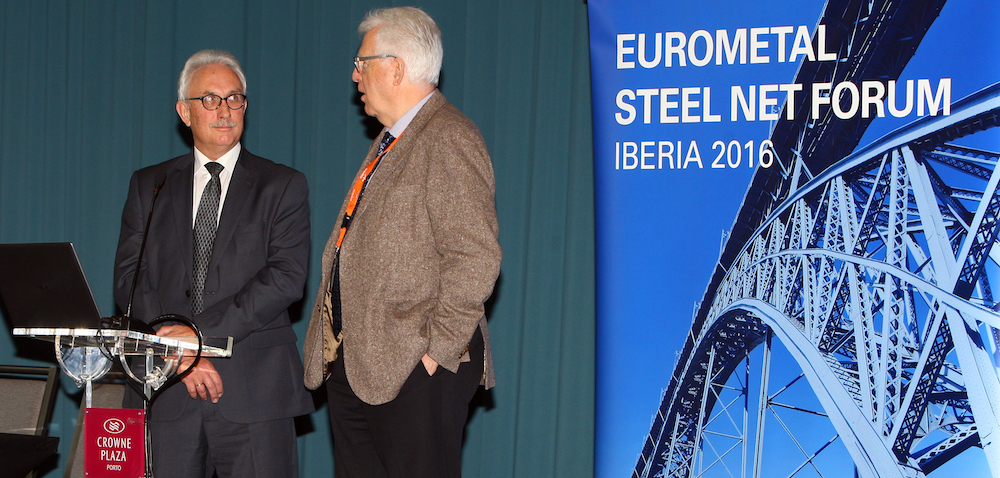
European steel consumption will stagnate in 2017, the head of economic studies at Eurofer told delegates at the EUROMETAL Iberia conference in Portugal on Friday November 11.
Speaking at the EUROMETAL Steel Net Forum Iberia in Porto, Jeroen Vermeij said that European steel consumption will not grow year-on-year in 2017, in contrast with a forecast year-on-year growth of 2.20% in 2016.
This is a conservative forecast, Vermeij said, reflecting a weak economy and the tendency of what little market demand there is to be fulfilled by existing capacity and imports rather than new orders.
Apparent steel consumption in the first half of 2016 grew by 2.60% year-on-year while imports grew about 11% year-on-year, Vermeij said.
The growth outlook for next year is stagnant, he said, because private consumption, which has been the main driver of steel consumption in 2016, will not be able to compensate for low public spending and low private investment.
The automotive sector is the only industrial sector in Europe operating at pre-crisis production levels. All others, including residential construction, are still slowly recovering, he said.
In the third quarter of 2016, Europe’s GDP grew by only 0.40% year-on-year, and market conditions in Europe are not likely to improve.
Investors, however, are not only deterred by a weak market, but by geopolitical instability and high risks, Vermeij said, pointing to how the refugee crisis and Brexit have provided shocks to the European Union, threatening financial stability, trade deals and the Schengen agreement.
However, despite the bleak outlook, market sentiment remains positive, Vermeij said.
And Georges Kirps, director general at EUROMETAL, was more optimistic about steel consumption in 2017.
“The German economy is still booming,” Kirps said, “[and] I think European steel consumption growth will be somewhere between one and two percent.”
European industrial production has so far reflected this sentiment, increasing 1.10% year-on-year in the third quarter.
Lorenzo Holt, Metal Bulletin
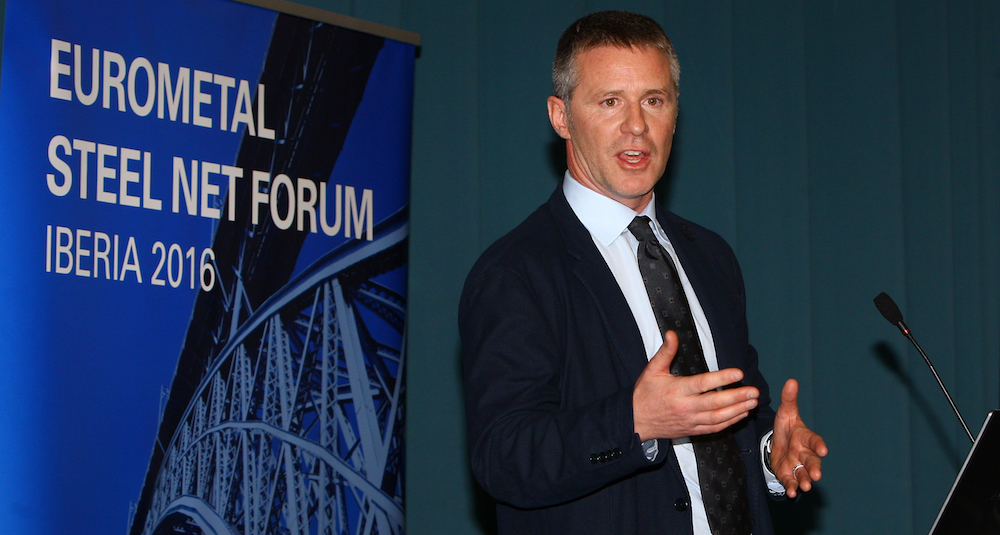
EUROMETAL IBERIA: Is protectionism the best way ahead for European steel?
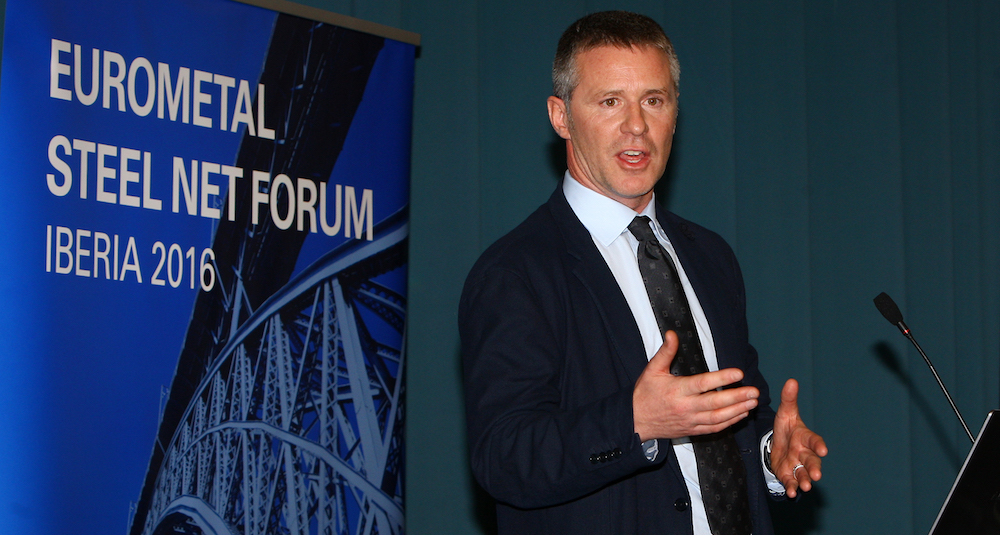
The subject of European anti-dumping duties applied to cheap Chinese steel imports dominated discussions at the Eurometal: Iberia steelmakers and distributors conference last week in Porto, Portugal.
Darren O’Riordan, director general of China-owned steelmaker Ansteel’s Spanish branch, spoke during his presentation on Friday November 11 of the dangers of the EU’s recently applied trade barriers to Chinese products.
“Protectionism is good in the short term but not in the long term,” O’Riordan said. “[European] consumers should be careful.”
He argued that too much protectionism could effectively block all foreign imports and reduce the sourcing options available to consumers and distributors, making prices too high.
Since the beginning of this year, EU domestic ex-works prices in Southern Europe have risen to €440 ($477) per tonne from €290 ($315) per tonne for hot rolled coil (HRC), to €545 ($591) per tonne from €350 ($380) per tonne for cold rolled coil (CRC), and to €455 ($494) per tonne from €325 ($353) per tonne for steel plate.
Over the past few months, the EU has set anti-dumping duties on Chinese imports of HRC, CRC and steel plate, and it is speculated that duties on hot dipped galvanized coil (HDG) could be added.
As China attends to its own economic problems and tries to develop a more service-oriented economy, it has been dismantling domestic steel mills and plans to eliminate 100-150 million tpy of steel capacity over the next five years, at the cost of 400,000 jobs in the country, O’Riordan said.
Standing in front of a map of China’s “One Belt, One Road” economic development plan – which shows the country’s ambitions to forge new trade routes across Asia into Europe and Africa – O’Riordan explained how China was not focused on exporting basic steel to Europe but rather on expanding into much larger markets in Asia and elsewhere.
Nonetheless, many in the audience were in favour of the EU’s anti-dumping duties against China and found them to be helpful, if not a final solution to the woes of Europe’s steel industry.
“People emphasise [China’s] reduction in capacity, but production is what matters,” one delegate told O’Riordan during his presentation. “China is not reducing its production or its exports, and it’s not privatising either.”
Another delegate commented privately that, in order for a person to be a consumer, one first needed to have a job and an income.
A major point of contention when discussing European anti-dumping duties imposed against Chinese steelmakers is the support they receive from the Chinese government. Many, such as Ansteel, are state-owned.
China is expected to be granted market economy status (MES) by the World Trade Organization (WTO) after December 11, which would allow it broader access to the European market and would change the way the EU calculates anti-dumping margins against it.
On November 2, China asked WTO members to honour this impending change in regulation.
On November 9, however, in a move apparently directed at China, the European Commission proposed a revision to the methodology it uses to calculate anti-dumping margins even for MES member-states of the WTO, particularly in regard to under-priced imports from state-backed or state-owned entities.
Lorenzo Holt, Metal Bulletin
ASSOFERMET in Europa alla guida di EFR
Ieri a Bruxelles, in occasione dell’Assemblea Generale di EURIC (la Federazione Europea del Recupero e Riciclaggio a cui ASSOFERMET aderisce) sono state rinnovate anche le cariche di EFR (la Federazione di Settore dei Rottami Ferrosi), alla cui guida è stata nominata Cinzia Vezzosi in veste di Presidente, insieme ai Vice Robert Fell (BMRA) e Ion Olaeta Bolinaga (FER), delle Federazioni consorelle di Regno Unito e Spagna, che rimarranno in carico per il prossimo biennio.

EU flats duties seen creating ‘monopoly’
European trade defence measures against flat product imports could lead to a “… monopoly” of the region’s steelmakers whose recent price hikes are not justified by demand, according to Slawomir Boliglowa, chief executive of Polish service centre and distributor Maxstal.
Already-imposed anti-dumping duties on China have stopped imports from there of hot and cold rolled coil, and plate, while duties are also expected soon on imports from Brazil, Iran, Russia, Serbia and Ukraine. “This will lead to a complete closing off of the European market for cheap product from the East,” Boliglowa tells Wirtualny Nowy Przemysl.
“We supported mills’ actions designed to strengthen the European market, but it seems to us that such a strong limiting of imports will cause a monopoly of European steelmakers, who are already increasing prices from month to month,” Boliglowa says in the interview monitored by Kallanish. “This [… price increase] is justified neither by the level of demand, which remains stable or is very slightly increasing, nor by raw materials prices.”
European mills’ plans to charge €500/tonne for hot rolled coil and €600/t for CRC in the first quarter next year signal a return to the high prices of 2007/08, he adds.
Duties on feedstock products could lead to increased imports of finished products such as pipe and profiles from Russia or Turkey, which would be a “… huge threat” to Europe’s distributors and service centres, according to Boliglowa.
“If imported finished profiles are cheaper than the sheet sold in our market that’s used to make them, then it would be an unprecedented threat to service centres,” Boliglowa observes. “In this situation mill-owned distributors will be at an advantage as they’ll have easier access to product direct from the producer.”
Maxstal is installing a new 30,000 tonnes/year cold-formed sections mill at its site in Krakow, with production expected to start by the end of March 2017. The new line is seen increasing the firm’s shipments by 25%.

Böllinghaus and Metalinox enter distribution partnership

German headquartered hot rolled and stainless bar specialist Böllinghaus Steel has appointed Brazilian stainless steel distributor Metalinox Cogne Aços Inoxidáveis for the distribution of its entire product range, a note said on Böllinghaus’ website.
The companies worked together in the past and “the consequent logic step was to officially enter the distribution partnership,” the note said. “This agreement enables both partners to grow further in a particularly challenging market,” said Böllinghaus, without specifying the regional coverage.
Located in Hilden, Germany, Böllinghaus specializes in the distribution of stainless steel long products and has its own production facilities in Portugal.
As reported earlier this year, Outokumpu appointed Böllinghaus Steel as a distributor for its cold drawn and hot rolled bars in hexagons, squares and flats covering Europe (excluding Germany and UK), APAC and Latin America. In January, Böllinghaus Steel established a sales office in Chicago, US, to cater the NAFTA market.
Böllinghaus Steel declined to provide further information when asked by Platts.
Laura Varriale, PLATTS

High value key for wire rod profitability: ArcelorMittal
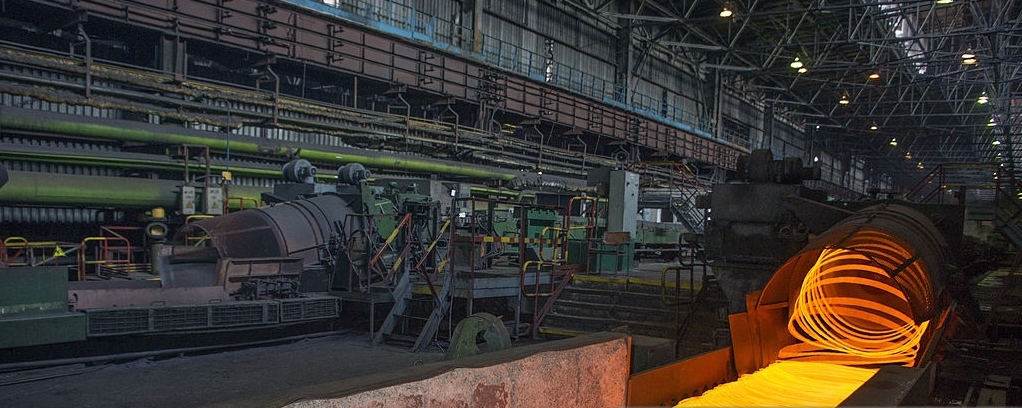
The European wire rod market is still subject to pressure from competitive imports and overcapacity, resulting in a focus on higher value products as the key opportunity for profitability in the market, Javier Alvarez-Linera Prado, of ArcelorMittal long products Southern Europe, said at the EUROMETAL Steel Net Forum Iberia in Porto Friday.
Prado said ArcelorMittal will focus on high value wire rod products in a bid to improve profitability, as the overcapacity in lower quality wire rod is expected to continue. Furthermore, increases in raw material prices are expected to squeeze margins more and imports could still continue to plague the sector, he added. “We need to go beyond traditional drivers,” he said, citing improvements in productivity and more value added products as alternatives.
He pointed to positive growth in the automotive and construction sectors as representing potential opportunities for growth in wire rod.
However, risks remain for the product over the next few years. Europe’s wire rod market currently has a 25 million metric ton installed capacity, with apparent consumption standing at only 15 million mt. This 10 million mt excess in capacity, coupled with rising imports, and a decline in exports owing to issues in Algeria, threatens the construction steel product, he said.
“If we still have overcapacity, plus imports, we will continue to be punished.” He said energy costs, particularly in southern Europe, pose further challenges — in that region energy costs account for 40% of overall production costs, compared to 25% in Germany, he noted. “We are competing on unfair ground with other countries,” he said.
In terms of curbing imports he urged the EU markets to come together and take advantage of proximity. “We don’t need commercial barriers but what we don’t want is unfair competition,” he concluded.
Erica Sesay, PLATTS
Growth seen in EU in 2017, but uncertainty looms: Eurofer
“Economic recovery is seen to be strengthening in Europe, but uncertainty looms in the steel sector, in light of Britain’s vote to leave the European Union and the new US president elect, Donald Trump,” Jeroen Vermeji, Eurofer’s head of economic studies, said at the EUROMETAL Steel Net Forum in Porto Friday.
Eurofer said a stronger industry improvement is expected in 2017, based on the third-quarter. Steel using sectors have been growing 2.5% in 2016, with the automotive sector currently at its peak since the pre-crisis level — the only steel using sector to have achieved this.
Eurofer also expects exports to be in a position to increase next year, as the world economy gains momentum, adding that 2017 also looks to be a good year for private consumption. “I think we can be sure about the strength of private consumption,” he said.
Despite signs of confidence, it is currently “impossible to assess the impact” of the latest turn of events. “If Trump imposes a ‘large economic box’ around the US, it could depress investments,” Vermeij noted. Post-Brexit jitters could also hurt steel demand, as the uncertainty could weigh on investment.
“The EU is divided more than ever,” and the relationship with Turkey is “fragile and definitely at risk,” he said, referring to Brexit and the refugee crisis in the region — President Erdogan’s post-coup crackdown has also led to fears in Europe over his increasing grip on power.
Vermeji said European apparent consumption is up 2.6% (2.1 million metric tons) year-on-year, in the first half of 2016. However, imports are growing faster than domestic demand and therefore are capturing most of the rise; imports grew by 11% in the same period (1.8 million mt). “We are not benefiting from the increase in demand,” he said.
Apparent steel consumption is expected to stay stable in 2017, with distributors and service centres currently holding high stock levels. However, real steel consumption is expected to grow by 2.4% on the back of the growth seen in steel using sectors, Vermeij concluded.
Erica Sesay, PLATTS
Challenges lie ahead for Iberian steel: industry executives
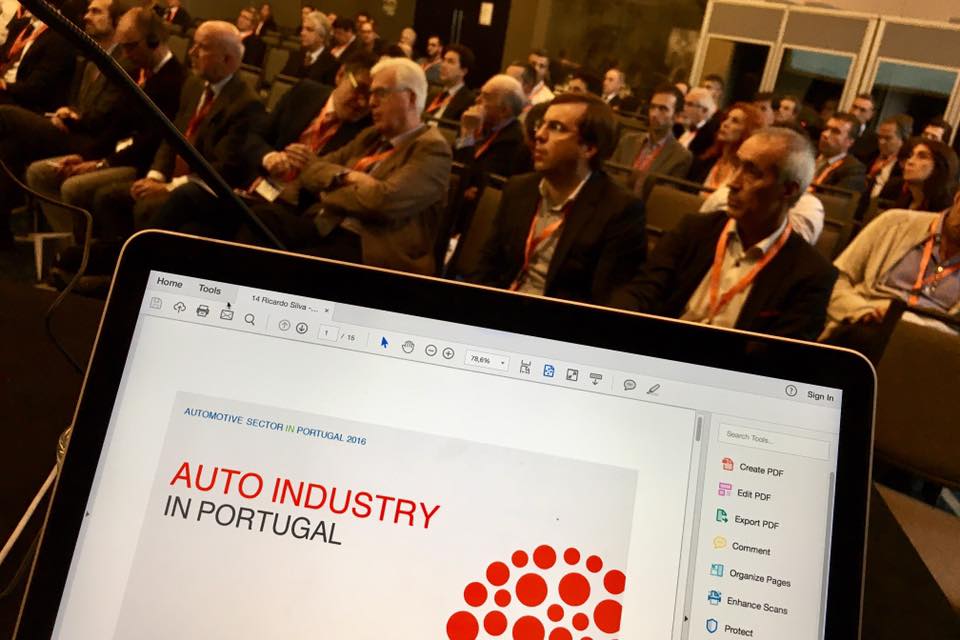
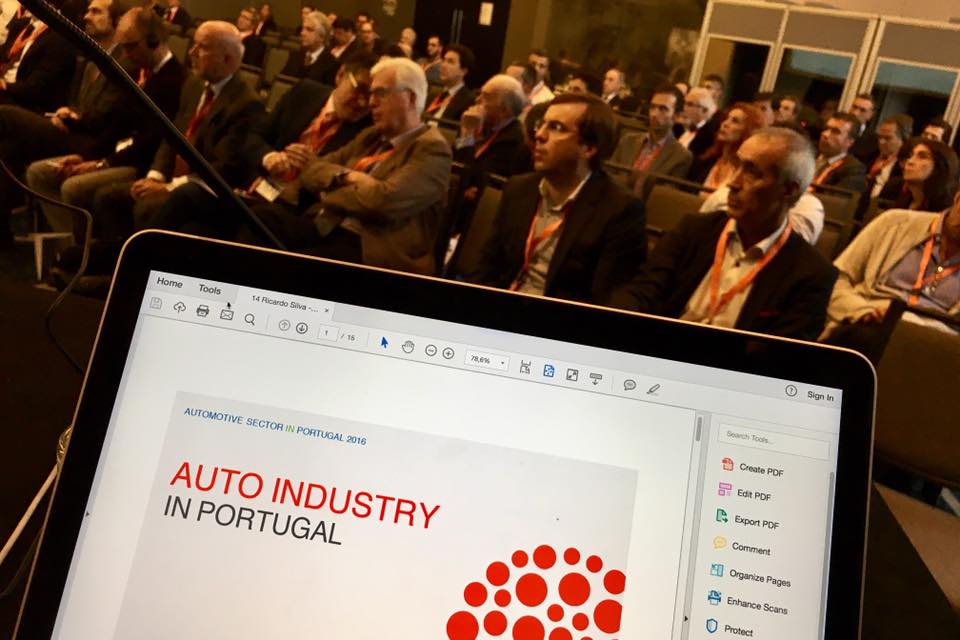
The steel sector in the Iberian peninsula will face various challenges in the coming year, industry executives at the EUROMETAL Steel Net Forum in Porto, Portugal, said last Friday. While ongoing issues such as lackluster demand and over-capacity are expected to persist, other challenges are likely to arise in the coming year, they said.
Mergers and acquisitions, plus anti-dumping measures are expected to be prominent in the European steel industry in 2017 but prices are not expected to increase sharply, speakers said. Carlos Vieira of Spain’s Gonvarri Steel Services told attendees that any consolidation would lead to the reduction of sourcing options for steel distributors, an issue which could be made worse by a spate of protectionism barriers expected next year.
The ongoing issue of Chinese over-capacity was, once again, a topic of discussion. Jens Lauber, ceo Tata Steel Distribution Europe and president of EUROMETAL, said: “overcapacity in China is a key factor to the destabilisation of the EU market,” adding that “EU producers are clearly in survival mode.”
The idea of generating value, as mentioned by other speakers at the meeting, was reiterated as a key strategy in improving profitability in the midst of the challenges ahead. “Europe needs a complete and strong value chain, with all participants to play their roles for value generation,” Lauber said.
Economic challenges are also looming, participants said. Fernando Pinto, president of Açomefer, the Portuguese association of wholesalers of steel, metals and tools, noted that the growth of Spanish and Portuguese GDP was positive in 2015, but that 2016 forecasts are negative, with Spanish growth receding to 3.1% for 2016 and Portugal’s expected to decline by 1.3%.
A further 2.2% decline is forecast for Spain in 2017, while an uptick of 1.6% is expected for Portugal in 2017.
Erica Sesay, PLATTS