


EU service centre flat steel sales strengthen
Shipments of flat products by European service centres increased by some 4% year-on-year in November according to Eurometal, the European Federation of Steel, Tubes and Metal Distribution and Trading.
Macroeconomic data has been increasingly positive in Europe with purchasing managers’ indices suggesting strength in manufacturing and construction. Strength in these steel intensive sectors is now being reflected in sales volumes as well as the rising European steel prices.
For the first 11 months of 2016, service centre shipments were up 1.4% on the same period in 2015. Stock volumes were barely changed on-year at 62 days.
Peter Brennan, PLATTS

European steel distribution shipments rise in November
European steel distributors’ association EUROMETAL tells Kallanish that European Union (EU) distribution sector shipments increased while inventories decreased year-on-year for both flat and long products in November.
Flat steel service centres (SSC) saw EU shipments grow by 4% y-o-y in November following a -7% fall in October. Over the first eleven months of 2016 shipments have risen by 1.4% on-year. Stock volumes within EU SSC, when expressed in days of sales, noted 62 days in November 2016, compared with 63 days in November 2015, EUROMETAL says.
EU Multi-Product & Proximity Stockholding distribution, mainly involving longs, tubular products and stainless steel, also registered an increase in shipments in all main product lines, except for tubular products and stainless steels, EUROMETAL adds.
November shipments in this sector rose by 2% y-o-y and grew slightly by 0.1% y-o-y for the first eleven months of 2016. Stocks within the EU Multi-Product & Proximity Steel Stockholding Distribution sector, expressed in days of sales, reached 69 days in November 2016, the association continues. This compares with 72 days during the same month of 2015.
HRC imports from Russia, Brazil now subject to registration
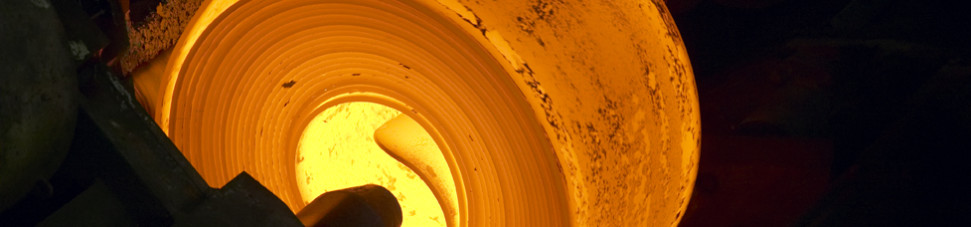
The European Commission (EC) announced Friday HRC imports from Russia and Brazil into the EU are now subject to registration, a move which could lead to a retroactive duty if the ongoing investigation results in the imposition of anti-dumping duties.
The EC said in its official Journal that, following evidence provided in a complaint from Eurofer, it set the estimated dumping margin at 20-50% ad valorem on the CIF import value. The EC assessed that despite the rising trend of import prices from Russia and Brazil, the absolute level of import prices remained at a “critically low level”. “In particular, it was lower than the costs of production of the EU’s [steel] industry at the end of 2015,” the EC said.
As reported, Eurofer lodged a complaint concerning HRC imports from Brazil, Iran, Russia, Serbia and Ukraine in May 2016 and filed a registration request in October after records showed imports rising significantly following the start of EC investigations in July.
As part of this investigation the EC examined the third quarter of 2016 and concluded that “this substantial increase in the level of these Russian and Brazilian imports is likely to seriously undermine the remedial effect of any definitive duties, unless such duties would be applied retroactively”.
According to the latest data (to October 2016) from Eurofer, Russian imports reached their highest level of 2016 in October at 211,000 metric tons, compared to the 85,000 mt of imports made in October 2015. In contrast Brazil’s EU imports fell, reaching its highest point in 2016 for October at 102,000 mt, compared to 107,000 mt imported in October 2015.
According to the EC, imports from Iran, Serbia and Ukraine saw no substantial increase in volumes during the time period.
Investigations usually take nine months at the EC, but recent investigations have been sped up, taking just eight months. The registration measure can be reaffirmed in six months’ time.
In a separate case, the EC imposed an anti-dumping margin of 13.2-22.6% on Chinese HRC imports in October last year.
Laura Varriale, PLATTS
Auto grade excluded from EU galv investigation: EC
The European Commission has clarified that automotive grades are not included in the anti-dumping investigation into imports of Chinese hot-dip galvanized coils.
“Products intended for the automotive industry are excluded from the investigation in light of the exact chemical composition and metallurgical properties of the product concerned as described in the notice of initiation,” an EC source told S&P Global Platts.
The official notice of October 8 caused mass confusion with market players scrambling to clarify what is and is not included.
Jeff Kabel, chairman of the International Traders Steel Association confirmed the group met with EU officials in Brussels last Wednesday but said the talks did not make the matter clear. “From my standpoint we are not clear if auto is included or not,” he said.
Chinese mills do not supply large quantities of automotive galv to the European car industry, although the two mills that supply the most are not named in the investigation, according to Kabel.
The separation of automotive from other industrial grades is particularly interesting as it is widely understood that an attempt in 2007 to dump Chinese HDG failed after objections from the automotive sector.
Peter Brennan, PLATTS
Saarland mills support online trading platform Mapudo
The two big mills in the German state of Saarland have become partners in the steel trading platform Mapudo, which was founded in 2014.
Engineering steel maker Saarstahl and plate maker Dillinger Hütte have invested a one-digit million euro amount through their joint capital venture unit SHS Ventures. Their contribution is shared by two further investors, NRW.Bank and HR Ventures, Kallanishnotes.
With its investment, the SHS group wants to extent its value-added chain, but also give a boost to its internal and external digitalisation. “We want to use the know-how of Mapudo to offer our customers the ideal mix of distribution channels,” says Saarstahl sales chief Klaus Richter, commenting on the ongoing diversification of sales processes.
Mapudo will use the money to improve and expand its platform, and to boost marketing to become more popular, says its managing director Sebastian Grethe, formerly of thyssenkrupp Materials.
Mapudo works like a virtual warehouse in which distributors list their products (see Kallanish passim). Buyers looking for a product will be linked with sellers, and can place their order immediately online. The fee, paid by the stockist, is a one-digit percentage of the transaction price, with a maximum and a minimum cap.
Global steel overcapacity forum holds first meeting
With minimal fanfare for such an important undertaking, the newly-formed Global Forum on Steel Excess Capacity held its first meeting in Berlin on 16 December.
The initiative was agreed to by the G20 leaders at the Hangzhou Summit in September 2016 and further discussed at the OECD steel committee meeting in the same month (see Kallanish passim).
The Forum is chaired by Germany with China and the US as co-chairs. Over thirty steel producing countries are participating, representing over 90% of global steel production.
In its latest monthly report on global crude steel output, the World Steel Association calculates current worldwide crude steel capacity utilisation ratio of its 65 reporting countries in October 2016 at 69.6%. It was 68.2% in October 2015. This already implies more than 30% overcapacity.
China, with currently 50.2% of global crude steel output, has been following its own steelmaking capacity reduction programme throughout 2016. A key element in this is the closing down of unofficial and therefore ‘illegal’ induction furnaces. The Catch-22 here is that, because the production is unofficial, it is unlikely to be recorded in government statistics.
This is probably why, according to worldsteel data, Chinese crude steel output at the end of October was actually up by 4% year-on-year.
EU probe into Chinese HDG includes auto grades: sources
Automotive grade hot-dip galvanized sheet is included in the European Commission’s investigation of Chinese coated material, according to a source at an association that received a clarification.
Numerous market players noted confusion over the official notice of the investigation, announced Friday December 9, and whether it excluded automotive grades. Many explained the omission by making comparisons to a previous investigation into Chinese HDG, launched in 2007, that ended without a duty following feedback from the automotive sector.
“An anti-dumping investigation into hot dipped galvanized coil from China will not have a negative impact on the EU automotive industry as the anti-dumping probe will not cover the HDG for the automotive sector”, Axel Eggert, Eurofer general director, told S&P Global Platts.
A lawyer based in Brussels concurred based on the guidelines in the notice. “Looking at the specification market players confirmed to me that the HDG for the automotive is excluded, as was demanded by the strong automotive industry lobby. They lobbied very hard as they needed materials and they have open contracts.”
However, the association source said he had met representatives from the EC earlier this week and they had clarified there was a mistake in the official notice and automotive grades are included. “We do know for a fact that it is included. That was just a mistake in the original specification,” he said.
Another senior market figure agreed the automotive sector had not been excluded. He said the definition “makes no reference to a specific automotive grade HDG. References to an end use destination of steel imports are unknown in the CN codes governing customs definitions of imported steels.”
The distinction is important as, while imported Chinese HDG is generally not used in the automotive sector, there are implications for other suppliers. For instance, Korean producer POSCO (which does sell auto grade to Europe) is said to be reluctant to send big volumes to Europe to avoid being named in an investigation.
It is understood the EC has set a deadline of December 23 for objections to be filed. The European Commission could not be reached for comment.
Peter Brennan and Annalisa Villa
Lead-times more important than price in EU coil market
Availability, rather than pricing, appears to be the most crucial driver to current European strip product demand, with service centers making sure they can cover their requirements in the face of tightening supply.
Higher mill offers have been largely accepted by the market despite the difficulties downstream players have in passing the costs on to buyers. While many sources suggest this boost in demand will keep the spot price firm through Q1 of next year, a number say the level is unsustainable and prices will fall in the second half of the year when real demand does not appear.
“Some expect prices to fall in March/April and they might be right, but what are you going to do in Jan/Feb [for Q2 orders]. Lead-times are getting longer, you have contracts to fulfill so you have to pay more on the spot market,” a Benelux trading source observed.
He noted that some service centers had refused to buy as they did not believe the price levels were sustainable, but now they had been forced to accept €550/mt for hot rolled coil from an Italian mill.
Some have pointed to the declining spot coking coal market as a sign that steel prices should drop. The S&P Global Platts assessment for premium low-vol material fell to $252/mt FOB Australia Thursday from a high of around $310/mt.
However, the quarterly settlement price for Q1 looks set to increase strongly from the Q4 contract price with the Japanese mill Nippon Steel & Sumitomo Metal Corp settling for January-February at $285/mt FOB Australia, up from $200/mt for October-December. This contract settlement is the benchmark, generally followed by the European mills.
A German trading source said the raw material prices will become less of a talking point in future negotiations with steelmakers switching their argument from higher production cost burdens to tighter supply.
“A mill told me the main impact is that it seems steel demand is higher in the last month, but it’s only a feeling of the demand it’s not the real demand because some customers are focusing on the lead-times and securing material. In the past it was price first, now it is not. I think in May/June we will talk about real demand and it won’t be so good so we’ll see prices start to decline.”
Peter Brennan, PLATTS

Made in Steel 2017 – Come on board

Do not wait any longer, exhibition space is running out. Made in Steel 2017 is the appointment for your business.
Do you want to participate as an exhibitor at Made in Steel 2017? Click here to discover all the opportunities for your business.
Affrettati, gli spazi espositivi si stanno esaurendo. Made in Steel 2017 è l’appuntamento ideale per il tuo business.
Vuoi partecipare come espositore a Made in Steel 2017? Clicca qui e scopri tutte le opportunità per il tuo business.
https://booking17.madeinsteel.it/en/catalogo/
Capannoni industriali in acciaio: progettazione in caso di incendio
24. Progettazione delle strutture di acciaio di capannoni industriali mediante l’applicazione dei metodi di ingegneria della sicurezza antincendio