

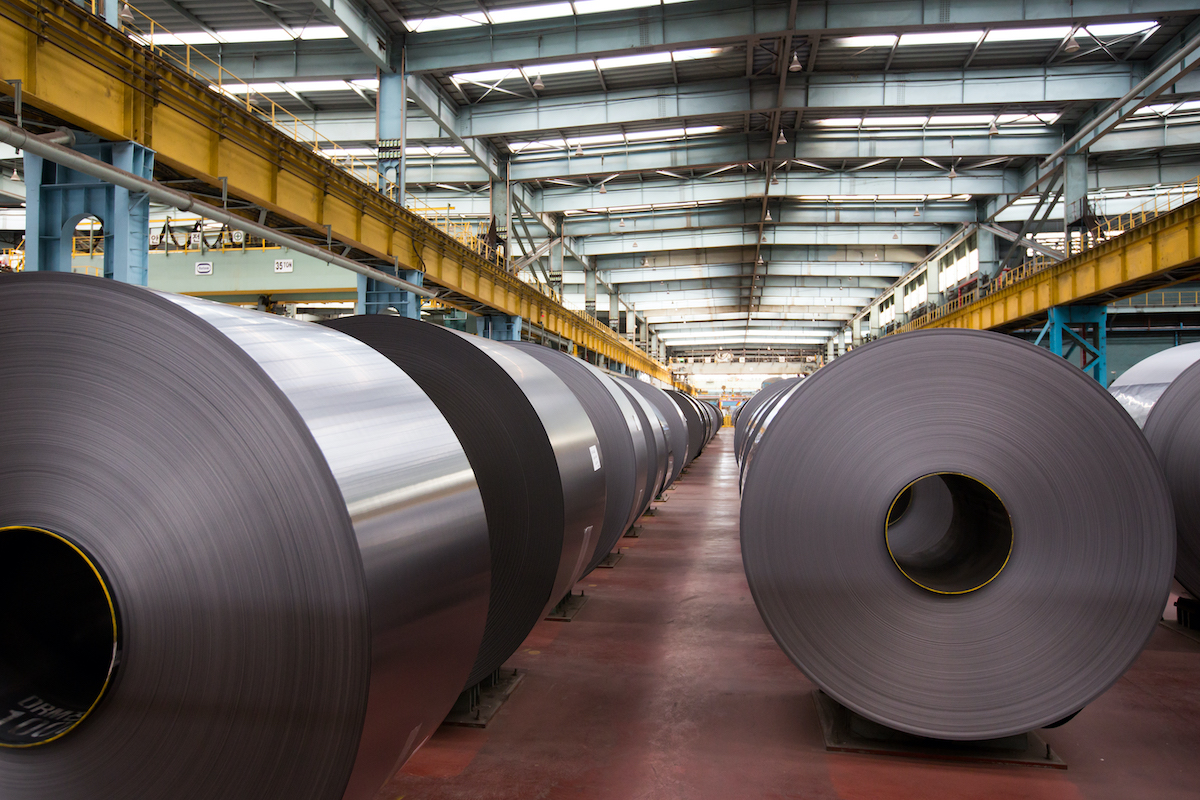
European domestic HRC market strengthens as higher-priced deals come to light
The European domestic hot-rolled coil market strengthened on Monday, March 2 as higher-priced transactions emerged, supporting mills’ upward price ambitions even as demand remains subdued.
Several sources reported the level of €700 ($827) per tonne delivered, equivalent to €685-690 per tonne ex-works, to have strengthened in deals versus €670-690 per tonne ex-works heard last week. Meanwhile, one source reported the level of €700-710 per tonne ex-works being achieved by one of the German producers.
Mills’ strong order books and longer than normal lead times supported by the slowdown of import activity caused by the introduction of the Carbon Border Adjustment Mechanism (CBAM) earlier this year were said to be the key reasons for the continuing upward price correction.
Fastmarkets’ daily steel hot-rolled coil index domestic, exw Northern Europe was €692.50 per tonne on Monday March 2, up by €6.43 per tonne from €686.07 on Friday February 27. The index was up by €10.21 per tonne week on week and by €41.67 per tonne month on month.
Fastmarkets’ corresponding daily steel hot-rolled coil index domestic, exw Italy was calculated at €676.25 per tonne on March 2, up by €5.62 per tonne from €670.63 per tonne on February 27. The index was up by €10.62 per tonne week on week and by €24.58 per tonne month on month.
In Italy, offer prices varied within €680-705 per tonne ex-works depending on the supplier.
Key tradeable levels were said to still vary within the range of €660-670 per tonne ex-works while small-tonnage cargoes were heard at €680-690 per tonne ex-works.
Some market participants voiced concerns that the US-Iran conflict may indirectly affect the market due to the rise in international oil and gas prices, which in turn could push electricity prices higher. Electricity costs had already been on the rise.
A large German HRC buyer said some tube and pipe mills in the region withdrew offers from the market while considering some corrections and added that the flat steel market may be more affected than the long steel market because of its exposure to energy-intensive sectors.
Additionally, sources from different parts of the world reported growing freight and insurance costs, which is putting import in an even less favorable position than now.


German Steel Federation calls for stronger Made in EU steel rules under Industrial Accelerator Act
The German Steel Federation (WV Stahl) has welcomed the European Parliament’s discussion on implementing the European Steel and Metals Action Plan (SMAP), stating that the debate comes at a critical moment for Europe’s steel sector.
According to the association, key commitments outlined in SMAP are not yet sufficiently reflected in the proposed Industrial Accelerator Act (IAA). WV Stahl argued that the legislation must establish a binding link between sustainability requirements and strict “Made in EU” criteria to ensure effective support for European steel producers.
Steel sector seen as strategic pillar of European industry
WV Stahl CEO Kerstin Maria Rippel stated that political commitments previously made by European Commission President Ursula von der Leyen and German Chancellor Friedrich Merz must now be translated into concrete legal measures.
She warned that the European steel industry faces existential challenges and emphasized that the Industrial Accelerator Act could play a decisive role by formally recognizing steel as a strategic sector while creating lead markets for low-emission steel produced within Europe.
Trade defense and origin rules serve different purposes
The federation also cautioned policymakers against conflating trade defense instruments with industrial policy measures during ongoing legislative discussions.
According to WV Stahl, post-safeguard trade measures address global overcapacity pressures, whereas origin-based industrial policies such as Made in EU requirements are necessary to safeguard investment certainty and maintain competitiveness within Europe.
Call for EU and EFTA-based origin definition
WV Stahl stated that the Industrial Accelerator Act should combine sustainability criteria with clearly defined European origin requirements limited to EU-27 and EFTA countries.
The association concluded that maintaining Europe’s industrial base requires steel to be formally recognized in legislation as a strategic backbone of European value creation, transforming the strategic vision of the Steel and Metals Action Plan into concrete industrial policy implementation.


French Senate rejects proposal to nationalize ArcelorMittal France
The French Senate has voted against a draft law that sought to nationalize steelmaker ArcelorMittal France, marking a significant political decision regarding the future of the country’s steel industry.
The draft law was examined by the Senate Finance Committee and proposed transferring ownership of ArcelorMittal’s French steel operations, including major northern facilities and associated jobs, to the French state. However, after review and debate, the Senate rejected the nationalization measure, concluding that it would not effectively address the fundamental challenges facing the steel sector.
The finance committee of France’s National Assembly had previously approved a bill introduced by the La France Insoumise party to nationalize the French assets of ArcelorMittal, as SteelOrbis previously reported.
Committee report emphasizes structural, not ownership, issues
In a report presented to the Senate, members of the Senate Finance Committee argued that the difficulties confronting the steel industry, such as declining demand, global overcapacity, high energy costs and competitiveness pressures, stem from broader economic and market forces rather than being solvable through ownership changes. Forced nationalization was seen by the committee as unlikely to reverse these trends or strengthen long-term viability.
The committee noted that, although nationalization powers are constitutionally available, previous interventions in other sectors were carried out through negotiated market mechanisms rather than expropriation. The analysis emphasized that preserving competitiveness and encouraging investment would be more impactful than a compulsory state takeover.
The rejection underscores wider debate in France and across Europe about how best to support strategic industries in the face of global pressures. Lawmakers and industry stakeholders have expressed concern over competitive disadvantages relative to producers outside the EU, driven by factors such as energy costs, regulatory burdens and market shifts.
While nationalization had garnered some support from unions and political groups arguing for strategic sovereignty, opponents warned of the financial and managerial risks associated with forced state ownership, and questioned its effectiveness in strengthening long-term industrial competitiveness.
Next steps for French steel policy
With the nationalization proposal rejected, attention is likely to shift toward alternative industrial policies aimed at revitalizing steel production through investment incentives, competitiveness measures, trade defense policies and structural reforms. The Senate report and debate may influence future legislative efforts to bolster France’s industrial base without altering ownership structures.

Escalation in Gulf disrupts shipping, steel may be impacted if war continues
The US-Israeli military strikes against Iran, which started on February 28, and Iran’s subsequent retaliation, have naturally created a tense situation in the Gulf, affecting operations in many industrial segments in the regions.
The impact has already been seen in the oil and gas sector and the disruptions of maritime activities in and around the region have already been reported.
In terms of steel and raw material shipments, there is a potential impact in terms of disruptions of deliveries from Iran itself, mainly to Asia, while the situation in the Strait of Hormuz is likely to result in delays of shipments destined for ports in the Gulf.
If the war continues, the situation may lead to higher steel prices in the region, especially for material ready on the ground since buyers may need to restock to replace the volumes for which they had previously placed import orders, the deliveries of which end up being delayed.
If the situation is not resolved in the near term, some cargoes may be redirected to alternative destinations, which will also affect steel market prices, at least temporarily.
Currently, passage through the Strait of Hormuz is blocked, though there has been no official closure. However, the number of vessels opting for this route has declined significantly. “Transportation is basically stopped today, but it looks like a short-term stoppage,” one international trader said. At present, there are vessels stuck on both sides of the straight as transportation is risky and several ships have already been attacked.
Major large Asian steel exporters polled by SteelOrbis state that they see major risks for the steel market from the rising tensions between Iran and Israel and the US in the region, in terms of increasing freight rates, a lower number of cargoes available for the Asia-Middle East route and possible transportation delays. “Due to increased regional risks, shipping costs have risen by 15 percent to 20 percent… Product prices in China remain stable. The current price adjustment is strictly related to transportation costs,” a representative of a major Chinese exporter said. Another large trader commented to SteelOrbis, “We have already seen freight increase, but most vessel owners will take one to two days to settle prices amid the current risks. Other impacts still need more time to be seen.”
Market sources said that, today, freight rate assessments for the China-Turkey route for a 40,000 mt vessel start from $40/mt, versus the previous $35/mt.
Another important issue resulting from the attacks on Iran is the expected deferring of shipments of steel, semis in particular, that have already been booking in the Middle East or in Asia. “I know that buyers are waiting for some large lots of Iranian billets. They may be cancelled, as no one knows about the consequences [of the escalation of the conflict]. But there is no news about this for now,” a Southeast Asian source commented. Shipments of materials destined for the region, especially to countries enclosed within the Gulf, are also likely to be jeopardized. Specifically, market players expect steel billet and flats shipments to be impacted as the region is a large importer of both.
As for the regular steel market activity, regional sources have not yet reported any major change, stating that construction projects are mainly being carried out as planned, but of course, if the situation worsens, things might change. “It is too early to tell. There could be a slight slowdown of activity, but it depends on how long this lasts. Today is the first day after the weekend, and 90 percent of project sites are working normally,” one source in the UAE told SteelOrbis.

European green steel market quiet despite state-backed decarbonization push; automakers lock in long-term supply
The European market for steel produced with reduced carbon emission content was quiet during the week to Thursday February 26, with only sporadic trades reported recently, sources told Fastmarkets.
At the same time, end-users were seeking long-term supply agreements and future green-steel projects continued to secure additional state funding, Fastmarkets heard.
Across Europe, appetite for low-emission steel remained subdued amid limited engagement from steel service centers.
“Spot sales [of green steel] are close to nil, but for long-term contracts we have more interest,” a seller source told Fastmarkets.
One European steelmaker said that demand for green steel from the distribution chain remained limited, adding that end users need to encourage customers to prioritize green steel.
Fastmarkets’ methodology defines European green steel as steel produced with Scope 1, 2 and 3 emissions at a maximum of 0.8 tonnes of carbon dioxide (CO2) per tonne of steel.
During the assessed week, leading European suppliers maintained premiums for such steel at €200-300 ($236-354) per tonne, but admitted that such prices were rarely achieved in transactions.
Buyer sources estimated achievable premiums for green steel with such emission levels at €70-150 per tonne, claiming that producers were prepared to negotiate further on larger volumes to stimulate purchasing.
But mill sources claimed that €150 per tonne was “the minimum premium for steel produced with such emissions, considering its limited availability.”
Fastmarkets’ weekly assessment of the green-steel domestic, flat-rolled differential to the hot-rolled coil index, exw Northern Europe was unchanged at €100-150 per tonne on Thursday.
Fastmarkets’ assessment of the flat-steel reduced-carbon-emissions differential, exw Northern Europe was €0-50 per tonne on Thursday, also stable week on week.
For steel produced in blast furnaces with reduced carbon emissions of 1.4-1.8 tonnes of CO2 per tonne of steel, offers for premiums were reported at €70-80 per tonne.
Estimates of achievable premiums came in at €0-50 per tonne.
Wider market updates
Market participants are also awaiting policy clarity at the EU level. The European Commission postponed the announcement of the Industrial Accelerator Act (IAA) to March 4 from the previously expected February 26 amid reported disagreements over local-content requirements and geographic scope.
The IAA is a long-anticipated policy initiative expected to support Europe’s decarbonization efforts and could provide a demand boost for green steel, Fastmarkets reported previously.
While broader demand for low-emission steel has been limited, some major end users were moving to secure volumes through long-term agreements. For example, German steelmaker Thyssenkrupp Steel agreed to supply its CO2 reduced bluemint recycled steel for series production of the BMW iX3 from 2026, including for outer body panels and battery housings, according to a February 23 statement.
The move highlights how automakers seeking green steel were prioritizing long-term contracts with producers even while spot activity remained thin.
Under the agreement, bluemint recycled steel – a mass-balanced product with a high share of recycled content – will be supplied as part of Thyssenkrupp’s broader transition toward carbon-neutral steelmaking.
The company plans to gradually replace coal-based production with a hydrogen-capable direct-reduction plant expected to produce up to 2.5 million tonnes per year of direct-reduced iron, which could cut CO2 emissions by up to 3.5 million tpy.
Thyssenkrupp aims to switch all production to climate-neutral bluemint steel by 2045 at the latest.
Meanwhile, German steelmaker Salzgitter AG secured additional public funding for its SALCOS decarbonization project. Germany’s Federal Ministry for Economic Affairs and Energy approved an increase of about €322 million in funding following European Commission approval under state-aid rules on February 6, according to a February 23 release.
The new allocation supplements the roughly €1 billion in state aid approved in 2022, financed 70% by the German federal government and 30% by the state of Lower Saxony.
Salzgitter will invest about €2.3 billion in the first phase of SALCOS, which aims to convert its flagship Salzgitter Flachstahl integrated steelworks to low-CO2 crude-steel production through the installation of an electrolyzer, a hydrogen-based direct-reduction (DRI) plant and an electric-arc furnace (EAF).
The company said previously the project could eliminate up to 95% of the site’s annual CO2 emissions, or about 8 million tonnes.
But in September 2025, Salzgitter delayed parts of the project amid weak market fundamentals and regulatory uncertainty, Fastmarkets reported at the time.

Constrained import remains the dominant force supporting the European domestic HRC market
Ongoing import tightness continues to be the key driver for domestic hot-rolled coil prices in Europe, Fastmarkets heard on Friday February 27.
Lower import activity is explained by the effect of the EU’s new Carbon Border Adjustment Mechanism (CBAM) and expectations of a new trade regime.
Offers from integrated mills in the region were heard at €700-720 ($826.27-849.88) per tonne delivered (around €680-705 per tonne ex-works). Most sellers said they were largely sold out of April-delivery coil, with May-delivery order books now open.
Estimates of achievable prices were reported at €670-690 per tonne ex-works for April-May delivery coil, depending on tonnage.
While some sellers called demand generally subdued, they confirmed that customers, including service centers, continue to book volumes despite sufficient stocks because buyers realize that the effects of import regulations are real and domestic prices will keep rising.
The same sell-side sources said on February 27 that upward price movements will have a moderate pace in the coming weeks with real demand remaining slow.
Fastmarkets’ daily steel hot-rolled coil index domestic, exw Northern Europe was €686.07 per tonne on February 27, up by €0.34 per tonne from €685.73 per tonne on Thursday February 26. The index was up by €6.07 per tonne week on week and by €36.57 per tonne month on month.
Fastmarkets’ corresponding daily steel hot-rolled coil index domestic, exw Italy was calculated at €670.63 per tonne on Friday, stable day on day. The index was up by €9.31 per tonne week on week and by €32.67 per tonne month on month.
Offers of May-delivery HRC were heard at €700-720 per tonne delivered (around €685-705 per tonne ex-works) from integrated suppliers and re-rollers. Tradeable levels were still reported at €680-690 per tonne delivered (around €665-675 per tonne ex-works).
One buyer said €680-685 per tonne ex-works could be achieved for smaller tonnages.
Most recent import HRC offers from Turkey were heard at €640 per tonne DDP and €630 per tonne DDP from Algeria.

Global DRI output up 11.5 percent in January 2026
According to the data released by the World Steel Association (worldsteel), global direct reduced iron (DRI) production in the 12 countries accounting for approximately 85 percent of total world DRI production in 2025 amounted to 10.24 million metric tons in January this year, decreasing by 9.9 percent month on month and up by 11.5 percent year on year.
The worldsteel data show that India was the largest DRI producer among the countries surveyed in January this year, with its DRI output amounting to 5.37 million metric tons in the given month. India was followed by Iran, Russia and Egypt in January, with outputs of 2 million mt, 750,000 mt and 603,000 mt, respectively.


EUROMETAL Southern Europe Meeting 2026: The shadow of industrial desertification
During the panel discussion “Rolling in the deep! Are we risking EU industrial desertification?”, held during the EUROMETAL Southern Europe Meeting 2026 on February 26 in Milan, Franco Felisa (ESN, Electromechanics Synergy Network), Tommaso Sandrini (Assofermet, San Polo Lamiere), Tayfun Iseri (YİSAD/Çolakoğlu Metalurji), and Piotr Sikorski (PUDS) debated the growing risk of industrial desertification in Europe.
Franco Felisa opened the debate with a lucid analysis of current market pressures, highlighting how European companies must face raw material and energy costs that are 40-50 percent higher than those of global competitors. He even evoked an extreme proposal that had already circulated in mid-February, namely, a coordinated shutdown of plants for an entire day as an act of protest. “Talking to Brussels is painful,” he noted, adding, “They listen, but then they ask you for numbers, as if they don’t live in the same reality.”
The same risk of industrial desertification is present in the Polish market, as highlighted by Piotr Sikorski, who said it does not only concern large producers. Sikorski explained how the crisis is hitting distribution: “There’s no single week when I don’t have a call from a distributor who is closing their lines or reducing their activity. Deindustrialization is not an idea hanging somewhere over there, but an ongoing process. To stop it, we must actively focus on the areas not represented by the government: distributors, users and small businesses.”
From Poland, the focus shifted to Turkey, one of Europe’s closest partners. Turkish production capacity is around 40 million mt, of which 20-25 million mt are exported to Europe. According to Tayfun Iseri, the market is facing several difficulties, but the biggest problem is the constant concern over costs. He stated, “We’re too focused on the cost problem, when the real problem is that we don’t know how to grow demand.” Regarding the risk of relocation, Iseri emphasized that most Turkish industries are family-owned and very proud of this: they would do everything possible to avoid bankruptcy, but it is unknown how long they can survive.
The environmental paradox
The hottest topic remains climate regulations. Although the goal of decarbonization is shared, the methodology is a subject of criticism. Felisa defined CBAM and safeguards as “accelerators of desertification”. “Both systems work for and against us,” Sikorski added.
In his intervention, Tommaso Sandrini observed that time is running out and that in two years, when downstream products become part of the scope of CBAM, we will have lost downstream sectors that will not return. “There is an increasing level of awareness within the economic community, but we do not see the same level of awareness within political institutions, even less in Brussels,” he commented.
In addition to the complexity and implementation of CBAM, Sandrini also criticized its environmental effectiveness. “European steel accounts for only 0.3 percent of global emissions. We are killing our value chains for a result that is irrelevant on a global level,” he said. The perception among participants at the EUROMETAL event was that CBAM was born as an environmental protection measure, only to become a true trade defense tool. “Nobody is saying anything about the environment right now. This is crazy,” commented Sikorski. Iseri added, “We started from the environment, but I think now it’s turning into a kind of protectionism.”
In essence, the speakers agreed that the time for diplomacy is up, stressing that Europe must protect not only those who produce steel, but especially those who use it. Otherwise, they concluded, the continent’s future will be that of a large buyer of finished products, with a manufacturing industry reduced to a distant memory.

EUROMETAL Southern Europe Meeting 2026: Vezzosi and Julius warn of risks of deindustrialization amid CBAM, safeguards and rising costs
The first panel at the “EUROMETAL Southern Europe Meeting 2026” hosted by EUROMETAL and Assofermet in Milan, February 26, opened with a clear message: the risk of the deindustrialization of the European Union is no longer an hypothesis, but a dynamic that the industry – along the entire steel supply chain – already perceives as real. The core of the discussion was the combined impact of trade measures, regulatory costs and growing global competitive pressure.
Cinzia Vezzosi, president of Assofermet, framed the issue as “systemic” and not limited to the steel sector alone. Vezzosi recalled how the EU has adopted measures with shared objectives (tackling environmental dumping, protecting domestic production, the ecological transition), but called for a look at their effectiveness, stating, “Are these instruments really strengthening the EU’s ability to compete or, on the contrary, do they risk undermining it deeply?”
According to the president of Assofermet, CBAM – created to rebalance competition – risks turning into a heavy burden for distribution and processing, i.e., for those segments that are already operating in global markets and are serving downstream manufacturing. The competitive gap, she said, could become structural. When this happens, she said, “deindustrialization begins”, with direct effects on employment, industrial capacity and the resistance of the value chain.
Vezzosi called for a change of pace in the European approach, asking for consistency between transition and competitiveness, stating, “This is not a corporative appeal, rather a systemic appeal. We ask environmental policies to be accompanied by industrial policies and that the protection of production does not end up penalizing processing and distribution. Above all, we ask for competitiveness to become a central issue of European choices and decisions.”
Next, Alexander Julius, president of EUROMETAL, shifted the focus to the resilience of European manufacturing, recalling that the supply chain does not end with primary steel. Distribution and user sectors make all the difference, he said, because without those who transform and incorporate steel into finished products, industrial demand and, consequently, the very sustainability of the segment in Europe are lacking.
In his speech, Julius insisted on a key point: the current combination of trade measures and environmental regulations, with rising costs and still unclear details, is generating a level of uncertainty that the industry considers dangerous. In his opinion, this not only affects the accounts of companies, but also the ability to plan and invest. “The industry needs certainties: at least we need to be able to make calculations. And, unfortunately, this is lacking today,” he said, warning that the absence of a predictable framework risks translating into rising costs that are difficult to manage when the measures are fully operational.
Julius then launched a further alarm signal on the degree of market readiness, stating, “I fear that many companies are not ready and that they are only partially considering these costs in their calculations. And this could turn into a surprise towards the end of 2027, when it will be time to pay.” In the context of the debate on CBAM, this came as a reminder of the need for tools and application rules to be defined quickly, to avoid distorting effects along the value chain.
Finally, Julius underlined the political dimension of the issue. According to the president of EUROMETAL, “European institutions will do nothing without pressure from national governments. This is why we must remain united and do something together,” adding that EUROMETAL is preparing a Europe-wide initiative, open to the involvement of interested associations in addition to Assofermet, with the aim of building a common position and a coordinated action “to be started immediately”, because – he concluded – “We have to do something now”.

European coil and green steel round-up: EU coil prices climb further supported by CBAM, new quotas
European coil prices jumped in the week to 27 February as extended lead times, solid mill orderbooks, and import deterrents continue to balance the scales of the market in mills’ favour.
Hot-rolled coil (HRC) prices in both North and South Europe climbed by EUR15/t on the week. Market sources reported incrementally higher offers at EUR710-750/t delivered in Northwest Europe, with deals settling at EUR690-700/t delivered, or the ex-works equivalent of EUR660-690/t.
In Italy, trading price indications clustered at a very slight discount between EUR660-680/t ex-works, otherwise operating on similar dynamics as in North Europe.
While the market was fairly unanimous in expecting higher prices in Q1 as compared to 2025 levels due to supply-side drivers like the Carbon Border Adjustment Mechanism (CBAM) and the upcoming redesign of steel import quotas, the lack of recovery in steel consumption is starting to give both sides of the market pause as relates to the sustainability of the current upward trend.
“The price rise is purely due to new policies, while demand is unchanged,” said an Italian trader. “Importing is becoming far more complicated as everyone wants to buy DDP, but we need to price-in risk from the new quotas, and we have no clarity there. It’s clear the quotas will be slashed, but the country-specific allocations are uncertain.”
Distributors were said to have increased their own sales prices to consumers by around EUR20/t, but “are in no hurry to sell,” as described by a German stockholder, due to the upcoming quota cuts and the expectation of higher prices as a result.
A Benelux distributor considered market dynamics as largely unchanged, “except that end-users can more clearly see that further price increases are inevitable – that does make it easier to close sales.”
Cold-rolled and hot-dip galvanized coil (CRC/HDG) prices experienced similar gains as HRC, with dealings breaking above EUR800/t delivered. Domestic buyers remain concerned about the availability of downstream coils on both existing and upcoming import barriers — Brazilian exporters were said to be capitalizing on this dynamic, offering CRC “actively” into Europe at EUR690-720/t DDP Antwerp, due to their non-inclusion in the CRC anti-dumping framework, and competitive default values under CBAM.
A German distributor described CBAM as a “Sword of Damocles” hanging over the market, with default values presenting an existential risk to smaller, more import-dependent operators.
Green Steel
Despite its long anticipation, at the close of this week McCloskey exclusively reported that the EU’s first official green steel definition – the voluntary low carbon steel label – could be at risk due to wider frictions in the drafting of the Industrial Accelerator Act (IAA).
Green steel standardisation via the label was a priority of the European Commission, as stated in its Steel and Metals Action Plan, both for the clarity it could give buyers in securing material with true emissions reductions, and the intention to link the standard to public procurement mandates to stimulate domestic low-carbon markets.
A full abandonment of the low carbon label has not been confirmed, and sources expect that if the IAA does neglect to include the label, the debate would be revisited under the Ecodesign for Sustainable Products Regulation (ESPR), with a steel-related delegated act already scheduled for this year.
Otherwise it was largely business as usual in the green steel segment, though one green steelmaking executive said the low-carbon market is “quietly gaining momentum,” mainly driven by construction. National governments were also said to be giving a “soft push” in their jurisdictions for the increased use of low-carbon steels, and that CBAM has “woken people up to the realisation that decarbonisation is a policy that cannot be ignored.”
The automotive sector was described as one of the only segments still realistically purchasing mass-balanced low-carbon material, due to production history requirements for inclusion in their supply chains.
Green HRC premia were reported on a range of EUR80-100/t for spot buyers of EAF-based material of around 0.7t CO2e/t, while higher premiums were available in deals to project buyers, or material of particularly low CO2 content of around 0.3t CO2e/t.
| Weekly European steel coil | |||||
| EUR/t | Term | 27-Feb-26 | Change | ||
| Weekly Northwest Europe steel coil | |||||
| Northwest Europe ex-works HRC | EX-WORKS | 680.00 | 15.00 | ||
| Northwest Europe ex-works CRC | EX-WORKS | 780.00 | 5.00 | ||
| Northwest Europe ex-works HDG | EX-WORKS | 780.00 | 5.00 | ||
| Weekly South Europe steel coil | |||||
| Italy ex-works HRC | EX-WORKS | 675.00 | 10.00 | ||
| South Europe CIF HRC | CIF | 540.00 | 0.00 | ||
| Source: McCloskey by OPIS. | © 2026 Dow Jones Energy Limited. | ||||
| Weekly green steel | |||
| EUR/t | Term | 27-Feb-26 | Change |
| Green Northwest Europe HRC premium (scopes 1-3 CO2 under 0.8t) | 80.00 | 0.00 | |
| Green Northwest Europe ex-works HRC (scopes 1-3) | EX-WORKS | 760.00 | 15.00 |
| Green HRC premium (scopes 1-2 CO2 under 0.5t) | 80.00 | 0.00 | |
| Green Northwest Europe ex-works HRC (scopes 1-2) | EX-WORKS | 760.00 | 15.00 |
| Green HRC reduced carbon price (scopes 1-3) | 64.32 | 7.57 | |
Author: Benjamin Steven, Maria Tanatar
