


ArcelorMittal Belgium completes consultation phase on planned Ghent tailored blanks closure
ArcelorMittal Belgium has announced that the information and consultation phase regarding the planned closure of its tailored blanks operations in Ghent has officially been completed.
The company had previously revealed its intention to discontinue the activity earlier this year, citing persistent financial losses and declining automotive production levels across Europe as key drivers behind the proposed shutdown, as SteelOrbis reported previously.
During the consultation process, management provided additional clarification on the restructuring plan, while employee representatives and social partners submitted questions, feedback and counterproposals. According to the company, these discussions were conducted within a transparent and constructive social dialogue framework.
In parallel, ArcelorMittal and labor representatives jointly developed a social plan designed to mitigate the impact on affected employees during the transition period. The agreed social plan received approval from 71.11 percent of the employees concerned.
ArcelorMittal stated that it remains committed to supporting workers throughout the transition and implementing all agreed accompanying measures.
Following the completion of consultations, the final decision regarding the proposed closure of the Ghent tailored blanks operations will now be taken by the company’s board of directors.


European Commission launches trilogues on new steel measure addressing global overcapacity
On 24 February 2026, the European Commission confirmed the start of trilogue negotiations on the upcoming EU steel measure aimed at addressing the negative effects of global overcapacity. Maroš Šefčovič represented the Commission in the first round of discussions with the European Parliament and the Council.
The proposed regulation is intended to replace the current steel safeguard measure, which expires on 1 July 2026. The objective is to ensure continuity of protection for the EU steel market while adapting the framework to evolving global conditions.
According to the Commission, the new measure would:
-
Reduce tariff-free import volumes to 18.3 million tonnes per year, representing a 47% reduction compared to 2024 quota levels;
-
Increase out-of-quota duties to 50%;
-
Apply to all origins except EEA countries;
-
Introduce a “melt & pour” requirement to strengthen traceability and transparency in the EU steel supply chain.
The proposal responds to what the Commission describes as unsustainable levels of global steel overcapacity, projected to reach 721 million tonnes by 2027 — approximately five times the EU’s annual steel consumption. The measure is presented as a means to protect the EU’s industrial base, support decarbonisation objectives, and safeguard an estimated 2.5 million jobs linked to steel production.
Trilogue negotiations between the Commission, the European Parliament and the Council will focus on finalising the legal text in time for the new framework to enter into force by 1 July 2026.
The Commission has indicated that the measure is designed to remain WTO-compatible and will be accompanied by continued engagement with international partners on collective solutions to global overcapacity.
Further details are available here: policy.trade.ec.europa.eu

Revista InfoAcero Febrero 2026
En el siguiente enlace pueden ver la edición de FEBRERO de nuestra revista InfoAcero
Destacamos a continuación algunos de sus contenidos:
- Opinión – D. Enrique Gimeno- Junta Directiva UAHE
- Índice UAHE: Evolución precios de aprovisionamiento Septiembre 24 – Diciembre 25.
- Metal: Actividad productiva y comercio exterior- Informe Confemetal – Febrero 26
- Asesoría Legal: “La empresa familiar”- D. Javier Edo, Asesor Legal UAHE
- Steel Net Forum Santander: Programa preliminar, 27 y 28 abril 2026
- Información Asociativa – Conferencias del mes de febrero “Perspectivas del sector siderúrgico”
- Colaboración RRHH –D. Agustín Barroso– Director RRHH HIEMESA


Europe faces industrial hollowing without steel trade reform
Europe’s industrial base could be hollowed out within a few years unless policymakers urgently rethink trade and climate policies, steel distributors association EUROMETAL has warned.
At the EUROMETAL Southern Europe meeting in Milan on Feb. 26, attended by S&P Global Energy, President Alexander Julius criticized European steel policy for focusing solely on steelmaking, neglecting the broader ecosystem of distribution and downstream manufacturing that supports millions of jobs.
“Without steel distribution and the steel-using industries, we don’t need steel in Europe,” he said.
The association is calling for a “level playing field” for steel-based products, urging national governments to push for measures comparable to those already applied to raw steel, and arguing that EU institutions are unlikely to act without sustained pressure from EU member states.
Over the past year, EUROMETAL has lobbied Brussels to address what it sees as a growing imbalance. While raw steel imports face safeguards and quotas, downstream steel products often enter the EU market with fewer restrictions.
Julius noted that this discrepancy has contributed to a steady erosion of European steel consumption over the past 15 years, as imported finished and semi-finished goods displace domestic materials.
The issue is intensifying as the US and Canada expand protections to derivative products, with exporters such as China, India and Turkey consequently diverting more steel towards Europe, which Julius described as “completely unprotected.”
He cautioned that planned changes to EU steel safeguards from July — including significant quota cuts and a 50% duty for out-of-quota volumes — could sharply raise EU steel prices without boosting European production.
Meanwhile, unchecked derivative imports would widen the cost gap for EU manufacturers and accelerate industrial relocation, with customers shifting capacity to countries like India and Serbia.
CBAM concerns: uncertainty remains
Julius also highlighted concerns about the EU’s Carbon Border Adjustment Mechanism (CBAM). While supporting decarbonization, he criticized unresolved methodological issues, including emissions benchmarks and certification procedures.
He warned that ambiguous draft guidance and impractical global certification requirements could leave companies unable to model future liabilities, potentially resulting in unexpected costs when payments begin.
Julius reiterated the need for coordinated national action to ensure fair treatment for steel-based products, emphasizing that only sustained member-state pressure will prompt EU institutions to act.



Polish steelmakers call for Ukraine steel, scrap quota
Polish steelmakers are pushing for the imposition of safeguard quotas for steel and scrap from Ukraine to curb arrivals of lower-priced finished products, Polish union of steel distributors president Piotr Sikorski said at an industry event in Milan on Thursday.
Sikorski’s comments came in the wake of remarks made by EU trade commissioner Maros Sefcovic this week that alluded to the possible inclusion of Ukraine in the new steel safeguard due to come into effect on 1 July.
Ukraine’s scrap export ban has made mills across the border from Poland even more competitive, Sikorski said. Scrap exports in Poland are about 2mn t/yr, and Ukraine was sending a lot less than that. The main issue lies in the fact that Ukrainian steelmakers have become even more competitive, Sikorski added, pointing out that the ban was not driven by any surge in steel demand in Ukraine.
Ukraine has been exempt from the current EU steel safeguard, and other duties, to assist its economy during the conflict with Russia.
This remains an unresolved issue and it is possible there may be a quota for steel and scrap — Polish producers are pushing for this but there is no certainty over the outcome, Sikorski said.
EU imports of Ukrainian hot-rolled coil rose from less than 508,000t in 2022 to nearly 1.3mn t in 2025.
Some Ukrainian steel exports to the EU have increased by 50pc, showing how competitive its sector is despite the conflict, Sefcovic said on Tuesday.


EU risks steel demand loss ahead of 2028 CBAM extension
There could be a significant risk to downstream steel demand in 2026-28, prior to the scheduled extension of the carbon border adjustment mechanism (CBAM) to downstream steel-consuming goods, European steel market participants said at the EUROMETAL & Assofermet Southern Europe meeting in Milan today.
Participants suggested that current CBAM costs are being underestimated across the supply chain.
Annual CBAM mark-ups on steel products effectively encourage the import of finished steel derivatives, Polish Union of Steel Distributors president Piotr Sikorski said. While CBAM is expected to expand to downstream products in 2028, the mark-ups on steel will by then be in their third year, potentially continuing to make derivative imports more competitive.
To mitigate the risk of the loss of demand, a list of key HS codes of EU-manufactured products with high steel content has been submitted to the EU by Eurofer, Argus understands. The proposal looks to establish a quota system for downstream products similar to existing steel safeguards.
Key product categories, which have been identified, include car parts and specialised vehicle components, certain home appliances and parts used in machinery and yellow goods. The objective is to implement these safeguards to protect EU manufacturing even before the 2028 CBAM downstream expansion.
Meanwhile, the new version of the steel safeguard measures is still expected to come into effect in July, but attendees warned that there are concerns about the World Trade Organisation compliance of those, at a time of ongoing negotiations on free-trade agreements with several countries on the basis of providing them with specific quotas.
The speed of EU manufacturing deindustrialisation and relocation of production remains a primary concern, market participants said at the event. In response, EUROMETAL is preparing an EU-wide initiative for joint action, president Alexander Julius said, calling for increased co-operation between national federations to present a unified front.
Market sentiment remains subdued, with service centres reporting a weak order intake in February — in some cases 10-20pc lower year on year. Several service centres expect their reliance on imported material to diminish over the course of the year. Imports could fall to about 20pc of their flat steel use, with the remaining 80pc sourced within the EU, according to some estimates. This marks a significant shift from previous years, when as much as 40pc of consumption was covered by imported steel, they said.

Trump’s new 10% temporary tariff takes effect
US President Donald Trump’s new 10% temporary tariff is officially in effect, Kallanish confirms.
The latest tariff, under Section 122, entered force after midnight Tuesday morning, in accordance with the official presidential proclamation issued Friday (see Kallanish 23 February). Later in the weekend, Trump said he would raise the new levy to 15% but that remains unofficial.
The new tariff, in effect for no more than 150 days, follows the US Supreme Court decision striking down the tariffs that the president imposed last year under the International Emergency Economic Powers Act (IEEPA) of 1977.
A press release from US Customs and Border Protection confirms that the Section 122 levy is being collected.
The presidential proclamation offers exemptions, including items that are already subject to the Section 232 tariff on steel and aluminium (see Kallanish 23 February). Specifically, amongst the excluded goods are “articles of iron or steel, derivative articles of iron and steel, articles of aluminum, derivative articles of aluminum, passenger vehicles and light trucks and parts of passenger vehicles and light trucks…heavy duty vehicles and buses.” Imports in compliance with the United States-Mexico-Canada Agreement also are exempted.
A 15% rate under Section 122 would be in violation of some of the trade deals the US has finalised, including higher tariffs than negotiated in deals with the EU, UK, South Korea and Japan, according to a report by Reuters.
Some market participants say the 10% Section 122 duties are buying the administration time to research and determine opportunities to impose tariffs under Section 301. US trade officials have made public statements that Trump may be working on raising it to 15%, but no timelines are given. Some market participants are guessing that the administration may use 10% and 15% subsequently to extend the Section 122 time line.
Trump has made public statements that tariff refunds would be via litigation, meaning those seeking refunds will need to file a lawsuit. Trump suggests that the issue would be fought in courts “for the next five years”.
The Supreme Court ruled, in part, that the IEEPA tariffs would need congressional approval. Unilateral tariffs by the executive branch under IEEPA are unconstitutional, according to the high-court majority opinion.
“The tariff beatings will continue until Congress reclaims some of its constitutional authority over US trade policy and checks the administration’s worst tariff impulses,” says Scott Lincicome, vice president of general economics at Cato Institute.
“Pure tariff chaos from the US administration,” Bernard Lange, chair of the European Parliament’s Committee on International Trade and German member of the European Parliament, writes in a social media post.


Switzerland develops alloy rebar to reinforce bridges
Swiss researchers have developed a strengthening system to retrofit damaged bridges, combining ultra-high-performance fibre-reinforced concrete with memory steel. The latter, alloyed with manganese, silicon, and chromium, among other elements, contracts after being heated, thus prestressing concrete structures.
Researchers at Swiss construction engineering institute Empa have replaced conventional steel reinforcement with iron-based shape memory alloy (Fe-SMA) bars – a “smart” material that can remember its original shape. After installation, the bars are heated to around 200°C. As they attempt to contract but are restrained by the concrete, internal stresses develop. These internal forces can close cracks, lift deformed elements, and extend the service life of a bridge, Kallanish learns.
The Fe-SMA (iron-based shape memory alloy) bars are manufactured like normal ribbed reinforcing bars and are delivered to the construction site in a pre-stretched condition. They are then positioned and anchored in the existing reinforced concrete structure, heated, and then covered with concrete.
The materials used by the Empa team are rather expensive, the researchers note. “The system is therefore particularly suitable for heavily deformed or already damaged bridges – in other words, where conventional reinforcement methods reach their limits.”
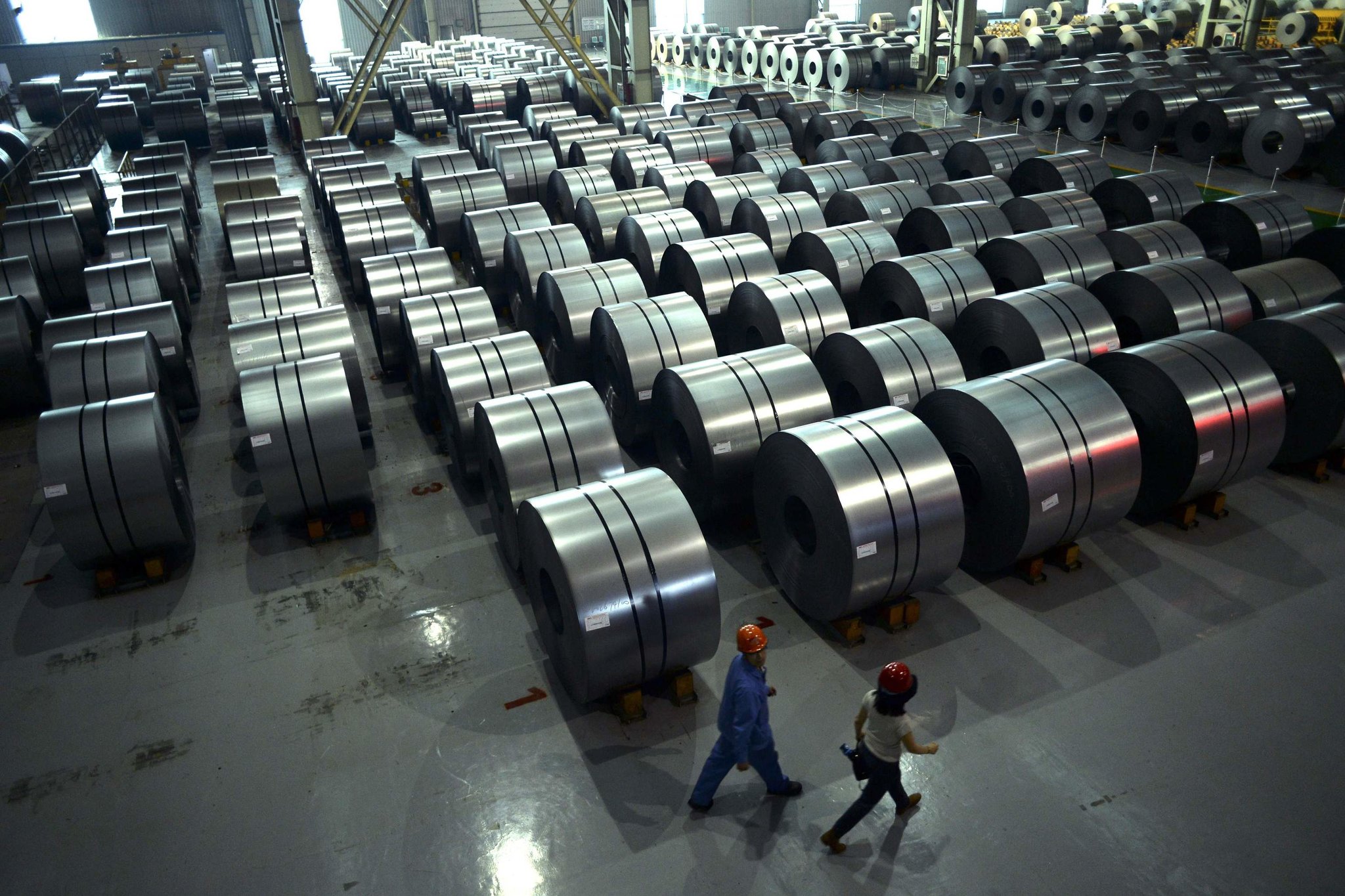
ArcelorMittal to shut Belgium-based Tailored Blanks following consultation
The consultation procedure for the planned shutdown of ArcelorMittal Tailored Blanks’ Ghent facility has concluded. Management considered alternative proposals submitted by employee representatives.
In a note obtained by Kallanish, ArcelorMittal describes the dialogue as “transparent and constructive”. The company and social partners negotiated a social plan which guarantees alternative employment within ArcelorMittal Belgium for staff wishing to stay under existing pay conditions. The plan includes a voluntary exit programme, including financial incentives.
On 20 February, 71.11% of the affected workforce voted in favour of the proposed package. The matter will now be submitted to the board of directors for a final ruling on the restructuring plan.
The Ghent facility, which employs 90 workers, has faced a sharp decline in volumes and substantially reduced margins, which have led to accumulated losses over several years. It has been directly impacted by the contraction in Europe’s automotive manufacturing sector. It produces laser-welded blanks, with engineering and manufacturing facilities worldwide.
The company previously stated it remains “the leading supplier of tailored blanks in Europe and is fully committed” to serving automotive sector customers (see Kallanish 12 January).

German annual coil contracts largely finalised
Long-term coil supply contracts in Germany have largely been closed on the upstream end, between mills on the selling side and carmakers and in-between suppliers/distributors as buyers.
Negotiations took longer than in previous years. A year ago, the first deals were closed by early December; others concluded in the course of January. This time around, no deals were reported before year-end 2025. “There were diverse reasons,” a buyer at a processor company explains. “For a long period, we had no master deal signed by mills and OEMs, plus the [targeted] price hikes did not fit the current market.”
The first signals for negotiations are traditionally given during the German sheet fairs in October, Euroblech (Hanover) or Blechexpo (Stuttgart). At Blechexpo last year, mill representatives told Kallanish they were aiming for a three-digit increase compared with the previous year’s contracts.
The was the opposite of the previous year when buyers initially demanded from mills a year-on-year discount of €100 ($117). Eventually, the agreements settled at €50-70 lower. Following the latest talks, prices were settled halfway, at an increase of between €45 and €60, mostly around €50/t, sources report.
“The mills appeared pretty coordinated with their deadlines,” a buyer at a tier supplier believes. He finds that neither side can be too happy with the outcome. The mills had their reasons for demanding a €100 hike against the background of rising costs in a market with unsatisfactory spot prices. Buyers, however, argued perspectives for demand were unclear.
Downstream, negotiations continue between the groups of buyers – the OEMs – and their tier suppliers and steel service centres.