

UAHE publishes December 2025 edition of InfoAcero
UAHE has published the December 2025 edition of its magazine InfoAcero.
This new issue includes, among others, an opinion article by Roberto González, President of UAHE, as well as the latest UAHE Index tracking the evolution of steel procurement prices from September 2024 to October 2025.
The magazine also features Eurofer’s outlook for the fourth quarter of the year, an overview of the construction sector in Spain based on the December Euroconstruct report, and a contribution on human resources by Agustín Barroso, HR Director at HIEMESA.
In addition, the publication presents UAHE’s training calendar for the first courses of 2026 and highlights upcoming sector events, including EUROMETAL Steel Net Forum Iberia 2026, to be held on 27–28 April in Santander.
Revista InfoAcero December 2025


Economists confirm tariffs’ heavy toll on German automakers
Germany’s automotive industry has become one of the country’s segments hardest hit by US tariffs, according to a report from the Cologne Institute for Economic Research examined by Kallanish.
The study finds that German exports of motor vehicles and parts, machinery and chemical products are particularly impacted. Together these operations account for more than two-fifths of German exports to the US and have been an outsized contributor to the overall decline in overseas shipments.
“Combined, these three sectors alone have dragged Germany’s exports to the US down by over 5.2 percentage points compared to the previous year, representing more than two-thirds of the overall decline in German exports to the US,” the report notes.
The relatively high tariff burden on motor vehicles and parts before the tariff agreement between the EU and US in August 2025 likely contributed significantly to the sharp drop of 14% in German automotive exports to the US compared with the previous year. German machinery exports to the US are partially subject to a substantially higher tariff rate of 50%, which applies to steel, aluminium and related products.
“Accordingly, German machinery exports to the US fell by 9.5% in the first three quarters of 2025. For metals, stronger front-loading effects in the first quarter explain the initial increase in exports, while subsequent quarters saw declines,” the economists’ document observes. “In key sectors, German exports to the United States have thus been pushed back to levels seen in 2022 or even early 2019. Without the significant upswing in German exports to the US following the Covid-19 pandemic until Donald Trump’s re-election in fall 2024, the downturn would have been even more painful.”
“Since US import tariffs are unlikely to return to previous levels anytime soon, the development in the third quarter of 2025 may represent an approximation of the ‘new normal’ for German exports to the US,” the study author Samina Sultan notes. “The development of German exports to the US has a significant impact on global exports for certain sectors. For motor vehicles and parts, the negative development in exports to the US accounts for nearly half of the global export decline. Losses in the US market are also a key factor behind the overall 3.3% drop in German machinery exports worldwide.”
In December, Volkswagen has stopped car production at one of its plants in Germany for the first time in the company’s 88-year history. The production line in Dresden is the one affected.
Volkswagen is preparing major changes to its development strategy. That is why VW’s future lineup in Europe and North America will be filled with cars organised according to the principle of a sequential hybrid. These are the so-called extended-range electric vehicles (EREVs), which are very popular in China but not yet widespread in Europe and North America.
Earlier, German defence manufacturer Rheinmetall said it is considering taking over one of Volkswagen’s soon-to-be-unused plants, as the arms maker seeks additional production capacity in Germany while domestic carmakers struggle (see Kallanish passim).


ArcelorMittal Spain’s Avilés EAF project advances
The upgrade of ArcelorMittal steelworks at Aviles in northern Spain is advancing. The environmental commission of the Principality of Asturias (CAMA) approved the environmental impact statement for the construction of a new electric arc furnace (EAF), Kallanish notes.
The Helena-EAF Avilés project is still awaiting the final consent of ArcelorMittal’s board.
Works will be carried out inside the steelworks and involve replacing one of the basic oxygen furnace (BOF) converters with an EAF with a capacity of 2.5 million tonnes/year of crude steel production. This will enable the mill to operate in hybrid mode, combining the traditional blast furnace route with the new electric one.
“The resulting facility will have one BOF converter in operation and one on standby, and an EAF, both based on pig iron and scrap use, and in the case of the EAF, also by direct reduced iron (DRI),” states the project documentation. “This flexibility will allow the mix of raw materials to be adapted according to the grades of steel to be produced, with the possibility of reaching up to 100% scrap in the load mix.”
The electric route will include an additional ladle furnace, which will strengthen the plant’s capacity to produce high-quality flat steel with a lower carbon footprint. The project will be completed with a new electrical substation.

France concludes annual coil contracts, Germany drags on
Negotiations for annual coil supply contracts between steel mills and carmakers have been largely concluded in France but continue in Germany.
According to a manager of an automotive supplier, last week saw movement in the French negotiations, with slightly higher prices achieved than in the previous round one year ago.
There has been a standoff for weeks, mainly because of an “unbelievable spread” between the price ideas on the opposing sides, “but suddenly things happened quite quickly”, he tells Kallanish. While mills tried to achieve a year-on-year premium of €100/t ($117), carmakers were actually asking for a y-on-y reduction by €100, he says.
The compromise found now results in a €15-20/t y-o-y increase in favour of mills, which they will nevertheless not be very happy about. Earlier in the autumn, mill managers indicated “a three-digit increase” as their target to be able to break even. They did not comment on last week’s outcome.
The French results will very likely not be repeated in the German talks, which are dragging on. According to a German observer, the French deals were based on a higher price level that was achieved last year, owing to the obvious dominance of one major mill group in the country.
In Germany, the power is distributed more diversely. Players here do not expect deals to be concluded before year-end and many believe that the point of agreement will be a y-o-y increase in the mid-double digit euro range.
One German buyer finds that such an outcome would be most comparable with that in France. “If prices were, say, €20-30 higher than here, and that level was lifted by another €20 now, it sort of compares with around €50 achieved in one step,” he says.

Trasteel becomes a member of EUROMETAL
Trasteel Group is a diversified industrial and trading platform headquartered in Lugano, Switzerland, with operations across more than 60 countries. The company combines global steel and metals trading with a network of industrial assets, processing facilities, and engineering subsidiaries across Europe and Asia.
Trasteel will generate $1.7B revenue in 2025 ($1.5B in 2024), split evenly between trading and industrial activities. The trading division focuses on steel, raw materials, consumables, metallics, non-ferrous metals, derivatives and energy, with a strategy built on geographic, time, and the technical arbitrage opportunities.
The industrial division includes Europe’s fourth-largest rerolling mill (370k tons capacity), tube plants with 400k tons of annual production, automotive blanking facilities, and rebar service centers in Poland and Romania. Engineering subsidiaries in Italy and Turkey extend the Group’s capabilities into machinery manufacturing, maintenance, and mechanical services.
More information: trasteel.com

European HRC markets quiet ahead of holiday season
In Northern Europe, most recent bookings were done at €620-625 ($727.30-733.16) per tonne ex-works, while offers for February and March delivery volumes varied within €640-670 per tonne ex-works range, depending on producer, they added.
Fastmarkets’ daily steel hot-rolled coil index domestic, exw Northern Europe was €623.75 ($731.70) per tonne on December 19, stable day on day.
The index was up by €2.08 per tonne week on week and by €10.24 per tonne month on month.
Bullish mill sentiment is largely down to the imminent introduction of the Carbon Border Adjustment Mechanism (CBAM) from January 1, 2026.
The CBAM regulations are expected to have significant impact on import prices because of the recently increased final default emissions values, compared with the draft version in November.
Meanwhile, sources reported some progress in long-term contracts negotiations between mills and the automotive sector.
For the first half year of 2026, a number of contracts were sealed with €30-50 per tonne year-on-year increases on average, to around “€700 per tonne,” sources told Fastmarkets.
“Automotive was fighting for a decrease [for long-term contracts], but the balance of power in the market shifted to the producers – with CBAM limiting import options and new regulations promoting green steel use,” a buyer in Germany said.
The Italian domestic HRC market was also quiet on December 19.
Offers for February-delivery HRC were heard at €610-640 per tonne ex-works, depending on supplier, with workable prices estimated at €610-620 per tonne ex-works.
“\I met an Italian customer yesterday [who] told me demand was very, very, very low,” a service center source told Fastmarkets. “The daily market is completely dead, he said [and] he thinks it will be no better in the first quarter of 2026.”
Fastmarkets’ daily steel hot-rolled coil index, domestic, exw Italy, was calculated unchanged at €613.75 per tonne on Friday.
The index was up by €2.5 per tonne week on week and by €12.08 per tonne month on month.


Polish domestic long steel prices flat, market slows for year-end holidays
Fastmarkets’ weekly price assessment for steel reinforcing bar (rebar), domestic, cpt Poland, was 2,400-2,450 zloty ($669-683) per tonne on Friday, unchanged week on week.
There was little demand for Polish rebar in the market at the moment because the industry slows down during the winter months, market sources said. Estimates of workable prices were heard at 2,400-2,450 zloty per tonne CPT, the same as in the previous week.
According to a distributor, some mills in the country were targeting higher offers for January rebar, around 2,500 zloty per tonne CPT, but they believed those prices were not workable because demand was still low.
The source said that mills were looking to increase offers for January because of rising scrap prices and new regulations, including the EU’s Carbon Border Adjustment Mechanism (CBAM), to come into effect on January 1.
But they said it was still “not easy to imagine” what will happen with the market in the new year in terms of costs and price increases.
Regarding imports, offers from Germany were heard at €580 ($680) per tonne delivered.
For drawing quality wire rod, offers were heard at 2,650 zloty per tonne on Friday. They sat at the upper end of estimates of workable market prices heard in the range of 2,600-2,650 zloty per tonne during the same assessment period.
Fastmarkets’ weekly price assessment for steel wire rod (drawing quality), domestic, delivered Poland, was 2,600-2,650 zloty per tonne on Friday, stable since the second half of November.
A consumer source did not expect prices for wire rod to change until later in January while the industry prepared for the holiday break.
The source said that mills could try to raise prices, but said that any increase would depend on the effects of new trade regulations in 2026.
“We have to wait and see the effect of CBAM,” the source said, adding that mills were waiting for the new rules to arrive before raising prices, because “any increase would otherwise be difficult for the market to accept.”
Luxembourg buys the Dudelange Liberty Steel site for €14.5m
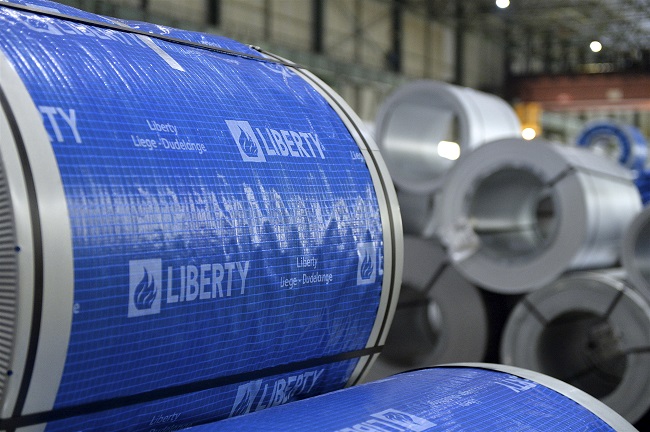
The State has offered the receiver €14.5m to buy the site of the bankrupt steelmaker in Dudelange. The site will be used to meet the needs of the craft and defence industries. The Luxembourg Defence Campus will be located there. Nothing is planned for former Liberty Steel employees.
The State’s offer concerns the industrial buildings established on cadastral parcels 1266/7613 (ELO site) and 1304/9790 (HDG site) as well as all the installations incorporated within the HDG building, Economy Minister Lex Delles (DP) said, the Minister for Defence, Yuriko Backes (DP), and the Minister for Labour, Marc Spautz (CSV), in response to a parliamentary question put by Dan Biancalana (LSAP), Mayor of Dudelange, and his predecessor, Mars Di Bartolomeo (LSAP). An offer made to the receiver subject to conditions, principally “the maintenance in good condition, until conclusion of the deed transferring ownership, of all the assets in question and the guarantee of access on first request to any document relating to the buildings and installations, as well as the payment in full of all preferential creditors, including in particular wage claims and the balance to be repaid to Adem”.
Artisanat and defence
The ELO site is to be completely rebuilt in line with the principles of densification of business parks to create a “Handwierkerhaff” – a site for craft activities. The parliamentary response states that this will be done in several phases.
The 140 former Liberty Steel workers who were not made redundant, but whose employment contracts were automatically terminated, will not be given priority for re-employment and will remain within the Adem fold.
Author: Marc Fassone


Tibnor to acquire Finnish steel distributor
Swedish specialty steel producer SSAB has announced that its subsidiary distributor Tibnor has signed an agreement to acquire Finland-based steel distributor Ovako Metals Oy, in a strategic move to strengthen its presence in the Nordic market and broaden its product offering.
Ovako Metals Oy generated approximately €40 million in revenue in 2024 and employs around 40 people. Upon completion of the acquisition, it is reported that Tibnor will take over the company’s distribution operations, including its product portfolio, logistics and warehouse activities, processing services and local sales teams.
The acquisition is subject to regulatory competition approval in Finland, and both SSAB and Ovako expect the transaction to be completed during the first quarter of 2026, pending clearance by the relevant authorities.
Fredrik Haglund, CEO of Tibnor, described the agreement as aligned with the company’s growth strategy, bolstering its footprint in Finland while enhancing service levels and product offerings in the region.
The planned acquisition marks a key step for SSAB’s distribution network across the Nordics and Baltics, reflecting broader consolidation in steel and metals supply chains to enhance market reach and competitiveness.

UK failure to seal EU tax exemption hands industry mountain of paperwork
Brussels confirms Christmas carve-out from green levies will not happen, leading to Brexit-style requirements
UK manufacturers are to be hit with mountains of Brexit-style paperwork in January on £7bn worth of exports to the EU after the government failed to secure an expected exemption from new green taxes.
The UK had hoped to secure a carve-out by Christmas on the carbon border adjustment mechanism (CBAM), but EU commissioners have confirmed this is not going to happen.
UK Steel says the exemption is unlikely to be in place before Easter, resulting in detailed paperwork for exporters in a repeat of Brexit when they were hit with paperwork on customs and standards of their goods.
The documentation requires exporters to provide a detailed paper trail of carbon emissions generated during the manufacturing process.
It will apply to scores of products made with steel and aluminium, including washing machines and car parts, under plans Brussels announced on Wednesday. It will also apply to fertiliser, cement and energy exports.
While the UK privately expressed hopes of a deal before Christmas, industry insiders say it was never in the realms of political reality.
The EU signed off the mandate on negotiations only in early December, making any deal outside a high-level political agreement involving all 27 member states, some of which have little interest in the UK, impossible.
A government insider said it would now be “prudent for businesses to prepare on the basis that the EU CBAM will be in force” from January, with support and information available from the Department for Business and Trade.
Make UK, the manufacturing trade body, said the paperwork would be “extensive” and hit businesses badly.
Frank Aaskov, the director of energy and climate change policy at UK Steel, said: “It is going to have significant negative impact. The paperwork is definitely significant. It will be quite a burden on SMEs [small and medium-sized enterprises].”
Aaskov said the taxes, set, for example, at €13 (£11) a tonne for “hot rolled wire”, a raw material for construction, fencing and engineering, would be significant for the steel industry.
“That kind of steel costs about €650 per tonne, so it seems like a small cost, but the steel business is ruthless, with imports from China very competitive, and anything up to €5 per tonne can be the difference between getting a contract and losing a contract.”
While the taxes do not have to be paid until 2027 and could be cancelled until a potential deal next year, it adds to the nightmare the UK steel is already facing with the EU.
Under the bloc’s rules, talks will now proceed in two stages, the first a formal discussion to decide the terms of reference and the second on emissions trading systems.
Months ago the EU announced it would match Donald Trump’s tariffs on steel, doubling levies on imports from third countries such as the UK to 50%, in a decision condemned as an “existential threat” to the beleaguered British steel industry.
The EU’s climate commissioner, Wopke Hoekstra, said on Wednesday: “We are in very good conversations with our UK friends.” He played down the significance of the 1 January deadline, saying “the price [the UK] will be paying is actually minimum” because decarbonisation efforts in Britain were well under way.
Pressed on the UK talks, Hoekstra said negotiations on the two opposing emissions trading systems had to take place first. “This is really a matter of doing things in the right order, step by step, chiffre par chiffre, pas à pas,” he said.
A UK government spokesperson said: “Our priority remains securing a carbon linking agreement as soon as possible, which would save UK industry from paying the charge on £7bn worth of UK exports.”
Author: Lisa O’Carroll
