


Tata Steel completes Tata BlueScope acquisition
Tata Steel has completed the acquisition of BlueScope Steel Asia Holdings’ (BSAH) 50% holding in Tata BlueScope Steel Private Limited (TBSPL), taking its direct and indirect ownership to 99.99%, Kallanish notes.
The Indian steelmaker acquired 43.3 million equity shares of face value INR 10 ($0.1) each for a consideration of INR 1,099.97 crore ($122 million). The transaction was executed in line with a share purchase agreement signed on 12 November and closed on 31 December, as per the company’s latest exchange filing.
TBSPL was previously a 50:50 joint venture between Tata Steel, via its subsidiary Tata Steel Downstream Products, and Australia’s BlueScope Steel, through its Asia holdings arm BSAH. Following completion, TBSPL has become an indirect subsidiary of Tata Steel.
Tata BlueScope is active in coated steel and building solutions in India, serving infrastructure, industrial and construction markets. Full ownership is expected to give Tata Steel greater strategic and operational control over the downstream business, as it continues to expand its value-added steel portfolio.
Tata Steel chief executive and managing director TV Narendran highlighted the company’s downstream portfolio focus on 1 January. “While volume expansion is limited, we are focusing on facilities to add value to the products manufactured here,” he said at a recent event.


Russel completes acquisition of Kloeckner US service centres
Canada’s Russel Metals has closed on the acquisition of seven steel service centres from Kloeckner Metals for $102 million, Kallanish learns from a company press release.
Russel says the acquisition will expand the Toronto, Ontario-based company’s market share in the US.
“We look forward to expanding our US footprint in key geographic areas,” states Russel Metals president and chief executive John Reid. “We welcome the Kloeckner employees to the Russel family.”
The deal is subject to normal working capital adjustments. The US service centre locations include Dubuque, Charlotte, Suwanee, Houston, Austin, Jacksonville and Pompano Beach.
Russel expects to increase market share as the US manufacturing base rebounds and Canadian nation-building projects advance. Executives see benefit from infrastructure investment, including rising demand from data centres (see Kallanish 10 November).
Russel Metals is one of the largest metals distribution companies in North America, with business segments split between metals service centres, energy field stores and steel distributors.

Federacciai: 2026 could be turning point given right conditions
SteelOrbis talked to Antonio Gozzi, president of Federacciai, the Italian steel producers association, about the situation in the EU steel market and decarbonization efforts. According to Gozzi, the key is to reduce carbon emissions without compromising the competitiveness of European industry.
How would you describe the current demand trends in the EU steel market across major sectors (construction, automotive, machinery, etc.)?
Europe imported 28 million mt of steel in 2024, but the situation will change profoundly from next year. A cap on imports is expected – free trade will be blocked at 18 million mt and beyond this threshold a 50 percent duty will be introduced. On top of this, two fundamental measures are being implemented – Buy European, which obliges public tenders to buy at least 60 percent of steel produced by European companies, and CBAM, which will impose a cost equivalent to the price of CO2 paid in Europe on products from countries not adhering to the Kyoto Protocol. Together, these initiatives will mark a structural change in the European steel market, reducing import pressure and supporting domestic demand for EU producers.
How are high energy prices affecting output, investment and competitiveness?
High energy prices strongly penalize the competitiveness of the European steel industry, with Italy recording the highest industrial costs in the world. Businesses can survive thanks to their extraordinary efficiency, which somehow compensates for the crazy energy costs. The absence of a common energy policy and the ETS system further exacerbate costs. We need interventions to reduce the price of electricity and measures such as the Energy Release, and we also need the energy transition not to be ideological – biofuels, synthetic fuels, carbon capture, nuclear power must also be used to achieve a balanced decarbonization which is not devastating for industrial assets.
Do you envisage further consolidation or restructuring processes in the European steel industry?
I do not believe that the European steel industry should prepare for a season of restructuring or downsizing, but rather for a phase of profound renewal. Making our companies survive and prosper means continuing on the trajectory of innovation and investment that has always distinguished us. We must leverage our competitive advantages. We are among the most decarbonized manufacturers in the world and we must keep the passion for manufacturing alive, enhancing the work and the people who are part of it. This is the only way we can guarantee a future and pride for European steel.
What are the effects of geopolitical developments on trade routes?
The direct effects of Trump’s tariffs, now at 50 percent, have practically wiped out our exports to the US, but our greatest concern is about indirect effects, the so-called trade diversion. Countries that have been excluded from the American market, especially China with its huge production overcapacity, are pouring their flows into Europe, which remains the most open market in the world.
We are living in a new historical phase. Globalization as we know it no longer exists, and free trade, if not accompanied by fair rules, risks becoming wild trade. That is why we are calling for a redefinition of international trade rules and effective defence measures, and we support tools such as Buy European, which can help protect the European industry in the face of increasingly distorted and aggressive competition.
What are your expectations for steel demand and prices in the short to medium term?
I do not expect a significant increase in demand in the short and medium term, but rather a phase of adjustment linked to economic weakness and geopolitical uncertainties. However, the steel industry is undergoing a structural transformation. The share of steel produced by electric arc furnaces (EAFs) will grow worldwide and is expected to exceed 45 percent by 2030. As for prices, the main variable will be the cost of CO2: with the CBAM coming into force, and the progressive reduction of free allowances, the price of emissions could reach up to 200 dollars per metric ton, strongly affecting production costs and therefore steel prices.
Are you optimistic or cautious about the EU steel sector’s medium-term competitiveness?
I look at the future of the European steel industry with great pride but also with realism. Italy can be proud of its model – we are among the most decarbonized steel producers in the world and an example of circular economy thanks to the main use of electric furnaces and scrap. However, we are going through a particularly difficult phase. We are living in an era of uncertainty, marked by high energy costs, complex regulatory transitions and aggressive global competition. For this reason, while I remain confident in the strength and innovation skills of our companies, I am cautious about European competitiveness in the medium term. We need decisive political choices and a real European industrial and energy policy that accompanies the green transition without sacrificing production and employment.
How do you assess the EU’s latest announcement on safeguard policies?
We have warmly welcomed the European Union’s announcement on the revision of the safeguard measures for steel. It is a necessary and long-awaited step, because without adequate defense policies, the European industry risks being overwhelmed by unfair competition and production overcapacity from non-EU countries. I would like to thank the [executive] vice-president [for Prosperity and Industrial Strategy of the European Commission] Séjourné and [European] commissioner Šefčovič for their sensitivity to the European industrial crisis and for their willingness to change direction quickly. We hope that the new measures will be adopted as soon as possible, together with other instruments such as Buy European, to ensure a fair market and to protect the competitiveness of the European steel industry.
Are these trade measures effective in ensuring a level playing field or do they end up distorting competition?
We are strong supporters of free trade, but not of wild trade. Defensive measures should not be seen as distortion tools, but as guarantees to ensure a level playing field in an increasingly unbalanced global environment. Europe today is the most open market in the world, and it risks paying a very high price if it does not acquire adequate tools to protect its industry.
What do you think are the main challenges of CBAM and what effects do you foresee on trade flows?
CBAM is an important tool, created with the aim of protecting the European industry from forms of unfair competition linked to the different environmental rules between countries. However, its structure still presents serious contradictions and application difficulties that risk compromising its expected positive effects. With the official CBAM implementation on January 1, 2026, and free CO2 allowances being phased out, the cost of emissions could reach up to $200 per metric ton. In the absence of corrective measures, this will make production for European blast furnaces unsustainable, shifting steel flows to less regulated areas. This is why we are asking Europe to accompany the application of CBAM with a real industrial policy, which protects the competitiveness of our companies and guarantees a sustainable and non-destructive green transition for the European steel industry.
Do you think current EU funding mechanisms are sufficient to support the green transition in steel?
The current funding mechanisms and policies of the European Union are not enough. The Green Deal has had an overly ideological and not very pragmatic approach, which has penalized the competitiveness of European industry without creating real technological advantages. We have seen a 30 percent loss of production in hard-to-abate sectors and over a million job losses in the past five years. While Europe imposes increasingly strict rules on itself, we are simply exporting jobs and importing CO2 from countries with lower environmental standards. We need less ideology and more pragmatism. We need to review the ETS system, maintain free allowances for energy-intensive consumers and concretely promote all useful technologies for decarbonization, such as carbon capture, biofuels, nuclear power and synthetic fuels, with a view to true technological neutrality. Only in this way will we be able to decarbonize without destroying our industrial base.
How do you see the balance between environmental targets and global competitiveness?
The balance between environmental targets and global competitiveness is only possible if Europe abandons ideology and adopts a pragmatic approach. We need to understand that there is no single way to decarbonise. Biofuels, nuclear, carbon capture and synthetic fuels are all useful technologies and must be able to coexist. It doesn’t matter if the cat is black or white, the important thing is that it catches the mouse. What I mean is that what really matters is reducing CO2 emissions without compromising the competitiveness of European industry.
How was 2025 and what are your expectations for 2026?
2025 was a fairly complex year for the steel industry, marked by an uncertain macroeconomic environment, weak demand in some key sectors, and strong pressure on energy and regulatory costs. It was a year of transition, in which companies worked primarily to defend volumes, employment, and competitiveness, postponing more structural investment decisions in many cases. 2026 could be a turning point, provided that the right conditions are in place. We expect a gradual recovery in demand, linked to the resumption of industrial and infrastructure investment, and a greater impact of European policies to protect the sector, starting with CBAM, safeguard measures, and the containment of unfair competition. The challenge remains to reconcile decarbonization and competitiveness: if the transition process is accompanied by concrete industrial policies, sustainable energy costs, and rules applied fairly at the European level, 2026 could mark the beginning of a more stable and promising phase for the Italian steel sector.


ArcelorMittal Hunedoara approves sale of all assets to UMB Steel for €12.5 million
Romanian steel producer ArcelorMittal Hunedoara has announced that its board of directors has approved the sale of all company assets to Romania-based UMB Steel for €12.5 million plus value added tax.
The board cited the lack of realistic prospects for a turnaround based on available data, the urgent need to curb ongoing losses linked to maintaining idle assets, and the necessity of generating liquidity to meet outstanding liabilities as decisive factors behind the approval.
The transaction covers the transfer of all tangible assets owned by ArcelorMittal Hunedoara at the time of sale. These include production machinery and industrial installations such as the electric arc furnace, rolling mill, locomotives, scrap processing and baling equipment, vacuum degassing and ladle furnace units, steel structures, cranes and auxiliary systems, motors, bearings, spare parts, tools, laboratory and weighing equipment.
Materials and inventories are also included, covering externally sourced and internally generated scrap, ferroalloys, refractory materials, electrodes and rolling rolls. In addition, all land and buildings located on the industrial site, including the slag heap and related appurtenances, form part of the sale, alongside all land parcels owned by the company outside the industrial site.
Completion of the transaction is subject to the fulfillment of several cumulative conditions, which must be met by June 1, 2026.
As SteelOrbis reported previously, ArcelorMittal Hunedoara permanently ceased production in September 2025 amid extremely challenging market conditions. These were driven primarily by persistently high electricity costs and intensifying competition from low-priced steel imports originating outside the EU. The plant specialized in the production of profiles and angles for the energy, construction and infrastructure sectors.

Holiday lull keeps European steel HRC market quiet
Most of the sources Fastmarkets contacted during the day said that they would be out of the market until next week.
Fastmarkets’ daily steel HRC index, domestic, exw Northern Europe, was assessed at €627.50 ($735.50) per tonne on Friday, unchanged since December 24.
The index was unchanged week on week, but was up by €9.17 per tonne month on month.
The latest official offers from Northern European mills for February/March-delivery HRC were heard at €630-670 per tonne ex-works or delivered. But estimates of tradable values were still below €630 per tonne ex-works.
Fastmarkets’ daily steel HRC index, domestic, exw Italy, was calculated at €623.12 per tonne ex-works on Friday, also unchanged since December 24.
The index was also unchanged week on week, but was up by €19.99 per tonne month on month.


Salzgitter to downsize and continue operating HKM steel plant
German steel producer Salzgitter has outlined a conditional strategy to keep operations running at the Hüttenwerke Krupp Mannesmann (HKM) steel plant in Duisburg, even as its joint venture partners move toward an exit. However, the company made clear that continued operations would require a substantial downsizing of the facility.
HKM is currently owned by thyssenkrupp Steel with a 50% stake, Salzgitter with 30%, and French pipe producer Vallourec holding the remaining 20%. Both thyssenkrupp and Vallourec have signaled their intention to withdraw from the venture, prompting Salzgitter to assess scenarios under which the plant could remain active.
According to Salzgitter, a continuation of operations would likely involve a sharp reduction in capacity—from the current level of around 4.2 million tonnes per year to roughly 2–2.5 million tonnes. The restructuring plan under consideration also includes replacing blast furnace production with electric arc furnace technology and significantly reducing the workforce, potentially from about 3,000 employees to nearly 1,000.
The company stressed that any takeover of the remaining shares would depend on clear preconditions. These include cost-sharing by the exiting shareholders for restructuring measures and layoffs, as well as firm steel procurement commitments from thyssenkrupp covering the next two to three years.
Adding to the uncertainty surrounding the plant’s future are ongoing arbitration proceedings between Salzgitter and thyssenkrupp. These disputes relate to financial responsibilities tied to restructuring and post-withdrawal liabilities, with outcomes that could materially influence the feasibility of maintaining HKM operations.
While Salzgitter has not ruled out a future for the Duisburg facility, the company’s statements underline that any continuation would be fundamentally different in scale and structure from HKM’s current configuration.

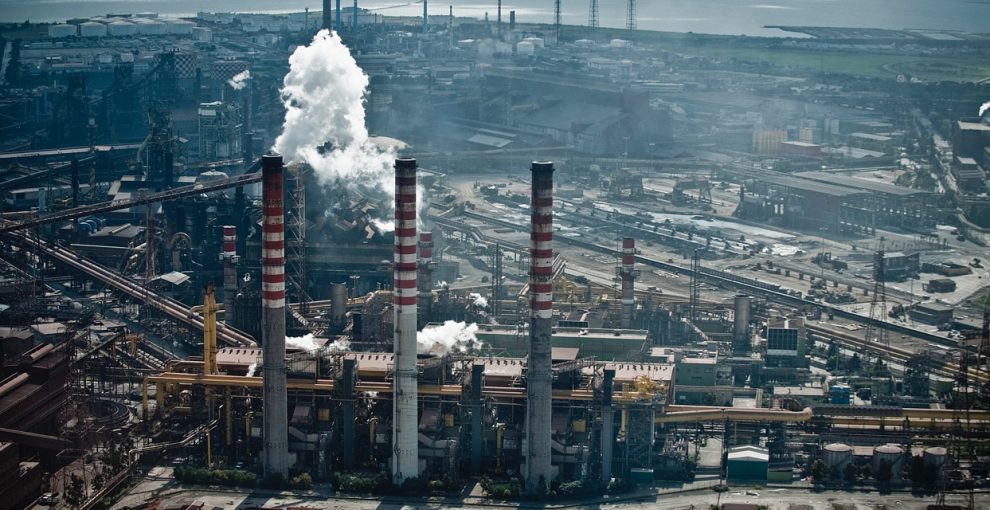
Flacks Group agrees with Italian government to acquire former ILVA Steel Group
U.S.-based private investment group Flacks, established in the UK, announced that it has reached an agreement with the Italian government to acquire the former ILVA steel group, which has long been loss-making and subject to environmental concerns.
The main plant of ILVA, located in the city of Taranto in the Puglia region and one of Europe’s largest integrated steel facilities, has for years been associated with environmental pollution and high cancer rates in the surrounding area. With the acquisition agreement, the aim is to secure the plant’s long-term future.
In a statement shared by the Florida-based Flacks Group on LinkedIn, the company emphasized that the transaction will preserve the employment of approximately 8,500 skilled workers and strengthen European supply chains that are critical to the automotive, construction, and infrastructure sectors.
The Group plans to invest up to EUR 5 billion in the modernization of the facility, including electrification and furnace upgrades, in order to support decarbonization, efficiency improvements, and sustainable growth. The statement also noted that the Italian government will remain a strategic partner with a 40% stake, while Flacks Group will hold an option to acquire an additional 40% share at a later stage.
Commenting on the transaction, Michael Flacks, Founder and Chairman of Flacks Group, stated: “Our objective is to make a long-term investment, modernize responsibly, and ensure that this historic steel plant has a lasting and sustainable future.”

Turkish Togg recorded more than 88.000 users in 2025
In 2025, Togg delivered 39,020 units of the T10X and T10F models to users, bringing its total user base to over 88,000.
Fuat Tosyalı, Chairman of the Board of Togg, stated that in 2025 the company reached many important milestones on its journey to becoming Türkiye’s global mobility brand and to expanding its mobility ecosystem across Europe. He said, “With our smart vehicles, our digital experience platform Trumore, our clean energy solutions Trugo and Siro, and our technology company Trutek, which focuses on the technologies of tomorrow, we are redefining mobility both in our country and in Europe. In 2026, which we see as a year of deepening and maturation, we will continue with the same determination to develop future technologies and move forward in line with our goals.”
Togg, Türkiye’s global technology brand in the field of mobility, achieved its targets in 2025 in line with its short-, mid-, and long-term roadmap. Evaluating the year 2025, Fuat Tosyalı, Chairman of the Board of Togg, recalled that after proving its success in Türkiye, Togg began its European journey in 2025, starting with Germany, and stated as follows:
“For seven years, we progressed in line with our plans and, for the first time in our history, succeeded in producing a smart vehicle whose intellectual property rights are entirely owned by our country. Following our first native electric smart vehicle, the T10X, we were delighted to introduce our second model, the T10F, to our users. We are proud that both the T10X and T10F models received the highest rating of five stars in Euro NCAP safety tests. With this rating, the T10X and T10F became two of the three safest cars in Europe.We offered both the T10X and T10F to users not only in Türkiye but also in Germany. We continue to work with full determination to become one of the most preferred brands in the European market, alongside Türkiye’s growing electric vehicle ecosystem. In Germany, where we followed a controlled plan for 2025, we signed 240 sales contracts in November and December and delivered 144 vehicles by year-end. Our deliveries are still ongoing.Being perceived as a ‘European manufacturer,’ our continuously updated software enabled by over-the-air updates, our simple digital experience, and the five-star rating from Euro NCAP are highly appreciated by German users. The end-to-end digital purchasing process we manage through Trumore also offers a transparent, trackable experience that meets expectations. To date, the number of people who have downloaded our Trumore application in Germany allowing users to manage processes such as pre-sales test drive appointments, sales, payments, financing, and after sales services has exceeded 50,000.”
Emphasizing Togg’s leadership in the electric vehicle market, Tosyalı continued: “The T10X continued to be one of the locomotive models of our brand in 2025 as well. There has also been strong interest in the T10F, which we introduced to the market as of September. The stability of the T10X in the market and the new interest generated by the T10F have complemented each other. This shows us that we are moving forward with the right steps at the right time as we expand our product range.
In 2025, we also introduced our dual-motor, all-wheel-drive 4More series, which offers higher performance, to our users. The T10X 4More Obsidian special edition stood out with its details inspired by the black tones of obsidian stone. In 2026, we will offer new color options for both the T10X and T10F. In addition, in the coming years we are focusing on increasing the range of Togg options we offer to our users with new models in different segments. For us, the most valuable thing is for our vehicles to grow by building a long-term relationship of trust with our users.”
“We Are Raising Quality Even Further Through Continuous Improvement Efforts”
Emphasizing that the continuous improvements implemented in the T10X have significantly enhanced the level of quality experienced by users, Tosyalı stated: “As a result of the continuous improvement efforts carried out on our T10X model, we achieved a significant improvement in user-reported quality feedback compared to the previous year. In the user satisfaction surveys that we measure on an ongoing basis, we recorded a 34% improvement in indicators related to perceived quality. We also launched our second smart device, the T10F, at a higher starting point in terms of quality indicators compared to the initial launch phase of the T10X. This is a concrete outcome of the learnings we have gained across our product development, production, and quality management processes.”
“Trugo Completed 5 Million Successful Charges”
Highlighting that Trugo is also the market leader, providing uninterrupted and convenient service to all electric vehicle users across all 81 provinces of Türkiye with ultra-fast charging stations, Fuat Tosyalı said: “Since April 2023, Trugo, as a licensed charging network operator, has completed 5 million successful charging sessions. Together with our partners, we operate more than 2,200 stations and over 4,000 sockets across 81 provinces, serving all electric vehicles and using 100% renewable energy for our ultra-fast chargers. With uninterrupted power, our widespread charging network, and high-speed charging solutions, we continue to support Türkiye’s energy transition.”
“We Are Also Supporting Users Through Authorized Dealerships”
Tosyalı also emphasized that Togg is expanding its network of experience and service points through new partnerships to reach more users: “Today, Togg serves users in all 81 provinces through a total of 22 experience centers 14 fixed and 8 mobile and 76 service points 41 physical and 35 mobile. Our priority is to provide the best experience at every touchpoint. As of December, a pilot program launched new authorized dealerships and service points in Antalya, Bursa, Gaziantep, Trabzon, and Tekirdağ. It is very important to us that our users know there is a reliable service point nearby that they can quickly access when needed. With this new structure, we aim to strengthen the Togg ecosystem and reach our users more effectively across all regions. Our 2026 expansion plans are entirely based on user feedback, field data, and ecosystem needs.”
Fuat Tosyalı stated that Togg will grow in 2026 with a balanced and sustainable approach: “We will continue our efforts to steadily increase T10X and T10F sales and market share in the Turkish market. On the product side, we will keep expanding user choices with new colors, versions, and models. We also plan to expand our sales and after-sales service network through authorized dealership agreements. In Germany, we aim to gain momentum in our second calendar year in the market. In short, we see 2026 as a year of deepening, maturation, and growth. We will continue to continuously improve our products with software and digital services and grow in Europe in a controlled yet determined manner. Our priority will always be user trust, quality, and sustainability.”

Türkiye, India lead EU HR TRQ utilisation
Türkiye and India have been quick to utilise the refreshed EU tariff-rate quotas for hot rolled sheet and strip for the 1 January-31 March period, Kallanish notes.
As of 2 January, around two-thirds of Türkiye’s quota for category 1A is tied up in awaiting allocation. Meanwhile, 127,723 tonnes, or 32%, currently remain accessible.
India’s quota is largely committed, with just 29,357t, or 13%, still available.
In contrast, nearly 90% of Korea’s quota remains available. The United Kingdom and Serbia both retain full availability, with 100% of their individual TRQs unused.
Within the other countries pool, where each origin holds an allocation of 110,266t, utilisation remains generally low, with Taiwan and Algeria as the main exceptions. Taiwan’s availability is 43%, while Algeria still has 86% of its quota remaining.
Egypt, Vietnam, Japan, Australia, Switzerland, the US, Libya and Canada all retain 100% availability.
The current safeguard measures, now in their eighth year, are set to expire in June, and are expected to be replaced by a new import regime with tighter TRQ conditions.
| Origin | Q1 2026 TRQ volume | Balance | Awaiting allocation | Avaliable TRQ tonnes | Available TRQ % |
| Türkiye | 393,978 | 393,978 | 266,254 | 127,723 | 32 |
| India | 222,830 | 222,830 | 193,473 | 29,357 | 13 |
| Korea | 159,533 | 159,533 | 17,654 | 141,878 | 89 |
| United Kingdom | 137,879 | 137,879 | 0 | 137,879 | 100 |
| Serbia | 140,955 | 140,955 | 172 | 140,783 | 100 |
| Other countries: | 848,202 | ||||
| Egypt | 110,266 | 110,266 | 0 | 110,266 | 100 |
| Viet Nam | 110,266 | 110,266 | 0 | 110,266 | 100 |
| Japan | 110,266 | 110,266 | 0 | 110,266 | 100 |
| Taiwan | 110,266 | 110,266 | 63,259 | 47,007 | 43 |
| Australia | 110,266 | 110,266 | 0 | 110,266 | 100 |
| Switzerland | 110,266 | 110,266 | 0 | 110,266 | 100 |
| United States | 110,266 | 110,266 | 0 | 110,266 | 100 |
| Libya | 110,266 | 110,266 | 0 | 110,266 | 100 |
| Canada | 110,266 | 110,266 | 0 | 110,266 | 100 |
| Algeria | 110,266 | 110,266 | 15,961 | 94,305 | 86 |
Source: EU TARIC, as of 2 January. Complied by Kallanish

European HRC market quiet due to year-end holidays
Fastmarkets’ daily steel HRC index domestic, exw Northern Europe was €627.50 ($738.13) per tonne on Wednesday, unchanged since December 24.
The index was unchanged week on week, but up by €12.50 per tonne month on month.
The latest official offers from Northern European mills for February/March-delivery HRC were heard at €630-670 per tonne ex-works or delivered. But estimations of tradable levels were still below €630 per tonne ex-works.
Fastmarkets’ daily steel HRC index domestic, exw Italy was €623.12 per tonne ex-works on Wednesday, also unchanged since December 24.
The index was unchanged week on week, but up by €20.62 per tonne month on month. The latest estimates of workable levels were reported at €610-620 per tonne ex-works.