


German power cap disadvantages Czechia, unbalances EU
Czech energy-intensive industry urgently needs government support with energy prices following Germany’s announcement of a power price cap, which will disrupt the European single market and hurt Czech competitiveness, according to the Czech and Slovak steel association, Steel Union.
The German government plans to cap electricity at 5 euro cents (6 US cents) per kilowatt hour from January 2026 through end-2028 at a total cost of €6.5 billion ($7.5 billion), Kallanish notes.
Trinecke zelezarny (TZ), currently the Czech Republic’s sole crude steel producer, consumes approximately 1 TWh of electricity per year. While German steelmakers are set to pay €50/MWh as a result of the subsidies, those in the Czech Republic pay around double, meaning a cost disadvantage for Trinecke zelezarny of some CZK 3-4 billion ($140-190 million) annually, the association points out.
“We understand the support of the German government as an effort to stabilise the industry at a time of high costs and uncertain energy policy. Without comparable conditions … the Czech steel industry will be unsustainable in the long term. If the government does not come with clear support, there is a risk that crude steel production will disappear from the Czech Republic. This would mean the loss of not only jobs, but also part of our industrial self-sufficiency,” says TZ chief executive Roman Heide.
Brussels has opened up the possibility for member states to adopt temporary national measures to support industry, including energy subsidies and investment incentives, as part of the new Clean Industrial Deal.
“However, this gradually shifts responsibility for industrial policy from the European to the national level, and the stronger a state is in terms of budget, the more it can protect its companies. The original ambition of the European Green Deal was to create a level playing field across the Union. However, these rules are now fragmented according to the possibilities of national budgets,” Steel Union notes.
“Thanks to the new tariff, German industry will have energy approximately half as cheap as Czech companies. For such a closely interconnected region as Central Europe, this represents a systemic risk,” concludes association chair Marcela Kubalová.
Adam Smith Austria


Crowe: One of the biggest issues regarding CBAM remains data availability and quality
SteelOrbis talked to Jamie Mcleod, director at Crowe U.K. LLP on EU’s trade measures and CBAM effects.
How do you evaluate the latest announcement from the EU regarding its safeguard policy?
The transition to a permanent framework for steel safeguard duties introduces several notable shifts, and the introduction of the “melt and pour” origin rule origin verification requirement may complicate compliance for UK exporters. From a UK customs and trade perspective, this poses serious risks. The EU remains the UK’s largest steel customer, accounting for 78 percent of UK steel exports in 2024. Without a carve-out for UK origin steel, British exporters could be priced out of the EU market.
The proposed quota reduction intensifies this threat. For the UK, the risk of trade diversion is also significant, and the UK’s own safeguard regime, managed by the Trade Remedies Authority (TRA), is also under review, with increased pressure on reforms as a result of the EU announcement.
Are these trade measures effective in ensuring a level playing field, or do they distort competition?
The EU’s motivation in trying to protect its steel industry from global overcapacity and subsidised imports is clear, and in principle, this is about restoring fair competition. In practice, however, trade measures like these often have unintended and nuanced consequences. Some EU manufacturers, for example, have voiced concerns about rising input costs and likely inflationary effects. So, while the measures may help upstream producers, they risk creating friction elsewhere in the economy.
Other EU trade bodies, meanwhile, are pushing for further extension of the measures to downstream products, which are currently excluded, creating potential loopholes and uneven protection across the supply chain.
It’s a complicated picture and the full impact remains uncertain. The proposal still needs to pass through the EU legislative process and WTO negotiations, both of which could take months and may result in amendments. Until then, businesses are operating in a climate of uncertainty.
What do you think the main challenges of CBAM are and what effects do you anticipate on trade flows?
CBAM continues to present significant operational and strategic challenges for businesses, and this is intensifying as we approach the definitive phase starting in January 2026, at which point a CBAM cost will come into play. One of the biggest issues remains data availability and quality. Importers must obtain detailed emissions data from third-country suppliers, many of whom lack the systems or incentives to provide it. Even with recent simplifications, such as excluding final production steps from emissions calculations, the reporting burden remains high.
Another challenge is uncertainty. Key elements like benchmark emissions values and default emissions rules are still pending, making it very difficult for businesses to forecast costs or plan contracts. The requirement for Authorised Declarant status from 2026 adds further pressure on importers to build robust compliance frameworks quickly.
In terms of trade flows, I expect some realignment of supply chains. EU importers may favour suppliers with transparent carbon data or shift sourcing to countries with recognised carbon pricing systems. Conversely, exporters unable to meet CBAM requirements may lose access or face pricing disadvantages.
From a UK perspective, the situation is evolving. The UK CBAM is due in 2027, and, while there’s political agreement on UK–EU ETS linkage, the timeline is unclear. Without an interim arrangement, UK exporters could face CBAM exposure despite regulatory alignment, potentially distorting trade until exemptions are formalised.
Do you think current EU funding mechanisms are sufficient to support green transition in steel?
While broader funding policy isn’t my area, I am particularly interested in how CBAM revenues, which in time will become highly significant, will be used – for now, this remains unclear. There are concerns that using CBAM revenues to subsidise EU producers could undermine the environmental goals of CBAM and raise WTO compatibility issues.
How do you see the balance between environmental targets and global competitiveness?
It’s a very difficult balance to strike. The EU is right to push for stronger climate action, and CBAM, the phase-out of free allowances, and tighter carbon pricing are all part of that. But the trade and competitiveness impacts are often more nuanced.
Whilst the EU has been firm in sticking to CBAM and the planned timeline, there’s a broader concern that other sustainability measures are being diluted. The delays and simplifications around the EU Deforestation Regulation (EUDR), for example, reflect growing pressure to ease compliance burdens – raising questions about consistency and ambition across the EU’s green agenda.
At the same time, the global trade environment has become increasingly volatile. With Mr. Trump back in office and actively applying tariffs, the risk of retaliatory measures and friction over climate-linked trade instruments like CBAM is real.


EU steel industry pushes for early adoption of new steel trade measure
The European Steel Association (EUROFER) and the European trade union federation IndustriAll Europe have warned that waiting until June 2026 to implement new steel trade measures risks leaving the sector exposed during a period of unprecedented import pressure.
According to the organizations, the sector is “under water” with no improvement in the economic outlook, with steel demand in Europe remaining deeply depressed with no significant recovery expected. Capacity restructuring and plant closures continue, while global competitors expand production and global overcapacity accelerates. In addition, in EU, unfair, low-priced imports now hold a 27 percent market share, double their 2012 level.
Massive stockpiling is already taking place, driven by anticipation of the future trade measure. EUROFER and IndustriAll warned that, if the new rules only take effect in June 2026, importers will continue flooding the market throughout next year, weakening the impact of the measure before it is even implemented. They argue that:
- the measure must start no later than April 1, 2026,
- amendments delaying adoption in Parliament or Council would worsen the crisis,
- 2026 risks becoming “another lost year” for EU steelmakers if action is slow.
EUROFER and IndustriAll Europe urged EU institutions to act decisively adopting the – European Commission’s proposal as a priority, implementing the trade measure by April 2026, and pairing it with a credible industrial strategy to safeguard Europe’s metals value chain. The organizations concluded that the steel industry – and the hundreds of thousands of workers it employs – cannot wait until June for relief.

Romanian longs market still struggles amid slow demand and liquidity pressures, but local prices hold firm
Given the persistently slow demand, limited sales volumes and ongoing liquidity pressures affecting both buyers and sellers, the outlook for the Romanian longs market has remained gloomy over the past week. Despite these challenges, domestic prices have generally held steady for both the country’s sole rebar producer and local traders. However, the weak pace of business continues to push some traders to offer prices below workable levels in an attempt to attract buyers’ interest and generate a minimal turnover. Meanwhile, the import market has remained quiet after quota exhaustion, reducing interest in new deals with Turkey or other non-EU suppliers. Market sources report that, when restocking is necessary, Romanian buyers increasingly lean toward nearby suppliers such as Bulgaria and Moldova due to shorter lead times and more flexible supply options.
As a result, domestic rebar offers have shown no change over the past week. The country’s sole producer continues to keep prices at €550-555/mt ex-works, while spot traders have maintained quotations at €550-565/mt ex-warehouse, in line with last week’s levels. Even so, some traders are still willing to negotiate lower prices to generate sales, with discounted levels of €535-540/mt ex-warehouse reported for larger-volume orders.
In the wire rod segment, prices have likewise remained unchanged. Despite weak demand, traders continue to quote material in the range of €560-570/mt ex-warehouse, with no significant adjustments reported during the week.
On the import side, no significant new purchases have been reported from Romanian buyers, aside from occasional medium-sized cargoes sourced from nearby suppliers. Overall, import prices have remained largely stable. According to market sources, EU suppliers continue to hold their offers steady, with the Bulgarian mill quoting at €570-580/mt CPT for rebar and the Moldovan supplier maintaining levels at around €550/mt CPT, unchanged from last week. Among non-EU suppliers, Egyptian mills have also kept their pricing unchanged, offering rebar at €485-490/mt CFR and wire rod at €495-500/mt CFR. In contrast, Turkish suppliers have raised their offers by approximately €10/mt over the past week, supported by firmer scrap prices. Current Turkish offers stand at €495-510/mt CFR, calculated on an exchange rate of €1 = $1.15 and estimated freight costs of €15-20/mt.
Stable EU HRC offers contrast with weak imports and rising CBAM confusion
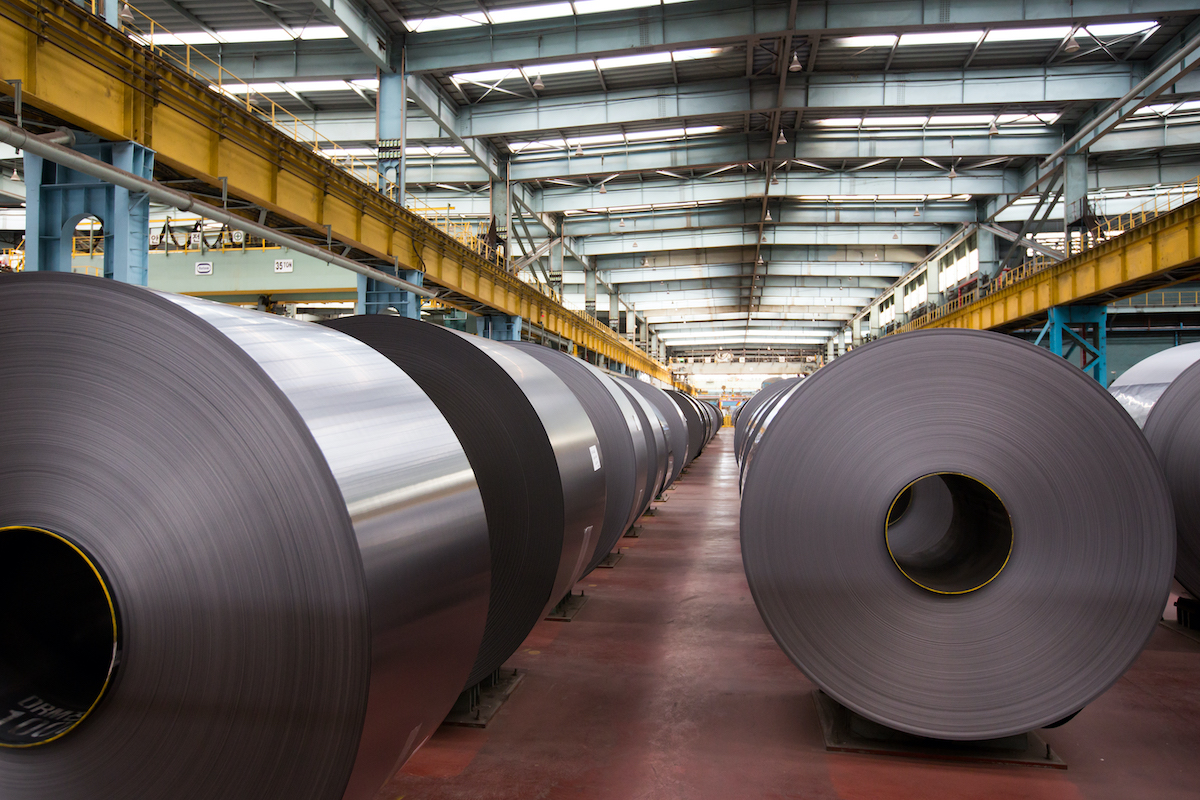
European HRC producers have held their January delivery offer prices steady at elevated levels this week. Import activity has continued to be weak, hindered by ongoing CBAM-related compliance issues and quota constraints. Besides, a leaked document released this week revealed the European Commission’s long-anticipated draft CBAM benchmark values, providing EU importers with the critical data needed to assess steel import costs from January 1, 2026. However, market sources claim that the numbers are provisional and may be adjusted, with most industry voices already questioning them.
More specifically, local mills in northern Europe are reported to be targeting €630-650/mt ex-works for new orders for January and February deliveries, the same as last week. However, according to sources, the tradable price levels for January delivery coils have been estimated at €600-620/mt ex-works for mainly January delivery, the same as last week. Sources also report that EU mills are in ongoing talks with automotive equipment makers for 2026 supply agreements, prompting them to maintain firm spot prices to preserve their negotiating power.
Meanwhile, in Italy, while mills have been targeting €620-630/mt for January delivery, the same as last week, the tradable price level for January delivery is still estimated at €590-600/mt ex-works.
In the import segment, indicative offer prices for HRC have settled at €475-520/mt CFR, compared to €470-520/mt CFR last week. The lower end of the range corresponds to offers for ex-Indonesia, ex-Malaysia and ex-India HRC at €475-490/mt CFR, mainly the same as last week. All prices exclude CBAM costs.
Offers for ex-Turkey HRC have been heard at around €520/mt CFR, duty included, mainly the same as last week, but without CBAM costs, though, according to sources, EU traders have this week been offering ex-Turkey HRC at €580-600/mt DDP, including CBAM costs.
Furthermore, market insiders have continued to report HRC import offers from different global suppliers coming to the region including CBAM costs on DDP basis at €560-600/mt levels, depending on the supplier, up by €20/mt on the higher end of the range week on week. “We heard several transactions have been done at €580-600/mt DPP for HRC from Vietnam, Algeria and Indonesia through traders this week,” a Spanish trader told SteelOrbis. This means the spread between import prices without CBAM and import offers on DDP basis, including CBAM-related costs, has reached €90-100/mt.
It is worth mentioning that this week’s leaked document unveiled the European Commission’s long-expected draft CBAM benchmark values, offering EU importers key inputs for estimating steel import costs beginning January 1, 2026. Yet the benchmarks are not final, and some in the sector have cast doubt on them. According to McCloskey calculations based on the leaked draft, CBAM costs for HRC imported into the EU would range from €43-140/mt for Turkish material depending on the production route (BF-BOF, DRI-EAF, scrap-EAF), reach around €223/mt for Indian HRC, and climb as high as €540/mt for Indonesian material. The market reaction to these figures has been overwhelmingly negative, with most participants doubting their accuracy and questioning whether the draft values can be taken as credible.
Domestic steel HRC prices in Europe firm as CBAM, trade defenses curb appetite for imports
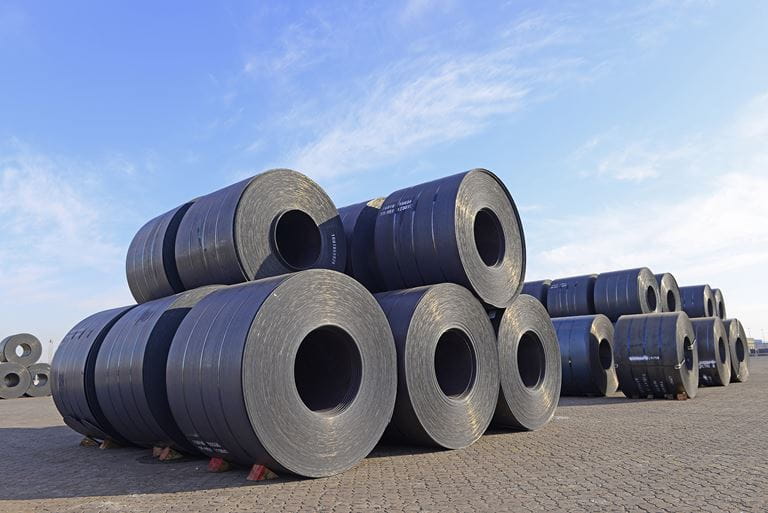
Trading was still limited in the spot market for HRC in Europe, but prices were firm, with sentiment mainly fueled by policy shifts, market sources said.
Buyers held sufficient inventories and took a cautious approach to new bookings.
“We bought enough [HRC to last] until the end of 2025 and even for the first quarter [of 2026],” a buyer in Germany said. “The next round of restocking will be in December. Mills have some flexibility on HRC orders, but zero on downstream products – cold-rolled and galvanized.”
In the Benelux area, transactions for January-delivery HRC were reported within the range of between €605 and €615 ($698-710) per tonne ex-works, and at €610 per tonne ex-works in Germany.
Some sellers claimed to have achieved €620 per tonne ex-works for January volumes.
Offers from integrated mills in Northern Europe stood at €620-650 per tonne ex-works.
European suppliers continued to prioritize long-term contract negotiations with original-equipment manufacturers (OEMs) in the automotive industry and were not very active in the spot market. Long-term negotiations were at an “advanced stage,” market sources said, but nothing has been finalized so far.
As a result, Fastmarkets’ daily steel hot-rolled coil index, domestic, exw Northern Europe, was €613.54 per tonne on Wednesday, up by just €0.21 per tonne from €613.33 per tonne on November 18.
The index was up by €1.21 per tonne week on week and by €22.08 per tonne month on month.
Meanwhile, Fastmarkets’ daily steel hot-rolled coil index, domestic, exw Italy, was calculated at €603.33 per tonne on Thursday, up by €1.66 per tonne from €601.67 per tonne on Wednesday.
The index was up by €4.45 per tonne week on week and by €18.33 per tonne month on month.
In Italy, there was “barely any trading,” market sources said.
“We have enough material in stock – no rush,” a local distributor said.
Italian suppliers had mostly sold out of coil for December delivery, with the latest bookings reported at €580-590 per tonne ex-works.
For January delivery, offer prices increased to around €600-620 per tonne ex-works, depending on the producer.
Buyers, however, indicated that January material could likely be secured at €590-600 per tonne ex-works
Market sources noted that there was “plenty of imported coil” available at €560-600 per tonne DDP Italy, including CBAM costs, for first-quarter 2026 delivery. One market participant said that the wide gap between import prices and domestic offers was making it difficult for Italian mills to justify any further price increases.
Traders have increasingly stepped in to offer DDP-based import deals – taking on the associated risks on the seller’s side – but buyers remained cautious.
With CBAM costs particularly high for some origins, such as Indonesia – at more than €500 per tonne for HRC if default emissions values are used – buyers expressed concern that certain contracts could face cancellation.
“We have DDP prices with CBAM costs included up to a certain threshold, but not up to 500 per tonne, certainly. Such additional costs can easily be considered force majeure,” a local buyer said.
Trade sources preferred to look into booking imports from “safer” origins with lower default values under CBAM, such as Turkey and South Korea.
HRC from Turkey and South Korea was available around €580-600 per tonne DDP, including CBAM costs.
HRC was on offer from India and Indonesia round €475-490 per tonne CFR.
But preliminary default emission values for both India and Indonesia were quite high, so buyers were cautious about booking coil from those origins.
Indeed, for Indian HRC, for example, the CBAM cost would be €218 per tonne, assuming EUA prices are below €100 per tonne, default values are 4.27 CO2e per tonne and the benchmark is 1.53 CO2e per tonne, Fastmarkets estimates. Under the same conditions, but with default values of 8.23 CO2e per tonne, CBAM costs for Indonesia HRC will be as high as €529 per tonne.
“Default emissions values by country are preliminary and very inconsistent. I think, in the end everyone, will aim for reporting using actual emission values,” a source in the Italian market said.
“The problem with CBAM rollout is a lack of consistent information,” a second market source said. “All the data we have in hand is not finalized, so we basically make new import bookings ‘blindfolded’.”


Steel hollow sections prices in Europe pulled up by CBAM-cost pressures
European steel hollow-sections prices widened upward in the week to Wednesday November 19, with market participants attributing the upward pressure to expected future costs related to the EU’s Carbon Border Adjustment Mechanism (CBAM) amid broader trade-policy uncertainty.
“The rise in prices can only be [because of] CBAM,” one trader said.
Fastmarkets’ monthly price assessment for steel sections (medium), domestic, delivered Northern Europe, was €710-760 ($819-877) per tonne on Wednesday, widening upward by €20 per tonne from €710-740 per tonne a month earlier.
Similarly, Fastmarkets’ monthly price assessment for steel sections (medium), domestic, delivered Southern Europe, was also €710-760 per tonne on Wednesday, also widening upward by €20 per tonne month on month.
A second trader and importer said that sections customers have been very quiet while “waiting for the start of 2026,” with CBAM’s phase 2 scheduled to begin on January 1. It will see EU importers move from reporting only, to paying CBAM charges on embedded emissions, via the purchase of CBAM certificates linked to the EU carbon price.
The same source added that CBAM considerations were causing slight price increases but that most traders would not be fully exposed to the associated risks, with the uncertainties being faced only by those involved in importing goods.
Hot-rolled coil feedstock costs have also moved up over the month, due largely to CBAM-cost considerations for the first quarter of 2026. Market participants said, however, that this was largely due to uncertainty around CBAM and new safeguards and the effect on imports, rather than real demand improvement.
Fastmarkets’ daily calculation of its steel hot-rolled coil index, domestic, exw Northern Europe, was €613.33 per tonne on Wednesday, up by €22.08 per tonne compared with €591.25 per tonne a month earlier.
European steel-beam prices fall despite CBAM-driven gains in other steel segments
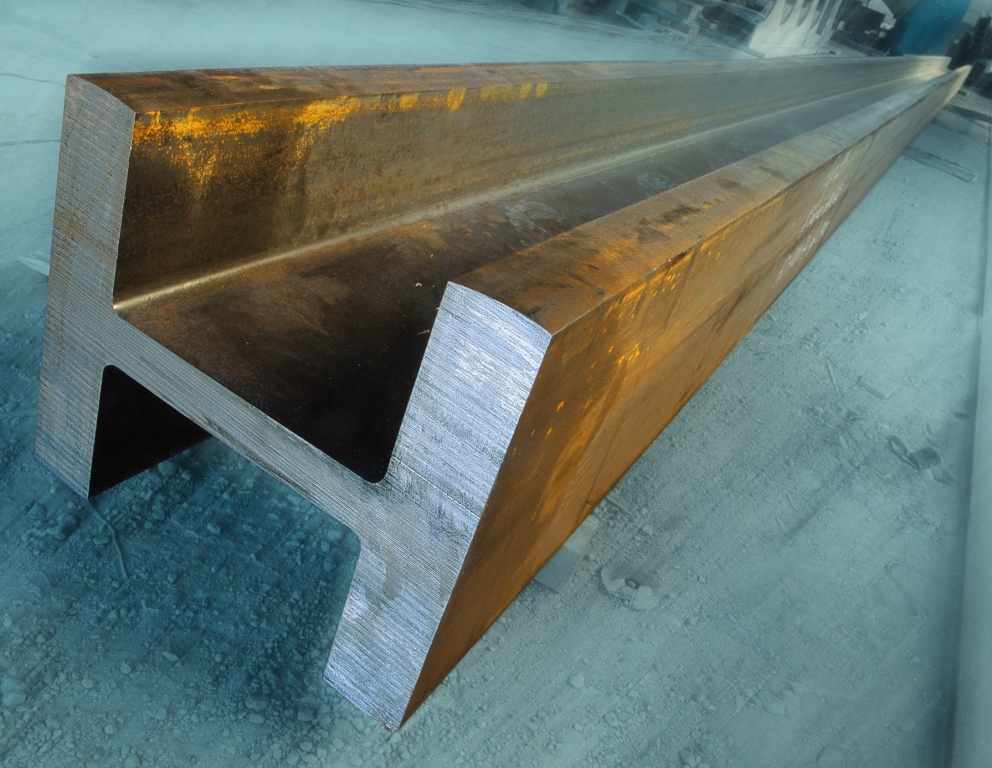
European steel-beam prices have fallen in the month to Wednesday November 19, even as other steel markets – particularly hot-rolled coil (HRC), plate and hollow sections – have strengthened.
Fastmarkets’ monthly price assessment for steel beams, domestic, delivered Northern Europe was €700-740 ($806-853) per tonne on Wednesday, down by €10-30 per tonne from €730-750 per tonne a month earlier.
Similarly, Fastmarkets’ monthly price assessment for steel beams, domestic, delivered Southern Europe was €700-740 per tonne on Wednesday, down by €10-30 per tonne month on month from €730-750 per tonne.
Flat steel prices have risen sharply in recent weeks, with expectations of future Carbon Border Adjustment Mechanism (CBAM)-related carbon costs underpinning higher levels, while broader trade-policy uncertainty – including around CBAM and possible EU safeguard measures – has contributed to reduced import competition.
Phase 2 of CBAM, set to begin on January 1 2026, will see EU importers move from reporting only to paying CBAM charges on embedded emissions, via the purchase of CBAM certificates linked to the EU carbon price.
The recent strength in HRC has led to the hollow-sections market widening upward because HRC is the product’s main feedstock.
Beams prices, however, have moved against the trend. The product continues to face weak demand in Europe, and its scrap-based production route is expected to incur significantly lower CBAM-related costs than flat steel, which is largely produced via a higher-emissions blast-furnace/basic-oxygen-furnace (BF/BOF) route.
As a result, domestically delivered beams in European markets have not benefited from the same CBAM-driven price support seen in flat steel markets in recent weeks.
One trader noted that while CBAM could lend support for higher beam prices next year, “the main effect will be on flat products,” adding that market sentiment currently remains clouded by political uncertainty around both CBAM and possible safeguard measures.
Despite these structural factors, any sustained recovery in European steel prices will still depend on improvements in underlying economic activity and demand, the source added.
Market participants also said it was still too early to gauge exact CBAM costs, noting the provisional nature of the latest leaked EU’s draft benchmarks and adopting a wait-and-see approach.
Meanwhile, scrap feedstock costs moved up in the month.
Fastmarkets’ calculation of its daily index for steel scrap HMS 1&2 (80:20 mix) North Europe origin, cfr Turkey was $351.33 per tonne on Wednesday, up $7.40 per tonne month on month from $343.93 per tonne.

Orgalim warns: new EU steel safeguards could severely damage Europe’s industrial competitiveness
Orgalim, the association representing Europe’s technology industries, has published a detailed assessment warning that the European Commission’s proposed reform of the EU steel safeguard system could have severe consequences for downstream industrial users. In its paper, released on 14 November 2025, the organisation argues that the draft regulation risks becoming a “devastating threat” to the competitiveness of sectors that depend heavily on steel as a critical input.
According to the analysis, the Commission’s proposal introduces a far more restrictive safeguard regime than the one currently in place. The reduction of tariff-free quotas, the sharp increase in out-of-quota duties, and stricter origin-verification requirements would significantly raise costs for manufacturers across Europe. Orgalim notes that these changes come at a moment when technology industries are already experiencing their third consecutive year of economic decline, with falling turnover, reduced investment capacity, and growing pressure from global competitors. Companies that rely on specialised steel grades, many of which are produced outside the EU or only in limited quantities within Europe, would face particularly serious sourcing challenges.
The position paper highlights that the financial impact on steel users could be dramatic. Orgalim estimates that the proposed system could increase annual tariff costs to more than €5.4 billion—almost seven times higher than in 2024—and potentially even more if importers are unable to fully utilise their quotas. In addition to these direct costs, the organisation points out that trade measures implemented since 2018 have already contributed to domestic steel price increases of more than 40 percent. The new proposal, it argues, would further intensify this upward price trend, placing downstream manufacturers at a structural disadvantage compared with their international competitors.
Orgalim emphasises that the proposal does not adequately consider Europe’s broader industrial objectives. The EU’s commitment to reindustrialisation, resilient value chains, and decarbonisation relies on manufacturers having stable and affordable access to steel. By raising costs and limiting flexibility, the new safeguard regime risks triggering relocations of production away from the EU, reducing investment, and weakening innovation ecosystems. The paper also criticises the lack of a cumulative impact assessment, noting that the combined effect of the safeguard proposal, CBAM implementation, the phase-out of ETS free allowances, and upcoming sustainability requirements under the ESPR may be far more damaging than what has been evaluated so far.
You can read Orgalim’s full position paper here.

Portuguese manufacturing sounds alarm over new EU steel tariffs
An interview published by ECO highlights deep concern across Portugal’s metalworking and mechanical engineering industries regarding the European Commission’s proposed tightening of steel import measures. The sector — Portugal’s largest exporting industry, responsible for €24 billion in exports and over 250,000 jobs — warns that the new tariff regime risks triggering large-scale industrial delocation, loss of competitiveness, and structural damage to Europe’s manufacturing base.
According to ECO, the Commission’s proposal to halve tariff-free steel import quotas and double the out-of-quota duty from 25% to 50% is seen by industry leaders as a one-sided policy designed to protect EU steelmakers at the expense of downstream manufacturers.
“Europe is becoming a disadvantage for industry”
At a high-level event organised by ECO and AIMMAP, CEOs from leading Portuguese industrial groups described a rapidly deteriorating business environment.
António Pedro Antunes (photo), CEO of Metalogalva (VigentGroup), warned that 70% of the company’s business is now at risk. The firm already shifted significant production to the United States in response to previous U.S. steel tariffs and fears it may now have to relocate further activities to remain competitive.
Companies report that steel import quotas from key origins are exhausted in the first quarter, making planning nearly impossible.
Downstream industry: high costs, no alternatives
Executives stressed that downstream manufacturers — which depend on competitively priced steel inputs — are becoming “reféns” (hostages) of rising EU steel prices and tightening trade defence rules. With energy prices still far higher in Europe than in competing regions, the sector argues that EU steelmakers have not improved competitiveness despite years of tariff protection.
Paulo Sousa, CEO of Colep Packaging, warned that the new measures could force companies to move production outside the EU simply to access affordable raw materials. Once relocated, these firms can export back into Europe without tariffs, undermining the purpose of the safeguard system.
“The industry will become trapped,” Sousa said. “If companies cannot buy competitive steel in Europe, they will have to relocate. Europe will lose jobs, investment and value creation.”
AIMMAP: “We have been warning for years — the wolf is at the door”
Rafael Campos Pereira, Executive Vice-President of AIMMAP, criticised the Commission for defending a sector that employs 300,000 people in Europe, at the risk of collapsing a downstream industry that employs 13 million across the EU and 250,000 in Portugal alone.
He warned that escalating tariffs, the arrival of CBAM costs, and a growing administrative burden could push many SMEs beyond their limits.
“We are compromising the future of manufacturing with unrealistic measures,” he said. “Most companies cannot relocate. If nothing is done, the damage will be enormous.”
A call for balanced policy — and urgent action
Portugal’s industry leaders call on both national authorities and Brussels to rethink the tariff strategy and adopt a full value-chain approach, aligning with concerns EUROMETAL has repeatedly raised at European level.
As Europe discusses reindustrialisation and strategic autonomy, industry representatives warn that policies must not force factories out of the continent.


