


European HRC market steady despite mills pushing for higher offers
The European hot-rolled coil market was mostly stable on Wednesday October 15 following recent pushes by mills to raise offer prices, which have drawn some resistance from buyers, sources told Fastmarkets.
On Monday, leading European steelmaker ArcelorMittal announced that it had raised its offers for HRC for December to €630 ($729) per tonne and for January to €650 per tonne ex-works or delivered.
Other mills in the region are also expected to increase their offers, Fastmarkets heard this week.
The market remains divided while it assesses the feasibility of these higher offers amid weak buyer demand, sources said.
Sentiment remains bullish, however, with new trade regulations and the EU’s Carbon Border Adjustment Mechanism (CBAM) expected to limit imports in 2026.
“Mills are asking for higher prices, but customers are very reluctant at the moment,” a distributor source told Fastmarkets.
“The market is split – the general consumption is not very good, stable, but at a low level,” the source said, adding that most market participants believe that prices will increase.
Some buyers in Northern Europe estimated tradable levels around €580-600 per tonne ex-works, but no sales were heard during the day.
Fastmarkets’ calculation of the daily steel hot-rolled coil index domestic, exw Northern Europe was €589 per tonne on October 15, up by €0.25 per tonne from October 14.
The index was up €10.25 per tonne week on week and by €8.69 per tonne month on month.
The market for imported coil to Northern Europe was quiet, with only a few offers reported over the week to Wednesday.
Offers from Turkey were heard at €530 per tonne delivered, including duties, while offers from Libya stood at €490 per tonne CFR.
Fastmarkets’ weekly price assessment for steel hot-rolled coil, import, cfr main port Northern Europe was €500-520 per tonne on Wednesday, unchanged week on week.
Meanwhile, the Italian market was also mostly stable, with estimates of the workable level heard hovering €570-580 per tonne ex-works.
Fastmarkets’ daily steel hot-rolled coil index, domestic, exw Italy dropped slightly to €576.67 per tonne on Wednesday, a €1.45 per tonne declined from Tuesday.
The Italian index was up by €31.67 per tonne week on week and by €27.92 per tonne month on month.
Regarding imported coil to Southern Europe, offers from Turkey were reported at €520 per tonne CFR, including duties.
Offers from India were also reported at €520 per tonne CFR.
Fastmarkets’ weekly price assessment for steel hot-rolled coil, import, cfr main port Southern Europe was €485-520 per tonne on Wednesday, unchanged week on week.


Stegra launches new financing round to advance Boden green steel plant
Sweden-based Stegra has announced the start of a new financing round to support the construction of the world’s first large-scale green steel plant in Boden, Sweden, following strong commitments from existing investors.
According to Henrik Henriksson, CEO of the company, the renewed backing from founding and lead investors reinforces confidence in Stegra’s business model. He stated that the company holds a strong order book, a competitive cost structure, and proven execution capabilities.
The proceeds from this round of financing are expected to account for up to 15 percent of Stegra’s total project funding, combining new equity, debt instruments, outsourcing arrangements, and selected strategic partnerships. In addition to equity commitments, Stegra is in advanced discussions with outsourcing partners.
Mr. Henriksson stated that the project has surpassed 60 percent completion, with a clear plan and timeline extended by three months to incorporate additional scope. The new financing will strengthen project delivery and provide a financial buffer.
The raised funds will be used to:
- Cover the expanded project scope linked to insourcing of railway and port infrastructure, now designed, built and owned by Stegra.
- Offset higher material, construction and installation costs.
- Compensate for state grants not fulfilled despite prior EU Commission approval.
- Maintain prudent liquidity and stability throughout the remaining construction period.
Once completed, the Boden green steel project will position Stegra as a leading player in Europe’s decarbonized steel landscape, enabling large-scale production of fossil-free steel with integrated logistics and renewable power infrastructure.


Uğur Dalbeler appointed World Steel Association Chairman
Uğur Dalbeler, CEO of Çolakoğlu Metalurji A.Ş., has been elected as worldsteel Chairman for a one-year term.
In the new term, Thachat Viswanath Narendran, CEO and Managing Director of Tata Steel, and Abdulqader Almubarak, CEO of Saudi Iron and Steel Company (Hadeed), will serve as Vice-Chairmen. Mark Vassella, CEO and Managing Director of BlueScope Steel Limited, will take on the role of Chief Financial Officer.
Executive Board Members
The Board of Directors also appointed the worldsteel Executive Board for the 2025/2026 term.
The members for the new term are as follows:
-
Abdulqader Almubarak, CEO, Hadeed
-
In Hwa Chang, Chairman, POSCO Holdings
-
Uğur Dalbeler, CEO, Çolakoğlu Metalurji A.Ş.
-
Masayuki Hirose, President & CEO, JFE Steel Corporation
-
Hu Wangming, Chairman, China Baowu Steel Group
-
Tadashi Imai, President & COO, Nippon Steel Corporation
-
Sajjan Jindal, Chairman & Managing Director, JSW Steel Limited
-
André Bier Gerdau Johannpeter, Deputy Managing Director, Gerdau SA
-
Liu Jian, Chairman, HBIS Group Co., Ltd. (replacing Yu Yong)
-
Lakshmi N. Mittal, CEO, ArcelorMittal
-
Alexey A. Mordashov, Chairman (PAO), Severstal (non-executive member)
-
Thachat Viswanath Narendran, CEO & Managing Director, Tata Steel
-
Paolo Rocca, Chairman & CEO, Techint Group
-
Leon Topalian, President & CEO, Nucor Corporation
-
Hubert Zajicek, CEO, Steel Division & Board Member, voestalpine AG
-
Edwin Basson, Director General, worldsteel (Secretary)
New Members
The Board also accepted the following steel companies as regular members:
-
GPH Ispat Limited (Bangladesh) – represented by Salehin Musfique Sadaf
-
OneSteel Manufacturing Pty Ltd. (Australia) – represented by Sebastian Hams
And as an associate member:
-
Tenova SpA (Italy) – represented by Roberto Pancaldi
With this election, the Turkish steel industry is represented at the worldsteel Chairmanship for the first time.
Uğur Dalbeler also serves as Vice-Chairman of the Turkish Steel Exporters’ Association.
He previously chaired the International Rebar Producers and Exporters Association (IREPAS) from 2004 to 2014.


Germany’s Saarstahl and Dillinger secure €1.7 billion financing for Power4Steel green steel project
German long-steel producer Saarstahl and German plate producer Dillinger Group, both subsidiaries of Stahl-Holding-Saar (SHS), have announced that they have secured €1.7 billion in financing for their Power4Steel transformation program. The financing ensures full funding for the entire project, enabling SHS to advance large-scale hydrogen-based steelmaking and reach ambitious carbon-reduction milestones.
The Power4Steel initiative involves constructing a direct reduction (DRI) plant and two electric arc furnaces (EAFs) at SHS’s Dillingen and Völklingen sites. These facilities will replace existing blast furnaces and converters, marking SHS’s shift toward hydrogen-based low-carbon steel production.
The €1.7 billion package was arranged through a consortium of leading national and international banks.
It includes:
- export credit agency (ECA) support from OeKB (Austria) and SACE (Italy),
- equity contributions from SHS, and
- direct financial aid from the German federal government and the Saarland regional government under the €2.6 billion transformation program for the Saarland steel industry.
Key environmental targets as part of the Power4Steel project include:
- around 55 percent carbon emissions reduction by 2030,
- full climate neutrality by 2045.
Once operational, SHS aims to become the largest producer of green steel within its peer group, anchoring the Saarland’s transformation into a low-carbon industrial region.

EuRIC becomes Recycling Europe to strengthen voice of European recycling industry
The European Recycling Industries’ Confederation (EuRIC) has announced that it has officially rebranded as Recycling Europe, marking a strategic evolution in its mission to represent Europe’s recycling sector with a unified voice as Europe navigates rising trade tensions, raw material insecurity, and the urgent need for industrial decarbonization.
The rebranding reflects the organization’s goal to increase visibility and impact across European and international platforms, reinforcing the role of recyclers as essential contributors to the EU’s climate, resource autonomy, and circular economy objectives.
Julia Ettinger, secretary general, said, “Recycling Europe embodies the evolution of the Confederation into a unified, forward-looking voice for recyclers across the continent. While our name has changed, our mission remains the same: to ensure that recyclers are recognized and empowered as indispensable partners in building Europe’s circular and resilient economy.”
Recycling Europe will continue to represent recyclers across all material streams – metals, plastics, paper, textiles, tyres, and more – while promoting policies that enable innovation, investment, and open markets.

German industries remain weak: BDI
Germany’s manufacturing industries remain under pressure, according to the country’s industrial umbrella organisation BDI – Bund der Deutschen Industrie – which reported a notable drop in industrial production of 2.5% in the second quarter.
An economic recovery “is not gaining ground”, BDI writes, contrary to some signs of a silver lining spotted earlier. In the fourth quarter of 2024, German GDP had gained some 0.2% year-on-year, and another 0.3% in the first quarter this year, but then saw a y-o-y drop of 0.3% in the second quarter.
The main cause is continued domestic demand weakness and declining investment, while plant utilisation remains low, Kallanish understands. Only recently, steel federation WV Stahl reported German steel mill capacity utilisation was at 67%.
Order intake figures in manufacturing industries nevertheless rose by 4.1% y-o-y in Q2, supported by orders from abroad. Orders from German buyers remained weak with a y-o-y drop of 1.5%, but were offset by orders from other countries which rose 8%.
Still, the production drop in manufacturing industries marks a setback after the increase of 1.3% seen in Q1. Revenues have kept dropping for two years now, with Q2 alone seeing a dip of 2.1%. BDI notes.
A small bright spot was seen at carmaking giant Volkswagen, which saw sales of passenger cars rise by 1% in the year so far, mainly due to good sales of electric vehicles.
Christian Koehl Germany


Serbia eyes EU negotiations over proposed trade measure
Serbian President Aleksandar Vucic wants to hold discussions with European Commission President Ursula von der Leyen over the proposed new EU steel trade measure, which will hit Serbia hard, he said during a press conference last week.
“We want to hold discussions with Ursula von der Leyen when she comes to Belgrade and to urge her to at least lift the tariffs for us as an EU membership candidate country if she can,” he said. “We will also accept quotas.”
According to him, the proposal of the European Commission to increase tariffs on imported steel will directly affect the Chinese-owned steel plant in the country – HBIS Group Serbia Iron & Steel. “That is a huge problem both for us and our Chinese partners. We expected a reduction of EU steel import quotas and Serbia could have handled it. However, now additional tariffs are to be introduced and none of us can handle that.”
The European automotive industry has been unable to handle competition from China and carmakers have protested the new trade measure proposal, he added. “Brussels is protecting the European steel industry and steel mills, but is killing the European car industry,” he argued.
Vucic said that, besides Serbia, the United Kingdom, Turkey and some other European countries are hardest hit by the tariff increase.
In May, HBIS Serbia Iron & Steel said it would continue to operate with only one blast furnace due to weak demand globally, especially in the European steel market (see Kallanish passim).
The plant in Smederevo can produce about 2.2 million tonnes/year of steel with its two furnaces, while No.1 alone has a capacity of about 900,000 t/y. Product range comprises hot and cold rolled coil, pickled coil and electrolytic tinplate.
The mill has a 5,000-strong workforce but in total around 20,000 people depend on it, according to Serbian authorities.
Serbia’s January-August crude steel output was 928,500t, up by 1.12% on-year.
Svetoslav Abrossimov Bulgaria
New safeguard may have limited EU longs impact
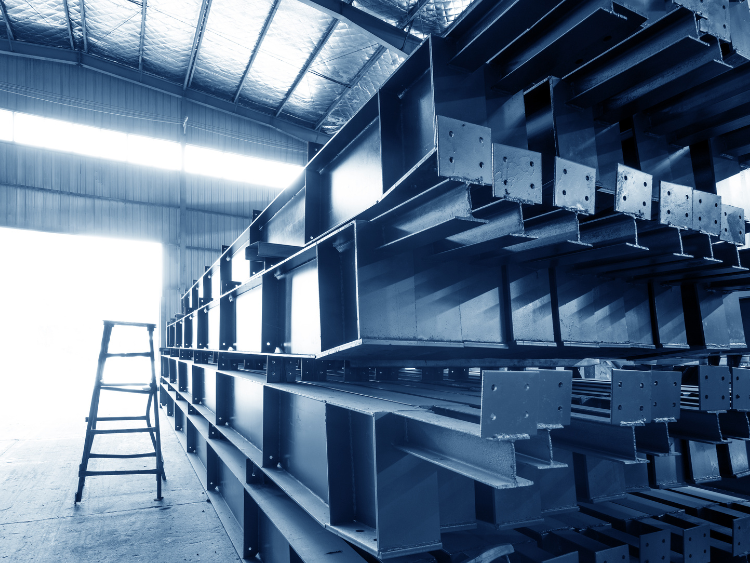
As EU steelmaker associations celebrate the European Commission’s new safeguard proposal, long product buyers are beginning to question the potential impact on their segment. While most market participants agree flats prices are likely to rise sharply, many doubt the impact on longs as import quotas from several countries remain underutilised, Kallanish notes.
In key markets such as Italy, France, and Germany, imports of rebar and merchant bar from outside the EU are already very limited. European prices for long products are largely driven by competition among EU-based producers, rather than by external import pressure.
While the rebar market remains largely regional, with some flows between Italy, southern Germany, and France, the presence of Spanish merchant bar and sections in both Italy and France remains particularly strong. Certain low-priced products, such as rebar from outside the EU, reportedly do not possess the required European certification, making them non-compliant for sale or use within the EU market.
The Commission’s proposal is expected to substantially reduce import volumes across all products, with rebar and wire rod imports expected to fall each by some 40% and merchant bar and light sections by 55%.
However, exposure to imports varies by country. Italian and French longs buyers say that national import data should be reviewed before drawing conclusions. Both Italy and France reportedly do not experience significant distortions from long product imports originating outside Europe.
An Italian wire rod buyer suggests the new safeguard appears to be a “copy and paste” of the US tariff approach. Longs makers may be over optimistic when interpreting European data, which could lead to a temporary increase in prices that would quickly deflate in the current stagnant market.
While wire rod prices have occasionally been influenced by Algerian, Egyptian or Turkish material, recent protectionist measures have not prevented values from declining in both southern and northern Europe.
Another source in Italy considers the new safeguard as a temporary buffer, noting that the European Commission, having been delayed in clarifying the CBAM measure, may have chosen to adopt what amounts to a “copy and paste” of the US tariffs.
Eurofer pointed out last week that the new trade system comprises a WTO-compliant tariff-rate-quota system, unlike US 50% duties on all steel imports justified on unilateral national security grounds. This came after the Commission clarified that “upfront high duties” would have hurt EU downstream players. Some observers have nevertheless warned the new measure pushes the boundaries of WTO acceptance.
Natalia Capra France
Italian re-rollers, coil producers prepare increases
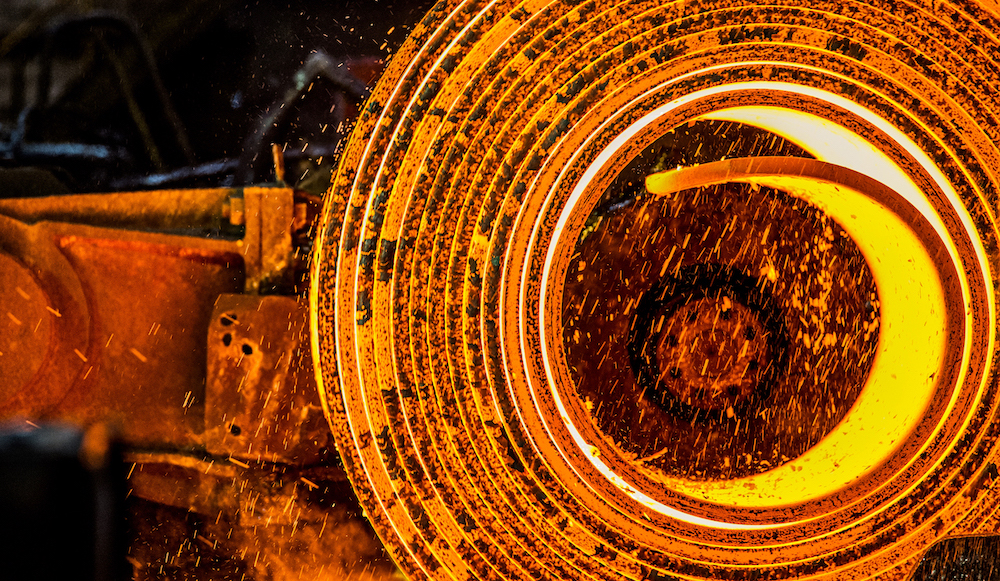
Italian re-rollers are considering gradual but steady price increases in the coming weeks, reflecting the impact of the new EU safeguard measure and anticipated costs associated with CBAM. The sector is preparing for a significant rise in average hot rolled coil costs in the near future, Kallanish notes.
Re-rollers are expected to be particularly impacted by the new safeguard measures, which will effectively remove several million tonnes of coil imports from the European market. Major players acknowledge they will need to continue sourcing globally to meet their substantial requirements. However, the combined effects of CBAM, melt-and-pour origin rules, and quota restrictions are expected to significantly increase the cost of imported HRC.
The market remains subdued, with demand sluggish and buyers maintaining a cautious stance. Purchasing activity is limited to small tonnages, often combining multiple grades and dimensions within single orders to optimise procurement costs.
Re-rollers acknowledge that a price repositioning will be necessary but remain pragmatic given the current slow consumption levels. They are expected to implement increases gradually, allowing customers sufficient time to absorb the adjustments and pass them downstream through the supply chain.
In the post-safeguard steel market, tube price increases are set to be “gradual”, as the industry cautiously tests the waters. Starting this week, welded tube prices will rise by €20/tonne ($23.4/t), aiming for a total increase of €50/t by the end of October, in the pursuit of “more sustainable” margins. The initial €20/t hike comes before any confirmed coil price increases.
Discounts in Italy are currently hovering at around 40 points. The plan is to gently push them down to 35 points by the end of October, recovering a couple of points each week.
The European coil market is pausing ahead of repositioning. Prices are expected to rise sharply in the coming days, as several producers halt sales and withdraw quotes. Some are said to be about to increase coil prices by €50/t ex-works, sources say.
Concerns are mounting among buyers about material availability, particularly since ArcelorMittal mothballed last week a blast furnace due to an accident (see Kallanish passim).
Natalia Capra France

ArcelorMittal announces two-step flat steel price rise across Europe amid shifting EU trade landscape
On Monday, ArcelorMittal announced a price increase of €20 per tonne for December-delivery hot-rolled coil, with new offers at €630 ($730) per tonne ex-works or delivered, depending on the region, compared with €610 per tonne ex-works or delivered for October/November delivery coil, several sources told Fastmarkets.
For December-delivery hot-dipped galvanized coil, offer prices were set at €730 per tonne ex-works or delivered.
And for January delivery HRC, the company was hoping to get €650 per tonne ex-works or delivered. For January-delivery HDG, the target offer was confirmed at €750 per tonne ex-works or delivered.
New offers have not been traded so far, but market sources noted that sentiment among other suppliers was becoming increasingly bullish, following the announcement of a new trade regime last week.
The European Commission unveiled on October 7 a proposal for sweeping reform of its steel import safeguards, suggesting cuts in tariff-free quotas by about 47% and imposing a steep 50% ad valorem duty on any volumes beyond the new threshold.
This move – and of course the introduction of the Carbon Border Adjustment Mechanism (CBAM) on January 1, 2026 – were expected to make importing steel “extremely challenging, and therefore greater reliance in domestic steel [operations] in the first quarter of 2026 was expected,” a distributor in Germany said.
In recent weeks, European HRC prices have been broadly stable, with stakeholders expecting more clarity about the new trade measures and CBAM, and postponing purchases.
It remained to be seen whether the new offers would be accepted by European buyers.
So far, tradable prices for HRC across Europe have remained far below ArcelorMittal’s target offers.
“At this stage, those levels [€630 per tonne and €650 per tonne] are not digestible. On top of that, other mills are still offering lower prices,” a steel service center in Germany said.
On October 13, sources estimated tradeable values for December-delivery coil at €580-590 per tonne ex-works in Northern Europe.
Fastmarkets’ most recent calculation of the daily steel hot-rolled coil index, domestic, exw Northern Europe, was €577.50 per tonne on October 10, unchanged from the day before.
The Northern European index was up by €2.50 per tonne week on week but down by €5.63 per tonne month on month.