

EC unveils official steel trade protection rework
The European Commission released its official proposals for its rework of the EU’s steel protection framework 7 October, detailing extensive cuts variable across product category volumes.
The official proposals largely mirror the changes recommended in the draft proposals revealed by McCloskey last week, and now include annexes detailing the CN code categorization of steel products and their respective allocation of the overall quota volume of 18,345,922 tons – a total reduction of 47%.
The out-of-quota duty for steel imports will increase – potentially permanently due to formulation as a new law – to 50%, and specific allocation to country-specific quotas, which will be established via subsequent implementing regulations on the basis of negotiations with World Trade Organization (WTO) members, will be subject to a ‘melted and poured’ clause ensuring that allocations match the origin in of primary steelmaking.
Specific allocations by product category under the new framework, alongside a comparison to the total country-specific and other countries quotas for each product category in year eight of the existing safeguard system, are detailed in the appendix below.
Trade defense measures already in place – namely anti-dumping and anti-subsidy duties – will continue to apply in addition to the new measures.
The date of implementation will be 20 days following publication in the Official Journal of the European Union, but is signaled to take effect from July when current protections lapse, due to the lead time inherent to consulting with World Trade Organization (WTO) partners and the EU’s comitology process.
The official proposals are also packaged alongside the Commission’s staff working document assessing both the potential impact of the measures and a variety of alternative strategies.
The staff working document evidences that the majority of consulted stakeholders were in support of the direction the European Commission has ultimately taken, but the margin was very close for some provisions, including the doubling of the out-of-quota duty level to 50% (57.6% of respondents in support); the elimination of the carry-over mechanism (53% support); and the permanent duration of the measures (57% support).
Other elements received stronger majority support, including the formulation of the protections as a tariff-rate quota framework (88% support); universal application across all exporting origins (“a large majority”); the inclusion of the ‘melted and poured’ clause (77.5% support); and the fundamental necessity of the measures (75.1% support).
Communications from the Commission accompanying its documented proposals illustrate that the significant cuts to the quotas are intended to give sufficient room for our industry to reach healthier capacity utilization levels of 80%, versus the cited current level of “around 67%,” and are designed – or at least intended – to be compliant with WTO rules.
The European Economic Area (EEA) countries will not be subject to the measures – and the Commission details that Free Trade Agreement partners more generally will be involved in discussions on the implications of the proposal, within the context of finding a “collective solution to the global overcapacity problem.”
Importantly however, the Commission stresses the “need to be realistic,” stating that “an exclusion of FTA partners’ imports is not possible. They represent 2/3 of total imports, some of which contribute to overcapacity, and such an exclusion would make the measure totally ineffective.”
As relates to Trump’s US administration and the US-EU framework trade deal agreed in the summer, the Commission emphasizes that its measure is “unilateral,” and based on the European Steel and Metals Action Plan, “which predates the EU-US Joint Statement.”
“However, the Commission shares many of the concerns of the US on this sector,” says the Commission. EU exports to the US continue to be subject to a 50% tariff rate, though the US-EU framework trade deal indicated parties would work together to establish duty-free quotas for the bloc’s steel exports.
Steel Protection Framework, Old vs New (Proposed)
| Product Category | Product Category Description | Year 8 Totals (Existing Safeguard), tonnes | Proposed Annual TRQ Volume (New Framework), tonnes | Reduction, tonnes | Reduction, % |
|---|---|---|---|---|---|
| 1A | Non Alloy and Other Alloy Hot Rolled Sheets and Strips | 7,719,250 | 5,198,712 | 2,520,538 | 32.65% |
| 1B | Non Alloy and Other Alloy Hot Rolled Sheets and Strips | 6,970 | 4,581 | 2,389 | 34.27% |
| 2 | Non Alloy and Other Alloy Cold Rolled Sheets | 3,185,012 | 1,544,759 | 1,640,253 | 51.50% |
| 3.A | Electrical Sheets (other than GOES) | 7,319 | 612 | 6,707 | 91.64% |
| 3.B | Electrical Sheets (other than GOES) (7225 19 90, 7226 19 80) | 397,255 | 199,079 | 198,176 | 49.89% |
| 4.A | Metallic Coated Sheets | 2,403,235 | 1,620,686 | 782,549 | 32.56% |
| 4.B | Metallic Coated Sheets | 2,053,047 | 1,238,995 | 814,052 | 39.65% |
| 5 | Organic Coated Sheets | 1,067,323 | 627,871 | 439,452 | 41.17% |
| 6 | Tin Mill products | 964,587 | 542,840 | 421,747 | 43.72% |
| 7 | Non Alloy and Other Alloy Quarto Plates | 3,249,469 | 1,196,903 | 2,052,566 | 63.17% |
| 8 | Stainless Hot Rolled Sheets and Strips | 440,487 | 153,186 | 287,301 | 65.22% |
| 9 | Stainless Cold Rolled Sheets and Strips | 1,066,442 | 496,342 | 570,100 | 53.46% |
| 10 | Stainless Hot Rolled Quarto Plates | 44,669 | 17,025 | 27,644 | 61.89% |
| 12 | Non Alloy and Other Alloy Merchant Bars and Light Sections | 1,976,288 | 881,735 | 1,094,553 | 55.38% |
| 13 | Rebars | 1,367,847 | 844,526 | 523,321 | 38.26% |
| 14 | Stainless Bars and Light Sections | 199,188 | 133,595 | 65,593 | 32.93% |
| 15 | Stainless Wire Rod | 89,729 | 40,462 | 49,267 | 54.91% |
| 16 | Non Alloy and Other Alloy Wire Rod | 2,601,105 | 1,569,532 | 1,031,573 | 39.66% |
| 17 | Angles, Shapes and Sections of Iron or Non Alloy Steel | 453,104 | 184,607 | 268,497 | 59.26% |
| 18 | Sheet Piling | 46,966 | 31,263 | 15,703 | 33.44% |
| 19 | Railway Material | 35,974 | 16,472 | 19,502 | 54.21% |
| 20 | Gas pipes | 374,493 | 222,413 | 152,080 | 40.61% |
| 21 | Hollow sections | 850,890 | 499,493 | 351,397 | 41.30% |
| 22 | Seamless Stainless Tubes and Pipes | 69,364 | 32,967 | 36,397 | 52.47% |
| 24 | Other Seamless Tubes | 489,819 | 268,901 | 220,918 | 45.10% |
| 25.A | Large welded tubes (7305 11 00, 7305 12 00) | 482,899 | 28,749 | 454,150 | 94.05% |
| 25.B | Large welded tubes | 156,190 | 83,616 | 72,574 | 46.47% |
| 26 | Other Welded Pipes | 541,704 | 250,757 | 290,947 | 53.71% |
| 27 | Non-alloy and other alloy cold finished bars | 628,090 | 97,315 | 530,775 | 84.51% |
| 28 | Non Alloy Wire | 877,993 | 317,886 | 560,107 | 63.80% |
Benjamin Steven Journalist, Steel


Tata Steel signs the non-binding Joint Letter of Intent with the Government of the Netherlands
Tata Steel and Tata Steel Nederland (TSN) have signed a non-binding Joint Letter of Intent (JLoI) with the Dutch government and the Province of North Holland, outlining a shared ambition to advance the first phase of an integrated project aimed at decarbonising the IJmuiden steelworks and improving public health and environmental quality in the surrounding region.
The JLoI defines the intent and objectives of all parties involved, but does not constitute a legally binding agreement regarding project implementation or the allocation of subsidies. However, it includes a commitment to negotiate in good faith toward a customised binding agreement.
These negotiations will continue over the coming months, including the period after the upcoming Dutch elections and the formation of a new government. Final investment approval will depend on internal processes at Tata Steel and the successful conclusion of the tailored agreement.

ArcelorMittal: EU’s proposal for stronger trade defense measures crucial for steel industry survival
Global steel giant ArcelorMittal has strongly endorsed the European Commission’s proposal to replace current EU safeguard measures with strengthened tariff quotas on steel imports. The company described the move as critical for the survival of Europe’s steel industry, which is facing mounting pressure from low-priced imports, shrinking demand, and weak economic conditions.
Commenting on the proposal, CEO Aditya Mittal said that he is sincerely relieved by the proposals that have been announced to support the European steel industry. He thanked the European Commission and the member states for understanding the criticality of the situation and acting appropriately and decisively. The European steel industry and manufacturing more broadly can have a much stronger future now and today marks a step in that direction, Mittal added.
Geert Van Poelvoorde, CEO of ArcelorMittal Europe, echoed these sentiments, noting that the proposal has brought a sense of relief across the European steel sector.
“ArcelorMittal and the European steel producers have been heard. Today, we can breathe a sigh of relief, with the European Commission’s announcement of the new, strengthened tariff quota proposal,” Van Poelvoorde stated, adding, “We thank the commissioners for the time and attention they have taken to understand the challenges facing our industry. We will continue to press for a swift introduction of the new tariff quota, in recognition of the severity of the challenges facing the steel industry in Europe.”

Link with CBAM and the Steel Action Plan
ArcelorMittal also stressed the importance of aligning trade defense instruments with climate policy, specifically the Carbon Border Adjustment Mechanism (CBAM), whose revised framework is expected by the end of 2025.
“We hope that the trade proposal unveiled today is an indication that our concerns will be reflected in the further measures to be announced in line with the Steel and Metals Action Plan,” Van Poelvoorde noted.
He said that his company believes that a strong tariff quota regime, combined with an effective CBAM, will be essential to restore a level playing field, curb market distortions, and support Europe’s steel competitiveness globally.

EU unveils quota volumes for new safeguard system
The European Commission has announced the details of its new safeguard system and unveiled the product quota volumes.
Accordingly, the new system maintains the principle of open trade and strengthens engagement with global partners to tackle overcapacity, by
- limiting tariff-free import volumes to 18.3 million mt a year (a reduction of 47 percent compared to the 2024 steel quotas),
- doubling the level of out-of-quota duty to 50 percent, compared to the 25 percent under the safeguard, and
- strengthening the traceability of steel markets by introducing a “Melt and Pour” requirement to prevent circumvention.
The quota volumes of various products can be seen in the table below.
| Products | New quota volume (mt) |
| HRC (1A) | 5,198,712 |
| CRC | 1,544,759 |
| Metallic Coated Sheets (4A) | 1,620,686 |
| Metallic Coated Sheets (4B) | 1,238,995 |
| Organic Coated Sheets | 627,871 |
| Quarto Plates | 1,196,903 |
| Merchant Bars and Light Sections | 881,735 |
| Rebars | 844,526 |
| Wire Rod | 1,569,532 |
Meanwhile, welcoming the new system, Axel Eggert, director general of the European Steel Association (EUROFER), said, “The ultimate objective of reducing unfair imports flooding the EU market is to allow our steel plants to operate again at a viable utilization rate of 80-85 percent. Currently, our facilities run at unsustainable utilization levels of around 65 percent, provoking closures and layoffs. One third of European steel demand is supplied by below-cost, high-carbon intensity imports. The measure also provides some of the visibility companies need to pursue their decarbonization investments.”

European HRC market remains cautious, digesting news about new import measures
Yesterday, the European Commission brought forward a new proposal to reform its steel import safeguards. The plan would include cuts in tariff-free quotas by about 47% and 50% ad valorem duty on any volumes beyond the new threshold, sources told Fastmarkets on Tuesday October 7.
Additionally, the Commission will require “melt and pour” origin verification for imported steel, which makes it harder for goods to be relabeled or transshipped via third countries.
The proposal, pending the approval of the European Parliament and Council, is expected to take effect in mid-2026, when the existing safeguards are set to expire.
Some EU-based sources have welcomed the new proposal, with a distributor source telling Fastmarkets that the European Commission is “on its way to protect the steel industry,” which they said will also cause prices to “go up” in the future.
At the same time, other sources deemed proposed measures “unfair” and only taking into consideration interests of steelmakers.
“We have a whole steel processing industry, reliant on imports. Such severe quotas cuts is shocking,” a steel service center source in the region said.
Meanwhile, subdued demand and lack of clarity around the EU’s Carbon Border Adjustment Mechanism (CBAM) remain core challenges for the industry, sources said.
“News about CBAM and safeguards has shaken the market,” a trader source told Fastmarkets, who also said that policy changes have caused imports to come to a halt.
“Demand is extremely low,” a distributor source said. “However, no imports will cause domestic prices to increase,” they added.
Fastmarkets’ calculation of the daily steel hot-rolled coil index, domestic, exw Northern Europe was €578.75 ($674.39) per tonne on Wednesday, up by €3.75 per tonne from €575 per tonne on October 7.
The Northern European index increased by €3.75 per tonne week on week and by €1.67 per tonne month on month.
The Italian domestic hot-rolled coil market also remained quiet this week.
Fastmarkets’ daily steel hot-rolled coil index domestic, exw Italy was calculated at €545 per tonne on Tuesday, unchanged from the previous day.
But the Italian index decreased by €2.50 per tonne week on week and by €5.42 per tonne month on month.
“Importing has become a difficult activity, and I expect that [domestic] prices will start to go up slightly,” a trader source in Italy told Fastmarkets.


Sülzle Stahlpartner expands distribution network by acquiring RH Stahl-Vertriebs
Germany-based steel distributor Sülzle Stahlpartner has announced the acquisition of RH Stahl-Vertriebs GmbH in Pfalzfeld, marking another key step in the company’s expansion strategy.
The Pfalzfeld location is considered strategically important for strengthening the company’s nationwide branch network. Sülzle plans to invest in the site to offer new opportunities for employees, enhanced service for regional customers, and closer cooperation with national business partners.
With the addition of the Pfalzfeld branch, Sülzle will maintain the full-service portfolio and established customer relationships of RH Stahl-Vertriebs, covering reinforcing steel supply, cutting and bending services, and construction by-products.
This acquisition follows Sülzle’s July 2025 takeover of the reinforcing steel division of WesterwaldStahl GmbH in Ransbach-Baumbach, as SteelOrbis reported previously.
Together, the Pfalzfeld and Ransbach-Baumbach locations significantly strengthen Sülzle’s sales network and customer reach across Rhineland-Palatinate, enabling more efficient logistics and service delivery.
Sülzle Stahlpartner continues to emphasize innovative, climate-friendly solutions in the structural steel sector. The company sees sustainability and modernization as key to its long-term competitiveness and contribution to the decarbonization of construction supply chains.
In recent years, Sülzle has supplied materials for major national infrastructure projects, including Frankfurt Airport’s Terminal 3 and the A3 Steigerwald Autobahn expansion, delivering up to 40,000 mt of reinforcing steel.

Panatere inaugurates world’s first solar furnaces to produce recycled steel in Switzerland
Switzerland-based raw material processor and recycler Panatere has inaugurated the world’s first two solar furnaces dedicated to steel recycling in La Chaux-de-Fonds, canton Neuchâtel, according to media reports. The project marks a major technological milestone in the push toward decarbonized and circular steel production.
“There is a real interest in recycling our valuable resources. We want to keep the metal waste from the factories and recycle it locally,” Raphaël Broye, CEO of Panatere, said, describing the project as a demonstration of “true circular sustainability”.
Every year, Switzerland imports around 140,000 mt of stainless steel, including 15,800 mt for the watchmaking industry and 6,500 mt for the medical sector. Panatere’s solar recycling initiative aims to reduce this import dependence by processing local scrap.
By using 500 concave mirrors and a heliostat to concentrate sunlight, the furnace can reach temperatures of up to 2,000 °C, melting metals in just 1.5 hours with zero carbon emissions.
Panatere’s initial goal is to recover five percent of the metals produced domestically, which are currently exported as waste.
By 2028, the La Chaux-de-Fonds solar center aims to produce 1,000 mt of solar steel per year, supplying local industries such as watchmaking and medical manufacturing. The project is also expected to create new local jobs and stimulate regional economic activity.
The solar steel project has received broad institutional backing, including support from the Federal Office for the Environment, the cantons of Neuchâtel, Jura, and Bern, SIG (Services Industriels de Genève), the Swiss Climate Foundation and Energy Lab.
The first solar-produced steel bar will be exhibited at the International Watch Museum in La Chaux-de-Fonds.


Germany’s SPD calls on EU to adopt “Buy European” steel policy to counter cheap imports
Germany’s Social Democratic Party (SPD) has unveiled a proposal calling on the EU to adopt a more protectionist approach to safeguard the EU’s steel industry against cheap imports and market distortions, according to a report by Reuters.
Accordingly, the party urges the European Commission to enforce a “Buy European” strategy and a robust trade protection framework aimed at ensuring fair competition and preserving domestic value creation.
At the heart of the SPD plan is the creation of a tariff-quota system to limit excessive import volumes while maintaining market openness and control. The party argues this approach is vital to defend European steelmakers against subsidized competitors, particularly from China, whose exports continue to disrupt EU markets.
The proposal also calls for tighter controls on Russian steel imports, including mechanisms to prevent indirect entry into the EU market through Turkey and other intermediaries.
The proposal reflects growing concern over industrial decline and job losses in traditional steel-producing regions. The party warns that unchecked imports and high energy costs risk undermining Europe’s industrial base.
The SPD insists its plan does not represent protectionism but rather an effort to enforce fair competition and safeguard Europe’s strategic interests in steel – a key material for infrastructure, defense, and the green transition.
EU to replace country-specific quotas with permanent safeguard regime
The European Commission has unveiled a legislative proposal to replace the existing EU steel safeguard system, introducing a new framework designed to protect the EU’s steel industry from the negative effects of global overcapacity, which is expected to increase from the current 602 million mt to 721 million mt by 2027, according to a draft seen by SteelOrbis.
The new permanent framework, which will replace the current measures which will expire on June 30, 2026, will come into effect as of mid-2026.
Under the new regulation, the EU will maintain free-of-duty tariff quotas equivalent to pre-overcapacity market conditions – calculated based on the 2013 import share of around 13 percent of EU consumption, resulting in an annual total quota volume of 18.3 million mt. The EU’s import volume will decrease as a result of the decline in the quota volume, SteelOrbis understands. The quotas will be administered on a quarterly basis, without carry-over between quarters, to avoid market flooding. The quotas will also be allocated per product category based on the share of imports that each product category held over the 2022-24 period. If deemed necessary, the European Commission may implement country-specific quotas or restrictions. Once these quotas are exhausted, a 50 percent tariff will apply, up from the current 25 percent, in line with global tariff levels with an aim to minimize the risk of trade diversion.
The measures will require importers to declare the country of “melt and pour” origin, verifying where the steel was originally produced in liquid form to prevent circumvention.
The Commission will make an assessment at the latest within two years following the adoption of this regulation to evaluate the necessity to adjust the scope of products and, if deemed necessary, it will consider making a legislative proposal to add additional steel products, including products that are made of or contain a significant amount of steel. In addition, the Commission shall evaluate the effectiveness of this regulation before July 1, 2031, and every five years thereafter.
Steel Mont-led consortium submits proposal to resume steelmaking at Liberty Galati in Romania
The proposal was submitted on September 23, outlines a plan to relaunch steelmaking operations at the Galati steelworks on the west bank of the River Danube, in southeastern Romania, under a tolling model, ensuring continuity of supply and safeguarding thousands of jobs connected to the site, according to Steel Mont.
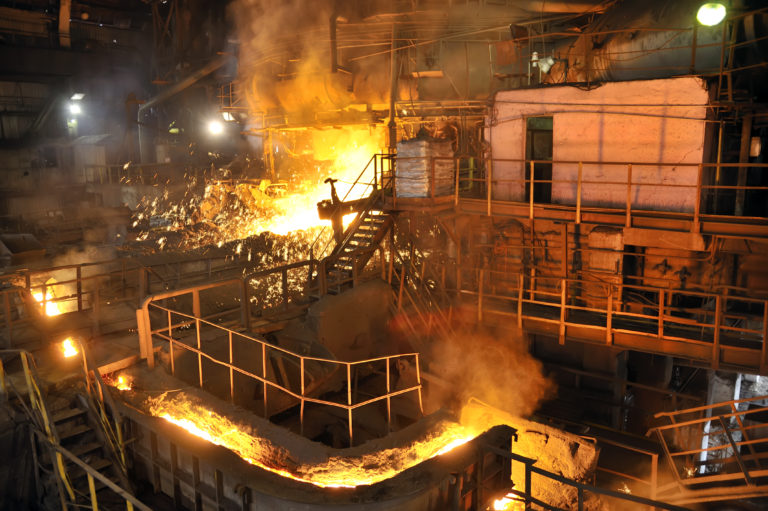
The Galati steelworks has five blast furnaces with a combined capacity of more than 6 million tonnes per year of pig iron. The mill is also able to produce 3.5 million tpy of hot-rolled coil, 1 million tpy of cold-rolled coil, 1.2 million tpy of steel plate and 350,000 tpy of hot-dipped galvanized (HDG) coil, Fastmarkets data shows.
The Liberty Galati plant is the largest integrated steel producer in Romania and one of the key industrial assets in southeastern Europe. Operations at the site have been severely curtailed since parent company Liberty Steel’s financial difficulties and production interruptions in recent years, with an attempt to restart crude steel production in June failing due to technical issues.
According to Steel Mont, which has its headquarters in Dusseldorf, Germany, the consortium’s proposal includes raw material supplies, tolling operations and the off-take of finished products, with an option for a potential acquisition of the plant in the future.
“We can confirm that the consortium has expressed its strong interest in supporting Liberty Galați’s restart,” Steel Mont founder and chief executive officer Rajesh Saraiya said. “This initiative is designed to safeguard jobs, secure supply chains, and ensure that Romania retains its strategic steelmaking capacity within the European Union.”
A Steel Mont representative told Fastmarkets on October 7 that the other participants in the consortium could not be revealed yet.
The administrators of Liberty Galati are currently reviewing the proposal, Fastmarkets understands.
Liberty Steel declined to comment on the matter when contacted by Fastmarkets on October 6.
Steel Mont has been operating for more than 10 years, trading in finished and semi-finished steel, minerals and steelmaking raw materials.
The proposal comes after a major development in August 2025: the restructuring plan for Liberty Galați was approved by a majority of creditors and confirmed by the Galați Tribunal.
The approved plan outlines debt repayments to secured and unsecured creditors, full payment of wage claims and a strategic refocusing on the domestic Romanian market, alongside cost optimization measures and streamlined local governance, according to Liberty Steel.
The vote involved approximately 1,200 creditors. The plan was accepted by more than half, with about 52% in favour, while 20% opposed, allowing it to pass under insolvency rules in Romania.