


HKM prepares BF B restart after revamp
German steel plant Hüttenwerke Krupp Mannesmann (HKM), owned by Salzgitter, said it is preparing to resume operations at blast furnace B after maintenance.
While the steelmaker did not specify the date of the BF B relaunch, it will perform equipment tests during the next two weeks before restarting. The furnace relining was announced in late May 2026 and started soon after the statement was made.
HKM is equipped with two BFs: furnace B has annual capacity of 2.7 mt of pig iron and BF A – 2.5 mt.
In July this year, Salzgitter acquired 100% of HKM’s shares, finalizing the transfer of ownership from Thyssenkrupp and Vallourec.
Following the share acquisition, Salzgitter initiated decarbonization plans for the HKM subsidiary, signing a contract with Tenova for the engineering, delivery, and installation of an electric arc furnace (EAF). The new furnace will be Germany’s largest and the second largest within the European Union with an annual capacity of 2.5 mt and a planned production target of 2 mt of green steel. The implementation phase will start in August this year and is scheduled for completion in 2029.
To learn more about Salzgitter’s decarbonization initiatives and those of other steelmakers globally, see McCloskey’s Global Green Steel Profile.
Author: Maria Tanatar


European CRC, HDG prices rise amid tight supply, improving demand
Tight supply is mainly seen in the cold-rolled coil segment. Market participants explained that the earlier availability of significant volumes of relatively cheap imports forced local suppliers to reduce production. While there are still some previously delivered volumes of imported CRC available in ports, after they are depleted it will be difficult to replenish them, considering a tighter safeguard quota and the burden of Carbon Border Adjustment Mechanism (CBAM) costs and anti-dumping duties.
In such conditions, the market’s reliance on locally produced CRC will increase, which in turn may spur mills to increase production. However, so far market sources report that one of the German suppliers will not have many volumes to offer for the spot market until the end of the year, having allocated the volumes to be produced to its regular customers.
In such conditions, the remaining producers are increasing prices.
In Northern Europe, the most recent deals as well as indications of tradeable levels came within €845-850 per tonne ex-works, versus €825 per tonne ex-works in the first half of August.
Fastmarkets’ weekly price assessment for steel cold-rolled coil domestic, exw Northern Europe moved up to €845-850 per tonne on August 26, from €825-830 per tonne on August 19.
After the assessment was filed, sales at €850-860 per tonne ex-works were reported.
The market in Southern Europe was comparatively quieter, as market participants, especially from Italy, had not yet fully returned after the summer break.
Most recent targets of Italian mills were voiced at €860 per tonne delivered or €845 per tonne ex-works before the end of the summer break, but no transactions were heard above €835 per tonne ex-works.
In the Iberian Peninsula, the most recent deals were said to be done at €860 per tonne delivered or €845 per tonne ex-works, with the key supplier targeting €880 per tonne delivered in the new round, which is netting back to €865 per tonne ex-works.
The assessment for steel cold-rolled coil domestic, exw Southern Europe was €835-845 per tonne on August 26, up from €830-835 per tonne on August 19.
Hot-dipped galvanized coil prices were somewhat lower compared with cold-rolled coil prices, reflecting better availability. However, a market source from Germany pointed out that demand from the automotive industry is picking up, which should help match HDG prices with those for CRC.
In Northern Europe, deals and tradeable levels for hot-dipped galvanized coil varied within €820-835 per tonne depending on the size of the cargo, which was reflected in the corresponding Fastmarkets assessment.
The weekly price assessment for steel hot-dipped galvanized coil domestic, exw Northern Europe was €820-835 per tonne on August 26, widening upward from €820-830 per tonne on August 19.
In the Iberian Peninsula, indications of tradeable levels came within €840-850 per tonne delivered, netting back to €825-835 per tonne ex-works.
Meanwhile, the Italian market was still quiet.
Fastmarkets’ weekly price assessment for steel hot-dipped galvanized coil domestic, exw Southern Europe moved up to €825-835 per tonne on August 26 from €815-825 per tonne on August 19.
On the import side, limited tonnages of South Korean CRC were heard offered at €860 per tonne DDP.
HDG offers from India were heard at $870-880 (€750-760) per tonne CFR.
Author: Vlada Novokreshchenova


Northern Europe HRC prices extend gains; Italian market quiet amid supply constraints
The Italian market was comparatively quieter amid supply constraints, while some market participants believed this would soon result in Italian prices matching those in Northern Europe.
The most recent indications of tradeable levels in Northern Europe varied within a wide range of €730-750 ($850-874) per tonne ex-works.
A seller source reported a tradeable-level indication for material scheduled for delivery in a week or two within the range of €730-740 per tonne ex-works, and another indication at €740-760 per tonne ex-works for material scheduled for delivery in October.
Other market sources contacted by Fastmarkets also indicated tradeable levels within the range of €730-750 per tonne ex-works.
At the same time, offers from suppliers in Germany and the Benelux area varied within the range of €770 per tonne ex-works to €800 per tonne delivered, which is equivalent to €785 per tonne ex-works.
Fastmarkets’ daily steel hot-rolled coil index domestic, exw Northern Europe was calculated at €741.25 ($863.58) per tonne on August 28, unchanged day on day.
The index was up by €19.17 per tonne week on week and by €32.50 per tonne month on month.
In Italy, the market leader was said to raise offers to €750 per tonne delivered or €735 per tonne ex-works; however, the most recent tradeable levels varied within the range of €710-720 per tonne ex-works.
Nevertheless, market participants interviewed by Fastmarkets believed the level targeted by the market leader would be quickly achieved, considering production issues at other suppliers, which, combined with constrained imports, are leading to reduced availability of the material in Italy.
Metinvest’s Ferriera Valsider has recently announced force majeure following a problem with its engine.
Meanwhile, Acciaierie d’Italia (ADI) might be forced to stop steelmaking by October, following the recent court ruling.
Fastmarkets’ daily steel hot-rolled coil index domestic, exw Italy was calculated at €717.5 per tonne on August 28, stable day on day.
The index was up by €5 per tonne week on week and by €7.81 per tonne month on month.
The import segment was quiet, with a minimal number of offers heard during the week to August 28.
Turkish HRC was available at €540 per tonne CFR, excluding any duties. The material from South Korea was offered at €720 per tonne DDP.
Author: Vlada Novokreshchenova

Von der Leyen: Energy costs must be reduced to strengthen European industry’s competitiveness


Gonvarri invests €116.4 Million in Low-Carbon Steel and Clean Energy

Romania launches new railway investment plan that could support steel demand
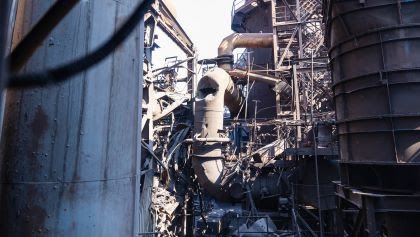
New Russian attack damages production infrastructure at Metinvest’s Zaporizhstal
Ukrainian mining and steel group Metinvest has announced that Russian forces carried out another attack on its Zaporizhstal steel plant in the early hours of August 27, following the previous attack on August 11 that had resulted in a complete production shutdown.
According to the company, five ballistic missiles struck blast furnace equipment, energy and transport infrastructure and open areas of the plant. No fatalities or injuries were reported in the latest attack, as employees on shift reached shelters after the air raid alert was issued.
Metinvest stated that specialists are currently assessing the extent of the damage and inspecting the plant’s production, energy and transport infrastructure to determine further steps. The company has not provided a timeframe for the resumption of production.
Latest strike occurs during recovery work from previous attack
As SteelOrbis reported earlier, the previous attack on August 11 resulted in the deaths of eight Zaporizhstal employees, while another 26 employees were injured. According to Metinvest, ballistic missiles hit the plant two minutes after the air raid alert was issued, damaging key blast furnace equipment, energy facilities and other infrastructure.
Following the August 11 attack, Zaporizhstal carried out emergency repair work and began dismantling damaged structures to access equipment, assess the damage and determine the possibilities for restoration. With production completely halted, the number of employees present at the plant was reduced, while a core team remained on site.
Metinvest COO Oleksandr Myronenko stated that the August 11 attack had caused destruction on a scale not experienced at Zaporizhstal since the Second World War and that the latest attack occurred while the company was still clearing debris from the previous strike. He also stressed that Zaporizhstal is a civilian industrial enterprise producing pig iron and rolled steel used in pipes, household appliances and motor vehicles and does not manufacture military products.
Author: SteelOrbis Editorial Team

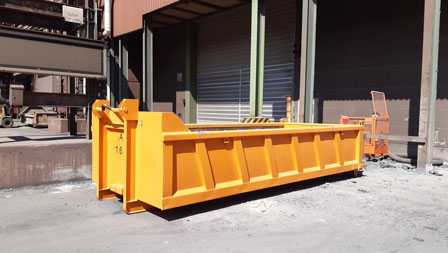
Salzgitter launches new wear-resistant TektoSal®450 steel for multiple applications
Salzgitter Flachstahl GmbH, a subsidiary of German steelmaker Salzgitter AG, has announced the launch of TektoSal®450, a new wear-resistant special steel available to customers as strip steel.
Wear-intensive applications targeted
The material is suitable for applications including earthmoving and mining machinery, dump trucks, tanks, containers and mixer transport systems, as well as other components primarily exposed to abrasive wear. It also offers good weather resistance.
Salzgitter Flachstahl offers TektoSal®450 as unpickled strip steel with natural edges in thicknesses ranging from 3 mm to 5 mm and widths between 900 mm and 1,500 mm. The company stated that the material provides high weldability due to its chemical composition and excellent bendability in both longitudinal and transverse directions.
Author: SteelOrbis Editorial Team

Graz university starts railway testing lab
The Technical University of Graz, Austria, on Thursday announced the inauguration of a railway testing laboratory which it says is unique in Europe.
The Railway and Infrastructure Laboratory (RaIL) will be able to test rail wear over their service life, among other criteria. The lab is the latest major investment of the university’s Institute for Railway Infrastructure Design. The institute’s research complements the activities of Austrian steelmaker voestalpine, which produces rails and other railway components.
One of the institute’s current research projects focuses on lighter steels for trains, Kallanish learns from Austria’s chamber of commerce, Wirtschaftskammer Österreich (WKÖ). Graz is developing harder steels with less weight. While harder steels are more difficult to weld, the institute is also developing corresponding welding technology in parallel, WKÖ explains on its website.
As an example, the chamber refers to locomotives of type Taurus, which have a weight of around 86 tonnes, and the Austrian railway operator ÖBB runs a fleet of 384 units.


Netherlands introduces CO2 toll for road transport
The introduction of the Truck Tax Act in the Netherlands will mean additional transportation costs for Dutch and foreign trucks when passing through the country.
The Royal Dutch Steel Federation, Koninklijke Staalfederatie, is supporting its members with calculation patterns to obtain an understanding of the truck levy.
The truck levy entered into force in July and applies to Dutch and foreign vehicles with truck owners paying per kilometre.
A truck of Category Euro 5 is charged a levy of €0.236/km ($0.30) according to European emission standards. The levy applies on highways, and on some provincial and municipal roads. Each truck must have its own toll box on board that works in the Netherlands.
National steel distributors federation Staalfederatie has raised awareness among its member that the introduction of charge will have an impact on logistics processes, transport rates and cost price calculations within the steel industry. It has established a working group to work out a practical translation of the consequences of the levy, and developed a model cost calculation, for members to gain insight into extra costs.
Staalfederatie tells Kallanish that it is up to the partners in a transaction how to deal with the costs. They might be added in a price-per-tonne, or price-per-order, or not handed down at all, depending on the individual relationship to the customer.
According to Dutch national government, Rijksoverheid, the truck levy contributes to a level playing field for international freight transport. On the dedicated Truck Tax Act website, it notes that the levy is broadly in line with the systems of other countries, such as Germany, Belgium and Denmark, but also the Dutch approach differs on several points.