


HRC prices broadly flat in Europe on continuing lack of demand
One integrated producer in Northern Europe cut its offer price to €570 per tonne ex-works in the week to Friday, down from €600 ($669) per tonne ex-works at the beginning of September.
And producer sources said the tradable price was closer to €540-550 per tonne ex-works.
“We can now accept €540 [per tonne ex-works], even though it’s basically at the cost line,” a mill source in Northern Europe said.
Buyer estimates of the workable level came in at €530-550 per tonne ex-works on Friday, although most were around €540-550 per tonne ex-works.
And lead times remained quite short, within four to five weeks.
“Spot prices [for HRC] are €550-550 per tonne ex-works,” a buyer source told Fastmarkets. “Some mills are really in a panic, particularly because of the dramatic situation with the car industry. Apart from that, most mills are looking to Brussels, waiting for the European Commission to act.”
Fastmarkets calculated its daily steel hot-rolled coil index domestic, exw Northern Europe at €545.21 ($608.24) per tonne on Friday, down by €0.42 per tonne from €545.63 per tonne on Thursday.
The index was down by €11.25 per tonne week on week and by €52.29 per tonne month on month.
In Southern Europe, Fastmarkets’ corresponding daily steel hot-rolled coil index domestic, exw Italy was €541.67 per tonne on Friday, down by €0.83 per tonne from €542.50 per tonne the previous day.
The Italian index was down by €15.83 per tonne week on week and by €53.33 per tonne month on month.
Sources told Fastmarkets that one domestic mill was offering HRC at €560 per tonne delivered, with lead times ranging from late October to early November. This would be equivalent to €545-550 per tonne ex-works, they said.
Other European suppliers were heard offering coil to Italy at €560 per tonne delivered.
And buyer sources estimated the tradable level in Italy at €530-550 per tonne ex-works.
Several sources in Italy suggested that current HRC prices were close to rock bottom for producers, but added that they expect to see some stabilization in October.
“Mills are already losing money selling [HRC] at the current prices, so I think they will close some facilities [such as furnaces and rolling lines] rather than continuing production and losing even more,” a second buyer source said.
European mill sources would not confirm any immediate plans to cut production, however.
“Cutting [steel] production means losing free-carbon rights, so it is a difficult choice,” a second mill source in Northern Europe told Fastmarkets.
The European market for coil imports remained quiet in the week to Friday.
“Most Asian suppliers kept a low profile this week – cautious about the [anti-dumping investigation] by the EU,” a third buyer source said.
“Actual import prices are close to domestic levels, So why buy from Asia with November-December lead times when you can get material within Europe in October? Besides, there is almost no demand,” the source added.
On September 24, the European Commission announced that it will start to register all imports of products falling under anti-dumping or anti-subsidy investigations, including continuing investigations where provisional determinations have not yet been made. And that further cooled the appetite for imports, sources said.
In the week to Friday, HRC offers to Italy came in from Asia at about €525-535 per tonne CFR for end-October/early November shipment, Fastmarkets understands.
And bids for the material were reported at €480-510 per tonne CFR, although no offers at that level had been heard by the time of publication.

Polish rebar prices decrease further on sluggish demand
Polish mills were heard offering rebar at 2,600-2,610 zloty per tonne CPT during the assessment week, but according to Fastmarkets’ sources, they could easily lower the price for firm bids.
A deal for 400 tonnes of rebar was reported at 2,570 zloty per tonne CPT.
Buyers’ estimations for the workable market level were at 2,570-2,605 zloty per tonne CPT, Fastmarkets understands.
In the secondary market, prices for rebar from stock were heard at 2,650-2,670 zloty per tonne CPT, depending on the region.
“It is a buyers’ market now. Buyers bid and more or less get [the desired price],” a producer source told Fastmarkets.
“Demand is not very bad, but the pressure for price decreases is quite high”, a distributor source told Fastmarkets, adding that prices would probably reach 2,650 zloty per tonne CPT by the end of September.
“Only the cut-and-bend companies still need rebar. Construction sites in Poland are quickly changing their projects to cut-and-bend figures at the expense of straight bars,” the distributor said.
According to Fastmarkets’ sources, cut-and-bend companies in Poland had enough work until the end of October.
Import offers of rebar from European suppliers to Poland were heard at €600-620 ($669-692) per tonne CPT.


Cinzia Vezzosi (Assofermet): the quality and cost of scrap will be crucial
The element that has now marked 2024, i.e. the lack of demand, is also the one that is worrying the distribution the most.
And if a recovery in the third quarter is now unlikely, the possibility of a more positive development in the medium term is possible.
Cinzia Vezzosi, president of Assofermet, explains this in a siderweb interview. She clarified on recycled steel and scrap: quality and costs will be decisive.


Decision on US Steel takeover delayed until 2025
Joe Biden could determine the future of US Steel in one of his last acts as President of the United States after postponing a decision on whether to block Nippon Steel’s proposed takeover for at least 90 days.
The Committee on Foreign Investment in the US (CFIUS) had been carrying out an investigation to determine whether the USD14.9 billion bid should be blocked on national security grounds. Following the submission of its findings, President Biden will be allowed 15 days to decide whether to block the Japanese company’s takeover.
However, reports in the Financial Times, New York Times and Washington Post revealed that the President had agreed to allow Nippon Steel to resubmit its filing with CFIUS. This will activate a 90-day extension to the committee’s considerations, making any decision unlikely before January – just days before the inauguration of the US’s next President.
Democratic presidential candidate, vice-president Kamala Harris, and Republican candidate Donald Trump both oppose the foreign ownership of US Steel. A desire to keep the company in US hands – strongly argued by the United Steelworkers union – could significantly affect US supply chains.
Potential restructure and plant closures
The chief executive of US Steel, David Burritt, said that the company would be forced to close plants and concentrate on its minimill operations without the USD2.7bn pledged by Nippon to upgrade its older facilities. The company may also move its headquarters to Arkansas, from Pittsburgh.
According to US Steel’s 2023 annual report, its minimills accounted for around 15% of its total 22.4 million short ton production. However, most of US Steel’s recent investment has been focused on the Big River Steel (BRS) minimill facility in Arkansas. Its current 3.3 million short ton capacity will double following the construction of the BRS2 EAF plant, which is expected online by the end of 2024.
US steelmaker Cleveland-Cliffs submitted a USD35 per share bid for US Steel in August last year. Nippon’s subsequent offer is worth USD55 per share. Cleveland-Cliffs has continued to state that it would resubmit a bid for US Steel if Nippon’s bid was blocked.
Antitrust concerns could stall a Cleveland-Cliffs takeover of the entire US Steel business, however. It has been estimated that such a deal would place 65% to 90% of steel used by US carmakers under the control of a single company.
Hopes for improved demand for domestic steel
The closure of US Steel’s older mills, resulting from a blocked Nippon takeover, would have little effect on a US steel market currently challenged by low demand. MEPS respondents can readily source material and are apprehensive about buying stock following months of price decline. MEPS’s US coil prices recovered slightly in September after falling to their lowest level since December 2022 during July and August. Plate prices are now at their lowest since January 2021, following a further decline.
However, the Federal Reserve’s decision to lower interest rates by 0.5 percentage points, on September 19, could help to strengthen demand in the US. A reduction in the cost of finance could prompt increased investment activity, particularly in construction. A further half of a percentage point cut is expected by the end of this year.
As steel buying demand increases once more, the importance of domestically produced steel will grow. Increasing trade protection measures – including Section 301 tariffs that will be increased from September 27 – will continue to deter imports.
Against the backdrop of this protectionist stance, however, US Steel chief executive David Burritt insists that foreign ownership of the country’s third-largest steelmaker would “strengthen national security, economic security and job security”.


Southern European long steel prices unchanged on sluggish construction sector
Fastmarkets’ weekly price assessment for steel reinforcing bar (rebar) domestic, exw Italy was €590-610 ($657-680) per tonne on Wednesday, unchanged since September 11.
Demand was reported to be weak due to slow consumption in the construction sector and cheap imports.
“Imports from China, Indonesia and Algeria [put further pressure on] demand for domestic rebar,” a rebar producer said. “With high costs, Europe cannot compete cost-wise with exporting countries in Asia and North Africa.”
Offer prices were reported at €600-610 per tonne ex-works, but most sources reported workable prices at €590-600 per tonne ex-works.
“Mills are trying to put prices up, but the market is so calm, so customers don’t believe so much in price increases,” a trader source said. “Demand is low, and we fight for every single order.”
Scrap prices edged down week on week because of competitive billet prices from Asia, sources said.
China’s exports of steel billet (Harmonized System code 72071100) totaled 349,285 tonnes in August, up by 127% from 153,570 tonnes a year earlier and up by 53% from 228,983 tonnes in July.
Turkey was the biggest buyer of China’s billet in August, taking 204,411 tonnes, or 59%, of China’s total exports.
Fastmarkets calculated its daily iron ore 62% Fe fines, cfr Qingdao index at $96.07 per tonne on Wednesday, up by 6.67% from $90.06 per tonne a week earlier.
Fastmarkets’ calculation of its daily index for steel scrap HMS 1&2 (80:20 mix) North Europe origin, cfr Turkey was $360 per tonne on Wednesday, down by $5.19 per tonne week on week.
And Fastmarkets’ price assessment for steel reinforcing bar (rebar), domestic, delivered, Spain was €620-625 per tonne on Wednesday, up by €5-20 per tonne week on week from €600-620 per tonne.
Market participants reported weak consumption and a silent export market.
Southern European wire rod
Meanwhile, Fastmarkets’ price assessment for steel wire rod (mesh quality), domestic, delivered Southern Europe was €620-630 per tonne on Wednesday, stable week on week.
Weak demand and high feedstock costs continued to weigh on European mills, sources said.
Published by: India-Inés Levy
Uncertainty, pessimism limits trading across Northern Europe steel long market
There were few signs in the short to medium term of the very depressed construction industry picking up due to high interest rates, high input costs, high labor costs and a constantly changing regulatory environment.
Demand remained low, with Chinese, Indonesian and Algerian imports weakening demand further.
With depressed market conditions in Europe, high feedstock costs and global steel oversupply, there was little expectation of demand improvement in the coming six months to a year, Fastmarkets heard.
Prices remained unchanged across the steel long market during the assessed week, with market participants reporting slow demand and unchanged market conditions.
Fastmarkets’ weekly price assessment of steel reinforcing bar (rebar), domestic, delivered Northern Europe was €630-645 ($704-721) per tonne on Wednesday, stable week on week.
Meanwhile, scrap prices edged downward week on week.
Fastmarkets’ calculation of its daily index for steel scrap HMS 1&2 (80:20 mix) North Europe origin, cfr Turkey was $360.00 per tonne on Wednesday, down by $5.19 per tonne from $365.19 per tonne a week earlier.
Fastmarkets’ weekly price assessment for steel wire rod (mesh quality), domestic, delivered Northern Europe was €605-630 per tonne, stable week on week.
Prices and market conditions remained stable in the wire rod market, Fastmarkets heard.
European HRC prices decrease further; market fundamentals remain weak
Demand from the main steel-consuming sectors remained low, with poor prospects for the near term, Fastmarkets understands.
The oversupply of HRC in Europe continued to put additional downward pressure on prices, with trading in the region remaining limited as a result.
Fastmarkets calculated its daily steel HRC index, domestic, exw Northern Europe at €545.63 ($609.45) per tonne on Thursday, down by €4.25 per tonne from €549.88 per tonne the previous day.
The index was down by €13.98 per tonne week on week and by €56.20 per tonne month on month.
Mills in Northern Europe were heard offering HRC at €570-580 per tonne ex-works, while buyers estimated the workable market level lower at €530-560 per tonne ex-works.
In Southern Europe, Fastmarkets’ daily steel HRC index, domestic, exw Italy was €542.50 per tonne on Thursday, down by €1.88 per tonne from €544.38 per tonne the previous day.
The Italian index was down by €15.00 per tonne week on week and by €57.50 per tonne month on month.
One Italian supplier was heard offering HRC at €560 per tonne delivered, which nets back to €550 per tonne ex-works.
Buyers estimated the tradeable market level at €530-550 per tonne ex-works, depending on the customer and traded tonnage.
A buyer source based in Italy told Fastmarkets that prices for HRC were close to the cost of production and would probably stabilize in the coming weeks.
“There is no more room [for prices] to go down, but there is not even one reason [for prices] to go up,” the source said.
Asia-origin HRC was heard offered to Italy at €525-535 per tonne CFR, for shipment at the end of October or November.
Buyers’ interest in the material remained low however, due to the trade safeguard measures, the European anti-dumping investigation against HRC from several origins and the small gap to domestic prices, Fastmarkets understands.
Green Steel
The spot market for green steel in Europe was also very quiet, with no new transactions reported during the week to Thursday.
Major suppliers in Europe maintained offers for steel with Scope 1, 2 and upstream Scope 3 emissions below 0.8 tonnes of carbon dioxide (CO2) per tonne of steel at €200-350 per tonne.
Estimates of tradeable values for the same material came in at €80-150 per tonne during the assessment week.
A mill source pointed out that for steel with CO2 emissions content below 500 kg per tonne of steel, “premiums below €200 per tonne would not be possible.”
Fastmarkets’ weekly assessment of the green steel domestic, flat-rolled, differential to HRC index, exw Northern Europe was stable at €100-200 per tonne on Thursday.
Sources suggested that low liquidity in the green steel market was connected to the global downturn in the European steel sector and slow consumption.
Once again, sources also said that the lack of a common standard for the industry remained an issue.
“We still have no formal definition for green steel; there is no clarity on how downstream Scope 3 emission should be calculated,” a buyer source in Germany told Fastmarkets.
“We absolutely need an industry definition of what steel is green. It doesn’t exist today. We are all talking about same thing, but slightly differently,” a mill source in Northern Europe said.
Buyer and seller sources agreed that the green steel definition needs to specify how many tonnes of CO2 emissions are embedded in one tonne of steel.
Fastmarkets methodology definition for green steel in Europe is the following:
“Steel produced with scope 1,2 & 3 emissions of maximum 0.8 tonnes of CO2 per tonne of steel”
Published by: Julia Bolotova, Darina Kahramanova

Italy in prime position to lead on low carbon steel but faces energy cost challenge: Federacciai
Italy is in a strong position to become a world leader in green steel but needs to deal with the country’s higher electricity prices that put its steel companies at a disadvantage, Federacciai President Antonio Gozzi said at the Italian steel association’s conference in Vicenza Sept. 26.
“The world of steel is changing rapidly,” Gozzi said. “As usual in situations of radical change, there are threats but also opportunities. The two great issues, scrap and energy, both impacted by decarbonization policies, are central to the survival of our companies.”
Italy is the second-largest steel producer in Europe after Germany, and 85% of its steel output is from electric furnaces.
Italian companies continue to pay higher electricity prices than their European competitors, Gozzi said. In 2023, energy-intensive German companies paid an average of Eur65/MWh, while in Italy the costs exceeded Eur110/MWh, he said. The reasons include the national energy mix, state incentives and the lack of an interconnected European electricity market.
Unified approach to power urged
Federacciai has suggested a unified approach to the use of emissions trading system auction proceeds, noting that countries such as Germany and France have allocated much more than Italy to support industrial decarbonization. A single European price for energy-intensive sectors could reduce these differences.
“The Italian EAF based steel industry, as far as Scope 1 is concerned, is in fact close to carbon neutrality” Gozzi said. “We are committed to solving the residual problems related to small emissions still present in electric furnaces and those, albeit limited, deriving from the use of natural gas in the reheating furnaces of rolling mills. To this end, we are working on solutions such as biomethane and hydrogen.”
“To reach the goal of net zero or even be carbon negative, we need a further third of electricity with zero carbon emissions,” Gozzi said. “Many of our companies have already invested, and continue to invest, in plants for the production of renewable energy.
“We are evaluating, as individual companies or in consortiums, participating in tenders for the renewal of hydroelectric concessions, which we hope will be announced as soon as possible in accordance with European directives.”
For this reason, Federacciai recently signed a memorandum of understanding with Edison-Edf and Ansaldo Nucleare to support future installations of small modular reactors and micro modular reactors in Italy and to lead to a long term nuclear power purchase agreement that will act as a bridge to new generation nuclear energy.
“We already have a connection cable with France, built by Interconnector, which could support the feasibility of the project,” Gozzi said. “If we could stipulate this contract under economically balanced conditions, starting from 2025-26, we could realize our dream of world leadership in the production of green steel.
“Being the first in the world in the production of totally green steel would radically change the history of our companies and their prospects, strengthening their relationships with customers, with institutions, including financial ones, increasing their sustainability and therefore their value.”
Renewable energy link to Tunisia
The second project Gozzi cited is the 600 MW cable with Tunisia and the investment in renewable energy in that country.
“After years of work, we are close to signing an intergovernmental agreement between Italy and Tunisia that could allow Italian energy-intensive companies, within the framework of the Interconnector obligations, to participate in the financing of the cable and the construction, in Tunisia, of photovoltaic and wind power plants whose energy could, at least partially, be reimported into Italy through the new cable.”
Gozzi said the cable could be ready in 2028.
Gozzi cited also another project that Federacciai launched: the CEIP Consortium, which practically all the Italian steel companies that use electric arc furnaces have joined and which is looking at the feasibility of one or more direct-reduced iron plants in Italy or abroad to serve Italian companies.
Gozzi told reporters that the scouting for the DRI is focusing on North Africa, but also Brazil or even with Vale in Brazil, with a long-term offtake agreement to deal with the shortage of scrap that is expected as many European blast furnace steelmakers go the EAF route.
In 2023, the Italian steel industry produced 21.1 MMt of steel, a reduction of 2.5% compared with 2022. Gozzi said Federacciai expects that 2024 production will be slightly less than in 2023 as Acciaierie d’Italia weighs on national output.
Platts, part of S&P Global Commodity Insights, assessed HRC Italy Sept. 26 at Eur540/mt base ex-works, down Eur5/mt on the day.

Tata Steel Nederland cuts costs amid market weakness
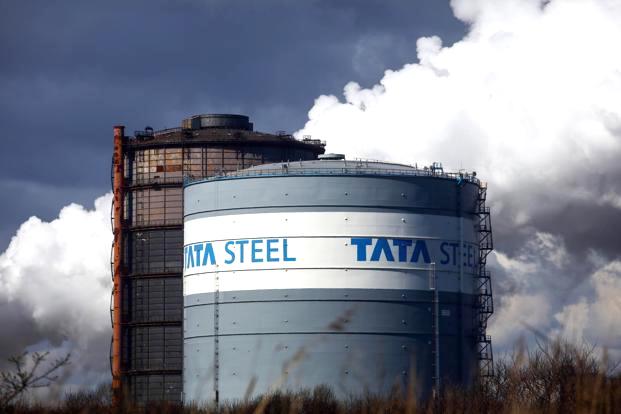
Tata Steel Nederland says it is “tightening the belt” by means of cost-cutting measures to cope with current deteriorating market conditions. It is the first northwestern European steelmaker to publicly announce such measures in reaction to the ongoing economic weakness.
European industry is experiencing tough times and this is directly affecting the steel market. Steel prices are low and customers are taking a wait-and-see approach, the company says in a statement. It concludes that the steel market will not recover after the summer.
The firm is therefore adopting cost-saving measures that directly save money, including measures in procurement, sales and inventory management. In addition, a partial hiring freeze has been implemented, as well as a significant reduction in training and business trips.
The company underlines it will keep its eyes on the transition to clean, green and circular steel, and that the cost-cutting measures will also serve to stick to that long-term plan.
Notably, the firm does not speak of reducing production. In fact, it states that “Tata Steel Nederland continues its steel production unabated in order to supply customers directly when the market recovers.”
According to a Dutch buyer of coil products made by Tata Steel Nederland, it is likely that European steelmakers will temporarily shut down blast furnaces to cope with the lack of demand. “Cutting production would be the best solution to get a better balance in supply and demand, but who will start?” he wonders.
Earlier this week, Kallanish contacted all the main coil-making producers in northwestern Europe to ask about plans to reduce production. None of the mills replied, including Tata Steel Europe.
Christian Koehl Germany

Deindustrialisation threatens European renewable energy buildout
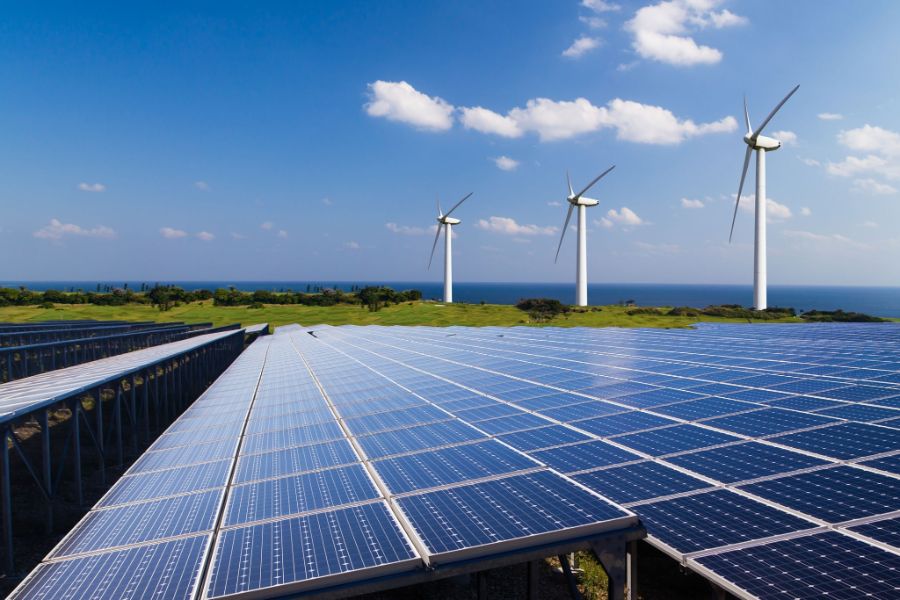
The expected reduction in production in some sectors, such as iron and steel, amid deindustrialisation in Europe, could contribute to electricity demand not materialising. Grids, permitting and revenue certainty are meanwhile obstacles to deploying the renewable energy capacity needed by industry.
Europe finds itself in a chicken and egg scenario, where steelmakers need clean, competitively-priced energy to sustain operations, but deindustrialisation is hampering energy project spending. “The lack of clarity in how demand will unfold could dampen the appetite to invest in next-generation clean energy projects, potentially stalling or slowing the energy transition,” McKinsey notes.
“One major cross-cutting bottleneck facing the energy transition is a lack of firm commitment to project pipelines – not helped by concerns surrounding project economics and long-term returns, and much less by the fact there is no precedent for the global energy transition,” it continues in a report seen by Kallanish.
It can take 4-12 years to develop a solar or onshore wind project in Europe, and over 12 years for offshore wind. This leads to major development uncertainty, financing challenges and cost overruns, points out BloombergNEF.
Governments have fast-tracked some projects, with 2024-26 spending plans seen increasing by 28% from 2023 levels in Germany, Great Britain, France, Italy and Spain. Challenges around affordability for end users, regulated equity returns and availability of government funding still pose risks to the buildout, BloombergNEF continues.
“Longer development timelines due to permitting and grid challenges, and rising interest rates are putting pressure on the expected returns for renewable energy investment. This is exacerbated by elevated equipment costs for wind … as well as increased negative power prices and zero-priced hours as renewable energy levels rise, especially during daytime hours for solar,” it adds. The electrification of industry will be essential to support renewables expansion.
On offshore wind, some governments, like in Germany and the Netherlands, have moved away from providing revenue support. This means developers must find an alternative route to market, usually through corporate PPAs. Reducing such revenue risks through two-way contracts for difference, supporting permitting and accelerated auction schedules could boost project deployment in offshore wind, BloombergNEF concludes.
Adam Smith Poland