


Revista InfoAcero Mayo 2024
En el siguiente enlace pueden acceder a la edición de Mayo de nuestra revista INFOACERO
Destacamos a continuación algunos de sus contenidos:
- Opinión – D. Federico García Imhof- Junta Directiva UAHE
- Evolución del Índice de Precios de Productos Siderúrgicos – UAHE
- Siderurgia: Previsiones Eurofer – Informe Eurofer- 2º trimestre 2024
- Información Asociativa: Jornada Responsabilidad de Directivos // Próximo Ciclo de Conferencias UAHE- Junio
- Colaboración ASCEM– Sr. Joan Carles Codina- Secretaría Jurídica
- Próximos Eventos: 32 Bienal Máquina Herramienta (3-7 Junio, Bilbao)// Asamblea General UAHE (4 Julio, Madrid)


Austria’s steel production declines in April
Austria’s steelmakers decreased crude steel production in April compared with the previous month, according to worldsteel data.
Output amounted to 633,000 tonnes, down by 8.4% from March and 2.8% less year-on-year, Kallanish notes. Austria remains in 21st place in the ranking of top ten global steel producers, worldsteel data show.
In January-April, the country produced 2.53 million tonnes of steel, up 2% on-year.
Overall EU output in April decreased by 0.7% y-o-y to 11.3mt. In the first four months of the year, steel production was 0.6% less on-year versus January-April 2023 at almost 44.4mt.
In May, Austria’s largest steelmaker, voestalpine, together with Mercedes-Benz and TSR Recycling, will form a joint project to ensure the technical feasibility of processng post-consumer scrap (old scrap) into high-quality scrap that can be used to produce high-quality steel grades for the automotive industry (see Kallanish passim).
Earlier, voestalpine launched production of what it says is the world’s first high-quality “greentec” wire rod from hydrogen-reduced pure iron and scrap at its site in Donawitz. It has the goal of researching the use of hydrogen to reduce fine iron ore. In the future, the resulting hot sponge iron could be melted down in an electric arc furnace or used to produce hot-briquetted iron.
Earlier, the steelmaker placed an order with Primetals Technologies for an 850,000 tonnes/year capacity electric arc furnace to be implemented at its site in Linz. Startup is scheduled for 2027. An EAF of the same capacity, supplied by Danieli, is planned in the same timeframe for Donawitz.
In 2023, Austria’s commerce chamber, Wirtschaftskammer Österreich (WKO), expressed concern over the crash in demand and orders for commodities in the country (see Kallanish passim). WKO saw orders declining by as much as 30%, with no relief in sight.
Svetoslav Abrossimov Bulgaria


Weak demand continues to weigh on Northern European steel longs market
Consumption remained subdued across the Northern European rebar and wire rod market in the week to Wednesday May 29.
Fastmarkets’ weekly price assessment for steel reinforcing bar (rebar), domestic, delivered Northern Europe was €630-650 ($682-704) per tonne on Wednesday, stable week on week.
Few trades were reported given ongoing weak demand and pessimistic sentiment, market participants told Fastmarkets.
“There have been few trades as demand is slow,” a trader source said.
The corresponding Fastmarkets’ weekly price assessment for steel wire rod (mesh quality), domestic, delivered Northern Europe was €615-650 per tonne on Wednesday, widening down by €10-30 per tonne from €645-660 per tonne on May 22.
Offers in Germany for mesh quality wire rod were reported at €615-625 per tonne, while higher offers of €625-650 per tonne were reported throughout the rest of Northern Europe.
Meanwhile scrap prices remained largely stable week on week.
Fastmarkets’ calculation of its daily index for steel scrap HMS 1&2 (80:20 mix) North Europe origin, cfr Turkey was $375.16 per tonne on Wednesday, up just $1.60 per tonne from $373.56 per tonne a week earlier.
Published by: India-Inés Levy


Southern European rebar prices edge up amid high input costs; wire rod market stable, increases forecast
High input costs and slightly improved demand resulted in rebar prices in Italy and Spain edging upward in the week to Wednesday May 29, sources have told Fastmarkets.
Sources added that they expected mills to increase their offer prices further by the end of May.
Fastmarkets’ weekly price assessment for steel reinforcing bar (rebar) domestic, exw Italy, was €650-660 ($704-715) per tonne on Wednesday, up by €10 per tonne from €640-650 per tonne on May 22.
High scrap costs and a lack of availability of domestic scrap resulted in the Italian market accepting higher offers, with further increased offers expected in the coming days, according to sources.
Some producer sources expect further price rises of €20-30 per tonne by the beginning of June, but whether the market will accept these increases remains uncertain.
“On May 28 producers targeted higher prices due the higher price of scrap and the difficulty of finding scrap,” a trader said.
“[The] lack of scrap has reached tragic levels, and we are all working hand to mouth with a non-existent billet stock,” a producer source said.
While some sources reported improved demand, other sources reported ongoing weak demand amid unfavorable weather conditions in Northern Italy.
“Local demand is strong, and we have cleaned our order book at previous lower prices. Given that all producers have been selling at a loss since March 2024, I am confident that this latest increase will be accepted by the market,” the producer source said.
“Rebar price is higher for new offers, and mills are announcing new price increases at the beginning of June. However, demand is not so strong these days, customers are a little disoriented, and bad weather in Northern Italy is slowing building activities,” a second trader said.
Meanwhile, international scrap prices remained largely stable week on week.
Fastmarkets’ calculation of its daily index for steel scrap HMS 1&2 (80:20 mix) North Europe origin, cfr Turkey, was $375.16 per tonne on Wednesday, up by $1.60 per tonne from $373.56 per tonne on May 22.
Fastmarkets’ weekly price assessment for steel reinforcing bar (rebar), domestic, delivered, Spain, was €635-655 per tonne on Wednesday, up by €10 per tonne from €625-645 per tonne on May 22.
Southern European wire rod
Fastmarkets’ weekly price assessment for steel wire rod (mesh quality), domestic, delivered Southern Europe, was €625-635 per tonne on Wednesday, unchanged from May 22.
A lack of availability of scrap and relatively weak demand resulted in wire rod producers attempting to reduce production, in turn lowering their requirements for scrap.
“The scrap market in Italy was asking steel mills for an increase in scrap prices of around €20 per tonne for June. Steel mills have tried to counteract this increase through production stoppages and differentiating raw material purchases,” a wire rod producer source said.
“These actions were taken because the final product (wire rod/bars/mesh) today does not allow such a significant price increase to be reflected on the market,” the source added.
Lower scrap costs of only a €5-10 per tonne increase have been negotiated, compared to what would have previously been €20 per tonne, sources said.
With energy costs having increased by approximately €5 per tonne, wire rod producers will likely increase offers by a €10 per tonne, Fastmarkets has heard.
Published by: India-Inés Levy


Liberty Steel hot idles its Galati blast furnace in Romania
Liberty Steel has decided to hot idle its blast furnace (BF) in Galati, Romania, due to difficult market conditions, a company spokesperson told Fastmarkets on Thursday May 30.
The company did not comment on the timeline for the equipment stoppage and did not provide an approximate restart date when contacted by Fastmarkets.
“To ensure a profitable and sustainable production at Galati, we have decided to enter a temporary hot idle period and continue operating our downstream mills from slab stocks,” Liberty Galati’s spokesperson said.
The spokesperson added that Liberty Galati’s teams would continue working full shifts.
According to the spokesperson, during this period, the company will focus on conducting maintenance and repairs to improve the performance and reliability of the BF and on consolidating the order book “for customers in the profitable market segments”.
The steelworks in Galati, located on the west bank of the Danube River, southeastern Romania, has installed capacity to produce 3.5 million tonnes per year of hot-rolled coil, 1 million tpy of cold-rolled coil, 1.2 million tpy of steel plate, and 350,000 tpy of hot-dipped galvanized coil, according to Fastmarkets’ information.
But the company has recently been running at reduced rates, with only one BF out of five operational.
The situation is similar for Liberty Steel’s other capacity in Central Europe specialized in the production of flat steel.
BFs No2 and No3 at the Ostrava steelworks, in the Czech Republic, remain idled, despite initial plans by the company to restart BF No3 at the beginning of this year.
The restart of BF No3 was postponed due to a dispute over unpaid bills between Liberty Ostrava and its power supplier Tameh Czech.
Liberty Steel restarted the rolling lines at the Dunaferr steelworks, Hungary, in January this year, after four months of downtime, but hot steel operations at the facility are still idled.
According to market sources, Dunaferr is using Russia-origin slabs to feed the rolling lines, with monthly output estimated at around 10,000-15,000 tonnes of HRC. The company might use the same feedstock to operate rolling lines in Galati, sources suggested.
In December last year, the European Commission confirmed a quota extension for Russia-origin slab until 2028, despite heavy criticism from European steelmakers.
Market brief
Meanwhile, the European flat steel market is still struggling with slow demand from all key steel-using industry sectors, according to sources.
Prices for HRC in Central Europe had started to increase since the beginning of the year, due to a pickup in apparent demand, but the upward trend only continued until mid-February, when prices started to decline.
Attempts by European steelmakers to increase prices in late April and early May were largely unsuccessful due to poor demand.
Since the beginning of May, prices for HRC in Central Europe have been stable.
Fasmarkets’ weekly price assessment for steel hot-rolled coil domestic, exw Central Europe, was €630-640 ($682-693) per tonne on Wednesday, unchanged since May 1.
Published by: Julia Bolotova, Darina Kahramanova

EU to extend safeguards until 2026, proposing restricted residual quotas access for HRC, wire rod
The proposed adjustments to the measures will come into effect on July 1, 2024. Member states will vote on the document next week, sources said.
The annual liberalization rate will change to 4% from 1%, with more restrictive adjustments for certain hot-rolled coil and wire rod quotas, effective July 1. The new measures will remain in place until June 30, 2026.
“Data shows that the liberalisation rate in the past has largely outpaced the evolution of consumption. While Tariff-Rate-Quotas (TRQs) have been increased by almost 25% since the measure was imposed (including the 5% top-up applicable since February 2019), consumption decreased by -17% over the same period. These opposing trends have therefore significantly widened the gap between the level of TRQs and the market demand,” the notice published on Thursday May 30 reads.
The existing measures have been in place since 2018 to protect EU steelmakers from a potential surge in imports.
The latest decision to extend the measures follows a review that began in December 2023.
The volume of steel imports into the EU remains high, especially in light of deteriorating consumption, according to the European Commission. Notably, in 2023, steel imports to the bloc totaled 24.721 million tonnes, down by 8.7% from 27.087 million tonnes the previous year, according to Eurofer data.
Meanwhile, Eurofer reported apparent steel demand for 2023 declined by 8.7% year on year to 126 million tonnes, from 138 million tonnes in 2022, marking the fourth annual downturn in the past five years.
Adjustments proposed
HRC
The major adjustment was proposed for product category 1, namely, hot-rolled coil (HRC) quota, which represents the largest share of imports to the EU (8.5 million tonnes in 2023).
“It [HRC] also represents 34% of the total production of the Union [steel] industry and around 25% of its domestic sales in terms of volume,” the notice reads.
Due to a recent surge in imports with certain origins – such as Vietnam, Japan, Taiwan – the residual TRQ for HRC had a tendency to be exhausted in the first couple of days of the new quarter.
“This has created an imbalance on the market throughout the remainder of those quarters by making available very large amounts immediately, thus generating substantial import pressure,” the notice reads.
As a result, the Commission has suggested imposing a limitation to the maximum volume that one single country can export under the residual TRQ. Notably, the Commission suggested a 15% cap per single country over the TRQ volume initially available in each quarter.
This would affect HRC imports falling under the “other countries” category. Notably, Vietnam, Japan, Taiwan and Egypt are the major HRC suppliers to the EU under that category, with Asian suppliers offering the most competitive prices, according to market participants in Europe.
For example, HRC imports in 2023 from Taiwan to the EU amounted to 1.25 million tonnes, 1.16 million tonnes from Vietnam and 1.09 million tonnes from Japan, according to GTT stats.
The total allowance for “other countries” safeguards category, where these countries belong, in 2023 was 3.7 million tonnes, according to the EU customs data.
If the Commission’s suggested 15% cap is applied, each country would not be able to supply more than 555,555 tonnes of HRC per year to the bloc.
European steelmakers speaking to Fastmarkets welcomed such a proposal, saying it was “necessary to protect the market”.
“If the measures remained in the current state, we wouldn’t have European steel production anymore,” a steel mill source said.
Distributors, on the contrary, said the decision was “a disaster” and was set to limit competition in the market.
“As distributors, we need to diversify supply sources. Importing was already painful with safeguards and CBAM adding up, with new limitations it will be impossible [to import coil] in Europe,” a distributor said.
Wire rod
Similar changes were proposed to product category 16: steel wire rod, with a 15% cap suggested per country over the TRQ volume initially available in each quarter.
“Import quotas [for wire rod] from Algeria, Egypt, Malaysia, Indonesia and India for the second quarter of 2024 were full in the first week after new period started. This has become a tendency,” a wire rod producer source said.
The total allowance for “other countries” categories in 2023 was around 472,335 tonnes, according to the EU customs data.
If a 15% cap is applied, each country falling under that category will be limited to delivering no more than 70,850 tonnes of wire rod to the EU in one year.
In 2023, Malaysia alone supplied 383,470 tonnes of wire rod to the EU, and Algeria 175,154 tonnes, according to GTT stats. Deliveries form Indonesia amounted to 168.781 tonnes.
Wire rod buyers in Europe were disappointed with the suggested adjustment.
“EU wire rod processors are experiencing shortages of the commodity and squeezed margins compared with fully integrated EU steel producers,” a wire rod buyer in Northern Europe said. “We need a continuous and uninterrupted flow of diversified sources of supply of steel products, both in the EU and overseas, from third countries.”
Import suppliers dominate European CRC market with much cheaper offers
CRC
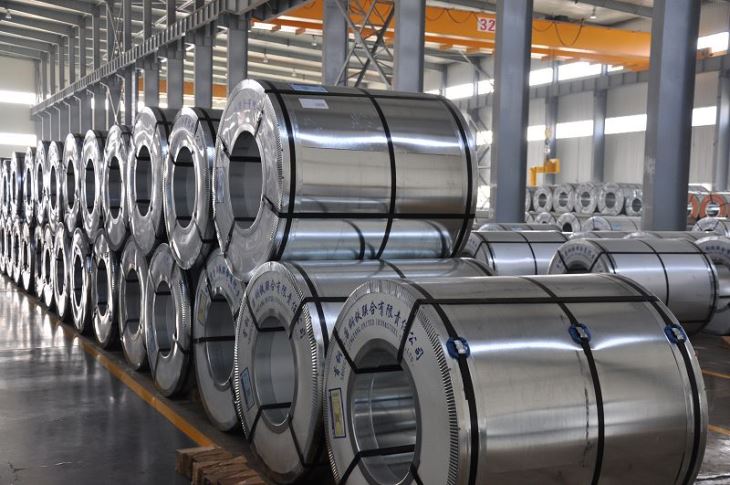
The CRC market was dominated by much cheaper imports and European mills trimmed their CRC output in favor of producing the more value-added HDG, industry sources told Fastmarkets.
“About 90% of CRC supply comes from imports now. Some [European] mills are not even offering CRC,” a buyer in Italy said.
Only one supplier was heard to be active in Italy, offering CRC around €740 ($804) per tonne delivered (around €725-730 per tonne ex-works), with July-August delivery available.
Buyer estimates of tradeable values were heard around €710-720 per tonne ex-works.
“European suppliers are only competitive if the buyer needs prompt shipment, special gauges, grades etc,” a second buyer in Italy told Fastmarkets. “Some suppliers [in Southern Europe] are quite well booked for CRC, offering quick delivery, but in general imports dominate the market.”
“CRC production is expensive in Europe; annealing is very energy-intensive so mills can’t go below costs,” a third buyer said.
Fastmarkets’ price assessment for steel CRC domestic, ex-works Southern Europe was €720-725 per tonne on Wednesday, up marginally by €5 per tonne from €715-720 per tonne on May 22.
Import CRC offers were reported at much lower levels.
Offers from India for August-shipment CRC to Southern Europe were heard at €695 per tonne CFR.
Offers from Japan and South Korea were heard at €660-675 per tonne CFR to Southern Europe for July-August-shipment CRC.
A transaction for CRC from South Korea was reported at €660 per tonne CFR during the assessment week.
“[Prices for imported CRC] are much lower; there is no chance for European mills to match those. For HDG, it is a bit less tense because overseas mills cannot supply the full range [of HDG] required by buyers in Europe,” a buyer in Italy told Fastmarkets.
HDG
Fastmarkets’ price assessment for steel hot-dipped galvanized coil domestic, ex-works Southern Europe was €740-750 per tonne on Wednesday, unchanged over the past week.
Offers from suppliers in Southern Europe were reported at €750-770 per tonne delivered (€740-760 per tonne ex-works) during the week, while buyers’ estimations of achievable prices were heard at €730-740 per tonne ex-works.
In the HDG market, trading was also slow, mainly due to limited demand from end-use sectors.
In such conditions, buyers avoided stockpiling and were mainly doing hand-to-mouth bookings.
Cheaper imports options were also available for HDG coil, but the impact of cheaper imports was not as significant as for CRC, Fastmarkets heard.
“Import HDG suppliers cannot supply the full range of grades and dimensions required by European buyers, so HDG is largely being procured in Europe,” a buyer in Southern Europe said.
Offers from Vietnamese suppliers of 0.5mm HDG with Z100-120 coating for August shipment were reported around $830 per tonne CFR to Southern Europe during the assessment week.
Published by: Julia Bolotova
Polish seamless pipemaker faces liquidation
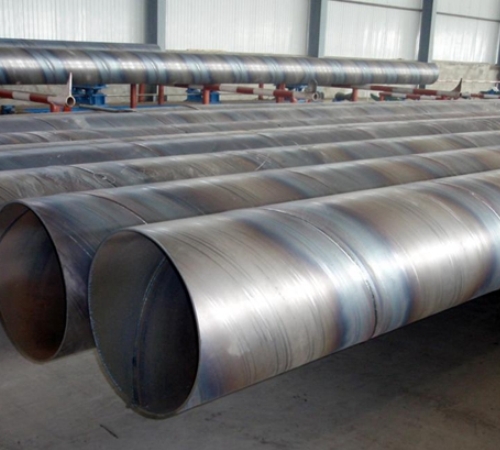
Poland’s Alchemia plans to liquidate its seamless pipemaking unit Walcownia Rur Andrzej (WRA). The decision was made because of WRA’s inability to compete on the market due to outdated production technology and the high cost of keeping the business running, informs Alchemia’s parent company, Boryszew.
Increased expenditure for maintenance and modernising production technology is “unjustified in technological and economic terms”, Boryszew says in a note seen by Kallanish. Liquidation of the unit will bring higher economic benefits than maintaining production, it adds.
Zawadzkie-based WRA’s revenue in 2023 was PLN 183 million ($46.5m), down 35% on-year. The firm has a 70,000 tonnes/year capacity of seamless pipe.
Its 435 workers all face being laid off. The Silesia-Opole division of the Solidarnosc trade union plans a picket line at WRA in protest of the liquidation on 4 June.
Unions have criticised management’s decision to inform them of the liquidation only 15 minutes prior to communicating the news to workers. The pipe mill is being liquidated not only because of punitive climate policy, but also because the owner failed to invest sufficiently in the production lines, unions point out.
Adam Smith Poland

Germany passes bill to accelerate H2 permitting, deployment
The German government passed on Wednesday the Hydrogen Acceleration Act to create the legal framework for the rapid development and expansion of hydrogen infrastructure.
The bill aims to speed up, simplify and digitise planning, approval and procurement procedures. That means the federal cabinet is working to “remove obstacles” to projects that produce, store or import hydrogen, explains economy and climate protection minister Robert Habeck.
“An efficient hydrogen infrastructure is of crucial importance for the decarbonisation of industry; hydrogen pipelines will be the lifeblood of industrial centres,” he adds in a note seen by Kallanish. “Time is running out. So that electrolysers or import terminals can go into operation as quickly as possible, we need leaner and, above all, faster planning and approval procedures.”
As part of the draft law, regulatory requirements will be reduced; legal cases challenging projects and environmental impact assessments will be shortened.
For example, permitting for electrolysers is to be simplified, while for smaller devices – up to 5 megawatts – it will be eliminated. Large-scale electrolysers that run primarily on renewable power by the end of 2029 will benefit from “overriding public interest” status, provided there are no concerns about public water supply. Infrastructure projects will also benefit from the approach, which was widely used to expand renewables in the country. This means authorities will prioritise these projects in the approval process.
The law is scheduled to come into force at the end of 2024, helping Germany to make progress on its target of having at least 10 gigawatts of electrolysis capacity in 2030.
As part of the BMWK industry package, the cabinet also passed the Carbon Dioxide Storage Act, which will focus on the use of carbon capture and storage (CCS) and carbon capture and usage (CCU) technologies.
Habeck says the act is an important “building block for the competitiveness of our industrial location”. It will enable both onshore and offshore storage of CO2. The next step is to finalise the details of the carbon management strategy.

Coil prices to recover slightly: Marcegaglia
International coil prices may increase slightly towards the end of the second quarter or beginning of Q3, Marcegaglia chairman Antonio Marcegaglia told Kallanish on the sidelines of the Danieli “Innovaction” event in Udine on Wednesday.
“Final demand for coils at an international level is rather static. Some consumption rebound is expected but I believe it will be more of a technical restocking thanks to some improved confidence in the relative price stability,” he noted.
“At an international level, the price has slightly improved [versus recent weeks]. The spread [between Asia-origin hot rolled coil import prices and] European levels has been reduced and there is no reason why prices should decrease further. Instead, it is plausible that values might in fact slightly increase,” Marcegaglia added.
The hike would be driven by the quick exhaustion of EU safeguard quotas, long lead times and the uncertainty related to the quota renewal, which is pushing deliveries of Asia-origin material imported into Europe towards September and October.
“It is plausible that this situation may cause some limited material availability on the European market. Despite the rather calm final demand, low stocks and lower imported material availability are the reasons for a possible consumption recovery, accompanied, I think, also by a slight price rebound,” Marcegaglia continued.
“On a smaller scale, we have seen this happening in the stainless steel [coil] segment owing to a situation of low imports, coupled with a strong reduction of European availability caused by the Acerinox and Outokumpu production slowdown,” he added.
Given the low consumption, this shortage was initially underestimated, but it caused prices of stainless coil, as well as its derivatives, to increase significantly. Marcegaglia sees a similar situation happening for carbon steel coil, although the price increases should be more moderate. Coil import prices from the Far East are now mostly stable, with a rebound registered of €20-30/tonne ($21-32) compared to the lowest levels seen in recent weeks, but import offers lack attractiveness.
Cold rolled and hot-dipped galvanised coil are both seeing weak trading. The spread between HRC and CRC/HDG prices should be wider than current levels. Stocks through the value chain are however low.
“The perception of the low stocks is not that clear. The visibility on the final consumption is short, also for service centres, and the general perception is that the order book weakness is compatible with the low stocks,” Marcegaglia observed. However, “we are going towards a favourable season. May was hampered by a series of holidays. Some activity should move in June”. In June and July, the market should see some recovery of apparent demand.
Downstream, the tube and sheet markets are suffering from weak prices and volumes due to uncertainty, but stocks also remain low, particularly for sheet. Demand is generally stable for welded tube depending on the end-user sector. “Overall volumes at the end of each month are not dramatically low but they are built slowly and with great cautiousness,” Marcegaglia noted.
Last year, Marcegaglia posted €7.8 billion ($8.4 billion) in revenue, slightly down from 2022 due to lower pricing, despite increased shipments. The decline was also driven by the consolidation of Outokumpu’s long products acquisition in 2023.
Kallanish assesses Asia-origin HRC transactions at €590-600/t cfr Europe on average, while Turkey is at €10-15/t higher duty paid. European HRC prices are at €630-640/t base delivered or ex-works, depending on the country.
Natalia Capra France