Slow demand plagues Northern European steel longs market; Dutch right-wing coalition plans to stimulate housing market
Fastmarkets’ weekly price assessment for steel reinforcing bar (rebar), domestic, delivered Northern Europe was €630-650 ($684-706) per tonne on Wednesday, stable week on week.
Prices were unchanged in the rebar market, with offer prices reported at around €650 per tonne and trades closer to €630-640 per tonne.
Consumption levels remained weak with minimal restocking reported.
“Due to public holidays in most EU countries this week there is no sign of change, so prices and demand are exactly as they were last week,” one buyer source said.
An improvement in weather conditions and a possible increase in public housing projects initiated in the Netherlands could support an uptrend in demand, Fastmarkets heard.
“Demand is still weak. Hopefully the weather will pick up and it seems like we will have a new government who have agreed to build more houses. A lot of projects have been stopped because of an intense regulatory environment combined with high costs and weak economic conditions, but with the new government they could try to restimulate the economy by initiating more house building as part of their mandate,” a buyer source from the Netherlands said.
New Dutch government
On Wednesday May 15, a deal was reached to form a right-wing coalition in the Netherlands, six months after Dutch nationalist Geert Wilders won a major election victory.
After months of negotiations, the deal will bring together the centre-right VVD, the new NSC party, the farmer’s protest party BBB and Geert Wilders PVV party. No prime minister has yet been elected.
With the most right-wing government in the country for decades, climate change regulation will be deprioritized in favor of more protectionist, nationalistic policies.
The proposed expansion of offshore natural gas extraction and building of four more nuclear power plants by 2040, as well as a €1.2 billion budget reduction of climate funds reflects the deprioritizing of climate-change goals.
Alongside stronger anti-immigration policies, the new coalition plans to stimulate the construction industry with ambitions to build at least 100,000 new homes annually and convert properties such as offices to dwellings to fix the deficit of housing, according to plans published on May 15.
The new government is expected to elect a prime minister by June 2024, Fastmarkets heard.
Fastmarkets’ weekly price assessment for steel wire rod (mesh quality), domestic, delivered Northern Europe was €645-660 per tonne widening downward by €10 per tonne from €655-660 per tonne one week prior.
Meanwhile, scrap costs dropped week on week after increasing through early May. Some sources predicted further scrap price rises in June.
Fastmarkets’ calculation of its daily index for steel scrap HMS 1&2 (80:20 mix) North Europe origin, cfr Turkey was $373.56 per tonne on Wednesday, down from $380.93 per tonne week on week.
Published by: India-Inés Levy


HRC prices flat in Europe; no rebound in sight amid insufficient demand
Quiet trading conditions prevailed in the European HRC market on Wednesday. Despite the common realization among buyers and sellers that the price has reached a bottom, bullish momentum has failed to reignite.
“Prices [for HRC] have been stable for the last three to four weeks, mills’ attempts to get higher values have failed because demand is not there and the market is oversupplied,” a buyer in Germany said.
“Mills, however, do not want to drop prices ahead of long-term contract negotiations with automotive [customers] for the second half of 2024,” he added.
Buyers’ estimates of tradable values for HRC in Northern Europe ranged between €630 ($684) per tonne and €650 per tonne ex-works, with deals reported at €630-640 per tonne ex-works in the week started May 20.
This was in contrast with offers heard at €640-670 per tonne ex-works for HRC with delivery in June-July.
Sources expected the next round of restocking to be in mid-June but suggested that booked volumes will likely remain limited.
As a result, Fastmarkets calculated its daily steel hot-rolled coil index domestic, exw Northern Europe at €637.00 ($691.64) per tonne on Wednesday, marginally down by €1.75 per tonne from €638.75 per tonne on the previous day.
The index was down by €3.63 per tonne week on week but up by €11.58 per tonne month on month.
Fastmarkets’ corresponding daily steel hot-rolled coil index domestic, exw Italy was calculated at €632.50 per tonne on Wednesday, down by €1.25 per tonne from €633.75 per tonne on the day before.
The index was down by €4.88 per tonne week on week but up by €13.33 per tonne month on month.
Prices for HRC in the Italian market were also fairly stable on Wednesday.
Transactions were reported at €630-640 per tonne ex-works for Italy-origin HRC with July delivery.
Offers for such material were made earlier this month at €670 per tonne delivered (€660 per tonne ex-works), but this level was deemed “unworkable” by buyers.
“Trend reversal has failed; yes, [HRC] prices have stopped falling and tended to stabilize in the past few weeks, but no major rebound has happened,” a buyer in Italy said.
Distributors and steel-service centers struggled to increase prices downstream amid poor end-user demand.
“There was an attempt to increase prices for HR sheets to €740-750 per tonne delivered, but bookings are still done at no higher than €720-730 per tonne delivered,” a steel service center source in Italy said.
Import offers were largely flat day on day.
Notably, July-shipment HRC from Vietnam was available at €580-590 per tonne CFR. But it was not widely confirmed by all sources that lower end was actually available.
HRC from India was on offer in Europe at €590-600 per tonne CFR, depending on a supplier.
And offers from Taiwan, Japan and South Korea were heard at €600-620 per tonne CFR for July-August shipment.
Buyers’ price ideas for imported coil was around €550-560 per tonne CFR – a price which is currently outside the acceptable range for overseas suppliers.
Published by: Julia Bolotova
USS, Cliffs publicly clash on Nippon deal feasibility
After the US Steel (USS) board of directors issued a letter claiming Cleveland-Cliffs is spreading inaccuracies regarding the legitimacy of its sale to Japan’s Nippon Steel, Cleveland-Cliffs has fired back with a press release calling the proposed transaction “an un-closeable deal,” Kallanish reports.
“Unfortunately, we have found ourselves in the midst of a long-running misinformation campaign targeting our company, our investors, our employees and our business partners. For that reason, we must correct the record,” the US Steel board states in an update to investors, employees, stakeholders and interested parties on 21 May.
USS accuses its Ohio-based rival of “sowing misinformation to our stakeholders in a relentless and unbridled effort to derail the transaction. While Cleveland-Cliffs is pushing false rumours to influence the market into believing we are working to unwind the transaction, nothing could be further from the truth,” the letter adds.
USS claims that it vetted Cleveland-Cliffs as a legitimate prospective buyer before finally deciding, “in the end, the Nippon Steel Company’s transaction was superior and offered the most value. The board found that the significant antitrust approval risk and associated valuation implications from a deal with Cleveland-Cliffs, among other risks, made their cash and stock proposal inferior to the higher, all-cash offer presented by NSC.”
In response, Cliffs sent out a statement under the title “Cleveland-Cliffs Reminds US Steel: You Have No Path to Close.”
“It is unfortunate that the US Steel board of directors is just now realising that it announced an un-closeable deal and is trying to blame Cliffs for its terrible decision-making. There has been nothing we have publicised or said publicly that could be described as ‘misinformation’,” says the Cliffs statement.
Lourenco Goncalves, Cleveland-Cliffs’ chief executive officer, contends that US Steel’s labour agreements with the United Steelworkers, who favored Cliffs as a would-be acquirer, are too high of a hurdle for Nippon to clear.
“With a USW-represented facility, you are not entitled to sell to whomever you please. We knew this, and you apparently did not,” his statement says. “We tried to explain to you, but you did not listen to us. The board of directors of US Steel failed its stockholders in this ‘strategic review process’ and is attempting to blame Cliffs for its own self-inflicted disaster.”
In August 2023, US Steel rejected a takeover offer from Cleveland-Cliffs (see Kallanish 14 August). In late 2023, USS accepted a bid from Nippon Steel, setting the stage for the combined entity to become the second-largest steel producer in the world (see Kallanish 18 December).
Market participants have expressed fears that a USS acquisition by Cleveland-Cliffs could weaken competition in the market, potentially leading to higher flat-steel prices (see Kallanish passim). US President Joe Biden announced that he too believes “US Steel must remain domestically owned” (see Kallanish passim).
Kristen DiLandro USA

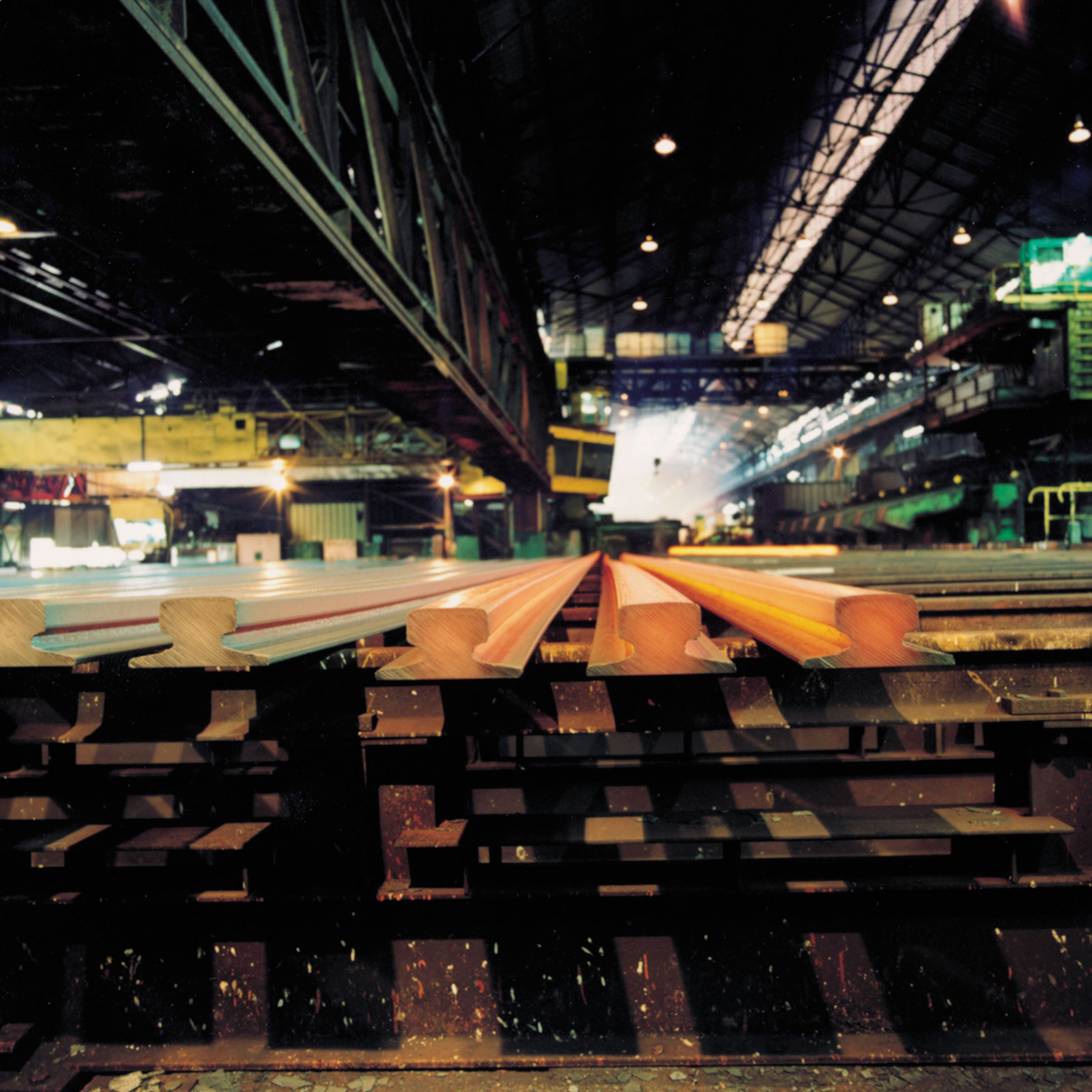
Innofreight builds ore unloading device at Třinecké Železárny
Třinecké Železárny has started operating a stationary unloading machine for railway wagons, built by railway logistics services company Innofreight.
The machine facilitates safe unloading of various types of fine ore and iron ore concentrates. Its capacity is up to 5 million tonnes/year of iron ore, with approximately 840t being unloaded in one hour, Kallanish hears from Innofreight. The wagons are shifted by a cable-shunting device called “Turtle”. The machine is controlled from an air-conditioned cabin, so that the operator is protected from noise, the Austrian supplier notes.
In addition to building the unloading machine, Innofreight has delivered wagons and special “MonTainer” containers, which it says enable more efficient utilisation of the freight trains to Třinec.
Earlier this year, Innofreight presented a new transporting system for wire coils named WireStanchions, commissioned by Austrian steelmaker voestalpine. Compared to transporting bundles in one layer with accordingly long trains, fewer wagons are now required as each wagon can carry up to 40-50% more payload, Innofreight claims. An InnoWaggon equipped with the WireStanchions can transport up to 38 wire coil bundles with a payload of 141t.
The system has been in use for voestalpine‘s inter-plant transportation since late last year, in a project with a transport capacity of around 2,000 truck transports per year. These are now transported by rail from the wire rod mill in St. Peter-Freienstein, Austria, to the wire drawing plant in Finsterwalde, Germany, some 770km away. This shift from road to rail saves around 1,500t of CO2 emissions, according to Innofreight.
Christian Koehl Germany
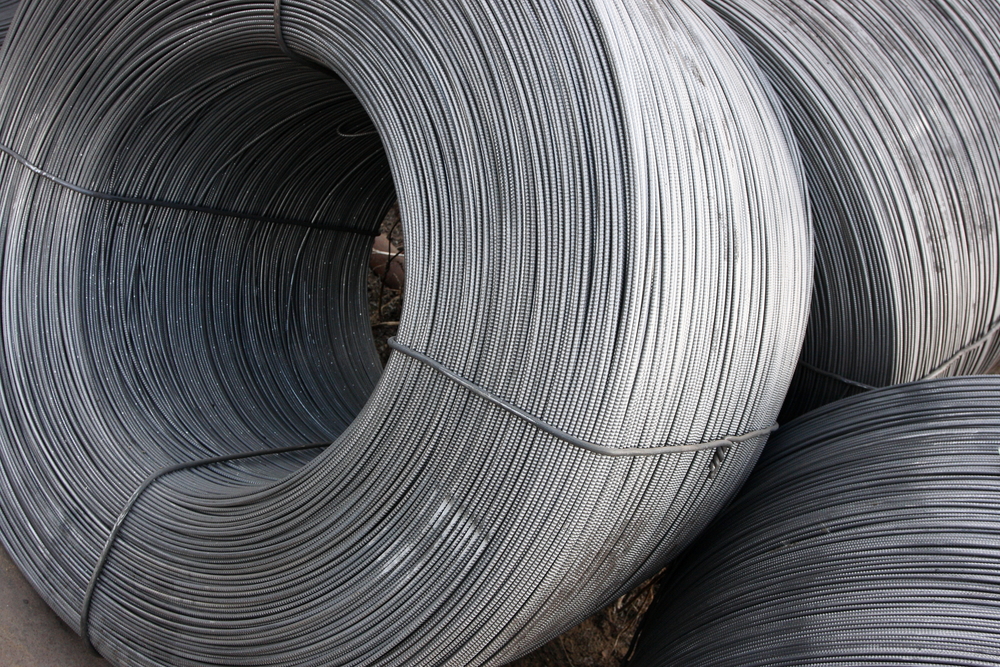
Bekaert acquires Bexco
Belgian wire solution specialist Bekaert has acquired 100% shares of Hamme-headquartered Bexco for €40 million ($43m). Bexco is active in the lifting and mooring market for offshore energy and marine applications, Kallanish notes.
The merger responds to the company’s strategy to strengthen its presence in the sector as it is expected to create a global offshore rope solutions provider generating significant synergies as well as profit.
“The move towards deeper waters requires rope solutions to permanently moor turbines to the seabed. Bekaert already has significant experience in this field via its Bridon-Bekaert Ropes Group business unit and now further strengthens its offering through the acquisition of Bexco,” Bekaert notes.
Bexco posted revenue of €40m last year.
Natalia Capra France
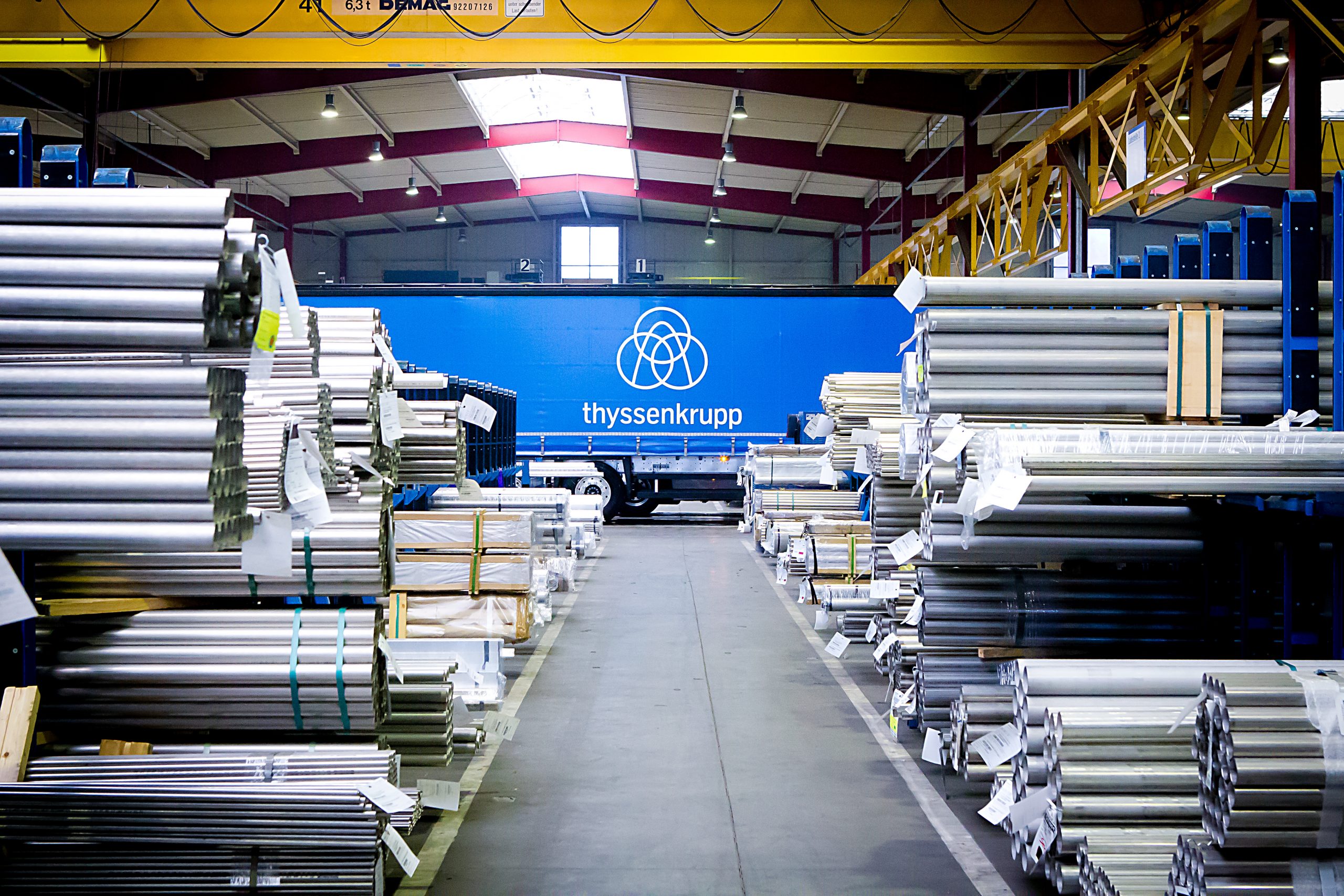
ThyssenKrupp Schulte to close seven sites
ThyssenKrupp Schulte will close seven sites as part of its restructuring drive, market sources told Argus today.
The company will close stockholding warehouses in Braunschweig, Rheine, Munich, Nuremberg, Freiberg, Mannheim and Frankfurt, according to multiple market sources.
Last month the company said it would be closing sites and cutting around 450 jobs, but did not reveal which sites would be affected.
“Fundamental structural adjustments are necessary to better respond to market changes in the future”, the company said when it announced the restructuring, citing declining materials demand and increasing demand for materials-related services. All the impacted locations are stockholding sites and do not provide additional processing.
ThyssenKrupp Schulte is part of ThyssenKrupp Materials Services and distributes stainless, carbon and non-ferrous metals from around 40 locations.
A ThyssenKrupp Materials Services spokesperson said it could not comment on the affected locations, as “discussions with the respective co-determination bodies have only just begun and the details of the transformation are the subject of these discussions”.
“At ThyssenKrupp Schulte we are aiming to transform the business model in order to increase the company’s profitability and enable Schulte to respond even better to changing customer needs,” the spokesperson added.


Carbon capture trial begins at ArcelorMittal Belgium
ArcelorMittal Gent has started operating a pilot carbon capture unit on its blast furnace off-gas in conjunction with Mitsubishi Heavy Industries (MHI), BHP, and Mitsubishi Development, Kallanish notes.
The pilot unit will operate at the Belgian steelworks for 1-2 years, to test the feasibility of progress to full-scale deployment of the technology to capture a sizeable portion of the Gent site emissions. Engineers have been working on site since January to assemble and commission the unit.
In October 2022, the four parties announced their collaboration on a multi-year trial of MHI’s carbon capture technology (Advanced KM CDR Process) at multiple carbon dioxide emission points, starting at the Gent steelmaking site.
The pilot carbon capture unit will initially be tested with blast furnace off-gases, and off-gases from the hot strip mill reheating furnace. It has the potential to be trialled to capture other important steelmaking gases such as reformer flue gas from a direct reduced iron plant, ArcelorMittal notes.
The development of the carbon capture solution at Gent could feed into multiple CO2 transport and storage projects under development in the North Sea region and contribute to global technological solutions required for decarbonisation of steel production, the firm adds.
Speaking at this week’s Gent consortium meeting, BHP group sales & marketing officer Michiel Hovers said: “This represents real progress in proving up the feasibility of carbon capture for steel production.” Mitsubishi Development chief executive Kenichiro Tauchi added: “This pilot is a significant step towards advancement of carbon capture technology as a potential solution to achieve solid emission reductions in the steel sector.”
This development is separate from ArcelorMittal Gent’s Steelanol facility, an industrial-scale demonstration plant that will capture waste gases from the blast furnace and biologically convert them into recycled carbonethanol. This project, in partnership with LanzaTech, Primetals Technologies and ERM, produced its first industrial ethanol last November.
Christian Koehl Germany

Italian plate market stagnates, prices low
The Italian heavy plate market remains quiet this month, with orders weak and mostly back-to-back, sources tell Kallanish.
Prices have declined by some €30/tonne ($32) compared to April on the back of low consumption. Both large and smaller buyers are not in a purchasing mood and are preferring to book low tonnages, to avoid any commitment. The distribution sector is also selling low volumes, but frequently, as clients are demanding quick delivery.
Asian-origin quotes have long lead times but competitive prices, at €600-620/t cfr Italy. The first four months of the year were “sufficient” in terms of sales. However, the main point of concern remains the lack of margins, mill sources report. With the current cost of production and sourcing slab, prices for S275 should be at about €60/t higher, they agree.
Italian plate re-rollers are quoting June lead times. Domestic S275 grade transactions are at between €700-710/t ex-works on average, while S355 is being transacted at €30/t more, sources suggest.
Imported slab prices from Asia are at about $580-600/t cfr Italy.
Natalia Capra France

HRC prices remain flat across Europe; mills reluctant to provide discounts
Fastmarkets calculated its daily steel hot-rolled coil index domestic, exw Northern Europe at €638.75 ($694.16) per tonne on Tuesday, marginally up by €0.42 per tonne from €638.33 per tonne on the previous day.
The index was down by €2.13 per tonne week on week but up by €13.25 per tonne month on month.
Traded volumes remained low, with buyers opting for hand-to-mouth bookings, Fastmarkets understands.
“We have seen more inquiries from distributors and steel service centers [for HRC] in May, but volumes are limited – nobody’s booking a single tonne more than required,” a mill source said.
And a second mill source said: “Real demand is limited, with no signs of recovery in the short- to medium term, so nobody is building stocks.”
Estimates of tradable prices for June-July delivery HRC came in at €630-650 per tonne ex-works.
“Mills are still struggling for orders but, for the past three weeks, they’ve stopped granting discounts and have tried to [increase] or at least stabilize prices [for HRC],” a buyer source said.
And other market participants said that prompt-delivery prices were higher, around €670-680 per tonne ex-works.
Italy-origin HRC was heard offered to Germany at €670 per tonne delivered on Tuesday.
And transactions for Italian HRC were reported at €650-670 per tonne delivered, but only for limited volumes.
Fastmarkets’ corresponding daily steel hot-rolled coil index domestic, exw Italy was calculated at €633.75 per tonne on Tuesday, up by €0.42 per tonne from €633.33 per tonne on the day before.
The index was down by €2.51 per tonne week on week but up by €13.75 per tonne month on month.
Trading in Italy’s HRC market was also limited, sources told Fastmarkets.
One local mill kept its offer price at €670 per tonne delivered (€660 per tonne ex-works) for June-July delivery coil.
And buyers put the tradable prices at as high as €640-650 per tonne delivered (€630-640 per tonne ex-works).
But some sources said that it was hard to increase downstream prices amid persistently slow end-user demand.
In the secondary market, 3-6 mm HR sheet was traded at no higher than €700-730 per tonne CPT, with most trades around €720-730 per tonne CPT, Fastmarkets understands.
And while some overseas suppliers have started granting some discounts, interest in imports showed no signs of improvement due to the looming import safeguard risks in the EU, sources told Fastmarkets.
Notably, July-shipment HRC from Vietnam was available at €580-590 per tonne CFR, while HRC from India was on offer in Europe at €590 per tonne CFR.
And offers from Taiwan, Japan and South Korea were heard at €600-615 per tonne CFR for July-August shipment.
July-shipment HRC from Turkey, meanwhile, was on offer at €610-620 per tonne CFR, including the anti-dumping duty, sources said.
But bids were no higher than €550-560 per tonne CFR – a price well outside the acceptable range for overseas suppliers.
Published by: Julia Bolotova

EU’s green steel transition raises supply issues
The EU’s transition to green steel raises concerns about supply-side constraints given delays to capacity expansions and current offers not meeting customer requirements, German steel distributor Kloeckner’s CEO Guido Kerkhoff said at the EUROMETAL conference in Zurich today.
This could be offset by growing opportunities on the demand side as the EU’s 2050 net zero targets are boosting demand for green steel, which currently exceeds the supply.
A green transition cannot happen immediately but must be implemented gradually, a market participant said. Customer willingness to pay for low-emission products is increasing, particularly for cars and home appliances. “We can’t say this is green and this is not, but we can say this is a greener option for the time being,” executive manager of Handel Schweiz, Andreas Steffes, said.

The shift to electric arc furnaces (EAFs) is very costly and not feasible for every producer, mainly because the scrap supply is limited, Steffes said. Additionally, Germany heavily depends on importing raw materials and cheaper energy owing to a lack of natural sources. This creates a significant challenge for using direct-reduced iron (DRI) in Germany, as there are not enough renewable sources to produce hydrogen, and importing hydrogen is very expensive, partly because of high transportation costs.
So far, there is no uniform standard for green steel, although work is being done in this regard.

To transform the steel industry, several tailwinds should be considered, including establishing a solid political framework, competitively priced green energy, sufficient technological solutions, fair allocations of subsidies, and demand from customers and green markets, senior manager at Swiss Steel, Stefan Feichtinger, said.
By Elif Eyuboglu