


Swedish output improves slightly in spring
Crude steel output at Swedish mills in the first quarter was below the corresponding 2023 period, but March and April showed some increase year-on-year.
During the first three months of the year, a total of 1,108,000 tonnes of crude steel were produced in Sweden. This is a 4.4% decrease in output compared to the same period last year, Kallanish learns from Swedish steel association Jernkontoret.
March saw output of 407,000t, up 3.5% on March 2023. This slight upward trend continued in April, which also saw output of 407,000t, up 1% on April 2023.
“It is of course gratifying that production increased in March and April, but it is not possible to draw any more far-reaching conclusions based on a single monthly figure,” says Mathias Ternell, Jernkontoret trade policy director.
The production statistics are compiled by Jernkontoret and are based on data from 11 crude steel manufacturing plants in Sweden. The association does not give details on finished products, and its figures do not draw a distinction between the blast furnace and the electric arc furnace routes.
Christian Koehl Germany


Steel Service Centers concerned about the impact of CBAM
Last Thursday, EUROMETAL’s “SSC Arbeitskreis” (Steel Service Center Working Group) brought together industry leaders from Germany, Austria, Netherlands, and Belgium. The somber mood reflected concerns over the impact of the Carbon Border Adjustment Mechanism (CBAM) on the future of European steel processing.
Over two dozen steel executives grappled with the current economic climate – both German and global – alongside pressing issues like decarbonization, energy efficiency, workforce security, and distribution challenges. However, decarbonization, particularly CBAM, dominated the discussions.
Customers Seek Workarounds, Threatening Service Centers
Suppliers from Asia are looking for workaround solutions and are threatening European metalforming industry and service centres and ultimately also the European steel mills.
Participants at the conference reported on the fears of the forming and steel processing industry (laser and welded components) regarding the future of European steel supply chains.
Scared by the impact of CBAM, some large customers (1st tiers) are looking for external alternatives outside European borders and opting to import ready-to-use steel products, in order to circumvent the regulation.
This trend deeply worries Service Centers, especially considering the current period of moderate activity. Already facing significant investments in decarbonization and cost optimization, CBAM throws another wrench into an already challenging situation.
The Need for Collaboration
Despite the gloomy outlook, the working group highlighted the importance of ongoing dialogue and collaboration within the industry. The active participation throughout the event underscored the need for such forums to navigate the current complexities and develop solutions.
The future of European steel processing hinges on the industry’s ability to adapt to the demands of CBAM while remaining competitive. Collaboration and innovation will likely be key to weathering this storm.
Looking Ahead
The positive spirit of collaboration continued beyond the discussions. The intention to repeat the event in spring 2025 has already been announced, with the German city of Bönen as the probable location. This commitment to ongoing dialogue bodes well for the industry’s ability to navigate the challenges ahead.


EU tubemakers welcome China seamless pipe investigation
The European Steel Tube Association (ESTA) has welcomed the anti-dumping investigation into imports from China of certain circular seamless pipes. This is a very important dossier for the European industry, a source from the association tells Kallanish.
“Low-priced Chinese imports into Europe have flooded the market for two years, creating significant harm for European producers who have seen the closure of several plants in recent years, notably in Germany with Eschweiler, Max Huette, Vallourec Mülheim and Vallourec Rath,” the representative comments. Lengthy European bureaucracy remains a key issue, he adds. The investigation should last a few months instead of two years.
The market share of Chinese imports for seamless tubes in Europe increased from 3.8% in 2021 to 7% in 2022, reaching 12.6% in 2023, “knowing that there are already anti-dumping measures on imports of stainless steel seamless tubes as well as seamless tubes in diameters greater than 406.4mm from China,” he notes.
“In terms of timing, the investigation will take a maximum of 14 months. It should publish definitive measures by July 2025 but provisional measures may be applied after seven months [from the start of the investigation] in December 2024. If the commission decides to apply import registration, which was requested by ESTA in the complaint file, then retroactive measures can be applied four months after the complaint was filed in September 2024. The news of the start the investigation should already deter some imports,” the source concludes.
The European Commission initiated last week an anti-dumping investigation into imports from China of certain circular seamless pipe of an external diameter below 406.4mm and carbon equivalent value (CEV) below 0.86. The probe follows a complaint lodged in April by ESTA. The products under investigation fall under EU TARIC codes 7304191020, 7304193020, 7304230020, 7304291020, 7304293020, 7304312030, 7304318030, 7304395030, 7304398230, 7304398320, 7304518930, 7304598230 and 7304598320.
Last year, the Commission confirmed the extension of existing anti-dumping measures on imports of certain seamless pipe of an external diameter exceeding 406.4mm originating from China (see Kallanish passim).
Natalia Capra France

Thyssenkrupp approves sale of tk Steel stake
The thyssenkrupp AG supervisory board has approved the participation of energy company EP Corporate Group (EPCG) in thyssenkrupp’s steel business.
EPCG is to acquire 20% of thyssenkrupp Steel Europe. The executive board of thyssenkrupp AG reached an agreement in principle with EPCG at the end of April (see Kallanish 26 April).
Notably, the vote was decided by the supervisory board chairman’s second vote, which went against the votes of employee representatives. Union IG Metall was quick with issuing a statement of its own on the decision. The result based on the double vote of the chairman “has buried the last hopes for a fair and democratic co-existence [of employers and employees],” says thyssenkrupp Steel shop chairman Tekin Nasikkol.
The union emphasises it does not oppose the participation of EPCG in principle. However, it criticises the quick speed of the process as “blind activism”, during which it was not kept properly informed, IG Metal claims.
Meanwhile, thyssenkrupp AG underlines that the entry of EPCG combines the materials capabilities of thyssenkrupp Steel Europe with the energy expertise of EPCG. The group notes that the strategic partnership is a significant contribution to safeguarding the future of the steel industry in Germany.
Christian Koehl Germany
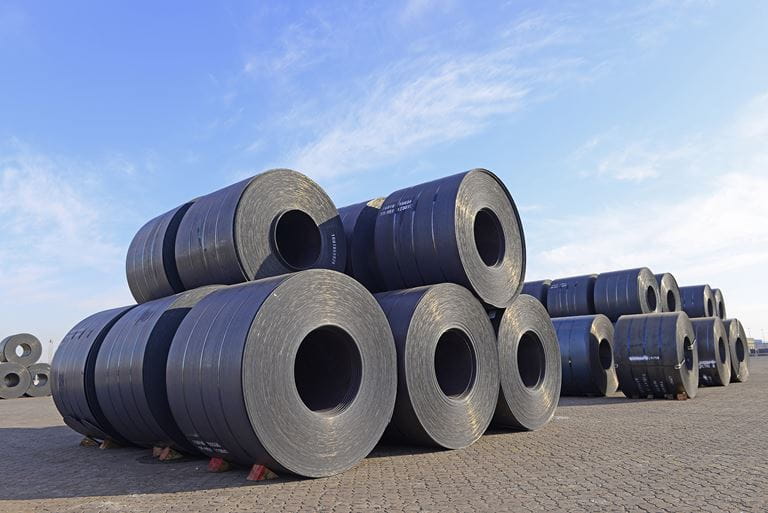
European HRC prices hold stable amid muted market activity
Domestic prices for hot-rolled coil in Europe have remained unchanged on May 24, while trading activity in the market remained slow.
End-user demand remained unchanged and was described as “normal” in majority of the EU countries, except for Germany, according to market participants.
“End-user demand is ok in Europe, except for Germany,” a service center said. “Germany is the most important industrial market in Europe, and it is like an engine with some problem that needs to be fixed before it gets worse.”
Apparent demand, in the meantime, remained low as the spot buyers have been avoiding restocking of bigger lots due to uncertain outlook for the second half of the year.
“The market is quite depressing, and nobody wants to commit to purchases of bigger volumes,” a distributor said.
Market participants believe that the steelmakers would take longer pauses in production for maintenances during the summer season to reduce output and help price recovery in the third quarter.
Platts assessed domestic prices for hot-rolled coil in Northwest Europe stable on the day at Eur635/mt ex-works Ruhr on May 24.
Deals have been reported at Eur630-640/mt ex-works Ruhr.
Tradable values have been heard at Eur620-640/mt ex-works Ruhr and offers at Eur630-640/mt ex-works Ruhr.
Platts assessed domestic prices for hot-rolled coil in South Europe at Eur625/mt ex-works Italy on May 24, stable on the day.
Tradable values have been reported at Eur620-630/mt ex-works Italy and offers at the equivalent of Eur610-630/mt ex-works Italy.
Interest in imported HRC from Asia was limited due to longer lead times, uncompetitive prices and risks related to possible changes in the safeguard measures after a review that is scheduled to end by June 30.
Offers of HRC from Asia have been reported at Eur580-610/mt CIF Italy and from Turkey at Eur610-630/mt CIF Italy, including antidumping duties.

Spanish automobile production, exports grow in April
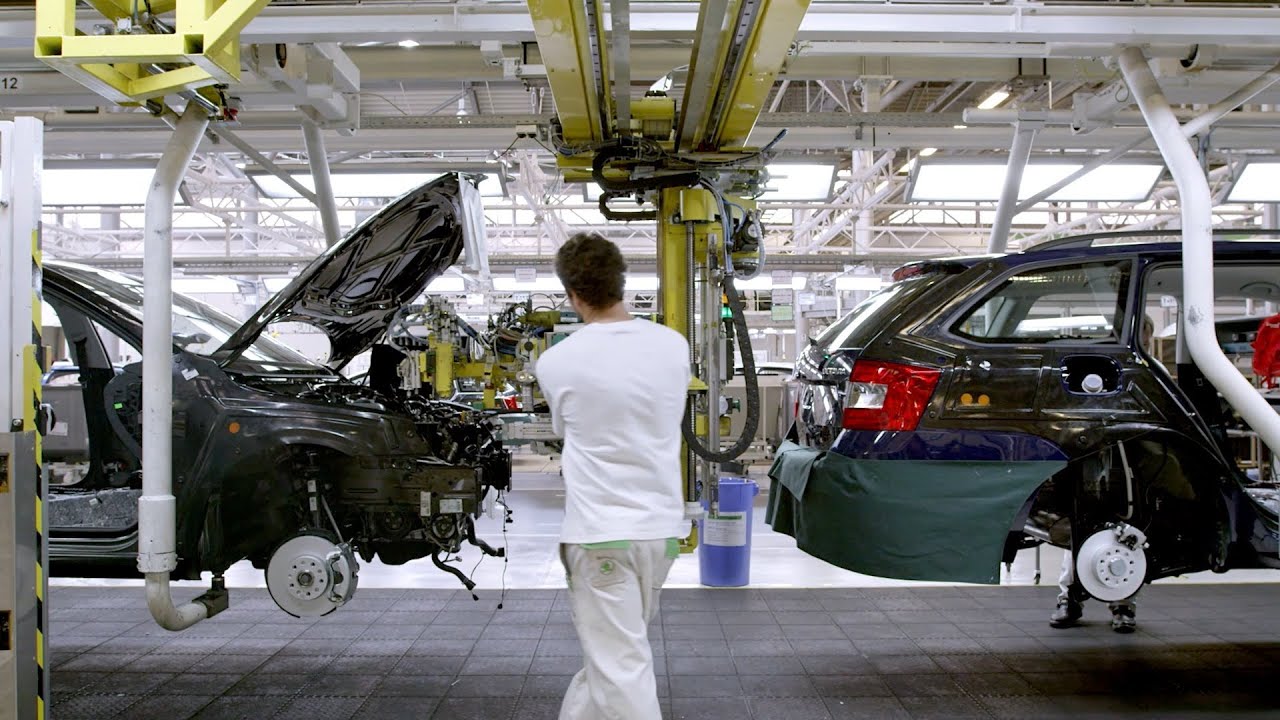
Spain’s car industry saw its performance recover in April after a poor March, which was impacted by material supply problems and the Easter holiday, Kallanish notes.
According to national automotive association Asociación Nacional de Fabricantes de Automóviles y Camiones (Anfac), output in April was 208,906 units, compared to 195,252 vehicles in March and 20.3% more versus the same month in 2023. Four-month production amounted to 863,731 units, a growth of 3.8% compared to January-April last year.
Meanwhile, Spanish vehicle exports rose, supported by increasing demand in markets outside Europe and stable supplies to the EU. Shipments were at 181,996 units, up 4.5% on-month and 12.9% higher than in April 2023.
European markets had a 92.4% share in Spanish deliveries in April, 0.3 percentage points less on-month, but up 3.4pp on-year. Four-month exports improved 1.4% over the same period in 2023 to 761,984 vehicles, Anfac data show.
Todor Kirkov Bulgaria

French construction outlook deteriorates
Sentiment among French construction companies deteriorated in April following a negative March. The firms surveyed by l’Institut National de la Statistique et des Études Économiques (Insee) reported a stable but negative business climate.
Construction companies active in both structural works and finishings had a pessimistic attitude towards their future but also their past activity, as “the business climate in building construction has darkened”, an Insee report obtained by Kallanish states.
Last month, construction companies’ order books deteriorated again, falling back below the long-term average. Given their staff size, the firms surveyed reported eight months of work. Production capacity was stable on-month, while 44% of firms reported slowing output because of supply difficulties.
Slightly more business managers than in the previous month were facing obstacles which limited their production capacity. About 19% of construction firms considered themselves unable to increase their production in case of additional orders due to a lack of personnel and supply difficulties. About 33% of companies reported “insufficient” demand, Insee concludes.
The situation for steel consumption downstream is “completely catastrophic [in France], as it is in Germany. We see a challenging year ahead. The main concern today revolves around tight margins. In 2024, we will not manage to make a profit,” a French purchasing group source tells Kallanish.
Some long steel mills are asking on average for €20/tonne ($21) on-month increases but have so far not been successful in obtaining higher prices, except for very low tonnages. Contract values for long products remain mostly stable compared to April.
Volumes shipped from distributors in March were reported to be low compared to the same period last year, while April volumes slightly improved. May is considered “quiet” amid back-to-back sales. The distribution sector is said to have purchased between 20-25% less in the first quarter compared to last year and a similar trend is likely in Q2 (see Kallanish 17 May).
Natalia Capra France
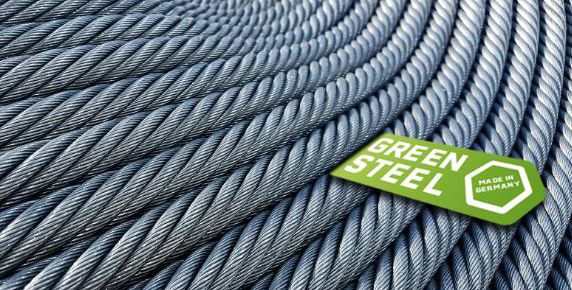
Germany outlines ‘leading markets’ concept for green steels
Germany’s economy ministry has issued a concept paper titled “Leading markets for climate-friendly materials”, seen by Kallanish.
“Green leading markets” ought to support demand for green steel and encourage investment in new industrial technologies, the ministry writes. “Our vision is a wind power plant made of green steel and mounted on a foundation of green cement. And an electric car which does not only roll without emitting CO2, but is made of green steel, too,” says economy minister Robert Habeck. The idea of green leading markets puts the focus on steel-using markets, “because even the best product is useless without buyers”, Habeck adds.
An initial step is to define at which point materials can be considered “green”, the minister notes. He welcomes the introduction of the Low-Emission Steel Standard – LESS – which was introduced by steel federation WV Stahl at the Hannover Messe last month.
In a reaction statement, WV Stahl approves of the ministry’s concept as a move to support industry’s transition using economic instruments. “WV Stahl especially encourages efforts to align public investment on the procurement of carbon-reduced products and technologies,” says its director, Martin Theuringer.
Germany’s steel recycling federation, BDSV, also found positive words for the ministry’s move. It has especially welcomed the explicit mention of secondary materials, which would be supported with a label that testifies to the share of scrap used in steel production.
Christian Koehl Germany

Italian coil price increases lose momentum
Italian coil prices are flat compared to the beginning of May. The increases attempted by European steelmakers on hot rolled coil are yet to translate into higher deal prices. The market is stagnating again, with demand low and appetite for material non-existent, Kallanish hears.
Activity has become particularly quiet after a rather significant increase in demand and consumption in April. Last month, several sources were under the impression that consumption had finally rebounded throughout the value chain, but this turned out to be just a technical rebound after the weak purchasing of the first quarter.
Service centres’ clients are once again in a wait-and-see mood, with slow activity downstream persisting. Given the weak order intake, service centres are refusing to purchase HRC in Europe. Another phase of destocking throughout the value chain seems to have started. According to multiple executives, if the low consumption continues into June, EU steelmakers will have to reduce output.
Producers of HRC, hot-dipped galvanised and cold rolled coil intend to hold firm with their high asking prices despite the slow activity. According to two production sources, lowering values today will not spur sales. May sales have been mostly back-to-back.
Service centres are also shunning the import market. Asia-origin material is quoted at €600-620/tonne ($649-671) cfr Italy for end-August boarding but some buyers believe the level of €580/t cfr can be achieved. Turkish material is quoted at €605-610/t cfr duty paid but product quality remains an issue, in the eyes of European buyers. The latest few import contracts were concluded at €590-600/t cfr for Asian material.
Downstream, sheet prices continue to be extremely low, meaning persistently squeezed margins. Since the beginning of the year, several service centres say they have not made any profit and sometimes sold at below cost due to the current low prices. “The entire value chain would need at least €40/t more to turn a profit, both upstream and downstream,” a service centres comments.
Several sources agree that, at present, activity is so subdued that there is no accurate price indication, as sales are so few and far between. They indicate an average level for domestic HRC at €620/t base ex-works.
Natalia Capra France

Southern European rebar market accepts early-May price rises; wire rod prices edge down
Wire rod prices, meanwhile, edged down amid subdued demand.
Fastmarkets’ weekly price assessment for steel reinforcing bar (rebar) domestic, exw Italy was unchanged at €640-650 ($693-704) per tonne on Wednesday after rising in the week to May 15.
A recognition of higher input costs was the main reason for customers accepting the higher prices targeted by mills earlier in the month, Fastmarkets understands.
But while prices remained steady, some market participants said they expect to see further price rises.
“[Last] week’s price increases have been consolidated, but with their order books in good shape, all producers now have low stocks of scrap and billet so I can see further production stoppages before the end of the month, which means that, in the next few days, domestic producers will increase [their offer] prices once again for June deliveries,” a producer source said.
And despite the consolidation of higher prices, demand remained subdued.
“Demand is not so good as there has been bad weather in northern Italy which is slowing the market,” a buyer source said.
Fastmarkets’ price assessment for steel reinforcing bar (rebar), domestic, delivered, Spain was also steady at €625-645 per tonne on Wednesday after edging higher in the week to May 15.
Rebar export prices, meanwhile, edged higher in Southern Europe, with offers heard at €590-600 per tonne in the week to Wednesday.
Southern European wire rod
Fastmarkets’ price assessment for steel wire rod (mesh quality), domestic, delivered Southern Europe, was €625-635 per tonne on Wednesday down by €15 per tonne from €640-650 per tonne on May 15.
Projected increases in scrap costs meant mill sources were forecasting price rises in June, Fastmarkets understands.
After edging higher earlier in May, international scrap prices recently began to fall, but some market participants expect to see further scrap price rises in June.
Fastmarkets’ calculation of its daily index for steel scrap HMS 1&2 (80:20 mix) North Europe origin, cfr Turkey, was $373.56 per tonne on Wednesday, down from $380.93 per tonne week on week.
“We have detected an upward trend for scrap in June of at least €10 per tonne, but it could be even more on pure fresh scrap categories,” a producer source told Fastmarkets. “That increase cannot be ignored by the mills [because they] do not have the margin, with current prices, to absorb the higher [raw] materials costs.”
Published by: India-Inés Levy
